
Amir Qadir al-Rashid (ah-MEER kah-DEER)
The Master of Resonance and Form
In a hall where guildsmen argued over contracts and priests debated the divine, Amir Qadir al-Rashid sketched wings across the margins of his notes. To his students he was both mentor and torment, demanding they study astronomy in the morning and anatomy by lamplight at night. His rooms overflowed with codices, gears, pigments, bones, and birds’ feathers — yet from this chaos came order, and from order, visions that would alter centuries.
Biography
Amir was born in Isfahan into a family of scribes and mathematicians. From an early age he exhibited a restless curiosity that refused boundaries. Where his peers learned calligraphy, Amir dissected birds to understand flight. Where others memorized scripture, he covered margins with diagrams of wheels and pulleys. His parents, recognizing both danger and promise, apprenticed him first to a physician, then to an engineer, though none could fully contain his appetite for knowledge. As a youth, Amir studied under traveling scholars from across the federations. He absorbed Greek philosophy, Indian mathematics, and Chinese cosmology, weaving them into his own restless synthesis. By twenty, he had produced anatomical sketches of such precision that physicians copied them for reference. Yet he also painted landscapes with startling realism, pioneering the use of vanishing perspective in miniature painting. To contemporaries, he seemed torn between arts and sciences; to Amir, they were inseparable. His first great project was the Codex of Forms, a sprawling manuscript of drawings, notes, and resonant experiments. Within its pages were gliders shaped like swans, harmonic water organs, sketches of human musculature, and city plans based on ecological circulation. The codex revealed not a single vision but an entire universe of interlinked ideas. Though many dismissed it as fanciful, apprentices flocked to his workshop to witness his relentless experimentation. In 1207, Amir founded the House of Resonant Arts in Samarkand. There, mathematics was taught beside poetry, sculpture beside astronomy. Students built scale models of machines, composed music based on geometric ratios, and debated philosophy beneath vast diagrams painted on walls. The House became a magnet for talent across the cooperative world, and its graduates spread his ideas into countless disciplines. Amir, both demanding and affectionate, guided them with a mix of ferocity and humor, often destroying their first works to force them toward deeper understanding. Despite his brilliance, Amir was not always easy to live with. He was known to abandon commissions halfway through, chasing a new idea that struck him at dawn. Patrons alternately revered and despised him: councils competed for his presence, yet none could hold him long. His refusal of permanent patronage became a statement of independence — he would serve federations but never be owned by them. This stubbornness earned him both enemies and legendary stature. Amir’s personal life was as unconventional as his work. He was openly bisexual and known for his simultaneous relationships with patrons, apprentices, and guildmasters. While controversial, his circle protected him, seeing his loves as extensions of his philosophy: that creation itself required union and plurality. His companions often became collaborators, and the House of Resonant Arts sometimes seemed as much a salon of lovers as of students. Gossip abounded, but Amir made no apologies, insisting that “truth in form comes only from truth in living.” His later works grew increasingly ambitious. He designed gliders that briefly carried apprentices across courtyards, experimented with resonance chambers that magnified human voice into choral tones, and drafted city plans where water, wind, and light flowed in ecological balance. Though many of these remained prototypes, their influence stretched centuries ahead. More than once, his sketches were rediscovered and applied long after his death, giving him the aura of prophecy. Amir’s final years were marked by both brilliance and decline. He contracted a venereal disease in his late sixties, but so consumed was he by invention and teaching that he neglected treatment. Friends and students pleaded with him to rest, yet he continued working, even as his body weakened. He was last seen lecturing with chalk-stained fingers, coughing blood onto his notes as he explained the geometry of bird wings. On 3 November 1255, at the age of 75, he collapsed in Samarkand, surrounded by apprentices who swore they could still hear his voice echoing in the resonance chambers he had designed.Legacy
Though his life ended in frailty, Amir Qadir al-Rashid’s influence only grew. His Codex of Forms became a foundational text for generations of artisans, inventors, and philosophers. The House of Resonant Arts continued for centuries, producing polymaths in his image. His sketches of flight, resonance, and ecological planning would be revived in later ages, proving his vision timeless. Remembered as the Master of Resonance and Form, Amir remains the archetype of the cooperative genius: brilliant, unruly, scandalous, and utterly transformative.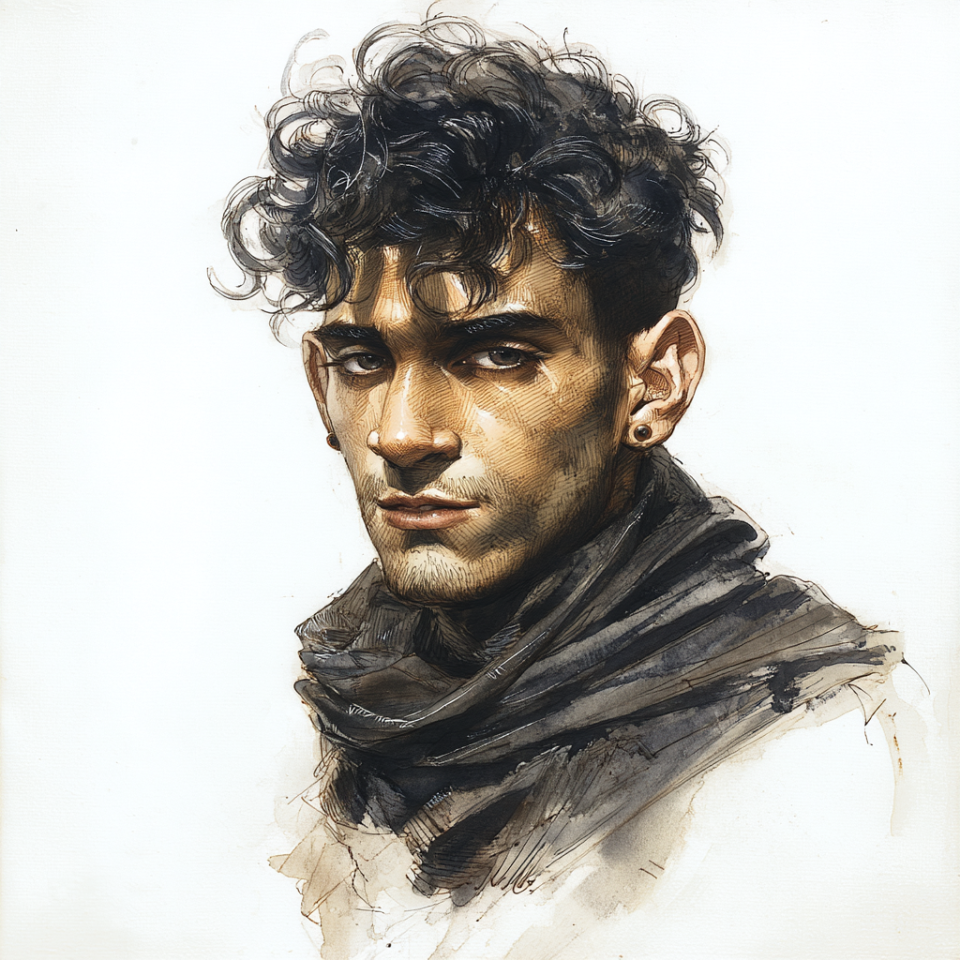
Date of Birth
14 Maat 1180 zc (Shifa)
Date of Death
07 Fjölgjǫf 1255 zc (Reposo)
Life
1180 zc
1255 zc
75 years old
Circumstances of Death
Succumbed to an untreated venereal disease in his mid-70s; so consumed with teaching, invention, and his many relationships that he neglected his health until it was too late.
Birthplace
Isfahan, Pārsa
Place of Death
Samarkand, Pārsa
Children
Belief/Deity
Buddhism + Mohammedan (Sufi-derived Rationalist)
 Reflects Sogdiana’s Silk-Road syncretism; scientific craft aligns with rational compassion schools.
Other Affiliations
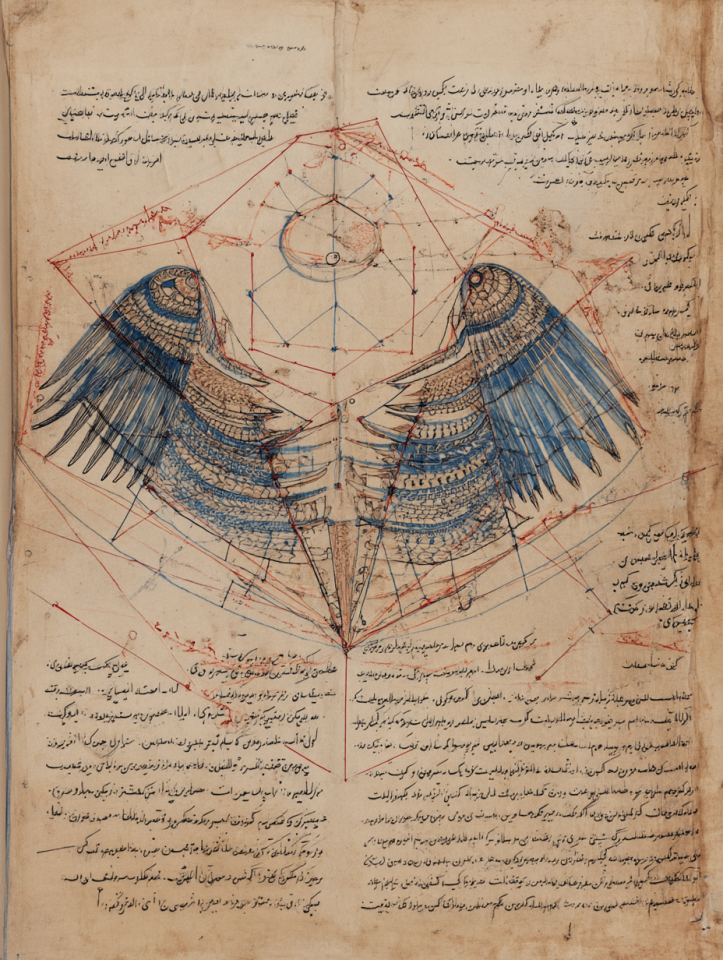
كتاب الأشكال الحيّة
by
Amir Qadir al-Rashid
The Codex of Living Forms
c. 1205 zc
A manuscript page filled with anatomical sketches, bird wings, and geometric overlays. Flesh, feather, and number unite into a living system of proportion.
c. 1205 zc
A manuscript page filled with anatomical sketches, bird wings, and geometric overlays. Flesh, feather, and number unite into a living system of proportion.
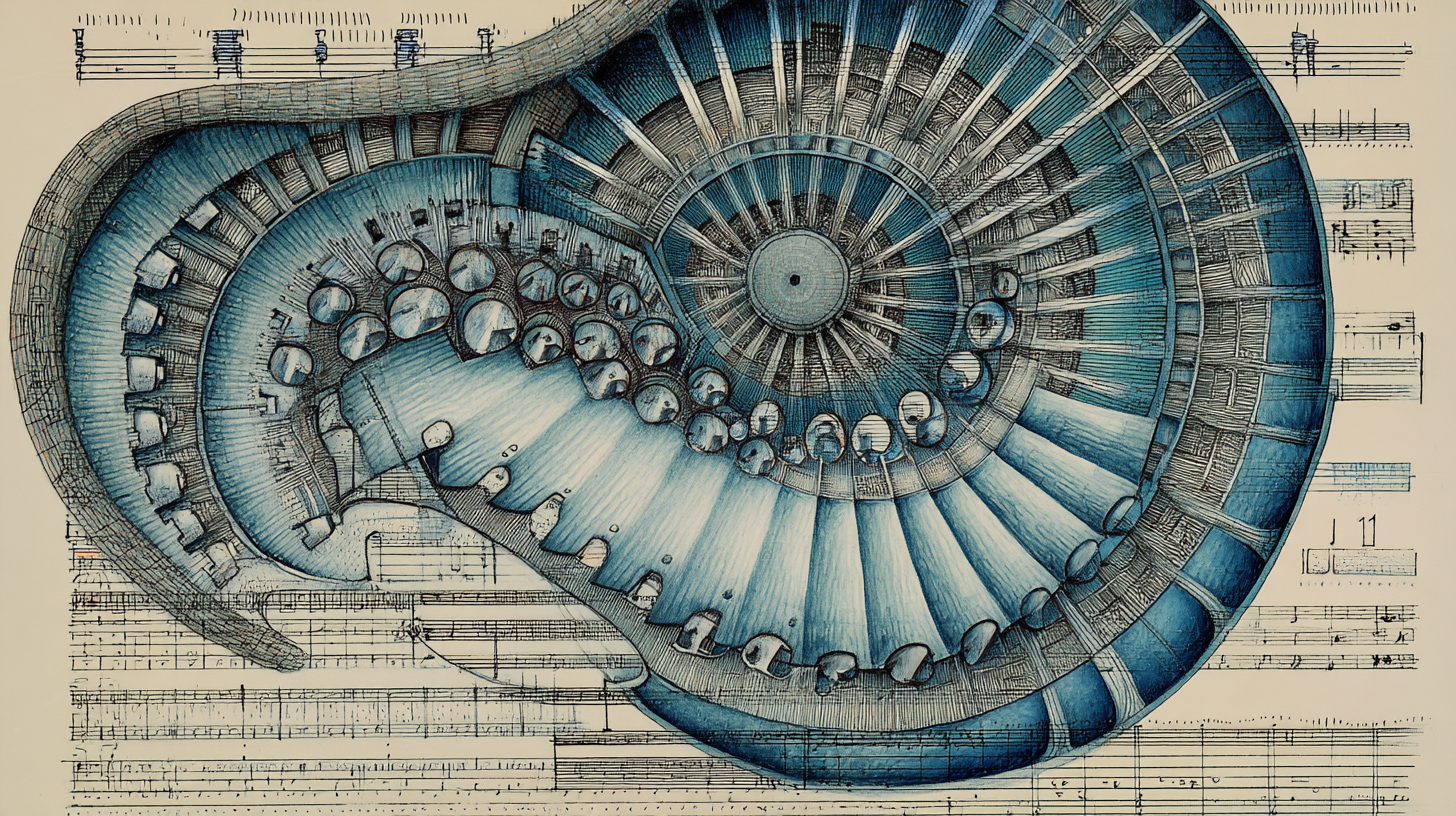
صوت الماء
by
Amir Qadir al-Rashid
The Voice of Water
c. 1210 zc
A drawing of a resonance-driven water organ, pipes spiraling like shells, designed to amplify sound into harmonic waves.
c. 1210 zc
A drawing of a resonance-driven water organ, pipes spiraling like shells, designed to amplify sound into harmonic waves.
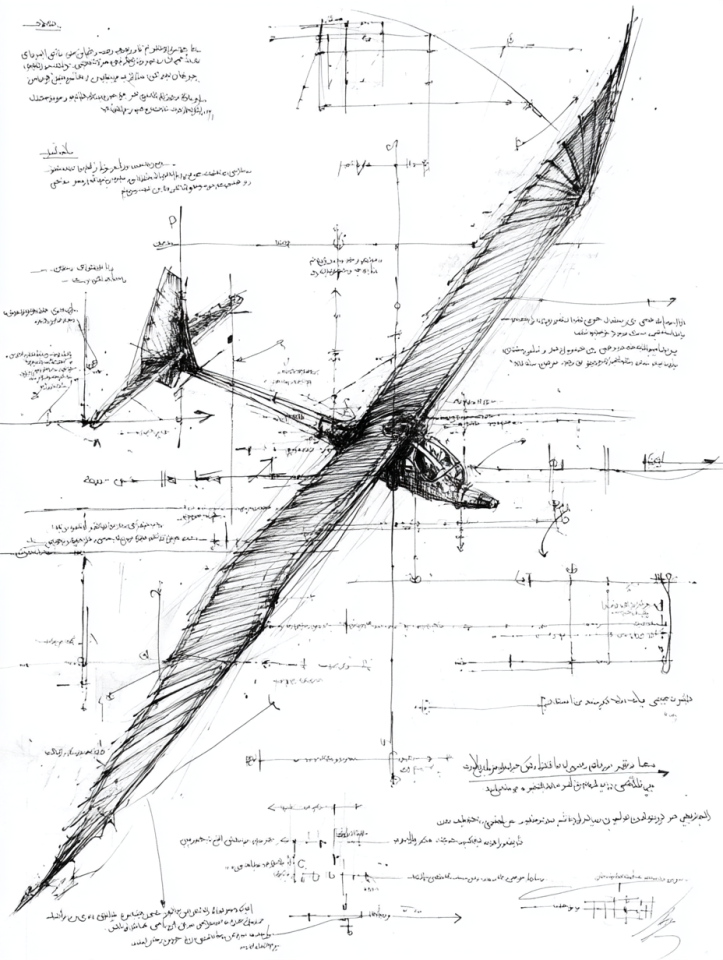
الطائر البشري
by
Amir Qadir al-Rashid
The Human Bird
c. 1215 zc
A glider prototype sketched in ink, its wings modeled after condors, annotated with precise airflow diagrams.
c. 1215 zc
A glider prototype sketched in ink, its wings modeled after condors, annotated with precise airflow diagrams.
الإنسان الهندسي
by
Amir Qadir al-Rashid
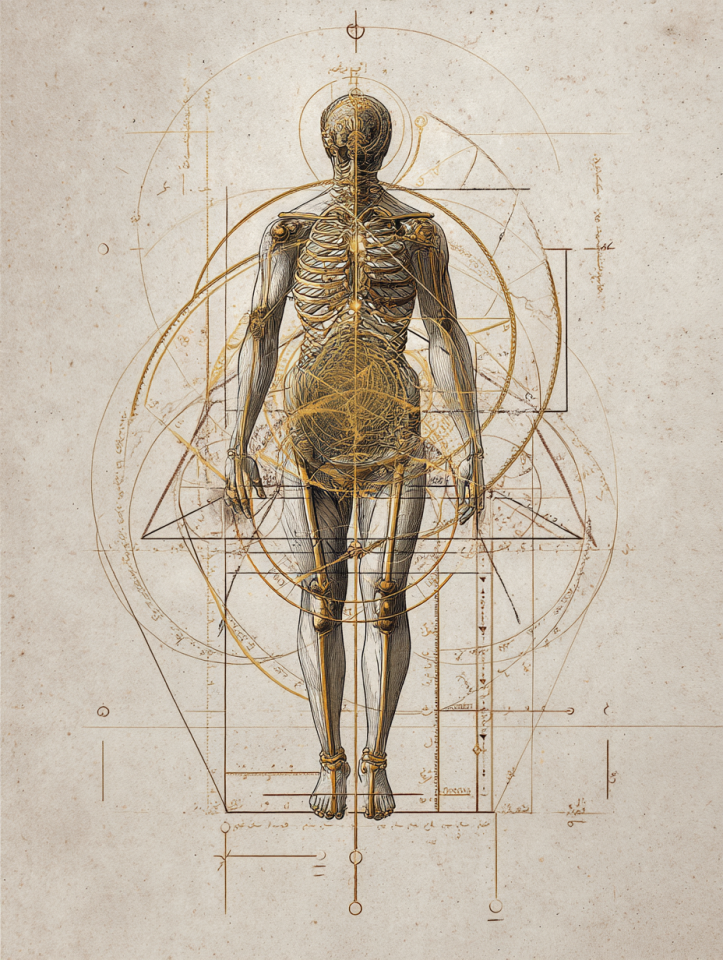
The Geometric Man
c. 1228 zc
A codex illustration merging human anatomy with golden ratio spirals, exploring harmony between body and cosmos.
c. 1228 zc
A codex illustration merging human anatomy with golden ratio spirals, exploring harmony between body and cosmos.
السيّد الشاب للنور
by
Amir Qadir al-Rashid
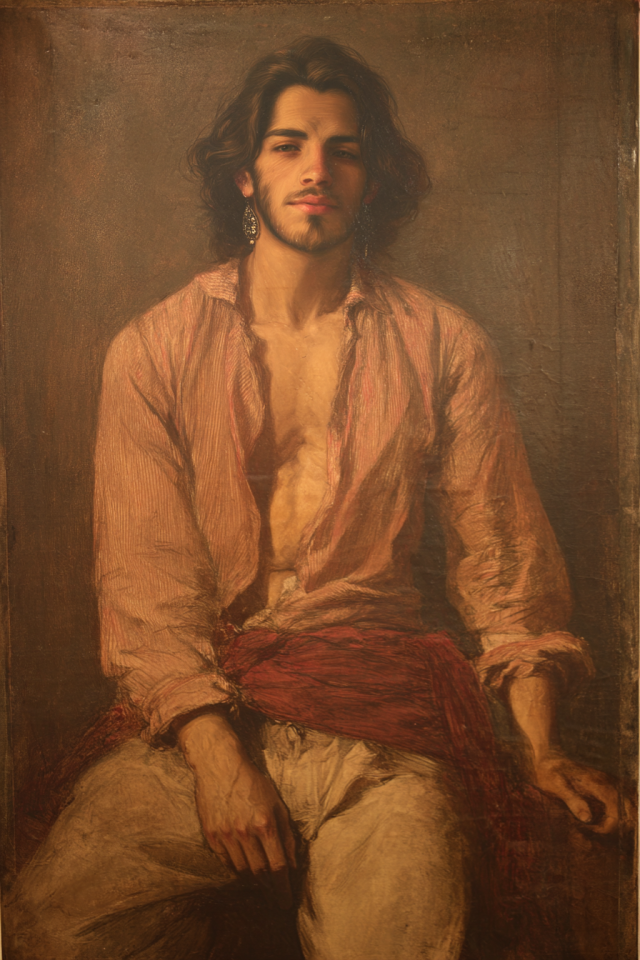
Young Master of Light (Darien Vashti)
c. 1230 zc
A luminous portrait capturing the young Photographer, Darien Vasht, amid a backdrop of pale stone, his face illuminated by reflected sunlight. The composition balances precision and tenderness—Amir’s geometry softened by human awe.
c. 1230 zc
A luminous portrait capturing the young Photographer, Darien Vasht, amid a backdrop of pale stone, his face illuminated by reflected sunlight. The composition balances precision and tenderness—Amir’s geometry softened by human awe.
الفلك العجيب
by
Amir Qadir al-Rashid
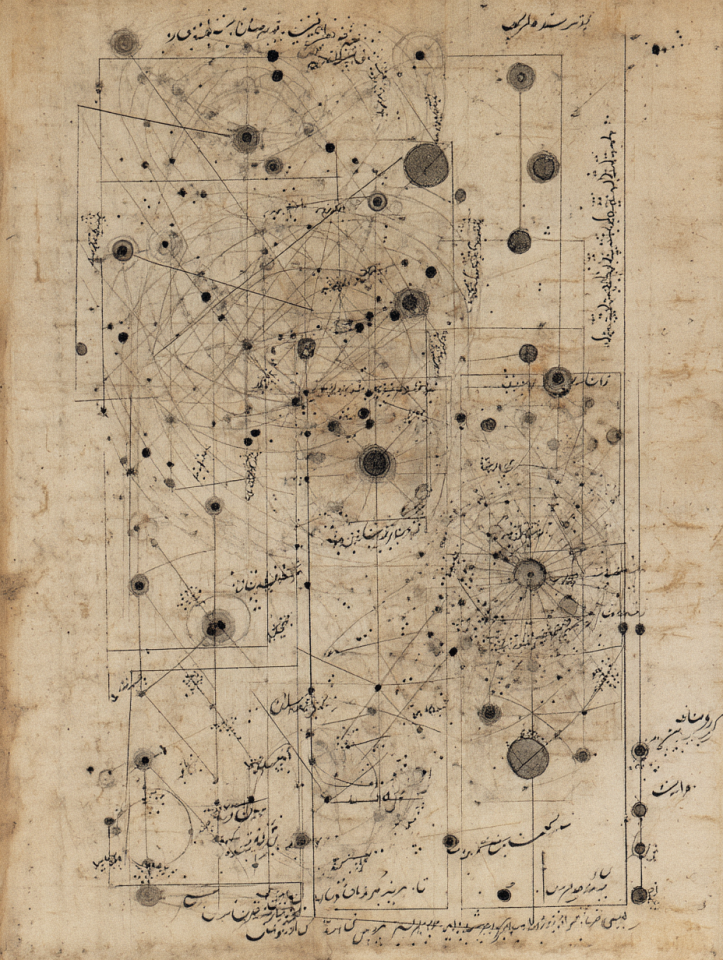
The Wondrous Heavens
c. 1248 zc
A codex sheet combining celestial star maps with engineering schematics, overlaying cosmos and mechanics.
c. 1248 zc
A codex sheet combining celestial star maps with engineering schematics, overlaying cosmos and mechanics.
تمثال الرنين
by
Amir Qadir al-Rashid
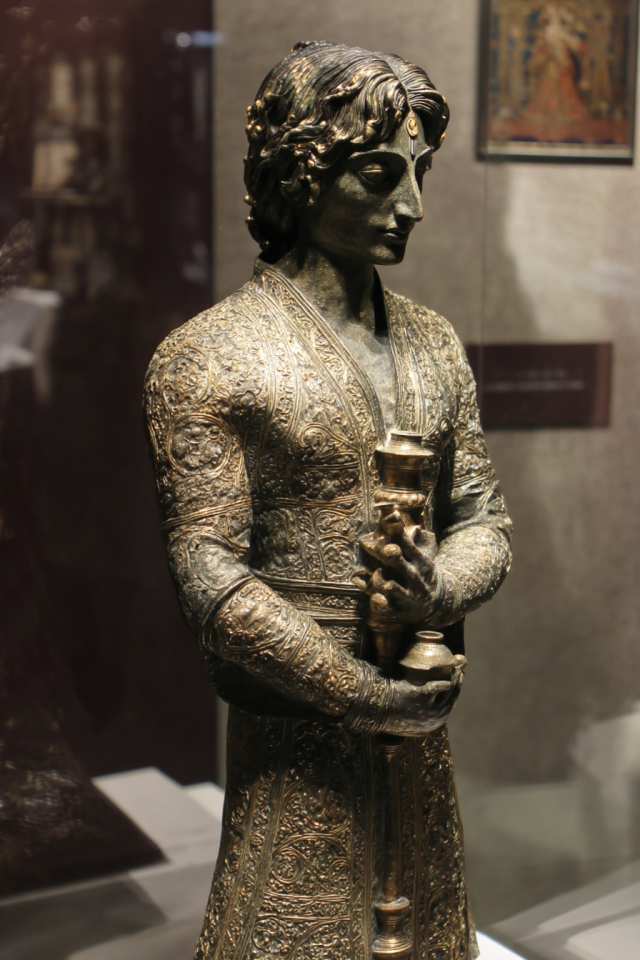
The Statue of Resonance
c. 1212 zc
A bronze figure embedded with harmonic chambers, designed so striking its surface produced resonant tones. Both sculpture and instrument, it embodied Amir’s philosophy that art and science are inseparable.
c. 1212 zc
A bronze figure embedded with harmonic chambers, designed so striking its surface produced resonant tones. Both sculpture and instrument, it embodied Amir’s philosophy that art and science are inseparable.
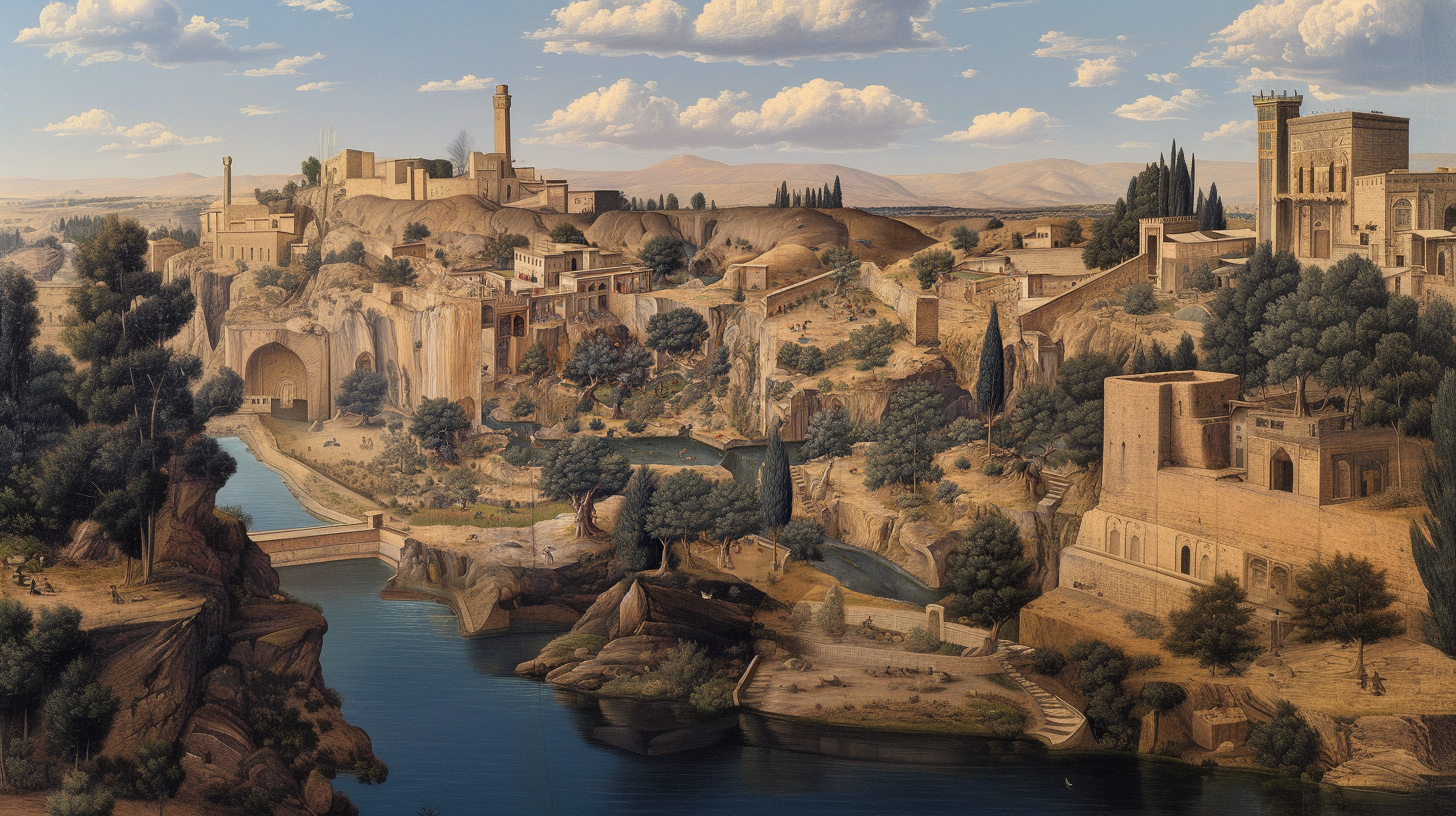
لوحة الأفق
by
Amir Qadir al-Rashid
The Horizon Painting
c. 1225 zc
A landscape painting that used vanishing-point perspective centuries before it was common in his region, blending realism with geometric overlays. It stunned contemporaries for its depth and order.
c. 1225 zc
A landscape painting that used vanishing-point perspective centuries before it was common in his region, blending realism with geometric overlays. It stunned contemporaries for its depth and order.
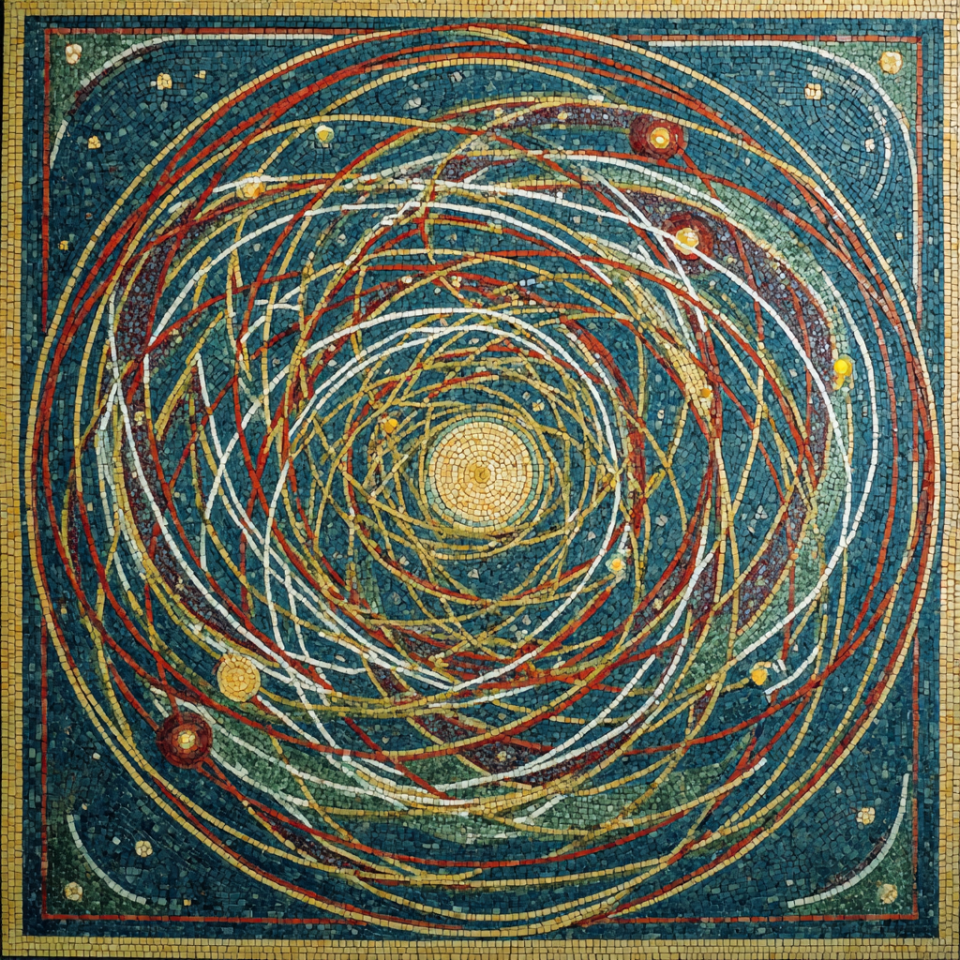
فسيفساء الكواكب
by
Amir Qadir al-Rashid
The Mosaic of the Planets
c. 1232 zc
A public square mosaic depicting planetary orbits as interlocking spirals of glazed tile, walked upon daily as civic art and astronomical teaching tool.
c. 1232 zc
A public square mosaic depicting planetary orbits as interlocking spirals of glazed tile, walked upon daily as civic art and astronomical teaching tool.
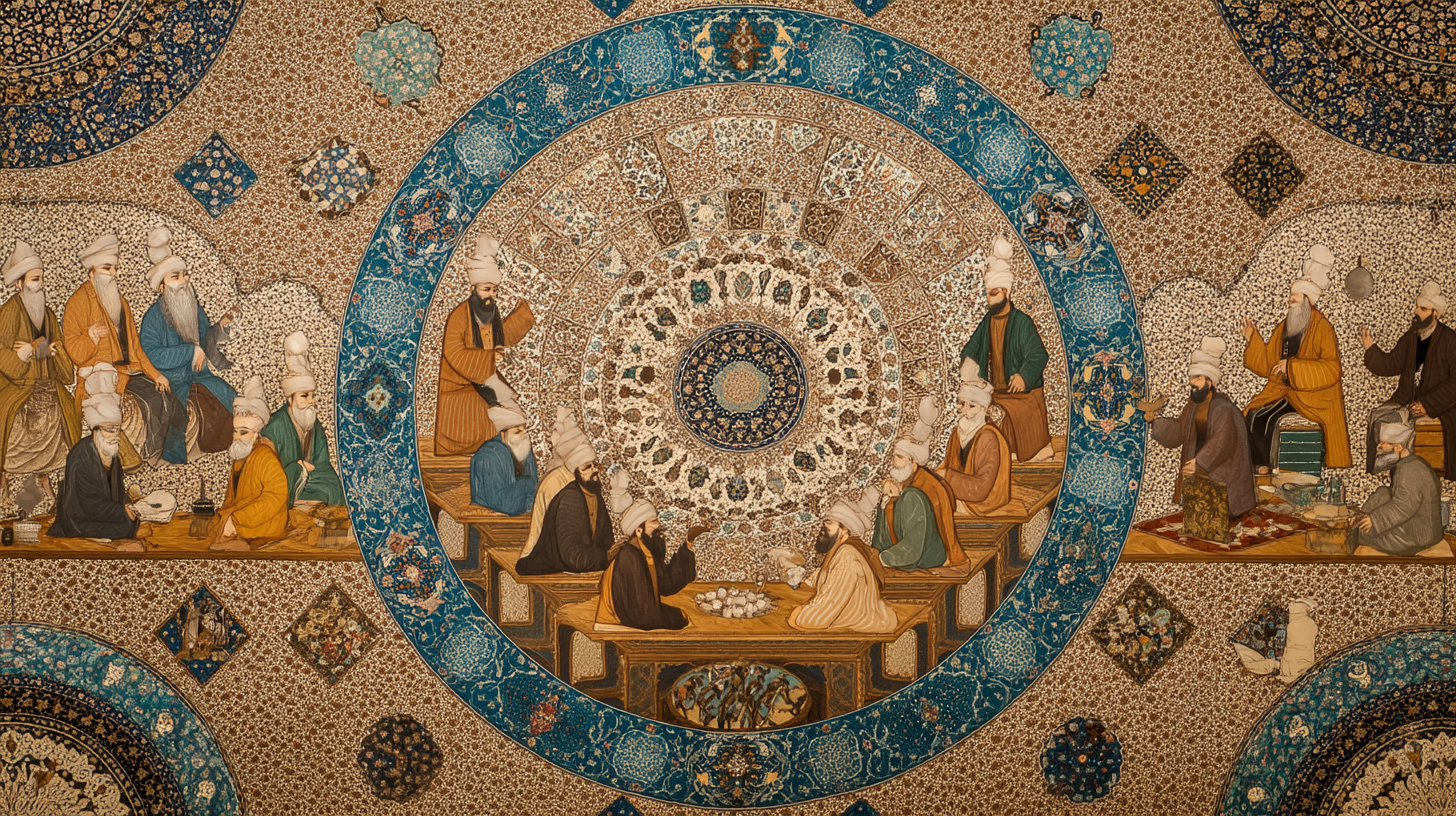
مرسم الإنسجام
by
Amir Qadir al-Rashid
The Harmony Fresco
c. 1241 zc
A fresco in a council hall depicting philosophers, craftsmen, and musicians encircled by geometric mandalas, representing the unity of cooperative knowledge.
c. 1241 zc
A fresco in a council hall depicting philosophers, craftsmen, and musicians encircled by geometric mandalas, representing the unity of cooperative knowledge.
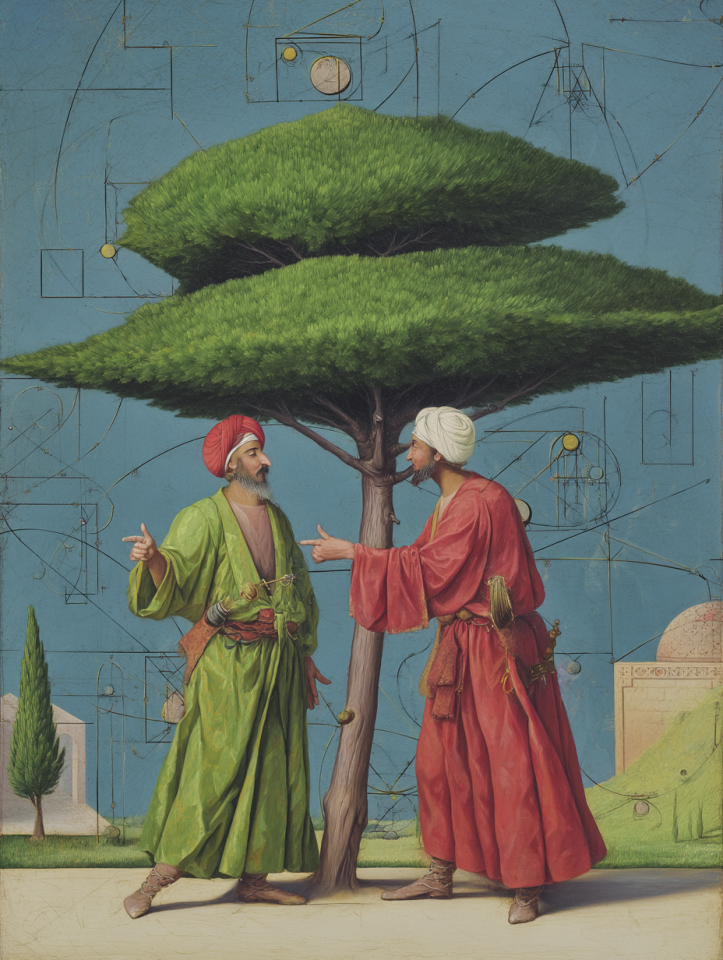
لوحة العقول المتحاورة
by
Amir Qadir al-Rashid
The Painting of Dialogues
c. 1218 zc
An oil painting depicting two philosophers in animated debate beneath a cypress tree. Their robes are rendered with luminous folds, while geometric diagrams hover subtly in the background, merging discourse with form.
c. 1218 zc
An oil painting depicting two philosophers in animated debate beneath a cypress tree. Their robes are rendered with luminous folds, while geometric diagrams hover subtly in the background, merging discourse with form.
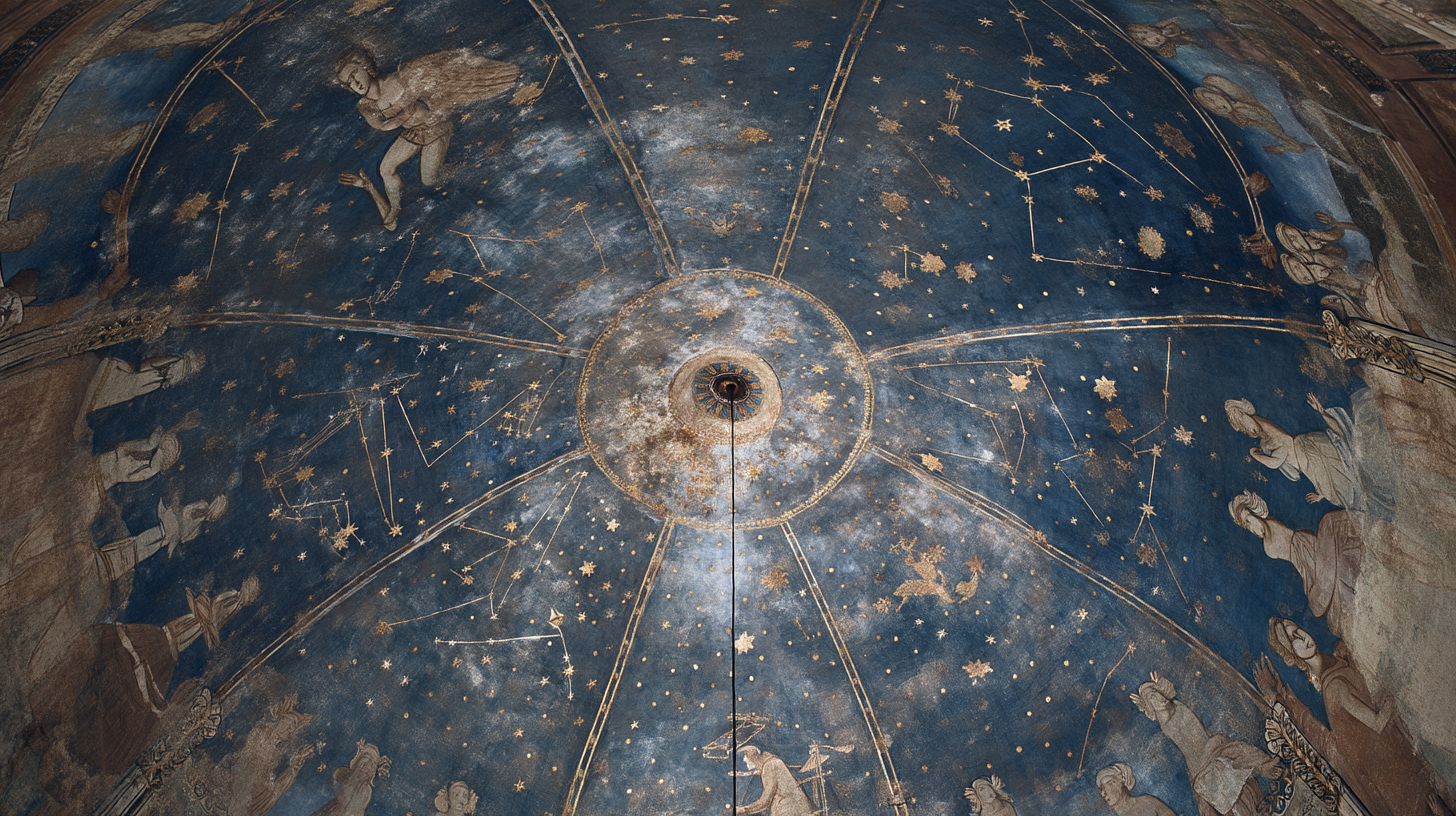
منظر النجوم
by
Amir Qadir al-Rashid
The Vision of Stars
c. 1224 zc
A mural painted for a domed ceiling, showing constellations mapped onto human figures. The night sky glows in indigo and gold, blending astronomy with mythology.
c. 1224 zc
A mural painted for a domed ceiling, showing constellations mapped onto human figures. The night sky glows in indigo and gold, blending astronomy with mythology.
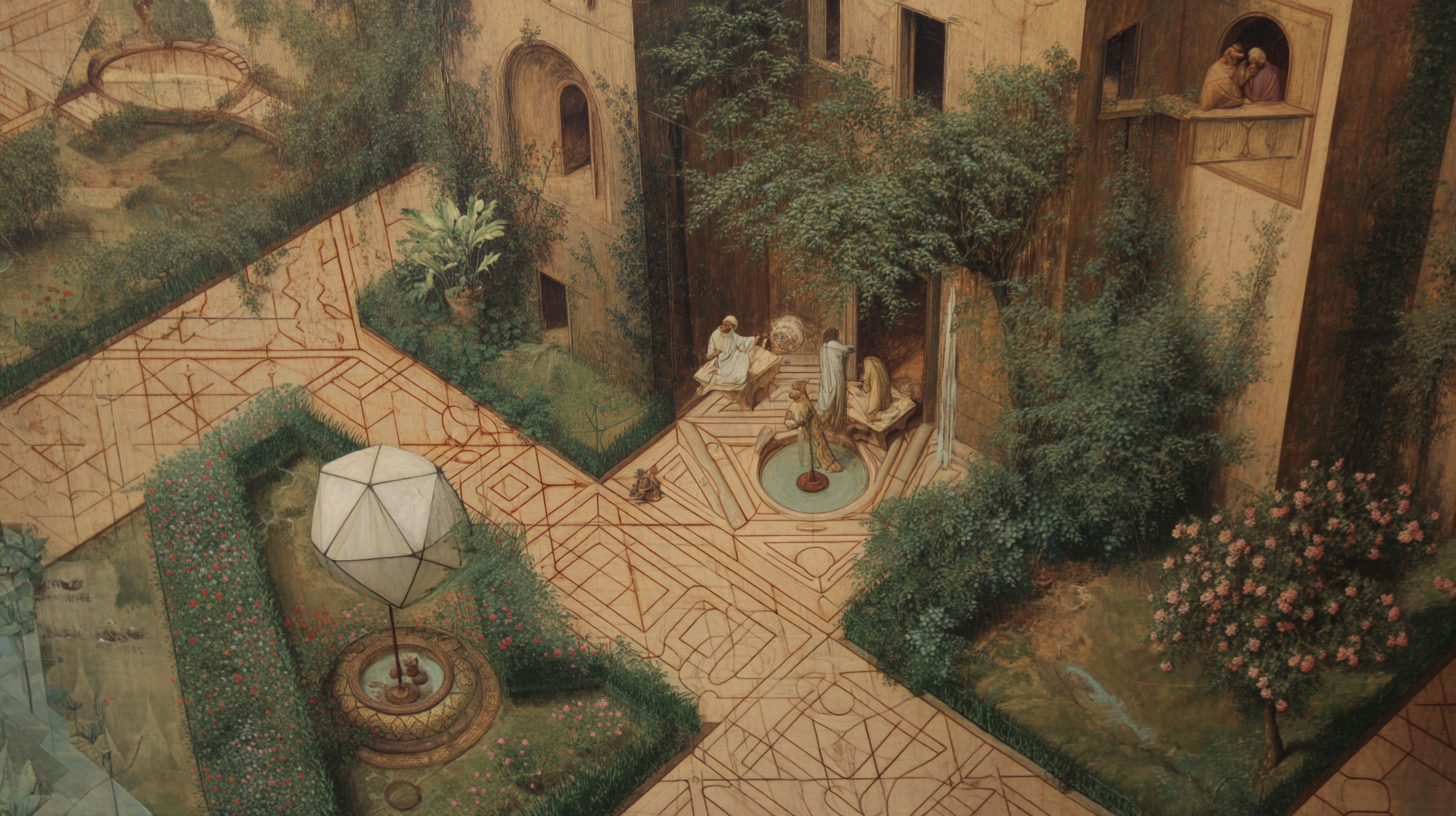
لوحة العائلة في الحديقة
by
Amir Qadir al-Rashid
The Family in the Garden
c. 1231 zc
A pastoral painting of a family reading in a courtyard, framed by vines and fountains. Subtle geometric overlays in the garden path suggest hidden cosmic order within domestic peace.
c. 1231 zc
A pastoral painting of a family reading in a courtyard, framed by vines and fountains. Subtle geometric overlays in the garden path suggest hidden cosmic order within domestic peace.
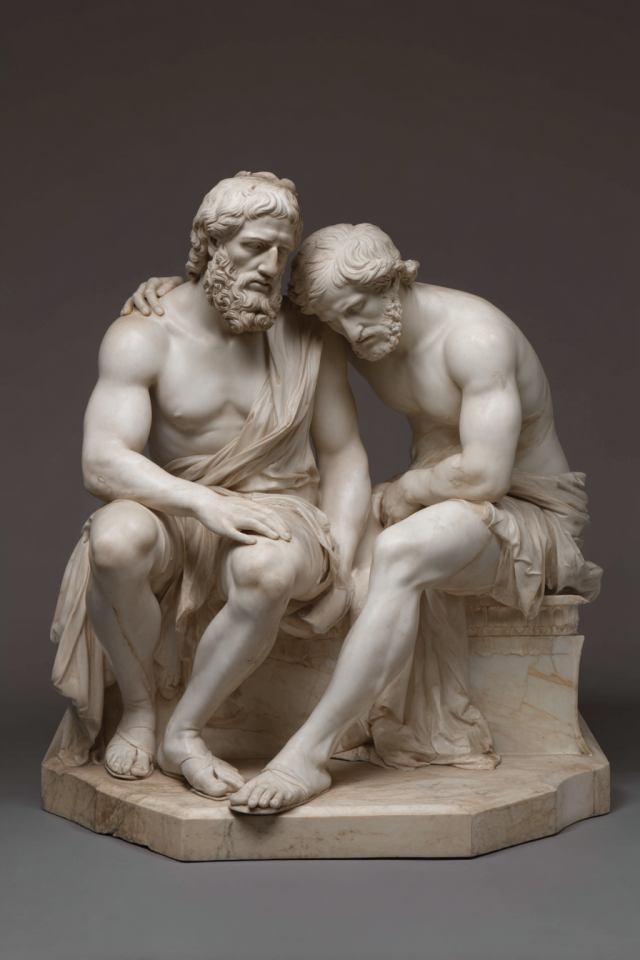
تمثال الرفاق
by
Amir Qadir al-Rashid
The Statue of Companions
c. 1236 zc
A marble statue of two young men seated together, one leaning casually upon the other. Their forms are strong yet tender, celebrating camaraderie with undertones of affection. Revered for its naturalism and quiet intimacy.
c. 1236 zc
A marble statue of two young men seated together, one leaning casually upon the other. Their forms are strong yet tender, celebrating camaraderie with undertones of affection. Revered for its naturalism and quiet intimacy.
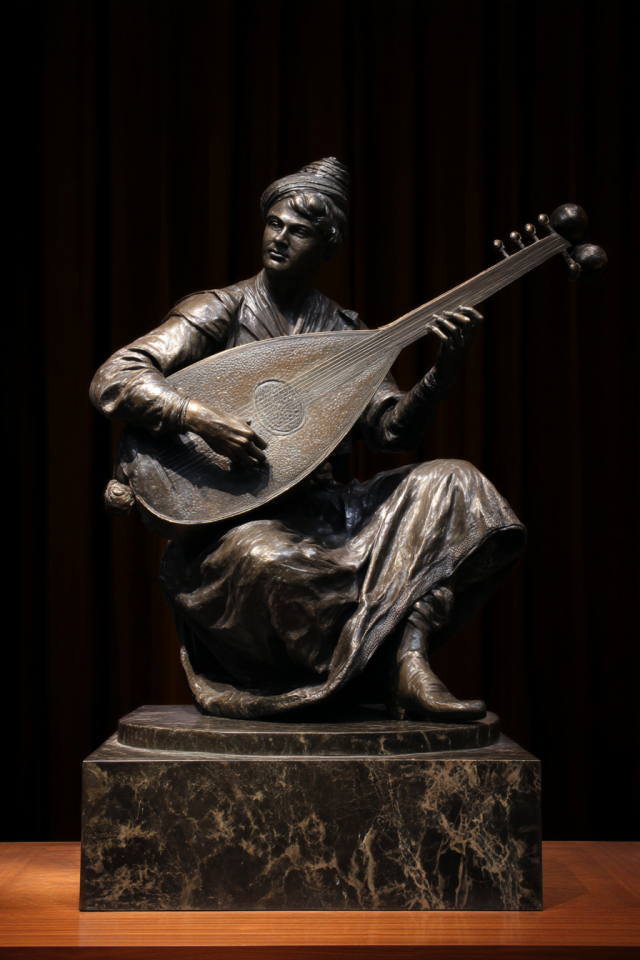
تمثال الموسيقي
by
Amir Qadir al-Rashid
The Statue of the Musician
c. 1243 zc
A bronze statue of a lute player mid-performance, embedded with small resonance chambers that cause the bronze itself to hum when struck lightly. Both portrait and instrument, it embodies Amir’s belief in the unity of sound and form.
c. 1243 zc
A bronze statue of a lute player mid-performance, embedded with small resonance chambers that cause the bronze itself to hum when struck lightly. Both portrait and instrument, it embodies Amir’s belief in the unity of sound and form.
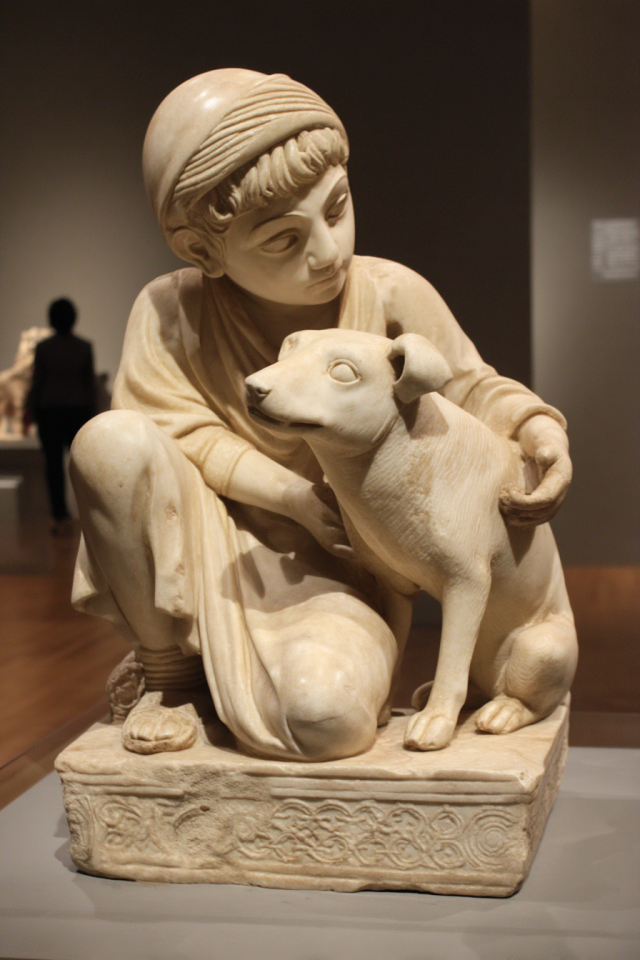
اردشیر و سگ شهباز
by
Amir Qadir al-Rashid
Ardashir and the Hound Shabaz
c. 1492 zc
A marble statue of a young boy, Ardashir, crouched in play with his loyal dog Shabaz. The work captures innocence and affection with tender realism, showing the animal not as ornament but as companion. The delicate folds of the boy’s robe and the attentive gaze of the hound elevate everyday companionship to the dignity of art.
c. 1492 zc
A marble statue of a young boy, Ardashir, crouched in play with his loyal dog Shabaz. The work captures innocence and affection with tender realism, showing the animal not as ornament but as companion. The delicate folds of the boy’s robe and the attentive gaze of the hound elevate everyday companionship to the dignity of art.
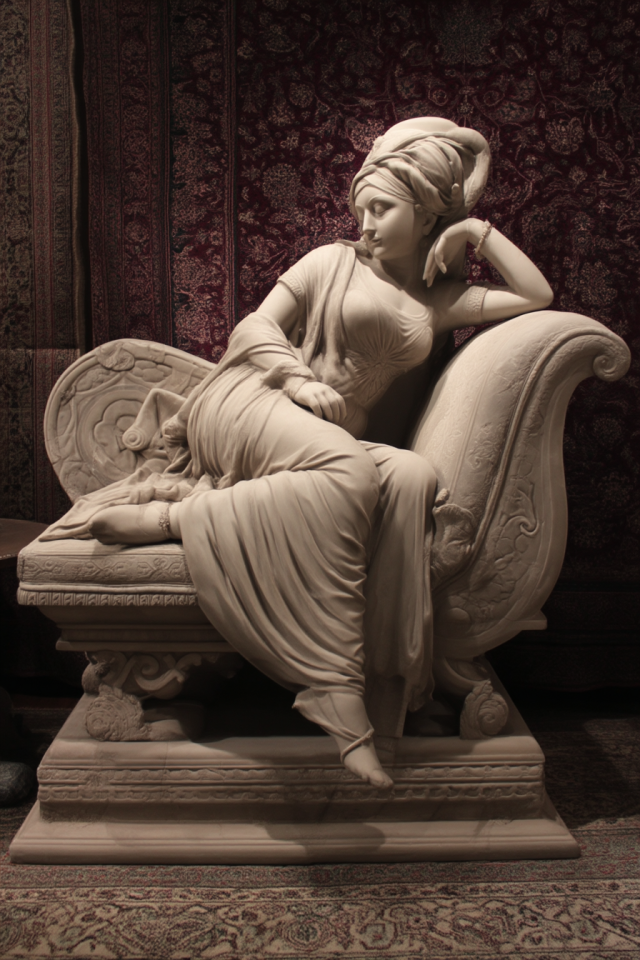
فاحشه در تفکر
by
Amir Qadir al-Rashid
Courtesan in Contemplation
c. 1501 zc
A reclining marble figure of a courtesan, draped in flowing garments and resting languidly upon a divan. Her downturned gaze suggests both allure and thoughtfulness, embodying the tension between sensual presence and inner reflection. The craftsmanship emphasizes texture—silk, skin, and cushion rendered in stone—with a serene poise that invites intimate pause.
c. 1501 zc
A reclining marble figure of a courtesan, draped in flowing garments and resting languidly upon a divan. Her downturned gaze suggests both allure and thoughtfulness, embodying the tension between sensual presence and inner reflection. The craftsmanship emphasizes texture—silk, skin, and cushion rendered in stone—with a serene poise that invites intimate pause.
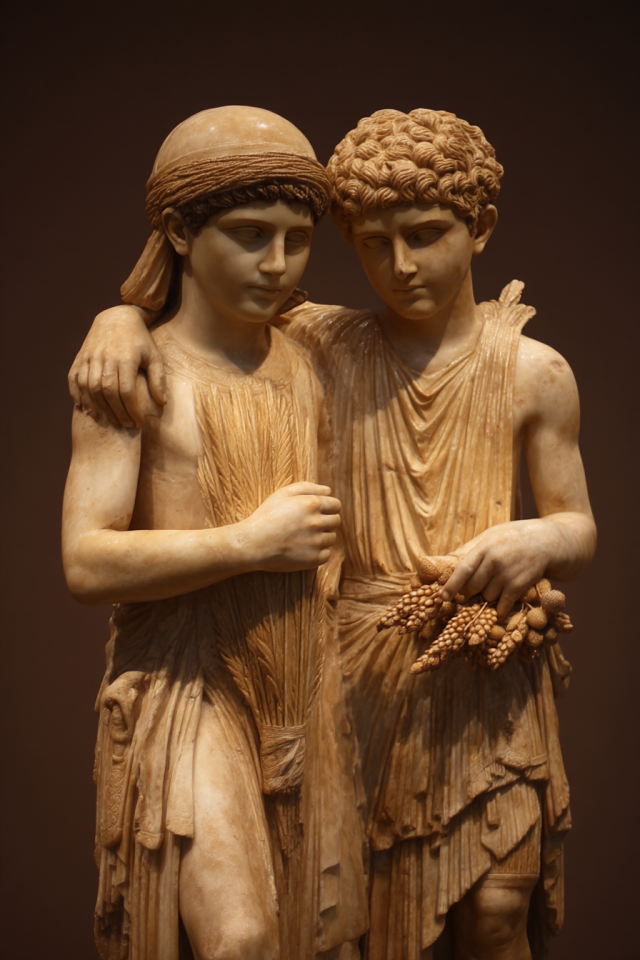
گیلگمش و انکیدو بهعنوان جوانان
by
Amir Qadir al-Rashid
Gilgamesh and Enkidu as Youths
c. 1487 zc
This marble sculpture depicts Gilgamesh and Enkidu not as legendary warriors but as innocent youths, tenderly close, one bearing wheat and the other grapes. Amir’s choice to render them as boys emphasizes the natural purity of their bond before destiny shaped them into myth. Their posture suggests both playfulness and devotion, reflecting the innocence of companionship and the sacred roots of friendship.
c. 1487 zc
This marble sculpture depicts Gilgamesh and Enkidu not as legendary warriors but as innocent youths, tenderly close, one bearing wheat and the other grapes. Amir’s choice to render them as boys emphasizes the natural purity of their bond before destiny shaped them into myth. Their posture suggests both playfulness and devotion, reflecting the innocence of companionship and the sacred roots of friendship.
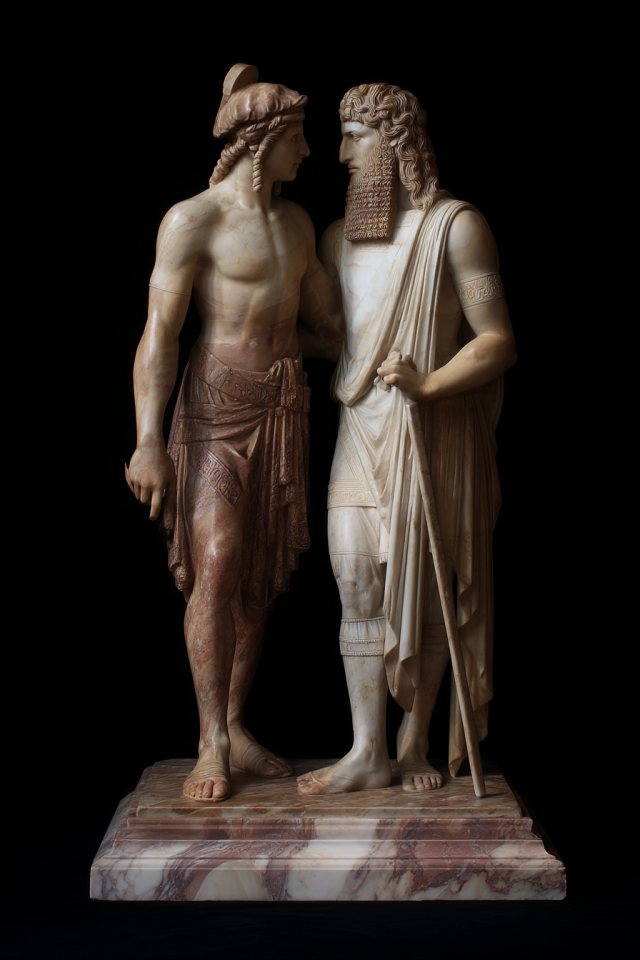
دیدار گیلگمش و انکیدو
by
Amir Qadir al-Rashid
The Meeting of Gilgamesh and Enkidu
c. 1491 zc
Carved in marble with subtle polychrome veining, this statue captures the moment Gilgamesh meets Enkidu. Their stance is intimate but monumental: one strong and youthful, the other bearded and weathered. They gaze into each other’s eyes, hands brushing in recognition of shared fate. Amir renders them not as distant myth but as men of flesh, bone, and longing, their forms balanced between strength and tenderness. The work has been called both heroic and quietly homoerotic, reflecting Amir’s appreciation for the male form and the intimacy of legendary companionship.
c. 1491 zc
Carved in marble with subtle polychrome veining, this statue captures the moment Gilgamesh meets Enkidu. Their stance is intimate but monumental: one strong and youthful, the other bearded and weathered. They gaze into each other’s eyes, hands brushing in recognition of shared fate. Amir renders them not as distant myth but as men of flesh, bone, and longing, their forms balanced between strength and tenderness. The work has been called both heroic and quietly homoerotic, reflecting Amir’s appreciation for the male form and the intimacy of legendary companionship.
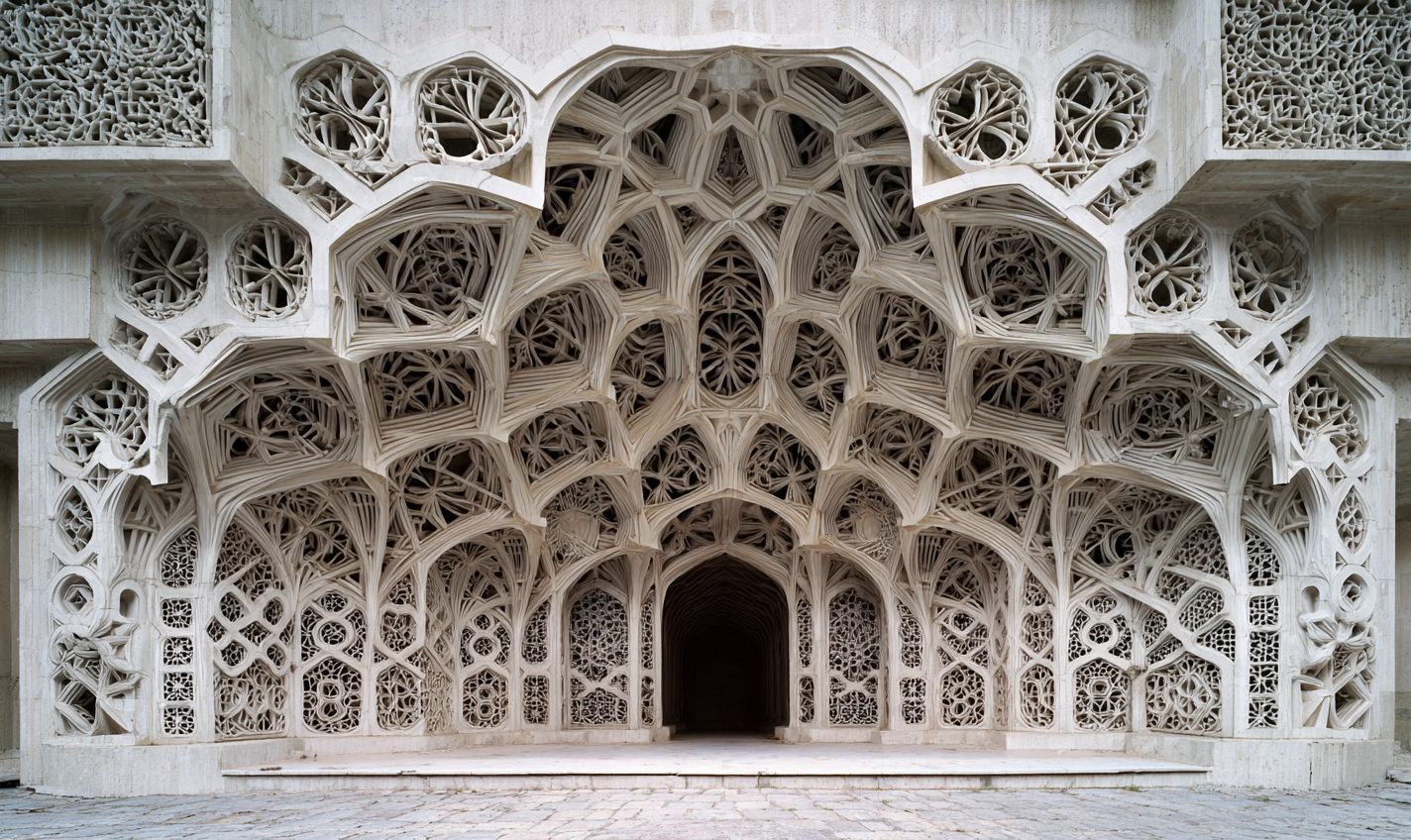
ایوان هماهنگی
by
Amir Qadir al-Rashid
The Arch of Harmony
c. 1494 zc
Location: Yazd, Persia
A monumental entryway designed by Amir Qadir al-Rashid for a Zoroastrian fire temple. The arch is constructed from pale marble, carved into interlocking patterns that resemble living lacework. The design draws inspiration from the stalactite muqarnas of Persian mosques, but Amir carried the geometry further into fractal iterations, repeating forms that grow smaller and more intricate with every layer. Light falls across the surfaces in shifting patterns, suggesting infinite depth within finite stone.
c. 1494 zc
Location: Yazd, Persia
A monumental entryway designed by Amir Qadir al-Rashid for a Zoroastrian fire temple. The arch is constructed from pale marble, carved into interlocking patterns that resemble living lacework. The design draws inspiration from the stalactite muqarnas of Persian mosques, but Amir carried the geometry further into fractal iterations, repeating forms that grow smaller and more intricate with every layer. Light falls across the surfaces in shifting patterns, suggesting infinite depth within finite stone.




Comments