
The Contendings of Horus and Set
Struggle of order vs. chaos, mediated through council and negotiation.
When Osiris was slain by his brother Set and cut into pieces, the throne of Egypt was left in dispute. Isis gathered her husband’s scattered body and restored him to life long enough to conceive a son. That son was Horus, born in secret among the marshes, guarded by his mother from Set’s jealous wrath. When Horus grew, he came forth to claim the throne that was his by right of blood.
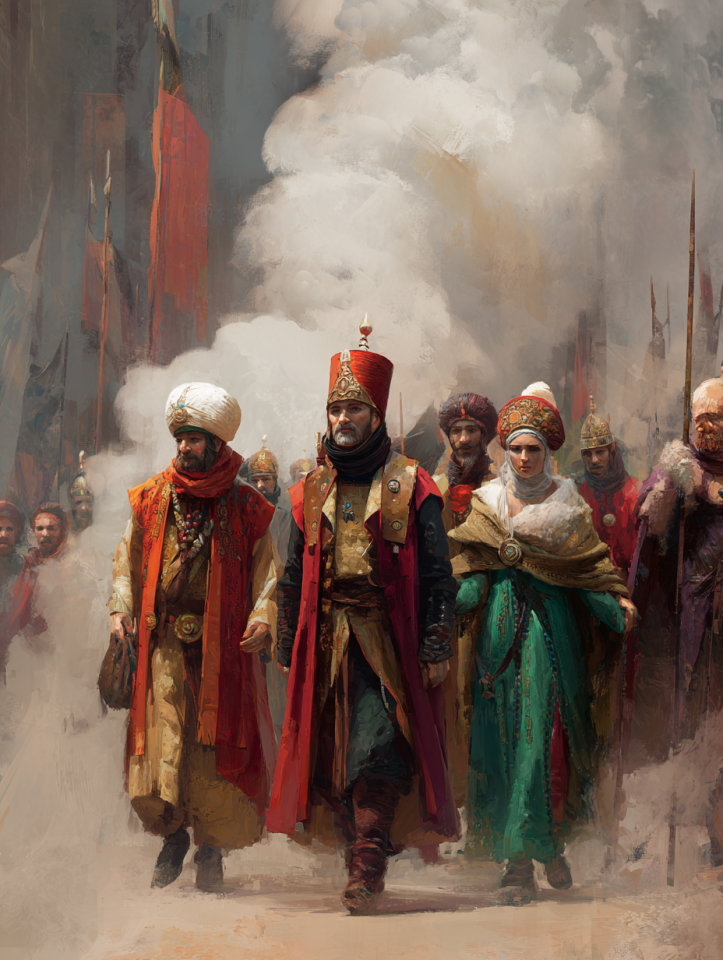
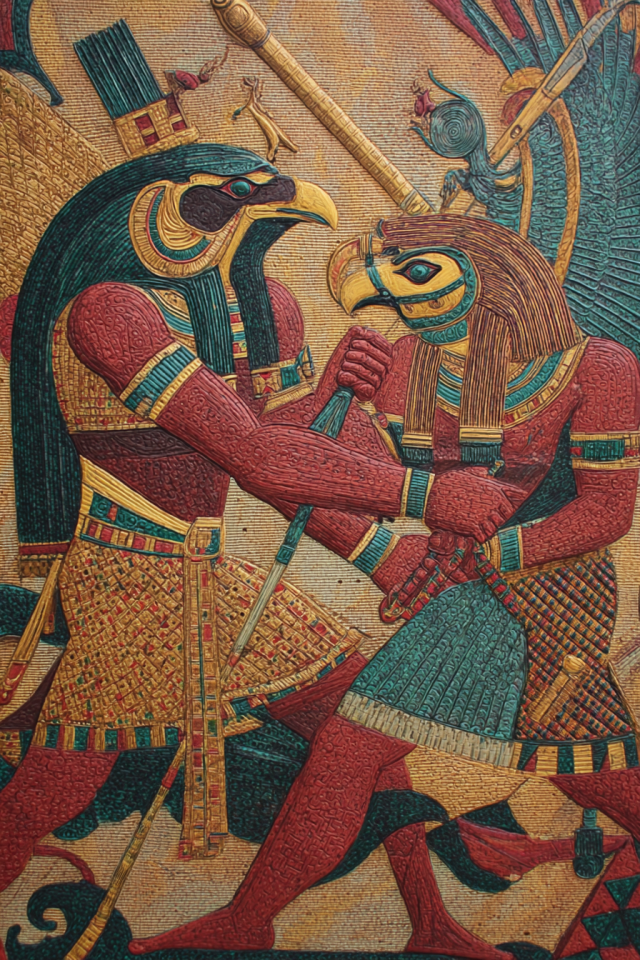
Set, however, would not yield. He declared that strength alone gave the right to rule, and he stood as lord of the desert, the storm, and all that raged beyond the fertile Nile. The gods were divided, some favoring Horus for his lineage, others swayed by Set’s power. To settle the matter, Ra convened the Ennead, the great council of the gods, and the trial of Horus and Set began.
For eighty years the struggle endured, waged in contests of every form. First came combat: Horus and Set grappled upon the river, each striking blows fierce as thunder. Horus lost an eye in the struggle, torn from his face, yet Thoth restored it, and it became the Wadjet Eye, symbol of healing and protection. Set too was wounded, his loins struck so that his strength faltered. Neither would yield, and the battle gave no resolution.
Then came trials of craft and cunning. The two gods raced boats upon the Nile. Horus, clever, built his craft of stone, and though it sank, his wit was praised. They wrestled again as hippopotamuses in the water, and the river churned red with their strife until the gods themselves cried out for them to stop.
Isis, ever cunning, took part as well. She disguised herself and approached Set, binding him with words until he confessed his guilt. But when Horus saw her show mercy, he was enraged at her lenience, for he wanted no compromise. Mother and son quarreled, and their bond was strained by the long war.
The council wavered, torn between the claims of inheritance and the argument of might. At last Neith, the goddess of wisdom, spoke: “Let the office be given to Horus, for he is the rightful heir of Osiris.” Ra, weary of the endless contention, consented. The gods decreed that Horus should rule the Two Lands, and Set would be given the desert and foreign lands beyond Egypt’s border.
Thus the balance was set: Horus, falcon of the sky, ruled as king upon the Nile, while Set, storm and strife, was banished to the red sands and distant horizons. Yet his presence was not wholly accursed, for Egypt still needed the strength of chaos at its borders.
So the Egyptians remembered the Contendings: not only as a feud between uncle and nephew, but as the shaping of balance itself — order seated upon the throne, chaos driven to the margins, yet never wholly destroyed.
Related Organizations




Comments