
The Nubian Lion-God Apedemak
Warrior-deity embodying both strength and protective stewardship.
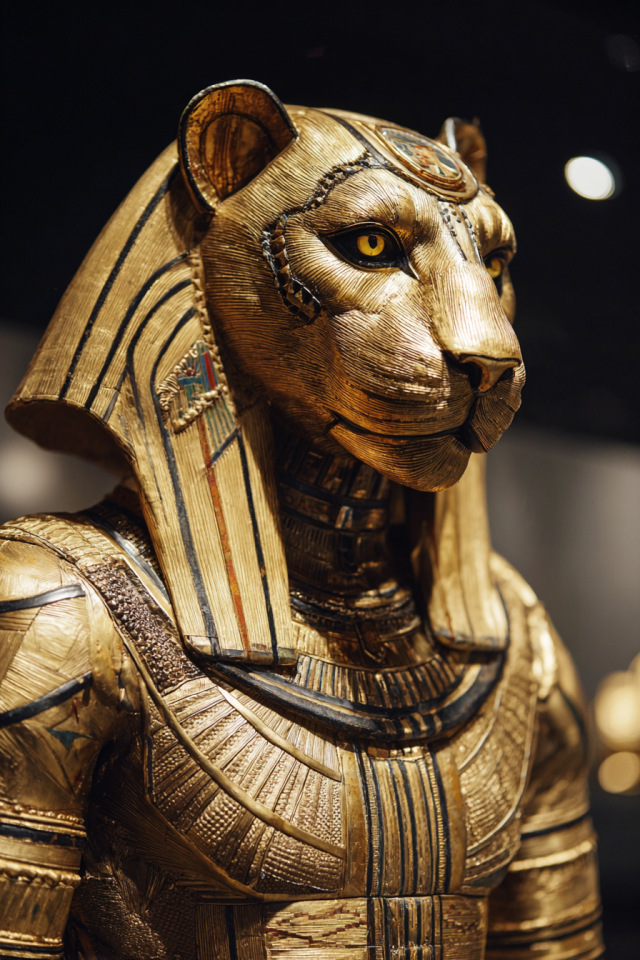
In the lands south of the Nile’s first cataract, where savanna meets desert and lions roamed proud, there arose a god whose visage bore their strength. His name was Apedemak, the Lion of Nubia. His head was that of the great beast, mane flowing like fire, his body clothed in divine might. Where he strode, warriors took courage, and kings claimed victory in his name.
The people of Kush called upon him in battle. His roar was the thunder that broke enemy lines, his claws the storm that tore through foes. Yet he was not only destroyer; he was guardian. The same hand that wielded the bow in war also sheltered the weak, for his nature bound strength with protection.
It was told that Apedemak descended in visions to the kings of Meroë. In their temples they carved his image: a lion-headed god enthroned, three-headed and four-armed in his might, or towering above captives with the calm power of a ruler who needed no cruelty to command. He bestowed legitimacy, crowning those who honored him with farr of their own — not Persian, but Nubian glory, fierce as the lion’s gaze.
In the temple at Naqa, he was shown seated beside Amun, for the Kushites wove their gods into harmony with those of Egypt. But where Amun was hidden, a god of distant mysteries, Apedemak was near, present in hunt and battle, a god of immediacy and presence. His lion’s face watched over the people, reminding them that divinity was not only in sky or river but also in the strength of the earth beneath their feet.
Legends told of his breath scorching the desert, of his roar shaking mountains, of enemies driven into flight by the very sight of his image upon a banner. Yet he was also said to smile upon farmers, bringing rain after drought, guiding herds through lean years, and blessing harvests with abundance. For the lion does not only slay; he also rules, and his pride is family as much as ferocity.
So Apedemak’s worship endured, not as the tale of a single act, but as a presence that wove through life. In battle chants he was invoked before warriors clashed, and in the quiet of temples his name was whispered in thanksgiving for strength given and protection kept. He was a god of the threshold: the roar at the frontier, the guardian at the hearth, the king crowned in lion’s light.
Though the temples of Nubia would one day fall to silence, the image of the lion-god remained upon their stones, unbroken by time. Even now, travelers who walk among those ruins can see his face carved deep, eyes staring out across the desert, as if Apedemak still watches, ready to rise should his people call again.
Related Organizations




Comments