
The Book of the Heavenly Cow
Warning against divine wrath and human arrogance.
In the first times, Ra ruled both gods and men. He was old, his bones silver, his flesh gold, his hair the color of lapis. But though he was creator and sun, men grew restless beneath his gaze. They whispered among themselves, “Ra is weary, his power wanes. Let us rise against him, for his strength is failing.”
Ra heard their plotting, and his heart was heavy with grief and anger. He called the gods to council: Shu and Tefnut, Geb and Nut, and wise Thoth. “What shall I do with mankind?” he asked. “They conspire against me, though I gave them life.” The gods urged him to act, lest rebellion spread. So Ra sent forth his Eye, radiant and terrible, in the form of Hathor.
But when Hathor looked upon mankind’s treachery, her face turned fierce and her nature changed. She became Sekhmet, lioness of war, and she fell upon the people with fury. Fields ran red, rivers choked with bodies, and the air was filled with her roaring. None could withstand her wrath, and men cried out in despair.
For days she slaughtered, and Ra looked upon the ruin with sorrow. “If she continues,” he said, “there will be no mankind left to honor the gods.” Yet Sekhmet’s bloodlust would not abate. She laughed in joy as she waded through carnage, her mouth hot with the taste of slaughter.
To stop her, Ra devised a cunning ruse. He commanded that beer be brewed in great vats, mixed with red ochre so that it shone like blood. At night the jars were poured upon the fields where Sekhmet would come at dawn. When the lioness-goddess arrived, she saw the ground awash in what seemed to be blood, and in her frenzy she drank.
She drank and drank until her rage was drowned in drunkenness. Her eyes grew heavy, her steps unsteady, and at last she fell asleep, her fury stilled. When she awoke, she was once more Hathor, gentle and radiant, goddess of love and joy. Humanity was spared, though scarred by what had passed.
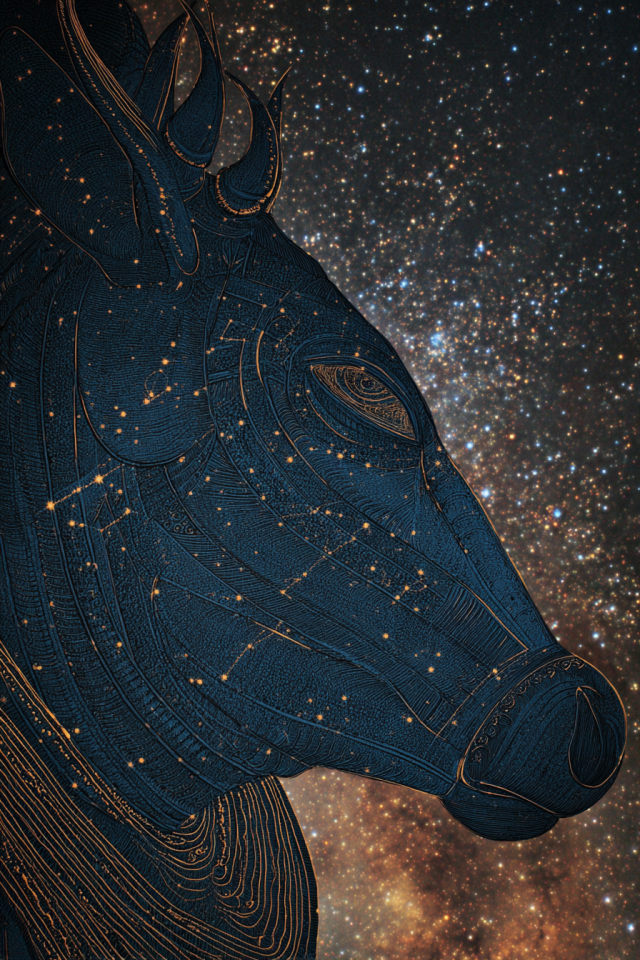
Yet Ra no longer trusted mankind. He withdrew from earth, ascending to the heavens upon the back of the great Heavenly Cow. Shu lifted the sky upon his shoulders, Nut arched her body above, and Ra sailed across the vault of heaven in his solar barque, ruling from a distance. Thus the world was set as it remains: gods above, men below, bound by memory of rebellion and wrath.
So the Egyptians remembered the tale of the Heavenly Cow — a warning that the gods’ anger, once loosed, could nearly undo creation, and a reminder that mercy came only through cunning and restraint. It was recited in tombs and temples, etched on walls, carried as a caution against arrogance and as a prayer for balance between god and man.
Related Organizations




Comments