Prometheus and the Fire
Gift of knowledge to humanity, rebellion against tyrannical Zeus.
In the days after the Titans fell and the Olympians reigned, mortals lived in hardship. They were weak, without warmth, without skill, and each winter chilled them to the bone. Their nights were long and dark, and their bellies often empty. From heaven, Zeus looked down upon them and decreed that they should remain so: dependent, frail, and never rising to rival the gods.
But among the elder Titans still roaming the earth was Prometheus, whose name meant Forethought. He looked upon humankind with pity. “These creatures are children of the earth,” he said, “and they deserve more than to suffer in ignorance.” Though bound by no law, he dared to defy the will of Zeus.
When the time of sacrifice came, Prometheus tricked Zeus himself. He wrapped bones in shining fat and placed them apart from the meat. He offered Zeus the choice, and the king of gods, fooled by appearances, claimed the glittering portion. From that day, men gave fat and bone to the gods, and kept the meat for themselves. Enraged, Zeus swore vengeance and denied humankind the gift of fire.
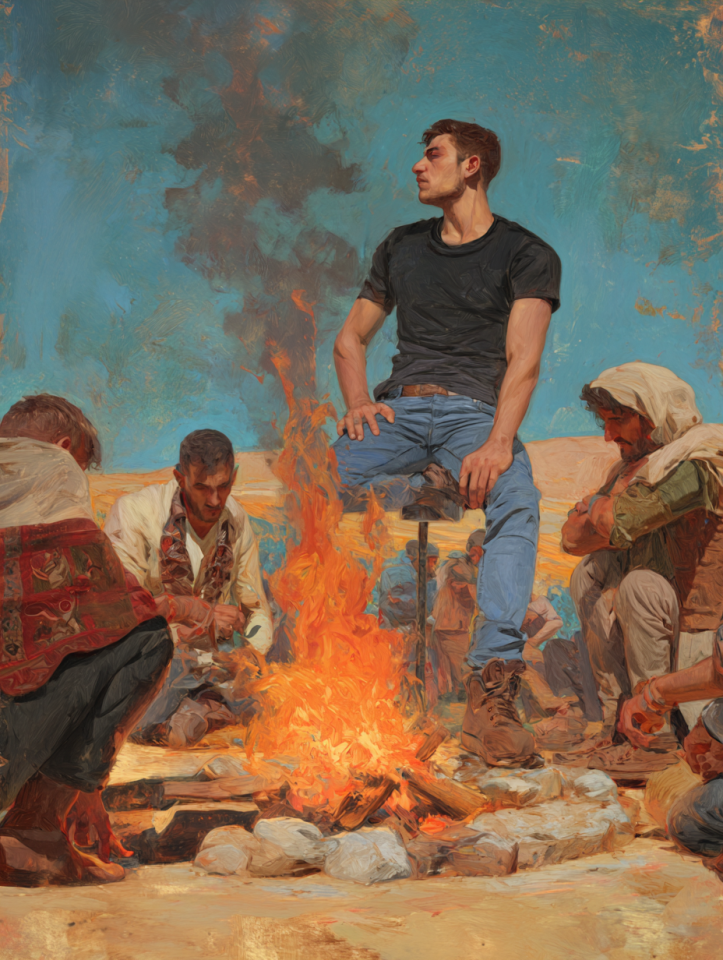
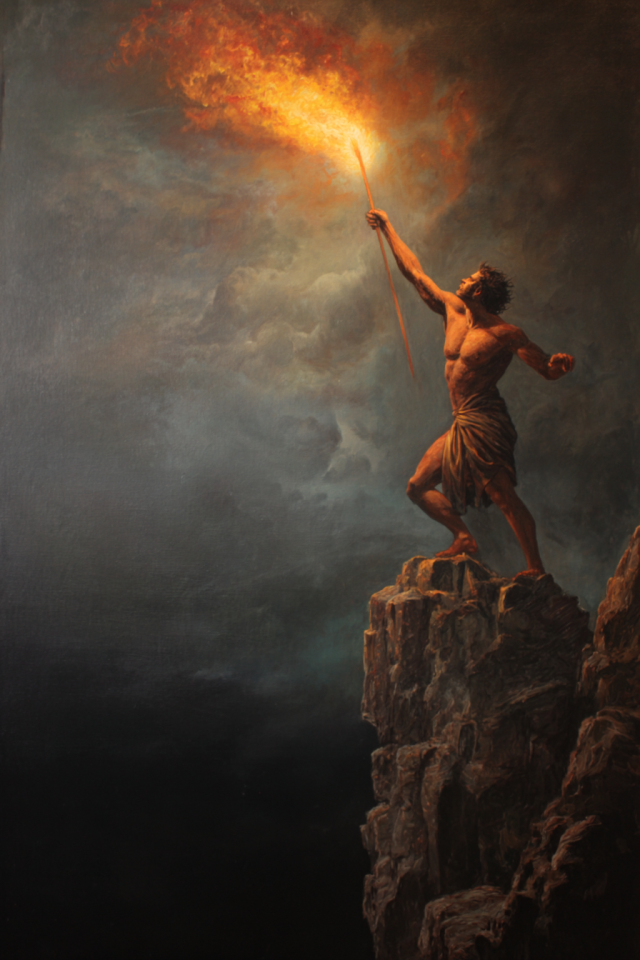
But Prometheus was not finished. In secret he ascended to Olympus, stealing into the forge of Hephaestus or, in some tellings, plucking a burning brand from the very chariot of the sun. He hid the flame in the hollow stalk of a fennel, carrying it down to mortals. When at last he placed it in their hands, fire leapt high, and humankind’s fate was forever changed.
The people rejoiced. They cooked their food, smelted ore, hardened their tools, and drove back the terrors of night. Where once they had huddled helpless, now they built homes, temples, and ships. Prometheus had given them not only warmth, but knowledge — the spark from which all crafts were born.
But Zeus beheld this and his wrath was boundless. He summoned Prometheus to answer for his theft. The Titan stood unbowed, declaring he would not repent. For this defiance, Zeus ordered him seized, and with chains of adamant he was bound to a pillar in the desolate Caucasus mountains. There each day an eagle descended, tearing at his liver, and each night it grew whole again, so that his torment would never end.
The gods looked on in silence, for none dared to speak against Zeus. Yet among mortals the story spread like fire itself, told in whispers and sung in bold voices: how one Titan had suffered so that mankind might live with light. They tended their hearths with reverence, knowing the flame was not theirs by nature but by rebellion.
Ages later, it was said, Heracles would pass that way and break the chains, slaying the eagle and freeing Prometheus. But until that day came, the Titan endured, nailed by fate between earth and sky, his gift blazing on in every hearth-fire and every forge.
So the tale is told: that Prometheus, though punished, became immortal in story, for he gave mortals the fire of the gods and taught them to shape their own destiny.
Related Organizations




Comments