




Orestes and the Furies
Justice shifting from blood vengeance to civic trial.
When the war at Troy was ended, Agamemnon returned in triumph to his halls at Mycenae. But his victories carried a shadow, for to launch the fleet he had slain his daughter Iphigenia, offering her life for a favorable wind. Clytemnestra, his queen, had never forgiven this crime. While her husband fought abroad, she took Aegisthus into her bed and together they wove a net of vengeance.
On the day of Agamemnon’s return, Clytemnestra met him with smiles and soft words. She bade him walk upon purple cloths as if he were a god, but in her heart she burned with hate. When he entered the bath, she cast a heavy robe about him, binding his arms, and struck him down with the axe. His blood ran over the tiles, staining the house of Atreus anew. Cassandra, the captive prophetess he had brought from Troy, also fell, her warnings unheeded. Thus Clytemnestra and Aegisthus claimed the throne, ruling in uneasy splendor.
Years passed, and the memory of the king’s death lingered like smoke in the palace. Electra, daughter of the slain king, lived in mourning, her days filled with whispered prayers for justice. Far away, her brother Orestes grew to manhood, fostered in secret. The god Apollo came to him in dream and oracle, commanding: avenge your father’s blood, or be forever cursed.
Orestes returned in disguise, carrying the weight of both duty and dread. He found Electra at Agamemnon’s tomb, pouring libations to the dead. Brother and sister embraced, their grief rising together into resolve. With a band of loyal companions, Orestes entered the palace, announcing false news of his own death to gain admittance.
First he turned upon Aegisthus, striking him down without hesitation. Then he came to his mother. Clytemnestra bared the breast that had nursed him, begging for mercy, calling him her son. Orestes faltered, torn between blood and blood, but Apollo’s command thundered in his mind. He raised the blade and slew her, crying out in anguish as the queen fell. The halls rang with the clash of vengeance fulfilled, yet also with the curse of matricide now born.
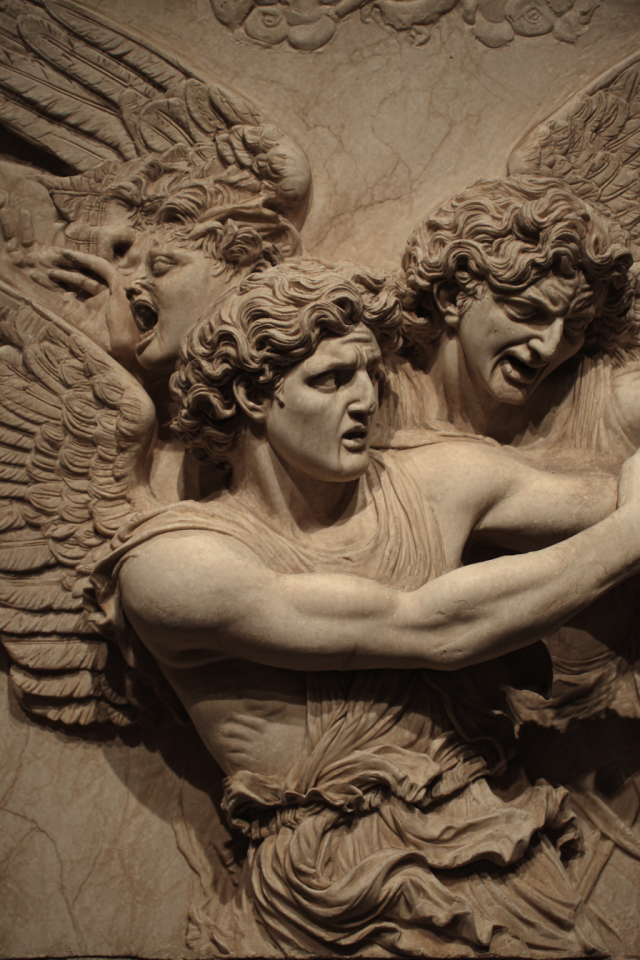
No sooner had he done the deed than the air grew heavy and the earth seemed to darken. From the shadows emerged the Furies — the ancient daughters of Night, older than Zeus, older even than the Olympians. Their hair was knotted with snakes, their eyes dripped with blood, their voices shrieked like hounds on the scent. They surrounded Orestes, chanting his guilt, and drove him into madness.
Orestes fled from Mycenae, pursued by the Furies wherever he turned. In the daylight he saw their faces, in the darkness he heard their cries. His mind cracked beneath their torment, and he wandered like a hunted beast. Seeking relief, he cast himself at the altar of Apollo at Delphi, begging his patron to save him. Apollo soothed him but could not banish the Furies, who claimed ancient right over blood crimes. The god sent him onward, to seek Athena in Athens, where judgment might be found.
So Orestes came to the city of Athena, the wise goddess, and there the matter was brought to trial. For the first time mortals sat in judgment of such a crime: twelve citizens chosen to weigh blood against blood. The Furies cried out that no law could absolve a son who slew his mother. Apollo stood for Orestes, declaring that the bond of the father outweighed the bond of the mother, that justice demanded vengeance for Agamemnon’s murder. The jurors cast their votes, and when the stones were counted the numbers stood even.
Then Athena herself rose, casting the deciding vote. “I stand with mercy,” she proclaimed, “for it is better that bloodshed end here than that vengeance breed forever. Orestes shall be acquitted, and the curse lifted from his line.” The trial was ended, and Orestes fell to the ground, free at last of the torment that had driven him.
The Furies, however, raged. Denied their prey, they howled that the old order had been broken, that justice had been stolen from them. But Athena spoke gently, offering them a place of honor in her city. “No longer Furies, be now the Eumenides — the Kindly Ones,” she said, “guardians of the just and protectors of the innocent.” So their wrath was transformed into guardianship, and they took root in Athens as spirits not of vengeance but of civic order.
Thus the tale ends: with a murder repaid, a son haunted, a trial held beneath the gaze of gods, and a new order born from the ruin of the old. The house of Atreus was scarred, yet from its blood rose the first trial by jury, and the voices of the Furies, once only cries of terror, became part of the chorus of law.
Related Organizations




Comments