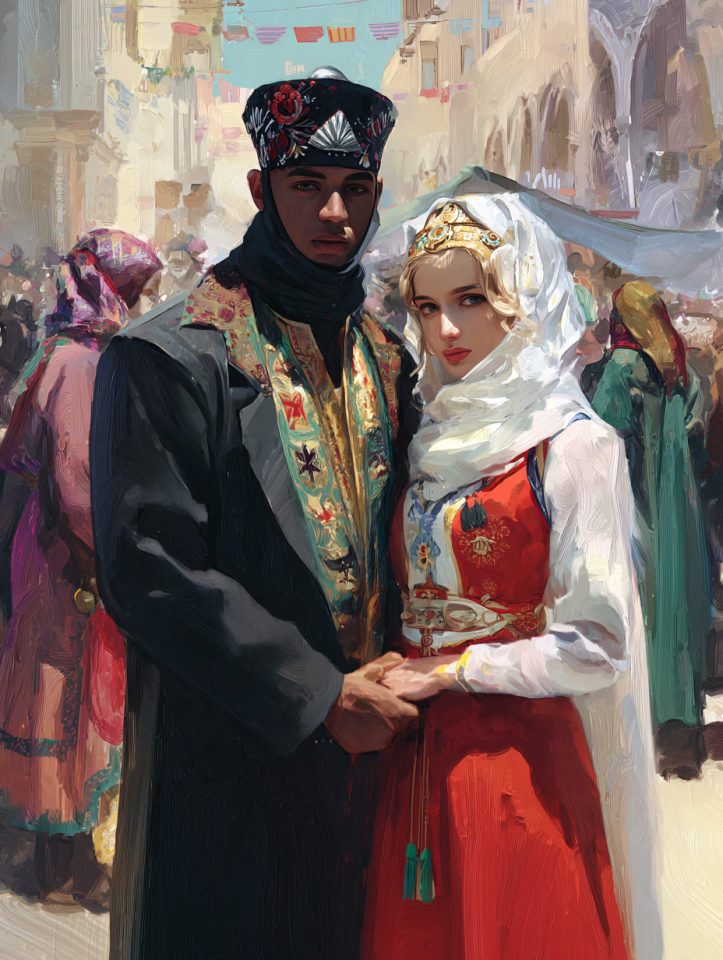
In the shade of papyrus groves along the Nile, priests chant in Coptic as merchants reply in Geʽez, their syllables braided like reeds in the current. Downstream in Nubian ports, children mix Arabic loanwords with ancestral tones, while Memphis sailors sing across the Red Sea in hybrid dialects shaped by centuries of tide-borne exchange. To a traveler, the chorus sounds at once familiar and strange: Semitic consonants clipped sharp against the flowing vowels of the Nile.
These tongues endured precisely because no empire silenced them. Without Rome’s suppression or Byzantium’s theological monopoly, the valley and highlands became custodians of linguistic continuity. Scripts evolved, dialects mingled, but every voice was preserved in its own dignity. The Nile–Memphis tongues remain today what they were millennia ago: bridges of Africa and Asia, spoken proof that federations honor difference without erasure.
Common Languages & Dialects
Coptic — Direct descendant of Ancient Egyptian, preserved as both liturgical and civic language.
Nubian (Dongolawi, Kenzi, Nobiin) — Riverine dialects thriving in Upper Nile communities.
Geʽez — Classical Memphis tongue, still read in philosophy and theology, basis for many scripts.
Amharic — A living Ethiopian tongue, enriched with Geʽez roots and Nile influences.
Tigrinya — Highland dialect carried through Memphis guilds and trade.
Tigre — Coastal tongue of Red Sea communities.
Beja (Bedawi) — Cushitic language of desert nomads, interlaced with trade words from Coptic and Geʽez.
Old South Arabian Survivals — Dialects preserved in Red Sea ports, blending into Memphis' speech.
Swahili (early form) — Emerged from coastal trade between Memphis, Nile ports, and East Africa.
Afro-Hebraic Dialects — Preserved among Jewish communities along Elephantine and Nile, never erased by Roman decree.
Origins & Evolution
Rooted in the Afro-Asiatic family, Nile languages carried forward Egyptian, Nubian, and Semitic legacies without interruption. Where our world saw Coptic diminish under Arabic dominance, here it persisted as a federative standard, taught in guild schools and used in civic life. Geʽez evolved into a scholarly script shared across Memphis monasteries and guilds, while Nubian tongues retained autonomy under federative protection. The absence of Rome and later conquest meant continuity, not erasure, shaping the linguistic geography of northeast Africa.
Cultural Function
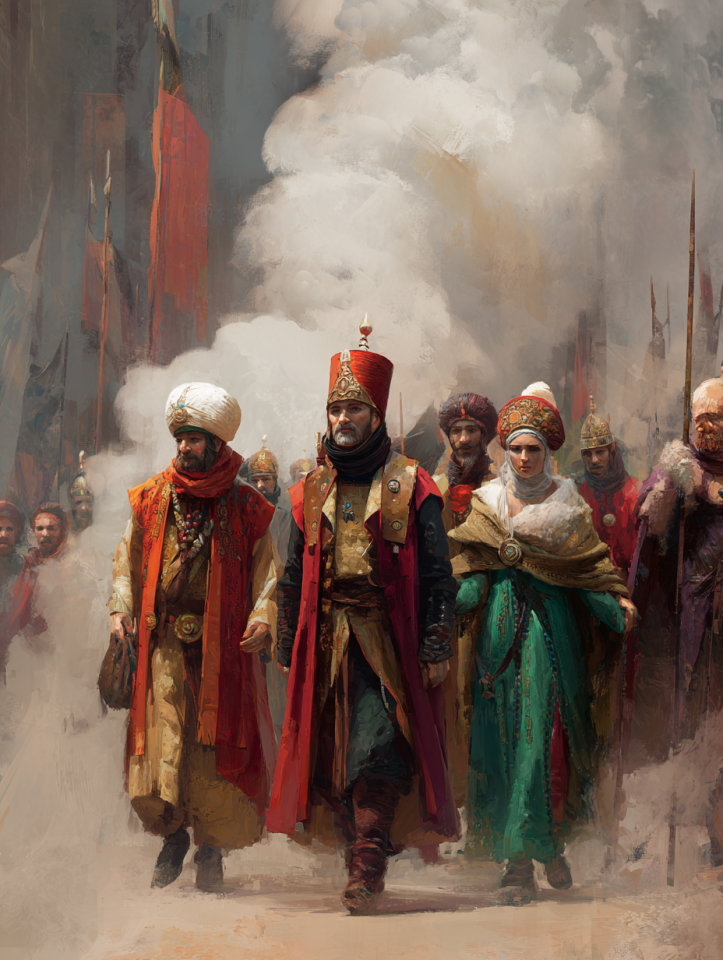
These tongues were not only speech but identity. Along the Nile, Coptic and Nubian anchored local governance, irrigation records, and temple rituals. In Memphis, Geʽez provided philosophical and spiritual texts, while Amharic and Tigrinya spread through guild and household life. Maritime traders carried Tigre and Beja across the Red Sea, forging hybrid dialects in caravanserai and portside markets. Together, the Nile–Memphis tongues became the fabric of ritual, trade, and kinship across a continent-spanning commonwealth.
Philosophical & Scientific Contributions
Texts in Geʽez and Coptic preserved ancient medical and astronomical knowledge. Monastic scriptoria recorded treatises on herbal medicine, geometry of irrigation, and metaphysics of balance. Nubian oral traditions contributed ecological knowledge — river patterns, desert survival, medicinal plants — woven into written records by bilingual scribes. Today, Nile–Memphis languages remain central in fields of philosophy, medicine, and ecological science, carrying words and metaphors that emphasize renewal, flow, and balance.
Political Role in the Accord
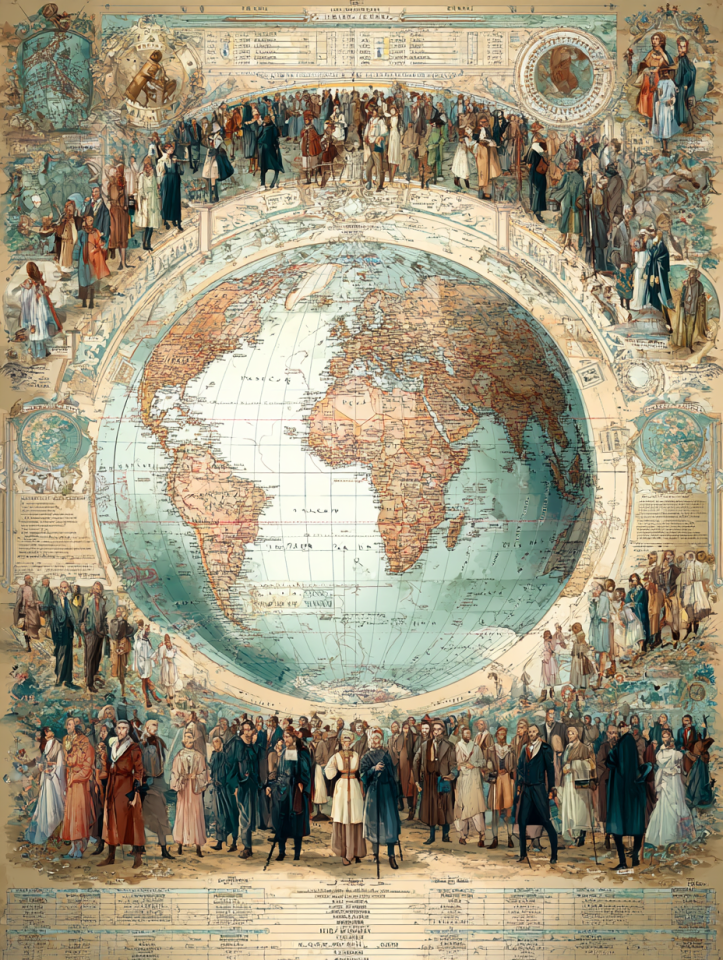
Within the Accord, Nile–Memphis tongues are recognized as one of the six anchor language families. Many treaties between Africa and Asia are signed in Geʽez or Coptic alongside Persic and Indic scripts. The
League of Translators & Observatories trains specialists fluent in these languages, ensuring that their continuity is institutionalized. Nile–Memphis voices thus serve as bridges between continents, affirming the federative principle that no tongue is expendable.
Symbolism & Scripts
The Coptic alphabet, descended from Demotic, stands alongside the elegant curves of Geʽez as symbols of continuity. Memphis coins and temple stones often bore bilingual inscriptions, a practice revived in modern banner motifs. Lotus and papyrus motifs entwined with Geʽez letters decorate guild seals, while Nubian geometric patterns frame Coptic proverbs on festival banners. Script itself is treated as visual art — flowing forms carved into stone, painted on temples, and woven into textiles.
Modern Legacy
Today, Nile–Memphis tongues remain vital in both liturgical and civic contexts. Coptic churches, Nubian guilds, and Memphis universities teach them side by side with global linguae francae. Swahili, grown from Axumic trade, now serves as a federative bridge across East Africa, enriched but not subsuming older tongues. On the Net of Voices, archives of Geʽez manuscripts and Coptic hymnals sit alongside Nubian oral recordings, preserving plural voices for a global audience. Rather than fading into fragments, the Nile–Memphis tongues have become living streams, carrying forward millennia of memory into Koina’s present.







Comments