




CTU: Cryptids-Southern Europe
Benandanti
Region: Southern Europe
Location:Friuli region of northeastern Italy (16th–17th century records)
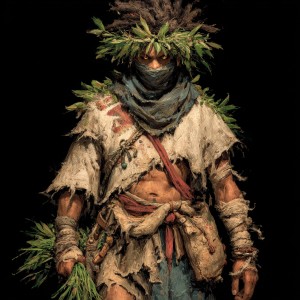
The *Benandanti* — “Good Walkers” — were individuals in Friulian folklore who believed their spirits left their bodies at night to battle malevolent witches and protect their community’s crops and wellbeing. Historical records from the Venetian Inquisition describe men and women who claimed they were born with a caul (a birth membrane), marking them for a supernatural vocation. On certain nights of the year — especially the Ember Days marking seasonal transitions — their spirits journeyed in dreamlike or astral form to fields, crossroads, or hidden places where they fought witches who sought to blight harvests.
Benandanti said they fought with fennel stalks while witches fought with sorghum. They described these nighttime battles as real but invisible to waking eyes; the outcome determined the prosperity of the coming season. Unlike stereotypical witches, Benandanti were community protectors, healers, and seers. They practiced blessing rituals, dream interpretation, and folk healing. However, because their beliefs involved spiritual journeys and battles, inquisitors eventually interpreted them as witches themselves, leading to interrogations, trials, and the gradual disappearance of the tradition.
The Benandanti represent a rare European counter-narrative: people who saw themselves not as sorcerers or devil-servants, but as *defenders* of the community against malign forces. Their folklore blends shamanic elements, agrarian rituals, and dream-based spirituality. Their story reveals how medieval Europe interpreted supernatural experiences — and how easily protectors could become persecuted when official doctrine collided with folk belief.
Location:Friuli region of northeastern Italy (16th–17th century records)
The *Benandanti* — “Good Walkers” — were individuals in Friulian folklore who believed their spirits left their bodies at night to battle malevolent witches and protect their community’s crops and wellbeing. Historical records from the Venetian Inquisition describe men and women who claimed they were born with a caul (a birth membrane), marking them for a supernatural vocation. On certain nights of the year — especially the Ember Days marking seasonal transitions — their spirits journeyed in dreamlike or astral form to fields, crossroads, or hidden places where they fought witches who sought to blight harvests.
Benandanti said they fought with fennel stalks while witches fought with sorghum. They described these nighttime battles as real but invisible to waking eyes; the outcome determined the prosperity of the coming season. Unlike stereotypical witches, Benandanti were community protectors, healers, and seers. They practiced blessing rituals, dream interpretation, and folk healing. However, because their beliefs involved spiritual journeys and battles, inquisitors eventually interpreted them as witches themselves, leading to interrogations, trials, and the gradual disappearance of the tradition.
The Benandanti represent a rare European counter-narrative: people who saw themselves not as sorcerers or devil-servants, but as *defenders* of the community against malign forces. Their folklore blends shamanic elements, agrarian rituals, and dream-based spirituality. Their story reveals how medieval Europe interpreted supernatural experiences — and how easily protectors could become persecuted when official doctrine collided with folk belief.
El Duende Ibérico
Region: Southern Europe
Location:Spain, Portugal, Basque Country — Iberian Peninsula
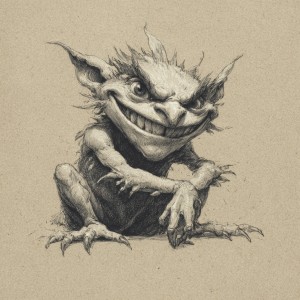
The Iberian *duende* is a broad category of small supernatural beings — goblins, house spirits, woodland tricksters — whose personalities and appearances vary by region. Some are mischievous household creatures, similar to brownies or kobolds, who hide objects, tangle hair, or create nighttime noise. Others inhabit attics, barns, or abandoned wells and appear as small, childlike figures with big hats, sharp ears, and quick, darting movements. The duende can be helpful if respected, but if provoked, they become temperamental, stealing food, spooking livestock, or throwing objects with invisible hands.
In rural Spain, especially in Castile and Extremadura, duendes were blamed for minor disturbances — missing keys, restless nights, or odd tapping inside walls. Households sometimes left bread, honey, or wine out to appease them. In Galicia and the Basque Country, duendes take on more magical roles: guardians of treasure caves, protectors of forest crossroads, or messengers between the natural and unseen realms. Parents warned children not to follow strange giggles or tinkling bells into the woods, where duendes might mislead them for sport.
The concept of *duende* also evolved culturally into a term associated with inspiration, especially in flamenco and Andalusian art — the sense that an unseen spirit stirs emotion. But in folklore, duendes remain deeply tied to the land and home. They are neither wholly benevolent nor wicked; they embody the unpredictable personality of the Iberian rural world. They remind communities that old houses, deep forests, and lonely hillsides can harbor presences both playful and uncanny.
Location:Spain, Portugal, Basque Country — Iberian Peninsula
The Iberian *duende* is a broad category of small supernatural beings — goblins, house spirits, woodland tricksters — whose personalities and appearances vary by region. Some are mischievous household creatures, similar to brownies or kobolds, who hide objects, tangle hair, or create nighttime noise. Others inhabit attics, barns, or abandoned wells and appear as small, childlike figures with big hats, sharp ears, and quick, darting movements. The duende can be helpful if respected, but if provoked, they become temperamental, stealing food, spooking livestock, or throwing objects with invisible hands.
In rural Spain, especially in Castile and Extremadura, duendes were blamed for minor disturbances — missing keys, restless nights, or odd tapping inside walls. Households sometimes left bread, honey, or wine out to appease them. In Galicia and the Basque Country, duendes take on more magical roles: guardians of treasure caves, protectors of forest crossroads, or messengers between the natural and unseen realms. Parents warned children not to follow strange giggles or tinkling bells into the woods, where duendes might mislead them for sport.
The concept of *duende* also evolved culturally into a term associated with inspiration, especially in flamenco and Andalusian art — the sense that an unseen spirit stirs emotion. But in folklore, duendes remain deeply tied to the land and home. They are neither wholly benevolent nor wicked; they embody the unpredictable personality of the Iberian rural world. They remind communities that old houses, deep forests, and lonely hillsides can harbor presences both playful and uncanny.
Loup-Garou
Region: Southern Europe
Location:France (particularly Normandy, Brittany, Gascony), with variations across Francophone regions
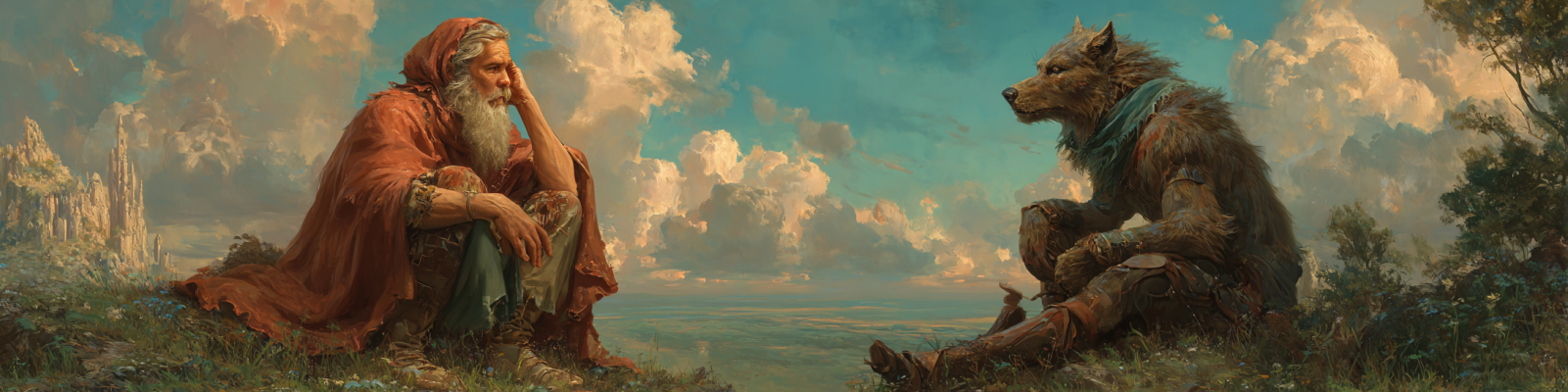
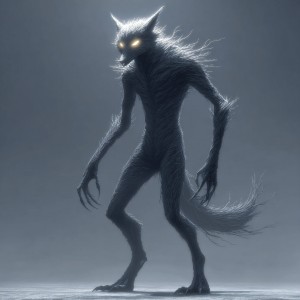
The *Loup-Garou* is France’s classical werewolf — a human cursed to transform into a wolf or wolf-man, usually through moral failing, magical punishment, or inherited misfortune. Unlike Hollywood werewolves, the Loup-Garou does not always change with the full moon and is not always a blood-raging monster. In many French rural traditions, the cursed individual retains human consciousness, wandering the countryside in a wolf’s body while unable to speak or seek help. The curse often lasts seven years unless broken by recognition: someone who sees through the wolf form and calls the Loup-Garou by name can free them.
In medieval France, the Loup-Garou frequently symbolized social transgression — broken oaths, misused sacraments, or betrayal of communal norms. A person who avoided church, violated family obligations, or committed secret crimes might be said to “wear the wolf’s skin at night.” Other versions depict the Loup-Garou as a dangerous predator who attacks livestock or travelers. In Brittany, some legends describe wolf-men who form silent packs, haunting ancient forest paths and megalithic sites. The motif often appears in penitential tales: fearsome, but rooted in the human moral world.
Later French colonial lore carried the Loup-Garou to Canada and the Caribbean, where it merged with local beliefs and evolved into hybrid legends such as the *rougarou* in Louisiana. Whether as cursed sinner, misunderstood wanderer, or night-stalking beast, the Loup-Garou reflects France’s deep historical entanglement with wolves — animals simultaneously admired and feared. The legend endures because it speaks to the unsettling idea that the wildness we fear in forests might live inside us as well.
Location:France (particularly Normandy, Brittany, Gascony), with variations across Francophone regions
The *Loup-Garou* is France’s classical werewolf — a human cursed to transform into a wolf or wolf-man, usually through moral failing, magical punishment, or inherited misfortune. Unlike Hollywood werewolves, the Loup-Garou does not always change with the full moon and is not always a blood-raging monster. In many French rural traditions, the cursed individual retains human consciousness, wandering the countryside in a wolf’s body while unable to speak or seek help. The curse often lasts seven years unless broken by recognition: someone who sees through the wolf form and calls the Loup-Garou by name can free them.
In medieval France, the Loup-Garou frequently symbolized social transgression — broken oaths, misused sacraments, or betrayal of communal norms. A person who avoided church, violated family obligations, or committed secret crimes might be said to “wear the wolf’s skin at night.” Other versions depict the Loup-Garou as a dangerous predator who attacks livestock or travelers. In Brittany, some legends describe wolf-men who form silent packs, haunting ancient forest paths and megalithic sites. The motif often appears in penitential tales: fearsome, but rooted in the human moral world.
Later French colonial lore carried the Loup-Garou to Canada and the Caribbean, where it merged with local beliefs and evolved into hybrid legends such as the *rougarou* in Louisiana. Whether as cursed sinner, misunderstood wanderer, or night-stalking beast, the Loup-Garou reflects France’s deep historical entanglement with wolves — animals simultaneously admired and feared. The legend endures because it speaks to the unsettling idea that the wildness we fear in forests might live inside us as well.
Strix
Region: Southern Europe
Location:Ancient Rome, with survivals into Italy, the Balkans & Mediterranean folklore
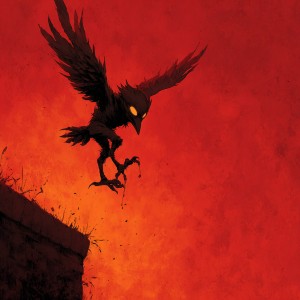
The *Strix* (plural *Striges*) is one of the earliest Roman supernatural beings described as a hybrid between a bird and a witch. Classical authors portray the Strix as an owl-like creature with a long beak, talon-sharp claws, and a cry that chills the blood. But unlike natural owls, the Strix feeds specifically on **human vitality** — drinking the blood of infants, stealing breast milk, or devouring internal organs. Ovid and Horace write of the Strix descending in the night to prey on cradled children, leaving behind weakness, sickness, or unexplained death. Its feathers and body were said to drip with corpse-like cold.
Over time, the Strix became dual in nature: part monstrous bird, part human witch. Some stories say the Strix is a woman who transforms under cover of night; others claim she sends her soul out in bird form while her body lies lifeless at home. Remedies against the Strix involved fire, iron, loud noise, garlic, or protective amulets. Roman households used charms, ritual incantations, and hearth offerings to ward off these predatory night spirits. The Strix was not simply a predator — she was an omen of moral disorder, a violation of domestic safety that struck at the heart of Roman family life.
The Strix legend survived long past the Roman era. In medieval Italy, the term “strega” (witch) partly echoes this ancient creature. In the Balkans, similar beings — night-flying witches who consume blood or milk — share traits with the old Strix. This makes the Strix one of Europe’s oldest vampire archetypes, predating Slavic undead lore and shaping the continent’s later fear of nighttime predation. It stands at the root of Europe’s belief that some threats are feathered, female, and hungry for the vulnerable.
Location:Ancient Rome, with survivals into Italy, the Balkans & Mediterranean folklore
The *Strix* (plural *Striges*) is one of the earliest Roman supernatural beings described as a hybrid between a bird and a witch. Classical authors portray the Strix as an owl-like creature with a long beak, talon-sharp claws, and a cry that chills the blood. But unlike natural owls, the Strix feeds specifically on **human vitality** — drinking the blood of infants, stealing breast milk, or devouring internal organs. Ovid and Horace write of the Strix descending in the night to prey on cradled children, leaving behind weakness, sickness, or unexplained death. Its feathers and body were said to drip with corpse-like cold.
Over time, the Strix became dual in nature: part monstrous bird, part human witch. Some stories say the Strix is a woman who transforms under cover of night; others claim she sends her soul out in bird form while her body lies lifeless at home. Remedies against the Strix involved fire, iron, loud noise, garlic, or protective amulets. Roman households used charms, ritual incantations, and hearth offerings to ward off these predatory night spirits. The Strix was not simply a predator — she was an omen of moral disorder, a violation of domestic safety that struck at the heart of Roman family life.
The Strix legend survived long past the Roman era. In medieval Italy, the term “strega” (witch) partly echoes this ancient creature. In the Balkans, similar beings — night-flying witches who consume blood or milk — share traits with the old Strix. This makes the Strix one of Europe’s oldest vampire archetypes, predating Slavic undead lore and shaping the continent’s later fear of nighttime predation. It stands at the root of Europe’s belief that some threats are feathered, female, and hungry for the vulnerable.




Comments