
CTU: Cryptids-Northern Europe
Álfar / Elves
Region: Northern Europe
Location:Iceland, Norway, Sweden, Denmark (Old Norse and Germanic traditions)
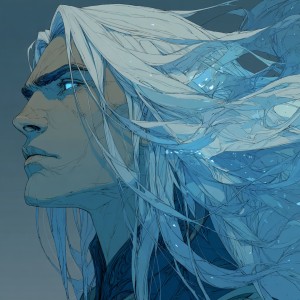
In Old Norse tradition, Álfar (elves) are not whimsical, small, or childlike. They are powerful, often beautiful, sometimes terrifying beings connected to fate, fertility, and ancestral spirits. Two broad types appear in early sources: the **Ljósálfar** (“light elves”), who dwell in bright, ethereal realms, and the **Dökkálfar** or **Svartálfar** (“dark elves”), associated with caverns, smithcraft, or hidden places. They are tall, uncanny, and radiant or shadowy depending on their nature. Unlike Tolkien’s reinterpretation, Álfar are closer to small deities — entities responsible for prosperity, illness, or sudden misfortune.
In Icelandic folklore, elves became strongly tied to the land. They live in *álfablót* hills, lava formations, and rocky outcrops called “elf stones.” Disturbing these places without permission — digging, building, or cutting trees — could cause illness, accidents, or even death. Conversely, showing respect by leaving offerings of milk or bread brought blessings. In many tales, Álfar engage with humans in marriages, healings, or disputes, but these relationships are delicate and fraught with rules. A broken promise can result in lifelong curses or the loss of a family’s fortune.
Álfar embody the idea that the land is shared with unseen neighbors. They enforce boundaries, reward care for the environment, and punish disrespect. Their cultural role blurs the line between nature spirits, ancestors, and gods. Even today in Iceland, construction projects sometimes reroute around known elf stones — a modern reflection of ancient respect. The Álfar remain some of the most enduring and complex beings in Northern European folklore.
Location:Iceland, Norway, Sweden, Denmark (Old Norse and Germanic traditions)
In Old Norse tradition, Álfar (elves) are not whimsical, small, or childlike. They are powerful, often beautiful, sometimes terrifying beings connected to fate, fertility, and ancestral spirits. Two broad types appear in early sources: the **Ljósálfar** (“light elves”), who dwell in bright, ethereal realms, and the **Dökkálfar** or **Svartálfar** (“dark elves”), associated with caverns, smithcraft, or hidden places. They are tall, uncanny, and radiant or shadowy depending on their nature. Unlike Tolkien’s reinterpretation, Álfar are closer to small deities — entities responsible for prosperity, illness, or sudden misfortune.
In Icelandic folklore, elves became strongly tied to the land. They live in *álfablót* hills, lava formations, and rocky outcrops called “elf stones.” Disturbing these places without permission — digging, building, or cutting trees — could cause illness, accidents, or even death. Conversely, showing respect by leaving offerings of milk or bread brought blessings. In many tales, Álfar engage with humans in marriages, healings, or disputes, but these relationships are delicate and fraught with rules. A broken promise can result in lifelong curses or the loss of a family’s fortune.
Álfar embody the idea that the land is shared with unseen neighbors. They enforce boundaries, reward care for the environment, and punish disrespect. Their cultural role blurs the line between nature spirits, ancestors, and gods. Even today in Iceland, construction projects sometimes reroute around known elf stones — a modern reflection of ancient respect. The Álfar remain some of the most enduring and complex beings in Northern European folklore.

Banshee
Region: Northern Europe
Location:Ireland (Irish Gaelic tradition), with regional variations across Celtic Ireland
The Banshee — *bean sí*, “woman of the mound” — is a spirit that heralds death in the family she is attached to. Descriptions vary by region: she may appear as a young woman with flowing red or fair hair, a stern matron dressed in grey, or an old crone with long white hair. Her clothing is often described as white, grey, or green — colors associated with the Otherworld. The Banshee rarely interacts directly; her presence is known through her keening — a high, mournful wail or lament that echoes across fields, valleys, or outside homes.
Keening was a real Irish funerary practice, and the Banshee myth extends this tradition into the supernatural. Families with deep Gaelic roots believed each lineage had its own Banshee, whose cry announced the death of a loved one long before news arrived. Encounters could be visual or purely auditory: a woman combing her hair at a stream, a shadowy figure standing at a crossroads, or a chilling cry in the dead of night. Unlike demonic spirits, the Banshee does not cause death — she warns of it.
The Banshee embodies grief, lineage, and remembrance. Her wail connects living families to their ancestors and acknowledges that death is part of the natural cycle. Over centuries, she became a symbol of Ireland’s deep relationship with mourning traditions and the idea that ancestors look after their descendants. While often feared, she is not malicious. She is sorrow given form — a messenger from the Otherworld whose cry anchors families to their heritage.
Location:Ireland (Irish Gaelic tradition), with regional variations across Celtic Ireland
The Banshee — *bean sí*, “woman of the mound” — is a spirit that heralds death in the family she is attached to. Descriptions vary by region: she may appear as a young woman with flowing red or fair hair, a stern matron dressed in grey, or an old crone with long white hair. Her clothing is often described as white, grey, or green — colors associated with the Otherworld. The Banshee rarely interacts directly; her presence is known through her keening — a high, mournful wail or lament that echoes across fields, valleys, or outside homes.
Keening was a real Irish funerary practice, and the Banshee myth extends this tradition into the supernatural. Families with deep Gaelic roots believed each lineage had its own Banshee, whose cry announced the death of a loved one long before news arrived. Encounters could be visual or purely auditory: a woman combing her hair at a stream, a shadowy figure standing at a crossroads, or a chilling cry in the dead of night. Unlike demonic spirits, the Banshee does not cause death — she warns of it.
The Banshee embodies grief, lineage, and remembrance. Her wail connects living families to their ancestors and acknowledges that death is part of the natural cycle. Over centuries, she became a symbol of Ireland’s deep relationship with mourning traditions and the idea that ancestors look after their descendants. While often feared, she is not malicious. She is sorrow given form — a messenger from the Otherworld whose cry anchors families to their heritage.
Black Annis
Region: Northern Europe
Location:Leicestershire, England — especially the Dane Hills region
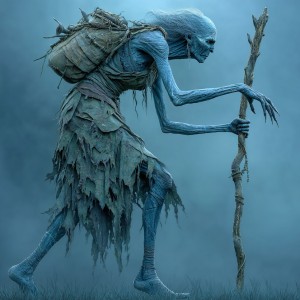
Black Annis is a hag-like spirit said to inhabit a cave in the Dane Hills, known as Black Annis’s Bower. She is described as a blue-skinned, long-limbed woman with iron claws and tangled hair. Her teeth are sharp, her arms unnaturally long, and her skin stained with cold. She emerges at night to hunt livestock — and in older stories, misbehaving children. Her iron claws were said to tear through cottage walls or scratch at shuttered windows, searching for prey. Daylight sends her crawling back into her lair, where she is said to tan the skins of her victims.
Folklore paints Black Annis as a remnant of older ritual beings — possibly a distorted memory of a local goddess, a cailleach figure, or a guardian spirit tied to the hills. Over time, rural fears transformed her into a cautionary tale to keep children close to the hearth and livestock secured. Villagers in older stories used to hang herbs or iron objects to ward her off, and some tales describe farmers building houses with no ground-floor windows to keep Annis from reaching inside.
Black Annis represents a fusion of local geography, genuine danger from roaming predators, and older mythic archetypes of winter hags. Her stories persist because they resonate with the terrifying quiet of the English countryside at night — the sense that something might be watching from the tree line, dragging long claws across stone in the darkness.
Location:Leicestershire, England — especially the Dane Hills region
Black Annis is a hag-like spirit said to inhabit a cave in the Dane Hills, known as Black Annis’s Bower. She is described as a blue-skinned, long-limbed woman with iron claws and tangled hair. Her teeth are sharp, her arms unnaturally long, and her skin stained with cold. She emerges at night to hunt livestock — and in older stories, misbehaving children. Her iron claws were said to tear through cottage walls or scratch at shuttered windows, searching for prey. Daylight sends her crawling back into her lair, where she is said to tan the skins of her victims.
Folklore paints Black Annis as a remnant of older ritual beings — possibly a distorted memory of a local goddess, a cailleach figure, or a guardian spirit tied to the hills. Over time, rural fears transformed her into a cautionary tale to keep children close to the hearth and livestock secured. Villagers in older stories used to hang herbs or iron objects to ward her off, and some tales describe farmers building houses with no ground-floor windows to keep Annis from reaching inside.
Black Annis represents a fusion of local geography, genuine danger from roaming predators, and older mythic archetypes of winter hags. Her stories persist because they resonate with the terrifying quiet of the English countryside at night — the sense that something might be watching from the tree line, dragging long claws across stone in the darkness.
Black Shuck
Region: Northern Europe
Location:East Anglia, England — Norfolk, Suffolk, Cambridgeshire coastline and marshlands
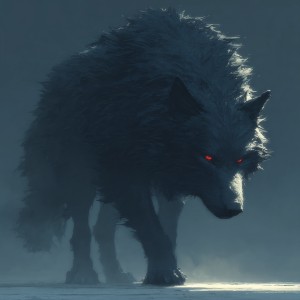
Black Shuck is one of England’s most enduring spectral hound legends — a massive black dog with glowing eyes, usually described as red like coals or green like lantern-light. Its size varies from that of a mastiff to that of a pony. Black Shuck travels along lonely coastal roads, churchyards, marsh paths, and old Roman lanes. Some accounts describe a single burning eye in the middle of its forehead; others mention soundless footsteps or the eerie impression that the dog leaves no prints at all. It moves with a quiet, uncanny purpose, appearing suddenly and vanishing just as quickly.
In most traditions, Black Shuck is an omen — not a physical beast. Seeing the hound foreshadows death or misfortune either for the viewer or someone close to them. One of the most famous stories comes from 1577, when villagers in Blythburgh claimed a massive hound burst through the church doors during a storm, killing two people and leaving scorch marks on the floor. Whether mythic or allegorical, these accounts cemented Shuck as a harbinger rather than a predator. Yet not all tales are menacing: in some Norfolk stories, the dog walks beside lone travelers, protecting them from harm.
Black Shuck reflects deep English anxieties about liminal spaces — crossroads, shorelines, graveyards, and fog-filled marsh paths. These were places where night travel was genuinely dangerous. The hound’s presence functions as a warning: travel carefully, acknowledge unseen forces, and respect the dangers of the land. Today, Black Shuck endures as a cultural icon of East Anglian folklore, a spectral guardian and omen woven into mist, sea spray, and centuries of storytelling.
Location:East Anglia, England — Norfolk, Suffolk, Cambridgeshire coastline and marshlands
Black Shuck is one of England’s most enduring spectral hound legends — a massive black dog with glowing eyes, usually described as red like coals or green like lantern-light. Its size varies from that of a mastiff to that of a pony. Black Shuck travels along lonely coastal roads, churchyards, marsh paths, and old Roman lanes. Some accounts describe a single burning eye in the middle of its forehead; others mention soundless footsteps or the eerie impression that the dog leaves no prints at all. It moves with a quiet, uncanny purpose, appearing suddenly and vanishing just as quickly.
In most traditions, Black Shuck is an omen — not a physical beast. Seeing the hound foreshadows death or misfortune either for the viewer or someone close to them. One of the most famous stories comes from 1577, when villagers in Blythburgh claimed a massive hound burst through the church doors during a storm, killing two people and leaving scorch marks on the floor. Whether mythic or allegorical, these accounts cemented Shuck as a harbinger rather than a predator. Yet not all tales are menacing: in some Norfolk stories, the dog walks beside lone travelers, protecting them from harm.
Black Shuck reflects deep English anxieties about liminal spaces — crossroads, shorelines, graveyards, and fog-filled marsh paths. These were places where night travel was genuinely dangerous. The hound’s presence functions as a warning: travel carefully, acknowledge unseen forces, and respect the dangers of the land. Today, Black Shuck endures as a cultural icon of East Anglian folklore, a spectral guardian and omen woven into mist, sea spray, and centuries of storytelling.
Fairy Host / Wild Hunt
Region: Northern Europe
Location:Pan-European (Celtic Ireland/Scotland, Germanic lands, Scandinavia, Brittany)
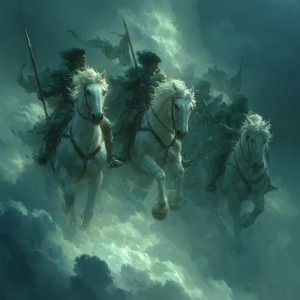
The Fairy Host or Wild Hunt is a supernatural procession of spirits, fae, or ghostly riders that sweeps across the sky or through forests during storms, winter nights, or seasonal turning points. In Celtic regions, the Host is often led by the Sídhe — the Otherworldly folk — who ride on white or black horses, accompanied by hounds with red ears. In Germanic and Norse lore, the Wild Hunt is led by Odin, Wodan, or other ancestral figures, with spectral warriors, dogs, and lost souls galloping through the night. Witnesses describe thunderous hooves, roaring wind, and ghostly lights arcing through the sky.
Seeing the Host is a dangerous omen. Those caught in its path may be swept away, struck by misfortune, or compelled to join the ride. In some traditions, the Host hunts the souls of the wicked; in others, it searches for souls not yet claimed by heaven or the ancestral realms. Folklore warns travelers to lie face-down and avoid drawing attention — or risk being abducted to the Otherworld for months, years, or forever. Offerings of bread, salt, or iron were said to protect homes from the Host’s passage.
The Wild Hunt embodies European anxieties around winter, war, and the thin veil between the living and the dead. It represents the forces of nature and fate that move beyond human control. Storms, auroras, meteor showers, and nocturnal winds all fed into the image of a great spectral host sweeping overhead. Across the continent, the narrative survives as one of the most iconic and widespread supernatural motifs in European folklore.
Location:Pan-European (Celtic Ireland/Scotland, Germanic lands, Scandinavia, Brittany)
The Fairy Host or Wild Hunt is a supernatural procession of spirits, fae, or ghostly riders that sweeps across the sky or through forests during storms, winter nights, or seasonal turning points. In Celtic regions, the Host is often led by the Sídhe — the Otherworldly folk — who ride on white or black horses, accompanied by hounds with red ears. In Germanic and Norse lore, the Wild Hunt is led by Odin, Wodan, or other ancestral figures, with spectral warriors, dogs, and lost souls galloping through the night. Witnesses describe thunderous hooves, roaring wind, and ghostly lights arcing through the sky.
Seeing the Host is a dangerous omen. Those caught in its path may be swept away, struck by misfortune, or compelled to join the ride. In some traditions, the Host hunts the souls of the wicked; in others, it searches for souls not yet claimed by heaven or the ancestral realms. Folklore warns travelers to lie face-down and avoid drawing attention — or risk being abducted to the Otherworld for months, years, or forever. Offerings of bread, salt, or iron were said to protect homes from the Host’s passage.
The Wild Hunt embodies European anxieties around winter, war, and the thin veil between the living and the dead. It represents the forces of nature and fate that move beyond human control. Storms, auroras, meteor showers, and nocturnal winds all fed into the image of a great spectral host sweeping overhead. Across the continent, the narrative survives as one of the most iconic and widespread supernatural motifs in European folklore.
Fossegrimen
Region: Northern Europe
Location:Norway (particularly rivers and waterfalls)
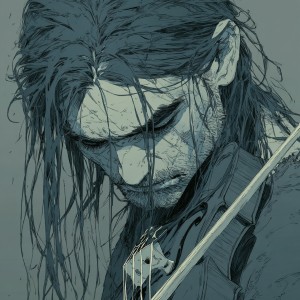
Fossegrimen — or simply Fossegrim — is a spirit associated with waterfalls and fast-moving streams. He appears as a handsome young man with long hair, often naked or wearing minimal clothing, playing a violin or fiddle. His music is described as unearthly, echoing the rush of water, the wind in mountain passes, and the ancient rhythms of the land. Fossegrimen is a master musician, capable of teaching humans the secrets of the fiddle — but his lessons come with a price.
Traditionally, those seeking musical mastery would bring an offering to a waterfall inhabited by Fossegrimen. A white goat was the most prized offering, but in later tales, salted meat or smoked mutton could suffice. The offering was thrown into the water on a Thursday night. If accepted, Fossegrimen would appear and play, and the learner would place their fingers on the strings as he guided them. In many stories, the spirit first teaches only enough for the instrument to mimic the sound of wind and water — true mastery is reserved for those whose offerings or intentions are pure.
Fossegrimen sits at the crossroads of art, nature, and the supernatural. His existence reflects a belief that art — especially music tied to folk tradition — is not merely learned but revealed. Knowledge comes from the land itself, from places where waterfalls roar like living voices. His stories remind communities to respect both the power of nature and the responsibility inherent in artistic gifts.
Location:Norway (particularly rivers and waterfalls)
Fossegrimen — or simply Fossegrim — is a spirit associated with waterfalls and fast-moving streams. He appears as a handsome young man with long hair, often naked or wearing minimal clothing, playing a violin or fiddle. His music is described as unearthly, echoing the rush of water, the wind in mountain passes, and the ancient rhythms of the land. Fossegrimen is a master musician, capable of teaching humans the secrets of the fiddle — but his lessons come with a price.
Traditionally, those seeking musical mastery would bring an offering to a waterfall inhabited by Fossegrimen. A white goat was the most prized offering, but in later tales, salted meat or smoked mutton could suffice. The offering was thrown into the water on a Thursday night. If accepted, Fossegrimen would appear and play, and the learner would place their fingers on the strings as he guided them. In many stories, the spirit first teaches only enough for the instrument to mimic the sound of wind and water — true mastery is reserved for those whose offerings or intentions are pure.
Fossegrimen sits at the crossroads of art, nature, and the supernatural. His existence reflects a belief that art — especially music tied to folk tradition — is not merely learned but revealed. Knowledge comes from the land itself, from places where waterfalls roar like living voices. His stories remind communities to respect both the power of nature and the responsibility inherent in artistic gifts.
Jötunn
Region: Northern Europe
Location:Pan-Scandinavian and Icelandic Norse mythology (Jötunheimr and beyond)
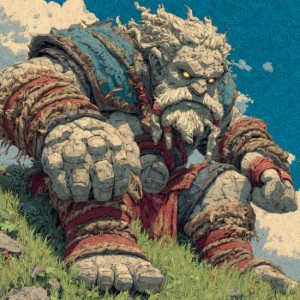
The Jötnar (singular: Jötunn) are the primordial giants of Norse mythology — beings who existed before the gods and who represent untamed cosmic forces. They are not merely oversized humans; they embody chaos, wilderness, entropy, and the raw elements of the natural world. Some Jötnar are monstrous, with many heads or bestial features; others are strikingly beautiful and indistinguishable from gods. Their home, Jötunheimr, lies across deep rivers and mountain ranges, a realm of frost, stone, and ancient power.
The relationship between Jötnar and the Norse gods is complex. They are adversaries, allies, spouses, and ancestors. Odin himself descends from Jötnar, and many gods take giantess lovers or wives. This mingling reflects a worldview where order (the gods) and chaos (the giants) are intertwined and interdependent. Many myths involve the gods seeking knowledge from giant seers, stealing treasures from giant smiths, or confronting giant forces that threaten cosmic balance. Ragnarok, the world’s end, is foretold as a battle where Jötnar join Loki’s cause against the Aesir.
Far from simple villains, Jötnar represent forces beyond human control: winter storms, volcanic fire, the endless sea, the hunger of wolves, the weight of mountains. They embody the awe and fear ancient Norse people felt toward their environment. Every cliff face, glacier, or storm could be interpreted as the presence of a Jötunn — a reminder that the world is older, larger, and more powerful than human beings will ever be.
Location:Pan-Scandinavian and Icelandic Norse mythology (Jötunheimr and beyond)
The Jötnar (singular: Jötunn) are the primordial giants of Norse mythology — beings who existed before the gods and who represent untamed cosmic forces. They are not merely oversized humans; they embody chaos, wilderness, entropy, and the raw elements of the natural world. Some Jötnar are monstrous, with many heads or bestial features; others are strikingly beautiful and indistinguishable from gods. Their home, Jötunheimr, lies across deep rivers and mountain ranges, a realm of frost, stone, and ancient power.
The relationship between Jötnar and the Norse gods is complex. They are adversaries, allies, spouses, and ancestors. Odin himself descends from Jötnar, and many gods take giantess lovers or wives. This mingling reflects a worldview where order (the gods) and chaos (the giants) are intertwined and interdependent. Many myths involve the gods seeking knowledge from giant seers, stealing treasures from giant smiths, or confronting giant forces that threaten cosmic balance. Ragnarok, the world’s end, is foretold as a battle where Jötnar join Loki’s cause against the Aesir.
Far from simple villains, Jötnar represent forces beyond human control: winter storms, volcanic fire, the endless sea, the hunger of wolves, the weight of mountains. They embody the awe and fear ancient Norse people felt toward their environment. Every cliff face, glacier, or storm could be interpreted as the presence of a Jötunn — a reminder that the world is older, larger, and more powerful than human beings will ever be.
Nessie
Region: Northern Europe
Location:Loch Ness, Scottish Highlands
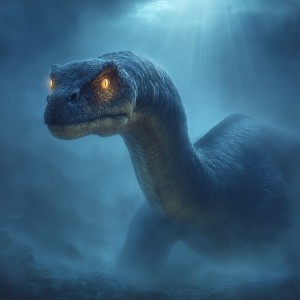
The Loch Ness Monster, known affectionately as *Nessie*, is the most iconic lake monster in the world. Scottish lochs have long carried legends of *kelpies* and *water horses*, but Nessie’s modern identity began in 1933 when road construction along Loch Ness increased visibility and sightings spiked. Witnesses described a long-necked creature surfacing from the water, sometimes with humps, sometimes with a serpentine silhouette. The infamous 1934 “Surgeon’s Photograph” — later exposed as a hoax — nonetheless locked the image of a plesiosaur-like being into global imagination. Nessie sightings continue, often as dark shapes, wakes, or humps cutting through calm water.
For locals, Nessie blends folklore with geography. Loch Ness is enormous, deep, and almost opaque with peat-stained water — perfect conditions for the imagination. Older Highlands tales speak of large water spirits inhabiting remote lochs, sometimes protective, sometimes dangerous. Nessie became the modern heir to these earlier myths, standing at the intersection of cautionary water lore, the mystique of the Highlands, and the 20th-century fascination with prehistoric survival. Whether a living creature or a cultural echo of ancient beliefs, Nessie functions as both mystery and mascot.
What keeps Nessie alive is not proof, but possibility. The loch’s vastness allows people to believe something could be hiding beneath the waves. Sonar sweeps, scientific expeditions, and countless documentaries only deepen the myth. Nessie endures because she represents the hope that the world still contains secrets — that even in a mapped and measured age, something enormous may still move in the dark water, unseen.
Location:Loch Ness, Scottish Highlands
The Loch Ness Monster, known affectionately as *Nessie*, is the most iconic lake monster in the world. Scottish lochs have long carried legends of *kelpies* and *water horses*, but Nessie’s modern identity began in 1933 when road construction along Loch Ness increased visibility and sightings spiked. Witnesses described a long-necked creature surfacing from the water, sometimes with humps, sometimes with a serpentine silhouette. The infamous 1934 “Surgeon’s Photograph” — later exposed as a hoax — nonetheless locked the image of a plesiosaur-like being into global imagination. Nessie sightings continue, often as dark shapes, wakes, or humps cutting through calm water.
For locals, Nessie blends folklore with geography. Loch Ness is enormous, deep, and almost opaque with peat-stained water — perfect conditions for the imagination. Older Highlands tales speak of large water spirits inhabiting remote lochs, sometimes protective, sometimes dangerous. Nessie became the modern heir to these earlier myths, standing at the intersection of cautionary water lore, the mystique of the Highlands, and the 20th-century fascination with prehistoric survival. Whether a living creature or a cultural echo of ancient beliefs, Nessie functions as both mystery and mascot.
What keeps Nessie alive is not proof, but possibility. The loch’s vastness allows people to believe something could be hiding beneath the waves. Sonar sweeps, scientific expeditions, and countless documentaries only deepen the myth. Nessie endures because she represents the hope that the world still contains secrets — that even in a mapped and measured age, something enormous may still move in the dark water, unseen.
Púca
Region: Northern Europe
Location:Ireland, Wales, and parts of rural England
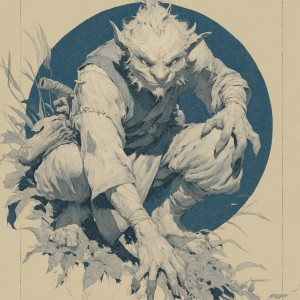
The Púca is one of the most versatile shapeshifters in Celtic folklore. It can appear as a horse, goat, dog, hare, or humanlike figure with animal features — often with black fur, glowing golden or red eyes, and an unnerving grin. The Púca is a trickster spirit, capable of both mischievous pranks and helpful deeds depending on its mood and how it is treated. Some tales describe it inviting travelers onto its back, then racing wildly through bogs and hedgerows before tossing them off unharmed. Other times it appears as a talkative creature offering warnings or prophecy.
In agricultural lore, the Púca influences harvest cycles. In some regions, the last sheaf of grain was left in the fields as the “Púca’s share,” a sign of respect so the spirit would not spoil the coming year’s crops. On Samhain (Halloween), the boundary between worlds thinned, and the Púca was said to roam freely — blessing or cursing depending on the person it encountered. It could sour milk, tangle horses’ manes, or lead wanderers astray in fog if angered.
The Púca’s dual nature makes it a quintessential Celtic being: unpredictable, intelligent, and morally flexible. It represents the landscape’s spirit — wild, playful, and dangerous in equal measure. Its stories told communities to be respectful, cautious, and clever when dealing with forces beyond human understanding. Today, the Púca survives as both a mischievous fairy and a cultural icon of rural Celtic imagination
Location:Ireland, Wales, and parts of rural England
The Púca is one of the most versatile shapeshifters in Celtic folklore. It can appear as a horse, goat, dog, hare, or humanlike figure with animal features — often with black fur, glowing golden or red eyes, and an unnerving grin. The Púca is a trickster spirit, capable of both mischievous pranks and helpful deeds depending on its mood and how it is treated. Some tales describe it inviting travelers onto its back, then racing wildly through bogs and hedgerows before tossing them off unharmed. Other times it appears as a talkative creature offering warnings or prophecy.
In agricultural lore, the Púca influences harvest cycles. In some regions, the last sheaf of grain was left in the fields as the “Púca’s share,” a sign of respect so the spirit would not spoil the coming year’s crops. On Samhain (Halloween), the boundary between worlds thinned, and the Púca was said to roam freely — blessing or cursing depending on the person it encountered. It could sour milk, tangle horses’ manes, or lead wanderers astray in fog if angered.
The Púca’s dual nature makes it a quintessential Celtic being: unpredictable, intelligent, and morally flexible. It represents the landscape’s spirit — wild, playful, and dangerous in equal measure. Its stories told communities to be respectful, cautious, and clever when dealing with forces beyond human understanding. Today, the Púca survives as both a mischievous fairy and a cultural icon of rural Celtic imagination
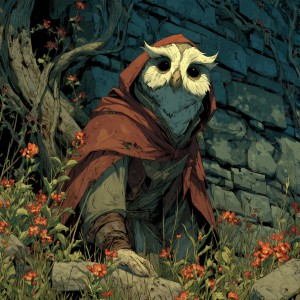
The Owlman of Mawnan
Region: Northern Europe
Location:Mawnan, Cornwall (St. Mawnan & St. Michael’s Church) — modern cryptid, 1976 onward
The Owlman is a modern British cryptid linked to sightings near the churchyard of Mawnan in Cornwall. Witnesses describe a tall humanoid figure with large owl-like wings, glowing red or orange eyes, and sharp claws. Its head is pointed or horned, resembling an owl’s silhouette, and its body is covered in dark feathers. The first widely reported sightings came in 1976 when two girls claimed a terrifying encounter near the church. Subsequent reports over the next few years described eerie screeching sounds, enormous winged shadows, or glowing eyes watching from trees.
Unlike older Cornish folklore beings, the Owlman has no clear precursor. It emerged suddenly and remains tied to the physical location of the church and its surrounding woods. Researchers view it as a blend of local ghost stories, the region’s owl population, and the atmospheric isolation of the clifftop church. Witnesses describe overwhelming fear, paralysis, or the sense of being “studied,” which aligns the Owlman more with modern psychological cryptid encounters than with traditional fae or monster lore.
Over time, the Owlman became Cornwall’s answer to the Mothman — a mysterious winged presence that haunts one specific location. Whether viewed as misidentified owls, a hoax that snowballed, or a genuinely unexplained phenomenon, the Owlman has sunk deep into Cornwall’s folklore consciousness. Walkers along the wooded paths of Mawnan still report strange shadows and the uneasy feeling that something large and silent is perched above them in the trees.
Location:Mawnan, Cornwall (St. Mawnan & St. Michael’s Church) — modern cryptid, 1976 onward
The Owlman is a modern British cryptid linked to sightings near the churchyard of Mawnan in Cornwall. Witnesses describe a tall humanoid figure with large owl-like wings, glowing red or orange eyes, and sharp claws. Its head is pointed or horned, resembling an owl’s silhouette, and its body is covered in dark feathers. The first widely reported sightings came in 1976 when two girls claimed a terrifying encounter near the church. Subsequent reports over the next few years described eerie screeching sounds, enormous winged shadows, or glowing eyes watching from trees.
Unlike older Cornish folklore beings, the Owlman has no clear precursor. It emerged suddenly and remains tied to the physical location of the church and its surrounding woods. Researchers view it as a blend of local ghost stories, the region’s owl population, and the atmospheric isolation of the clifftop church. Witnesses describe overwhelming fear, paralysis, or the sense of being “studied,” which aligns the Owlman more with modern psychological cryptid encounters than with traditional fae or monster lore.
Over time, the Owlman became Cornwall’s answer to the Mothman — a mysterious winged presence that haunts one specific location. Whether viewed as misidentified owls, a hoax that snowballed, or a genuinely unexplained phenomenon, the Owlman has sunk deep into Cornwall’s folklore consciousness. Walkers along the wooded paths of Mawnan still report strange shadows and the uneasy feeling that something large and silent is perched above them in the trees.
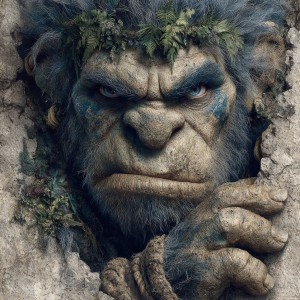
Trolls
Region: Northern Europe
Location:Norway, Sweden, Denmark, Iceland — mountains, forests, deep valleys, sea cliffs
In traditional Scandinavian folklore, trolls are ancient beings tied to the land itself — not the goofy creatures of modern cartoons. Their appearances vary widely: some are enormous, mountain-sized giants with moss-covered skin, while others are smaller, brutish beings who lurk in forests or caves. They are often depicted with long noses, knotted hair, and rough, stone-like features that make them nearly indistinguishable from the cliffs and boulders they inhabit. Trolls avoid sunlight, which can turn them to stone — a belief used to explain strange rock formations throughout Norway and Iceland.
Trolls represent wild nature, the untamed land beyond the edges of human settlement. They live in mountains, forests, or caves and are deeply territorial. Some stories portray them as violent or aggressive, stealing livestock or attacking travelers. Others depict them as slow-witted, easily tricked, or even reclusive. Humans could sometimes bargain with trolls — trading tools, food, or songs — but more often, folklore warned that trolls dislike church bells, iron, and the presence of humans near their homes. They personify the isolation and danger of old Scandinavian wilderness.
In Icelandic sagas, trolls appear as solitary beings with immense strength, while in Norwegian tales they become families or clans living in grand mountain halls. Trolls emerge at night to roam valleys or dance on meadows, leaving behind circular depressions in the grass. These tales reflect a worldview where people respected and feared nature’s unpredictability. Even today, travelers in Norway encounter “troll roads,” caves, and mountains named after them — reminders that the north’s rugged landscape has always held room for beings older than humankind.
Location:Norway, Sweden, Denmark, Iceland — mountains, forests, deep valleys, sea cliffs
In traditional Scandinavian folklore, trolls are ancient beings tied to the land itself — not the goofy creatures of modern cartoons. Their appearances vary widely: some are enormous, mountain-sized giants with moss-covered skin, while others are smaller, brutish beings who lurk in forests or caves. They are often depicted with long noses, knotted hair, and rough, stone-like features that make them nearly indistinguishable from the cliffs and boulders they inhabit. Trolls avoid sunlight, which can turn them to stone — a belief used to explain strange rock formations throughout Norway and Iceland.
Trolls represent wild nature, the untamed land beyond the edges of human settlement. They live in mountains, forests, or caves and are deeply territorial. Some stories portray them as violent or aggressive, stealing livestock or attacking travelers. Others depict them as slow-witted, easily tricked, or even reclusive. Humans could sometimes bargain with trolls — trading tools, food, or songs — but more often, folklore warned that trolls dislike church bells, iron, and the presence of humans near their homes. They personify the isolation and danger of old Scandinavian wilderness.
In Icelandic sagas, trolls appear as solitary beings with immense strength, while in Norwegian tales they become families or clans living in grand mountain halls. Trolls emerge at night to roam valleys or dance on meadows, leaving behind circular depressions in the grass. These tales reflect a worldview where people respected and feared nature’s unpredictability. Even today, travelers in Norway encounter “troll roads,” caves, and mountains named after them — reminders that the north’s rugged landscape has always held room for beings older than humankind.




Comments