

CTU: Cryptids-Greater North America
Bigfoot / Sasquatch
Region: Greater North America
Location:Pacific Northwest (Washington, Oregon, British Columbia), with broader sightings across North America
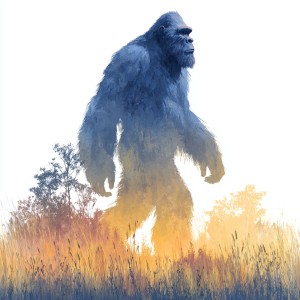
Bigfoot, or Sasquatch, is the cornerstone of North American cryptid culture — a large, hair-covered humanoid said to inhabit remote forests, mountains, and wetlands. Descriptions consistently depict a creature between 6–10 feet tall, broad-shouldered, with a domed head, long arms, and dark fur. Its footprints — often 16 inches or longer — gave the creature its popular name. Witnesses report wood-knocking, strange whistles, powerful odors, and fleeting glimpses of a massive figure moving with surprising quiet through dense terrain. Bigfoot combines the physicality of a great ape with the uncanny intelligence of something humanlike.
Indigenous peoples of the Pacific Northwest have long traditions about large forest beings — *Sasq’ets* among the Stó:lō, the *Tsiatko* among the Salish, and numerous others — though these beings vary culturally and should not be conflated with modern Bigfoot. The contemporary cryptid emerged in the mid-20th century through logging-camp stories, newspaper reports, and infamous tracks found in the 1950s. The Patterson–Gimlin film of 1967 became the defining image: a striding figure with muscular mass and swinging arms, debated endlessly by skeptics and believers.
Bigfoot’s endurance comes from a mix of ecology, psychology, and cultural longing. The forests of the Pacific Northwest are genuinely vast and lightly populated, creating a believable environment for an undiscovered species. At the same time, Bigfoot embodies the possibility of a wildness untouched by modern life — a remnant of a world where humans are not the only upright walkers. Whether understood as myth, misidentification, or undiscovered primate, Bigfoot represents the deep American attraction to wilderness, mystery, and the idea that something big might still be out there.
Location:Pacific Northwest (Washington, Oregon, British Columbia), with broader sightings across North America
Bigfoot, or Sasquatch, is the cornerstone of North American cryptid culture — a large, hair-covered humanoid said to inhabit remote forests, mountains, and wetlands. Descriptions consistently depict a creature between 6–10 feet tall, broad-shouldered, with a domed head, long arms, and dark fur. Its footprints — often 16 inches or longer — gave the creature its popular name. Witnesses report wood-knocking, strange whistles, powerful odors, and fleeting glimpses of a massive figure moving with surprising quiet through dense terrain. Bigfoot combines the physicality of a great ape with the uncanny intelligence of something humanlike.
Indigenous peoples of the Pacific Northwest have long traditions about large forest beings — *Sasq’ets* among the Stó:lō, the *Tsiatko* among the Salish, and numerous others — though these beings vary culturally and should not be conflated with modern Bigfoot. The contemporary cryptid emerged in the mid-20th century through logging-camp stories, newspaper reports, and infamous tracks found in the 1950s. The Patterson–Gimlin film of 1967 became the defining image: a striding figure with muscular mass and swinging arms, debated endlessly by skeptics and believers.
Bigfoot’s endurance comes from a mix of ecology, psychology, and cultural longing. The forests of the Pacific Northwest are genuinely vast and lightly populated, creating a believable environment for an undiscovered species. At the same time, Bigfoot embodies the possibility of a wildness untouched by modern life — a remnant of a world where humans are not the only upright walkers. Whether understood as myth, misidentification, or undiscovered primate, Bigfoot represents the deep American attraction to wilderness, mystery, and the idea that something big might still be out there.
Hopi Ant People
Region: Greater North America
Location:Hopi traditions of the American Southwest (Arizona)
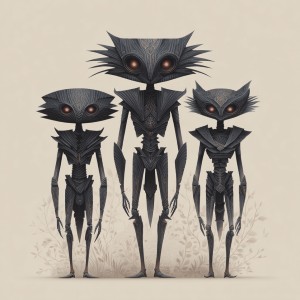
The Ant People — *Anu Sinom* — occupy a central role in Hopi cosmology. They are not cryptids or monsters, but ancestral beings who helped humanity survive cycles of destruction and renewal. According to Hopi stories, the world has passed through multiple eras, each ending in catastrophe — flood, fire, or earth-shaking upheaval. During the destruction of the First and Second Worlds, the Ant People sheltered early humans inside vast underground chambers. These beings taught them how to store food, create light, and survive until the surface became safe again.
The Ant People are described as small, slender beings with large heads, big eyes, and long fingers — imagery some modern outsiders interpret through a “gray alien” lens, though that is *not* the original cultural meaning. Their association with subterranean life comes from their appearance and their role as caretakers of food, agriculture, and safe places. They are considered wise, generous, and deeply connected to the cycles of the earth. The Hopi emphasize that the Ant People maintain harmony and survival — they respond when balance between humans and the world is endangered.
Some Hopi mesas have petroglyphs that outsiders misinterpret as depictions of “alien suits,” but in Hopi teaching they represent spiritual beings, not extraterrestrials. The Ant People symbolize preparedness, humility, and cooperation — values essential for withstanding environmental catastrophes. Their stories remain central to Hopi ceremonial life and continue to be taught today.
Location:Hopi traditions of the American Southwest (Arizona)
The Ant People — *Anu Sinom* — occupy a central role in Hopi cosmology. They are not cryptids or monsters, but ancestral beings who helped humanity survive cycles of destruction and renewal. According to Hopi stories, the world has passed through multiple eras, each ending in catastrophe — flood, fire, or earth-shaking upheaval. During the destruction of the First and Second Worlds, the Ant People sheltered early humans inside vast underground chambers. These beings taught them how to store food, create light, and survive until the surface became safe again.
The Ant People are described as small, slender beings with large heads, big eyes, and long fingers — imagery some modern outsiders interpret through a “gray alien” lens, though that is *not* the original cultural meaning. Their association with subterranean life comes from their appearance and their role as caretakers of food, agriculture, and safe places. They are considered wise, generous, and deeply connected to the cycles of the earth. The Hopi emphasize that the Ant People maintain harmony and survival — they respond when balance between humans and the world is endangered.
Some Hopi mesas have petroglyphs that outsiders misinterpret as depictions of “alien suits,” but in Hopi teaching they represent spiritual beings, not extraterrestrials. The Ant People symbolize preparedness, humility, and cooperation — values essential for withstanding environmental catastrophes. Their stories remain central to Hopi ceremonial life and continue to be taught today.
Mahaha
Region: Greater North America
Location:Inuit (Alaska, Arctic Canada)
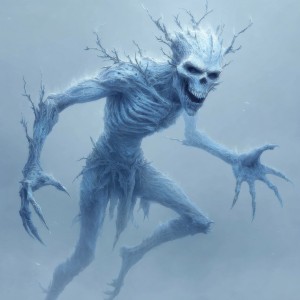
Mahaha is one of the most frightening beings in Inuit folklore — a thin, blue-skinned demon with long, icy fingers and a smile stretched unnaturally wide. Unlike many malevolent spirits, Mahaha is quiet and eerily cheerful, laughing softly as it stalks its victims. Its skin is said to be cold as ice, and its touch leaves frostbite-like marks. Mahaha is known for attacking travelers caught alone on the tundra, especially during the long, dark winter months when snow obscures sound and distance.
What makes Mahaha particularly chilling is its method of killing: it tickles victims to death. This detail may sound whimsical, but in traditional stories it is portrayed as horrifying — the tickling is not playful but relentless, causing paralysis, suffocation, and despair. The creature leaves bodies twisted in frozen positions, faces contorted as if trapped between laughter and terror. According to folklore, Mahaha’s laugh echoes faintly over the ice long after it has departed, carried by the Arctic wind.
Despite its strength, Mahaha can be defeated through cleverness. Some stories say it is easily tricked — victims survive by outwitting it, such as offering it a drink and allowing it to lean over a pool of water, where it falls in and is carried away by the current. This mix of danger and foolishness makes Mahaha a classic trickster-adversary figure in Inuit tales. It embodies the harshness of Arctic winters, where cold and isolation are constant threats, but also reinforces the cultural value of intelligence over brute strength.
Location:Inuit (Alaska, Arctic Canada)
Mahaha is one of the most frightening beings in Inuit folklore — a thin, blue-skinned demon with long, icy fingers and a smile stretched unnaturally wide. Unlike many malevolent spirits, Mahaha is quiet and eerily cheerful, laughing softly as it stalks its victims. Its skin is said to be cold as ice, and its touch leaves frostbite-like marks. Mahaha is known for attacking travelers caught alone on the tundra, especially during the long, dark winter months when snow obscures sound and distance.
What makes Mahaha particularly chilling is its method of killing: it tickles victims to death. This detail may sound whimsical, but in traditional stories it is portrayed as horrifying — the tickling is not playful but relentless, causing paralysis, suffocation, and despair. The creature leaves bodies twisted in frozen positions, faces contorted as if trapped between laughter and terror. According to folklore, Mahaha’s laugh echoes faintly over the ice long after it has departed, carried by the Arctic wind.
Despite its strength, Mahaha can be defeated through cleverness. Some stories say it is easily tricked — victims survive by outwitting it, such as offering it a drink and allowing it to lean over a pool of water, where it falls in and is carried away by the current. This mix of danger and foolishness makes Mahaha a classic trickster-adversary figure in Inuit tales. It embodies the harshness of Arctic winters, where cold and isolation are constant threats, but also reinforces the cultural value of intelligence over brute strength.
Mishipeshu
Region: Greater North America
Location:Great Lakes region — Ojibwe, Anishinaabe, and other Algonquian nations
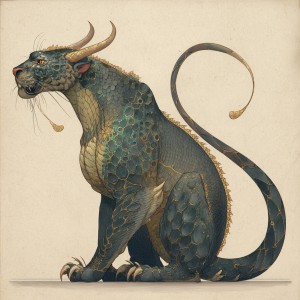
Mishipeshu — also called Mishibizhiw or the Underwater Panther — is one of the most powerful beings in the cosmology of the Great Lakes. It is described as a massive, panther-shaped creature with iridescent scales, horns, a long serpentine tail, and sometimes spines along its back. Mishipeshu dwells in the deepest parts of lakes, especially Lake Superior, and rules the waters and their spirit inhabitants. Its roar is said to shake boats, churn waves without wind, or crack ice in winter. The being embodies both the beauty and deadly danger of the Great Lakes — a place the Anishinaabe regard with immense spiritual seriousness.
Traditionally, Mishipeshu is not simply a monster but a being of great power who must be respected. Offerings of tobacco, copper, or food were historically made to calm the waters or ask safe passage for fishing expeditions, canoe journeys, or lake crossings. Some stories describe Mishipeshu as a guardian of sacred places or hidden copper deposits; others portray it as a fierce opponent of Thunderbirds, the sky spirits. Their cosmic conflict explains summer storms, violent waves, and sudden deaths on the water. To disturb Mishipeshu’s territory without ritual permission was to invite disaster.
For the Anishinaabe, Mishipeshu symbolizes the living intelligence of the lakes. It can bless or destroy, protect or punish, depending on the respect shown by travelers. Jesuit missionaries and later colonial writers misinterpreted it as a “devil,” but to Indigenous communities Mishipeshu remains far more complex: a being of power, sovereignty, and natural law. Its image in rock art across the region — especially on cliffs overlooking deep water — marks ancient sites where human and spirit worlds meet.
Location:Great Lakes region — Ojibwe, Anishinaabe, and other Algonquian nations
Mishipeshu — also called Mishibizhiw or the Underwater Panther — is one of the most powerful beings in the cosmology of the Great Lakes. It is described as a massive, panther-shaped creature with iridescent scales, horns, a long serpentine tail, and sometimes spines along its back. Mishipeshu dwells in the deepest parts of lakes, especially Lake Superior, and rules the waters and their spirit inhabitants. Its roar is said to shake boats, churn waves without wind, or crack ice in winter. The being embodies both the beauty and deadly danger of the Great Lakes — a place the Anishinaabe regard with immense spiritual seriousness.
Traditionally, Mishipeshu is not simply a monster but a being of great power who must be respected. Offerings of tobacco, copper, or food were historically made to calm the waters or ask safe passage for fishing expeditions, canoe journeys, or lake crossings. Some stories describe Mishipeshu as a guardian of sacred places or hidden copper deposits; others portray it as a fierce opponent of Thunderbirds, the sky spirits. Their cosmic conflict explains summer storms, violent waves, and sudden deaths on the water. To disturb Mishipeshu’s territory without ritual permission was to invite disaster.
For the Anishinaabe, Mishipeshu symbolizes the living intelligence of the lakes. It can bless or destroy, protect or punish, depending on the respect shown by travelers. Jesuit missionaries and later colonial writers misinterpreted it as a “devil,” but to Indigenous communities Mishipeshu remains far more complex: a being of power, sovereignty, and natural law. Its image in rock art across the region — especially on cliffs overlooking deep water — marks ancient sites where human and spirit worlds meet.

Pukwudgie
Region: Greater North America
Location:Southern New England — Wampanoag, Algonquian nations (Massachusetts, Rhode Island)
Pukwudgies are small, humanlike beings in Wampanoag folklore, often described as knee-high figures with gray skin, sharp features, and spiky hair. They are known for their ability to appear and vanish at will, control fire, and cast illusions. Pukwudgies carry poisoned darts or spears made of bone or stone, and older stories say they can transform into cougars or porcupines when threatened. Despite their size, they are considered unpredictable and dangerous, not friendly woodland spirits. They live in remote forest areas, rocky outcrops, or wetlands, often near ancient trails or sacred paths.
In Wampanoag stories, Pukwudgies were once helpful to humans. But the relationship deteriorated after misunderstandings and perceived slights, and the beings grew resentful. They began playing malicious tricks, stealing items, or luring people off trails. Some tales describe them pushing humans off cliffs or into rivers. Their greatest enmity was toward the giant culture-hero Maushop; Pukwudgies attacked his children, leading Maushop to retaliate, after which they became openly hostile to humans. This story is central to why the creatures are no longer benign in the living tradition.
Today, Pukwudgie stories persist in New England communities, especially around places like the Freetown-Fall River State Forest, where hikers report eerie lights, whispering, or feelings of being watched. While modern accounts blend folklore with the modern paranormal scene, the original Indigenous stories carry deep meanings about respect for land, boundaries, and reciprocal relationships with the unseen world. Pukwudgies remain one of the most culturally distinctive beings in Algonquian folklore.
Location:Southern New England — Wampanoag, Algonquian nations (Massachusetts, Rhode Island)
Pukwudgies are small, humanlike beings in Wampanoag folklore, often described as knee-high figures with gray skin, sharp features, and spiky hair. They are known for their ability to appear and vanish at will, control fire, and cast illusions. Pukwudgies carry poisoned darts or spears made of bone or stone, and older stories say they can transform into cougars or porcupines when threatened. Despite their size, they are considered unpredictable and dangerous, not friendly woodland spirits. They live in remote forest areas, rocky outcrops, or wetlands, often near ancient trails or sacred paths.
In Wampanoag stories, Pukwudgies were once helpful to humans. But the relationship deteriorated after misunderstandings and perceived slights, and the beings grew resentful. They began playing malicious tricks, stealing items, or luring people off trails. Some tales describe them pushing humans off cliffs or into rivers. Their greatest enmity was toward the giant culture-hero Maushop; Pukwudgies attacked his children, leading Maushop to retaliate, after which they became openly hostile to humans. This story is central to why the creatures are no longer benign in the living tradition.
Today, Pukwudgie stories persist in New England communities, especially around places like the Freetown-Fall River State Forest, where hikers report eerie lights, whispering, or feelings of being watched. While modern accounts blend folklore with the modern paranormal scene, the original Indigenous stories carry deep meanings about respect for land, boundaries, and reciprocal relationships with the unseen world. Pukwudgies remain one of the most culturally distinctive beings in Algonquian folklore.
Roswell Aliens
Region: Greater North America
Location:Roswell, New Mexico — July 1947
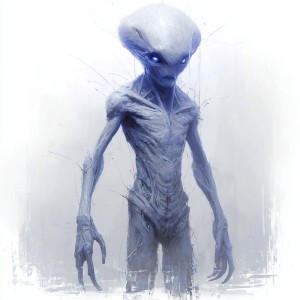
The Roswell Incident began in 1947 when rancher Mac Brazel discovered strange debris on a remote piece of land northwest of Roswell. The U.S. Army Air Forces initially released a press statement saying they had recovered a “flying disc.” Within 24 hours, that statement was retracted and replaced with the explanation that the debris came from a weather balloon. This abrupt reversal sparked public suspicion, and Roswell quickly became a cultural lightning rod for Cold War anxiety, secrecy, and fascination with extraterrestrial life.
In the decades that followed, Roswell evolved from a local curiosity into a worldwide phenomenon. Witnesses came forward claiming they had seen unusual materials, bodies, or transport vehicles. By the 1980s and 1990s, books, documentaries, and Hollywood films turned Roswell into the central myth of UFO culture. The U.S. government later acknowledged that the debris likely came from Project Mogul — a classified program using high-altitude balloons to detect Soviet nuclear tests — but by then the folklore surrounding crashed saucers and alien recovery teams had already eclipsed the mundane explanation.
Within American culture, Roswell functions the same way ancient myths did: as a vessel for public fears and hopes. It channels themes of secrecy, government power, and humanity’s place in the cosmos. Whether believed literally or not, Roswell became the template for modern UFO mythology — the moment when extraterrestrial life entered popular imagination not as science fiction, but as a story whispered at dinner tables, discussed on late-night radio, and pinned to the walls of conspiracy theorists and dreamers alike.
Location:Roswell, New Mexico — July 1947
The Roswell Incident began in 1947 when rancher Mac Brazel discovered strange debris on a remote piece of land northwest of Roswell. The U.S. Army Air Forces initially released a press statement saying they had recovered a “flying disc.” Within 24 hours, that statement was retracted and replaced with the explanation that the debris came from a weather balloon. This abrupt reversal sparked public suspicion, and Roswell quickly became a cultural lightning rod for Cold War anxiety, secrecy, and fascination with extraterrestrial life.
In the decades that followed, Roswell evolved from a local curiosity into a worldwide phenomenon. Witnesses came forward claiming they had seen unusual materials, bodies, or transport vehicles. By the 1980s and 1990s, books, documentaries, and Hollywood films turned Roswell into the central myth of UFO culture. The U.S. government later acknowledged that the debris likely came from Project Mogul — a classified program using high-altitude balloons to detect Soviet nuclear tests — but by then the folklore surrounding crashed saucers and alien recovery teams had already eclipsed the mundane explanation.
Within American culture, Roswell functions the same way ancient myths did: as a vessel for public fears and hopes. It channels themes of secrecy, government power, and humanity’s place in the cosmos. Whether believed literally or not, Roswell became the template for modern UFO mythology — the moment when extraterrestrial life entered popular imagination not as science fiction, but as a story whispered at dinner tables, discussed on late-night radio, and pinned to the walls of conspiracy theorists and dreamers alike.
The Beast of Bray Road
Region: Greater North America
Location:Elkhorn & Walworth County, Wisconsin (1980s–present)
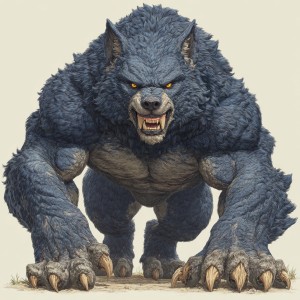
The Beast of Bray Road is a modern American cryptid — a wolf-like humanoid reported near rural roads, cornfields, and wooded areas around Elkhorn, Wisconsin. Witnesses describe a creature standing 6–7 feet tall with a muscular, upright posture, pointed ears, long snout, and thick fur. It reportedly moves between two postures: running on all fours like a wolf and rising bipedally like a man. Reports from the late 1980s and early 1990s describe glowing eyes reflecting headlights, powerful leaps, and a predatory stillness as it watched from ditches or tree lines.
Unlike the traditional werewolf tied to curses or transformations, the Beast of Bray Road appears more like a natural creature — something physical, fast, and intelligent but not human. Witnesses consistently describe fear: the sense of encountering a predator that is *almost* a wolf but not quite. The creature is often seen near roadkill or animal carcasses, leading some theories to frame it as a scavenger. Sightings frequently occur at night or dusk, when rural Wisconsin’s landscape blurs into shadow.
The Beast gained national attention through local newspapers and later through paranormal media. It has since become part of the Dogman family of cryptids — modern, rural, wolf-humanoids seen across North America. The legend persists because it sits right at the edge of plausibility: Wisconsin has wolves, dense forests, and long stretches of lonely road. The Beast of Bray Road remains a reminder that even in farmland and small towns, something unknown might still be moving just beyond the headlights.
Location:Elkhorn & Walworth County, Wisconsin (1980s–present)
The Beast of Bray Road is a modern American cryptid — a wolf-like humanoid reported near rural roads, cornfields, and wooded areas around Elkhorn, Wisconsin. Witnesses describe a creature standing 6–7 feet tall with a muscular, upright posture, pointed ears, long snout, and thick fur. It reportedly moves between two postures: running on all fours like a wolf and rising bipedally like a man. Reports from the late 1980s and early 1990s describe glowing eyes reflecting headlights, powerful leaps, and a predatory stillness as it watched from ditches or tree lines.
Unlike the traditional werewolf tied to curses or transformations, the Beast of Bray Road appears more like a natural creature — something physical, fast, and intelligent but not human. Witnesses consistently describe fear: the sense of encountering a predator that is *almost* a wolf but not quite. The creature is often seen near roadkill or animal carcasses, leading some theories to frame it as a scavenger. Sightings frequently occur at night or dusk, when rural Wisconsin’s landscape blurs into shadow.
The Beast gained national attention through local newspapers and later through paranormal media. It has since become part of the Dogman family of cryptids — modern, rural, wolf-humanoids seen across North America. The legend persists because it sits right at the edge of plausibility: Wisconsin has wolves, dense forests, and long stretches of lonely road. The Beast of Bray Road remains a reminder that even in farmland and small towns, something unknown might still be moving just beyond the headlights.
The Dover Demon
Region: Greater North America
Location:Dover, Massachusetts (1977 sightings)
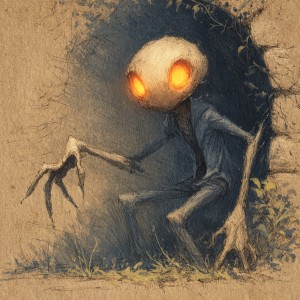
The Dover Demon is a purely modern American cryptid, rooted in a concentrated 24-hour wave of sightings in April 1977. Three separate teenagers reported seeing a small, pale creature near roads and stone walls in Dover. Descriptions were consistent: a hairless, peach-colored or grayish humanoid with a bulbous head, large glowing eyes (often described as orange), long thin limbs, and hands that clung to rocks with unusual flexibility. The creature was about three to four feet tall and moved awkwardly, almost as if unfamiliar with the terrain.
Investigators noted that the descriptions did **not** match any known Indigenous folklore of the area, nor any existing cryptid tradition. This makes the Dover Demon unusual — it’s not a revived myth but something that entered folklore fully formed in the 20th century. The creature was silent, showed no aggression, and disappeared quickly. Those who saw it described an overwhelming feeling of strangeness rather than fear — a “wrongness,” as if encountering something out of place.
Over time, the Dover Demon became part of modern cryptozoology, often linked to UFO lore, interdimensional hypotheses, or experimental animals. But with no sightings before or after that single cluster, it remains a minimal but iconic cryptid. Its staying power comes from the specificity of the witnesses and the mystery of a creature that appeared briefly and left no explanation behind.
Location:Dover, Massachusetts (1977 sightings)
The Dover Demon is a purely modern American cryptid, rooted in a concentrated 24-hour wave of sightings in April 1977. Three separate teenagers reported seeing a small, pale creature near roads and stone walls in Dover. Descriptions were consistent: a hairless, peach-colored or grayish humanoid with a bulbous head, large glowing eyes (often described as orange), long thin limbs, and hands that clung to rocks with unusual flexibility. The creature was about three to four feet tall and moved awkwardly, almost as if unfamiliar with the terrain.
Investigators noted that the descriptions did **not** match any known Indigenous folklore of the area, nor any existing cryptid tradition. This makes the Dover Demon unusual — it’s not a revived myth but something that entered folklore fully formed in the 20th century. The creature was silent, showed no aggression, and disappeared quickly. Those who saw it described an overwhelming feeling of strangeness rather than fear — a “wrongness,” as if encountering something out of place.
Over time, the Dover Demon became part of modern cryptozoology, often linked to UFO lore, interdimensional hypotheses, or experimental animals. But with no sightings before or after that single cluster, it remains a minimal but iconic cryptid. Its staying power comes from the specificity of the witnesses and the mystery of a creature that appeared briefly and left no explanation behind.

The Jersey Devil
Region: Greater North America
Location:Pine Barrens, New Jersey (Lenape land historically)
The Jersey Devil is one of America’s oldest regional monsters, rooted in colonial folklore of the Pine Barrens. Descriptions vary wildly, but the creature is usually depicted as a kangaroo-like or deer-like body with leathery wings, a horse or goat-shaped head, hooves, and a forked tail. It emits an eerie screech said to echo across the pines at night. According to the most famous legend, the creature was the cursed 13th child of Mother Leeds in the 1730s, born human before sprouting wings and fleeing up the chimney — a tale blending colonial superstition with local gossip.
The Pine Barrens’ isolation contributed to the legend’s growth. Settlers feared the dark, sandy forest, which was home to outcasts, fugitives, and communities surviving on the fringes of society. Strange sounds, unfamiliar animals, and torchlight in the distance became fodder for monstrous interpretation. The Jersey Devil gained national attention in 1909 when a wave of sightings — fueled by newspapers — caused schools to close, factories to shut down, and entire towns to panic. Eyewitnesses claimed to see the Devil perched on rooftops, flying overhead, or wandering rural roads.
Much of the Jersey Devil’s power lies in the Barrens themselves: a sprawling wilderness that feels eerie even today. The creature has become equal parts folklore, tourism symbol, and cultural mascot. Yet beneath the pop image is a genuine frontier fear — the sense that the deep woods can hide something unknown, something not entirely human, something that has been screaming in the trees since colonial shadows first fell across the land.
Location:Pine Barrens, New Jersey (Lenape land historically)
The Jersey Devil is one of America’s oldest regional monsters, rooted in colonial folklore of the Pine Barrens. Descriptions vary wildly, but the creature is usually depicted as a kangaroo-like or deer-like body with leathery wings, a horse or goat-shaped head, hooves, and a forked tail. It emits an eerie screech said to echo across the pines at night. According to the most famous legend, the creature was the cursed 13th child of Mother Leeds in the 1730s, born human before sprouting wings and fleeing up the chimney — a tale blending colonial superstition with local gossip.
The Pine Barrens’ isolation contributed to the legend’s growth. Settlers feared the dark, sandy forest, which was home to outcasts, fugitives, and communities surviving on the fringes of society. Strange sounds, unfamiliar animals, and torchlight in the distance became fodder for monstrous interpretation. The Jersey Devil gained national attention in 1909 when a wave of sightings — fueled by newspapers — caused schools to close, factories to shut down, and entire towns to panic. Eyewitnesses claimed to see the Devil perched on rooftops, flying overhead, or wandering rural roads.
Much of the Jersey Devil’s power lies in the Barrens themselves: a sprawling wilderness that feels eerie even today. The creature has become equal parts folklore, tourism symbol, and cultural mascot. Yet beneath the pop image is a genuine frontier fear — the sense that the deep woods can hide something unknown, something not entirely human, something that has been screaming in the trees since colonial shadows first fell across the land.
Wendigo
Region: Greater North America
Location:Northern Algonquian regions — Cree, Ojibwe, Innu, Saulteaux (Great Lakes, Quebec, Manitoba)
The Wendigo is a powerful being in Algonquian traditions, associated with winter, famine, greed, and the breakdown of human social bonds. Unlike modern pop-culture versions, the Wendigo is not simply a tall skeletal monster or a deer-headed creature. Traditionally, a Wendigo is a human being transformed by consuming human flesh during starvation, or by giving in to extreme selfishness and spiritual imbalance. The transformation twists the person into a relentless, starving presence — a being with a heart of ice, an insatiable appetite, and a body that grows in proportion to the hunger, never satiated.
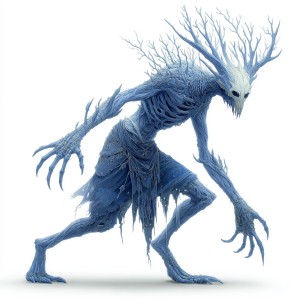
Many Algonquian stories describe the Wendigo as gaunt, emaciated, with glowing or sunken eyes, and lips chewed away from hunger. Others describe it as an enormous, frost-covered giant whose footsteps echo like cracking tree trunks. The common thread is that the Wendigo embodies cannibalistic greed — the person who eats and eats and is never full, who destroys community by consuming it. Some stories emphasize possession: the Wendigo spirit whispers to people during harsh winters, tempting them toward violence or desperation.
The Wendigo is not just a cryptid — it is a moral and spiritual warning. It teaches that taking more than one needs, hoarding during famine, or abandoning community obligations opens the door to destruction. During history’s harshest winters, fears of Wendigo possession were taken seriously; in some communities, individuals believed to be overtaken by Wendigo madness were restrained or exorcised. The being represents the danger of imbalance, especially in climates where survival depends on cooperation.
Location:Northern Algonquian regions — Cree, Ojibwe, Innu, Saulteaux (Great Lakes, Quebec, Manitoba)
The Wendigo is a powerful being in Algonquian traditions, associated with winter, famine, greed, and the breakdown of human social bonds. Unlike modern pop-culture versions, the Wendigo is not simply a tall skeletal monster or a deer-headed creature. Traditionally, a Wendigo is a human being transformed by consuming human flesh during starvation, or by giving in to extreme selfishness and spiritual imbalance. The transformation twists the person into a relentless, starving presence — a being with a heart of ice, an insatiable appetite, and a body that grows in proportion to the hunger, never satiated.
Many Algonquian stories describe the Wendigo as gaunt, emaciated, with glowing or sunken eyes, and lips chewed away from hunger. Others describe it as an enormous, frost-covered giant whose footsteps echo like cracking tree trunks. The common thread is that the Wendigo embodies cannibalistic greed — the person who eats and eats and is never full, who destroys community by consuming it. Some stories emphasize possession: the Wendigo spirit whispers to people during harsh winters, tempting them toward violence or desperation.
The Wendigo is not just a cryptid — it is a moral and spiritual warning. It teaches that taking more than one needs, hoarding during famine, or abandoning community obligations opens the door to destruction. During history’s harshest winters, fears of Wendigo possession were taken seriously; in some communities, individuals believed to be overtaken by Wendigo madness were restrained or exorcised. The being represents the danger of imbalance, especially in climates where survival depends on cooperation.




Comments