



CTU: Cryptids-Central Asia & Mongolia
Almas
Region: Central Asia & Mongolia
Location:Mongolia, Altai Mountains, Central Asia (borderlands with Russia and China)
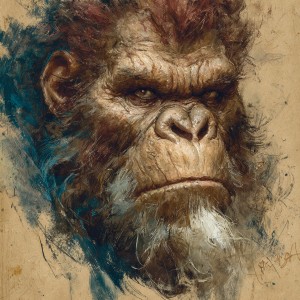
The Almas is a wildman figure deeply embedded in the folklore of Mongolia and the Central Asian steppes. Described as a large, ape-like or hominid creature covered in reddish-brown hair, the Almas walks upright and has distinctly humanlike facial features — pronounced brow ridges, a flattened nose, and deep-set eyes. Sightings usually place it in remote mountain valleys, steep gorges, or high-altitude meadows where few people travel. Traditional accounts distinguish the Almas from modern apes or bears; they describe it as something closer to an ancient human lineage that never vanished.
For centuries, Mongolian herders, hunters, and travelers have shared accounts of Almas encounters. These stories emphasize the creature’s elusiveness: it flees quickly when spotted, moves with surprising agility on steep slopes, and avoids humans with deliberate caution. Some elders claim the Almas steals livestock feed or tools, while others describe it watching from ridges during twilight. In older traditions, the Almas was not considered a monster but a reclusive neighbor — another being sharing the wilderness, living parallel to human society without direct conflict.
During the Soviet era, explorers and scientists collected numerous sightings from nomads and local officials, leading to speculation that the Almas might represent a remnant population of archaic humans. While no concrete evidence has ever been found, the legend persists because it resonates with the rugged, uncharted nature of the Central Asian wilderness. Whether an undiscovered hominid or a cultural symbol of the steppe’s vastness, the Almas remains one of Eurasia’s most intriguing cryptid figures.
Location:Mongolia, Altai Mountains, Central Asia (borderlands with Russia and China)
The Almas is a wildman figure deeply embedded in the folklore of Mongolia and the Central Asian steppes. Described as a large, ape-like or hominid creature covered in reddish-brown hair, the Almas walks upright and has distinctly humanlike facial features — pronounced brow ridges, a flattened nose, and deep-set eyes. Sightings usually place it in remote mountain valleys, steep gorges, or high-altitude meadows where few people travel. Traditional accounts distinguish the Almas from modern apes or bears; they describe it as something closer to an ancient human lineage that never vanished.
For centuries, Mongolian herders, hunters, and travelers have shared accounts of Almas encounters. These stories emphasize the creature’s elusiveness: it flees quickly when spotted, moves with surprising agility on steep slopes, and avoids humans with deliberate caution. Some elders claim the Almas steals livestock feed or tools, while others describe it watching from ridges during twilight. In older traditions, the Almas was not considered a monster but a reclusive neighbor — another being sharing the wilderness, living parallel to human society without direct conflict.
During the Soviet era, explorers and scientists collected numerous sightings from nomads and local officials, leading to speculation that the Almas might represent a remnant population of archaic humans. While no concrete evidence has ever been found, the legend persists because it resonates with the rugged, uncharted nature of the Central Asian wilderness. Whether an undiscovered hominid or a cultural symbol of the steppe’s vastness, the Almas remains one of Eurasia’s most intriguing cryptid figures.
Karakura
Region: Central Asia & Mongolia
Location:Kazakhstan, steppe regions of Central Asia
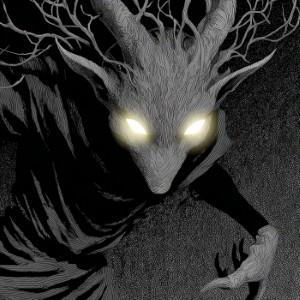
The Karakura is a night demon in Kazakh folklore associated with darkness, wind, and desolate places. It is often described as a shadowy, horse-sized creature with glowing red or yellow eyes, long limbs, and a form that shifts in the darkness. Some accounts portray it as a massive dog or wolf; others as a humanoid figure with a cloak-like body made of smoke or dust. The Karakura appears at night on the open steppe, usually in lonely areas where travelers camp far from settlements.
Folklore often frames the Karakura as a predator of fear rather than flesh. It creeps close to sleeping travelers, pressing upon their chests or whispering in their ears, causing nightmares, paralysis, or overwhelming dread — a mythological explanation for sleep paralysis in nomadic cultures. Some stories claim it feeds on fear, growing stronger the more terrified a person becomes. Others describe it circling campsites with soft, deliberate footsteps that leave no tracks, watching from beyond the firelight until dawn.
Because the Kazakh steppe is vast, windswept, and prone to sudden night storms, the Karakura embodies the dangers of isolation. It is a reminder of the vulnerabilities of life on open plains, where darkness can swallow sound and distance plays tricks on the senses. The demon represents both literal and psychological threats — the kind that arrive when a traveler is alone with only wind and fear for company.
Location:Kazakhstan, steppe regions of Central Asia
The Karakura is a night demon in Kazakh folklore associated with darkness, wind, and desolate places. It is often described as a shadowy, horse-sized creature with glowing red or yellow eyes, long limbs, and a form that shifts in the darkness. Some accounts portray it as a massive dog or wolf; others as a humanoid figure with a cloak-like body made of smoke or dust. The Karakura appears at night on the open steppe, usually in lonely areas where travelers camp far from settlements.
Folklore often frames the Karakura as a predator of fear rather than flesh. It creeps close to sleeping travelers, pressing upon their chests or whispering in their ears, causing nightmares, paralysis, or overwhelming dread — a mythological explanation for sleep paralysis in nomadic cultures. Some stories claim it feeds on fear, growing stronger the more terrified a person becomes. Others describe it circling campsites with soft, deliberate footsteps that leave no tracks, watching from beyond the firelight until dawn.
Because the Kazakh steppe is vast, windswept, and prone to sudden night storms, the Karakura embodies the dangers of isolation. It is a reminder of the vulnerabilities of life on open plains, where darkness can swallow sound and distance plays tricks on the senses. The demon represents both literal and psychological threats — the kind that arrive when a traveler is alone with only wind and fear for company.
Mongolian Death Worm
Region: Central Asia & Mongolia
Location:Gobi Desert (Mongolia)
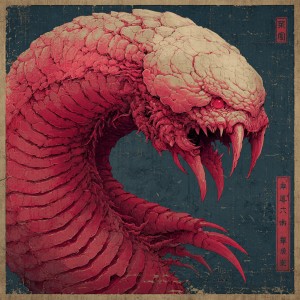
The Mongolian Death Worm — known locally as the *olgoi-khorkhoi* (“large intestine worm”) — is one of the most infamous cryptids of the Gobi Desert. Described as a thick, bright red worm measuring two to five feet long, it is said to emerge from the desert sand during the hottest months of the year. Witnesses describe it as smooth-skinned, headless, and capable of lifting itself from the ground like a snake. Its appearance alone, vivid against the pale desert, gives it an unsettling aura.
Folklore attributes terrifying abilities to the creature. Some stories claim it can kill at a distance by spitting corrosive venom or spraying acid that burns through cloth and flesh. Others say it emits electrical discharges powerful enough to kill camels or humans instantly. Because of these traits, locals avoid certain areas of the desert said to be Death Worm territory, especially after rare rainstorms when the ground becomes soft. Most legends emphasize that the creature is extremely dangerous and unpredictable, surfacing without warning before burrowing back into the sand.
Despite modern expeditions and global fascination, no physical evidence of the Death Worm has ever been found. Yet the legend remains potent. The Gobi is one of the harshest, least-populated landscapes on Earth, filled with mirages, sudden storms, and ancient bones. In this environment, the Death Worm serves as a symbol of the desert’s hidden dangers — a creature that embodies the fear of what lies beneath the sand, unseen until it strikes.
Location:Gobi Desert (Mongolia)
The Mongolian Death Worm — known locally as the *olgoi-khorkhoi* (“large intestine worm”) — is one of the most infamous cryptids of the Gobi Desert. Described as a thick, bright red worm measuring two to five feet long, it is said to emerge from the desert sand during the hottest months of the year. Witnesses describe it as smooth-skinned, headless, and capable of lifting itself from the ground like a snake. Its appearance alone, vivid against the pale desert, gives it an unsettling aura.
Folklore attributes terrifying abilities to the creature. Some stories claim it can kill at a distance by spitting corrosive venom or spraying acid that burns through cloth and flesh. Others say it emits electrical discharges powerful enough to kill camels or humans instantly. Because of these traits, locals avoid certain areas of the desert said to be Death Worm territory, especially after rare rainstorms when the ground becomes soft. Most legends emphasize that the creature is extremely dangerous and unpredictable, surfacing without warning before burrowing back into the sand.
Despite modern expeditions and global fascination, no physical evidence of the Death Worm has ever been found. Yet the legend remains potent. The Gobi is one of the harshest, least-populated landscapes on Earth, filled with mirages, sudden storms, and ancient bones. In this environment, the Death Worm serves as a symbol of the desert’s hidden dangers — a creature that embodies the fear of what lies beneath the sand, unseen until it strikes.
Shurale
Region: Central Asia & Mongolia
Location:Tatar folklore (Tatarstan, Bashkortostan, Volga–Ural region)
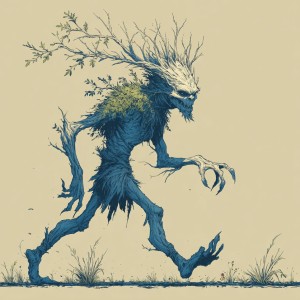
The Shurale is a forest trickster spirit from Tatar folklore, often depicted as a tall, thin humanoid with long fingers, wild hair, glowing eyes, and a single horn protruding from its forehead. It dwells in deep forests, especially birch groves, where it plays pranks on hunters, woodcutters, and travelers. The Shurale is known for tickling people to death — a strange but consistent detail — which it accomplishes with its unnaturally long fingers. More mischievous than malevolent, the Shurale thrives on confusion and humor, even if its humor can turn lethal.
Stories about the Shurale often describe it mimicking human voices or animal calls to lure travelers deeper into the woods. Once disoriented, victims may walk in circles for hours or find themselves inexplicably far from familiar paths. To escape its tricks, folklore advises turning clothing inside-out, carrying protective charms, or offering kind words. In some tales, the Shurale befriends clever humans who solve riddles or entertain it, rewarding them with protection or supernatural assistance in hunts.
The Shurale reflects the ancient relationship between the Tatar people and their forests — places of beauty, danger, and hidden spirits. Its playful yet perilous nature reinforces respect for the wilderness and the need to remain vigilant when traveling alone. Even today, the Shurale appears in Tatar literature, children’s stories, and cultural performances as an iconic symbol of the region’s humor and supernatural imagination.
Location:Tatar folklore (Tatarstan, Bashkortostan, Volga–Ural region)
The Shurale is a forest trickster spirit from Tatar folklore, often depicted as a tall, thin humanoid with long fingers, wild hair, glowing eyes, and a single horn protruding from its forehead. It dwells in deep forests, especially birch groves, where it plays pranks on hunters, woodcutters, and travelers. The Shurale is known for tickling people to death — a strange but consistent detail — which it accomplishes with its unnaturally long fingers. More mischievous than malevolent, the Shurale thrives on confusion and humor, even if its humor can turn lethal.
Stories about the Shurale often describe it mimicking human voices or animal calls to lure travelers deeper into the woods. Once disoriented, victims may walk in circles for hours or find themselves inexplicably far from familiar paths. To escape its tricks, folklore advises turning clothing inside-out, carrying protective charms, or offering kind words. In some tales, the Shurale befriends clever humans who solve riddles or entertain it, rewarding them with protection or supernatural assistance in hunts.
The Shurale reflects the ancient relationship between the Tatar people and their forests — places of beauty, danger, and hidden spirits. Its playful yet perilous nature reinforces respect for the wilderness and the need to remain vigilant when traveling alone. Even today, the Shurale appears in Tatar literature, children’s stories, and cultural performances as an iconic symbol of the region’s humor and supernatural imagination.




Comments