




CTU: Cryptids-Appalachia
Grafton Monster
Region: Appalachia
Location:Grafton, West Virginia
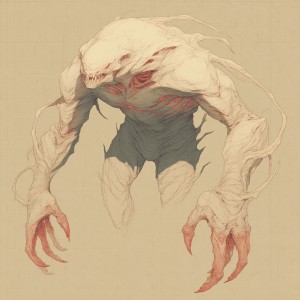
The Grafton Monster entered Appalachian folklore in 1964 when a local newspaper reporter claimed to have seen a massive, white-skinned creature walking along a railway line near the Tygart River. Descriptions that followed painted a picture of a creature standing seven to nine feet tall with smooth, hairless skin—pale like polished stone. Witnesses often claimed the monster appeared headless, though more careful listeners said its head was set low on its shoulders, blending with its broad torso. Its movements were said to be surprisingly graceful for a creature of its bulk.
The legend gained traction when multiple teenagers reported seeing it while cruising the outskirts of town at night. They described it as silent, muscular, and strangely clean—not a muddy or matted beast, but something almost artificial in its smoothness. Locals began to speculate about escaped experiments, mutative accidents, or cave-dwelling giants disturbed by trains. The creature was said to move with an uncanny purpose, not attacking but simply passing through as though on some unseen errand.
Over time, reports dwindled, but the Grafton Monster remained in the regional imagination. Unlike many cryptids, it is not associated with glowing eyes or supernatural powers. Instead, its mystery lies in its physical oddity and the unsettling quietness that accompanies it. The absence of aggression only deepens the intrigue—what is a creature that large doing wandering alone, silent, head down, ignoring everything but its path?
Location:Grafton, West Virginia
The Grafton Monster entered Appalachian folklore in 1964 when a local newspaper reporter claimed to have seen a massive, white-skinned creature walking along a railway line near the Tygart River. Descriptions that followed painted a picture of a creature standing seven to nine feet tall with smooth, hairless skin—pale like polished stone. Witnesses often claimed the monster appeared headless, though more careful listeners said its head was set low on its shoulders, blending with its broad torso. Its movements were said to be surprisingly graceful for a creature of its bulk.
The legend gained traction when multiple teenagers reported seeing it while cruising the outskirts of town at night. They described it as silent, muscular, and strangely clean—not a muddy or matted beast, but something almost artificial in its smoothness. Locals began to speculate about escaped experiments, mutative accidents, or cave-dwelling giants disturbed by trains. The creature was said to move with an uncanny purpose, not attacking but simply passing through as though on some unseen errand.
Over time, reports dwindled, but the Grafton Monster remained in the regional imagination. Unlike many cryptids, it is not associated with glowing eyes or supernatural powers. Instead, its mystery lies in its physical oddity and the unsettling quietness that accompanies it. The absence of aggression only deepens the intrigue—what is a creature that large doing wandering alone, silent, head down, ignoring everything but its path?
Mothman
Region: Appalachia
Location:Point Pleasant, West Virginia
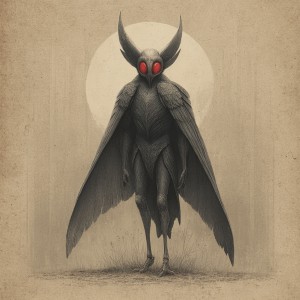
The Mothman legend began in November 1966, when two young couples driving near an abandoned TNT factory outside Point Pleasant reported seeing a tall, winged figure with glowing red eyes following their car. They described it as humanoid, but with wings folded against its back like a giant insect or a man in a dark coat. Once the story hit local papers, similar sightings poured in—some swearing it stood in the road watching them, others claiming it shrieked like a mechanical howl. These weren’t just frightened travelers; policemen, volunteer firefighters, and lifelong residents claimed something strange was stalking the river towns at night.
What sets Mothman apart from most cryptids is the **pattern of dread** that followed him. Residents insisted the creature appeared during moments of intense community stress—missing pets, livestock deaths, electrical disruptions, and the strange feeling that “someone was watching.” The sightings created a mix of panic and fascination, turning late-night drives into impromptu stakeouts. Rumors spread quickly: Mothman was a mutant birthed by wartime chemicals; a bird no one had catalogued; a spirit of the land warning people of something coming. Eyewitnesses, however, remained consistent on one detail—the eyes. Red, bright, reflecting no light, staring through people rather than at them.
Everything changed on December 15, 1967, when the Silver Bridge collapsed during rush hour, killing forty-six people. In the chaos and heartbreak, some locals connected the tragedy to the sightings. Whether Mothman was a harbinger, a coincidence, or a phantom imagined during a tense era became the center of debate. After the collapse, the sightings stopped almost entirely. Over time, Mothman transformed from a figure of fear into a local symbol—equal parts omen, mystery, and cultural identity for Point Pleasant, whose annual Mothman Festival now welcomes thousands hungry for unexplained history.
Location:Point Pleasant, West Virginia
The Mothman legend began in November 1966, when two young couples driving near an abandoned TNT factory outside Point Pleasant reported seeing a tall, winged figure with glowing red eyes following their car. They described it as humanoid, but with wings folded against its back like a giant insect or a man in a dark coat. Once the story hit local papers, similar sightings poured in—some swearing it stood in the road watching them, others claiming it shrieked like a mechanical howl. These weren’t just frightened travelers; policemen, volunteer firefighters, and lifelong residents claimed something strange was stalking the river towns at night.
What sets Mothman apart from most cryptids is the **pattern of dread** that followed him. Residents insisted the creature appeared during moments of intense community stress—missing pets, livestock deaths, electrical disruptions, and the strange feeling that “someone was watching.” The sightings created a mix of panic and fascination, turning late-night drives into impromptu stakeouts. Rumors spread quickly: Mothman was a mutant birthed by wartime chemicals; a bird no one had catalogued; a spirit of the land warning people of something coming. Eyewitnesses, however, remained consistent on one detail—the eyes. Red, bright, reflecting no light, staring through people rather than at them.
Everything changed on December 15, 1967, when the Silver Bridge collapsed during rush hour, killing forty-six people. In the chaos and heartbreak, some locals connected the tragedy to the sightings. Whether Mothman was a harbinger, a coincidence, or a phantom imagined during a tense era became the center of debate. After the collapse, the sightings stopped almost entirely. Over time, Mothman transformed from a figure of fear into a local symbol—equal parts omen, mystery, and cultural identity for Point Pleasant, whose annual Mothman Festival now welcomes thousands hungry for unexplained history.
Nain Rouge
Region: Appalachia
Location:Detroit, Michigan
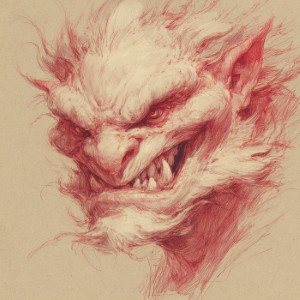
Nain Rouge, translated as “Red Dwarf,” comes from French colonial folklore that took deep root around Detroit. He is described as a small, impish figure with bright red skin, glowing eyes, and a grin too wide for his face. Early settlers believed he appeared before calamities—fires, battles, crop failures—and that his presence foretold bad luck not just for individuals, but for entire communities. He does not attack or manipulate; he simply appears, smiles, and disappears, leaving misfortune in his wake.
Local lore ties him to several pivotal moments in Detroit’s history. Some stories claim the Nain Rouge warned indigenous peoples of European encroachment; others say he taunted the explorer Cadillac, cursing his fortunes. As the city industrialized, sightings became tied to factory accidents, political scandals, and economic decline. Workers reported glimpsing a red figure darting between machinery or perched on rooftops during times of unrest. Whether real or imagined, these stories painted him as a barometer of a community’s anxiety.
In modern times, the Nain Rouge has transformed from feared spirit to cultural mascot. Detroit holds annual parades where participants symbolically chase him out of the city, merging superstition with celebration. His evolution shows how folklore adapts: a figure once whispered about in fear becomes a character woven into civic pride. Still, the original stories retain their chill—an omen in red, arriving without explanation, leaving only unease behind.
Location:Detroit, Michigan
Nain Rouge, translated as “Red Dwarf,” comes from French colonial folklore that took deep root around Detroit. He is described as a small, impish figure with bright red skin, glowing eyes, and a grin too wide for his face. Early settlers believed he appeared before calamities—fires, battles, crop failures—and that his presence foretold bad luck not just for individuals, but for entire communities. He does not attack or manipulate; he simply appears, smiles, and disappears, leaving misfortune in his wake.
Local lore ties him to several pivotal moments in Detroit’s history. Some stories claim the Nain Rouge warned indigenous peoples of European encroachment; others say he taunted the explorer Cadillac, cursing his fortunes. As the city industrialized, sightings became tied to factory accidents, political scandals, and economic decline. Workers reported glimpsing a red figure darting between machinery or perched on rooftops during times of unrest. Whether real or imagined, these stories painted him as a barometer of a community’s anxiety.
In modern times, the Nain Rouge has transformed from feared spirit to cultural mascot. Detroit holds annual parades where participants symbolically chase him out of the city, merging superstition with celebration. His evolution shows how folklore adapts: a figure once whispered about in fear becomes a character woven into civic pride. Still, the original stories retain their chill—an omen in red, arriving without explanation, leaving only unease behind.
Sheepsquatch
Region: Appalachia
Location:Southern West Virginia
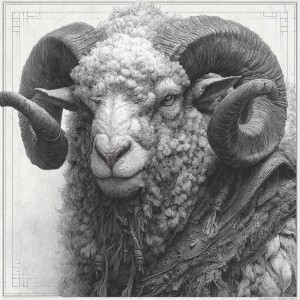
Sheepsquatch, sometimes called the “White Thing,” is a relatively modern cryptid whose sightings date back to the mid-1990s. Witnesses describe a creature about the size of a bear but covered in long, shaggy white fur with a decidedly sheep-like profile. It is often said to have horns like a ram, a pronounced snout, and limbs strong enough to uproot small trees. Reports consistently mention an overwhelming sulfur smell—an odor so strong it forces people to gag or flee—which adds an apocalyptic edge to an otherwise almost comical appearance.
Most sightings occur in remote, forested hollows or strip-mined regions where human industry has disrupted natural habitats. Locals often frame encounters as sudden and brief: a rustle in the brush, a flash of pale fur, or a horrible bleat echoing through the valley. Some insist it charges when startled; others claim it freezes in place like a panicked deer. The sulfur smell remains the most consistent hallmark, leading to speculation about underground caverns, chemical waste, or even paranormal origins.
Over time, Sheepsquatch became a minor regional celebrity through reality shows, internet retellings, and late-night campfire culture. It has the personality of a creature caught between fear and curiosity—too strange to be natural, too clumsy to be truly threatening, yet too persistent in local stories to ever entirely dismiss. It’s the kind of cryptid people mention with a half-laugh, half-shiver, never certain where the joke ends and the truth begins.
Location:Southern West Virginia
Sheepsquatch, sometimes called the “White Thing,” is a relatively modern cryptid whose sightings date back to the mid-1990s. Witnesses describe a creature about the size of a bear but covered in long, shaggy white fur with a decidedly sheep-like profile. It is often said to have horns like a ram, a pronounced snout, and limbs strong enough to uproot small trees. Reports consistently mention an overwhelming sulfur smell—an odor so strong it forces people to gag or flee—which adds an apocalyptic edge to an otherwise almost comical appearance.
Most sightings occur in remote, forested hollows or strip-mined regions where human industry has disrupted natural habitats. Locals often frame encounters as sudden and brief: a rustle in the brush, a flash of pale fur, or a horrible bleat echoing through the valley. Some insist it charges when startled; others claim it freezes in place like a panicked deer. The sulfur smell remains the most consistent hallmark, leading to speculation about underground caverns, chemical waste, or even paranormal origins.
Over time, Sheepsquatch became a minor regional celebrity through reality shows, internet retellings, and late-night campfire culture. It has the personality of a creature caught between fear and curiosity—too strange to be natural, too clumsy to be truly threatening, yet too persistent in local stories to ever entirely dismiss. It’s the kind of cryptid people mention with a half-laugh, half-shiver, never certain where the joke ends and the truth begins.
Spearfinger
Region: Appalachia
Location:Cherokee territory (Tennessee and North Carolina)
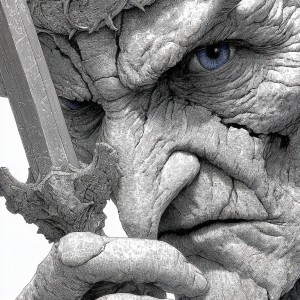
Spearfinger, or *U’tlun’ta* in Cherokee tradition, is one of the most fearsome beings in southeastern Native folklore. She is described as an old woman with stone-like skin and a long, razor-sharp finger made of obsidian or flint. That finger is her primary weapon — used to cut out the livers of unsuspecting travelers, especially children. Spearfinger is said to mimic voices to lure victims away from safety, calling to them in the voices of relatives or friends. Her stone skin makes her invulnerable to most weapons, and her cries echo across mountainsides in a chilling, fractured wail.
Legend says Spearfinger frequented the high cliffs and rocky outcrops of the Appalachians, blending into the stone until the moment she struck. She could disguise herself as a harmless old woman gathering firewood or as a stump or boulder on the forest floor. Her footsteps made a sound like rocks grinding together, and birds were said to fall silent in her presence. Cherokee villages feared her ability to appear without warning and vanish just as quickly, leaving only a missing child or a trail of disturbed leaves.
One of the central stories about Spearfinger tells of the time the Cherokee united against her. Warriors, medicine people, and even the birds and animals worked together to find a way to kill her. They discovered her one weakness: a vulnerable spot on her right side where her heart was hidden. After striking this point, they were finally able to defeat her. The tale serves as a lesson in unity, vigilance, and the dangers of deception — a narrative far larger than a simple monster story.
Location:Cherokee territory (Tennessee and North Carolina)
Spearfinger, or *U’tlun’ta* in Cherokee tradition, is one of the most fearsome beings in southeastern Native folklore. She is described as an old woman with stone-like skin and a long, razor-sharp finger made of obsidian or flint. That finger is her primary weapon — used to cut out the livers of unsuspecting travelers, especially children. Spearfinger is said to mimic voices to lure victims away from safety, calling to them in the voices of relatives or friends. Her stone skin makes her invulnerable to most weapons, and her cries echo across mountainsides in a chilling, fractured wail.
Legend says Spearfinger frequented the high cliffs and rocky outcrops of the Appalachians, blending into the stone until the moment she struck. She could disguise herself as a harmless old woman gathering firewood or as a stump or boulder on the forest floor. Her footsteps made a sound like rocks grinding together, and birds were said to fall silent in her presence. Cherokee villages feared her ability to appear without warning and vanish just as quickly, leaving only a missing child or a trail of disturbed leaves.
One of the central stories about Spearfinger tells of the time the Cherokee united against her. Warriors, medicine people, and even the birds and animals worked together to find a way to kill her. They discovered her one weakness: a vulnerable spot on her right side where her heart was hidden. After striking this point, they were finally able to defeat her. The tale serves as a lesson in unity, vigilance, and the dangers of deception — a narrative far larger than a simple monster story.
Tailypo
Region: Appalachia
Location:Southern Appalachia (North Carolina, Virginia, Tennessee)
Tailypo is one of the classic Appalachian cabin stories, told by lantern light and passed down through generations. The tale usually begins with an old man living alone in a remote cabin with only his three loyal hunting dogs for companionship. One night he hears a rustling outside and shoots at a strange creature trying to enter his food stores. In the morning, he finds he has severed a small, strange-looking tail. He cooks and eats it, puzzled but unconcerned — until sunset, when something begins scratching at his cabin walls and calling out in a chilling, drawn-out voice: “Tailypo… Tailypo… I want my Tailypo…”
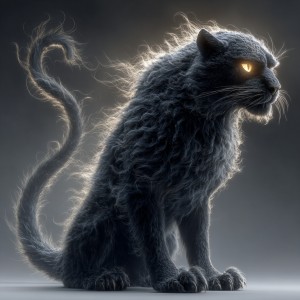
The creature itself is rarely described clearly, which makes the story more unsettling. Some versions say it has glowing eyes and thin, wiry limbs; others claim it crawls like a large, emaciated animal. What matters more is the *sound* — the scratching, pacing, and relentless repetition of its demand. Each night, the Tailypo returns, the voice growing closer, more insistent. The dogs try to defend the old man but are picked off one by one, vanishing into the darkness with a yelp. As fear mounts, the man barricades himself inside, but the creature eventually gets in.
The story traditionally ends with the old man disappearing, dragged into the woods or torn apart, leaving only the echo of the creature’s voice on the wind. Some storytellers soften the ending; others make it more gruesome. In all versions, the Tailypo is a lesson in consequences — about violating the natural order, taking what doesn’t belong to you, or ignoring the warnings of the wilderness. It’s simple, eerie, and enduring, the kind of story mountain families tell because it still works every time.
Location:Southern Appalachia (North Carolina, Virginia, Tennessee)
Tailypo is one of the classic Appalachian cabin stories, told by lantern light and passed down through generations. The tale usually begins with an old man living alone in a remote cabin with only his three loyal hunting dogs for companionship. One night he hears a rustling outside and shoots at a strange creature trying to enter his food stores. In the morning, he finds he has severed a small, strange-looking tail. He cooks and eats it, puzzled but unconcerned — until sunset, when something begins scratching at his cabin walls and calling out in a chilling, drawn-out voice: “Tailypo… Tailypo… I want my Tailypo…”
The creature itself is rarely described clearly, which makes the story more unsettling. Some versions say it has glowing eyes and thin, wiry limbs; others claim it crawls like a large, emaciated animal. What matters more is the *sound* — the scratching, pacing, and relentless repetition of its demand. Each night, the Tailypo returns, the voice growing closer, more insistent. The dogs try to defend the old man but are picked off one by one, vanishing into the darkness with a yelp. As fear mounts, the man barricades himself inside, but the creature eventually gets in.
The story traditionally ends with the old man disappearing, dragged into the woods or torn apart, leaving only the echo of the creature’s voice on the wind. Some storytellers soften the ending; others make it more gruesome. In all versions, the Tailypo is a lesson in consequences — about violating the natural order, taking what doesn’t belong to you, or ignoring the warnings of the wilderness. It’s simple, eerie, and enduring, the kind of story mountain families tell because it still works every time.
The Boojum
Region: Appalachia
Location:Great Smoky Mountains, North Carolina
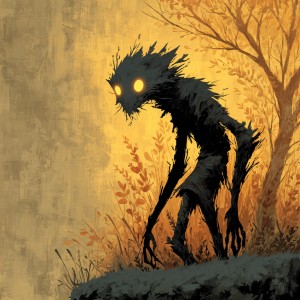
The Boojum is a gentler figure in Appalachian folklore, though no less strange. Described as a shaggy, giant man or humanoid creature covered in grayish hair, the Boojum wanders the high ridges of the Smoky Mountains searching for shining stones. He is said to hoard crystals, gems, and quartz he finds in mountain crevices, storing them in hidden caves. Despite his size — some tales claim he stands well over eight feet tall — the Boojum is shy and avoids humans whenever possible, melting into the forest with surprising grace.
Local stories often portray the Boojum as lonely. Some versions link him to a mountain woman named Annie, who fell in love with him and walked the ridgelines calling his name. These tales blend melancholy with myth: the Boojum, in his solitude, responds only with a long, mournful cry that echoes across the valleys. Hunters claimed to hear that cry at dusk, unsure whether it belonged to a man, an animal, or something caught between the two. In these stories, the Boojum’s only real desire is to be left alone with his treasures.
Unlike many cryptids, the Boojum sits at the intersection of myth and gentle cautionary tale. He teaches respect for the mountains, discourages wandering too far off trail, and symbolizes the strange beauty of the wilderness. The Boojum is less a monster than a folkloric guardian of the highlands — wild, misunderstood, and deeply tied to the Smokies.
Location:Great Smoky Mountains, North Carolina
The Boojum is a gentler figure in Appalachian folklore, though no less strange. Described as a shaggy, giant man or humanoid creature covered in grayish hair, the Boojum wanders the high ridges of the Smoky Mountains searching for shining stones. He is said to hoard crystals, gems, and quartz he finds in mountain crevices, storing them in hidden caves. Despite his size — some tales claim he stands well over eight feet tall — the Boojum is shy and avoids humans whenever possible, melting into the forest with surprising grace.
Local stories often portray the Boojum as lonely. Some versions link him to a mountain woman named Annie, who fell in love with him and walked the ridgelines calling his name. These tales blend melancholy with myth: the Boojum, in his solitude, responds only with a long, mournful cry that echoes across the valleys. Hunters claimed to hear that cry at dusk, unsure whether it belonged to a man, an animal, or something caught between the two. In these stories, the Boojum’s only real desire is to be left alone with his treasures.
Unlike many cryptids, the Boojum sits at the intersection of myth and gentle cautionary tale. He teaches respect for the mountains, discourages wandering too far off trail, and symbolizes the strange beauty of the wilderness. The Boojum is less a monster than a folkloric guardian of the highlands — wild, misunderstood, and deeply tied to the Smokies.
The Cowee Serpent
Region: Appalachia
Location:Cowee Valley, North Carolina (smoky rivers and Cherokee homelands)
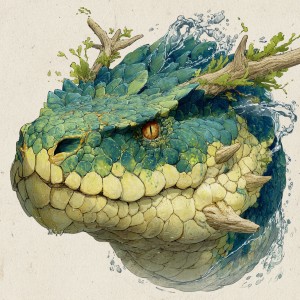
The Cowee Serpent is one of the great river beasts of Cherokee oral tradition, sometimes described as a massive horned serpent with shimmering scales and antler-like projections that glow faintly in moonlight. According to legend, the creature dwells in the deep pools of the Little Tennessee River near Cowee, surfacing only on quiet nights when the water is still and the air hangs heavy with mist. Its body is said to move with the slow, deliberate grace of something ancient—part fish, part serpent, part supernatural presence woven into the valley’s geography.
Early accounts from Cherokee storytellers portray the Cowee Serpent as a guardian spirit tied to the river’s health. In some tales, it punishes those who pollute or overfish; in others, it warns villages of impending danger by thrashing the water or letting its antlers glow across the valley like lanterns. Yet there are darker versions too—stories of travelers disappearing near deep eddies, or fishermen catching glimpses of luminous horns beneath the surface before feeling a sudden pull on their canoe. These conflicting portrayals show how the Serpent functions as both protector and threat, depending on the storyteller’s lineage.
As European settlers entered the region, the legend mixed with frontier accounts of giant snakes and water monsters, giving rise to embellished retellings about river leviathans dragging wagons into fords or scaring off horses at night. Despite these additions, the core image remains intact: a colossal creature, luminous and ancient, whose unseen presence shapes the character of the river itself. Even now, some locals say the valley grows unnaturally still before storms, as if the Serpent is stirring beneath the water, waiting.
Location:Cowee Valley, North Carolina (smoky rivers and Cherokee homelands)
The Cowee Serpent is one of the great river beasts of Cherokee oral tradition, sometimes described as a massive horned serpent with shimmering scales and antler-like projections that glow faintly in moonlight. According to legend, the creature dwells in the deep pools of the Little Tennessee River near Cowee, surfacing only on quiet nights when the water is still and the air hangs heavy with mist. Its body is said to move with the slow, deliberate grace of something ancient—part fish, part serpent, part supernatural presence woven into the valley’s geography.
Early accounts from Cherokee storytellers portray the Cowee Serpent as a guardian spirit tied to the river’s health. In some tales, it punishes those who pollute or overfish; in others, it warns villages of impending danger by thrashing the water or letting its antlers glow across the valley like lanterns. Yet there are darker versions too—stories of travelers disappearing near deep eddies, or fishermen catching glimpses of luminous horns beneath the surface before feeling a sudden pull on their canoe. These conflicting portrayals show how the Serpent functions as both protector and threat, depending on the storyteller’s lineage.
As European settlers entered the region, the legend mixed with frontier accounts of giant snakes and water monsters, giving rise to embellished retellings about river leviathans dragging wagons into fords or scaring off horses at night. Despite these additions, the core image remains intact: a colossal creature, luminous and ancient, whose unseen presence shapes the character of the river itself. Even now, some locals say the valley grows unnaturally still before storms, as if the Serpent is stirring beneath the water, waiting.
The Dogman
Region: Appalachia
Location:Primarily Great Lakes region, but with Appalachian sightings (Kentucky, Tennessee, West Virginia)
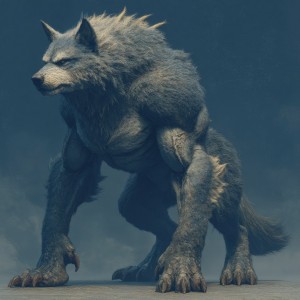
The Dogman is a creature described as a tall, muscular, upright canine — something like a wolf standing on two legs. Although often associated with northern Michigan, Dogman lore stretches deep into Appalachia, where hunters, hikers, and rural residents claim to have seen wolf-like beings watching from the tree line or pacing them along backcountry trails. Witnesses often describe an animal with broad shoulders, a narrow waist, digitigrade legs, and a head unmistakably canine. Its eyes are commonly reported as reflective or intelligent, giving the uneasy impression of something half-animal, half-aware.
Appalachian stories tend to frame Dogman encounters not as attacks but as prolonged observations. People report seeing it cross a road in two or three long strides, or watching from behind a stand of pines before fading back into the forest. Others describe hearing heavy, bipedal footsteps outside campsites at night, accompanied by low growls that don’t sound quite natural. Livestock disappearances are sometimes attributed to the creature, but these claims are more rumor than verified detail. Dogman stories share Bigfoot’s rural habitat but differ in tone — there is almost always a sense of being watched by a predator, not an elusive ape.
The Dogman persists in folklore partly because the regions where it is reported — deep forests, old homesteads, unlit roads — lend themselves to fear and imagination. Unlike Bigfoot, Dogman’s legend carries a sharper edge; people don’t describe curiosity or wonder, but dread and instinctual fear. Whether a misidentified wolf, a campfire legend, or something stranger, the Dogman has carved out a unique niche in Appalachian storytelling — the creature that watches from the edge of the firelight, silent and waiting.
Location:Primarily Great Lakes region, but with Appalachian sightings (Kentucky, Tennessee, West Virginia)
The Dogman is a creature described as a tall, muscular, upright canine — something like a wolf standing on two legs. Although often associated with northern Michigan, Dogman lore stretches deep into Appalachia, where hunters, hikers, and rural residents claim to have seen wolf-like beings watching from the tree line or pacing them along backcountry trails. Witnesses often describe an animal with broad shoulders, a narrow waist, digitigrade legs, and a head unmistakably canine. Its eyes are commonly reported as reflective or intelligent, giving the uneasy impression of something half-animal, half-aware.
Appalachian stories tend to frame Dogman encounters not as attacks but as prolonged observations. People report seeing it cross a road in two or three long strides, or watching from behind a stand of pines before fading back into the forest. Others describe hearing heavy, bipedal footsteps outside campsites at night, accompanied by low growls that don’t sound quite natural. Livestock disappearances are sometimes attributed to the creature, but these claims are more rumor than verified detail. Dogman stories share Bigfoot’s rural habitat but differ in tone — there is almost always a sense of being watched by a predator, not an elusive ape.
The Dogman persists in folklore partly because the regions where it is reported — deep forests, old homesteads, unlit roads — lend themselves to fear and imagination. Unlike Bigfoot, Dogman’s legend carries a sharper edge; people don’t describe curiosity or wonder, but dread and instinctual fear. Whether a misidentified wolf, a campfire legend, or something stranger, the Dogman has carved out a unique niche in Appalachian storytelling — the creature that watches from the edge of the firelight, silent and waiting.
The Flatwoods Monster
Region: Appalachia
Location:Flatwoods, West Virginia
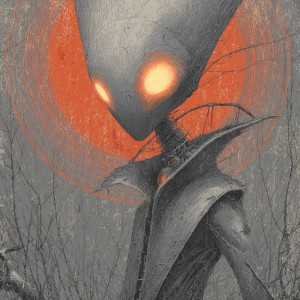
On the evening of September 12, 1952, three young boys witnessed what looked like a bright fireball streak across the sky and land on a nearby hill. Curious and frightened, they gathered a small group of locals and hiked toward the site. What they reported seeing has become one of the most vivid descriptions in American folklore: a towering figure—estimates range from seven to ten feet tall—wearing what looked like a dark metal dress or suit, topped with a glowing, spade-shaped head framed by a hood-like structure. Some described the creature’s eyes as porthole-like, others as headlights. The air was thick with a pungent, metallic odor that irritated their eyes and throats.
Witnesses claimed the creature emitted a hissing or mechanical noise, and that its movements were stiff, almost floating rather than walking. Several in the group later reported nausea, throat irritation, and burning sensations on their skin—symptoms that folklore fans now compare to “radiation exposure,” though no official explanation was ever found. The military, arriving the next day, dismissed the incident as a misidentified meteor and “mass hysteria,” but the villagers remained adamant that what they saw wasn’t a trick of the light or a frightened animal. The fireball in the sky had been real. So had the creature’s presence.
Over the decades, the Flatwoods Monster evolved from a one-night terror into a cultural icon. Towns across West Virginia adopted imagery of the spade-shaped hood and glowing eyes for murals, souvenirs, and museum exhibits. Some speculate the creature was an alien probe or a misidentified owl; others hold firmly to the original description—that something otherworldly landed in the hills that night. Regardless of explanation, the Flatwoods Monster remains one of America’s most striking and visually distinct cryptids, remembered not for what it did, but for how clearly it imprinted itself on the people who saw it.
Location:Flatwoods, West Virginia
On the evening of September 12, 1952, three young boys witnessed what looked like a bright fireball streak across the sky and land on a nearby hill. Curious and frightened, they gathered a small group of locals and hiked toward the site. What they reported seeing has become one of the most vivid descriptions in American folklore: a towering figure—estimates range from seven to ten feet tall—wearing what looked like a dark metal dress or suit, topped with a glowing, spade-shaped head framed by a hood-like structure. Some described the creature’s eyes as porthole-like, others as headlights. The air was thick with a pungent, metallic odor that irritated their eyes and throats.
Witnesses claimed the creature emitted a hissing or mechanical noise, and that its movements were stiff, almost floating rather than walking. Several in the group later reported nausea, throat irritation, and burning sensations on their skin—symptoms that folklore fans now compare to “radiation exposure,” though no official explanation was ever found. The military, arriving the next day, dismissed the incident as a misidentified meteor and “mass hysteria,” but the villagers remained adamant that what they saw wasn’t a trick of the light or a frightened animal. The fireball in the sky had been real. So had the creature’s presence.
Over the decades, the Flatwoods Monster evolved from a one-night terror into a cultural icon. Towns across West Virginia adopted imagery of the spade-shaped hood and glowing eyes for murals, souvenirs, and museum exhibits. Some speculate the creature was an alien probe or a misidentified owl; others hold firmly to the original description—that something otherworldly landed in the hills that night. Regardless of explanation, the Flatwoods Monster remains one of America’s most striking and visually distinct cryptids, remembered not for what it did, but for how clearly it imprinted itself on the people who saw it.
The Hopkinsville Goblins
Region: Appalachia
Location:Hopkinsville / Kelly, Kentucky (border of Appalachia)
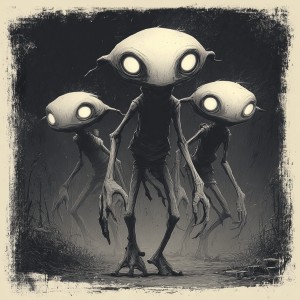
The Hopkinsville Goblins burst into American folklore after a single night in August 1955, when a rural family arrived at the Hopkinsville police station terrified and breathless. They claimed their farmhouse had been besieged by small, strange creatures emerging from the woods. According to their report, the beings were three to four feet tall, with large glowing eyes, long arms, and thin, wiry legs. Their skin, the witnesses said, appeared smooth or metallic, reflecting moonlight like polished aluminum. They moved with abrupt, unnatural jumps, almost hovering rather than walking, and seemed unfazed by gunshots fired in panic from inside the home.
That night, multiple adults and several children all described the same unsettling behavior: the beings approaching windows, peering in, then darting away when confronted. At one point, a creature was said to climb onto the roof, prompting frantic attempts to drive it off. When police arrived, they found no bodies or footprints that matched a known animal, but several officers noted the witnesses were genuinely frightened, not intoxicated, and seemingly unable to fully articulate what they had seen. The house showed signs of gunfire, but nothing else that could explain the event.
Over time, the story spread beyond Kentucky, evolving into one of America’s most famous “alien encounter” accounts. Skeptics blamed owls or misinterpretation; believers insisted the descriptions were too detailed and consistent to dismiss. What gives the Hopkinsville incident staying power isn’t just the strangeness of the creatures — it’s the atmosphere of the encounter: a silent country road, a remote farmhouse, a family convinced something intelligent and unknown was circling them in the dark. In folklore circles, it remains a touchstone for encounters that defy easy explanation.
Location:Hopkinsville / Kelly, Kentucky (border of Appalachia)
The Hopkinsville Goblins burst into American folklore after a single night in August 1955, when a rural family arrived at the Hopkinsville police station terrified and breathless. They claimed their farmhouse had been besieged by small, strange creatures emerging from the woods. According to their report, the beings were three to four feet tall, with large glowing eyes, long arms, and thin, wiry legs. Their skin, the witnesses said, appeared smooth or metallic, reflecting moonlight like polished aluminum. They moved with abrupt, unnatural jumps, almost hovering rather than walking, and seemed unfazed by gunshots fired in panic from inside the home.
That night, multiple adults and several children all described the same unsettling behavior: the beings approaching windows, peering in, then darting away when confronted. At one point, a creature was said to climb onto the roof, prompting frantic attempts to drive it off. When police arrived, they found no bodies or footprints that matched a known animal, but several officers noted the witnesses were genuinely frightened, not intoxicated, and seemingly unable to fully articulate what they had seen. The house showed signs of gunfire, but nothing else that could explain the event.
Over time, the story spread beyond Kentucky, evolving into one of America’s most famous “alien encounter” accounts. Skeptics blamed owls or misinterpretation; believers insisted the descriptions were too detailed and consistent to dismiss. What gives the Hopkinsville incident staying power isn’t just the strangeness of the creatures — it’s the atmosphere of the encounter: a silent country road, a remote farmhouse, a family convinced something intelligent and unknown was circling them in the dark. In folklore circles, it remains a touchstone for encounters that defy easy explanation.
The Mingo War Giant
Region: Appalachia
Location:Ohio River Valley and surrounding Appalachian frontier
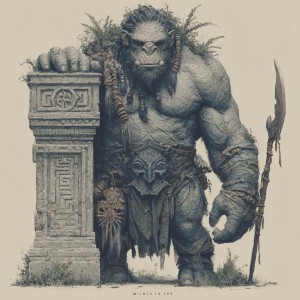
The Mingo War Giant comes from frontier-era stories passed down through both Native American oral tradition and later settler folklore. The Mingo, an Iroquoian-speaking people of the Ohio River Valley, spoke of encountering enormous humanoid beings in ancient times — towering figures said to live deep within the forests or along remote ridges. Early stories portray these giants not as simple brutes but as unpredictable forces: sometimes protectors, sometimes antagonists, always embodying a raw, older power connected to the land. Some accounts describe them as twice the height of a man, with broad shoulders, long strides, and a thunderous voice that echoed across valleys.
As European settlers moved westward in the 1700s, they began to mix their own giant lore — biblical references, Old World myths, and tall tales — with those of the Mingo and neighboring tribes. Stories sprang up about fierce battles between warriors and giants, often framed as tests of bravery or moments when human ingenuity triumphed over overwhelming strength. Frontier journals and letters occasionally mention “mounds too large for any ordinary Indian to build” or tools too heavy for a single man to lift, which storytellers later linked to the idea of ancient giants inhabiting the region long before recorded history.
While there’s no archaeological evidence to support the literal existence of such beings, the Mingo War Giant persists as one of the most atmospheric legends of the Ohio–Appalachian borderlands. It represents the way early peoples—Indigenous and settler alike—interpreted the vastness and mystery of the landscape. The giant is the embodiment of wilderness: towering, ancient, and capable of both violence and awe. Even today, when people find oversized stone tools or encounter inexplicable footprints in creekbeds, the old stories resurface, reminding locals of the towering figures who once walked the ridges in legend.
Location:Ohio River Valley and surrounding Appalachian frontier
The Mingo War Giant comes from frontier-era stories passed down through both Native American oral tradition and later settler folklore. The Mingo, an Iroquoian-speaking people of the Ohio River Valley, spoke of encountering enormous humanoid beings in ancient times — towering figures said to live deep within the forests or along remote ridges. Early stories portray these giants not as simple brutes but as unpredictable forces: sometimes protectors, sometimes antagonists, always embodying a raw, older power connected to the land. Some accounts describe them as twice the height of a man, with broad shoulders, long strides, and a thunderous voice that echoed across valleys.
As European settlers moved westward in the 1700s, they began to mix their own giant lore — biblical references, Old World myths, and tall tales — with those of the Mingo and neighboring tribes. Stories sprang up about fierce battles between warriors and giants, often framed as tests of bravery or moments when human ingenuity triumphed over overwhelming strength. Frontier journals and letters occasionally mention “mounds too large for any ordinary Indian to build” or tools too heavy for a single man to lift, which storytellers later linked to the idea of ancient giants inhabiting the region long before recorded history.
While there’s no archaeological evidence to support the literal existence of such beings, the Mingo War Giant persists as one of the most atmospheric legends of the Ohio–Appalachian borderlands. It represents the way early peoples—Indigenous and settler alike—interpreted the vastness and mystery of the landscape. The giant is the embodiment of wilderness: towering, ancient, and capable of both violence and awe. Even today, when people find oversized stone tools or encounter inexplicable footprints in creekbeds, the old stories resurface, reminding locals of the towering figures who once walked the ridges in legend.
The Moon-Eyed People
Region: Appalachia
Location:Cherokee folklore; widespread in Appalachian lore (North Carolina, Tennessee, Georgia)
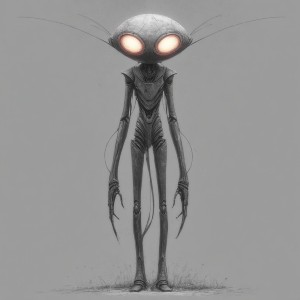
The Moon-Eyed People are one of the most intriguing entries in Cherokee tradition, describing a mysterious race said to have lived in the mountains long before European contact. They were described as pale, small-statured people with unusually large, light-sensitive eyes. According to some Cherokee stories, they were unable to see in daylight and thus lived in caves or traveled only at night. Their unusual appearance and nocturnal habits set them apart from surrounding tribes, contributing to their mythic status.
Some versions of the legend claim the Moon-Eyed People were driven out during a great conflict, unable to withstand the bright summer sun. Others say they simply vanished, leaving behind stone mounds or fortifications whose origins were unexplained. Over time, European settlers incorporated the story into their own folklore, linking the Moon-Eyed People to Welsh explorers, lost tribes, or even tribes of subterranean humans. None of these explanations hold historical support, but they illustrate how compelling the idea is — a vanished people glimpsed only through fragments.
Modern archaeology offers no proof of such a group, but the legend endures because it inhabits the perfect intersection of mystery, cultural memory, and geographical features that suggest hidden histories. Caves, stone effigies, and unexplained earthworks in the Southern Appalachians keep fueling speculation. The Moon-Eyed People remain a symbol of the unknown peoples who might have walked the mountains long before written records, lingering in the imagination as whisper-figures at the edge of night.
Location:Cherokee folklore; widespread in Appalachian lore (North Carolina, Tennessee, Georgia)
The Moon-Eyed People are one of the most intriguing entries in Cherokee tradition, describing a mysterious race said to have lived in the mountains long before European contact. They were described as pale, small-statured people with unusually large, light-sensitive eyes. According to some Cherokee stories, they were unable to see in daylight and thus lived in caves or traveled only at night. Their unusual appearance and nocturnal habits set them apart from surrounding tribes, contributing to their mythic status.
Some versions of the legend claim the Moon-Eyed People were driven out during a great conflict, unable to withstand the bright summer sun. Others say they simply vanished, leaving behind stone mounds or fortifications whose origins were unexplained. Over time, European settlers incorporated the story into their own folklore, linking the Moon-Eyed People to Welsh explorers, lost tribes, or even tribes of subterranean humans. None of these explanations hold historical support, but they illustrate how compelling the idea is — a vanished people glimpsed only through fragments.
Modern archaeology offers no proof of such a group, but the legend endures because it inhabits the perfect intersection of mystery, cultural memory, and geographical features that suggest hidden histories. Caves, stone effigies, and unexplained earthworks in the Southern Appalachians keep fueling speculation. The Moon-Eyed People remain a symbol of the unknown peoples who might have walked the mountains long before written records, lingering in the imagination as whisper-figures at the edge of night.
The Raven Mocker
Region: Appalachia
Location:Cherokee territory (North Carolina, Tennessee, Georgia)
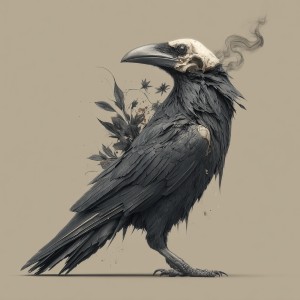
The Raven Mocker, known in Cherokee as *Kâ’lanû Ahkyeli’skï*, is one of the most feared beings in Cherokee tradition. Unlike many cryptids, it is not merely a creature but a malevolent spirit associated with death, illness, and the final moments of life. According to legend, the Raven Mocker appears when someone is dying, invisible to all except other medicine people. It is said to steal the dying person’s life force, consuming the years they would have lived and adding them to its own lifespan. When it feeds, witnesses hear the sound of a raven’s wings beating or an eerie, rasping cry.
Descriptions of the Raven Mocker vary, but many portray it as a shape-shifter capable of appearing as an old man or woman until the moment it reveals its true form — gaunt, shadowed, and surrounded by a dark aura. In some stories, the Raven Mocker flies through the air in a ghostly form, fire trailing from its body as it passes over treetops. Cherokee medicine men were said to be able to sense when a Raven Mocker was near and could fight or even kill one, though doing so required great spiritual power. The Raven Mocker fears such healers and avoids homes where medicine men are present.
This figure’s presence in Cherokee lore speaks to communal fears surrounding death, dying alone, and the vulnerability of the sick. The Raven Mocker is not a creature one hunts or confronts; it is a reminder of how fragile the border between life and death can be. Even today, among those who grew up with Cherokee storytelling, the Raven Mocker remains a chilling symbol of the moment when breath leaves the body and the world grows quiet.
Location:Cherokee territory (North Carolina, Tennessee, Georgia)
The Raven Mocker, known in Cherokee as *Kâ’lanû Ahkyeli’skï*, is one of the most feared beings in Cherokee tradition. Unlike many cryptids, it is not merely a creature but a malevolent spirit associated with death, illness, and the final moments of life. According to legend, the Raven Mocker appears when someone is dying, invisible to all except other medicine people. It is said to steal the dying person’s life force, consuming the years they would have lived and adding them to its own lifespan. When it feeds, witnesses hear the sound of a raven’s wings beating or an eerie, rasping cry.
Descriptions of the Raven Mocker vary, but many portray it as a shape-shifter capable of appearing as an old man or woman until the moment it reveals its true form — gaunt, shadowed, and surrounded by a dark aura. In some stories, the Raven Mocker flies through the air in a ghostly form, fire trailing from its body as it passes over treetops. Cherokee medicine men were said to be able to sense when a Raven Mocker was near and could fight or even kill one, though doing so required great spiritual power. The Raven Mocker fears such healers and avoids homes where medicine men are present.
This figure’s presence in Cherokee lore speaks to communal fears surrounding death, dying alone, and the vulnerability of the sick. The Raven Mocker is not a creature one hunts or confronts; it is a reminder of how fragile the border between life and death can be. Even today, among those who grew up with Cherokee storytelling, the Raven Mocker remains a chilling symbol of the moment when breath leaves the body and the world grows quiet.
The Sidehill Gouger
Region: Appalachia
Location:Appalachian Mountains (especially high ridges and steep slopes)
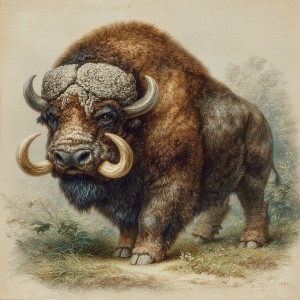
The Sidehill Gouger is one of the classic Appalachian tall-tale creatures, built from loggers’ humor and the terrain’s brutal slopes. According to lore, Gougers are four-legged mammals with legs on one side of their body significantly shorter than the legs on the other. This physical oddity means they can only walk in one direction around a mountain—clockwise or counterclockwise—never reversing course. Older storytellers say that if a Gouger is forced to turn around suddenly, it will tumble endlessly downhill, rolling head over heels until it collides with a creek or ravine. Some versions claim there are two species: left-leaning and right-leaning Gougers, each trapped on their preferred contour lines.
The Gouger legends grew from the culture of logging camps, where men worked long hours on slopes that punished every misstep. Over time, workers turned their daily hazards into stories, and the Gouger became both a mascot and a shared joke. One tale describes a logger who brought home a “perfectly good Gouger pelt,” only to discover it was simply a deer hide cut unevenly as a prank. Others claim the creatures dig trenches along hillsides as they pass, creating the narrow paths hikers sometimes find carved into the mountains. The stories often carry a wink—everyone knows the creatures aren’t real, but everyone enjoys telling the tale as if they might be.
Despite its humorous origins, the Sidehill Gouger has become part of a larger tradition of American “fearsome critters,” creatures invented by woodsmen to entertain newcomers, explain odd terrain features, or lighten long nights in bunkhouses. Younger generations repeat the stories with affection, keeping the Gouger alive as a symbol of Appalachian wit. Even if no one expects to meet one, the idea of a creature shaped by the land’s impossible slopes feels strangely fitting for mountain country.
Location:Appalachian Mountains (especially high ridges and steep slopes)
The Sidehill Gouger is one of the classic Appalachian tall-tale creatures, built from loggers’ humor and the terrain’s brutal slopes. According to lore, Gougers are four-legged mammals with legs on one side of their body significantly shorter than the legs on the other. This physical oddity means they can only walk in one direction around a mountain—clockwise or counterclockwise—never reversing course. Older storytellers say that if a Gouger is forced to turn around suddenly, it will tumble endlessly downhill, rolling head over heels until it collides with a creek or ravine. Some versions claim there are two species: left-leaning and right-leaning Gougers, each trapped on their preferred contour lines.
The Gouger legends grew from the culture of logging camps, where men worked long hours on slopes that punished every misstep. Over time, workers turned their daily hazards into stories, and the Gouger became both a mascot and a shared joke. One tale describes a logger who brought home a “perfectly good Gouger pelt,” only to discover it was simply a deer hide cut unevenly as a prank. Others claim the creatures dig trenches along hillsides as they pass, creating the narrow paths hikers sometimes find carved into the mountains. The stories often carry a wink—everyone knows the creatures aren’t real, but everyone enjoys telling the tale as if they might be.
Despite its humorous origins, the Sidehill Gouger has become part of a larger tradition of American “fearsome critters,” creatures invented by woodsmen to entertain newcomers, explain odd terrain features, or lighten long nights in bunkhouses. Younger generations repeat the stories with affection, keeping the Gouger alive as a symbol of Appalachian wit. Even if no one expects to meet one, the idea of a creature shaped by the land’s impossible slopes feels strangely fitting for mountain country.
The Silver Giant of Blairsville
Region: Appalachia
Location:Near Blairsville, Georgia (Appalachian foothills)
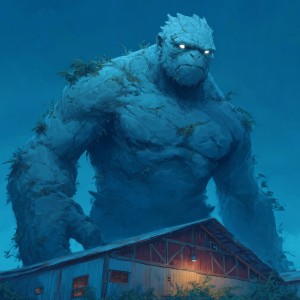
The Silver Giant is a lesser-known cryptid, whispered mostly in local eyewitness accounts rather than old folktales. Reports describe a tall, luminous figure — anywhere from seven to ten feet high — glimpsed between trees at dusk or dawn. Witnesses say its skin or surface appears metallic or reflective, shining faintly like polished silver even in low light. Some describe its head as smooth and featureless, others speak of faint indentations where eyes might be. Sightings usually last only a moment before the figure slips behind a ridge or fades from view.
Unlike more aggressive or vocal cryptids, the Silver Giant is almost always silent. People who claim to have seen it often describe a heavy stillness in the woods beforehand, as if the usual insect and bird sounds cease in its presence. The creature never approaches or signals awareness of witnesses; it simply stands or walks at the edge of vision, leaving people unsure whether they saw something real or a trick of early morning light reflecting off dew or spider silk. Those who insist they saw it swear that the figure’s movement was intentional, purposeful, and entirely unlike a deer or bear.
The scarcity of stories gives the Silver Giant an eerie purity. It isn’t tied to a long tradition, and it has no established role as omen or monster. It feels like a creature caught mid-existence, something glimpsed before it fully enters legend. Whether an optical illusion, a misidentified animal, or something stranger, the Silver Giant remains one of those cryptids that quietly lingers in the backrooms of Appalachian folklore.
Location:Near Blairsville, Georgia (Appalachian foothills)
The Silver Giant is a lesser-known cryptid, whispered mostly in local eyewitness accounts rather than old folktales. Reports describe a tall, luminous figure — anywhere from seven to ten feet high — glimpsed between trees at dusk or dawn. Witnesses say its skin or surface appears metallic or reflective, shining faintly like polished silver even in low light. Some describe its head as smooth and featureless, others speak of faint indentations where eyes might be. Sightings usually last only a moment before the figure slips behind a ridge or fades from view.
Unlike more aggressive or vocal cryptids, the Silver Giant is almost always silent. People who claim to have seen it often describe a heavy stillness in the woods beforehand, as if the usual insect and bird sounds cease in its presence. The creature never approaches or signals awareness of witnesses; it simply stands or walks at the edge of vision, leaving people unsure whether they saw something real or a trick of early morning light reflecting off dew or spider silk. Those who insist they saw it swear that the figure’s movement was intentional, purposeful, and entirely unlike a deer or bear.
The scarcity of stories gives the Silver Giant an eerie purity. It isn’t tied to a long tradition, and it has no established role as omen or monster. It feels like a creature caught mid-existence, something glimpsed before it fully enters legend. Whether an optical illusion, a misidentified animal, or something stranger, the Silver Giant remains one of those cryptids that quietly lingers in the backrooms of Appalachian folklore.
The Snallygaster
Region: Appalachia
Location:Maryland borderlands, Appalachia-adjacent
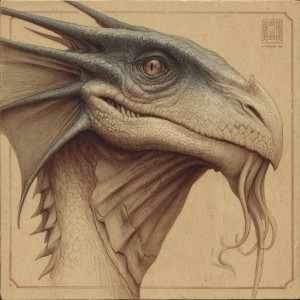
The Snallygaster’s legend predates most American cryptids, reaching back to German settlers in the 1700s who brought stories of a dragon-like creature said to haunt the hills. Early accounts describe it as a monstrous hybrid—part bird, part reptile, part mechanical nightmare—with a long, metallic beak lined with razor-sharp teeth and tentacle-like appendages trailing behind it. Settlers claimed the beast swooped down silently, snatching livestock and sometimes even children. It was said to leave strange, circular scorch marks on the ground, which some interpreted as nests or footprints.
Newspaper reports from the early 1900s revived the creature’s fame when several Maryland communities claimed a Snallygaster was terrorizing the region. These stories grew increasingly dramatic, describing a winged creature with a twenty-five foot wingspan, a single cyclopean eye, and tentacles capable of grasping a full-grown man. One story insisted the creature nearly captured a local man before being frightened away by the sound of a steam whistle. Another claimed it laid eggs “as large as a barrel” near South Mountain. Reporters flourished these tales with a carnival-barker flair, but locals insisted something strange had been circling the skies.
Eventually, the Smithsonian Institution allegedly expressed interest in obtaining a specimen, and President Theodore Roosevelt was said to consider postponing a hunting trip to personally aid in its pursuit. Whether these claims were ever true is secondary to how deeply the Snallygaster embedded itself into regional folklore. Even today, breweries, festivals, and town mascots bear its name. Half dragon, half bird, half tall-tale spectacle, the Snallygaster remains a creature with one foot in European myth and the other in Appalachian storytelling.
Location:Maryland borderlands, Appalachia-adjacent
The Snallygaster’s legend predates most American cryptids, reaching back to German settlers in the 1700s who brought stories of a dragon-like creature said to haunt the hills. Early accounts describe it as a monstrous hybrid—part bird, part reptile, part mechanical nightmare—with a long, metallic beak lined with razor-sharp teeth and tentacle-like appendages trailing behind it. Settlers claimed the beast swooped down silently, snatching livestock and sometimes even children. It was said to leave strange, circular scorch marks on the ground, which some interpreted as nests or footprints.
Newspaper reports from the early 1900s revived the creature’s fame when several Maryland communities claimed a Snallygaster was terrorizing the region. These stories grew increasingly dramatic, describing a winged creature with a twenty-five foot wingspan, a single cyclopean eye, and tentacles capable of grasping a full-grown man. One story insisted the creature nearly captured a local man before being frightened away by the sound of a steam whistle. Another claimed it laid eggs “as large as a barrel” near South Mountain. Reporters flourished these tales with a carnival-barker flair, but locals insisted something strange had been circling the skies.
Eventually, the Smithsonian Institution allegedly expressed interest in obtaining a specimen, and President Theodore Roosevelt was said to consider postponing a hunting trip to personally aid in its pursuit. Whether these claims were ever true is secondary to how deeply the Snallygaster embedded itself into regional folklore. Even today, breweries, festivals, and town mascots bear its name. Half dragon, half bird, half tall-tale spectacle, the Snallygaster remains a creature with one foot in European myth and the other in Appalachian storytelling.

The Whirling Whimpus
Region: Appalachia
Location:Logging regions of Appalachia (historically spread through lumberjack folklore)
The Whirling Whimpus belongs to the same family of old lumberjack tall tales that produced the Jackalope and the Hodag, but its Appalachian roots give it a distinct character. Described as a creature made of whirling wind, dust, and twisted limbs, the Whimpus spins across the forest floor like a living cyclone. Some stories claim it has claws or arms occasionally visible within the swirling mass; others insist it has no physical form at all—just a furious funnel of debris that can snatch tools, hats, or unlucky loggers off their feet. Sightings usually occur at dusk when winds rise suddenly between the trees.
Lumberjacks told stories of the Whimpus to explain the strange eddies and sudden gusts that made treetops sway even on calm days. Men working alone along ridge lines claimed they could hear a distant humming or a low, circular roar moments before the creature appeared. In some versions, the Whimpus is mischievous rather than malicious: it might scatter a cook’s firewood, mix up a foreman’s paperwork, or chase a greenhorn through a thicket just to teach him humility. Other tales make it more dangerous, attributing serious injuries to its temperamental swirls, especially when tempers flared during hard labor.
These stories served a purpose beyond entertainment—they helped woodcutters describe the unpredictable nature of mountain winds, which could fell branches without warning or send sparks from a saw’s blade flying into dry brush. The Whimpus became the folklore personification of weather itself: quick, chaotic, and impossible to control. Even today, when hikers feel a stray gust rushing down a hollow or circling around a stand of spruce, some still joke that the Whimpus is out stretching its legs.
Location:Logging regions of Appalachia (historically spread through lumberjack folklore)
The Whirling Whimpus belongs to the same family of old lumberjack tall tales that produced the Jackalope and the Hodag, but its Appalachian roots give it a distinct character. Described as a creature made of whirling wind, dust, and twisted limbs, the Whimpus spins across the forest floor like a living cyclone. Some stories claim it has claws or arms occasionally visible within the swirling mass; others insist it has no physical form at all—just a furious funnel of debris that can snatch tools, hats, or unlucky loggers off their feet. Sightings usually occur at dusk when winds rise suddenly between the trees.
Lumberjacks told stories of the Whimpus to explain the strange eddies and sudden gusts that made treetops sway even on calm days. Men working alone along ridge lines claimed they could hear a distant humming or a low, circular roar moments before the creature appeared. In some versions, the Whimpus is mischievous rather than malicious: it might scatter a cook’s firewood, mix up a foreman’s paperwork, or chase a greenhorn through a thicket just to teach him humility. Other tales make it more dangerous, attributing serious injuries to its temperamental swirls, especially when tempers flared during hard labor.
These stories served a purpose beyond entertainment—they helped woodcutters describe the unpredictable nature of mountain winds, which could fell branches without warning or send sparks from a saw’s blade flying into dry brush. The Whimpus became the folklore personification of weather itself: quick, chaotic, and impossible to control. Even today, when hikers feel a stray gust rushing down a hollow or circling around a stand of spruce, some still joke that the Whimpus is out stretching its legs.
The White Things
Region: Appalachia
Location:West Virginia
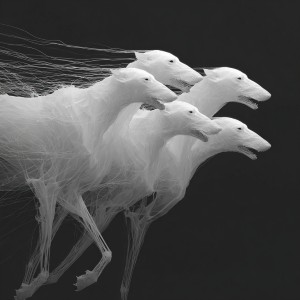
“White Things” is a catch-all name locals have used for over a century to describe pale, ghostly creatures glimpsed along lonely roadsides, riverbanks, and deep woods hollows. Sightings vary wildly: some describe a massive, wolf-like animal with pure white fur; others speak of gaunt, human-shaped figures that stand unnervingly still until approached. Witnesses often mention glowing or reflective eyes, not bright like headlights but soft, ghostlike lights that seem to drift rather than shine. Regardless of the form they take, the creatures are always described as unnaturally quiet, with none of the sounds typical animals make when moving.
Many early reports come from the late 19th and early 20th centuries, a time when remote mountain communities still traveled by horse at night. Stories spread among riders who claimed they saw white beasts pacing their wagons, keeping pace effortlessly over rough ground. Some insisted the creatures could move between trees without disturbing a single branch, or appear suddenly beside the road as if stepping out from a curtain of fog. A few accounts describe the White Things screaming — a sound said to be a mix of a woman’s wail and a panther’s cry — but most witnesses describe them as eerily silent, simply watching.
Folklore paints the White Things as ambiguous presences rather than traditional monsters. Some stories say they appear before deaths or accidents, others that they guard lost travelers or stand sentinel at old battlefields. Their shifting roles reflect the uncertainty surrounding them: they could be spirits, animals, ghosts, illusions, or something older entirely. In many Appalachian communities, the White Things endure as a symbol of the wilderness itself — quiet, watchful, and unpredictable.
Location:West Virginia
“White Things” is a catch-all name locals have used for over a century to describe pale, ghostly creatures glimpsed along lonely roadsides, riverbanks, and deep woods hollows. Sightings vary wildly: some describe a massive, wolf-like animal with pure white fur; others speak of gaunt, human-shaped figures that stand unnervingly still until approached. Witnesses often mention glowing or reflective eyes, not bright like headlights but soft, ghostlike lights that seem to drift rather than shine. Regardless of the form they take, the creatures are always described as unnaturally quiet, with none of the sounds typical animals make when moving.
Many early reports come from the late 19th and early 20th centuries, a time when remote mountain communities still traveled by horse at night. Stories spread among riders who claimed they saw white beasts pacing their wagons, keeping pace effortlessly over rough ground. Some insisted the creatures could move between trees without disturbing a single branch, or appear suddenly beside the road as if stepping out from a curtain of fog. A few accounts describe the White Things screaming — a sound said to be a mix of a woman’s wail and a panther’s cry — but most witnesses describe them as eerily silent, simply watching.
Folklore paints the White Things as ambiguous presences rather than traditional monsters. Some stories say they appear before deaths or accidents, others that they guard lost travelers or stand sentinel at old battlefields. Their shifting roles reflect the uncertainty surrounding them: they could be spirits, animals, ghosts, illusions, or something older entirely. In many Appalachian communities, the White Things endure as a symbol of the wilderness itself — quiet, watchful, and unpredictable.
The Wood Booger
Region: Appalachia
Location:Virginia and West Virginia (Blue Ridge region), with sightings throughout Appalachia
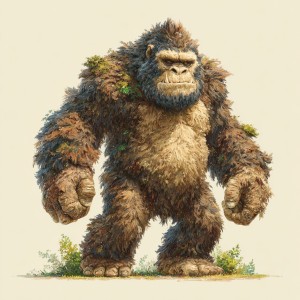
The Wood Booger is Appalachia’s local cousin to Bigfoot—a shy, forest-dwelling creature said to stand between six and nine feet tall, covered in dark brown or black hair. Unlike more aggressive folklore figures, the Wood Booger is described as elusive and almost gentle, avoiding confrontation by slipping deeper into the woods whenever humans approach. Hunters and hikers report glimpses of a large silhouette moving behind trees, sudden quiet in the forest, or the feeling of being observed from a nearby slope. Tracks attributed to the Wood Booger are large, humanlike, and usually found near creeks or muddy hillsides.
Stories of the Wood Booger often center on brief encounters: a figure darting across a trail, a rock tumbling down a hill with no visible cause, or a pair of shining eyes staring from deep shadows before vanishing. Old-timers say that the creature whistles or taps on trees to communicate, a claim echoed in modern “wood-knocking” Bigfoot lore. Reports rarely describe aggression. Instead, the Wood Booger behaves like a forest guardian or a wary observer of human activity, keeping its distance unless cornered or startled.
In recent years, the Wood Booger has become a local icon, especially in Norton, Virginia, where a park trail is named after it. But even before tourism turned the creature into a mascot, the legend had deep roots in mountain storytelling. Families warned children not to wander too far from camp at night “lest the Wood Booger get you,” though the tone was more teasing than fearful. As far as Appalachian cryptids go, the Wood Booger occupies a strange niche—too quiet to be a monster, too persistent to be ignored, always half-seen in the borderland between truth and tale.
Location:Virginia and West Virginia (Blue Ridge region), with sightings throughout Appalachia
The Wood Booger is Appalachia’s local cousin to Bigfoot—a shy, forest-dwelling creature said to stand between six and nine feet tall, covered in dark brown or black hair. Unlike more aggressive folklore figures, the Wood Booger is described as elusive and almost gentle, avoiding confrontation by slipping deeper into the woods whenever humans approach. Hunters and hikers report glimpses of a large silhouette moving behind trees, sudden quiet in the forest, or the feeling of being observed from a nearby slope. Tracks attributed to the Wood Booger are large, humanlike, and usually found near creeks or muddy hillsides.
Stories of the Wood Booger often center on brief encounters: a figure darting across a trail, a rock tumbling down a hill with no visible cause, or a pair of shining eyes staring from deep shadows before vanishing. Old-timers say that the creature whistles or taps on trees to communicate, a claim echoed in modern “wood-knocking” Bigfoot lore. Reports rarely describe aggression. Instead, the Wood Booger behaves like a forest guardian or a wary observer of human activity, keeping its distance unless cornered or startled.
In recent years, the Wood Booger has become a local icon, especially in Norton, Virginia, where a park trail is named after it. But even before tourism turned the creature into a mascot, the legend had deep roots in mountain storytelling. Families warned children not to wander too far from camp at night “lest the Wood Booger get you,” though the tone was more teasing than fearful. As far as Appalachian cryptids go, the Wood Booger occupies a strange niche—too quiet to be a monster, too persistent to be ignored, always half-seen in the borderland between truth and tale.
The Yahoo / Appalachian Yowie
Region: Appalachia
Location:Appalachian mountain range (especially Kentucky, Tennessee, western North Carolina)
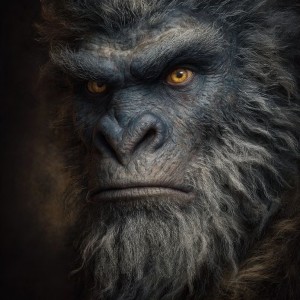
Before the term “Bigfoot” became widespread, settlers in Appalachia already had stories of large bipedal creatures stalking the forests. They called them “Yahoos,” a name drawn from frontier slang that marked them as wild, powerful, and barely human. These creatures were described as towering, hairy figures with long arms, broad shoulders, and an ability to move through dense forest without making a sound. Some early accounts describe them as more human-faced than the Pacific Northwest Sasquatch, while others lean toward a more animalistic interpretation.
Legends of the Yahoo often revolve around encounters near remote homesteads or while gathering firewood. Hunters reported hearing heavy footsteps pacing them at night, and woodcutters claimed to see silhouettes watching them from ridge lines at dawn. A recurring detail across many accounts is the Yahoo’s scream — a long, high-pitched cry that blends the sound of a man yelling with the howl of a wild animal. In older stories, the Yahoo is not portrayed as a predator but as a territorial creature, quick to flee unless provoked, though some tales imagine it throwing rocks or branches to frighten away trespassers.
Appalachian oral tradition treats the Yahoo as part of the landscape itself: not a monster, not a myth, but a presence that everyone has heard of even if few claim to have seen it. The advent of the Bigfoot craze changed how the creature was framed, but in many rural communities, the original term persists. To them, the Yahoo is older than all the documentaries, tabloids, and cryptid shows — a creature whose legend grew naturally out of centuries of living beside deep woods and deeper mysteries.
Location:Appalachian mountain range (especially Kentucky, Tennessee, western North Carolina)
Before the term “Bigfoot” became widespread, settlers in Appalachia already had stories of large bipedal creatures stalking the forests. They called them “Yahoos,” a name drawn from frontier slang that marked them as wild, powerful, and barely human. These creatures were described as towering, hairy figures with long arms, broad shoulders, and an ability to move through dense forest without making a sound. Some early accounts describe them as more human-faced than the Pacific Northwest Sasquatch, while others lean toward a more animalistic interpretation.
Legends of the Yahoo often revolve around encounters near remote homesteads or while gathering firewood. Hunters reported hearing heavy footsteps pacing them at night, and woodcutters claimed to see silhouettes watching them from ridge lines at dawn. A recurring detail across many accounts is the Yahoo’s scream — a long, high-pitched cry that blends the sound of a man yelling with the howl of a wild animal. In older stories, the Yahoo is not portrayed as a predator but as a territorial creature, quick to flee unless provoked, though some tales imagine it throwing rocks or branches to frighten away trespassers.
Appalachian oral tradition treats the Yahoo as part of the landscape itself: not a monster, not a myth, but a presence that everyone has heard of even if few claim to have seen it. The advent of the Bigfoot craze changed how the creature was framed, but in many rural communities, the original term persists. To them, the Yahoo is older than all the documentaries, tabloids, and cryptid shows — a creature whose legend grew naturally out of centuries of living beside deep woods and deeper mysteries.
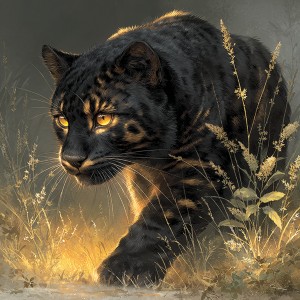
Wampus Cat
Region: Appalachia
Location:Cherokee territory; broader Appalachia
The Wampus Cat’s story begins in Cherokee legend, where it is tied to themes of transgression, punishment, and transformation. One common version tells of a woman curious about forbidden rituals who disguised herself in a cougar-hide and watched the men of her village perform sacred rites. When discovered, the spirits punished her by fusing her with the cat-skin she wore, condemning her to roam the forests forever—half woman, half cougar, neither fully human nor fully animal. This origin gives the Wampus Cat a tragic, morally charged presence in Cherokee storytelling.
As European settlers moved into the region, the legend blended with their own superstitions. Reports began to describe a huge, panther-like cat with eerie glowing eyes and a scream that carried for miles. Some emphasized its speed; others focused on its uncanny intelligence. Farmers blamed it for disappearing livestock, hunters swore they saw it stalking them at the tree line, and campers told stories of hearing its humanlike wail echo across the ridges at night. These evolving tales kept the creature’s dual nature alive—a fusion of the familiar and the uncanny.
Modern Appalachian folklore treats the Wampus Cat as both a supernatural guardian and a feared omen. Some claim it protects the wilderness from human encroachment; others insist it stalks those who break promises or cross certain moral boundaries. Regardless of interpretation, the Wampus Cat has become a symbol of Appalachian mystery, bridging Cherokee spiritual tradition with generations of backwoods storytelling.
Location:Cherokee territory; broader Appalachia
The Wampus Cat’s story begins in Cherokee legend, where it is tied to themes of transgression, punishment, and transformation. One common version tells of a woman curious about forbidden rituals who disguised herself in a cougar-hide and watched the men of her village perform sacred rites. When discovered, the spirits punished her by fusing her with the cat-skin she wore, condemning her to roam the forests forever—half woman, half cougar, neither fully human nor fully animal. This origin gives the Wampus Cat a tragic, morally charged presence in Cherokee storytelling.
As European settlers moved into the region, the legend blended with their own superstitions. Reports began to describe a huge, panther-like cat with eerie glowing eyes and a scream that carried for miles. Some emphasized its speed; others focused on its uncanny intelligence. Farmers blamed it for disappearing livestock, hunters swore they saw it stalking them at the tree line, and campers told stories of hearing its humanlike wail echo across the ridges at night. These evolving tales kept the creature’s dual nature alive—a fusion of the familiar and the uncanny.
Modern Appalachian folklore treats the Wampus Cat as both a supernatural guardian and a feared omen. Some claim it protects the wilderness from human encroachment; others insist it stalks those who break promises or cross certain moral boundaries. Regardless of interpretation, the Wampus Cat has become a symbol of Appalachian mystery, bridging Cherokee spiritual tradition with generations of backwoods storytelling.




Comments