





CTU: Cryptids-Amazon & Atlantic Coast
Boitatá
Region: Amazon & Atlantic Coast
Location:Brazil (coastal regions, inland forests, Amazon Basin)
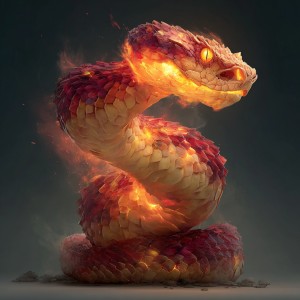
Boitatá — also known as *Cobra de Fogo* (“Fire Serpent”) — is a blazing serpent spirit associated with protection of the land. Descriptions vary widely: some depict it as a long, fiery snake moving through fields like a living streak of flame; others describe it as a massive serpent with burning eyes that emit light bright enough to blind intruders. It is said to inhabit marshes, grasslands, and forest edges, appearing especially during fires or periods of drought. The Boitatá is often mistaken for *fogo-fátuo* (will-o’-the-wisp), but its movement and intensity mark it as a powerful supernatural presence.
In Indigenous Brazilian tradition, Boitatá protects the environment from those who harm it — especially arsonists, hunters who start careless fires, or people who destroy sacred groves. Some stories say Boitatá was once a giant anaconda who consumed so many burning objects that it became incandescent from within, forever glowing like an ember. Others claim it is a guardian spirit sent by the forest itself. Its eyes are described as particularly dangerous; anyone who stares directly into them may be stricken blind, cursed, or driven mad.
Colonial-era chroniclers wrote about fiery creatures in Brazil’s forests, linking them to unfamiliar natural phenomena. Over time, the legend absorbed these observations and became a rich, hybrid folklore figure — part natural wonder, part spiritual being. Today, Boitatá stands as one of Brazil’s most striking mythical protectors: bright, terrifying, and tied to the land’s memory. When unexplained flashes of flame move across fields at night, older generations still whisper that Boitatá is out patrolling the darkness.
Location:Brazil (coastal regions, inland forests, Amazon Basin)
Boitatá — also known as *Cobra de Fogo* (“Fire Serpent”) — is a blazing serpent spirit associated with protection of the land. Descriptions vary widely: some depict it as a long, fiery snake moving through fields like a living streak of flame; others describe it as a massive serpent with burning eyes that emit light bright enough to blind intruders. It is said to inhabit marshes, grasslands, and forest edges, appearing especially during fires or periods of drought. The Boitatá is often mistaken for *fogo-fátuo* (will-o’-the-wisp), but its movement and intensity mark it as a powerful supernatural presence.
In Indigenous Brazilian tradition, Boitatá protects the environment from those who harm it — especially arsonists, hunters who start careless fires, or people who destroy sacred groves. Some stories say Boitatá was once a giant anaconda who consumed so many burning objects that it became incandescent from within, forever glowing like an ember. Others claim it is a guardian spirit sent by the forest itself. Its eyes are described as particularly dangerous; anyone who stares directly into them may be stricken blind, cursed, or driven mad.
Colonial-era chroniclers wrote about fiery creatures in Brazil’s forests, linking them to unfamiliar natural phenomena. Over time, the legend absorbed these observations and became a rich, hybrid folklore figure — part natural wonder, part spiritual being. Today, Boitatá stands as one of Brazil’s most striking mythical protectors: bright, terrifying, and tied to the land’s memory. When unexplained flashes of flame move across fields at night, older generations still whisper that Boitatá is out patrolling the darkness.

Boto Encantado
Region: Amazon & Atlantic Coast
Location:Amazon Basin (Brazil, Peru, Colombia, Bolivia)
The Boto Encantado is one of the Amazon’s most iconic legends — a pink river dolphin that transforms into a handsome human man at night. According to folklore, the boto emerges from the river wearing a white hat to hide his blowhole and attends local festivals, parties, or celebrations. He is charming, irresistible, and an extraordinary dancer. Women are warned: if a mysterious stranger dressed impeccably in white approaches, he might be a boto in disguise. After seducing or impregnating young women, the boto returns to the river by dawn, disappearing beneath the surface.
The legend blends seduction with danger. Many river communities tell stories of children said to be fathered by the boto — an explanation historically used for pregnancies resulting from taboo relationships or encounters. The boto is often portrayed as both romantic and predatory: a shapeshifter who seeks connection with humans but ultimately belongs to the water, bound to return. In older Indigenous versions, the boto is more clearly a powerful river spirit, capable of pulling swimmers beneath the water or transforming into entirely aquatic beings.
Beyond its role in morality tales, the Boto Encantado reflects the Amazon’s deep respect for river animals. Pink river dolphins are intelligent, curious, and sometimes interact with humans, giving the legend a foundation in real behavior. The story warns of seductive strangers, the power of rivers, and the blurred boundary between human and nature. Today, references to the boto still appear in festivals, songs, and local traditions throughout the Amazon Basin.
Location:Amazon Basin (Brazil, Peru, Colombia, Bolivia)
The Boto Encantado is one of the Amazon’s most iconic legends — a pink river dolphin that transforms into a handsome human man at night. According to folklore, the boto emerges from the river wearing a white hat to hide his blowhole and attends local festivals, parties, or celebrations. He is charming, irresistible, and an extraordinary dancer. Women are warned: if a mysterious stranger dressed impeccably in white approaches, he might be a boto in disguise. After seducing or impregnating young women, the boto returns to the river by dawn, disappearing beneath the surface.
The legend blends seduction with danger. Many river communities tell stories of children said to be fathered by the boto — an explanation historically used for pregnancies resulting from taboo relationships or encounters. The boto is often portrayed as both romantic and predatory: a shapeshifter who seeks connection with humans but ultimately belongs to the water, bound to return. In older Indigenous versions, the boto is more clearly a powerful river spirit, capable of pulling swimmers beneath the water or transforming into entirely aquatic beings.
Beyond its role in morality tales, the Boto Encantado reflects the Amazon’s deep respect for river animals. Pink river dolphins are intelligent, curious, and sometimes interact with humans, giving the legend a foundation in real behavior. The story warns of seductive strangers, the power of rivers, and the blurred boundary between human and nature. Today, references to the boto still appear in festivals, songs, and local traditions throughout the Amazon Basin.
Caipora
Region: Amazon & Atlantic Coast
Location:Brazil (especially Minas Gerais, Bahia, and the Amazon region)
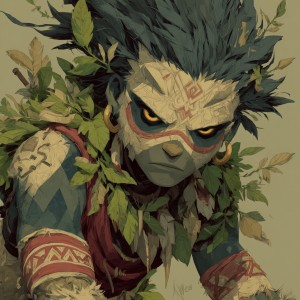
Caipora is a forest guardian spirit closely related to Curupira but with her own distinct identity. Generally depicted as a small woman or sometimes a small, dark-skinned being covered in body paint or charcoal, Caipora rides a wild boar and carries a staff or bow. She is associated with hunting days — especially Sundays and Fridays — and is said to wander the forest ensuring that animals are respected. Like Curupira, she punishes hunters who kill excessively or violate taboos, but her demeanor is often more serious and foreboding.
Caipora can vanish into smoke or mist and is said to control forest animals. Hunters tell stories of being led in circles, hearing mocking laughter, or suddenly finding their prey spirited away — signs that Caipora disapproves of their actions. She is believed to move silently despite the boar she rides, appearing unexpectedly at the edge of campsites, watching with glowing eyes. Offerings of tobacco, cachaça, or roasted meat are traditional ways to appease her, and hunters who respect her rules are said to find abundant game and safe passage.
In Indigenous and Brazilian storytelling, Caipora represents the living agency of the forest — a figure who can be kind but never careless, capable of protecting wildlife with unwavering resolve. Her presence reinforces the forest as a place bound by spiritual rules rather than merely human law. To this day, the phrase “Caipora’s watching” is used when bad luck befalls hunters or when the forest seems unusually still.
Location:Brazil (especially Minas Gerais, Bahia, and the Amazon region)
Caipora is a forest guardian spirit closely related to Curupira but with her own distinct identity. Generally depicted as a small woman or sometimes a small, dark-skinned being covered in body paint or charcoal, Caipora rides a wild boar and carries a staff or bow. She is associated with hunting days — especially Sundays and Fridays — and is said to wander the forest ensuring that animals are respected. Like Curupira, she punishes hunters who kill excessively or violate taboos, but her demeanor is often more serious and foreboding.
Caipora can vanish into smoke or mist and is said to control forest animals. Hunters tell stories of being led in circles, hearing mocking laughter, or suddenly finding their prey spirited away — signs that Caipora disapproves of their actions. She is believed to move silently despite the boar she rides, appearing unexpectedly at the edge of campsites, watching with glowing eyes. Offerings of tobacco, cachaça, or roasted meat are traditional ways to appease her, and hunters who respect her rules are said to find abundant game and safe passage.
In Indigenous and Brazilian storytelling, Caipora represents the living agency of the forest — a figure who can be kind but never careless, capable of protecting wildlife with unwavering resolve. Her presence reinforces the forest as a place bound by spiritual rules rather than merely human law. To this day, the phrase “Caipora’s watching” is used when bad luck befalls hunters or when the forest seems unusually still.

Curupira
Region: Amazon & Atlantic Coast
Location:Brazil (especially Amazon, Atlantic Forest, interior regions)
Curupira is one of Brazil’s oldest and most beloved forest spirits, appearing in Indigenous Tupi-Guarani folklore long before European arrival. He is described as a small, child-sized being with bright red or flame-colored hair, sharp teeth, and — most famously — **feet pointed backwards**. These reversed feet are a signature trait used to confuse hunters or intruders: anyone tracking Curupira finds footprints leading in the wrong direction, sending them deeper into the wilderness until they become lost. His laughter is mischievous, shrill, and echoing, drifting between trees like a warning.
Curupira is not a monster but a fierce **protector of the forest**. Stories portray him as defending animals, trees, and waterways from hunters who take more than they need or lumber workers who destroy without respect. He punishes greed: men who overhunt may find themselves lost for days, stalked by phantom sounds, or terrified by illusions he conjures. In some tales, he rides a magical wild boar and races through the forest at impossible speed. In others, he can shapeshift or create false paths that mislead trespassers.
At the same time, Curupira rewards respect. Hunters traditionally left offerings — fruit, tobacco, cachaça — at the base of certain trees to gain his favor. Children are told stories of him as both a trickster hero and a moral compass, reminding them that the forest watches and remembers. Curupira embodies a worldview where nature is alive, reactive, and worthy of protection — a position deeply rooted in Indigenous values that endured even through colonial Brazil.
Location:Brazil (especially Amazon, Atlantic Forest, interior regions)
Curupira is one of Brazil’s oldest and most beloved forest spirits, appearing in Indigenous Tupi-Guarani folklore long before European arrival. He is described as a small, child-sized being with bright red or flame-colored hair, sharp teeth, and — most famously — **feet pointed backwards**. These reversed feet are a signature trait used to confuse hunters or intruders: anyone tracking Curupira finds footprints leading in the wrong direction, sending them deeper into the wilderness until they become lost. His laughter is mischievous, shrill, and echoing, drifting between trees like a warning.
Curupira is not a monster but a fierce **protector of the forest**. Stories portray him as defending animals, trees, and waterways from hunters who take more than they need or lumber workers who destroy without respect. He punishes greed: men who overhunt may find themselves lost for days, stalked by phantom sounds, or terrified by illusions he conjures. In some tales, he rides a magical wild boar and races through the forest at impossible speed. In others, he can shapeshift or create false paths that mislead trespassers.
At the same time, Curupira rewards respect. Hunters traditionally left offerings — fruit, tobacco, cachaça — at the base of certain trees to gain his favor. Children are told stories of him as both a trickster hero and a moral compass, reminding them that the forest watches and remembers. Curupira embodies a worldview where nature is alive, reactive, and worthy of protection — a position deeply rooted in Indigenous values that endured even through colonial Brazil.
Encantados
Region: Amazon & Atlantic Coast
Location:Amazon Basin and northeastern Brazil (especially along major rivers)
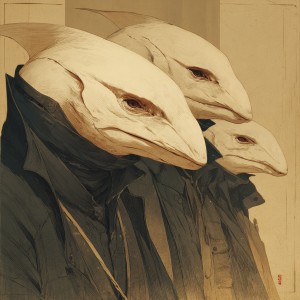
“Encantados” is a collective term for enchanted beings in Brazilian folklore, usually associated with rivers, lakes, and hidden realms beneath the water. They often take the form of animals — dolphins, snakes, caimans — that can transform into humans. Unlike singular creatures like the boto, Encantados form an entire society or world parallel to human existence. They are described as beautiful, charismatic beings who wander the shoreline at night, entering villages to dance, flirt, or observe humans before returning to their aquatic kingdom.
Their shapeshifting is central to their identity, and they frequently appear at festivals or celebrations where music draws them in. Some tales portray Encantados as benevolent — healers, messengers, or protectors who interact with humans out of curiosity or kindness. Others describe them as tricksters who lure people into the river, sometimes out of affection, sometimes out of jealousy, and sometimes simply because they exist by different rules than humans. An Encantado’s true form is rarely revealed, but clues — damp footprints, water scent, an odd brightness in the eyes — signal their presence.
The belief in Encantados reflects the Amazon’s deep spiritual relationship with its waters. Rivers are not just physical spaces; they are homes to beings with agency, emotion, and will. In rural communities, unexplained drownings, disappearances, or even sudden infatuations are sometimes attributed to Encantado influence. They are woven into daily life through cautionary tales, celebrations, songs, and rituals, representing the ever-present mysteries beneath the river’s surface.
Location:Amazon Basin and northeastern Brazil (especially along major rivers)
“Encantados” is a collective term for enchanted beings in Brazilian folklore, usually associated with rivers, lakes, and hidden realms beneath the water. They often take the form of animals — dolphins, snakes, caimans — that can transform into humans. Unlike singular creatures like the boto, Encantados form an entire society or world parallel to human existence. They are described as beautiful, charismatic beings who wander the shoreline at night, entering villages to dance, flirt, or observe humans before returning to their aquatic kingdom.
Their shapeshifting is central to their identity, and they frequently appear at festivals or celebrations where music draws them in. Some tales portray Encantados as benevolent — healers, messengers, or protectors who interact with humans out of curiosity or kindness. Others describe them as tricksters who lure people into the river, sometimes out of affection, sometimes out of jealousy, and sometimes simply because they exist by different rules than humans. An Encantado’s true form is rarely revealed, but clues — damp footprints, water scent, an odd brightness in the eyes — signal their presence.
The belief in Encantados reflects the Amazon’s deep spiritual relationship with its waters. Rivers are not just physical spaces; they are homes to beings with agency, emotion, and will. In rural communities, unexplained drownings, disappearances, or even sudden infatuations are sometimes attributed to Encantado influence. They are woven into daily life through cautionary tales, celebrations, songs, and rituals, representing the ever-present mysteries beneath the river’s surface.

Mapinguari
Region: Amazon & Atlantic Coast
Location:Amazon rainforest (Brazil, Peru, Bolivia)
The Mapinguari is one of the Amazon’s most famous cryptids — a towering forest giant described with features that range from unsettling to outright bizarre. Traditional accounts depict it as a massive, shaggy creature standing seven to ten feet tall, walking upright, with long claws and skin so tough it cannot be pierced by arrows. Some stories describe it as having only one eye; others say it has a second mouth on its stomach that reeks of decay. The smell, in fact, is one of its signature traits — witnesses claim the Mapinguari’s stench is so overpowering it causes nausea or unconsciousness before the creature ever arrives.
Indigenous groups portray the Mapinguari as a transformed shaman — a wise man who lived too long or broke a sacred rule, cursed with immortality and turned into a wandering monster. He roams the rainforest, wailing or roaring at anyone who crosses his path. Hunters claim he can twist the forest around himself, making trails distort or leading people in circles until they collapse. His voice is said to resemble a mix of human cries and jaguar growls, echoing unpredictably through the trees. Some accounts insist he avoids water and is afraid of crossing rivers, which hunters historically used to their advantage.
Modern interpretations sometimes link the Mapinguari with possible prehistoric animals — like giant ground sloths — surviving in remote areas of the jungle. Regardless of biological theories, the Mapinguari represents the Amazon’s vastness and its refusal to be tamed. He stands for the dangers that lie beyond human understanding, the mistakes that echo through generations, and the eternal presence of something larger, older, and unconquerable in the rainforest. Among all Amazonian legends, the Mapinguari remains one of the most haunting — not just because of his form, but because he embodies the forest’s memory.
Location:Amazon rainforest (Brazil, Peru, Bolivia)
The Mapinguari is one of the Amazon’s most famous cryptids — a towering forest giant described with features that range from unsettling to outright bizarre. Traditional accounts depict it as a massive, shaggy creature standing seven to ten feet tall, walking upright, with long claws and skin so tough it cannot be pierced by arrows. Some stories describe it as having only one eye; others say it has a second mouth on its stomach that reeks of decay. The smell, in fact, is one of its signature traits — witnesses claim the Mapinguari’s stench is so overpowering it causes nausea or unconsciousness before the creature ever arrives.
Indigenous groups portray the Mapinguari as a transformed shaman — a wise man who lived too long or broke a sacred rule, cursed with immortality and turned into a wandering monster. He roams the rainforest, wailing or roaring at anyone who crosses his path. Hunters claim he can twist the forest around himself, making trails distort or leading people in circles until they collapse. His voice is said to resemble a mix of human cries and jaguar growls, echoing unpredictably through the trees. Some accounts insist he avoids water and is afraid of crossing rivers, which hunters historically used to their advantage.
Modern interpretations sometimes link the Mapinguari with possible prehistoric animals — like giant ground sloths — surviving in remote areas of the jungle. Regardless of biological theories, the Mapinguari represents the Amazon’s vastness and its refusal to be tamed. He stands for the dangers that lie beyond human understanding, the mistakes that echo through generations, and the eternal presence of something larger, older, and unconquerable in the rainforest. Among all Amazonian legends, the Mapinguari remains one of the most haunting — not just because of his form, but because he embodies the forest’s memory.
Uirapuru
Region: Amazon & Atlantic Coast
Location:Amazon rainforest (Brazil)
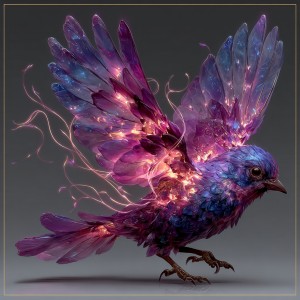
Uirapuru is a mythical bird associated with love, luck, and spiritual transformation. Inspired by the real Uirapuru bird — known for its haunting, flute-like song — the folklore figure is said to be a young warrior transformed into a bird by forest spirits. According to legend, the warrior fell in love with a chief’s wife and asked the gods for help. Instead, he was turned into a small brown bird whose song was so beautiful it could stop all other birds mid-flight. When he sings, the forest becomes still, and those who hear him are said to receive blessings of love or good fortune.
People in the Amazon say that hearing the Uirapuru’s song is a rare and sacred experience. Hunters stop their work, gatherers freeze mid-step, and families fall silent to listen. Because the bird sings rarely and only for short periods each year, its voice carries great significance. Some versions of the legend claim that if the Uirapuru sings near your home, love will prosper; others say hearing the song cures jealousy, sadness, or misfortune. The bird’s presence marks an auspicious moment in the cycle of the forest.
Throughout generations, the Uirapuru has symbolized longing and transformation — the idea that love can reshape a person’s fate, even if the result is bittersweet. Its legend survives because Amazonian communities experience the real bird’s voice as something genuinely otherworldly, a sound so captivating it feels magical. In folklore, the Uirapuru is a reminder that beauty and tragedy often share the same origin.
Location:Amazon rainforest (Brazil)
Uirapuru is a mythical bird associated with love, luck, and spiritual transformation. Inspired by the real Uirapuru bird — known for its haunting, flute-like song — the folklore figure is said to be a young warrior transformed into a bird by forest spirits. According to legend, the warrior fell in love with a chief’s wife and asked the gods for help. Instead, he was turned into a small brown bird whose song was so beautiful it could stop all other birds mid-flight. When he sings, the forest becomes still, and those who hear him are said to receive blessings of love or good fortune.
People in the Amazon say that hearing the Uirapuru’s song is a rare and sacred experience. Hunters stop their work, gatherers freeze mid-step, and families fall silent to listen. Because the bird sings rarely and only for short periods each year, its voice carries great significance. Some versions of the legend claim that if the Uirapuru sings near your home, love will prosper; others say hearing the song cures jealousy, sadness, or misfortune. The bird’s presence marks an auspicious moment in the cycle of the forest.
Throughout generations, the Uirapuru has symbolized longing and transformation — the idea that love can reshape a person’s fate, even if the result is bittersweet. Its legend survives because Amazonian communities experience the real bird’s voice as something genuinely otherworldly, a sound so captivating it feels magical. In folklore, the Uirapuru is a reminder that beauty and tragedy often share the same origin.
Yacumama
Region: Amazon & Atlantic Coast
Location:Amazon Basin (Peru, Brazil, Ecuador, Colombia)
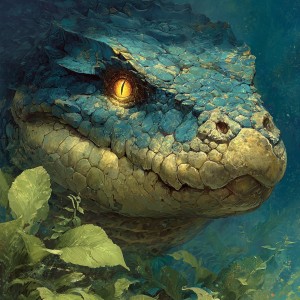
Yacumama — “Mother of the Waters” — is one of the great serpents of Amazonian folklore. She is said to inhabit deep river bends, oxbow lakes, and flooded forests, where she waits quietly beneath the surface. Descriptions vary, but most portray her as an enormous anaconda-like creature, capable of swallowing canoes whole. Some stories claim she reaches lengths of more than 100 feet, with eyes that glow like lanterns and a mouth as wide as a hut. Her movement churns the river, and her breath is said to create whirlpools that pull victims underwater.
Indigenous communities regard Yacumama with respect rather than simple fear. She is the primordial guardian of the rivers — creator of oxbow lakes, protector of aquatic life, and punisher of those who pollute or overexploit the waters. Fishermen approach her territory with offerings or ritual words, asking permission to enter. Stories say that when trees fall suddenly at the river’s edge or when the forest grows unnaturally quiet, Yacumama is nearby. Lightning strikes, earthquakes, or unexplained ripples in perfectly still water are sometimes attributed to her movement.
European explorers in the 19th and early 20th centuries recorded Indigenous accounts of colossal serpents, often exaggerating them further. Some travelers reported seeing enormous tracks or hearing thunderous splashes in remote waterways. Scientific skepticism hasn’t dampened the legend — the Amazon’s sheer size and mystery keep the possibility alive in local imagination. Yacumama is more than a monster: she is a mythic embodiment of the Amazon’s power, depth, and ancient sovereignty.
Location:Amazon Basin (Peru, Brazil, Ecuador, Colombia)
Yacumama — “Mother of the Waters” — is one of the great serpents of Amazonian folklore. She is said to inhabit deep river bends, oxbow lakes, and flooded forests, where she waits quietly beneath the surface. Descriptions vary, but most portray her as an enormous anaconda-like creature, capable of swallowing canoes whole. Some stories claim she reaches lengths of more than 100 feet, with eyes that glow like lanterns and a mouth as wide as a hut. Her movement churns the river, and her breath is said to create whirlpools that pull victims underwater.
Indigenous communities regard Yacumama with respect rather than simple fear. She is the primordial guardian of the rivers — creator of oxbow lakes, protector of aquatic life, and punisher of those who pollute or overexploit the waters. Fishermen approach her territory with offerings or ritual words, asking permission to enter. Stories say that when trees fall suddenly at the river’s edge or when the forest grows unnaturally quiet, Yacumama is nearby. Lightning strikes, earthquakes, or unexplained ripples in perfectly still water are sometimes attributed to her movement.
European explorers in the 19th and early 20th centuries recorded Indigenous accounts of colossal serpents, often exaggerating them further. Some travelers reported seeing enormous tracks or hearing thunderous splashes in remote waterways. Scientific skepticism hasn’t dampened the legend — the Amazon’s sheer size and mystery keep the possibility alive in local imagination. Yacumama is more than a monster: she is a mythic embodiment of the Amazon’s power, depth, and ancient sovereignty.




Comments