

World War
The World War was a crucial global conflict that was fought all across the world and on every continent. The World War was the deadliest in human history.
The Conflict
Prelude
The prelude of the conditions that led to the World War can be traced back to the Russo-German War and even further to the Great War. Following their victory in both conflicts, the German Empire looked to be the uncontested masters of Europe. Creating the Zollverein in 1940, Germany largely obtained their goal in uniting many European nations under a singular customs and financial union, with the German mark being the primary currency across Europe.
Italy, despite being on the victorious side of the Great War, did not receive the territory of which they believed were owed to them. The siege of Malta failed, and the territory remained under Great Britain, while the Dalmatian Coast was retained by Austria, later the Habsburg Confederation and Yugoslavia. Despite Germany and Russia guaranteeing the region to Yugoslavia, Italy still demanded the region. This, in part with Bularia's ambitions on Balkan Land, led Yugoslavia to join with Greece, Turkey, and Romania as a defensive Balkan League. Italy, in turn, looked towards the defeated Spanish and Portuguese Republics as potential allies, forming the Latin Bloc. Though being Celtic, the Kingdom of Brittany would later join as well.
The Empire of Japan, though being defeated in the Great War, had entered the Russo-German War as a tentative German ally. In doing so, the Great Treaty was amended to allow for Japan to have a greater naval presence in the Pacific. This concerned the Kingdom of America, and thus the two entered in the Japanese-American Naval Treaty in 1941. This treaty did not sit well with most Japanese officials, and thus looked to a loophole in the document. What was conceived was to build battleships and aircraft carriers beyond the stipulations in either the Great Treaty or the Naval Treaty, and sell them to other members of the Japanese led Greater East Asia Co-Prosperity Sphere, including Korea and Hawaii. America decried this as violations of the treaty, believing these nations were merely Japanese puppets, and built up their navy in an attempt to match the entirety of the GEACPS.
Great Britain, which had also been on the losing side of theGreat War, entered into negotiations with Italy and Japan. Britain joined Italy in North Africa, executing the Reconquest of Egypt in 1938, while Italy conquered Ethiopia in 1939. Inspired by the Japanese GEACPS, Britain likewise created the Commonwealth of Nations as a means to assert authority over their current and former colonies without annexation into the British Empire. However,regions such as the Dominion of Australia had concerns in regards to Japan's growing influence, leading to Britain and Japan renewing the Anglo-Japanese Alliance.
Great Britain attempted to build up its Royal Navy past what was permitted under the Great Treaty, building an aircraft carrier and "selling" it to Brittany with another under construction. Since Britain was not allowed to obtain aircraft carriers, Germany demanded the ship be turned over and construction ceased on the second one. Britain ignored the ultimatum, causing Germany to declare the Anglo-German War in 1944. The Kaiserliche Marine met the Royal Navy in the Battle of Jutland, where the Royal Navy's engineering proved pivotal in their victory.
Following the British victory, Italy invaded Albania and annexed the nation. Confident, Italy then negotiated Romania leaving the Balkan League by mediating a two state solution in Transylvania between Romania and Hungary. Romania agreed, and left the League. Italy then invaded Greece, but became bogged down as the Greek military proved more capable than Italy had believed. Yugoslavia, honoring their alliance, declared war on Italy, asking for German support.
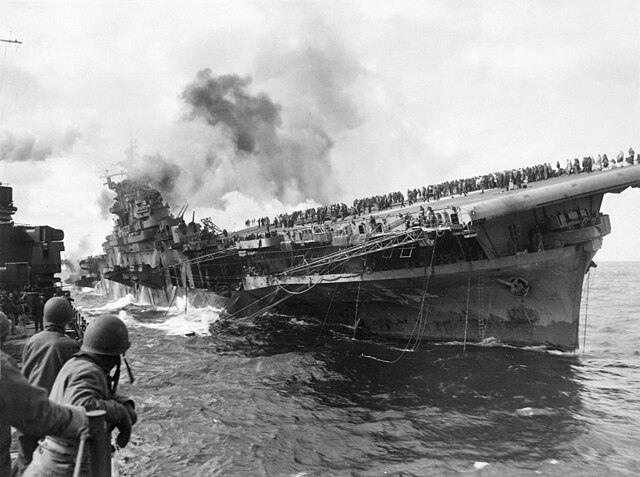
Germany, upon seeing Japan's ambitions, sought allies in the region to increase their naval chances. Germany recalled their carrier in the region and leased the island of Guam to the Americans. America sent a carrier strike group inbound for Guam. Japan sent an ultimatum, demanding the strike group be recalled, but the ultimatum was ignored. In the Battle of Guam, Japanese forces and their allies ambushed the American strike group. Outnumbered three-to-one, the American strike group was defeated. America declared war on Japan, calling for allies. Germany answered, leading Great Britain to declare war on America as well.
Deployment
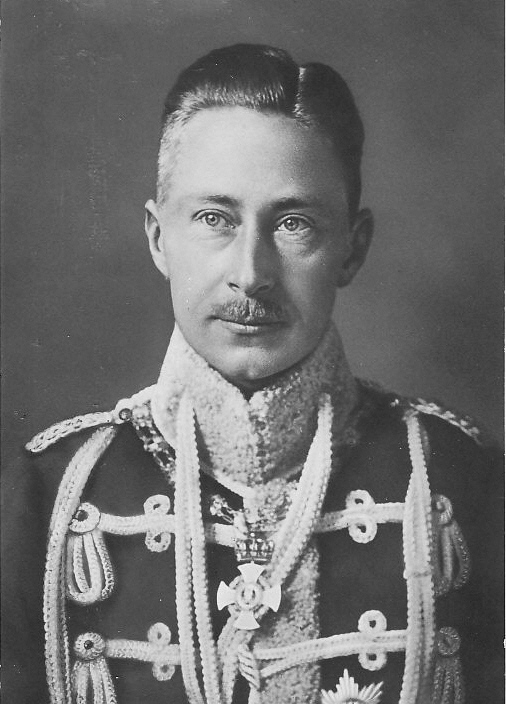
In negotiations, Chancellor Cordell Hull and King James I agreed to a "Europe First" strategy in the war with Kaiser Wilhelm III. James appointed Dwight D. Eisenhower as the Supreme Commander in the European Theater and Douglas MacArthur as the Supreme Commander in the Pacific Theater.
America looked to secure its territory, and developed a plan to invade the Kingdom of Canada. However, being cousins with King Walter I, James secretly stuck a deal, known as the Halifax-Niagara Agreement, wherein Halifax would be invaded and surrendered to America temporarily while Canada gained full control over the Power Plant in Niagara Falls. Canada and America would have a tense stand off for the rest of the war.
America then began planning for an invasion of the island of Bermuda. The following battle, America managed to take the island, but the cost was too much for the follow up planned invasion of Great Britain. Instead, Germany and America worked to land in Maghreb in support for a North African Front. The marines that had been planned for the British invasion were redirected to the Pacific invading Papua.
America negotiated with other nations in the New World. Establishing the Pan-American Confederation, America originally found few interested. However, when the war began, many of these nations believed it was their opportunity to gain territory that had been contested particularly against Great Britain.
An Italian assassin attempted to murder the King of Brittany. The Breton court was angered, but Italy managed to convince the Bretons the assassin was French from the French Socialist Republic. Brittany responded with a declaration of war, invading Normandy. The French Front would not last, as knowledge of the truth came out, and France and Brittany agreed to peace terms. France, along with their Dutch and Aragonese allies, invaded Italy and Spain. Spain and Portugal would likewise eventually leave the Latin Bloc, and by extension the war, in exchange for Aragon annexing Navarre.
Battlefield
The Americans employed a tactic of island hopping in the Pacific, wherein key strategic islands under Japanese were invaded and fought for. This allowed slow progression of the conflict, but many of these islands still counted for large scale and costly battles for both sides. Many American officers began to note the Japanese fighting style and kamikaze tactics, citing these as evidence of Japanese fighting ferocity.
In Africa, the German effort against the Italian forces dragged on. Maghreb proved to be an invaluable ally to the German and American forces, and was promised Tunisia from Italy in exchange. The fighting continued, with the liberation of Libya from the Italians and the return of the Libyan monarchy. Egypt likewise rebelled, joining the German and American war efforts. Egypt invaded south into British controlled Sudan, declaring the Kingdom of Egypt and the Sudan. Somalia and Ethiopia, strained from under the thumb of Italy, revolted, declaring their respective independence along religious lines.
Following the procurement of the Suez Canal, Germany utilized it to invade the south of India. Many in the south, particularly those within the Princely States, grew hostile against their British occupiers. With German support and weapons, India fell into a civil war, wherein the Princely States gained their independence and the north became the Indian Confederation.
France managed to press all the way through the Alps, though the death toll was higher than expected. Meanwhile, the Germans launched an invasion of Naples from Africa. Both France and Germany attempted to race to Rome in order to secure the peninsula for themselves. Eventually, Benito Mussolini was deposed, and a vote was cast in 1948. In the vote, the Italian Communist Party won in the north, while the Royalists won in the south.
Conditions
The Hawaiian nation, having been pressed into the conflict against their will by the Japanese, began to resent what they believed to be yet another colonial master. While King Kalakaua II attempted diplomacy, an insurrection was attempted, leading to mutinies across the Hawaiian military. This included the Hawaiian controlled Japanese aircraft carrier, where the Hawaiian sailors killed their Japanese commanders. In an attempt to quell the insurrection, Prince David was executed by the Japanese court. This backfired, and the Hawaiian Kingdom declared its independence. Prince Edward remaining a Japanese officer, feigned loyalty to Japan, but secretly established a spy ring to send intelligence back to America.
Likewise, Korea rebelled against Japanese rule as well. Calling on the Russian Empire for support, the two would invade Manchukuo, with Korea invading from the south and Russia from the northeast. When the British aligned Han China attempted to intervene, Russia armed South China as a means to counter.
During the campaign of Papua, Colonel Archduke Thomas circumvented Supreme Commander MacArthur's authority and negotiated with Java. Should Java join the Americans against Japan, they would receive the entirety of the East Indies. Upon discovering this plan, MacArthur attempted to kill the agreement, believing the Asian countries required western guidance. However, the treaty was approved, thus weakening the Japanese war effort further.
The Dominion of Australia did not wish to provide into the war effort of the Commonwealth, and thus protested their conscription into military service for what they saw as British pride. When the protests were not headed, the Australian officials declared the Republic of Australia, with a riot burning the Parliament House. The western third, however, remained loyal to the British crown, declaring the Dominion of Western Australia. The two would not come to blows, and instead the Australian Republic would invade and annex New Zealand from the British in order to ensure their security.
With the Italian withdrawal in 1948, Yuoglavia and Greece invaded Albania against the remaining Italian forces. Though there were ideas of restoring the Albanian monarchy, Greek and Yugoslav ministers agreed to a partition.
The Engagement
With the war waging in Europe, America looked to end the fighting in the Pacific. While the Japanese were being pushed back on all fronts, their resolve remained strong, leading to minimal surrenders. Supreme Commander MacArthur agreed with the proposal of a full scale invasion of Japan, to be the first successful invasion of the Japanese Islands in history. The plan, dubbed Operation Downfall, was perceived to be the only means of ending the war on acceptable terms for the Americans. Archduke Thomas called the mission suicide, with those in agreement dubbing the plan "The American Blood Tide". Chancellor Hull sided with MacArthur, and the plan was approved.
Japan will never surrender. The Emperor must be taken by force.Douglas MacArthur
With the intel gathered from Prince Edward, the plan to invade Kyushu commenced, with initial casualty reports detailing upwards of 250,000 casualties in the first three months. The Americans were joined by the Australians and the now secured Javan Empire.
Outcome
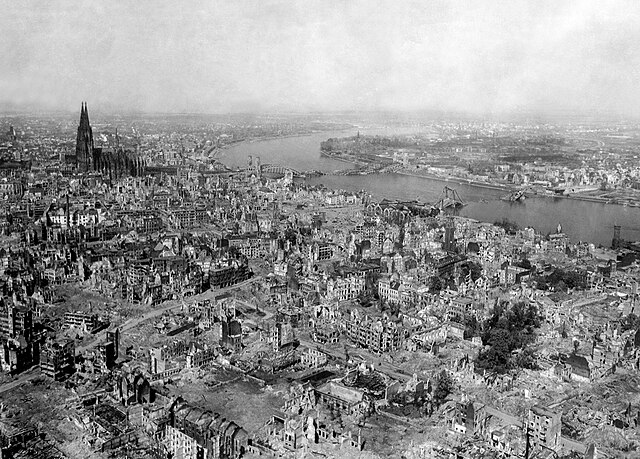
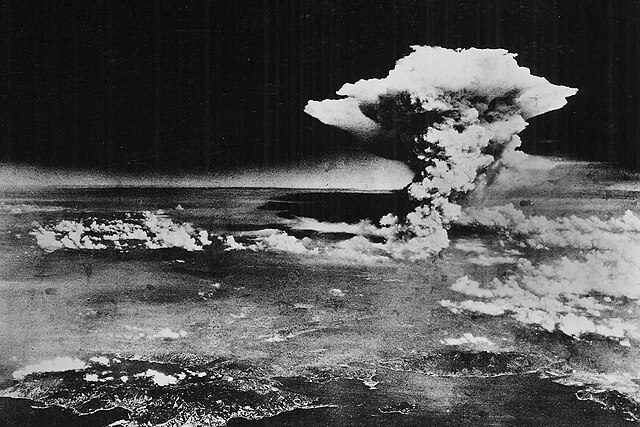
Germany, seeing the death toll enacted on America during the invasion of Japan, decided for a different approach. Kaiser Wilhelm was presented with three options. The first was to maintain a costly blockade of the British Isles. The second was a full scale invasion. The last, and most extreme, was to utilize the atomic bomb they had developed. The Kasier was said to have brooded for days before authorizing the bombing in late 1950. Months later, during Operation Donnerkeil, American and German pilots flew American B-29 bombers from Berlin, dropping the bomb over Norwich. The bombing resulted in mass casualties, initially killing approximately 85,000 with a total attributed death toll being approximately 140,000. Great Britain would sue for peace less than 48 hours later, believing Germany had the capability for more bombs.
Germany won their war with one bomb.
America may lose ours with a million bodies.Archduke Thomas
A joint force of American, Australian, Chinese, Javan, and Korean occupy major cities and regions of Japan. The total killed in the invasion of Japan is still disputed to this day. A Joint Intelligence Center estimate was declassified decades after the war, estimating 2.5 to 3.5 million American and 10 to 14 million Japanese military casualties. These reports include dead and wounded.
The American approach achieved victory through attrition of men, while the German approach achieved victory through attrition of will.German High Command
Italy became divided, with the south retaining the Italian monarchy as the Kingdom of Italy, but the north coming under communist control as the Democratic People's Republic of Italy. The north subsequently joined the Comintern Union.
Aftermath
Following the Bombing of Norwich, Great Britain signed the Treaty of Osnabruck, dissolving the crown into England, Scotland, and Wales. Their militaries were heavily regulated, being placed under direct German oversight. Edward VIII was forced to abdicate, being replaced by George VI of England, Henry I of Scotland, and George I of Wales.. All three nations were forced to join the Zollverein.
Never again shall Britain be capable of threatening the European continent.Kaiser Wilhelm III
The remainder of the British African Colonial Empire was divided between America and Germany. the German African Colonial Empire became the uncontested powerhouse of the continent, while the American African Colonial Empire controlled the last two regions in West Africa.
In the Pacific, America occupied and administered Central Japan, while the rest was divided between their allies. Australia occupied Shikoku, Java occupies Ryukyu, and the newly formed Republic of China annexed Taiwan. Furthermore, America took control of the Viceroyalty of the Philippines.
Historical Significance
Legacy
Though America emerged victorious, many of the different results were condemned, particularly taking territory in Africa and Asia. This was seen by many nations as a violation of the Continental Ordinance. Chancellor Hull defended the move, belieiving it would ease the transition to independence better than the fall of the Dutch African Colonial Empire.
America won the war but lost its innocence.Unknown
Australia wished to elevate their standing on the world stage. As such, the Kingdom of Australia was proclaimed, and the throne was offered to Archduke Thomas. Thomas agreed, and took the regal name Richard.
Technological Advancement
Code-breaking became crucial during the conflict. Germany had developed their enigma code, while America used Navajo code talkers. In order to create a greater sense of security against British intelligence, the two nations developed the Rahzea Code, which combined efforts between the two. The code was never broken during the war.




Alas, poor Norwich. The politics of this world war are fascinating.
Explore Etrea | WorldEmber 2025