


Nalmaria

Nalmaria is one of only three planets to be featured in all five volumes of The Milky Way's Most Horrifying Planets, for a very good reason.
This planet has no molten core, instead held together by a supermassive queen spider controlling an ever-growing hivemind. She calls herself Pasaval, and she controls several million hostilins, mile-wide spider minions.
Nalmaria has become an official No-Fly Zone after spiders intercepted several spacecrafts two thousand years ago. Before then, it was simply common knowledge to avoid Nalmaria. It is classed as a Harvesting Planet, but no civilisation is willing to claim Nalmaria as their own, so it remains an unclaimed, lawless region.
Geography, Location & Climate
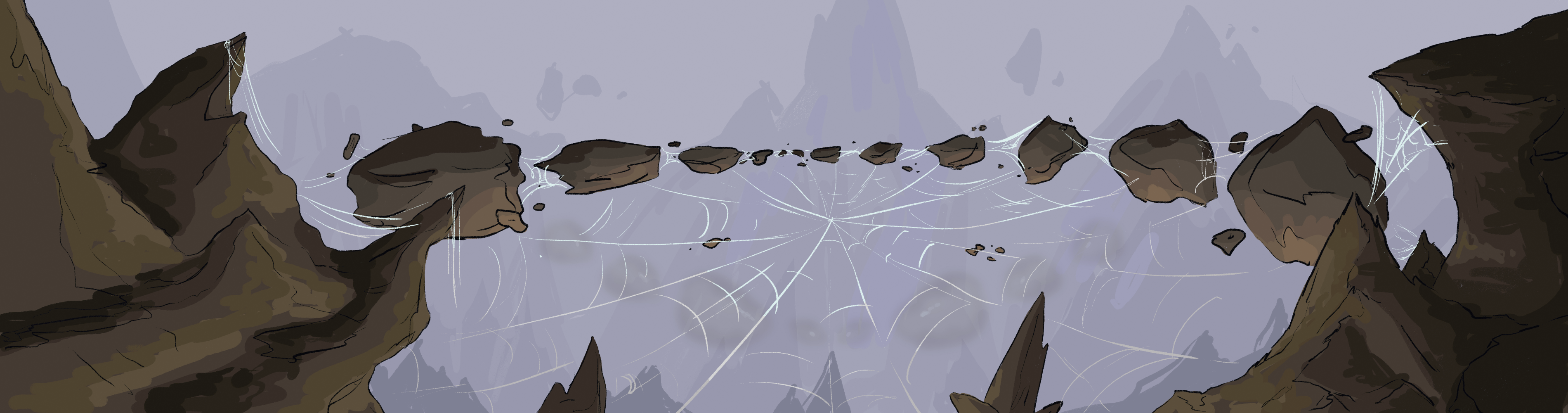
From orbit Nalmaria resembles a fairly typical planet. Upon closer inspection, the rippling waves of the white oceans are not water, but rather Pasaval's silk.
These oceans reach right from the core to the surface of Nalmaria, holding together every fragment of stone that makes up the planet. Without this silk, Nalmaria would collapse. The surface of Nalmaria is barren and practically lifeless in terms of foliage. Few plants survive due to the extremely cold temperatures.
The Deadlands is the largest continent on Nalmaria, considered the most dangerous. Large stretches of arid plains makes any prey animal easy to spot, so few creatures live here. Most survive in the mountains, towards the south and east of the Deadlands.
Scientists cannot figure out why hostilins avoid the Habitable Zone. This large island, south-east of the Scorched Lands, is the only region of Nalmaria free of the hivemind.
Just under four billion years ago, the kavaari ventured onto Nalmaria, landing in what is now the Habitable Zone. In that time. Nalmaria had a molten core, dominated by dragons, and was a global rainforest. The only evidence of the kavaari having landed on Nalmaria is a mighty statue of a kavaarian swordstress, in ruins. It was built using varistone, an artificial material created by the kavaari, capable of withstanding billions of years of environmental damage.
History
Nalmaria is roughly five billion years old, as determined by geomagical planetary dating. For most of its lifespan it was a thriving planet, with lush, tropical climates and healthy ecosystems, dominated by dragons. The evolution of large arachnids, and eventually the hostilin species, caused a total ecological collapse. The first hostilins appeared around ten million years ago, long after most dragons died out.
Kavaari
The kavaari discovered Nalmaria 3.9 billion years ago, declaring it a planet fit for survival, but not their own.These intelligent spiders grew hungry, particularly for magma. They dug as far down as they could and began consuming the very core of the planet. The core began to deplete, and Nalmaria became unstable. Magnetic fields were disrupted, the atmosphere rapidly cooled down, oceans disappeared, and all life began to die out.
A freak mutation caused one hostilin to grow much larger than the others, and she was far more intelligent. She filled in the core of the planet with her own webs, and began tethering Nalmaria back together, which had begun to fracture and fall apart. Now, her silken oceans are the only thing keeping Nalmaria as one.
Over the last million years scientists have attempted to research Nalmaria, placing a handful of research vessels onto the planet's surface. Some were automated, others with crew. These vessels required mountains of paperwork for authorisation to land on Nalmaria, as it is a strict No-Fly Zone. The latest research has focused on hostilins and their evolution, particularly around the manifestation of their collective hivemind.
Ecology
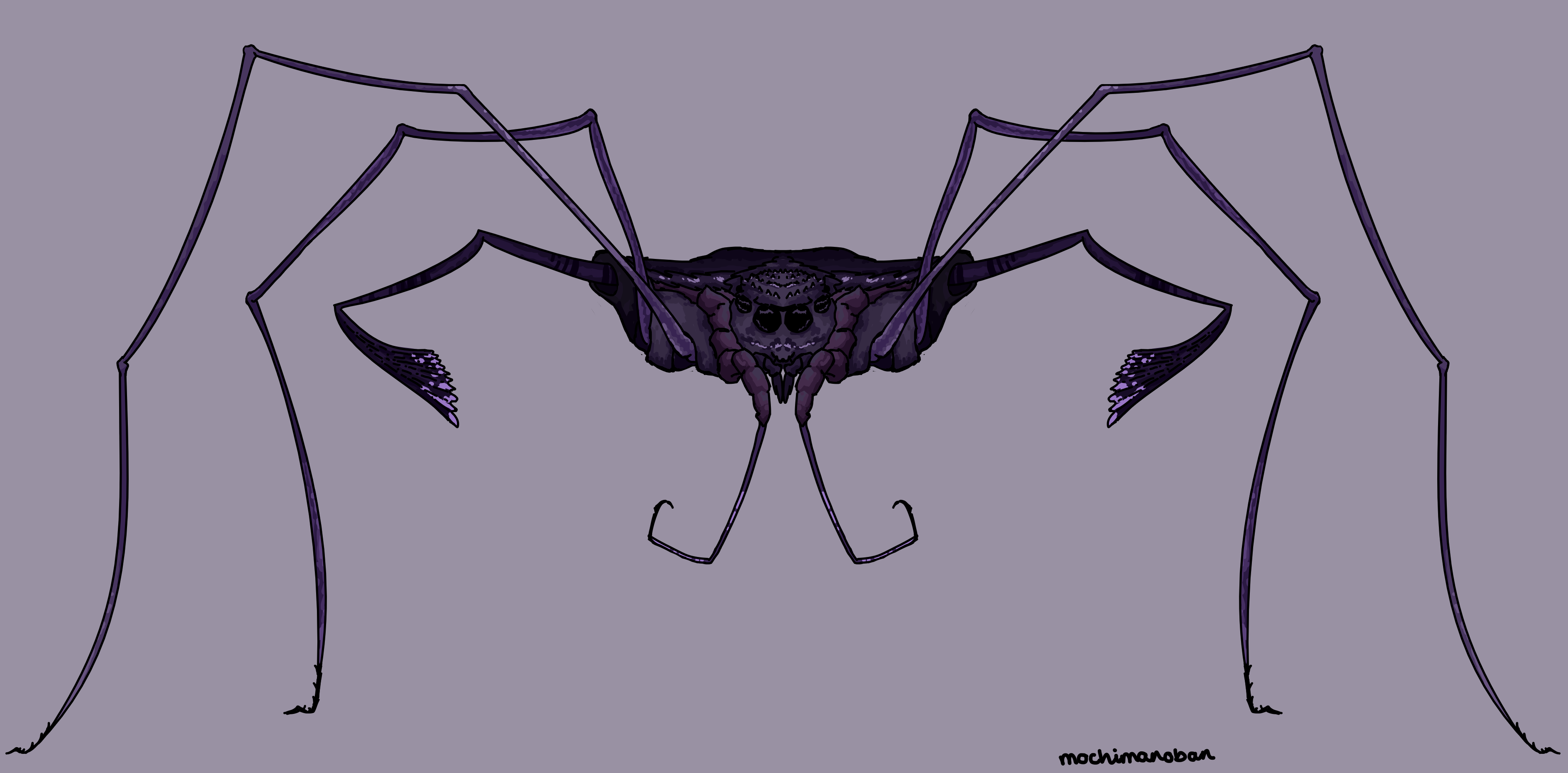
Despite their impressive size, hostilins still aren't the largest creatures on Nalmaria. That title goes to the blanket spider; with a silken wingspan of nine miles, they weave webs between their legs and soar the skies.
They shoot balls of eggs into space, hatching after a year, babies raining down from the skies. Those that don't burn up in the upper atmosphere must weave webbed wings to catch themselves mid-flight, or else they splat on the ground.
The sub-zero temperatures of Nalmaria means not a lot survives. The dominant arachnids all produce a natural anti-freeze compound that keeps them functioning as normal. These arachnids slow down in winter months, where temperatures drop to minus thirties.
Aside from arachnids, Nalmaria is home to many mammals and birds. These warm blooded animals cling to life, seeking refuge in caves where radiation from Pasaval warms up the atmosphere. As a result of this radiation, many animals suffer from devastating mutations.
A handful of dragon species still survive, classified as fossil species as they have not undergone evolution in millions of years. There are around thirty native species of dragons, descendents of those that used to rule the once tropical planet.
I spent three months in a titanium research vessel. I emerged on my second day there, and saw massive gashes along the walls. Where they came from, I have no idea. I didn't hear anything attack the vessel overnight. Speaking of nights, I slept forty minutes at best. I kept hearing these howls aaaall night long. What was howling, you ask? A spider. The size of a house. I saw its eight googly eyes staring through my window. Every so often it would get closer and closer, rattling its fangs at me, staring at me with those lifeless eyes. It would not. Stop. Howling.





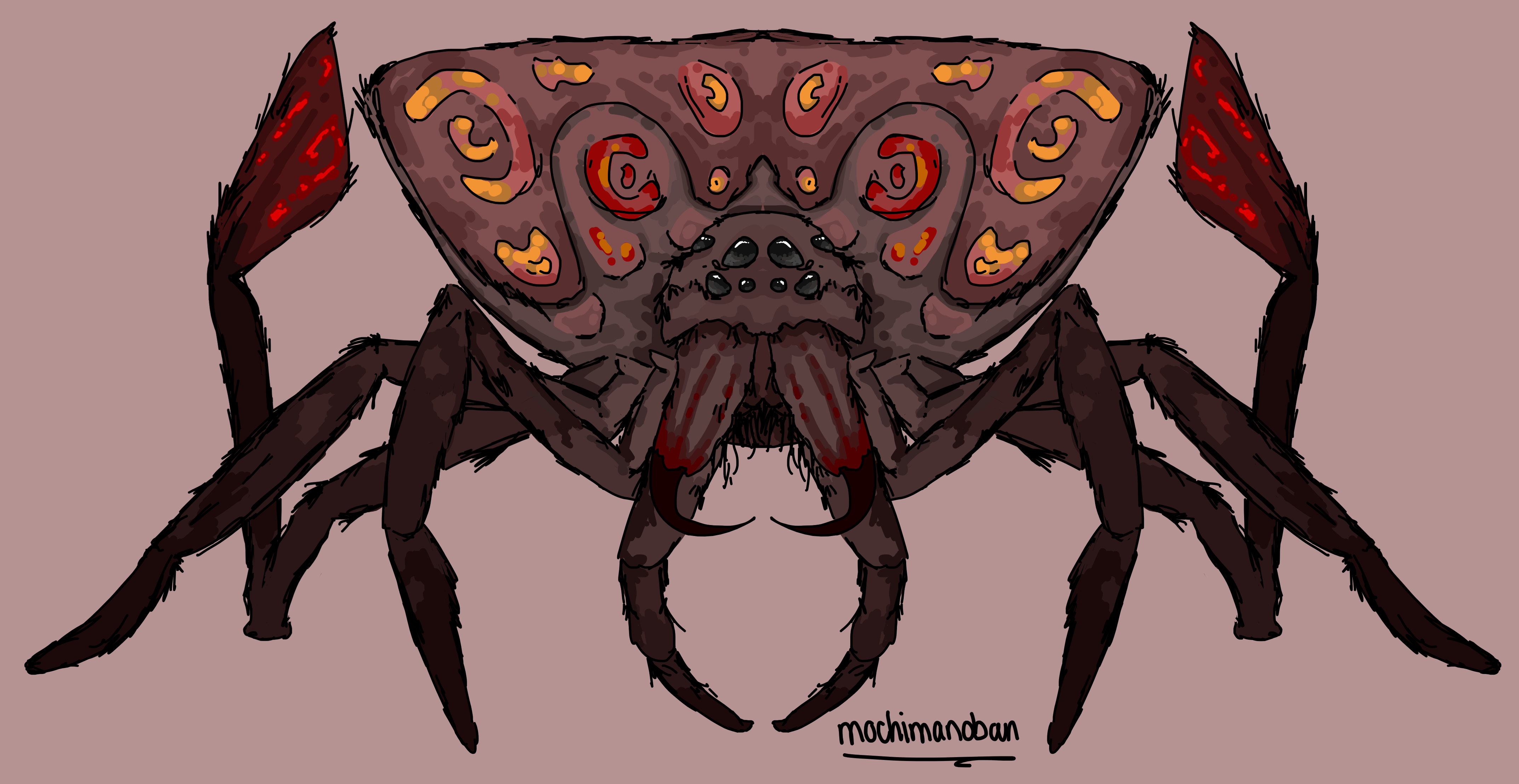
I agree, your drawings are absolutely stunning. I hate them. 'bigspider.webp' and 'leggyspider.webp' gave me a good chuckle. Is 'bigspider' a hostilin or the Queen herself?
hehehe thank you! they're not, I just couldn't settle on a design for the hostilins just yet, so I haven't drawn them </3