

Alderian
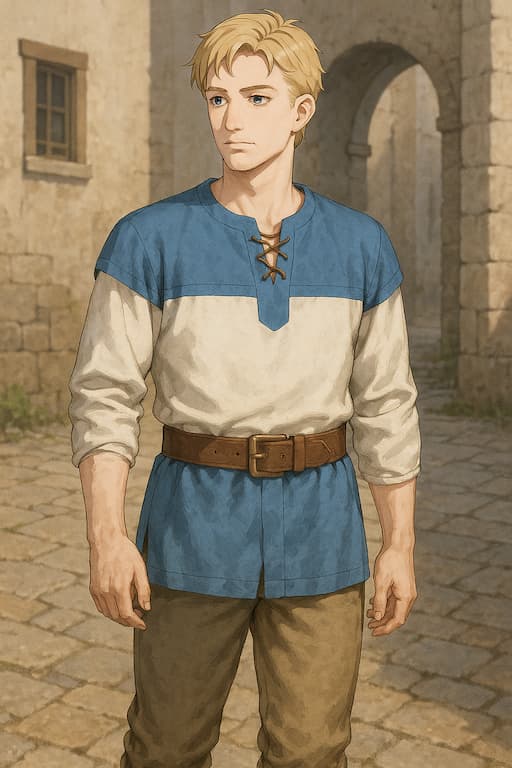
Alderians are a pale-skinned humanoid race native to The Alder, known for their adaptability, ambition, and pursuit of order. Though lacking natural magic, they dominate most of the continent through discipline, intellect, and hierarchy. Considered the “baseline” species of the world, Alderians are capable of interbreeding with nearly all other races, giving rise to many hybrids and shaping the political and cultural core of Alderia’s civilisation.
Basic Information
Anatomy
Alderians are upright, bipedal humanoids with well-proportioned musculature and balanced skeletal structure suited for endurance and tool use. They possess rounded ears, forward-facing eyes for depth perception, and dexterous hands capable of fine manipulation and craftsmanship. Their physical variation is moderate, with differences in height, build, and facial features, but overall they exhibit a versatile physiology adapted equally to labor, travel, and combat. Their senses are well-rounded rather than specialized, emphasizing adaptability over specialization.
Biological Traits
average food intake is 2000 kcal daily
Genetics and Reproduction
Alderians reproduce sexually, with genetic inheritance combining traits from both biological parents. They are a fully fertile baseline species, capable of consistent generational growth without magical or artificial intervention. Gestation typically lasts around nine months, resulting in live birth. Alderians display standard genetic diversity across physical traits such as height, facial structure, and durability, though extreme mutations are uncommon. Their reproductive biology favors adaptability and population stability, allowing them to thrive across varied environments and form the dominant demographic lineage throughout Alderian-controlled territories.
Growth Rate & Stages
Alderians mature at a steady, predictable pace. Childhood spans roughly the first decade of life, marked by rapid physical growth and foundational skill development. Adolescence begins in early teens, accompanied by accelerated physical maturation, increased strength and coordination, and social role formation. Full physical and cognitive maturity is typically reached by the early twenties. Alderians experience a long adult phase characterized by stable capability and productivity, followed by gradual age-related decline beginning in later decades. Lifespan varies by environment and circumstance, but most Alderians live into their seventies or eighties under stable conditions.
Ecology and Habitats
Alderians are highly adaptable and can establish permanent settlements in a wide range of environments. While their cultural and political centers are rooted in the lands of the Alder, they naturally expand into forests, plains, foothills, and river valleys, favoring regions with reliable water, arable land, and accessible resources. Their physiology does not specialize for extreme climates, but through clothing, shelter, and tool-making they comfortably inhabit temperate, cold, and semi-arid zones. Alderians modify their surroundings extensively—cultivating farmland, constructing fortified towns, and developing trade routes—making them ecological generalists capable of shaping terrain to support long-term habitation and growth.
Dietary Needs and Habits
Alderians are omnivores with a flexible diet capable of adapting to regional resources and cultural practices. Their nutrition typically comes from a balance of grains, vegetables, fruits, and animal proteins, supplemented by dairy, legumes, and preserved foods where available. They rely on cooked meals for safety and digestibility, though dried and smoked provisions are common for travel and military supply. While capable of surviving on modest fare, Alderians thrive on varied diets and often develop regional cuisines based on local agriculture and trade. Food habits emphasize communal meals, hearth-based cooking, and seasonal availability.
Behaviour
Alderians exhibit complex social and survival behaviours shaped by hierarchy and pragmatism. Within their own species, they value order, discipline, and calculated ambition, often engaging in quiet competition masked by civility. Their interactions are structured, transactional, and focused on advancement within established systems.
Toward predators or perceived threats, Alderians respond with strategy rather than instinct. They favour planning, coordination, and long-term retaliation over open confrontation, using intellect and organisation as their primary means of defence.
In their treatment of predated or subordinate species, Alderians tend toward control and assimilation. They rationalise dominance as stewardship, enforcing structure and culture upon others in the name of civilisation. This behaviour has made them both respected and resented, as their stability often comes at the cost of the freedom of those they rule.
Additional Information
Perception and Sensory Capabilities
Alderians possess balanced, general-purpose senses typical of humanoid physiology. Their vision is forward-facing with strong depth perception, effective in daylight but limited in darkness. Hearing is moderate, with rounded ears adapted for a wide range of everyday environmental sounds rather than fine directional acuity. Their sense of smell is functional but not specialized, useful for detecting basic environmental cues rather than long-range tracking. Touch sensitivity is refined, especially in the hands, supporting delicate manipulation and tool use. Overall, Alderian sensory ability favors versatility and general awareness rather than any heightened specialty.
Civilization and Culture
Major Organizations
Beauty Ideals
Alderian beauty ideals centre on purity, symmetry, and restraint, reflections of their broader cultural obsession with order. Pale, unblemished skin is considered the height of refinement, a mark of noble blood and spiritual cleanliness. Hair is typically kept light or muted in tone and groomed with precision, while visible scars, sunburn, or physical labour marks are viewed as lower-class traits.
Facial symmetry and delicate bone structure are prized, especially the long, narrow features seen in highborn families. Youth is valued not for innocence but for control, the ability to maintain composure and poise under scrutiny. Emotionless calm is considered elegant; overt displays of passion are treated as vulgar.
Among the elite, beauty is often enhanced through subtle artifice: powdered skin, lightly dyed hair, and soft-coloured fabrics meant to evoke the divine purity of The Alder’s ancient myths. In contrast, frontier Alderians tend to favour a harder aesthetic, lean muscle, endurance, and weathered poise, seeing beauty in survival rather than polish. Across the species, the unspoken rule remains constant: beauty is not self-expression, but discipline made visible.
Relationship Ideals
Alderian relationship ideals emphasise stability, loyalty, and social harmony over passion or spontaneity. Partnerships are typically formed through mutual benefit, strengthening family ties, social standing, or economic security. Emotional restraint is valued; open affection is seen as undisciplined or improper.
Among higher classes, marriages are often arranged or strategically negotiated, while commoners favour practicality and shared responsibility. Love, when acknowledged, is considered strongest when expressed through reliability and duty rather than sentiment. Betrayal within relationships carries severe social stigma, as trust and order are seen as foundations of both personal and societal stability.
Common Dress Code
Alderian dress reflects their cultural emphasis on hierarchy, restraint, and precision. Clothing is tailored, modest, and colour-coded to social status. Pale blues and whites dominate among citizens, a symbolic link to purity and the mythic origins of The Alder, while nobles and officials incorporate red or purple to denote authority.
Fabrics are clean and well-maintained rather than extravagant. Ornamentation is minimal, favouring sharp lines and symmetry over excess. Function dictates form: soldiers wear practical fitted gear, scholars favour layered robes with subdued embroidery, and merchants adopt muted but durable fabrics suited to travel.
Exposed skin is rare outside labouring classes, as propriety demands coverage that implies discipline and self-control. In all social tiers, dishevelment or flamboyance is seen as moral decay, an outer sign of inner disorder.
Common Taboos
Alderian taboos are rooted in their obsession with order, purity, and social control. Anything that disrupts hierarchy or threatens composure is treated as deeply shameful. Emotional excess, public weeping, rage, or open affection, is considered a loss of discipline, reflecting weakness rather than sincerity.
Physical impurity is equally condemned. Dirt, scars, and bodily odours are associated with moral failing; cleanliness and control of one’s appearance are seen as civic duties. Magic use, particularly unregulated or hereditary forms, remains a cultural and legal taboo since the witch hunts that defined the kingdom’s founding. To practise it is not just rebellion but sacrilege.
Cross-species intimacy, especially with those viewed as lesser races, is officially tolerated yet socially reviled, seen as tainting Alderian bloodlines. To the Alderian mind, chaos is not a force of nature but a sin against the world’s intended design.
Historical Figures
Starlous Alderian is remembered as the warlord-founder of the Kingdom of Alderia, born from the illegal Alderian settlements in what is now Arlandia. When The Federation Mandate retaliated against the encroaching colonists, Starlous united the scattered settlers under a single banner and led a decisive cavalry assault that annihilated the Glaviankin host. In the aftermath, he ordered the systematic extermination of the surviving tribes, erasing them from the land and claiming the territory as Alderian heartland. His campaign, equal parts legend and atrocity, marked the beginning of Alderian civilisation and the end of the Glavliankin. Though later ages sanctified his actions as divine providence, surviving accounts suggest Starlous was less saviour than architect of empire, the man who built Alderia upon ash and silence.
Common Myths and Legends
The most enduring Alderian legend is that of The Eternal Hero, a figure said to have risen from humble origins to cleanse the land of corruption during the chaotic eras before Alderia’s unification. Described as a woman of light and conviction, she is credited with forging the moral foundation of the kingdom, law, discipline, and the belief that purity of purpose could outlast death itself. Some claim she ascended to divinity, watching over the righteous from beyond the mortal veil; others see her as a political invention, a myth crafted to sanctify Alderian authority. Whether saint or symbol, the Eternal Hero endures as the embodiment of Alderian virtue: unwavering order in a world forever slipping toward chaos.
Interspecies Relations and Assumptions
Alderians can interbreed with beastfolk and produce compatible half-breeds, but hybrid lines do not propagate indefinitely; second-generation mixing typically produces infertile or non-viable offspring unless the Alderian line is reinforced.
Genetic Descendants
Origin/Ancestry
The Alder
Lifespan
85
Average Height
5'4" to 6'2"
Average Weight
59–91 kg
Body Tint, Colouring and Marking
pale skinned.
Geographic Distribution
Related Organizations
- Alderbrook
- Bogclutch Military
- Brackenhill Farmers Union
- Clan Bogclutch
- Clan Dalkurharn
- Clan Embercrack
- Clan Redstone
- County of Yarden
- Goblin Cult Temple
- House Alderian
- House Lansing
- House Serrean
- House Varden
- Oakwood Council
- Oakwood Guard
- Oakwood Pact
- Oakwood Vanguard
- Pepper Trade Republic
- The Alden Retrainers
- The Black Thorn Gang
- The Iron Fang Gang
- The Order of The Oak
- The Ren
- The Silver Talon
- The Silver-Oak Council
- The vigilance
- Vel’Rasa Order
- Willowshade

Comments