

The Eternal Hero
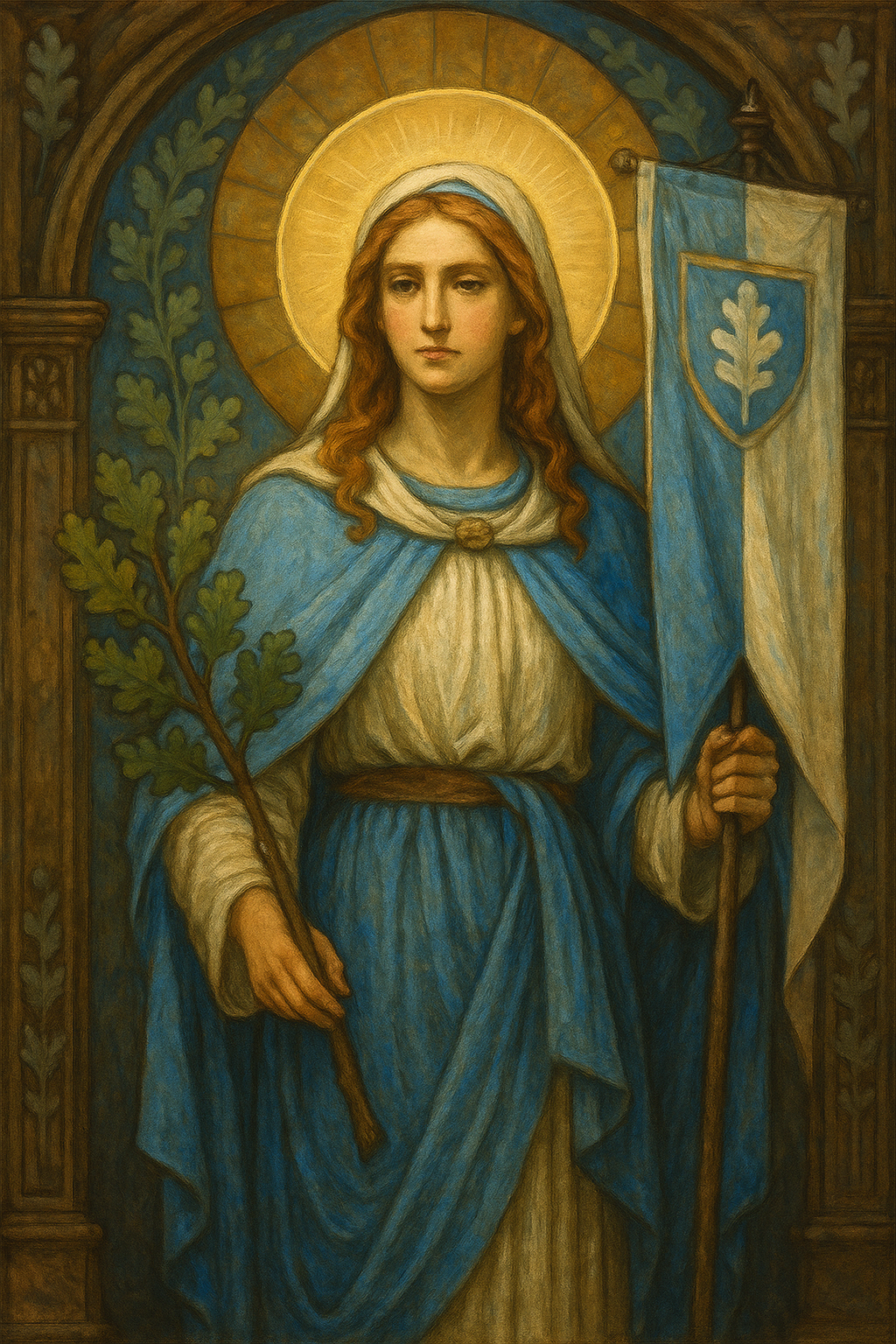
The Eternal Hero is a revered Alderian folk legend believed to have lived during the early Era of Founding, predating the consolidation of the Alderian Kingdom. Her story is preserved almost exclusively by The Order of Oak, whose members claim she ascended to divine status following a life of heroic deeds, sacrifice, and defence of the innocent.
While mainstream Alderian society either regards her as myth or forgets her entirely, rural communities and forest settlements sometimes maintain small shrines or whispered devotions to her legacy.
Mental characteristics
Personal history
The Eternal Hero is believed to have lived during the late Mandate era, prior to the rise of the Kingdom of Alderia. Most traditions place her origins in a small agrarian settlement deep within the ancient Alder woodlands, long before the region was formally unified. Her birth name is lost to history; all records and surviving oral accounts refer to her simply as The Hero or The Eternal One.
According to early accounts preserved by wandering monastics and later formalised by the Order of Oak, she was raised among labourers and foresters, living an ordinary life until a calamity struck her village. Sources differ — some attribute the event to Mandate purges, others to bandit devastation, and a few to plague or famine. Regardless of the cause, traditions agree that she emerged as a lone survivor or one of very few left, profoundly marked by loss.
Rather than succumb to despair, she devoted herself to aiding the vulnerable and resisting injustice wherever she encountered it. Over time, she developed a reputation for protecting isolated communities, confronting predatory warbands, and intervening in disputes between local powers. Tales describe her travelling tirelessly between hamlets and forest camps, offering both martial aid and counsel. Her presence reportedly attracted followers — early companions sometimes described as disciples, warriors, or fellow wanderers — though numbers and identities remain uncertain.
Her deeds spread across the region through folk retellings and travelling story-keepers. Many accounts emphasise her humility and refusal to claim land or title, leading to her later veneration as a champion of common folk. Some claim she liberated enslaved goblins, negotiated peace among rival clans, and escorted refugees through contested territory during the collapse of Mandate control.
Her end is a matter of theological and political dispute. In older folk traditions she was slain by nobles who viewed her growing influence as a threat. Order texts state she did not die, but ascended after sacrifice — “taken by the Oak to stand eternal beyond mortal soil.” Secular historians generally regard this as myth, believing she was executed or died in battle during the period of consolidation preceding the Kingdom of Alderia’s formation.
Despite her uncertain fate, her legacy endured in scattered forest communities. Centuries later, her legend was formalised into a religious tradition by The Order of Oak, who view her as a divine intermediary and living ideal of protection, justice, and self-sacrifice. Modern interpretations vary, but she remains a symbolic figure of resistance, virtue, and guardianship — particularly revered in isolated woodland societies and among those who resent centralised authority.
Divine Classification
Folk Hero / Saint
Religions
Species
Church/Cult
Date of Birth
Era of Founding
Date of Death
Era of Founding
Children
Pronouns
She / Her
Sex
Female
Eyes
Brown
Hair
Brown
Skin Tone/Pigmentation
White

Comments