

Dwarf
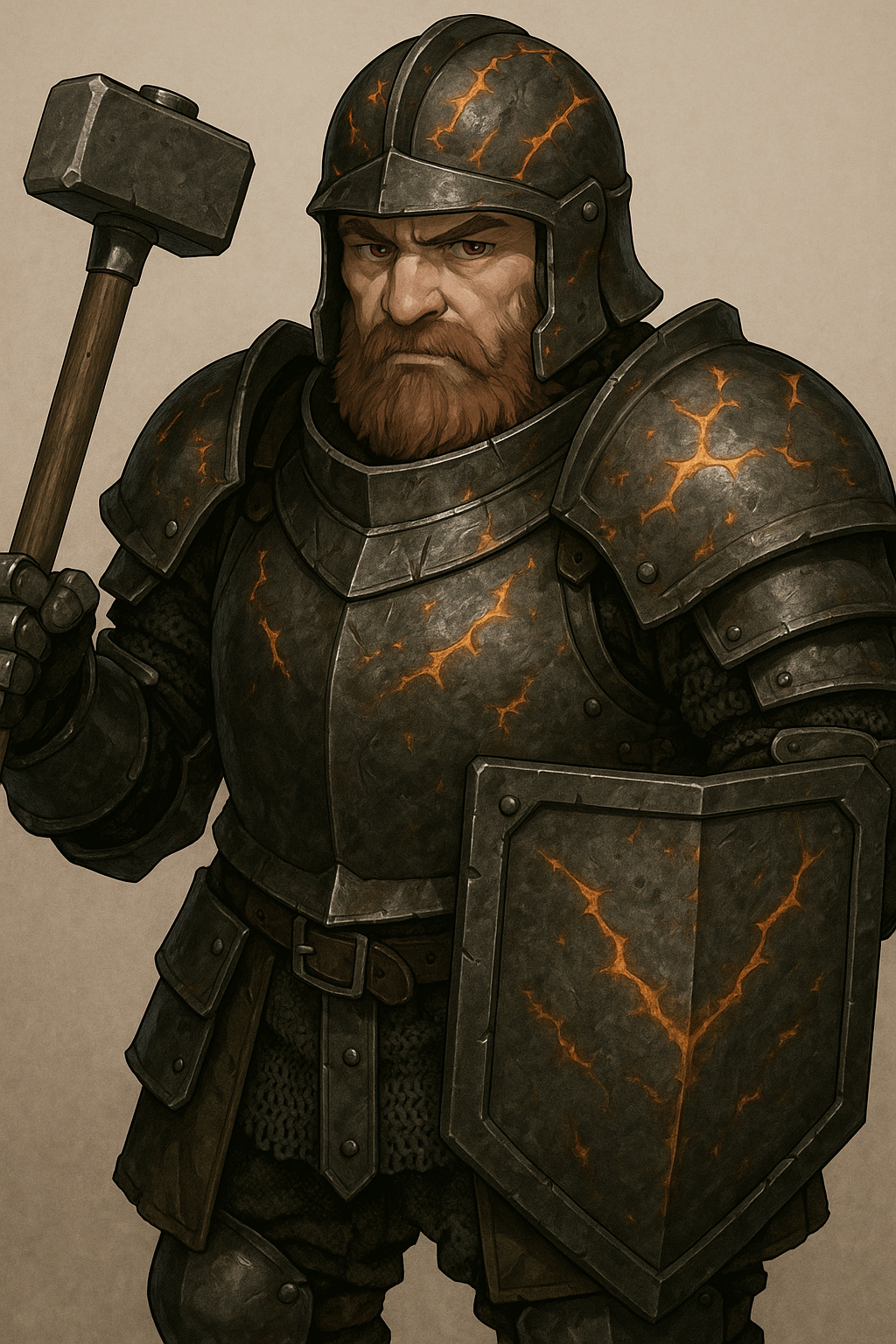
Dwarfs are a common sub race consisting of a mix of Alderian and Gnome genetics.
The race is very common throughout Redstone Hold however uncommon throughout The Alder overall.
Basic Information
Anatomy
Dwarves are compact, muscular humanoids characterized by shorter stature and a dense bone structure inherited from their gnome ancestry. They typically possess broad shoulders, thick limbs, and strong hands well-suited to labor, combat, and craftsmanship. Their bodies are built for endurance and strength over agility, with slow but powerful movement and exceptional physical resilience. Facial hair is common among males, while females tend toward clean or finely trimmed grooming traditions depending on cultural practice.
Biological Traits
average food intake is 2000 kcal daily
Genetics and Reproduction
Dwarves originate from a stabilized hybrid of Alderian and gnome lineage. They form a fully recognized species and reproduce sexually. Dwarves can interbreed with Alderians or other dwarves, but hybrid fertility rules apply—continued viability relies on maintaining either dwarf-to-dwarf or dwarf-to-Alderian reproduction patterns. They cannot produce offspring with gnomes or other hybrid species. Offspring of mixed Alderian-dwarf parentage may present height variation, though the dwarven physical profile tends to dominate genetically over generations.
Growth Rate & Stages
Dwarf children develop more slowly than Alderians, reflecting a long maturation arc. Childhood and adolescence extend into late teens, with full physical maturity reached in the early twenties. Their growth stages emphasize gradual physical strengthening and skill development. Dwarves maintain vitality later into life than Alderians on average, experiencing a drawn-out middle-age period before gradual decline.
Ecology and Habitats
Dwarves historically flourished in stone-rich regions—mountain fortresses, deep quarries, and subterranean strongholds—though they are not strictly bound to underground life. They excel in environments where resource extraction, metallurgy, and fortified construction are possible. While capable of living on the surface, dwarven settlements often favor defensible locations and controlled territory, reflecting cultural preference for security and structural stability.
Dietary Needs and Habits
Dwarves are omnivores with preference for hearty, dense foods that support sustained labor. Meat, grains, root vegetables, mushrooms, and fermented products form staple dietary elements. Their metabolism favors slow, consistent caloric intake, and they have strong tolerance for preserved goods—often developing robust brewing traditions and fermentation practices as a cultural hallmark.
Behaviour
Dwarves exhibit a psychology defined by pragmatism, endurance, and deep-seated communal loyalty. As a hybrid race born of Alderian and gnomish ancestry, they blend human ambition with gnomish precision, producing a temperament both methodical and unyielding. Dwarves value work above sentiment; creation is their expression of faith, and craftsmanship their measure of worth. Every tool, wall, and forge is a reflection of identity, making labour a moral act rather than a necessity.
Socially, dwarves are communal but rigid. Hierarchies are respected, and honour is tied to reliability rather than charisma. To fail in one’s duty is a personal disgrace that extends to the entire household or guild. They are slow to trust outsiders, viewing loyalty as something to be proven through years, not words. This caution often reads as coldness, though among themselves, dwarves display quiet warmth and humour grounded in shared toil and mutual respect.
Psychologically, dwarves exhibit low emotional volatility and a strong sense of self-discipline. They are resistant to manipulation, preferring reason and craftsmanship over rhetoric or mysticism. Their greatest flaw mirrors their strength, a near-obsessive need for control. When structure fails, dwarves experience deep unease, sometimes collapsing into fatalism or stubborn denial.
Additional Information
Social Structure
Dwarven society across the continent follows a structured, hierarchical model that reflects their cultural values of order, endurance, and craftsmanship. While customs vary between holds and clans, most dwarf communities share the same foundation: collective duty above individuality, stability over innovation, and respect for the hierarchy that maintains both.
The typical dwarf settlement is organised around guilds and castes, with leadership concentrated among elder craftsmen, military commanders, or religious figures who embody discipline and authority. Obedience and productivity are treated as moral virtues, while disorder or idleness is viewed as corruption of the soul.
Perception and Sensory Capabilities
Dwarven senses mirror Alderian baselines, with no extreme enhancements. They possess solid general vision and hearing, though their eyesight shows slight adaptation to low-light environments due to extended periods spent underground in certain historical periods. Their spatial awareness and tactile sense are slightly heightened, aiding precision in crafting and stonework, though not on a supernatural level.
Civilization and Culture
Beauty Ideals
Dwarven beauty ideals centre on strength, discipline, and order, the visible expression of inner control. A dwarf is considered beautiful when their appearance reflects precision and restraint: hair and beard kept in perfect condition, posture straight, movements deliberate. Every detail, from the cut of a tunic to the polish of armour, signals mastery over the self.
Physical power is admired not for aggression but for its containment. Broad shoulders, steady eyes, and a composed expression convey dominance through control rather than excess. Among both sexes, visible signs of endurance
Courtship Ideals
Traditionally, dwarves court through demonstration rather than words: craftsmanship offered as a gift, consistent attendance at communal meals, or the steady fulfilment of duty alongside the intended partner. Emotional restraint is valued; displays of jealousy or impulsive desire are considered undignified. Commitment, once declared, is taken as binding and permanent, with dissolution viewed as a personal and moral failure.
Marriage and partnership are social contracts before they are emotional ones, binding two individuals into a single, disciplined unit that strengthens the family, guild, or hold. Love, when it develops, is expected to mature into quiet companionship and mutual respect. In dwarven culture, the greatest declaration of affection is constancy.
Relationship Ideals
Authority and structure play central roles. One partner, often the more experienced or higher-ranked, is expected to provide direction and security, while the other offers devotion and diligence. Equality is defined not by freedom but by mutual fulfilment of duty within the relationship’s hierarchy. Betrayal, neglect, or disorder within such bonds is regarded as a moral failing that stains not only the individuals involved but the reputation of their kin.
To the dwarven mind, love is not a fleeting emotion but a disciplined act.
Common Etiquette Rules
Dwarven etiquette is formal, structured, and deeply tied to hierarchy. Respect is demonstrated through precision of speech, controlled body language, and adherence to rank. Every interaction follows an unspoken code of order.
Physical gestures are measured. A shallow nod is the standard greeting between equals, while a closed fist over the chest signifies loyalty or submission to authority. Public argument is frowned upon; disagreements are settled privately or through official channels, preserving the image of unity. Cleanliness and presentation are also marks of respect, as unkempt appearance implies neglect of duty.
Within guilds and holds, obedience to protocol is seen as the foundation of civilisation. Orders are followed without hesitation, meals observed in silence until elders speak, and personal boasting discouraged unless sanctioned by rank. Etiquette, in dwarven society, is not courtesy for its own sake but the expression of order itself
Common Dress Code
Dwarven dress code reflects their cultural devotion to order, authority, and discipline. Clothing is designed to project control and function rather than luxury. Every piece is purposeful, fitted, and maintained to exacting standards. Tunics and coats are cut with sharp lines, belts and clasps positioned symmetrically, and colours restricted to muted earth tones, greys, reds, and black.
Common Taboos
Dwarven taboos stem from their reverence for order, discipline, and collective stability. Anything that threatens these principles is considered a moral and social violation. Disobedience is the gravest offense, to defy a superior or disrupt the chain of command is seen not as rebellion but as spiritual decay. Idleness is equally condemned, viewed as rot within the social body; every dwarf is expected to labour, create, or contribute to the strength of the hold.
Interspecies Relations and Assumptions
Dwarves maintain reproductive compatibility only with other dwarves, Gnomes and Alderians. Their hybrid origin means they cannot interbreed with other species. Generational stability favors dwarven pairing, but Alderian lineage remains biologically viable. This reinforces long-standing interaction between dwarf and Alderian societies.
Lifespan
80–110
Average Height
4'4"–5'0"
Average Weight
65–90 kg
Geographic Distribution
Related Organizations

Comments