Tunyag (ˈtu.njag)
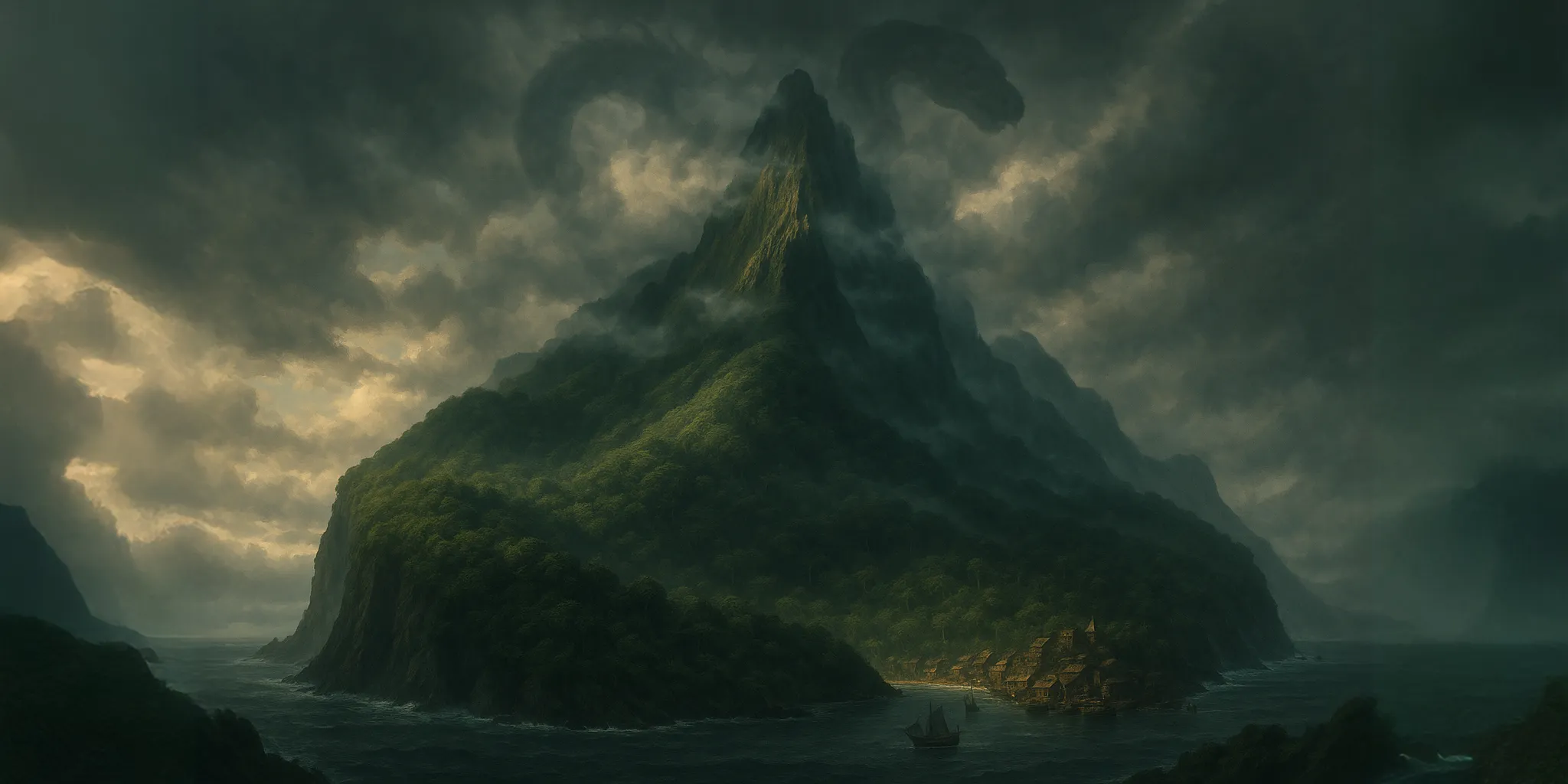
Tunyag is an island in the Kapuluan archipelago and part of the Lalawigan ng Balugo, a province of the Tagápulo Empire. The island is best known for its steep, rugged terrain, which has long made it unsuitable for most forms of agriculture. Sparsely populated and largely wild, Tunyag is rumored to harbor villages hidden deep in remote valleys - settlements that have evaded direct contact with the Empire for generations. Criminals and rebels are said to have sought refuge in these isolated communities. Combined with the island's ferocious wildlife - including tigers, bears, and the dreaded Lawunawa - Tunyag is regarded as one of the most dangerous places in the Empire for outsiders to visit.
The island has only one notable settlement, located on a natural harbor along the southwestern coast: the town of Panando. Like the island itself, Panando carries a dangerous reputation. Despite the efforts of Lakanlalawigan Dangal ng Bato to stamp out corruption, the town remains notorious as a safe haven for pirates and smugglers. Whenever the Lakanlalawigan's forces arrive to arrest the outlaws - or the officials who shelter them for a price - the criminals always seem to be forewarned and vanish into the mountains. Expeditions sent in pursuit either return empty-handed or not at all. More than one has disappeared into the wilderness without a trace, while their quarry later reemerges looking well-fed and rested from their backcountry vacation.
Notable Spirits
The inhabitants of Tunyag all pay homage to Kaptanog, the Lord of Teeth, the Anito who rules over the island - especially its wild interior. Most wear an amulet fashioned from a large tooth, symbolizing their devotion and ensuring that the god will recognize them as faithful should they meet him face-to-face. Kaptanog is also called the Rajanawa, the King of Dragons.
According to legend, Kaptanog manifests as a colossal and terrifying beast, with the body of a tiger and the head of a Lawunawa. Its roar is said to be strong enough to topple trees. Fiercely protective of its forests, it resents the encroachment of civilization and demands tribute from all who enter - save for the Dugoligaw, who are believed to have a natural right to dwell in wild places. Offerings vary: traditionally, the sacrifice of a tool will appease the god, and raw meat is also a favored gift. Those with nothing else to give may offer a limb. Though few survive such an ordeal, those who do are revered, granted the deference of all Tunyag's beasts, and allowed to walk the wilderness unafraid for the rest of their lives.
Geography
Tunyag is one of the most rugged and mountainous islands in the Kapuluan archipelago. Roughly crescent-shaped, it curls around the natural harbor on its southwestern coast. The island measures about sixteen miles along its longest axis, from northeast to southwest, and about seven miles across at its widest point. Despite its modest size, Tunyag is crowned with several high peaks, the tallest being Halimipinbundok, which rises to just over 6,700 feet. Apart from the few coastal settlements, the island is covered in dense forest. If there are indeed villages hidden in its interior, no roads or clearings betray their presence.
Geographic Details
Location: Southwestern RegionLatitude: 12.96 degrees North
Longitude: 25.45 degrees West
Average Elevation: 597 ft
Highest Point: 6,752 ft (Halimipinbundok)
Lowest Point: -3 ft
Area: 172 sq mi
Related Articles
This article was originally written for Spooktober 2024. You can find all of my Spooktober Articles at Spooktober Central.
This article was originally written for Spooktober 2023. You can find all of my Spooktober Articles at Spooktober Central.



Tunyag sounds dangerous and rugged, which makes me wonder what kind of black-market trade might happen there. I’m also curious about the island’s fauna—does it have animals like sheep or goats, or only the more ferocious wildlife you mentioned?
The black market is mostly focused on avoiding taxes; spices from the Mangimoi archipelago are carried in and sold to merchants who forge the records to make them domestic products. Of course, the smugglers will bring anything in if there’s a profit. And pirates can turn their loot into coin here as well. It has deer, sheep, goats, and other prey animals; they just don’t have the same reputation as the predators.