Kuyab (ˈku.jab)
Kuyab is an island in the Kapuluan archipelago and part of the Lalawigan ng Duhan. It is closely connected to the smaller nearby island of Dagkut - the two are separated by a strait that narrows to just 3,000 feet at points and is never more than two miles wide. The strait is dotted with rocks and islets and is considered unnavigable by all but the smallest boats.
This proximity proved fateful when the Weeping Plague appeared on Dagkut in 3882. It spread to Kuyab almost immediately, and to the rest of the archipelago within a few weeks. While the plague was devastating across the Tagápulo Empire, Kuyab suffered more than any place except Dagkut itself.
Puzzlingly, Kuyab's population has not recovered - even a century after the last reported cases of the Weeping Plague. While Dagkut's population rebounded after the epidemic, no children have been born on Kuyab since. Its only population growth has come through immigration - and since the island is widely believed to be cursed, few choose to settle there.
The reason for this ongoing sterility is unknown - but everyone has a theory. Some believe the plague tainted the island's soil or water, and insist on consuming only food and drink brought from elsewhere. Others claim that a sacred temple once stood hidden in the hills of Kuyab, where a wicked Anito dwelled, placated by a devoted order of priests who all perished during the plague. Now, they say, the god is angry and has cursed the islanders. A third theory suggests that the souls destined to become children are avoiding Kuyab because of the ancient plague - though this does not explain why those same spirits have not shunned other plague-ravaged islands.
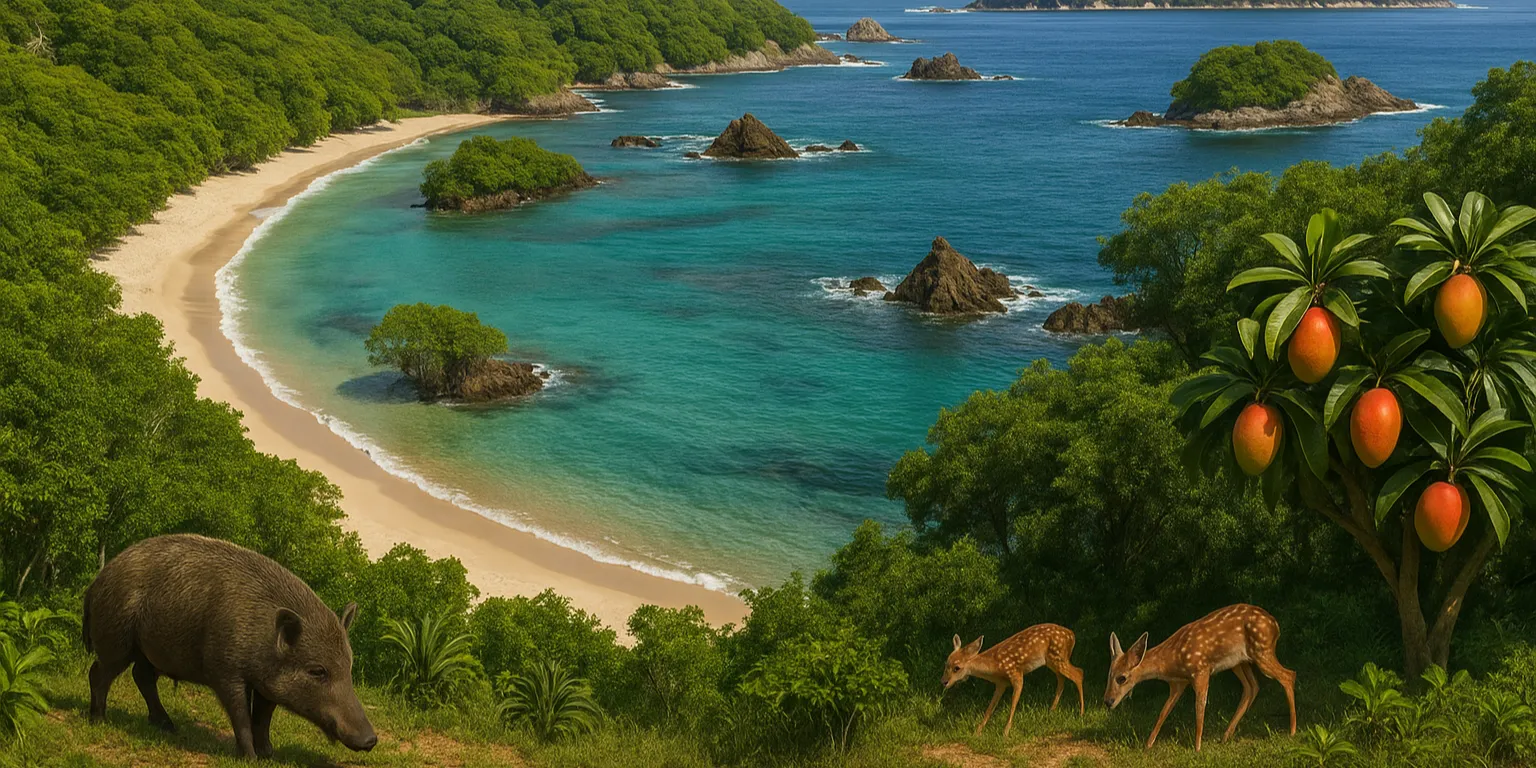
Whatever the cause, the consequence is the same. Though nearly twice the size of Dagkut, Kuyab's population is barely a tenth of its smaller neighbor's. The villages that once dotted the island are abandoned - or inhabited by only a few stubborn holdouts. Some have begun to call Kuyab a Talimungaw's paradise, and those who seek solitude now come to bury themselves in its interior. The curse of sterility has affected only the speaking races: animals and plants have thrived even as the people vanished. The orchards that once brought the island wealth have gone wild - yet remain bountiful.
Notable Spirits
In the absence of people, the lesser spirits of Kuyab have begun to wither, forgotten by those who once knew their names. They linger in sacred places that are no longer honored, and in wild places whose stories are no longer told. The island's great Anito, Palarona, is still revered by the remaining inhabitants and named by the Imperial Priests in the litany of the Empire's gods - but the local spirits are fading. Unless something changes, they seem destined to vanish entirely.
Geography
Kuyab is a roughly semi-circular island, with an arcing southwestern coastline that nearly meets Dagkut. Its shore is lined with numerous inlets and bays, while the island's center is dominated by rolling hills. Once famed for its abundant orchards - particularly the high quality of its mangoes - the hills are now more forest than farmland, with fruit mostly consumed by animals and a few hermits.
Geographic Details
Location: Southwestern RegionLatitude: 12.7 degrees North
Longitude: 27.92 degrees West
Average Elevation: 118 ft
Highest Point: 2,034 ft
Lowest Point: -3 ft
Area: 340 sq mi
Related Articles
This article was originally written for Spooktober 2024. You can find all of my Spooktober Articles at Spooktober Central.
This article was originally written for Spooktober 2023. You can find all of my Spooktober Articles at Spooktober Central.



Oooo, what a mystery. If someone travelled to a different island, would they find the sterility cured?
Explore Etrea | WorldEmber 2025
Yes - those who relocate can reproduce normally.