
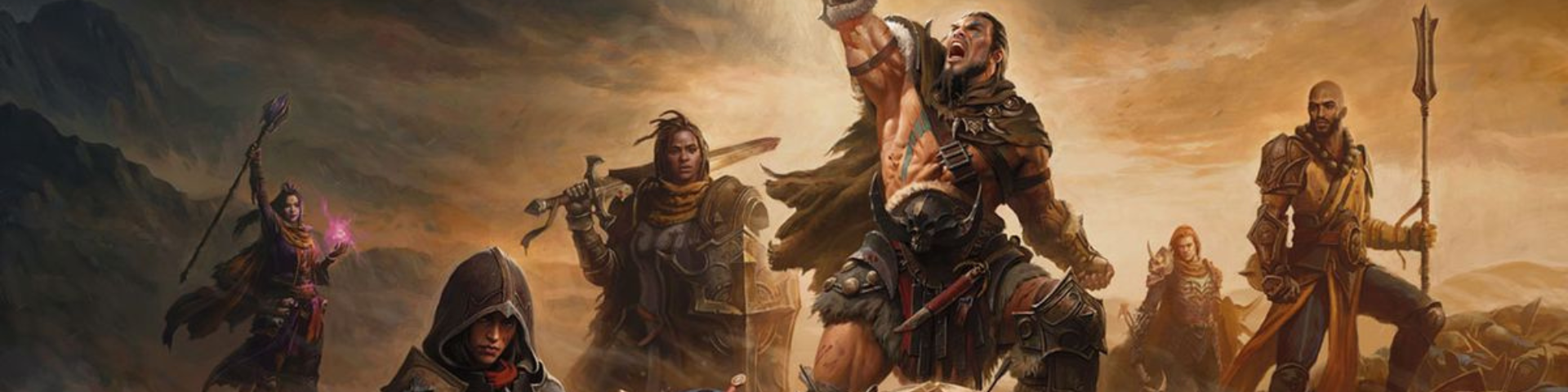
Terran (TERR-uhn)
"And Sarudin, eldest of the Minores Deos, did labor beneath the glory of the Deorum Trinus, forging a vessel worthy of their divine Concordance. From the clay of Aemaphia’s sacred earth, he did shape the form of mortals, strong and supple, and breathed into them the harmony of life, death, and nature. Thus were the Terrans wrought, in the image of the Trinus. To be both creators and stewards, seekers and sowers. In their hearts, Sarudin placed the spark of balance, that they might strive to honor Concordance and uphold the eternal truth. For as they were made from the earth and by the divine hand, so too were they bound to the cycle, to live, to labor, and to pass, returning to the soil whence they came."-Il Octo Libros de Trutina, Book VIII:8
The Terrans are one of the most influential and controversial races on Aemaphia. Their role in shaping the modern political landscape of the planet is not to be understated. Following their mysterious emergence onto Aemaphia some twenty-four thousand years ago, the terrans soon grew to inhabit all the corners of Acarcia, establishing some of the most significant civilizations the world has ever known. During their long history, several terran empires have rose and fell since their genesis, affecting not only the land itself, but the species that inhabited them. The most notable of these empires was founded by Korrin d'Orian, better known as Corin Imperare, who united the eight kingdoms of Aesersia into the Empire of Doria after the fall of the Sophic Empire of Northern Arthesia. The Dorian Empire stood for sixteen hundred years before collapsing due to civil war. Now, a confederation of terran states and nations known as the Union dominate Acarcia.
Basic Information
Anatomy
The Terrans of Aemaphia, known to scholars as "Homo Terra Imperis", possess a physiology closely resembling that of baseline humanoids, but subtly marked by their divine origins. Averaging between 5 and 6 feet in height with a medium frame and a lifespan of 75 to 80 Concordant Years, their anatomy is resilient, adaptable, and biologically optimized for survival across Aemaphia’s diverse climates. Internally, Terrans feature an advanced circulatory and nervous system believed to be refined by Sarudin’s divine craftsmanship, allowing for exceptional physical and mental adaptability. Unlike other mortal species, Terrans carry a latent spiritual spark, known as the Coranima, believed to tether them more closely to the cycle of Concordance. This spiritual organ is invisible to mundane science but detectable by clerics and seers, and may explain the Terrans’ unusual affinity for arcane, occult, and primal mageia.
Sexual Dimorphism
Sexual dimorphism among Terrans is present but generally subtle, manifesting in differences of average height, musculature, and hormonal traits rather than dramatic physiological divergence. Male Terrans tend to be slightly taller and more prone to muscle mass development, while female Terrans typically exhibit greater endurance, metabolic efficiency, and pain tolerance—an evolutionary balance shaped by their demanding reproductive biology. Facial structure, vocal pitch, and secondary sexual characteristics vary widely across ethnic lines, making broad generalizations culturally imprecise. Still, Terran societies often exaggerate or ritualize these small distinctions through fashion, gendered roles, and social expectation, reinforcing identity more through custom than through biology. In truth, Terran dimorphism is less about form than it is about the myths they tell themselves, each culture assigning meaning, power, or purpose to traits that are, biologically speaking, remarkably close.
Genetics and Reproduction
Terran genetics are defined by an extraordinary degree of environmental adaptability, a trait believed to be both a gift from Sarudin and a divine challenge imposed by the Eight. Over millennia, Terran populations exposed to specific biomes, whether arid desert, frozen tundra, dense jungle, or mountain highland, have undergone subtle but permanent phenotypical mutations, resulting in the rich tapestry of ethnic variations observed across Aemaphia today. This same genetic mutability, however, binds the Terrans in an eternal biological arms race with disease, as pathogens evolve alongside them in a shared cycle of adaptation. Terrans are, by nature, hosts. Both for resilience and for affliction. Their ever-shifting genome, while a source of strength, also makes them uniquely susceptible to congenital mental illness and physical deformity, conditions which the Edicts of Concordant Design interpret as signs of imbalance between body and soul. Thus, the very trait that allows Terrans to survive anywhere in Aemaphia also marks them as the most biologically vulnerable of all the mortal races. A paradox they often confront with denial, eugenic policy, or religious rationalization.
Reproduction Among Terrans
Terran reproduction is a carefully calibrated biological and cultural process shaped by the demands of survival, legacy, and divine design. Gestation typically lasts eight months, though in rare cases, a child remains in the womb into a ninth; an event regarded with reverence across nearly all Terran cultures. Such children, known colloquially as Ninth-Born, are often believed to carry a spark of sorcerous potential or divine favor, their delayed emergence interpreted as a sign of hidden power or prophetic destiny.
Pregnancy itself is an intense physical ordeal for the mother, a sacred yet grueling trial of endurance that once claimed many lives before the advent of modern medicine and divine midwifery. Even with today’s low mortality rates, the toll of childbirth leaves most Terran mothers physically and spiritually exhausted for weeks or months afterward. As a result, Terran societies across Acarcia have developed intricate familial structures and postnatal customs to ensure the mother’s full recovery.
Central to these customs is the father's role as early caregiver, a societal expectation that is near-universal among Terran cultures. In the critical first three months, the father—or, in some regions, a designated paterfamilias or life partner—is expected to provide food, comfort, protection, and emotional stability to both mother and child. This period of paternal devotion is seen as both a duty and a rite of passage. Beyond that, Terran child-rearing is a shared endeavor, with both parents contributing to the development, education, and moral foundation of the child for the first twelve years. Genetically, Terrans are designed to optimize adaptability through reproduction: offspring inherit not only a blend of physical traits, but a matrix of adaptive genes that subtly shift in expression based on environmental conditions, disease resistance, and even magical saturation. This dynamic genetic inheritance ensures that each generation of Terrans remains suited for survival in Aemaphia’s ever-changing world, while preserving enough variation for the species to continually evolve.
Growth Rate & Stages
The study of terran anatomy, part of the larger study known as Morphologea Hominidae, is a field of rigorous observation and practical application, blending the disciplines of natural medicine, occult biometrics, and comparative physiology. While Terrans lack the arcane resonance or mythic mutability of other species, their bodies are marvels of balanced design—resilient, efficient, and capable of remarkable adaptation across environments. Scholars of Morphologea Hominidae often note that what Terrans lack in magical flair, they make up for in structural symmetry, cognitive versatility, and a unique spiritual organ, the Coranima, which subtly influences their biology through devotion, willpower, and faith. The life cycle of the average Terran follows a steady, biologically familiar arc marked by clear stages of growth, though subtly shaped by their divine heritage. Terran children mature at a consistent pace, reaching adolescence around the age of twelve and physical adulthood by seventeen. From there, a typical Terran experiences a long plateau of vitality and productivity lasting well into their fifties, thanks to Sarudin’s balanced design. Old age sets in gradually, with most Terrans remaining active and lucid until their late seventies. Though their physical bodies may wane, the Coranima, the spiritual spark within each Terran, often flares most brightly in the twilight years, leading many elders to experience heightened dreams, prophetic insight, or a final burst of inspiration. Life is viewed not as a linear climb, but as a sacred spiral: from the first breath to the last, every stage is honored as a vital expression of Concordance.
Maturity Through Labor
The Terran concept of Maturity Through Labor is a cultural cornerstone across nearly all ethnic and national lines, rooted in the belief that purposeful work is the sacred bridge between childhood and citizenship. At the age of twelve, a Terran is no longer seen merely as a child, but as an adolescent capable of learning the responsibilities and disciplines of adult life. This transition marks the end of exclusive parental stewardship and the beginning of vocational apprenticeship, a deeply revered tradition known as the Path of Hands. Families, guided by communal elders, spiritual leaders, or Guild representatives, typically arrange apprenticeships based on a child’s physical aptitude, intellectual inclinations, or divine signs observed during youth. These apprenticeships vary widely in form and function: a youth may be bound to a blacksmith, a traveling merchant, an archivist, a cleric, a soldier, or even a wandering adventurer. The apprentice becomes the ward of their master, who assumes full legal and spiritual responsibility for their development during this formative period.
The duration of a Terran apprenticeship ranges from four to eight years, depending on the complexity of the trade and the standards of the local Guild or clergy. Throughout this time, the apprentice not only gains practical skills and knowledge but also learns social discipline, civic duty, and the values of their community or faith. The completion of an apprenticeship is marked by a Rite of Acceptance, often a public ceremony in which the apprentice’s name is inscribed into local records, signifying their full integration into adult society. At this point, they are eligible to marry, hold property, engage in business, serve in military or religious institutions, and begin a family of their own. While life remains a journey of learning and striving, Maturity Through Labor affirms that adulthood is not defined by age alone, but by contribution, craftsmanship, and commitment to the greater good.
Funerary Rites
Funerary customs among the Terrans are deeply tied to the doctrines of the Eightfold Faith, reflecting their belief in Concordance and the eternal cycle of life, death, and spiritual renewal. While customs vary by region, the most widespread practice involves a ceremonial Return to the Pillars, in which the deceased is ritually purified, anointed in sacred oils, and offered prayers invoking Amerra, Donin, and Sarudin; the deities of life, death, and the earth. The body is then either buried in sanctified soil, cremated in holy fire, or entombed in a family crypt, depending on the deceased’s caste, wealth, or religious role. Offerings of food, tools, and symbolic relics are common, meant to ease the soul’s passage and honor the life they lived. The faithful believe that a soul in good standing may be welcomed into the divine domain of their patron deity, avoiding the oblivion of Discord. Mourning rituals usually last eight days, culminating in a Feast of Remembrance where loved ones share stories, recite verses from Il Octo Libros de Trutina, and reaffirm their own devotion. Death, to the Terran, is not an ending—it is a return, a reckoning, and a chance for remembrance that echoes through generations.
Ecology and Habitats
The Six Terran Ethnicities
"It is ignorance to observe the phenotypical adaptations within the wide spectrum of Terran ethnicities as a weakness or blemish. Bigotry against fellow Terrans is a blasphemy, a willful disregard of our genetic excellence. Our species ability to adapt is one of it's greatest strengths and highest virtues, and any who argue otherwise is a fool."- Carles d'Avenpor, Professor Emeritas of Sciencia Naturea Biologeia
Over the course of nearly twenty-four thousand years, the Terrans of Acarcia have undergone profound environmental adaptation, their mutable physiology allowing them to survive, and ultimately thrive within every biome Aemaphia offers. This capacity for long-term phenotypical mutation has shaped their bodies, behaviors, and even cultural instincts in response to regional climates, resources, and threats. Whether enduring the searing dunes of Arthesia, the jungled peaks of Aegesia, or the frostbitten fjords of Gornend, Terrans gradually transformed to better withstand their surroundings. What began as subtle differences in skin tone, bone structure, or resistance to disease eventually gave rise to six dominant ethnic groups, each with its own ancestral homeland, cultural legacy, and biome-specific adaptations. These groups now inhabit nearly every corner of Acarcia, a living testament to the Terrans’ unmatched ability to reshape themselves, and their environments, to suit their ambition.
The Topanese
The Topanese are one of the six major ethnic groups of Terrans, primarily native to the twin continents of Aegesia and Aquilesia. Shaped by generations of life in mountainous jungles, coastal peninsulas, and volcanic archipelagos, the Topanese exhibit lean, agile physiques, epicanthic eyes adapted to humid glare, and a heightened resistance to tropical disease. Their cultures often emphasize harmony with land and sea, reflecting a long history of careful agricultural engineering, monastic tradition, and sophisticated maritime trade. Though many Topanese societies value discipline, introspection, and collective welfare, they are no strangers to military prowess or divine ambition; Topanese warrior-philosophers and seafaring clerics are common throughout the Union. Their spiritual worldview tends to elevate Digilis and Luathel, favoring balance, nature, and dreams. Despite their distance from Aesersia’s imperial core, the Topaneseare far from peripheral; their mastery of terrain, devotion to legacy, and philosophical rigor mark them as one of the most quietly influential Terran groups in all of Acarcia.
Major Phenotypical Adaptations - Topanese Terrans have developed a range of phenotypical adaptations suited to the dense jungles, humid coastlines, and high-altitude plateaus of Aegesia and Aquilesia. Their skin tones range from golden-bronze to deep umber, providing natural protection against intense tropical sunlight. Narrower eyes with pronounced epicanthic folds help shield against glare and windblown particulates, while increased melanin levels support vitamin regulation in variable light conditions. Many exhibit a higher lung capacity and cardiovascular efficiency, traits linked to ancestral habitation of mountainous regions. Additionally, Topanese immune systems display a robust resistance to vector-borne illnesses common in humid climates, the result of millennia-long coevolution with local pathogens. Their straight, dark hair and compact musculature further reflect evolutionary responses to heat retention, humidity, and labor-intensive subsistence in rugged terrain. These traits have made the Topanese remarkably resilient in some of Aemaphia’s most biologically demanding environments.
The Letenese
The Letenese are the ancestral Terran ethnic group of Aesersia, and their legacy forms the ideological and imperial backbone of Terran civilization. Hailing from the temperate heartlands and river valleys of the continent, the Letenese are physically characterized by fair to olive skin, straight or wavy hair in a spectrum of browns and blondes, and angular facial features adapted to cooler, less sun-intense climates. Their cultures tend to prize order, hierarchy, and the codification of knowledge—traits that made them natural architects of empire. From the philosophers of the early Gjald republics to the imperial houses of Doria, the Letenese have historically cast themselves as the rightful stewards of Concordance, often viewing other ethnic groups as subjects to civilize or assimilate. They revere Aelius and Sarudin above all, believing in glory through labor and conquest through reason. Though now fractured across many nations, the Letenese continue to influence the Union's politics, religion, and language, clinging fiercely to the belief that Terran destiny was carved in their own image.
Major Phenotypical Adaptations - Letenese Terrans exhibit phenotypical traits shaped by millennia of habitation in Aesersia’s temperate plains, rolling hills, and inland forests. Their skin tones typically range from pale ivory to light olive, suited to regions with moderate sun exposure and cooler seasonal climates. Hair is commonly straight or wavy, varying in hues of chestnut, ash, and gold, while eye colors trend toward gray, green, and blue—mutations favored by low-light, overcast environments. Letenese bone structure tends toward high cheekbones and narrow noses, adaptations for temperate air density and heat regulation. Metabolically, they possess strong digestive flexibility, a reflection of agricultural abundance and omnivorous diets rooted in millennia of grain cultivation and animal domestication. While less resistant to tropical disease than their southern kin, the Letenese display enhanced cognitive plasticity and a predisposition toward strategic social organization, traits reinforced by generations of empire-building, urbanization, and cultural hegemony.
The Urchanese
The Urchanese are a formidable Terran ethnic group native to the "Land of the Titans", Aestidesia’s wind-scoured highlands and frostbitten mountain valleys who also later settled the northern mountainous regions of Arcesia. Shaped by generations of survival in a land ruled by ancient Giantkin and haunted by their degenerate Ogre cousins, the Urchanese are a people of grit, ritual, and austere dignity. Their societies prize endurance, discipline, and ancestral legacy, often blending martial prowess with spiritual austerity. Urchanese culture is steeped in reverence for the land’s mythic scale—its endless forests, cragged peaks, and the silent watch of forgotten titans. Known for producing stoic philosophers, steel-eyed warriors, and ascetic mystics, the Urchanese see themselves not as masters of nature, but as its most devoted students. Among the Union's peoples, they are both respected and feared, for theirs is a culture born not from conquest, but from outlasting what would crush all others.
Major Phenotypical Adaptations - Urchanese Terrans bear the unmistakable marks of their harsh homeland in Aestidesia. Their skin ranges from ashen olive to deep earthy tones, providing protection against biting winds and sun glare reflecting off ice and stone. Broad-shouldered and barrel-chested, they possess enlarged lung capacity and thick musculature adapted for high-altitude living and grueling physical labor. Their hair tends to be thick and dark, growing quickly to shield against the cold, while their eyes are often narrow and deeply set, with dark irises that help reduce snow-blindness and glare. Many display calloused hands, high cold tolerance, and dense bone structure—physical testaments to lives spent enduring frost, hunger, and the slow patience of stone. These traits, forged over millennia among towering peaks and shadowed vales, give the Urchanese the look of warriors carved from the mountains themselves.
The Vistlanese
The Vistlanese are a proud and weather-worn Terran ethnic group, shaped by the vast plains, rugged hills, and coastal steppes of Southeast Arcesia, a land they once called home before the rise of the Orcs shattered their dominion. They later settled Western Aesersia, Southern Aestidesia, and Northwestern Arthesia. Known for their horse-rearing clans, fortified hill-cities, and storm-worshipping priesthoods, the Vistlanese developed a fiercely independent and martial culture centered on survival, honor, and ancestral pride. Their societies were often semi-nomadic, moving with the seasons and maintaining a deep connection to the land’s rhythms and spirits. When the Orcs surged across Arcesia, many Vistlanese kingdoms were driven into exile or fragmented into scattered diasporas, yet they carried their traditions like sacred fire. Even in displacement, the Vistlanese remain defiant, clinging to their oaths, forging new identities in exile, and dreaming always of reclaiming the wind-swept homeland stolen from them.
Major Phenotypical Adaptations - Vistlanese Terrans bear the hallmarks of a people honed by wind, open sky, and the long memory of hardship. Their skin tones range from sand-touched tan to sun-bronzed russet, evolved for life beneath Arcesia’s fierce, unbroken sun. Their builds are rangy and lean, with sinewy musculature ideal for long-distance travel and mounted combat, reflecting generations of life in motion across grasslands and hills. High cheekbones, wind-chafed skin, and storm-gray or amber eyes are common, believed to be adaptations to constant exposure to dust, wind, and seasonal glare. Their hair tends to be thick and dark, worn long or braided in accordance with clan and ancestral custom. Vistlanese reflexes are quick, their cardiovascular systems fine-tuned for endurance, traits vital for surviving in a land where mobility once meant survival. Even in exile, their physicality remains a living testament to their lost homeland: every stride, scar, and sun-lined feature carved by the memory of Arcesia’s endless horizon.
The Retenese
The Retenese are a desert-forged ethnic group of Terrans native to the sun-scorched basins and arid highlands of northern Arthesia and southern Aesersia. Known for their endurance, pragmatism, and deeply communal values, Retenese cultures have long thrived in environments where survival hinges on cooperation, faith, and fierce self-reliance. They are stewards of some of the oldest temples of the Eightfold Faith, and their oral traditions and prophetic lineages are revered throughout Acarcia. Retenese societies tend to emphasize honor, stewardship of scarce resources, and scholarly devotion—particularly to Donin and Luathel, whom they see as guardians of arcane mageia, unending endurance, and the unconquerable dream of all Terran to achieve exaltation. Though often blinded by their own elitism, the Retenese are no strangers to diplomatic expressions of power: their merchant dynasties, scholar-prophets, and ascetic warriors have shaped the rise and fall of empires. To outsiders, the Retenese may appear stoic or austere, but beneath the surface lies a culture forged in fire, layered with poetry, memory, and quiet resilience.
Major Phenotypical Adaptations - Retenese Terrans have evolved phenotypical traits finely tuned to the harsh demands of desert life and arid highlands. Their skin ranges from rich copper to deep umber, offering natural protection against prolonged sun exposure and extreme temperatures. Eyes tend to be dark and narrow, with thicker lashes and pronounced brow ridges that shield against sand and glare. Their nasal structure is typically longer and more arched, an adaptation that humidifies and filters dry, dust-laden air. Hair is usually dark, tightly curled or coiled, aiding in heat dispersion and scalp protection. Metabolically, Retenese populations show remarkable water retention efficiency and salt tolerance, reflective of millennia spent surviving in drought-prone regions. These physical traits, coupled with a culture of adaptive clothing, ritual fasting, and spiritual discipline, make the Retenese one of the most physically resilient Terran groups in Aemaphia, well-suited to endure scarcity, heat, and long, arduous journeys across unforgiving terrain.
The Zalinese
The Zalinese are the Terran ethnic group that developed in the lush river valleys, savannas, and equatorial forests of Arthesia. Their societies are known for their vibrant oral traditions, intricate kinship structures, and deep reverence for cycles of life and death—often viewing Concordance not as balance achieved, but as balance continuously pursued. Zalinese cultures tend to center around ancestral memory, agricultural stewardship, and sacred artistry, with music, dance, and storytelling serving as vital cultural pillars. They are fiercely community-oriented, yet politically astute, with many Zalinese dynasties and spiritual orders playing key roles in the rise of regional power blocs and theological reformations. Their devotion to Digilis, and Sarudin is particularly strong, honoring nature, craft, and the sanctity of labor. Though historically overlooked by imperial chroniclers, the Zalinese are an ancient people with an unbroken cultural legacy—one rooted not in conquest, but in cultivation, memory, and resilience beneath the sun.
Major Phenotypical Adaptations - Zalinese Terrans possess phenotypical traits shaped by millennia of life in Central and Southern Arthesia; from its sun-drenched savannas, to its humid rainforests, and its vast jungle highlands. Their skin ranges from deep bronze to obsidian black, providing powerful natural protection against intense ultraviolet radiation. Hair is typically tightly coiled or coarsely curled, aiding in thermalregulation and scalp insulation in hot, humid climates. Zalinese bone structure tends toward broader noses and fuller lips, adaptations for humid air intake and efficient heat dissipation. High melanin levels, dense musculature, and strong bone density contribute to both durability and physical endurance, traits essential to survival in predator-rich environments and labor-intensive agrarian societies. Additionally, Zalinese populations display heightened resistance to parasitic infections and tropical diseases, a result of evolutionary arms races against endemic pathogens. These adaptations, combined with a cultural mastery of herbal medicine and environmental stewardship, have made the Zalinese biologically and socially attuned to some of Aemaphia’s most ecologically complex and demanding regions.
Behaviour
Terran behavior is marked by a complex fusion of spiritual purpose, mortal limitation, and an unshakable belief in their supremacy. Shaped by a finite lifespan, Terrans are driven by urgency, an insatiable need to matter before they return to the soil. This temporal pressure fuels their obsession with legacy: from kings raising colossi and carving their names into mountainsides, to children scrawling initials in temple stone or tree bark, Terrans are fixated on permanence in defiance of the impermanent nature of life. Their faith in the Eightfold reinforces this drive, teaching that a life lived in pursuit of Concordance and divine purpose may earn them eternal exaltation, thus sanctifying their ambitions. Yet beneath this piety lies a species-wide superiority complex; Terrans believe themselves not merely chosen but inherently dominant. Other races are seen as curiosities at best, obstacles at worst, beings who failed to harness the world as Terrans have. This worldview, paired with their resource-driven social systems, fosters a cultural disposition toward conquest, exploitation, and expansion. Unlike the elves who preserve, or the orcs who endure, the Terrans acquire. And in doing so, they reshape Aemaphia to bear their indelible mark.
Titan's Reach
Titan’s Reach is the name given to the deep-seated Terran compulsion toward expansion, dominion, and the exploitation of land and life alike. A trait so pervasive it is seen not as a cultural quirk but a spiritual affliction. Among their Kinder cousins, this drive is described with wary poetry: "The Terran soul is cursed with a titan’s reach. Their gaze shall always exceed the length of their arm." It speaks to an insatiable restlessness, a divine discontent that propels Terran societies to consume, conquer, and reshape the world in their own image. This behavior manifests in sprawling empires, relentless colonization, the mechanization of nature, and the ceaseless extraction of resources, justified through faith, legacy, and the illusion of stewardship. Even their noblest endeavors, religion, scholarship, trade, often mask deeper desires to claim and control. As a result, Terran societies are almost never static; they expand until they fracture, build until they consume, and burn until only memory and monument remain. Thus Titan’s Reach is both the source of their greatness and the seed of their downfall.
Additional Information
Geographic Origin and Distribution
The Terran of Acarcia
The Terrans, given their highly adaptive nature, have developed a number of geographic distinction, both culturally and physically, as they spread across Acarcia.The Aegesian and Aquilesian Terran
The majorities of the cultures and societies of Aegesia and Aquilesia share the Topanese ethnic background. Given its great distance from the other major Terran population centers, the twin continents of Aegesia and Aquilesia have few ethnic minorities, with only a few Zalinese populations inhabiting their eastern coastline and several pockets of Urchanese refugee settlements in the northern territories.
The Q'olchi
The Q'olchi people are the dominant Topanese cultural group, originally inhabited the valleys of eastern Aegesia before settling the jungles and coastland of the continent. Following the formation of the Tzacualli Mountains, the Q'olchi were divided and evolved into two distinct cultures.
The Huari
The Huari were a minority group of nomadic hunter-gathering Topanese that settled the western Aegesia prior to the formation of the Tzacualli Mountains. Following the formation of the Tzacualli Mountains, the Huari developed into two distinct cultures defined by their relationship to the mountains.
The Letichebve of Aegesia
The Orc Emergence and their subsequent conquest of Arcesia destabilized the surrounding terran population centers, including Aestidesia. Several of the western Urchanese were forced to flee further southwest, eventually settling in northern Aegesia.
The Mendi of Aquilesia
A group of seafaring ethnically Zalinese Terrans from Arthesia settled the archipelago and eastern coast of the Peninsula of Aquilesia, remaining to this day.
The Gjald of Aquilesia
The Aeserian Terran
The many cultures and societies of Aeseria come from four prominent ethnic backgrounds; the native Letenese, the Vistlanese of Arcesia, the Urchanese of Aestidesia, and the Retenese from Northern Arthesia. However, Aesersia has also long been identified as Acarcia's mixing pot, where all cultures come to share their best with the rest. During the height of the Empire, countless other peoples emigrated to Aesersia, becoming assimilated into the imperial cultural hegemony that defined that era. Even now, the Union stands open to all Terrans willing to join the cause of greater cooperation across Acarcia.
The Gjald
The Gjald people are ethnically Letenese terrans who settled the North Central Aesersian continent. The Gjald are deeply community focused, as a society. As such, even in the most ancient periods of their history, they often adopted forms of meritocratic rule or even direct democracy. Given the abundance of natural resources and the limited external threats, the majority of Gjald cultures never developed expansionist traditions. They instead developed complex intercultural rivalries that remain to this day.
The Kehelt
The Kehelt people are ethnically Letenese terrans who settled Northeastern Aesersia. Unlike their Gjald cousins, the Kehelt possess a collective cultural identity centered on warfare, due in part to the limited natural resources of Northeastern Aesersia. The early Kehelt horseback raiders eventually evolved into the knightly traditions that dominate Kehelt culture to this day. Additionally, the Unseelie Fey of Llheinyuen presented a constant threat to the ancient Kehelt lords.
The Heiltsuk of Aesersia
The Heiltsuk people are ethnical Vistlanese who migrated to Aesersia from Arcesia long before the Orc Emergence that devastated their cousins centuries later. Despite their ethnic origins, the Heiltsuk lost much of their Vistlanese cultural identity as nomadic plains hunter, adapting to an agricultural lifetime.
The Rete of Aesersia
Ethnic Retenese who, in pursuit of more bountiful territories, would establish themselves powerful kingdoms in southern Aesersia. Maintaining the proud barring of their cousins Arthesia, the Rete of southern Aesersia long strove to distinguish themselves as lords of their own destiny and writers of their own legacies.
The Letichebve of Aesersia
Displaced Letichebve, from the Urchanese ethnic group, quickly emigrated to Aesersia fleeing the Orcs as they conquered Arcesia. They settled southeastern Aesersia, predominantly the vast prairies of eastern Cordea.The Aestidesian Terran
Aestidesia is known as the Land of Titans, both due to the impossible mountain peaks and the roaming Ogres that haunt the valleys. The Terran's of this region are the minority, struggling to maintain a life against larger and more dangerous ecological rivals.
The Letichebve
The Letichebve are ethnically Urchanese terran who settled Southern Aestidesia. Rural and rugged survivalistsThe Buryatve
The ethnically Urchanese who settled in the wilderness of Northern Aestidesia once ruled territories stretching to the western coast of Northern Arcesia. Stubborn beyond reason, the Buryatve remain in their mountains to this day.The Yatovsuk of Aestidesia
Ethnic Vistlanese who were originally from Arcesia, fleeing the Orcs to settle in southern border of Aestidesia and their former home. They now survive by raiding the Urchanese people of the region.The Heiltsuk of Aestidesia
These proud Vistlanese settled the northeastern coast of Aestidesia centuries before the Orc Emergence. In the intervening generations, they adopted much of the Letichebve cultural traditions.The Arcesian Terran
The cultures of Arcesia are defined by their displacement by the Orcs and the diaspora that followed.
The Yatovsuk
The Yatovsuk are ethnically Vistlanese terrans who settled Northern Arcesia prior to the Orc Emergence. These proud nomads remained within their homeland despite constant warfare with the endless masses of Orcs.
The Heiltsuk
The Heiltsuk are another group of ethnically Vistlanese terran who originally settled Southern Arcesia prior to the Orc Emergence. Unlike the Yatovsuk who defiantly remained in their ancestral homeland, most of the Heiltsuk, already traditionally nomadic, fled to the safety of nearby continents. As far as Imperial records state, only a single group of Heiltsuk remain within Arcesia.
The Huari of Arcesia
These ethnically Topanese terrans migrated to the vast southwestern territories of Arcesia prior to the Orc Emergence. Following the establishment of the Orc Dominions, these stubborn Huari remain in defiance of the "Greenskin" occupiers.
The Arthesian Terran
The Rete
Ethnic Retenese of northern ArthesiaThe Khusu
Ethnic Zalinese of central ArthesiaThe Mendi
Ethnic Zalinese of southern ArthesiaThe Letichebve of Arthesia
These ethnically Urchanese terrans fled the Orcish encroachment of Arcesia, eventually settling in northwest Arthesia. They have now become the nomadic raiders of the Arthesian Desert.
The Huari of Arthesia
These ethnically Topanese terrans began settling the western coastline of Arthesia, as well as the islands of the Pugnausian Archipelago, centuries before the Zalinese corsairs started raiding these areas. They have since developed complex cultures within these regions.
The Gjald of Arthesia
The Aepesian Terran
The small isolated continent of Aepesia, and its surrounding archipelago, was not one of the primary points of Terran Emergence. As a result, it remained undiscovered by the greater Terran of Acarcia for millennia. Since reaching Aepesia during the Kuset period, the Terrans of Arthesia have long colonized the region. However, with the collapse of the Sophic Empire, the Zalinese and Retenese of Aepesia found themselves isolated, and over the centuries developed their own distinct cultures. Finally, Letenese Gjald explorers from northern Aesersia, blown tremendously off course, would find themselves hopelessly marooned on the eastern Aepesian archipelago. Without a way to return, these Letenese adapted to the islands, eventually encountering their fellow Aepesian, the abandoned colonists from Arthesia. During the twilight of the Empire, greater Acarcia would finally chart Aepesia and encounter the long-secluded Aepesian Terran. Eager to exploit the trove of unique natural resources, the Union has mounted an aggressive effort to integrate these lands, and their people, into their federation.The Mendi of Aepesia
The Rete of Aepesia
The Gjald of Aepesia
The Terran Abroad
Tenebrusian Terran
Trunsian Terran
Tectusian Terran
Perception and Sensory Capabilities
The mundane senses of the Terrans of sight, hearing, smell, touch, and taste are well-developed but unremarkable when compared to the heightened sensory capabilities of many other Aemaphian species. Their vision is limited in darkness, their hearing lacks the precision of Beastfolk, and their sense of smell is dulled compared to the Vaarner Faeryi. To overcome these limitations, Terrans have long relied on clever innovation and magical augmentation. Tools like spyglasses, echolenses, and scent masks are common among explorers and hunters, while enchanted gear, such as Whisper-Rings to enhance hearing or Nightcloaks woven with moonsilver to grant darkvision, are sought after by adventurers. Occult magic rituals further compensate, with clerics invoking sensory miracles and alchemists brewing potions to temporarily heighten perception. Though mundane in nature, Terrans bridge the gap between mortal limitation and divine ambition through invention, discipline, and devotion.
Academic Baseline
In the study of comparative physiology and sensory perception, the Terran’s five mundane senses are universally regarded as the standard model by which all other species are measured. This convention, largely established by Terran scholars themselves, reflects not biological objectivity but a deep-seated cultural belief in their own centrality. To Terran academics, the Terran baseline is not merely common; it is correct. The neutral point from which all deviation is considered enhancement or deficiency. Elven darkvision, Dwarven stonesight, or Gnomish empathy are often described in terms of how they exceed or fall short of Terran norms, reinforcing a subtle hierarchy rooted in perceived superiority. Though framed as scientific impartiality, this standardization reveals more about Terran pride than physiology, casting their sensory limitations as the gold standard of sentient experience.
Civilization and Culture
Major Language Groups and Dialects
"A smile goes just as far in any phrase in any language, but knowing all the countless ways to say 'friend' can go just a little further to keeping you alive."- The Adventurer's Almanac
The languages, dialects, and regional splinters spoken by the many ethnic groups and cultures of Terrans across Acarcia are as diverse and deeply rooted as the phenotypical adaptations the species has developed over millennia of migration, conquest, and survival. Each tongue carries the imprint of environment, labor, belief, and political domination, shaped as much by imperial decree as by stubborn regional memory. As a result, Lingueia Terraeum is regarded by academics and amateur scholars alike as one of the most intricate and contentious fields of study in the scholarly discipline.
International Terran Languages
These languages represent those most vital to international power, serving either as the primary tongues of sovereign states or as the dominant mediums of diplomacy, administration, faith, and long-distance trade. Mastery of such languages grants access to courts, contracts, and corridors of influence beyond any single homeland, while ignorance of them can relegate entire cultures to the margins of history. As a result, international Terran languages are not merely tools of communication, but instruments of governance, prestige, and imperial continuity.
Vulgar
Vulgar is an amalgamated trade-language commonly spoken by all Terrans associated with or citizens of The Union, developed during the earliest era of the Empire. Almost all but the most isolated Aesersians are fluent in Vulgar. As a result, Vulgar is frequently used across all of Acarcia and even heard in distant Faselica. It is the predominate language used by Adventurers across all of Aemaphia.Imperial
Imperial began as the official court-language of the Empire, and now serves as the chief administrative language of the Union. Imperial is also the primary language used by The Reignhold Alliance, The Eightfold Faith as well as the many trade guilds of The Conlegium Commercias. As a result, it is regularly used as the premiere diplomatic language throughout Aemaphia.Terran Languages of Aesersia
As the cosmopolitan heart of the Union and the locus of modern Terran cultural hegemony, Aesersia is dominated by the widespread use of Vulgar and Imperial in public life, governance, commerce, and faith. These languages form the common tongue of cities, courts, and institutions, binding the continent into a shared administrative and cultural framework. Yet beneath this veneer of unity, older regional languages persist as "mother tongues", spoken within households, rural communities, and insular traditions, preserving local identity even as their speakers navigate a world increasingly shaped by unified speech.
Galdic
The region language of the Letenese Gjald of Aesersia, and is one of the primary ancestors of Vulgar.Keheltic
The regional language of the Letenese Kehelt of Aesersia and abroad. Another major influence on Vulgar.Tuskisch
A regional splinter quasi-language offshoot of Heiltic brought to Aesersia from Aestidesia. Tuskisch is spoken extensively in Hunend and Protesend. Heavily influenced by ancient Geutanic when the Vistlanese Heiltsuk first settled in northwestern Aesersia. Inspired by Hungarian.Sulinese
A regional splinter quasi-language offshoot of Kemetic brought to Aesersia from Northern Arthesia. Sulinese is spoken principally across Suliese Renatus and Thanese. Inspired by Italian.Terran Languages of Arthesia
Ancient and proud Arthesia was among the last of the Terran continents to bind itself to the Empire, and this reluctance is reflected clearly in its linguistic landscape. The spread of Vulgar and Imperial across Arthesia was gradual, uneven, and often resisted, adopted first by courts and ports while the interior remained linguistically insular. Even in the modern era, vast stretches of rural Arthesia continue to speak their ancestral languages with little to no exposure to the universal codex forged in the distant heart of the Union, regarding such tongues not as progress, but as the linguistic imprint of foreign rule.
Sophic
The formal Retenese language used across the continent of Arthesia, developed during the dynastic period of the Sophic Empire. Sophic was one of the primary sources for Imperial, having been regularly spoken within southern Aesersia up until the establishment of the Empire at the end of the Heroic Era. Named for the Sophic Empire from which it originates. Inspired by Ancient Egyptian.Kemetic
The regional language of the Retenese Rete of Arthesia and abroad. Kemetic was used regularly by the common folk of southern Aesersia during the Heroic Era. As a result, it is another primary influence to both Imperial and Vulgar. Named for the Kemeti people of Kemetsis, the southernmost territory of Sophic Arthesia, now known as Cameseria across the Union.Kusetic
The regional language of the Zalinese Khushu of central Arthesia and one of the oldest living Terran languages still spoken in Acarica. Kusetic is the linguistic precursor to the entire Libunese language family, including Sophic, Kemetic, Neitese, and the many branches of Sulinese.Mendese
The regional language of the Zalinese Mende of Arthesia and abroad. Geographically speaking, Mendese is one of the widely used of the Saonese language branches.The Terran Languages of Aegesia and Aquilesia
Metsic
The formal Topanese language used across Aegesia and Aquilesia.Opochtic
The regional language of the Topanese Q'olchi of Aegesia, and the sibling language of Metsic.Huaric
The regional language of the Topanese Huari found in their ancestral Aegesia and abroad.Terran Languages of Aestidesia and Arcesia
Gocebic
The formal Urchanese language used across Aestidesia and Arcesia.Letichese
The regional language of the Urchanese Letichebve across Acarcia, and shares a root language with Gocebic.Buriatese
The regional language of the Uchanese Buryatve who defiantly remained in Aestidesia.Heiltic
The regional language of the many Vistlanese Heiltsuk found across Aemaphia.Kocenese
The regional language of the Vistlanese Yatovsuk of Arcesia and abroad.Extinct Terran Languages
Though these primeval languages are no longer active spoken in any conventional sense, many are still preserved in academic records by linguists across Aemaphia. Scholars argue that by understanding the ancestral tongues of ancient Terran, one can strengthen their connection to the wisdom of the past as well as provides vital tools to navigate the present. It is even said, by the most skilled of linguists, that a mastery of these root languages can give their user a command over all their dialectic off-shoots, regionals branches, splinters, and direct descendants that borders on fluency.
Qualisic
The root language of all the Topanese linguistic family and its many branches. The name comes from the formal Imperial designation for the Q'olchi region of Aegesia, which is Qualesisia.Geutanic
The root language of the entire Letenese linguistic family and its unique branches. The name comes from the Imperial term for a Gutan, which is a type of burial mound used by ancient Letenese across northern Aesersia.Sloveninic
The root language of all the Urchanese linguistic family and its various branches.Yatoic
The root language of the entire Vistlanese linguistic family and its distinct branches.Libunese
The root language of all the Retenese linguistic family and its numerous branches.Saonese
The root language of the entire Zalinese linguistic family and its subsequent branches.

Comments