"Dicti Vervm et Nvmkam Cognosces Timorem"
(Speak Virtuously and You Will Never Know Fear)
-The First Law of the Empire
Imperial is the official language of the Union and the former Dorian Empire of Acarcia. An administrative language, it is mostly used for official documents and historical records. Bureaucrats and high ranking imperial officers are often fluent in the language, as are scholars throughout Acarcia as it is also the official language of modern academia. The aristocracy of Acarcia also pride themselves on fluency in the complex language, and view those who have not mastered it as common or low-born.
Imperial is an amalgam of the many ancient Terran tribal languages and Sophic, as well as Glossa grammar conventions and Phoni essentials.
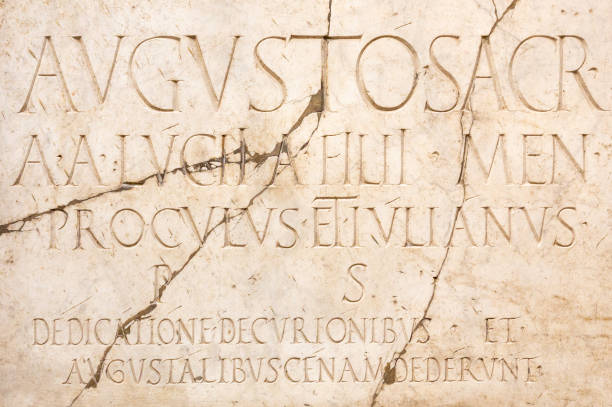
Imperial is based on the real world language of Italic Latin.
Writing System
Imperial scribes often impose language conventions onto adopted foreign words. For example, Imperial uses I in place of E, especially at the beginning of words. It also uses double LL in place of a single L. Confusingly, Imperial scribes arbitrarily use V in place of U or A, although the V are still pronounced as the vowels they were before.
Example: Insvlla Isson instead of the Island of Esson.
Furthermore, Imperial scrivners regularly use K in place of C, CH, and QU. Likewise, it uses CV in place of QUO. Again these changes are purely textual and do not affect pronounciation.
Example: Akillisia instead of Aquilesia.
Lastly, Imperial scholars used P in place of PH. Unlike other changes, this distinction can alter the pronounciation of the word.
Example: Sopik Impirivm instead of the Sophic Empire.
By its very nature, Imperial actively tries to resist geographic variation or the development of dialects.
For ease of research, each word listed in this limited Imperial vocabulary is structured in thematic sections. Furthermore, words may be listed multiple times, if they possess more than one definition or grammatical use.
Common Imperial Words
Ae is a prefix that is used to mean Of The World.
Aemas means The World, Itself. Often used in a figurative or artistic sense rather than a scientific term. The scientific term is Aemaphia, which means The Sphere of the World.
Acadeum means Education, Scholarly Pursuit, or Subject.
Anima means Soul, Spirit, or occult energy (either Holy or Profane).
Coranima is a term used to identify the soul of a sapient being, which is often given greater spiritual and magic value than those of sentient beings, monsters, or simple beasts.
Ave means Hail or Long Live. Often used as part of a chant, such as Ave Doria! Ave Imperivm! Ave Terrvn! or Ave Ailvis!
Arcana means Arcane Magic.
Arcantare is a general term to identify practitioners of Arcane Magics. Arcanum refers to the dedicated group of arcane magic-users.
Incantari means Sorcererous
Incantare is used to refer to Sorcerers.
Bureau means Box or Segment. Used to refer to a specific department within a Ministerium.
Bestae literally means Beast or Beastlike, and is used to refer to the various Beastfolk of Aemaphia.
Cognosces means To Know or Possess Knowledge Of.
Com means With or Together. When used as a prefix, it denotes that the subject is a singularity of unifying components.
Comcordeia means Concordance. It is a portmanteau of Com and Cor, literally meaning "Totality Together"
Con mean Group. When used as a prefix, it denotes that the subject is a collection of auxiliary parts.
Cor means Whole, Primary, or Total.
Cornaus means Ocean, literally translating to the "Totality of Seas".
Insulla means Island, with the suffix Nia denotes that the object is an Island in topography.
Naus means Sea or a large body of salt water.
Laus means Lake or a large body of fresh water.
Fleus means River of a body of flowing water.
Cosmos means Reality.
Deorum means Panteon.
Deo means God with Minores Deos used to identify lesser gods.
Vivit Sancti is a term used for mortals who have undergone apotheosis, becoming deific saints. The term literally translates to the Living Sanctified.
Theoseia means Religion.
Theologeia is the academic study of religion and how the occult interacts with reality.
Apocrypha means Unorthodox.
Apostati means Heretical.
Apostare is used to refer to Warlocks, cultists, or heretics.
Dicti means Speech or To Speak.
Dictori means Commands or Dictates.
Dictatorum means Kingdom.
Dictatore means King.
Dive means Divide or To Divide.
En means In. When used as a suffix prefix, it denotes "Within" the attached object.
Ensem means From or Origin. When used as a suffix -ensem, it denotes "Originating From".
Es means As and is used as a conjunction or adverb used for comparison, example, time, or reason.
Et means And or In Addition To.
Fasel means Forgotten or Left Behind.
Fidem means Church or Faith.
Fidem Imperalis is a term used to designate the official Church of the Empire.
Fidem Unium is a term used to designate an officially sanctioned religion allowed to proselyte within the Union.
Frange means Fringe, Splinters, or Shards as well as To Scatter or To Splinter.
Hic means Here.
Homo means Person or the qualities of Personhood.
Imperium means Empire.
Imperare means Emperor.
Imperare Inherent means Imperial Heir.
Imperare Surrogare means Acting Emperor.
Iuri means Tax.
Libre means Book or Tome, with Libros being the plural.
Lingua means Language. It literally translates to Tongue and can be used to identify the body part.
Lingueia is the academic study of Languages.
Mageia means Magic and can refer to any type of magics, whether Arcane, Occult, or Primal.
Minister means Administrator or Appointed Servant.
Ministorum is the administrational entity. It is usually divided into countless Ordos and Bureaus.
Monstrum means Monster.
Numquam means Never, but was originally a portmanteau of "Non Umquam" or Not Ever.
Non means No or Not.
Nunc means Now or the Present.
Obscura means Hidden.
Oliphant means Elephant or Mammoth.
The Oliphanti Imperialis is the symbol, or Sigil Imperare, of the Dorian Empire.
Ordo means Sects or Order.
Polar means Endpoint of an Axis, used to designate the Northernmost and Southernmost points on Aemaphia.
Polareus Bores is the sea of icebergs at the northernmost axis of Aemaphia.
Polareus Notos is the frozen mass at the southernmost axis of Aemaphia.
Pro means For.
Sacreme means Oath or To Swear an Oath.
Sedis means Throne.
Sciencia means Science.
Sciencia Naturea means Natural Sciences, the study of the natural phenomena of Aemaphia.
Geologeia is the subject of Sciencia Naturea of the various natural features and physical locations that span Aemaphia.
Ecologeia is a subject of Sciencia Naturea, focusing on the lifeforms, their biologies, and how they interact with the environments.
Morphologea - A subject within Ecologeia, the specific study of sapient biology.
Morphologea Hominidae - The study of Hominid biology.
Monstrologea - Subject of Ecologeia focused on the biology of monsters.
Cosmologeia is the academic study of the mechanisms of Existence itself. It is one of the more esoteric subsets of Sciencia Naturea.
Astralum refers to the Astral Realm as a subject.
Cosmoseum refers to the Temporal Realm as a subject.
Essenceum refers to the Essential Realm as a subject.
Eterneum refers to the Eternal Realm as a subject.
Liminum refers to the Liminal Realm as a subject.
Sociologeia is the complex study of how lifeforms organize themselves as well as the various systems of organization they form. It is one of the newer subset of Sciencia Naturea.
Esoterica means Forbidden and is used to denote academia that is outside Imperial sanction.
Tectus means Unknown or Unclear.
Tempus means Time.
Tenebrus means Shadow.
Terrae means Terran or Humanlike.
Timor means Fear.
Trune means Break, Broken or To Break.
Trutina means Truth.
Umquam mean Ever.
Unium means Union.
Unium Societas Terrae is the Imperial title for The Union, translating literally to the "Union of Terran Alliances".
Vere means Virtue.
Specific Imperial Terms - Topographical Suffixes
Imperial topographers use suffixes to give new meaning to a variety of words.
Phia denotes that the object is a Sphere. Example - Aemaphia.
Cia denotes that the object is a Landmass. Example - Acarcia or Fasilicia.
Sia denotes that the object is a Continent. Example - Aesersia or Trunsia.
Ria denotes that the object is a Country or Nation. Example - Prothinoria or Botoria.
Pia denotes Territory.
Gia denotes County.
Mia denotes City.
Via denotes that the object is a Colony. Example - Imparovia.
Lia denotes that the object is a Wilderness. Example - Telia Obscura.
Nia denotes that the object is an Island. Example - Essonia.
Naus denotes that the object is a large body of salt water such as a Sea. Example - Divenaus.
Laus denotes that the object is a large body of fresh water such as a Lake. Example - Gigalaus.
Fleus denotes that the object is a flowing body of water such as a River. Example - Corifleus.
Reus denotes that the object is a large body of ice such as a Glacial Mass. Example - Polareus.
Specific Imperial Terms - Scientific Uses
Anthrosapis - The academic term used to identify all creature deemed "Sapient".
Terrae means Terran or Terran-like.
Silvae means Fey or Fairy.
Orcus means Orc.
Xeno means Alien.
Hominidae - Meaning "Man-like", used to identify creatures with a single head and torso, two arms and two legs, with minor sexual dimorphism.
Anthrosapis Hominidae - The academic terms of the Hominids of Aemaphia.
Bestae Natura - The general terms or "family" of the many Beastfolk species of Aemaphia.
Ecologeia Monstrum - The specific study of monsters.
Bestae Ichthyum
Ichthyae are Fishfolk or the Locathah, based on “Roa'kakowa”.
Percae are Anglerfolk or the Kuo’toa.
Carcharodae are Sharkfolk or the Sah'kua'gen.
Bestae Insectum
Formicae are Antfolk or the Thri-Kreen.
Cancrae are Crabfolk.
Aranae are Spiderfolk or the Anasi-Gumo.
Flagellae are Scorpionfolk or the Serki-Gumo.
Irritae are Flyfolk.
Lepidopae Lumen are Butterflyfolk.
Lepidopae Caligo are Mothfolk.
Bestae Reptilium
Lacertae are Lizardfolk.
Crocylidae are Gatorfolk.
Testudae are Turtlefolk.
Ophidae are Snakefolk.
Anurae are Frogfolk or the Grungiwug.
Bufonae are Toadfolk or the Buliwug.
Batrae are Newtfolk or the Gripliwug.
Bestae Avium
Corvae are Crowfolk or the Tengu.
Bestae Mammalium
Simiae are Apefolk.
Felisae are Catfolk
Ursae are Bearfolk
Taurae are Bullfolk
Caprae are Goatfolk
Rattae are Ratfolk
Caninae are Dogfolk
Lupinae are Wolffolk
Truncae are Elephantfolk
Suinae are Swinefolk



Comments