
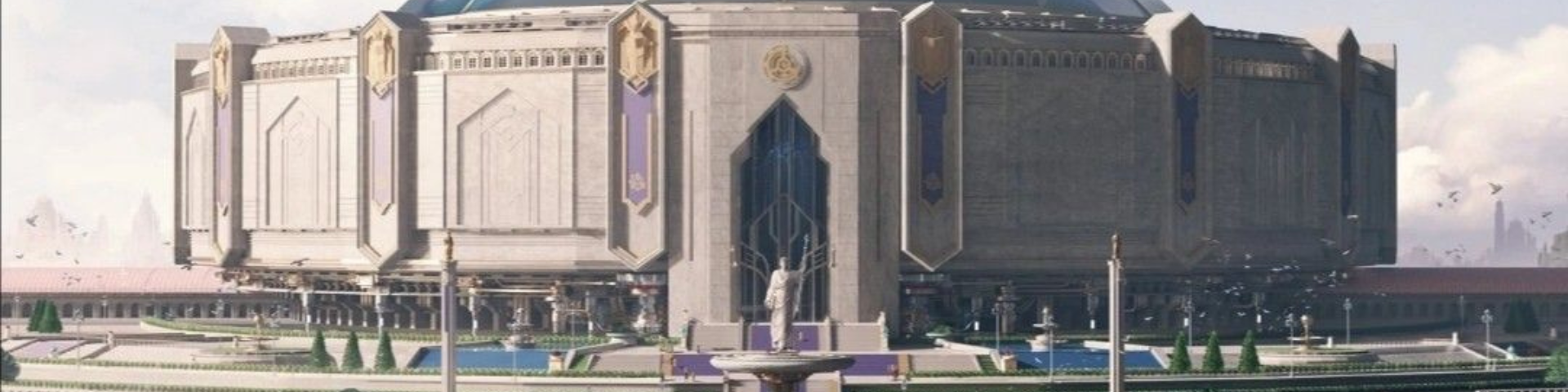
The Eightfold Faith
"In the beginning, there was concordance. Not the state perpetual, but the concept divine."-Dictori Octoe, Book I:1
The Eightfold Faith is a polytheistic religion focused on the myths, scriptures, and teachings of eight deities, collectively known as Deos Octonus, who each possess divine dominion over particular aspects of everyday life. These deities, themselves quasi-corporeal beings of immense occult power, are believed to respond to the active pleas of faithful mortals. Through prayer and religious rituals, devoted followers can receive blessings from the Eightfold. Most worship the whole pantheon, some dedicating themselves to specific patron deities. While depicted as being beneficent in nature, failure to pay homage to the Eightfold gods can have dire consequences. Finally, the truly faithful are believed to be spared the oblivion of death, instead joining their patrons in eternal exaltation.
Structure
"Lo, as fields of golden grain bend 'neath the gentle breath of heaven, so too must the heart of man yield to faith, which is the unseen hand that guideth the soul. For as the tiller of earth knoweth not if rain shall come, yet he trusteth the heavens to nourish his labor, so must thou, O seeker, place thy trust in the balance of the Eight. Though storms may darken the firmament and the seed lie hidden 'neath the soil, the faithful shall reap in due season, for faith is both the plough and the harvest, the promise and its fulfillment."-Il Octo Libros de Trutina, Book IV:11-12
The priesthood of the Eightfold Faith, known as the Octocclesiarchy, is a highly structured and hierarchical institution responsible for maintaining both the spiritual practices, doctrines, and traditions of the faith as well as the daily infrastructural operations of the international organization. At its administrative core are the Cardinals, their superior Archcardinals, and most superior Apostles, who oversee major temples, interpret sacred texts, and guide the overall direction of worship and theological discourse. Beneath them are the regional clergy of the Deacons and the Bishops, including temple priests, itinerant preachers, and scholars, who serve local communities by leading rituals, offering counsel, and preserving the stories of the Deos Octonus and Vivit Sancti. The priesthood is also deeply involved in education and the administration of sacred sites, with priests often doubling as scribes, historians, and guardians of relics. Training for the priesthood is rigorous, combining years of study in the Eightfold Path with practical service in temples or monastic orders. Priests are seen as mediators between the mortal and divine realms, and their lives are dedicated to embodying the principles of balance, justice, and salvation that are central to the Eightfold Faith.
The Octocclesiarchy
The priesthood of the Eightfold Faith is a highly structured organization which regulates the rituals and rites of the faith. The priesthood is divided into a hierarchy of three groups with eight formal ranks, seven of which are achieved through diligent study and internal politics, with the highest of these seven being the Apostles. The eighth formal rank, known as the Prophets, are something of a group of iconoclasts. Each prophet, of which there are only eight, are selected by divine appointment from any member of the Eightfold Faith, even followers outside of the Octocclesiarchy. There have even been historical examples of non-faithful appointed Prophets, though they are extremely rare.
Given the wildly different methods of selection and promotion, the majority of the Octocclesiarchy gives the Prophets a wide leash, often electing to pamper them into submission, exile them into obscurity, or assassinate them if left with no other option. The Prophets, for their part, often resent the cloistered nature of the conventional Octocclesiarchy and are ever frustrated by their bureaucratic nonsense impeding their god's will.
The Cleric
The eternally stalwart Clerics are a revered order within the Eightfold Faith, composed of Priests Proselytes who take up the mantle of adventurers to combat the forces of Discord—the malevolent influence believed to drive mortals toward wickedness and imbalance. Tasked with defending the Union and the faithful, clerics wield divine power granted by the Deos Octonus, channeling sacred magic to heal, protect, and purge evil. They are highly trained in the rites of exorcism, the banishment of dark entities, and the destruction of monsters that threaten peace and order. Clerics are often found on the front lines of danger, delving into cursed ruins, confronting infernal cults, or protecting remote villages from marauding beasts. Beyond their martial and magical prowess, clerics serve as moral exemplars, inspiring others to resist corruption and embrace the virtues of the Eightfold Path. Their dual role as warriors of the divine and shepherds of the faithful makes them indispensable agents of both spiritual and physical salvation.
The Templar
The Warlock
Other Classes in the Eightfold Faith
The Aedificium Octori
The Aedificium Octori, or the Edifice of the Eight, represents the hierarchical and architectural framework of places of worship in the Eightfold Faith, each tier reflecting the spiritual authority and purpose of its clergy. From humble chapels to sprawling holy city-states, these sacred spaces serve as the focal points for worship, governance, and divine connection. The Aedificium Octori reflects the Eightfold Faith’s intricate balance between spiritual devotion, administrative control, and cultural influence. These sacred spaces serve as more than places of worship—they are pillars of community, centers of academic learning and scholarship, hospitals and sanatoriums, and enduring symbols of divine presence in Aemaphia.
The simplest and most numerous places of worship are the Chapels, managed by local deacons. These modest structures are typically located in villages and rural communities, often crafted from wood or local stone. Chapels serve as centers for daily prayer, community gatherings, and small-scale rituals. The deacon oversees the spiritual needs of the local populace, conducting blessings, marriages, and funerary rites. Despite their simplicity, these chapels are adorned with icons of the Eight Pillars and often house a single relic or sacred text.
Larger and more ornate than chapels, Chancels are regional places of worship presided over by archdeacons. These mid-sized temples, built in larger towns, serve as communal hubs for worship and education. Chancels often include libraries of sacred texts, classrooms for teaching the Eightfold Path, and space for larger ceremonies. Their architecture is characterized by open, circular layouts symbolizing Concordance, with a central altar dedicated to the Deos Octonus. Archdeacons hold authority over multiple deacons and their chapels, ensuring orthodoxy across their region.
Imposing and intricately designed, Cathedrals mark the spiritual and administrative centers of entire dioceses. Each bishop, who presides over a cathedral, acts as both spiritual leader and regional governor for the Eightfold Faith. These grand structures are constructed from marble and other precious materials, with towering spires and stained-glass windows depicting the myths of the Deos Octonus. Cathedrals host major festivals, ordination ceremonies, and theological debates, and their bishops wield significant influence over local rulers and nobles.
Even grander than cathedrals, Basilicas serve as the seats of archbishops, the highest-ranking clergy in provincial governance. These structures are often fortified, blending the roles of spiritual sanctuaries and political strongholds. Lavishly decorated with gilded murals, mosaics, and relics from the Eightfold Faith’s history, basilicas are symbols of divine and temporal authority. Archbishops lead councils, oversee bishops, and coordinate the faith’s broader directives within their provinces. Pilgrims from across the land often travel to basilicas to receive blessings or witness grand ceremonies.
Minsters, castle-like complexes governed by cardinals, represent the pinnacle of spiritual authority before the highest echelons of the Octocclesiarchy. These sprawling edifices, often located in strategic or historically significant locations, serve as administrative hubs for entire kingdoms or large territories. Minsters house extensive libraries, training facilities for priests, and the tombs of revered saints and clergy. Cardinals, seen as living embodiments of the Eightfold Faith, hold court in these opulent structures, orchestrating the faith’s theological and political direction.
There are thirty-two Monasteries, each ruled by an archcardinal, representing spiritual retreat and scholarly devotion. These secluded complexes are often situated in remote mountains, forests, or deserts, symbolizing the pursuit of divine wisdom away from worldly distractions. Monasteries function as centers of learning, meditation, and scriptural preservation, producing many of the Eightfold Faith’s sacred texts and doctrinal interpretations. Each monastery is associated with one of the Eight Pillars, focusing on its specific teachings.
At the summit of the Aedificium Octori lie the Sancta Sedes, the eight holy city-states where the Apostles and Prophets reside. These cities are the spiritual and administrative heart of the Eightfold Faith, each devoted to one of the Deos Octonus. Sancta Sedes are sprawling urban centers featuring monumental basilicas, towering spires, sacred gardens, and elaborate reliquaries. Governed by the highest clergy, these cities are pilgrimage sites for the faithful, hosting grand councils, coronations, and rituals. The Apostles serve as the ultimate interpreters of divine will, while the Prophets—chosen by the gods—act as the unpredictable instruments of divine intervention.
Outside the direct hierarchy of the Octocclesiarchy are independent temples and modest shrines dedicated to specific holy sites, relics, or Vivit Sancti. These temples are often overseen by sects or local priesthoods and vary widely in size and grandeur. Some are small shrines built over sites of miracles, while others are vast complexes honoring legendary figures or housing sacred artifacts. While not formally part of the Aedificium Octori, these temples play a vital role in regional worship and often act as bridges between local traditions and the broader orthodoxy.
Architectural Themes
Across all levels of the Aedificium Octori, certain architectural themes are consistent to promote thoughtful devotion during religious ceremonies. The most obvious is the use of octagonal designs. Many temples and shrines are built with eight-sided foundations to honor the Eight Pillars and the unity of the Deos Octonus. Even larger structures are built in expressions of eight, having eight towers, eight halls, or even eight chapels for the larger structures. Next is the application of specific natural materials, such as sanctified wood, polished stone, and metals associated with each deity are incorporated into construction, symbolizing balance between the natural and divine realms. Last is an emphasis on sacred light. Windows and openings are designed to capture and amplify natural light, representing the divine illumination of the Sun and Moon. Even the simplest chapel will possess a stain-glass window depicting some holy event to inspire the faithful.
Cultural and Spiritual Role
The Aedificium Octori is not merely a collection of sacred spaces but a living embodiment of the Eightfold Faith’s principles. Each structure, from the smallest chapel to the grandest city-state, serves as a beacon of spiritual guidance, a center for community, and a tangible reminder of the eternal presence of the Deos Octonus in mortal lives. Through the Aedificium Octori, the faith weaves its teachings into the physical and spiritual landscapes of Aemaphia.
Octelus, the Eightful
The average parishioners of the Eightfold Faith, collectively referred to as the Eightful, form the foundation of the religion’s spiritual and societal influence. As the most populous segment of the faithful, they are responsible for upholding the core values of the Eightfold Path in their daily lives and ensuring the continued vitality of the faith through participation in rituals, offerings, and communal efforts. The Eightful are seen as the lifeblood of the church, embodying its teachings and providing the resources needed to sustain its vast spiritual and administrative infrastructure.
Eightful in good standing with the church are those who faithfully adhere to the Eightfold Path and fulfill their obligations to the Octocclesiarchy. These individuals regularly attend services, participate in community rituals, and contribute through mandatory tithings or acts of service. They are considered vital to maintaining the balance and harmony envisioned by the Deos Octonus, embodying the principles of Concordance in their daily lives. In contrast, apostates are those who have willfully rejected the teachings of the Eightfold Faith, abandoned their responsibilities to the community, or openly defied the authority of the church. Apostates are viewed as heretics, disruptors of the divine order and servants of Discord, whose actions are a breach of the sacred covenant between mortals and the Eight.
A member of the Eightful can become apostate through various actions, such as refusing to tithe, openly challenging the doctrines of the faith, or engaging in practices deemed heretical by the Octocclesiarchy. Even subtle acts, such as neglecting essential rituals or promoting minor acts of discord within the community, can lead to their designation as apostates. While apostasy is a grave matter, the church extends the possibility of redemption to those willing to return to the Eightfold Path. Although the specifics are shrouded in ecclesiastical secrecy, it is suggested that a combination of confession, acts of penance, and participation in a restorative ritual overseen by clergy can reinstate an apostate into good standing. This process reinforces the faith's emphasis on transformation and the belief that no soul is beyond salvation if they sincerely seek to realign with Concordance.
Expectations of the Eightful
The Eightful are expected to live in harmony with the Eightfold Path, adhering to its principles of balance, humility, and service to others. Daily rituals such as prayers to the Deos Octonus, participation in weekly temple services, and observance of seasonal festivals are considered standard practices. The Eightful are also encouraged to perform acts of charity and stewardship, such as aiding the poor, caring for the environment, and supporting the community through volunteer work. Beyond personal piety, they are tasked with fostering unity and maintaining Concordance within their families and local communities, ensuring that the faith’s teachings resonate throughout all aspects of life.
Tithings and Church Storehouses
Mandatory tithings form a crucial part of the Eightful’s responsibilities, providing the resources needed to sustain the Octocclesiarchy and its extensive network of temples, clergy, and charitable efforts. Parishioners are required to offer a portion of their income, crops, or labor to the church, with tithes often collected in the form of money, food, or goods. These contributions are stored in church storehouses, which serve as vital reserves for the community during times of famine, natural disaster, or war. The church uses these resources to support its clergy, fund the construction of temples, and distribute aid to the needy, reinforcing its role as both a spiritual and practical cornerstone of society. This system ensures that the Eightful remain materially invested in the faith, fostering a sense of shared purpose and communal resilience.
Culture
"Lo, in the gathering of the righteous, doth the strength of the whole surpass the might of the lone soul. For verily, as the vine doth twine with the oak, so must the faithful intertwine in communion. Where two or three are gathered in devotion, there shall the divine be amongst them, and in the warmth of one another's spirits, doth the fire of Concordance burn bright. Forsake not thy brethren, for in their hearts lie the echoes of thine own truth. And as the river doth flow not alone, but joined in course with many streams, so doth the faithful walk in the path of the Deos Octonus with humble step and hand in hand. In unity there is strength, and through unity, doth the will of the gods be made manifest."-Il Octo Libros de Trutina, Book I:16
The culture of the Eightfold Faith is deeply shaped by its doctrines, sacred rituals, and the highly organized structure of the Octocclesiarchy. Among its faithful, the culture is one of devotion, reverence, and a constant pursuit of balance and harmony. Overall, the culture of the Eightfold Faith is a blend of solemn devotion, communal responsibility, and intellectual pursuit, creating a structured but diverse society where the divine permeates every aspect of life. It’s a faith that requires commitment, sacrifice, and the ongoing quest for harmony with the divine will.
The gods are venerated in an almost reverential, hierarchical manner. The Deos Octonus are seen as guiding forces, with their myths shaping the lives of their followers. While the faithful universally acknowledged the importance of all eight deities, each sect may place particular emphasis on one or more deities, tailoring their practices accordingly. The deep respect for the divine is evident in everything from temple design to the way people conduct themselves in public spaces.
Priests, or those in the higher ranks of the Octocclesiarchy, are seen as intermediaries between the gods and mortals. They carry significant weight in the daily lives of the faithful, acting as advisors, healers, and spiritual leaders. These figures are revered for their knowledge of the sacred texts and for their occult wisdom. Their power extends beyond the spiritual realm, often influencing political and social matters, particularly in the Union, where the church’s influence is substantial. The faith places great value on service to others, and priests are seen as protectors, providing guidance and defending the faithful against forces of evil, both mortal and monstrous.
A central tenet of the Eightfold Faith is the pursuit of Concordance, which is a state of balance between the physical, spiritual, and moral realms. This philosophy influences the cultural mindset of the faithful. Adherents are taught to live in harmony with the natural world, with each individual’s actions considered in relation to the greater cosmic order. Disruptions to this balance, whether through personal behavior or broader societal conflict, are seen as signs of disorder that must be corrected.
The Eightfold Faith places a heavy emphasis on daily rituals, ceremonies, and seasonal observances. Worship is structured around the Eightfold Path, with its followers engaging in regular prayers, offerings, and rites to honor the Deos Octonus. The faithful believe that aligning their lives with divine will through these rituals brings them closer to spiritual enlightenment. Major life events—birth, marriage, death—are all marked by sacred rites that emphasize the cyclical nature of existence.
Sacrifice is not just a ritualistic concept but a fundamental virtue within the Eightfold Faith. The faithful are taught that personal sacrifice—whether of time, resources, or comfort—is necessary for spiritual growth and the betterment of society. This could range from offering prayers for the welfare of others to more tangible acts, such as charity and public service. However, the more devout believe that the ultimate act of sacrifice is the surrender of oneself to the will of the gods.
The Eightfold Faith values communal life, and many of its more devoted followers live in monastic settings, dedicating their lives entirely to the service of the gods. These communities foster deep connections and shared experiences of faith. Beyond the monasteries, the faithful often gather for public celebrations of the gods’ greatness during festivals and holy days. These occasions reinforce the importance of community and the interwoven nature of individual and collective devotion.
While the Octocclesiarchy works to maintain a unified doctrine, the eight recognized sects within the faith create a diverse cultural landscape. These Deos Cultus celebrate their respective deities and interpret the Eightfold Path through different cultural lenses. While there is a core unity in worshiping the Deos Octonus, each sect has distinct practices, festivals, and philosophies. This diversity often fosters healthy debate within the faithful, leading to an enriching variety of traditions and perspectives.
The Eightfold Faith places high value on knowledge, both sacred and worldly. Followers are encouraged to seek wisdom through study of the Libroctu Dictorum and Il Octo Libros de Trutina. Scholarly pursuits, whether theological or scientific, are seen as vital to understanding the divine order of existence. The faithful believe that knowledge, when pursued in the right spirit, leads to greater alignment with the gods and a more harmonious life.
While the faith promotes unity among its followers, it is also fiercely protective of its doctrines. Those who stray from the established teachings or form new cultic groups outside the approved sects are considered heretics. The faithful are taught that straying from the prescribed paths of the Eightfold Faith leads to spiritual degradation and potential damnation. As a result, the culture of the Eightfold Faith includes a strong sense of loyalty to the core tenets and a collective effort to maintain orthodoxy.
The faithful view themselves as the defenders of the cosmic order, fighting against evil forces that seek to disrupt the divine balance. This could involve protecting the faithful from external threats, such as demonic entities, or confronting internal vices like corruption and deceit. Rituals and prayers to the Deos Octonus are often directed toward ensuring that the forces of darkness are kept at bay, and it is common for priests to lead their communities in defensive rites.
Assets
"When the tempest rageth and the sky is split asunder, fear not, for Torden, the merry lord of storms, walketh amidst the thunder. As the oak endureth the gale and the river cutteth the stone, so shall the steadfast heart prevail against adversity. For the storm is but a trial, cleansing the weak and strengthening the worthy. Stand firm, O faithful, and let not the winds of despair uproot thee, for beyond the thunderclouds lieth the clear horizon."-Il Octo Libros de Trutina, Book VI:9
Holy Doctrines of the Eightfold Faith
The Eightfold Faith is guided by two central religious texts that shape the doctrine and practices of the faith. The Libroctu Dictorum, or Book of Eight Dictates, is the foundational text, detailing the myths and legends of the Deos Octonus, offering a divine narrative of the origins of existence, the gods, and the world. This scripture is central to the faith, providing moral lessons and theological insights. Il Octo Libros de Trutina, or the Eight Tomes of Truth, is a collection of writings from Prophets and Apostles, offering more personal spiritual guidance through allegories, proverbs, and epistolary sermons. While the Libroctu Dictorum is seen as divine law, Il Octo Libros de Trutina is more accessible, focusing on practical applications of faith and spiritual advice for everyday life.
The Eight Dictates and the Eight Truths
As the name implies, the Eightfold Faith is a singular institution made up of eight interconnected dogmatic mythos known as Dictori Octoe, or the Eight Dictates. Not unlike other polytheistic faiths which have distinct myths attributed to a particular god that plays into the larger mythological philosophy, the Dictori Octoe is a mythical accounting—told in epic poem form— of the origin of existence, the formation of Aemaphia, and the establishment of the divine law all mortals must follow. To accomplish this, the Dictori Octoe is divided into two halves, each made up of sixteen sagas. The first epic details the emergence of the Deorum Trinus, the creation of existence, the vanquishing and casting out of Discord, the birth of the Minores Deos, the forming of mortals, and concludes with the exposure of mortals to evil. The second epic explores Aelius' attempts to create the perfect society alongside Sarudin, the great god war between Aelius and Torden, the wager of faith, the apotheosis of Sabine to a god, and concludes with a prophetic telling of the end times. Through these stories, the faithful are supposed to develop an understanding of the world and how it works. They are life lessons, allegories, and fables meant to teach proper conduct. However, to the most devout followers of the Eight, the Dictori Octoe is beyond dispute. It is the word of the gods.
During the reign of the Q’olchic City-States, devout priests of the Eightfold transcribed the scattered remnants of the many Dictori Octoe into a massive scriptural text. This definitive tome survived the millennia and was later translated into both Imperial and Vulgar during the Imperial Era. Now known as the Libroctu Dictorum or the Book of Eight Dictates, this essential document is widely available to the faithful across Aemaphia.
There are other myths attributed to a specific deity within the Eightfold Faith, particularly regarding apocryphal adventures of the Minores Deos, but those are co-opted by the cultic sects and further modified. These secondary myths are collected into the Apocrypha Octoe.
The Libroctu Dictorum is not the only holy scripture used by the Eightfold Faith. As a living faith, new circumstances require new divine insights, revelations, and dictates. These doctrines have been gathered, over the centuries, into a companion text. Il Octo Libros de Trutina, or the Eight Tomes of Truth is a collection of mortal scripture written by Prophets and Apostles of the Eightfold Faith throughout the millennia. It provides spiritual advice via allegorical proverbs and vague psalms on daily matters of faith, as well as epistolary sermons to various dioceses throughout Aemaphia. The Octo Libros de Truntina is considered by most to be the more accessible of the two texts, and is thus the more commonly distributed and read.
History
"Behold, as the master builder setteth his foundation with care, so too must the seeker lay firm their understanding upon the Eight Pillars, which uphold the sacred vault of wisdom. For without each pillar, the arch doth crumble, and the house is made ruinous. Verily, these Pillars are as stones hewn by divine hands: the Pillar of Life giveth breath to the walls, the Pillar of Death anchoreth them in truth. The Pillar of Nature girdeth the frame with balance, and the Pillar of Craft joineth them with purpose. The Pillars of Sun and Moon lend light and shade, that the structure may endure through time, and the Pillars of Storm and Sea temper strength with resilience. He that comprehendeth these shall walk 'neath a roof unshaken, for the house of his spirit shall stand eternal."-Dictori Octoe, Book II:27-29
The earliest practices associated with the Eightfold Faith can be traced back to the Terran Emergence, a period marked by the rise of early terran civilizations and their attempts to interpret the cosmos and their place within it. As such, the Eightfold Faith is widely considered the oldest known Terran faith system, its origins predating even the earliest written records. While monolithic in scope—appearing as a central or dominant faith in nearly every ancient Terran culture—the Eightfold Faith’s early manifestations were far from uniform. Archaeological evidence and fragmentary texts reveal a diverse array of interpretations, rituals, and deities associated with the faith’s core principles. These accounts, though rooted in a shared cosmology centered on the Eightfold Path or Eight Pillars, often diverged significantly in their symbolism, pantheon, and application. This inconsistency suggests that the Eightfold Faith likely evolved independently in various regions, shaped by local traditions and environmental factors, before consolidating into the more unified system recognized in later periods of Terran history.
Pre-Imperial Eightfold Practices
In the migratory period following the Terran Emergence, the early religious practices of nomadic Terrans were highly disorganized and varied widely between tribes and regions. Spirituality was deeply intertwined with survival, often centered around animistic beliefs and the veneration of natural forces such as the sun, stars, rivers, and storms. Rituals were informal and largely pragmatic, consisting of offerings, chants, and dances intended to appease local spirits or secure favorable outcomes, such as successful hunts or protection from predators. Without a unified framework or permanent structures, these practices were transient, evolving as tribes migrated and encountered new environments. While certain shared symbols and archetypes began to emerge—many of which would later be incorporated into the Eightfold Faith—religious expression during this time was marked by fluidity and adaptation rather than cohesion or dogma.
Kuset and the Establishment of Temples
The Kuset Tribes of the Anbaund Savanna were among the earliest Terran societies to embrace the Eightfold Faith as a central component of their spiritual and cultural identity. Known for their nomadic traditions, the tribes transitioned to semi-permanent settlements to construct the first temples dedicated to the Eightfold Faith, a significant departure from their prior reliance on portable shrines. These early temples, built from sandstone and adorned with intricate carvings depicting the Eight Pillars, served as communal spaces for worship, meditation, and teaching. Located along key trade routes and watering holes, these sites quickly became centers of religious activity, attracting not only the Kuset tribes but also neighboring peoples who came to seek guidance or participate in sacred rites. Over time, the temples gained a reputation for their spiritual significance, becoming prominent pilgrimage destinations and fostering inter-tribal unity within the Anbaund region.
Kemet and Religious Infrastructure
The Kingdoms of Kemet, located along the fertile river valleys of Southern Arthesia, took the practice of temple-building to new heights, establishing some of the most enduring monuments to the Eightfold Faith. The Kemetic rulers, who viewed themselves as divinely appointed stewards of the Eightfold Path, commissioned vast temple complexes as both spiritual and political symbols of their authority. Constructed with limestone and basalt, these temples were marvels of engineering, featuring grand courtyards, towering obelisks, and sanctuaries aligned with celestial phenomena to honor the divine order of the Eightfold Path. Pilgrimage to these sites became an integral part of the faith, with the Kingdoms of Kemet hosting annual festivals that drew worshippers from across Southern and Eastern Arthesia. These gatherings solidified the temples’ importance not only as centers of devotion but also as hubs for cultural exchange, trade, and scholarly pursuit. Through these efforts, the Kingdoms of Kemet elevated the Eightfold Faith from a regional tradition to a unifying spiritual force, influencing the development of religious practices throughout the Terran world.
Q’olchi and the State Adoption
The Q’olchi City-States of ancient Aegesia holds the distinction of being the first Terran society to formally adopt the Eightfold Faith as the primary religion of the state. This monumental shift occurred as the empire sought to unify its culturally diverse population under a shared spiritual framework, elevating the Eightfold Path from a regional tradition to a cornerstone of governance and identity. The clergy, revered for their wisdom and perceived proximity to divine truth, quickly ascended to prominent roles within the imperial bureaucracy, advising rulers and overseeing administrative functions through the lens of the faith's moral and philosophical principles. Drawing inspiration from the monastic traditions of the Harmonious Way, a spiritual practice long observed by the Fey inhabitants of the Aegesian jungles, the Q’olchic priests established vast jungle monasteries as centers for religious study, meditation, and esoteric practice. These hidden sanctuaries, constructed with intricate stonework and seamlessly integrated into the lush jungle environment, became hubs for both spiritual enlightenment and scholarly activity. Many of these ancient monasteries remain standing today, revered as sacred sites and architectural marvels in both Aegesia and Aquilesia, preserving the enduring legacy of the Q’olchi City-State’s profound influence on the Eightfold Faith.
Theocratic Rule in Gochebe
The Kingdom of Gochebe emerged as a totalitarian theocracy that dominated ancient Aestidesia, with its governance firmly rooted in the doctrines of the Eightfold Faith. Central to Gochebe's political and religious system was the figure of the King of All Kings, a dual-role leader who served as both high priest and monarch. These rulers were revered as living gods, believed to be the physical manifestation of the Eightfold Deities united in a singular, divine form. Worship of the King of All Kings was woven into the fabric of daily life, with grand ceremonies and pilgrimages reinforcing their divine authority. However, within a few generations, the once-revered theocracy began to deviate from the core tenets of the Eightfold Faith. Corruption and absolutism took hold, as the kings abandoned principles of balance and harmony in favor of brutal control and excess. This era became infamous for its descent into barbaric blood rituals and human sacrifices, practices that were condemned by neighboring societies and ultimately led to widespread rebellion. The moral and spiritual decline of Gochebe not only destabilized the kingdom but also left a lasting scar on the perception of the Eightfold Faith in Aestidesia, marking a dark chapter in its history.
The Decline of Kochevnik Religious Practices
The once-rich religious practices of the nomadic Kochevnik saddlelords of Arcesia have been largely lost to history, following the devastating upheaval brought about by the sudden Orc Emergence. This cataclysmic event decimated the Kochevnik tribes, scattering their communities and disrupting their deeply rooted spiritual traditions. The surviving nomadic tribes, struggling to rebuild their way of life amidst constant threats, now practice simplified versions of the Eightfold Faith, focusing on rudimentary rites and rituals that emphasize survival and communal resilience. These practices retain fragments of Kochevnik's former spiritual depth, but the intricate ceremonies and oral traditions that once defined their faith have faded with time. Many Kochevnik refugees, unable to maintain their nomadic lifestyles, sought asylum in neighboring regions such as Aestidesia and Aesersia. Over generations, these displaced peoples assimilated into their host cultures, adopting local customs and religious interpretations of the Eightfold Faith. The loss of the Kochevnik's distinct spiritual identity remains a poignant reminder of the cultural devastation wrought by the Orc Emergence, and efforts to preserve their legacy are hindered by the scarcity of surviving records or practitioners.
Ancient Aesersia and Integration
In ancient Aesersia, the various migratory clans developed a unique synthesis of the Eightfold Faith, integrating its tenets with pre-existing traditions such as ancestor worship and Beastfolk druidic practices. Each clan adopted a specific deity or aspect of the Eightfold Faith as their divine patron, emphasizing different elements of the faith according to their cultural values and environmental circumstances. For example, some clans focused on deities associated with the natural world, venerating aspects of the Eightfold Path tied to growth, harmony, and the cycles of life, while others emphasized those deities linked to protection and warrior virtues. Ancestor worship was a significant component of Aesersian spiritual practice, with clans holding regular rites to honor their forebears and seek their guidance, often incorporating offerings and prayers into the Eightfold rituals. Additionally, druidic influences permeated the religious practices of these nomadic groups, blending animistic reverence for the land with the more structured teachings of the Eightfold Faith. Sacred groves, ancient trees, and natural landmarks served as sites of worship, where druids and spiritual leaders performed ceremonies that bridged the divine and the earthly. This fusion of faiths created a distinct religious identity for the Aesersian clans, marking them as a unique cultural force within the broader Terran world, even as they maintained a deep respect for the natural world and their ancestral roots.
The Decline of the Eightfold During the Sophic Empire
The religious practices associated with the Eightfold Faith experienced a dramatic decline across a wide swath of Acarcia, as the people of Arthesia, southern Aesersia, and eastern Arcesia were conquered by the Sophic Empire of northern Arthesia. As the first multiregional terran empire, the Sekhemre of the Kurus Sophas used their command of the arcane arts to bring half of the Old World under their heel.
As the Sophic Empire expanded its dominion, the indigenous cultures and their diverse interpretations of the Eightfold Faith were forcibly replaced by the empire’s dominant religion, the Creed of the Nine Truths. The Creed, an atheistic belief system espoused by the Sopha people, was founded upon principles of logic, reason, and philosophical inquiry, promoting a pantheon of abstract truths rather than deities. During the reign of the Sophic Empire, the Creed was actively propagated through both intellectual and military means, with Sophic scholars, missionaries, and soldiers dismantling traditional religious structures and promoting the new faith as a unifying force.
This ideological shift was further solidified by the imperial decree that the Creed should be observed as the state religion, effectively supplanting the Eightfold Faith in many regions. Temples dedicated to the Eightfold Faith were repurposed or abandoned, and religious leaders were often marginalized or persecuted. In the wake of the Sophic Empire's dominance, the Eightfold Faith became a marginalized belief system, practiced only in secluded communities or among the remnants of old traditions, while the Creed of the Nine Truths took hold as the dominant religion across much of southern Aesersia and eastern Arcesia.
Unification and the Dorian Empire
Following the collapse of the Sophic Empire and a few centuries of turmoil, a new empire rose in central Aesersia, and with it came a need for a unified religious doctrine. The Dorian Empire, led by Corvain Imperare, second emperor of Doria, was acutely aware of the power vacuum the unified Sophic Empire had wrought on the fractured regions across Acarcia. Emperor Corvain, a devoted follower of the Eightfold Faith himself, recognized that a cohesive religious system would be vital for consolidating his newly established empire. The Dorian Empire, which already spanned vast and diverse territories, required a single, unified faith that could bridge cultural divides, stabilize governance, and strengthen the bonds of loyalty among the empire’s varied peoples. The fragmented and diverse expressions of the Eightfold Faith, which had evolved over centuries into a patchwork of regional interpretations, were no longer sufficient to maintain unity across such a vast and varied realm. It was clear to Emperor Corvain that the Eightfold Faith, with its ancient roots and widespread following, held the potential to serve as the cornerstone of the empire’s identity, provided it could be formalized and standardized into a singular, cohesive belief system.
The Concilium Octo and the Formation of the Official Canon
In response to this need for religious unity, Emperor Corvain commissioned the formation of the Concilium Octo in Reignhold. This grand council was tasked with establishing the official canon of the Eightfold Faith. The council was composed of the greatest priests, scholars, and spiritual leaders from across Aesersia and northern Arthesia, representing a broad spectrum of the faith’s practices and regions. The Concilium's goal was to create a universally accepted framework for the Eightfold Faith that could be adopted by the entirety of the Dorian Empire. Over the course of several years, the council carefully debated and synthesized various elements of the faith, consolidating its core teachings, rituals, and theological principles into a unified doctrine. The council also canonized important religious sites, designating sacred temples and pilgrimage destinations that would be integral to the faith’s practice. Additionally, the Concilium established a hierarchical structure of clergy, ensuring that the leadership of the Eightfold Faith would be organized and centralized, providing both spiritual and political authority to the religion. The decisions made by the Concilium Octo would shape the Eightfold Faith for centuries to come, establishing a doctrinal foundation that remains influential in the modern world. With the completion of the Concilium Octo, the Empire established the Eightfold Faith as Fidem Imperialis, the official faith of the Empire of Doria and all the citizens of Aesersia. Prior to the Long War and the formation of the Union, the practice of any other religion within the Empire was considered heresy and therefore illegal under imperial law. Those in violation were labeled Heretic and subject to fine, imprisonment or execution.
The First and Second Reformation
However, consensus was not to last. Just as Corvain decreed the Eightfold Faith as Fidem Imperialis, the Empire allied itself with the Holy Metztli Republic of the Aquilesian peninsula. Suddenly, the Eightful of Aesersia were confronted with an entirely distinct form of Eightfold practice, with unique rites and teaching. This tense esoteric situation was exacerbated by the Empire's decision to accept Kochevnik refugees fleeing the Orcs into imperial territory. This second infusion of ethnic traditions further altered rituals and challenged unified dogma. Thus, under the reign of Caius II, fourth emperor of Doria, the First Reformation of the Concilium Octo was called. Caius had recognized the fault in his grandfather's first attempt, and invited representatives of the Eightfold Faith from all corners of Acarcia to Reignhold. Only the Prophets of southern Arthesia replied, chastising the arrogance of the young emperor for attempting to will the work of the gods according to his newly established empire. Undeterred, the second Concilium Octo found success, once more ratifying a ecclesiastical consensus. In response to their refusal to participate, the church of the Dorian Empire, at the time calling itself the Orthodox Church of the Eightfold Faith, established all other denominations of the faith heretical. The many disparate sects throughout Acarcia suddenly fell within Consensus Apostati, leading to zealous imperial Eightfold inquisitors to ruthlessly hunt them throughout the continent.
In year 261 of the Imperial Era, during the twilight of Calryx I's reign, the Concilium Octo met for a third and final time, known as the Great Reformation. This monumental council marked a pivotal moment for both the Eightfold Faith and the Empire of Doria. Tensions among the fracturous factions of terrans were high. Decades of discord caused by the relentless inquisitions of the zealots of the orthodox Aesersian denomination, as well as the continued exclusion of the Arthesian Prophets of Kuset and Gocebic Priest-Kings of Aestidesia from the Octocclesiarchy, had weakened the terran societies across Acarcia. This religious infighting had enabled the Orcs and the Unseelie Fey to ravage communities with near-total impunity. Thus, Emperor Calryx I saw fit to call for a final Concilium Octo to unify the dogma across Acarcia and end all theological conflict. This was the final action required to solidify Calryx's long sought alliance between the Empire, Arthesia, and Aestidesia. Like Corvain and Caius before him, Calryx recognized that a people unified in faith were a mighty force for the man who united them to wield. Ratifying the doctrines of the Eightfold Faith into a single faith that stretched across all of Acarcia would be a grand achievement for the ambitious Imperare. Through diligent diplomacy and a fair amount of bribes, all ecclesiastic parties agreed to the third Concilium Octo. This strategic inclusion bridged the critical cultural divide that hindered terran unity for millennia, however it did nothing to resolve the lasting tension between the Apostles of the Octocclesiarchy and the divinely appointed leaders of Arthesia and Aestidesia, now known collectively as the Anointed Prophets of the Sanctified Voices.
Esoteric Indulgences
The Great Reformation introduced a more pragmatic approach to religious governance, culminating in the Edict of Esoteric Indulgence, part of a broader treaty designed to accommodate the Empire’s diverse populations. This edict allowed subjects to practice non-orthodox faiths openly by paying a nominal fee known as an Indulgence, effectively reducing the threat of rebellion while maintaining the dominance of the Orthodox Church of the Eightfold Faith. By diffusing tensions and fostering peaceful coexistence, the Edict of Esoteric Indulgence ensured the Empire’s stability, enabling it to remain unified under a single spiritual banner. The Great Reformation not only consolidated the Eightfold Faith but also established a framework for controlled religious tolerance, bringing an enduring peace to a culturally diverse and spiritually dynamic empire.
The Church During the Long War
Throughout the long and detailed history of the Empire, the church was foundational to the maintenance of power. The church was able to control popular opinion and quell rebellions before they started. In addition, the sheer potency of occult power the priesthood of the Octocclesiarchy can wield made them a terrifying unofficial army for the Empire's agenda. Few forces, other than the orcish Dominions of Carmacia, also known as the Urkh Mhe'dhaal of Kar'mak, dared to invade Aesersia or its allies. With the stability the Eightfold Faith helped to provide, the Empire's only enemy proved to be itself. Corruption slowly eroded the infrastructure of the Empire until, finally after fourteen hundred years, it collapsed into a continent spanning civil conflict known as the Long War.
The ten provinces that made up the imperial core of Aesersia had suffered under the insane reign of the Bleak Sovereign, and upon his death, the exasperated provincial leaders saw their opportunity to break free from the crippled Empire. These defiant acts of sedition change the power-structure of the terrans of Acarcia forever. Due to their tacit support of the Bleak Sovereign, the morally compromised Occlesiarchy were effectively powerless to stop this collapse from occurring. The Empire had experienced internal conflicts before, but nothing on the scale of the Long War. In the past, the Church of the Eightfold Faith was able to maintain institutional independence and neutrality during regional disputes, failed uprising, or even imperial conflicts, such as the Gardener War and the Throne War, but the nature of the Long War compromised the churches loyalties in unexpected ways. Some kingdoms, such as northern provinces of Gornoria and Hunoria, rejected all imperial influence, including the priesthood of the Eighfold, in favor of their own original cultural traditions. Still others, such as the economically thriving provinces of Prothinoria and Sulinoria, discarded the church as relics of outdated superstition. Lastly, the zealous province of Thanisoria, ancient seat of Doninic worship, saw the collapse of the Empire as a divine mandate and declared themselves a theocratic sovereignty. With the stability of the Empire shattered, the church descended into regional rivalries as factions within the Octocclesiarchy threw their weight behind the feuding provinces tearing Acarcia apart. For the first time since before the Great Reformation, priests of the Eightfold Faith found themselves in opposing armies.
The Eightfold Faith in the Current Era
Today, the Eightfold Faith remains a hybrid of the many practices and traditions that have evolved across the entirety of Acarcia, reflecting the diverse regional influences that shaped its development. While the official dogma of the faith, as established by the three Concilium Octos, serves as a unifying framework, the various cultural interpretations of the Eightfold Path continue to thrive within different regions. The canonical teachings, rituals, and holy sites promulgated by the Concilium have provided a common foundation for worshipers, but local practices, influenced by ancestral traditions and earlier religious forms, have been integrated into the broader faith. For example, certain regions retain elements of ancestor worship and druidic rituals, which are now interpreted through the lens of the Eightfold Path’s principles of harmony and balance. Additionally, the faith’s diverse pantheon of deities is often expressed differently depending on the local customs and environmental context, leading to unique forms of worship and theological emphasis. Despite these variations, the core tenets established by the Concilium Octos—such as the veneration of the Eight Pillars and the pursuit of spiritual enlightenment through the Eightfold Path—remain central to the practice of the faith, ensuring a continuity that ties the disparate traditions of the Eightfold Faith together into a single, living belief system.
Since this unification, the Eightfold Faith has grown to cross racial and national lines as the spear of Terran supremacy. Though some cultures still take to the primary worship of a particular patron deity, faithful members are sure to honor all eight gods through various ritual and holy festivals in the hope of earning their blessing or avoiding their wrath.
Demography and Population
"As the gardener tendeth the vine with care, so must thou nurture thy kin, for the family is as a garden planted by the hand of Amerra, the Mother of All. The child is as a tender shoot, needing the warmth of love as the sun, and the wisdom of guidance as the rain. The elder is as the ancient tree, whose roots run deep and whose shade sheltereth the young. Neglect not thy family, for weeds of discord shall choke the tender growth, and the garden shall wither. Yet if thou till with patience, prune with kindness, and sow with harmony, thy household shall flourish as a bountiful harvest, pleasing unto the eyes of the divine."-Il Octo Libros de Trutina, Book V:14
The most prominent religion throughout all of Acarcia is the Eightfold Faith, official faith of the Union and all terrans abroad. A composite polytheistic religion of eight deities with dominion over particular aspects of everyday life. These eight interconnected faiths were originally unique regional or cultural cults that slowly incorporated as the various terran societies united together.
Mythology & Lore
"In the first dawn, when the earth was void and barren, Amerra, the Mother of All, looked upon the lifeless soil and wept, for there was no bloom nor fruit to adorn the garden of existence. Then came Donin, the Miser, and he spake, 'Weep not, for from my hand shall come the dark loam where thy seed shall take root.' Together they labored, she sowing the seeds of life and he casting the soil of death, that the two might entwine in harmony. From their union sprang forth the first vine, bearing blossoms of beauty and fruits of plenty, nourished by life yet tempered by death. Thus, it is written: without the soil, no seed may grow, and without the seed, the soil is but dust. In their balance, all creation is sustained."-Dictori Octoe, Book I:3-5
Central to the mythology of the Eightfold Faith is the acknowledgement of the Deos Octonus who govern the natural and spiritual realms through their divine aspects. All of existence is overseen by the ineffable will of the High Divine Trinity—Amerra, the Mother of All; Donin, the Miser; and Digilis, the Huntress—represent the foundational forces of creation, death, and the natural world. The remainder of the pantheon, known as the Lesser Gods, embody specific domains such as the sun, the moon, war, the sea, and craftsmanship, each playing an essential role in the balance of the universe and all life therein. The faith teaches that the cycle of life and death is eternal, and through reverence for these gods, followers seek to align their lives with the divine order. The mythology also includes the veneration of countless lesser demigods, or Vivit Sancti, who represent heroic figures and embody particular virtues, offering inspiration and guidance. Vital to the Eightfold Faith is the concept of Concordance, or supreme balance—life and death, creation and destruction, light and darkness—as essential to the harmony of existence.
The Deos Octonus
The Deos Octonus, or the Divine Eight, are the central figures of the Eightfold Faith, representing the divine pantheon that governs all vital aspects of existence. These deities are further divided into two sub-pantheons of influence: the Deorum Trinus, or the High Divine Trinity, and the Minores Deos, or the Lesser Divines. Together, they reflect the faith's core beliefs of balance, harmony, and the cyclical nature of life, death, and rebirth. Worshippers of the Eightfold Faith venerate these eight gods as embodiments of essential natural and spiritual principles, with each god representing a fundamental aspect of the universe. The Eight Pillars, the guiding doctrine of the faith, teaches that followers must strive to understand and align themselves with the divine forces embodied by the Deos Octonus in order to achieve enlightenment and spiritual balance.
The Deorum Trinus
At the heart of the Eightfold pantheon are the Deorum Trinus—Amerra, Donin, and Digilis—who are recognized and revered as the supreme deities of Aemaphia, representing the most fundamental aspects of existence itself—creation, annihilation, and unknowable will of nature. The Deorum Trinus also have divine patronage over particular types of knowledge and certain concepts of truth, making them the ultimate authorities on the three major mageia; arcane, occult, and primal magics.
Amerra
Amerra, the Mother of All, is recognized as the supreme Goddess of Life, embodying creation, growth, and nurturing. Often depicted as a towering feminine skeletal being draped in a shroud of moss, fungi, and multicolored flowers, Amerra is said to embody unfettered creation. Her eyes are radiating stars, her flowing hair is lightning, her ribcage houses a cacophonous beehive dripping with honey, vines of wildberries and stinging nettles wrap around her arms and legs, and resting atop her hips grows a world-sized swirling orb of seawater teeming with life. Countless avian creatures, too many to identify fly about her shoulders, while endless numbers of beasts follow in her wake like a parade. Amerra can also appear to mortals as a young pregnant female humanoid of dusky tan skin, dark earth-toned hair with honey highlights, and bright blue eyes of pure water. She still drapes herself in a gown of moss and flowers. Amerra is known to love all and cherish everything in existence, from the newborn babe to the raging dragon. She is seen as the origin of all living things and is worshipped for her role in sustaining life and the cycles of birth and renewal. Amerra also has dominion over social, communal, ethical, and moral truths. The truths that shape Terran cultures, as well as basic education, medicine, philosophy, and social engineering. A circle with a spiral emanating outward, representing the endless cycle of life and the nurturing flow of creation serves as Amerra's holy symbol.
Donin
Amerra's consort and counterpart, Donin—also known as the Miser or the Keeper of Secrets—is the supreme God of Death and the Unknown. Donin represents the inevitable end of all natural things. Donin is often depicted as an enormous masculine skeletal figure of black bones, much like Amerra herself. Unlike his companion, Donin is practically naked, as nearly all he touches is reduced to dust. Only precious metals and gemstones adorn his form, as they seem impervious to his entropic touch. Donin can also be depicted as a kindly-looking and regal elderly ebony hued male humanoid with a long beard gilded with golden rings set with gemstones. He is always seen with a wicked shovel that doubles as a walking stick. Despite his ghoulish appearance and domain, Donin is seen not as a malevolent force, but as a necessary counterbalance to Amerra, bringing about the natural cycle of decay and transformation that defines existence. Donin is not a conventional dour nihilistic death god. Donin presents death in more philosophical tones, teaching "death is mystery" or a journey offering limitless knowledge beyond mortal comprehension to those daring enough to pursue it. His cult enthusiastically champions the collection of esoteric secrets, magical truth, and higher learning. The knowledge one must mine for. As Donin is also a chthonic god; the earth, the Underlands, caves, gems, mineral deposits, mines, tombs, bunkers, wells, sewers, banking, and hidden treasure are also within his domain. Fear not the low places of Aemaphia, for Donin is there. Alone, Donin represents inevitability, power through sacrifice, and acceptance of one's place in existence. With Amerra, Donin's domain expands to embody the duality of life and death, reflecting the eternal cycle of creation and destruction. Donin uses an iron hand cupping a gem in the shape of a single drop of blood as his holy symbol, representing the sacred and necessary nature of sacrifice, decay, and renewal.
Digilis
The third of the Deorum Trinus is known as Digilis the Huntress. The priests of the Eightfold Faith claim Digilis emerged from the churning nothingness of the Pre-Existence the moment Amerra and Donin met, embodying the natural reality the two had spawned while not being a spawn of them itself. Scholars recognize that Digilis as of the oldest deities worshiped by Terrans, predating the other Deos Octonus by eons, and is thus the most ambiguous figure in the pantheon. Sometimes depicted as both a male god or female goddess, while other times Digilis is depicted as a hermaphroditic amalgam with both features or an androgynous entity featuring none. Other times, Digilis adopts a more mortal form, appearing as a small wild humanoid clad in leathers, furs, and feathers accompanied by a large primeval predatory beast. Regardless of how she is depicted, Digilis is the supreme Deity of Nature and the Wild. Digilis oversees the balance and the struggle between civilization and the untamed world. Digilis has primordial and natural knowledge in their domain. The obvious truths of nature such as hunting, gathering, farming, navigating and other aspects of survivalism. Thus, Digilis represents the primal forces of nature such as the seasons, including growth, sustenance, the harvest and the hunt, and her worshippers seek to honor the natural world through respect for its cycles and creatures.The divine symbol of Digilis is a bow and arrow with the arrow pointing directly upward, representing the balance of nature, justice, and the primal instinct of the hunt.
The Minores Deos
Arguably more than their Trinus counterparts, the Minores Deos of the Eightfold pantheon play a crucial role in the day-to-day lives of their mortal worshippers. Each represents specific domains that directly influence the daily lives and spiritual practices of the faithful. They are depicted in more understandable and anthropomorphic terms, possessing complex emotional states and motivations, further connecting them to their mortal followers.
Aelius
Aelius, known as the Sun Wolf, is the God of Terran Civilization, Art, Philosophy, Warfare, and Conquest. He is revered as the fierce protector of Terrans everywhere, and is associated with hegemonic order, progress and prosperity for the faithful, and victory through enlightenment. Aelius is depicted as an imposing humanoid figure clad in gold plate armor. His snarling helm is fashioned in the likeness of a wolf with a fanning crown of serpentine solar beams radiating from it. In his right hand is a gilded tome of pure light, a divine accounting of all noble deeds done and all wicked acts committed that remain unpunished. In his left hand, Aelius wields a polearm of pure solar fury. Though rarely depicted without his fearsome helm, it is said that Aelius is blindingly beautiful. With skin of warm walnut-wood and eyes of flaming white, Aelius is often seen as a younger than expected warrior wearing his dark hair in tight braided rows. When not armored, Aelius is said to wear simple but immaculate white robes and a turban with golden sandals. His followers seek his guidance in the development of society, law, and culture, viewing him as a source of unrelenting light and uncompromising wisdom. While he is sometimes depicted as a warm patron of art and philosophy, the cult of Aelius also teaches there is no greater fury than that of the radiant spear of the sun. Several of the Aeliun rites, such as self-induced dehydration or intentional sunburns, are brutal on the body of the faithful. The divine symbol of Aelius is a radiant spear or sunburst with a howling wolf at its center, signifying illumination, order, and the fierce protection of civilization.
Torden
Torden, the Wanderer is the God of Storms, the Open Skies, and Battle itself. Seen as an eternal outsider among the other gods, Torden symbolizes power, conflict, self-reliance, strategy, celebration, and the recognizing one's place in the turbulent hierarchy of nature. Torden is typically depicted as a hulking male humanoid with pale maplewood skin etched in light blue tattoos invoking lightning. His hands, feet, and brow are painted a dark blue meant to symbolize the sky itself. His wild mane of hair and beard are tangles of blacks and greys, as if stormy clouds. On his wide hips rest a collection of throwing axes that Torden hurls inside lightning bolts. His worshippers often turn to him in times of struggle, seeking his strength and intervention in times of war or personal conflict. Torden, however, is not a brooding god of battle but a jovial ruffian. Thunder is oft called "Torden's Laughter". It is well known that Torden gave mortals beer and his cults are some of the best brewers in Acarcia. Torden is venerated by bards and travelers to earn his blessing on their long journeys. Furthermore, Torden is said to be the "Caller of Contests", with countless legends depicting the god as a bard compelling communities to engage in absurd feats of strength, constitution, or dexterity. A lightning bolt emblazoned on a tankard is used as the holy symbol of Torden, representing his dual nature as the bringer of storms and the patron of joyous, chaotic celebration.
Sabine
Sabine, the Goddess of Luck and the Sea, is a more enigmatic divine figure. Having allegedly stolen her deific position among the Deos Octonus through her own cunning and resourcefulness, Sabine represents the unyielding will of Terrans to accomplish anything through skill, wit, and guile. Said to be a sailor in life, Sabine is regularly depicted in loose trousers and barefoot. Often seen with a cloak, a vest, and several sleeves, it is almost impossible to know where Sabine's hands actually are, even in art. Her skin is often a rich cherrywood and her hair is worn short or up. All aspects of her design emphasizes utility. She is associated with fortune, the fluidity of fate, knowledge, desire, and the alluring mysteries of the oceans or other unknowns. Her followers, oftentimes Scoundrels in one form or another, pray to her for luck and protection, particularly in illegal or maritime ventures. The cults of Sabine engage in many practices other priests would consider dubious, but the Octocclesiarchy cannot argue against the prosperous results of the Sabinites. The holy symbol of Sabine is a compass rose set within a crashing wave, representing her dominion over navigation, fortune, and the uncharted mysteries of the ocean.
Sarudin
One-eyed Sarudin, the God of Earth, Labor, the Seasons, Agriculture, and Craftsmanship of all Kinds, is perhaps the most directly worshipped of all the Eight across Acarcia. Whether a team of architects building a citadel or a baker hoping not to burn a loaf of bread, all those who labor offer small prayers of success to Sarudin. Taught to be the only son of Digilis, Sarudin embodies the solid, enduring forces of the earth, as well as its many wonders such as precious metals and otherworldly gemstones. Furthermore, Sarudin represents the creative and productive aspects of craftsmanship. His devotees include patroned artisans, inspired builders, humble farmers, miners deep beneath the earth, smiths of every craft, ever-patient teachers, and those who seek to shape the material world in some meaningful way. Even an adventurer can call on Sarudin as they develop their strategy for confronting a monster. Depicted as a barrel-chests and strong armed bald man with a groomed beard and only one smoldering eye of coal. His skin is a dark mahogany and his beard is a bright crimson. In his godly hands are tools of trade and before him is always a work table of some kind. He is said to have used his own left eye to forge the lune of Aemaphia, Aepedi, as a lantern by which he could labor in the darkness of night. When Luathel emerged and claimed her title as Goddess of the Moon, Sarudin offered her Aepedi, which he reforged into an illuminating circlet. Sarudin's symbol is a hammer striking an anvil, creating a spark that represents the intersection of inspiration and hard work.
Luathel
Finally, Luathel of the Grail and the Sword, is the Goddess of the Moon, Love, Sleep, Dreams, and Medicine, is a strange deity. Luathel represents healing, reflection—both literal and figurative, and the quiet, nurturing aspects of the divine. Luathel is almost always depicted as a curvaceous young woman with ebony skin, silvery mirror-like eyes, and lavish dreadlocks of pale moonlight. She wears loose flowing silks of white and silver with lengths of pearls adorning her neck, waist, wrists, and hair. She often holds a grail in her right hand, while she wears a scimitar upon her hip. Her followers often seek her blessings in times of illness or sorrow, invoking her power to restore balance and promote well-being. She is also the patron deity of romantic love. Legends romantically link her to nearly every other Minores Deos, with her twin Aelius' fraternal jealousy serving as the third in any love triangle. Orthodoxy regularly pairs Luathel with Sarudin, though her own cultists regularly practice polyamory and polygamy. The association between Saurdin is strengthened by the legend of the forging of Aepedi, the lune of Aemaphia. When Luathel claimed her role as Goddess of the Moon, Sarudin offered her Aepedi as a gift. Knowing that Sarudin had toiled nightly by the light of Aepedi, and would continue to do so if she accepted the gift, Luathel agreed but requested that Sarudin rested each night and joined her in her Palace of Dreams to admire his handiwork together. Thus was the night reserved for rest and lovers. A silver chalice cradling a pearlescent crescent moon is used as Luathel's divine symbol, embodying the nurturing, reflective, and mysterious nature of the Goddess of love, dreams, and healing.
Together, the Minores Deos provide their mortal worshippers with a diverse range of benevolent divine influences, with each member of this pantheon helping to guide individuals through the complexities of daily life, from the pursuit of wisdom and prosperity to the challenges of war, illness, and cruel fate. Many within the Union select a member of the Minores Deos as their patron deity, engaging in greater daily veneration while also worshipping the other seven.
The Vivit Sancti
In addition to the Deos Octonus, the Eightfold Faith also sponsors the worship of a vast array of lesser demigods known as the Vivit Sancti. These beings, often heroes, saints, or legendary figures, are venerated by the faithful for their exemplary deeds and spiritual significance. The Vivit Sancti are considered aspirational immortals, serving as models of virtue, strength, wisdom, and devotion that followers strive to emulate. They are often seen as intermediaries between the mortal world and the divine, representing the nuanced expressions of the larger pantheon of gods. Each Vivit Sanctus embodies specific virtues or qualities—such as courage, compassion, or resilience—that reflect the broader principles of the Eightfold Faith but with a more personal, relatable focus. Over time, many of these figures have become central to regional practices, with localized myths and cults developing around their stories. Through the veneration of the Vivit Sancti, followers are reminded that the path to spiritual enlightenment is not only through the divine but also through the lives of those who have walked the Eightfold Path with exceptional devotion, courage, and integrity. These figures also provide a means for the faithful to connect with the divine in a more tangible, human way, often through prayers for guidance, protection, or inspiration in their daily lives.
Some Vivit Sancti are considered the Vigilanes, the ultimate symbols of devotion. These figures—often warrior saints, martyrs, or revolutionaries—have transcended the mortal realm through extraordinary actions or deep connection to the gods. Their deeds, whether they were miraculous acts of bravery or self-sacrifice for the greater good, inspire the faithful to act in similar ways. The Exemplare, on the other hand, are those Vivit Sancti who were once great scholars, philosophers, or healers, revered for their intellect, guidance, and wisdom. They represent how enlightenment and knowledge can bring mortals closer to the divine.
The cults surrounding the Vivit Sancti often develop unique regional interpretations. One such example is Alvei, Saint of the Silent Forest. Alvei was a humble mystic, one who lived in seclusion, communicating only with the forces of nature, until a fateful encounter with one of Torden’s divine messengers. Legend states that she unified feuding villages near the mystical forests of Lelithestria simply by leading the people to work with the land instead of warring over it. Alvei’s veneration is particularly strong in the northern forests, where followers leave offerings of wildflowers in exchange for wisdom and guidance in times of hardship.
The Eightfold Faith also welcomes figures who transcend traditional boundaries. Take Valitero, the Rogue Saint, a wanderer who famously traversed all of Aemaphia, performing acts of quiet rebellion in service to the gods. Valitero, a venerated figure among scoundrels, symbolizes cleverness, resilience, and freedom in the face of oppression. His followers invoke his name when seeking success in endeavors of stealth, strategy, or clever negotiation, believing that his ingenuity will guide them through even the most treacherous situations.
Yet, as with any faith, the Vivit Sancti are not above scrutiny or controversy. There are more radical views, particularly from some scholars, suggesting that certain Vivit Sancti were perhaps constructed or exaggerated over time as tools of empire-building. These heretical thinkers argue that figures like Digilis, in particular, may be an anthropomorphized version of the primal forces of druidic traditions—intentionally assimilated into the Eightfold Faith to pacify the ancient practices of other peoples in the empire. These views, though considered dangerous and heretical by most within the Octocclesiarchy, are a testament to the complexity and depth of the Eightfold Faith's relationship with its origins.
In any case, the Vivit Sancti continues to inspire and guide the faithful, offering more intimate connections to the divine. These aspirational immortals represent the complexities of living a balanced life in accordance with the Eightfold Path, illustrating how spiritual growth is often a journey that combines both divine influence and the human struggle toward virtue.
The Concept of Concordance
A core tenet of the Eightfold Faith is the idea of Concordance, the belief that balance is essential to the harmony of existence. Every deity, from the supreme Amerra and Donin to the mischievous Sabine and the laborious Sarudin, reflects a facet of this balance. By worshipping the Deos Octonus, followers align themselves with the universe’s rhythms, acknowledging that life and death, creation and destruction, light and darkness must exist in harmony.
The concept of Concordance stresses the importance of maintaining balance in one’s life, such as managing work and rest, passion and reason, or joy and sorrow. Each deity's followers strive for harmony within themselves and with the world around them, understanding that their actions, whether in peace or war, are part of a greater divine order.
Myths of the Deorum Trinus
The myths of the Deorum Trinus—Amerra, Donin, and Digilis—are foundational to the very fabric of existence, shaping the cosmos and dictating the laws of reality. As embodiments of creation, death, and balance, these deities govern the cycles of life, the passage of time, and the natural order that underpins all existence. Amerra’s myths speak to the origins of life and the ceaseless process of creation, while Donin’s focus on death and transformation ensures the regeneration of all things, marking the end as part of a greater cycle. Digilis, with her role as the Huntress, enforces the delicate balance of nature and justice, upholding the primal laws that govern both the wilderness and civilization. Together, the Deorum Trinus provide the cosmic structure that dictates the flow of life and death, the laws of balance and fairness, and the continuous cycle of renewal, making their myths central to understanding the universe itself.
Amerra's myths focus on themes of creation, renewal, and the cyclical nature of life. As the Mother of All, she is portrayed as the primordial force that brings forth life, nurturing all forms of existence from the smallest plant to entire worlds. Her stories emphasize fertility, growth, and the interconnectedness of all living things, highlighting her role as a protector and provider of life’s endless potential. For mortals, Amerra's myths are significant because they reflect the inherent cycles of birth, death, and rebirth that govern their world. Worshippers seek her blessings for prosperity, the flourishing of their communities, and the beginning of new endeavors, with seasonal rituals and fertility rites dedicated to her in hopes of ensuring life's continued abundance.
The First Flower - In the early days of the world, when the void was still vast and barren, Amerra stood at the edge of creation. With a simple breath, she exhaled a seed, which fell to the earth and sprouted into the first flower, a symbol of the beginning of life itself. The flower bloomed, its petals glowing with radiant light, and from its beauty, all other plants and creatures began to emerge. This first bloom was not merely a plant, but the heart of all things created. From it, Amerra nurtured the first forests, rivers, and living beings, and thus the cycle of birth and creation began, each bloom echoing the endless potential of new life that would follow.
The Mother's Gift - Long before the lands were filled with countless souls, Amerra walked through the valleys and forests, observing the earth. One day, she encountered a grieving mortal woman who had lost her lover to a wild storm. The woman cried to Amerra, pleading for the return of her beloved. Amerra, moved by her sorrow, knelt beside the woman and placed her hand on her heart. In that instant, she bestowed upon her the gift of motherhood—an eternal bond that transcends life and death. The woman became a vessel for new life, and in time, she gave birth to many children, each one a gift from the earth and Amerra's own nurturing spirit. From that day forth, all mothers, mortal and divine, carried within them the sacred essence of creation, a reminder that motherhood is not merely a role but a divine gift that shapes the course of all life.
The Garden of Concordance - As the world grew and civilizations began to flourish, Amerra noticed that the balance of life had become fragmented. Disputes and discord spread among mortals, and the harmony that she had woven into existence began to fray. To restore peace, Amerra turned to the ancient art of gardening, for in the soil, she knew the secret to unity. She planted a garden where every plant, from the smallest seedling to the grandest tree, was carefully placed to create an ecosystem of harmony. Each flower, tree, and vine represented different aspects of existence—growth, change, and rebirth. As the garden flourished, Amerra invited mortals to tend to its growth, teaching them that the act of nurturing life was not only an expression of love but of Concordance. Through the garden, mortals learned that by respecting the interconnectedness of all life, they too could bring balance to their world.
Donin's myths revolve around themes of death, transformation, and balance, teaching mortals that death is not an end but a vital part of the cyclical nature of existence. His followers view death as a necessary transition that clears the old to make way for new life, underscoring the importance of both decay and rebirth. Donin's teachings emphasize sacrifice, portraying it as a sacred duty for the greater good, and encouraging mortals to honor the natural cycles of life. Rituals devoted to Donin focus on honoring the dead and ensuring safe passage to the afterlife, reinforcing the idea that all things must return to the earth for the world to maintain harmony. His myths highlight the concept of order in the universe, teaching that every life, every death, and every sacrifice has a purpose in sustaining balance.
The Shadow of the Eternal Rest - In the earliest days of creation, mortals feared death, seeing it as an abyss with no return. Donin, the Miser, sought to quell these fears, though not through comfort or promises of an afterlife, but by revealing the truth: death is not an end, but a necessary passage. One bold mortal was particularly resistant, bargaining with every god and spirit to avoid the inevitable. But Donin appeared in the form of a shadow, leading the mortal to a quiet grove where the spirits of the departed lingered. There, the mortal saw their faces, peaceful and unburdened, and realized that death was not a terror, but a transition to a deeper existence. From that moment on, the mortal accepted death’s inevitability and revered Donin for teaching him the true nature of existence—a cycle that must be embraced, not feared.
The Miser’s Treasure - In the days when the world was young, Donin was known to hoard not only mortal souls but also the treasures of nature. While others saw the great bounties of forests, rivers, and mountains as gifts to be shared, Donin collected them into his vaults, hiding them away to ensure no mortal could claim them without sacrifice. One day, a village, facing famine and drought, turned to Donin for help, offering their most prized possessions in exchange for his bounty. He agreed, but only on the condition that they sacrifice their most precious thing—their ability to ever again enjoy the harvest. The villagers, desperate, agreed, and when the rains returned, they discovered that their prosperity came with an insidious cost: they could no longer savor the fruits of their labor. Donin’s miserly ways became infamous, for he only ever gave with the understanding that nothing in life was ever truly free.
The Gift of the Fallen Leaf - In the days when mortals sought only to accumulate wealth and possessions, Donin observed their greed with a sense of quiet disapproval. He knew that true wealth was not in gold or land, but in the virtue of sacrifice. To prove this, he appeared before a young woman, who had been given everything she desired, yet felt empty inside. Donin presented her with a single, withered leaf, the last of autumn’s fall, and asked her to give it away to someone in need. At first, she was puzzled—how could such a small thing hold any value? Yet, after giving the leaf to a child who had nothing, she felt a warmth within her heart, and for the first time, truly understood the power of sacrifice. Donin’s lesson—that true wealth lies in what we are willing to give up, rather than what we hoard—became one of the core teachings of his faith.
Digilis' myths revolve around the natural world, balance, and the pursuit of justice. As the goddess of the wild, she embodies both the nurturing and destructive forces inherent in nature, teaching mortals the importance of respecting the cycles of life, death, and renewal. Her myths often depict the tension between growth and decay, with Digilis acting as the impartial force that ensures fairness in the natural order. For her followers, Digilis' stories emphasize self-reliance, strength, and the need to live in harmony with the earth and its creatures. Through these tales, mortals are reminded to respect the balance between civilization and the untamed wild, and to honor the sacred relationship between all living things.
The Huntress and the Shifting Forest - In ancient times, Digilis wandered through a vast, ever-changing forest where the trees moved as if they had minds of their own. One day, a band of mortals, desperate for shelter, ventured into the woods, unaware of the forest’s mutable nature. When they found themselves lost, battling an endless cycle of misdirection, Digilis appeared, her bow drawn and her eyes sharp as she whispered a single word: "Balance." With her intervention, the trees stilled, and the forest revealed a path back to safety. The mortals learned that only through respect for nature’s balance could they navigate its unpredictability, and ever after, they revered Digilis as the guardian of harmony between the untamed wilds and mortal life.
The Trial of the White Stag - Once, Digilis set forth a challenge to test the strength of the wild’s balance. She summoned a magnificent white stag, unmatched in speed and grace, and placed it within a vast hunting ground that straddled the realms of civilization and nature. She called upon the greatest of hunters, each one seeking to claim the stag, but none succeeded. For every hunter who chased the creature, the stag led them in circles, outwitting them at every turn. After many failures, Digilis revealed that the stag was not a prize to be won, but a symbol of nature’s freedom. The hunters learned that the balance between the wild and civilization could only be achieved through restraint and respect for the untamable.
The Song of the Broken Arrow - During a great storm that ravaged the land, a group of warriors returned from a long journey, having lost their way. Their bows were broken, and their arrows spent, with nothing left but the courage to face the wilds ahead. Seeing their plight, Digilis appeared, her eyes aglow with the glow of a thousand stars. She took their broken arrows and, with a single touch, transformed them into perfect weapons, but with a twist—each arrow bore the scars of its former breakage. She explained that it was in embracing one’s flaws that true strength is found, and that sometimes, the brokenness in a thing makes it whole. Her followers carry this lesson, forever remembering that nature’s power is as much in its scars as in its beauty.
Myths of the Minores Deos
Here is a curated selection of the most captivating and revered myths tied to the five gods of the Minores Deos. These legendary tales, brimming with divine intrigue, illustrate the unique powers, personalities, and eternal struggles of each deity. From epic feats of heroism to moments of cosmic revelation, these myths offer a glimpse into the profound influence of the Minores Deos on the mortal realm.
Unlike the higher deities of the Deorum Trinus, the Minores Deos are closely connected to the day-to-day lives of mortals, embodying the forces of nature, creation, death, justice, and growth. Their myths focus on the cycles of life, the balance between life and death, the struggles for justice, and the nurturing aspects of existence. These stories serve as a guide for how mortals navigate their world, teaching lessons on the importance of sacrifice, balance, and reverence for the natural order. The Minores Deos are seen not just as celestial beings, but as essential forces that shape the very fabric of mortal life and the environment, making their myths vital to the understanding of existence itself.
The myths surrounding Sarudin emphasize themes of craftsmanship, innovation, and the transformative power of labor. His tales highlight the value of hard work, the pursuit of mastery, and the importance of creation, both in the physical world and in the lives of mortals. Through his guidance, mortals learn to harness raw materials and shape their environment, representing the divine potential within all to mold their destiny. These myths inspire mortals to build, create, and continually improve, fostering a sense of pride, purpose, and resilience in their endeavors.
The Shaping of Mortals - Sarudin, ever compelled by innovation, looked upon natural life and sought to improve upon it. He began shaping mortals from the very elements of Aemaphia. Drawing from Donin's caverns, Sarudin took the finest gems, from Digilis' wildest reaches, he harvested the most primal clay, and from Amerra's pure breath, he gathered the essence of life itself. His first creations were the Giantkin, towering beings forged from these materials, but their immense size made them unwieldy and out of balance with the world. Undeterred, Sarudin crafted the Kinder, smaller and more nimble, but their size proved to be a hindrance to the challenges of civilization. Finally, Sarudin achieved his greatest work: the Terrans, a race of balanced proportions, perfectly suited to the demands of life and civilization, and destined to thrive in the world he had shaped.
The Mischief Makers - After the success of the Terrans, Sarudin sought to create a race imbued with a deeper connection to nature and magic, thus he crafted the Fey. However, the Fey proved to be an utter disaster, embodying boundless chaos, willful independence, and a mischievous spirit that undermined the harmony Sarudin had worked so hard to establish. Their unpredictable nature and constant interference with mortal life created widespread disruption, leaving destruction in their wake. In his frustration but unwilling to destroy anything he's forged, Sarudin banished the Fey to the untamed, mystical regions beyond the mortal realms, known as the Mysts of Myth. There, the Fey dwell in isolation, their wild antics restrained by the powerful forces of the land, far removed from the order and progress Sarudin had envisioned for his creations.
The myths of Torden explore themes of chaos, rebellion, and the destructive yet revitalizing power of storms. They emphasize the necessity of challenging authority, embracing freedom, and confronting the unpredictability of life. Through Torden’s actions—whether disrupting the order of the gods, gifting mortals with intoxicants, or stirring the seas—his myths remind mortals of the vitality found in spontaneity and the creative potential of disorder. These stories resonate deeply with those who value individuality, resilience, and the courage to face life’s tempests, showing that even in destruction, there is an opportunity for renewal and growth.
Fermentation and Fomentation - Torden, in his role as the god of revelry, is credited with introducing ale and wine to mortals, bringing both joy and social chaos to the world. His gift to the mortals was not merely a beverage, but a means to challenge the orderliness of Aelius' First City. Torden, believing in the necessity of indulgence, revelry, and chaos alongside the rigidity of structure, saw in the consumption of alcohol a way to test the limits of civility and spark the true spirit of mortal life. As ale flowed freely, they became symbols of both unity and discord, sparking both camaraderie and wild disorder in the heart of Aelius' pristine city. While Aelius sought to maintain strict order, Torden’s gift of drink represented his belief in the vitality of chaos, forever altering the social landscape and the relationship between order and freedom.
The Sailor and the Storm - Torden's affections for Sabine are legendary, marked by his numerous attempts to win her favor throughout both her mortal life and her ascension to godhood. As a mortal, Sabine sailed the seas with Aelius, and Torden, the tempestuous god of storms, was drawn to her fierce spirit and independence, often testing her with powerful storms to prove her resilience. Despite his efforts, Sabine remained unattached, captivated by her partnership with Aelius. After her apotheosis, Torden continued his courtship, seeking to woo her with gifts and displays of strength, yet Sabine remained elusive, intrigued by his wild nature but never yielding to his advances. Their interactions, filled with both rivalry and mutual respect, solidified their complex and enduring relationship, with Torden's affection for Sabine often creating tension between him and Aelius.
The myths of Aelius center on themes of order, enlightenment, and the pursuit of civilization. They celebrate the power of knowledge, justice, and structure to elevate humanity from chaos and ignorance. Aelius’ tales often depict him as a mentor and architect, guiding mortals in building cities, crafting laws, and mastering the arts of reason and governance. These stories highlight the value of discipline, foresight, and cooperation, teaching mortals that lasting progress comes through collective effort and adherence to principles of fairness and harmony. Aelius’ myths inspire a vision of a world shaped by intellect and integrity, offering a blueprint for achieving prosperity and balance.
Founding the First City - Founded by Aelius, the First City was considered his ultimate gift to mortals, a bastion of civilization, order, and progress. It was conceived as a place where Aelius' ideals of unity, governance, and enlightenment could take root and flourish. Sabine, the goddess of luck and the sea, played a pivotal role by guiding Aelius through treacherous waters and helping establish trade routes that connected the city to the farthest reaches of Aemaphia. Sarudin, the god of craftsmanship, provided the knowledge and tools to construct the city's impressive architecture, ensuring its resilience and beauty. Together, they shaped the First City into a beacon of culture and civilization, a lasting testament to Aelius' vision and the cooperative efforts of the gods.
The Rivalry of Ages - Aelius and Torden's rivalry is one of the most enduring and legendary in the history of the Eightfold Faith. Their first meeting occurred in the untamed skies, where Torden, the god of storms and conflict, challenged Aelius, the radiant god of the sun and order, to a series of trials. Initially, these competitions were meant to test each other's strength, intellect, and resolve, with both deities growing increasingly inventive in their challenges. Torden’s tempestuous nature clashed with Aelius’ steadfastness, resulting in a series of daring and chaotic contests that stretched from the battlegrounds of physical might to the intricacies of governance and wisdom.
The rivalry culminated in an epic duel at the gates of Aelius’ prized first city, a moment that would become a defining event in both their mythologies. As Aelius stood proudly at the city’s entrance, Torden summoned a mighty storm to ravage the land, seeking to break the city’s walls and bring ruin to Aelius’ creation. The duel, fought both in the heavens and on the mortal plane, was a clash of contrasting philosophies: Aelius’ unyielding order against Torden’s tempestuous force. The battle ended in a draw, with neither deity yielding, but it marked the beginning of a delicate truce, with both gods accepting their eternal roles in shaping the mortal world—one through order, the other through conflict.
Legends of Sabine emphasize themes of luck, freedom, resilience, and the mysteries of the sea. They depict her as a cunning and resourceful figure who thrives on adventure, often bending rules and defying expectations to overcome challenges. Her stories celebrate the unpredictable nature of life, encouraging mortals to embrace risk, adapt to change, and find strength in adversity. As a goddess of the seas, Sabine’s myths highlight the boundless and untamed aspects of existence, urging mortals to navigate their own paths with courage and ingenuity. Her tales resonate deeply with sailors, scoundrels, and dreamers, offering inspiration to those who seek liberation and opportunity in life’s uncertainties.
Charting the First City - In one of the earliest myths of the Eightfold Faith, the pre-deity Sabine accompanied Aelius, the Sun God and patron of civilization, on a perilous journey to find a location for the first great city. At the time, Sabine was a mortal sailor, known for her luck and resourcefulness. Aelius, seeking a place to establish his divine vision of order and progress, invited Sabine to join him, recognizing her uncanny ability to navigate the unknown. As they traveled across vast and uncharted seas, they faced countless challenges: violent storms, mysterious sea creatures, and the treacherous unpredictability of nature. In each trial, Sabine’s wits and quick thinking helped them navigate obstacles, while Aelius’s divine wisdom provided the foundation for their mission. Ultimately, the duo discovered a land blessed with fertile soil, sheltered harbors, and an abundance of resources—ideal for the first city of Aemaphia. This myth illustrates how Sabine's contributions were integral to the birth of civilization, and how Aelius’s lofty ideals were grounded in the practical guidance of his companion.
Outracing the Tempest - One of the most beloved myths about Sabine, the Goddess of Luck and the Sea, tells of how she outwitted Torden, the God of Storms and Tempests, through her mastery of seafaring. The myth recounts a daring race across the tempestuous seas, where Torden, in his usual mischievous spirit, challenged Sabine to navigate through a violent storm he conjured. Confident in his own power, Torden summoned fierce winds and monstrous waves to hinder her progress. However, Sabine, with her cunning and expertise, skillfully steered her boat using the fickle currents and subtle whispers of the wind. As the storm raged, she relied not only on her luck but on her deep understanding of the sea, turning Torden’s own storm against him. By the time the storm subsided, Sabine had sailed past him, leaving Torden both bewildered and begrudgingly impressed. This myth showcases Sabine’s cleverness and the delicate balance she strikes between luck, skill, and defying the odds.
Myths of Luathel explore themes of healing, love, introspection, and the balance between rest and action. Her stories often depict her as a nurturing yet enigmatic figure who guides mortals through their dreams, offering solace, wisdom, or warnings. Myths about Luathel emphasize the importance of self-reflection and the power of love to unite and heal. They also stress the need for balance—between work and rest, body and mind, and light and darkness—symbolized by her connection to the moon. For mortals, Luathel’s tales serve as a reminder to care for themselves and others, to seek harmony, and to find beauty in life’s quiet, restorative moments.
The Forging of Aepedi - Luathel’s connection to Sarudin is enshrined in the creation of Aepedi, the luminous moon of Aemaphia. When Luathel ascended to claim her celestial domain as Goddess of the Moon, Sarudin, inspired by her brilliance, forged Aepedi as a tribute to her. Night after night, he toiled under its silver glow to perfect its light, polishing it to radiate a warmth that balanced her ethereal coolness. Moved by Sarudin’s labor of love, Luathel requested that he rest from his ceaseless crafting and join her in the Palace of Dreams, a tranquil realm she created to reflect the harmony of her gifts. Together, they forged the tradition of nightly rest and reflection, intertwining the act of creation with the restorative power of love and peace. This myth solidified Luathel as a goddess of romantic love, with Sarudin often viewed as her divine consort.
The Moonlit Labyrinth - Legends also depict Luathel as a mysterious and capricious figure, embodying love’s duality as both nurturing and elusive. In one tale, she created the Moonlit Labyrinth, a shifting realm within the Palace of Dreams, where mortals and deities alike sought answers to their hearts’ deepest questions. Here, Luathel’s own amorous entanglements were immortalized in myth, including her romantic ties to Torden, Digilis, and even fleeting liaisons with Sabine. Her twin, Aelius, often found himself embroiled in these tales, his jealousy symbolizing the delicate tension between the warmth of the sun and the cool radiance of the moon. Despite the complexity of her relationships, Luathel remains a figure of enduring compassion and mystery, her blessings sought by healers, lovers, and dreamers who revere her as a guide through life’s joys and challenges. Her association with polyamory and boundless affection cements her as a goddess of inclusivity, reflecting love in all its forms.
Divine Origins
"As the moon doth cast its silver light upon the darkened lake, so too doth truth shine upon the veiled mysteries of the world. Yet know this: the surface of the water may lie still, but beneath it the depths remain unknown. The mirror doth reflect the face, but it showeth not the heart. Seek not to grasp all that is hidden, for in the mystery, wisdom is found. The moon doth reveal, but only in its time, and those who gaze too eagerly may find naught but their own reflection."-Il Octo Libros de Trutina, Book XIV:22
The origins of the deities of the Eightfold Faith are shrouded in mystery, with various myths and legends offering differing accounts of their emergence. Some believe that the gods were born from the primordial forces of creation, while others claim they arose from the ancient union of cosmic elements, embodying the fundamental aspects of life, death, and nature. The first divine figures may have been mortal beings exalted through divine acts or cosmic events, later elevated into gods by their deeds or inherent qualities. Over time, their roles and domains expanded, intertwining with the cultural beliefs and spiritual needs of the people who venerated them. However, the precise origins of each deity remain elusive, as their mythologies have evolved and merged across countless ages and civilizations, obscuring their true beginnings in the mists of time.
Canonical Origins
The canonical origin of the Eightfold Faith's deities is vital to the church as it establishes a unified theological foundation that reinforces the principles of Concordance, the divine truth of balance and harmony. By codifying the origins of the Deorum Trinus and Minores Deos, the faith provides its followers with a coherent narrative that validates the sanctity of their teachings and rituals. These origins serve as the bedrock for the Octocclesiarchy's authority, offering a shared mythological framework that transcends regional interpretations and cultural variations. This canonical account also strengthens the church's ability to guide moral conduct, resolve doctrinal disputes, and ensure spiritual unity among its diverse adherents.
Origin of the Deorum Trinus
The mythical origin of Amerra and Donin begins in the timeless void, a boundless expanse devoid of life or form. Amerra, the Mother of All, emerged as a radiant force of creation, while Donin, the Miser, arose as a solemn keeper of endings and balance. Drawn to one another, they formed a divine union, blending the energies of life and death in harmonious equilibrium. As they journeyed through the void, they discovered Digilis, a primal and untamed presence flourishing in the wild and chaotic places. Together, the three deities established Concordance, the divine truth that life, death, and nature must exist in balance to sustain creation. This triadic harmony became the foundation of the Eightfold Faith, reflecting the interwoven forces that govern existence.
And so Amerra, Donin, and Digilis began shaping Existence by weaving the forces of life, death, and nature into a vast, ordered cosmos. From the chaos of the ethereal void, they established realms governed by balance, creating cycles of growth and decay, light and shadow, harmony and wildness. Upon this foundation, they inscribed the divine laws, exalting Concordance as the ultimate principle: that all forces, no matter how disparate, must coexist in equilibrium. These laws permeated the cosmos, ensuring that creation would flourish, endure, and renew itself according to the eternal balance set forth by the Deorum Trinus. Having finished their grand design, they deemed the humble sphere of Aemaphia as Concordant, selecting it as their home within the Temporal Realms. Thus the Temporal Realms were deemed a sacred place where the divine influence of the gods were their most potent.
Amerra, the Mother of All, is considered one of the first divine entities to emerge at the dawn of pre-Existence, long before the shaping of Aemaphia and the realms of the gods. In the ancient lore of the Eightfold Faith, it is said that she was born from the primal forces of the cosmos, a divine spark that emerged when the void of creation yearned for form and meaning. Her existence predates even the formation of the Deorum Trinus, as she embodies the essential, ceaseless forces of creation and life itself. In the primordial chaos, before the world was shaped, Amerra was the unformed potential of all things, radiating warmth, vitality, and the promise of life. She was the first force to instigate the cycle of birth and growth, a divine will that guided the materials of the universe into order and form. It is said that Amerra shaped the first world from the raw energies of creation, imbuing it with the capacity for life and the potential for endless renewal. As the Mother of All, she gave birth to the seeds of life, nurturing the first beings and the elements from which all things would grow. Thus, Amerra’s origin as the source of creation and her role in the earliest moments of existence make her an essential figure in the ongoing cycle of life, growth, and rebirth in the cosmos.
Donin, the Miser, was born second only to Amerra at the dawn of pre-Existence, emerging from the inherent need for balance in the cosmos. Where Amerra embodied creation and life, Donin represented the inevitable forces of death, decay, and transformation, essential components for maintaining cosmic equilibrium. According to myth, Donin came into being as the natural counterpart to Amerra, arising from the void to counterbalance her boundless fertility and creative energy. In the earliest moments of existence, as Amerra’s radiant force began to shape the world, Donin’s presence was the stillness that followed—ensuring that everything born would eventually return to the earth, completing the cycle of life and death. His divine essence was woven into the fabric of decay, where the end of one life was seen as the beginning of another, allowing new creations to flourish. Donin's origin is tied to the primordial laws of sacrifice, for it is said that he himself sacrificed a part of his essence to bring death into existence, a self-imposed duty to uphold the cycle. Unlike other gods who held dominion over specific domains, Donin's nature was to serve as the necessary force of order through death and the eventual return of all things to the earth, ensuring the rebirth of the world. Through his divine presence, Donin governs the transformation of all things, reminding the mortal world of the necessity of death and the balance it brings to the great wheel of existence.
Digilis, the Huntress, emerged at the dawn of pre-Existence in a moment of primal balance, neither preceding nor following Amerra and Donin. Unlike the other gods, whose origins were born of creation and death, Digilis was the embodiment of the untamed forces that lay between them—the wilderness, nature, and the pursuit of justice in its purest, most instinctual form. Her divine essence sprang from the very heart of the primordial wilds, a force neither bound by the structure of creation nor the finality of death, but rather existing in the ebb and flow of natural cycles. In myth, it is said that as the world began to take shape, Amerra’s birth brought life, and Donin’s brought death, but it was Digilis who defined the law of balance in between—the cycles of predator and prey, the struggle for survival, and the raw, unscripted forces of nature. Her presence was not one of order, but of necessary chaos, allowing the untamed world to thrive through natural law and instinct. Digilis did not follow the patterns set by the divine rulers of creation and decay, but instead, she wandered at the margins of both—her influence guiding the sacred balance between all living things. She became the guardian of nature’s harsh truths, where life could bloom in one moment and be consumed in the next, teaching mortals to respect the wilds and its inherent justice. As the ever-watchful Huntress, she symbolized both the necessity of self-reliance and the deep, unbreakable connection between all living creatures.
Origins of the Minores Deos
The origins of the Minores Deos differ significantly from those of the Deorum Trinus, as they are more deeply intertwined with mortal existence and the world of Aemaphia. While the Deorum Trinus were born from the primordial forces of creation, embodying cosmic principles that transcend the physical world, the Minores Deos emerged from the direct interaction between the gods and the mortal realm. Their origins are closely linked to Aemaphia itself, with many Minores Deos taking mortal forms, living among humans, or directly shaping the world around them. This connection to the everyday struggles, desires, and aspirations of mortals has made the Minores Deos more accessible and relatable to their followers, grounding their divine power in the realities of mortal life. As a result, they serve as patrons of various aspects of mortal existence, such as love, craft, and conflict, offering guidance and blessings to those who call upon them.
Sarudin, the eldest of the Minores Deos and the child of Digilis, was discovered by the Deorum Trinus deep within the untamed wilderness of the cosmos. Emerging from the primal earth, Sarudin embodied the spirit of craftsmanship and innovation, wielding the knowledge to shape raw materials into tools, shelter, and art. Recognizing the potential of mortals, Sarudin descended to the world of Aemaphia and became their first divine mentor, teaching them essential skills such as smithing, masonry, weaving, and agriculture. Through Sarudin’s guidance, Terran's learned not only to survive but to thrive, transforming their surroundings into ordered, habitable realms. Revered as the patron of artisans and builders, Sarudin’s legacy endures in the crafts and creations that sustain mortal life.
Second of the Minores Deos, Torden was revealed to the Deorum Trinus as a roving force within the boundless skies, embodying the storm’s might and the tempest’s fury. Unlike the nurturing Sarudin, Torden emerged as a noble adversary to early mortals, challenging their resolve and ingenuity through trials of conflict and hardship. As the divine bringer of strife, Torden fostered heroic deeds by testing the courage and strength of mortals, shaping them into legends. Yet, beneath the ferocity of storms lay Torden's vibrant spirit as a teller of tales and truths, weaving narratives that inspired unity and wisdom. Torden is also the brewer of ale, distiller of wine, and a reveler in life’s joys, teaching mortals to celebrate victories, mourn losses, and embrace the fleeting beauty of existence. Torden's duality, both fierce and jubilant, make him a revered yet enigmatic figure among mortals, embodying the paradoxes of struggle and celebration.
Imperious Aelius, the third of the Minores Deos and the firstborn of Amerra and Donin, emerged as the radiant God of the Sun, illuminating the path of time and progress for all mortals. As the architect of civilization, Aelius taught mortals the principles of order, governance, and societal harmony, becoming the divine patron of the arts, philosophy, and the pursuit of knowledge. He is credited with building the First City, a luminous bastion of culture and unity, where mortals learned to thrive together under the guidance of divine law. Aelius ushered the Terrans toward modernity, fostering innovation and collective advancement, but his brilliance also cast a shadow of unyielding judgment. Fierce in his hatred of heresy and discord, Aelius is known to purge those who defy Concordance with the searing fire of his wrath, ensuring that the sanctity of truth prevails. As the arbiter of mortal souls, Aelius’s gaze spares none, rewarding the virtuous with his favor and condemning the wicked to his eternal disdain. This zealous devotion to order often puts him at odds with his wild sibling, Torden.
The forever-cunning Sabine is unique among the Deos Octonus as she began her journey as a mortal sailor and cunning navigator, celebrated for her unmatched intuition and unshakable resolve. As a companion to Aelius, she taught the godly architect the mysteries of the seas, the secrets of the stars, and the daring ingenuity of those who thrive on the unpredictable tides of fate. Sabine’s legend grew as she balanced her deep respect for Aelius’s order with her kinship to Torden’s wild and chaotic storms.
Her defining moment came during a cataclysmic tempest unleashed by Torden himself to test mortal resilience. With her ship battered and her crew in despair, Sabine defied the storm, wielding her wits and audacity to outmaneuver its fury. She not only survived but uncovered a hidden relic of great power deep within the heart of the tempest—a treasure said to be left by the Deorum Trinus themselves. Seizing this divine artifact, she boldly claimed the right to godhood, a feat no mortal had ever attempted.
Though her actions enraged Aelius and amused Torden, the Deorum Trinus ultimately recognized her daring as a reflection of Concordance itself—a perfect union of courage, cunning, and fate. Thus, Sabine ascended as the goddess of seafarers, scoundrels, and fortune-seekers, embodying the balance between Aelius’s structured guidance and Torden’s chaotic trials. As a deity, Sabine is both patron and provocateur, offering her favor to those who embrace the unpredictable tides of life with daring hearts and clever minds. Sailors whisper her name to calm treacherous waters, gamblers invoke her for luck, and rogues admire her for proving that even a mortal can steal divinity from the gods.
Luathel’s mythological tale begins in the tranquil reflection of the moon upon the surface of Aemaphia’s primordial lakes. Born of Amerra’s nurturing love and Donin’s quiet wisdom, Luathel emerged as a deity of serene power and healing grace. Her earliest legends describe her discovering the Grail of Vitalis, an artifact of divine energy said to channel the restorative forces of Concordance itself. With the Grail, Luathel brought solace to mortals plagued by sickness and sorrow, becoming their steadfast guardian in times of strife. Her domain expanded as she embraced dreams and sleep, weaving her gentle influence into the lives of those who sought her solace during their most vulnerable hours. Her pale, soothing light became a guide to wanderers and a beacon of hope to the weary.
Desperate to keep his sister ever-safe, Aelius commissioned Sarudin to forge the Scalpel Panacea, the sacred scimitar associated with Luathel. Sarudin drew a single drop of vitae from the Grail of Vitalis to forge the blade, imbuing it with the ability to both restore and destroy. Delighted with the gift, Luathel now wields the Scalpel Panacea to combat nightmarish aberrations and entities that terrorize the minds of mortals, often manifesting within their dreams. As its cutting edge is not just a weapon of physical destruction but also a tool for healing, as it is believed to sever the connection between aberrations and their victims, easing both bodily ailments and mental suffering. In this way, the Scalpel Panacea represents the dual nature of Luathel’s power: a force that can bring destruction to malady while also restoring balance and tranquility.
Blasphemies and Heretical Theories
Some faithless occult scholars, damnable blasphemers of other faiths, and mad heretics within the Eightfold Faith propose that the deities of the Eightfold Faith may have originated from lesser, forgotten beings or even rebellious entities that were later sanctified through myth and ritual. These theories suggest that the gods were once mortals or primordial spirits who ascended to divinity through acts of deception, ambition, or unnatural manipulation of the forces of life and death. In some fringe beliefs, it is posited that the gods were originally twisted reflections of ancient, pre-Faith pantheons—ancient deities who were demonized or suppressed over time, only to be reinterpreted into the Eightfold Faith through a process of religious revisionism. Others argue that the gods’ divine nature was fabricated by the early priests, exaggerating their powers and roles to establish dominance and control over the faithful. Such heretical claims are considered blasphemous by the established priesthood, as they challenge the purity and divine origins of the Eightfold deities.
Scholarly Evidence
Never let it be said that the faithful fear scrutiny. In fact, the church often sponsors archeological and historical investigations into the earliest epoch of the faith. Often, these ventures bring forth relics that affirm the truth of the Octocclesiarchy's canon, however some expeditions return with contradictory evidence that directly challenges divine consensus. The reality, to some, is that the truth of the Eightfold Faith is buried by millennia of misunderstanding and willful malpractice, waiting for the bold to uncover it.
Almost every living being in Acarcia knows Amerra and Donin, the kind Mother and the quiet Father. However, scholars of the Omani argue that the ancient Kinder knew them as the deities, Mera and Dunen. It is believed they are remnants of complex nomadic oral occult traditions. It is further believed that the Gigantepolei allowed the two as minor gods, then known as Myra the Seedbearer and Doin the Harvester, within their expansive polytheistic system when they conquered Aemaphia. During this time, they were viewed as little more than agricultural deities. Finally several of the early nomadic Terran tribes who engaged in trade with the Omani adopted these agricultural deities. Through veneration of the two gods, tribal life moved from migratory to settler-based. This adaptation is argued to be the source of Amerra and Donin's eventual rise to prominence amongst global Terran culture.
Drudic scholars argue that the mysterious Digilis was once a primal Speaker of the Seen within the Primal Laws. According to their research, an awakened Treant dedicated to the preservation of the densewood forests of modern Prothinoria, the antediluvian D’hg’ls was an archdruid of a massive enclave of druids for millennia prior to the Kinder Emergence. The Omani that settled the eastern region of Aesersia soon fell under the sway under the druidic Beastfolk and began following the Treant, whom they called Djebes, the Red Sentinel. These Djebes Kinder introduced druidic practice to the Gigantepolei centuries later when conquered and the teaching of the Red Sentinel spread across all of Acarcia. Known as Dyolios among Gigantepolei, the archdruid was thought to be a demigod itself, inadvertently beginning the slow process of further apotheosis. By the time of Corrin the Conquer, the archdruid finally ascended to a Personification and appeared before the future Emperor as Digilis.
- It is canonically confirmed that the God of the Wilderness was the first to challenge Corrin to unite all of Aesersia under his banner, setting into motion much of the modern world.
Aelius, as put forth by some of the most bold scholars of the occult, began existence as a Felinae Totemic Avatar to the Speakers of Secrets within the Primal Laws known as Relentless Aylos, the Sun Lion. His Totem Cult eventually outgrew the Primal Laws and became its own cult before being absorbed by the ever-expansive Gigantepolei’s pantheon. The Northern Giants, not having a word in Kyro for Lion, misinterpreted his feline depiction as a wolf, thus leading to his current visual iteration as the Ayllios, the Sun Wolf among the ancient giants. Fro there, these historians argue Aelius followed the path that several giant deities do, ending up being worshipped by primitive Terran tribes.
Unlike the other theories listed here, the origins of Torden are fairly consistent. Even in canon, Torden is associated with Giantkin, depicted as the adopted father of Giants following their abandonment by Sarudin.
However, more heretical theories argue that Torden is a Giant demigod himself, one of the dozen lesser Storm Giant hero cults that were common in the Gigantepolei. Hero cults dominated the late period of the Gigantpolei, with each Storm Giant hero representing a specific theme or type of adventure. Torden, then known as Tartenei, was associated with tormenting Terrans. Miraculously, Torden’s cult was one of the few that maintained broad worship after the Gigantepolei collapsed across Acarcia. This is mostly because of his divine edict of tormenting Terrans, something the displaced Giantkin gleefully indulged in. However, he also became popular among early Terrans as he was also a minor deity of beer and good fortune. For most of pre-Imperial Terran history, anything other than fermented alcohol was very dangerous to drink, this basic fact of survival made Torden a pretty significant tribal deity among tribal Terrans.
According to blasphemous records from the devious fey of the Harmonious Way, the Mighty Smith Sarudin was once a mortal Duergar who, during early pre-Imperial Terran history, taught the first Omani tribes the secrets of mining and metallurgy. Legend states he was the sole survivor of his expeditionary hold, and after decades of helping the Kinder of ancient Acarcia, he achieved Apotheosis into a Manifestation via the Harmonious Way. He continued to serve the Kinder as a Ikitesei or Living Saint. Not fully understanding the Harmonious Way, the Kinder began to worship Sarudin as a living Demigod. After a few centuries, his cult spread throughout the continent and Sarudin achieved a second apotheosis. In a flash, Sarudin the Ikitesei ceased to exist as a material being and became a Personification. As such with many of the Omani tales, only the rarest oral accounts of this ancient Fey exist among the Kinder today.
It is a known theological truth that Sabine is the most recent addition to the Deos Octonus, being elevated from Vivit Sancti to Minores Deos during the establishment of the First City, however there are some mad scholars who proclaim that Sabine was risen to her status during the early Imperial Era. These blasphemers argue there were no records of Sabine worship prior to the Great Reformation anywhere within the Eightfold Faith's history. They have no evidence for these claims, instead insisting that apotheosis warps reality itself thereby creating evidence of prior existence and removing any to the contrary. They imply the entity worshipped as Sabine fabricated their canonical origin as a Vivit Sancti and thus we know nothing about their true identity or agenda. While most who hold this theory live is paranoid fear, some among them further state that another consequence of apotheosis is that whatever Sabine was, she is now and has always been Sabine, having lost herself and her original goals in her divine ascension.
Meanwhile, many argue Luathel was not a singular entity or hangover from another faith, but rather a forced amalgam of several lunar cults unified by Imperial decree into a new occultic entity. It is well known that the Luathen cult is a hodgepodge of rites and rituals associated with the moon, its cycle, water, purity, medicine, sleep, dreams, and prophecy. Even with a casual understanding of different faiths, once could easily identify elements of Beastfolk totemic animism mixed with a Cloud Giant demigoddess cult worship combined with pre-Imperial Lechlath tribal folklore surrounding Unseelie Fey in the Mythwood of western Aesersia in Luathen practice. As the theory goes, early in the unification period of the Imperial Era, attempting to convert the many moon cults throughout Aesersia to Aelius worship proved fruitless. Therefore, these renegade cults were forcibly gathered together and their leaders were offered a choice; find a solution or be eliminated. The various leaders of these lunar cults prayed, mediated, chanted, communed, and channeled together for months until, under the light of a full moon, a single ephemeral voice answered. The voice named herself Luathel, Lechlath for Awoken Moon. She then woke The Speaker of Aelius and revealed to the prophet that she was the Sun God's twin sister, long slumbering but now stirred by the plight of her distraught followers. The Speaker of Aelius called for the Empire to acknowledge Luathel as divine and release the cults from internment. The numerous lunar cults quickly unified and joined the Eightfold Faith under Luathel’s guiding light.
This, of course, begs the question "who held Luathel's position prior to her ascendancy?" Again, like with the Unspoken One and the nature of belief, this question is fundamentally impossible to answer in our current iteration of reality. Perhaps there was another Moon deity prior to Luathel's awaken, or there never were eight gods until there were? Neither thought is comforting.
Cosmological Views
Aemaphia and the Vision of Concordance
In the cosmology of the Eightfold Faith, the world of Aemaphia holds a central and sacred role as the divine stage upon which the principles of Concordance are enacted. Created by the Deos Octonus as a reflection of their divine will, Aemaphia is a realm where the cycles of life, death, nature, and creation intertwine, offering mortals the opportunity to align themselves with the cosmic balance. The faithful believe that Aemaphia serves not only as a place for growth and learning but also as a critical testing ground for souls, where every choice contributes to or disrupts the harmony envisioned by the gods. Success leads to eternal exaltation, while failure results in transformative consequences, emphasizing the profound stakes of mortal existence.
Why Does Aemaphia Exist?
Aemaphia exists as the ultimate expression of the Deos Octonus’ vision of balance and creation. It was shaped by the gods as a sacred sphere where the forces of life and death, creation and decay, nature and civilization could coexist in harmony. As a microcosm of the cosmic order, Aemaphia allows the interplay of divine and mortal realms, giving mortals the agency to participate in the greater cycle of existence. By living in alignment with the Eightfold Path, mortals contribute to the preservation of Concordance, sustaining the delicate equilibrium that ensures the cosmos flourishes. Aemaphia’s existence is therefore both purposeful and fragile, reflecting the divine mandate that harmony must be nurtured and maintained.
What Are Mortals Meant to Do?
Mortals are entrusted with the sacred duty of upholding Concordance, serving as stewards of balance within Aemaphia. They are called to live in accordance with the Eightfold Path, embodying virtues such as humility, compassion, and diligence in their daily lives. Mortals are encouraged to honor the Deos Octonus through rituals, acts of service, and the cultivation of harmony in their communities and the natural world. By understanding and fulfilling their roles as creators, protectors, and restorers of balance, mortals contribute to the divine vision, ensuring that the world remains a reflection of the gods' will. In doing so, they not only preserve Aemaphia but also ascend spiritually toward enlightenment.
If mortals succeed in their lifetimes, they are believed to achieve spiritual exaltation, joining their patron deity in one of the Five Heavens, where they dwell in eternal harmony and fulfillment. This reward reflects their alignment with the divine order and their contribution to sustaining Concordance. Conversely, failure to uphold the Eightfold Path results in divergence from the cosmic balance. Such souls face one of the Three Punishments, where they are either transformed and given another chance at mortal life, trapped in stasis as a reminder of wasted potential, or annihilated for disrupting the order. These outcomes underscore the high stakes of mortal existence and the critical role of Aemaphia as the proving ground for all souls.
The Eightfold Afterlife
The Eightfold Faith teaches that mortal life is a journey toward spiritual alignment with the Deos Octonus, and that the afterlife reflects an individual’s adherence to the Eightfold Path. At the heart of these beliefs lies the promise of eternal exaltation for the truly faithful. Those who have lived in harmony with the divine will, embodying the virtues of balance, humility, and devotion, are said to ascend beyond the mortal plane to join their patron deity in the Eternal Realms. There, they exist as Exalted Spirits, dwelling in divine communion and basking in the presence of the gods.
For those who falter in their faith or stray from the Eightfold Path, the afterlife is less certain. Some sects within the Octocclesiarchy believe that such souls are reincarnated, returning to the mortal world to seek redemption and another chance to achieve spiritual alignment. Others suggest that these wayward souls linger in a state of liminality, unable to ascend until they are cleansed of their misdeeds through penance or intercession from the faithful. A grim fate awaits those who outright reject the Eightfold Faith or live in open defiance of its principles. Such individuals are believed to face the oblivion of death, a dissolution of spirit where they are cast into the void, severed from the cycle of life and creation. This is considered the ultimate punishment—a spiritual annihilation that removes the soul from the harmony of existence.
The concept of Concordance plays a vital role in these afterlife beliefs. The faithful are taught that the state of their soul at the moment of death determines whether they contribute to or disrupt the cosmic balance. Funeral rites, led by priests, often include prayers and blessings designed to guide the deceased toward alignment with the Eightfold Path, ensuring a safe journey into the next life. These teachings not only provide comfort and purpose to followers but also reinforce the central tenets of the Eightfold Faith, encouraging the faithful to live in harmony with the divine order and strive for spiritual unity with the Deos Octonus.
The Five Heavens
The divine destinations known as the Five Heavens are central to the Eightfold Faith’s concept of the afterlife, representing realms of eternal reward for the faithful who have lived in harmony with the Eightfold Path. Each heaven is governed by specific deities of the Deos Octonus and reflects their divine domains, offering unique forms of spiritual fulfillment to the souls who ascend there. From the lush cultivation of the Arboretum Eternal to the untamed balance of the Wilderness Concordant, the Five Heavens embody the virtues of creation, justice, and renewal. The structured harmony of the Second City, the boundless joy of the Gentle Skies, and the daring risks of the Second Chance highlight the diversity of the Eightfold afterlife. Together, these heavens illustrate the faith’s ultimate promise: that those who live according to divine principles will find their place in an eternal realm aligned with their virtues and deeds.
The Arboretum Eternal is a divine afterlife realm where Amerra and Donin work in joyous unity to cultivate the endless cycles of existence. This lush, bountiful garden symbolizes the harmony between life and death, with every plant, creature, and element reflecting the interconnected balance of creation and decay. The faithful who enter this heaven are said to assist in the nurturing of all things, tending to blooming fields, mighty forests, and tranquil streams that perpetuate the eternal cycle. The Arboretum Eternal embodies the ultimate harmony of the Mother of All and the Miser, a place of serene renewal and profound purpose.
Outside of the Arboretum, lay the Wilderness Concordant. The Wilderness Concordant is a vast, untamed heaven presided over by Digilis, where her faithful become one with the wild. This harmonious landscape of rolling forests, pristine rivers, and unspoiled mountains is a testament to the sacred balance of predator and prey, growth and decay. Souls in this realm experience a deep unity with nature, living as part of its endless cycles while upholding its justice. It is said that the Wilderness Concordant is a place where all creatures, mortal and divine, exist in perfect balance, and where the natural order reigns eternal.
The Second City, the prophesized rebuilt capital of the faithfully departed, is a shining bastion of civilization and order, ruled in supreme harmony by Aelius and Luathel. This celestial metropolis embodies the ideals of justice, knowledge, and healing, with its faithful engaging in the eternal battle against Discord across the cosmos. Here, the merciful discover new methods of healing and wisdom, while the righteous forge unbreakable laws to preserve harmony. Streets of radiant gold and moonlit gardens house the faithful, who live in peace while dedicating their eternity to advancing the virtues of the Sun Wolf and the Grail Bearer. The faithful of Sarudin also inhabit the city, though their god dedicates his labors elsewhere.
Second Chance is a strange heaven, depicted in scripture as a bustling celestial gambling hall and tavern presided over by Sabine. It is a place of miracles and second opportunities. Here, the faithful and the fortunate gather to test their luck, bartering for divine blessings or even a chance at another mortal life. The realm is filled with games of chance, riddles, and daring wagers, with Sabine herself said to preside over the most audacious gambles. Those who win favor are granted incredible miracles, while those who lose still find solace in the lively camaraderie of the Second Chance. This realm epitomizes the goddess’s belief in the unpredictable nature of existence and the rewards of daring to take risks.
Crowning all other heavens is the Gentle Skies, a boundless expanse of cloud cities and radiant blue skies where Torden and his faithful roam freely. This afterlife is a realm of endless exploration, feats of strength, and joyous celebration, where the courageous are rewarded with adventures among the heavens. Souls here revel in contests, drink in cloud-born taverns, and journey through the stars in search of new challenges and untold wonders. The Gentle Skies are the ultimate reward for those who lived boldly, a heaven that celebrates resilience, camaraderie, and unbridled joy.
The Three Punishments
The dreaded Three Punishments are integral to the Eightfold Faith’s vision of the afterlife, representing the divine consequences for souls who fail to align with the Eightfold Path. Each punishment reflects a distinct response to spiritual imbalance, overseen by specific deities of the Deos Octonus. Souls trapped in the Miser’s Vault languish in eternal stasis, reflecting their failure to embrace growth and enlightenment. The Grand Forge offers redemption by reshaping flawed souls and granting them another chance at mortal life. In contrast, the Storm Unending, delivers annihilation to the most wicked and irredeemable souls, ensuring their removal from the cosmic order. These realms emphasize the importance of balance, accountability, and transformation, reinforcing the Eightfold Faith’s teachings on the consequences of mortal choices.
The Miser’s Vault is a grim facet of the afterlife in the Eightfold Faith, where unenlightened souls, the unfaithful, are said to languish for all eternity. Overseen by Donin, the Miser, this vast, shadowy cavern is filled with countless blemished, unpolished, or uncut gems, each representing a soul that failed to achieve enlightenment or spiritual balance in life. These souls, trapped in stasis, are unable to ascend or reincarnate, existing as silent witnesses to the passage of time. The faithful regard the Miser’s Vault as a sobering reminder of the consequences of spiritual apathy, and funeral rites often include prayers to Donin, beseeching him to spare the departed from this fate. Of course, The Miser is loath to relinquish one of his treasury. Thus, the Vault symbolizes the unyielding reality of death and the necessity of striving for balance in life to avoid its eternal grip.
The Grand Forge, presided over by Sarudin, is a realm where flawed but faithful mortal souls are granted a second chance. Souls that were not wholly wicked but strayed from the Eightfold Path are brought to this divine workshop, where Sarudin reshapes them like molten metal. Through the fires of transformation, these souls are reforged, their imperfections tempered until they are ready to face existence anew. Once their reshaping is complete, they are reincarnated into the mortal world, given another opportunity to achieve enlightenment. The Grand Forge represents the virtues of perseverance, redemption, and the divine mercy of Sarudin, encouraging the faithful to view their mistakes as opportunities for growth rather than permanent failures.
The Storm Unending is a fearsome afterlife domain ruled by Torden, where the most wicked and unrepentant souls meet their end. This eternal tempest is a realm of chaotic winds, lightning, and unrelenting fury, where souls are shredded and scattered into nothingness. It is believed that this fate is reserved for those who willfully disrupted the balance of Concordance, the heretic and blasphemer, and those causing harm and destruction without remorse. Unlike the Miser’s Vault or the Grand Forge, the Storm Unending offers no redemption or second chances—only annihilation. The faithful see this as the ultimate warning against embracing evil and chaos, with Torden’s tempest serving as both a punishment and a force that clears away corruption, ensuring the cosmic order remains intact.
Tenets of Faith
"O ye mariners of the mortal seas, mark well the stars of thy devotion, for without their guiding light, thy vessel is adrift in the tempest. As the steadfast keel doth cleave the surging waves, so must thy faith cut through the trials of this life. Behold, the sails of piety are filled by the winds of the gods, and he who tendeth them not shall founder upon the shoals of doubt. Yet he that trusteth in the sacred course, holding fast to the helm of belief, shall find safe harbor in the eternal embrace of the Eightfold. For lo, the voyage of the faithful is charted not by mortal whim, but by the hand of divine Providence."-Il Octo Libros de Trutina, Book VI:9
The common tenets of the Eightfold Faith emphasize balance, harmony, and devotion to the divine will of the Deos Octonus. Practitioners are taught to live in accordance with the Eightfold Path, which stresses virtues such as compassion, humility, diligence, and respect for the cycles of life and death. They are encouraged to honor all eight deities equally, though many also maintain personal devotions to a specific patron god. Rituals and prayers are central to daily life, alongside practices that promote community, self-improvement, and stewardship of the natural world. The faithful believe in the interconnectedness of all existence and strive to uphold the principle of Concordance, which calls for harmony between the mortal and divine realms. Festivals, offerings, and acts of service are seen as essential expressions of their faith, reinforcing their bond with the gods and with one another. Through these tenets, the Eightfold Faith shapes a life of purpose, reverence, and spiritual fulfillment.
The Pillars and the Path
The Eight Pillars and the Eightfold Path are central doctrines of the Eightfold Faith, providing the philosophical and spiritual foundation for its followers. The Eight Pillars represent the core aspects of existence, each tied to a specific deity of the Deos Octonus: Life, Death, Nature, Craft, the Sun, the Moon, Storm, and Sea. These pillars embody the essential forces that shape the universe, guiding the faithful toward a deeper understanding of the balance and interconnectedness of all things.
The Eightfold Path, meanwhile, serves as a practical guide for living in alignment with the divine. It emphasizes virtues such as compassion, humility, courage, and balance, offering a framework for spiritual growth and moral conduct. Together, the Eight Pillars and the Eightfold Path provide both the philosophical underpinning and the actionable guidance for achieving Concordance, the ultimate harmony between mortal life and divine will.
The Eight Pillars
The Eight Pillars of the Eightfold Path serve as the spiritual foundation of the Eightfold Faith, guiding the faithful toward enlightenment and harmony with the divine. These pillars are seen as the cornerstones upon which the seeker’s understanding and connection to the cosmos are built. The faithful believe that each pillar is essential, and their interdependent nature mirrors the sacred vault of wisdom that sustains existence. The Pillar of Life represents the sustaining force of existence, bringing vitality and energy to all beings. The Pillar of Death serves as a reminder of mortality and the essential role of death in the natural order, anchoring the faithful in the truth of impermanence. The Pillar of Nature embodies the forces that shape the physical and spiritual realms, ensuring balance and interconnectedness. The Pillar of Craft calls for the mastery of skills and knowledge, uniting the faithful in purposeful creation. The Pillars of Sun and Moon signify the duality of the cosmos, bringing clarity and balance between opposites—light and darkness, day and night. The Pillar of Storm represents the fierce, untamed forces that shape life and change, while the Pillar of Sea speaks to the deep, unknowable resilience that endures through trial and time. Together, the Eight Pillars form a framework for understanding the divine and mortal worlds, offering the faithful both a path to spiritual fulfillment and the strength to withstand the trials of existence. Those who walk in accordance with these sacred stones build a foundation that can withstand the storms of life, standing firm in both purpose and faith.
The Pillar of Life is the genesis of existence, representing vitality, growth, and creation. It encompasses the nurturing aspects of birth, renewal, and the flourishing of all living beings. This pillar reminds the faithful that life is sacred, a divine gift to be cherished and cultivated. It calls upon mortals to honor the spark of creation in themselves and others, nurturing their communities and the world around them.
Far from being feared, the Pillar of Death is revered as an essential counterpart to life. It represents the inevitability of endings, the passage of time, and the return to the divine. Death is not seen as a negation but as a transition—a truth that anchors the faithful in humility and acceptance. It urges mortals to find wisdom in mortality, to embrace the cyclical nature of existence, and to let go of the attachments that hinder spiritual growth.
The Pillar of Nature embodies the interconnectedness of all things. It represents the natural world’s balance, from the smallest seed to the vastness of the cosmos. This pillar teaches the importance of harmony between mortals and the environment, emphasizing stewardship, sustainability, and respect for the forces that sustain life. Nature, in its rhythms and cycles, mirrors the divine order, reminding the faithful to walk in balance with all living things.
The Pillar of Craft symbolizes the power of creation and the pursuit of purpose. It honors the skills, ingenuity, and artistry of mortals, reflecting the divine creativity that shaped existence. Craft is more than manual labor; it is the act of imbuing one’s work with meaning and intention. This pillar encourages the faithful to strive for excellence, to take pride in their work, and to see their efforts as an offering to the divine.
A beacon of clarity, truth, and enlightenment, the Pillar of the Sun represents the power of illumination—both literal and metaphorical—guiding mortals to understanding and wisdom. The sun’s light banishes ignorance and reveals the path forward, inspiring hope and renewal. This pillar reminds the faithful to seek truth, to act with integrity, and to bring light to the shadows of the world.
The Pillar of the Moon stands as the counterpart to the sun, representing mystery, intuition, and the subtle forces that govern existence. It embodies the rhythm of cycles, the hidden knowledge that lies beneath the surface, and the quiet power of reflection. The moon teaches the faithful to embrace the unknown, to trust their inner voice, and to find strength in stillness and contemplation.
The Pillar of Storm reflects the raw, untamed forces of change and transformation. It represents the challenges and trials that forge resilience and strength. Storms are destructive but also necessary, clearing the old to make way for the new. This pillar urges the faithful to face adversity with courage, to embrace change as a divine force, and to emerge from turmoil stronger and wiser.
The Pillar of Sea is the embodiment of depth, endurance, and adaptability. It represents the vast, unknowable depths of the divine and the resilience of the human spirit. The sea’s ebb and flow remind the faithful of life’s impermanence and the need to adapt to its currents. This pillar calls upon mortals to remain steadfast in their faith, to draw strength from the depths of their being, and to trust in the unseen forces that guide them.
The Temple of the Eight Pillars
The Temple of the Eight Pillar, a renowned Arthesian site of devotion to the Eightfold Faith, houses a breathtaking physical manifestation of the Eightfold. These towering structures, located within the central sanctum, are both architectural marvels and sacred symbols of the divine truths upheld by the faith. Each pillar is uniquely crafted to reflect the essence of the concept it embodies, making the temple a place of profound spiritual reflection.
Pilgrims from across Acarcia visit to meditate, leave offerings, or perform sacred rites at the base of the pillars. The temple priests conduct ceremonies in which each pillar is honored in sequence, emphasizing their interconnectedness. Seasonal festivals also incorporate elaborate rituals that symbolically renew the pillars' divine essence, reinforcing the sacred bond between the faithful and the Eightfold.
The Pillar of Life is carved from pristine white marble veined with vibrant green, adorned with intricate reliefs of blooming flowers, flowing vines, and newborn creatures. Tiny golden inlays depict the first light of dawn breaking over a fertile field. The pillar exudes vitality, its surface warm to the touch, reminding the faithful of life’s constant renewal. Worshippers often leave offerings of seeds or fresh fruit at its base.
The Pillar of Death is a stark, obsidian column with smooth, mirror-like surfaces. Etched into the stone are faint, silvery outlines of skeletal forms and ghostly figures ascending into the heavens, illuminated by faint magical light. The polished stone reflects those who approach, serving as a humbling reminder of mortality. At its foot, priests conduct rituals of remembrance and release for the departed.
Hewn from a single colossal tree trunk, petrified over millennia, the Pillar of Nature retains its bark texture, with carvings of animals, plants, and celestial constellations spiraling upward. Moss and flowering vines grow naturally along its surface. This living relic connects the faithful to the divine balance of the natural world. It is said to resonate faintly with the sound of a heartbeat when one meditates in its shadow.
The Pillar of Craft is fashioned from bronze and steel, this pillar is a masterpiece of smithing. Gears, tools, and intricate patterns of craftsmanship are worked into its surface, creating a sense of perpetual motion and ingenuity. The pillar reflects the divinely inspired creativity of mortals. Worshippers often touch its surface for blessings of skill and inspiration before beginning their own works.
The Pillar of the Sun is made from shimmering gold and crystal, radiating a soft golden light. Etched sunbursts radiate from its core, and its apex is crowned with an eternal flame. Representing clarity and truth, the light from this pillar bathes the sanctum, symbolizing the banishment of ignorance. Pilgrims kneel before it to seek enlightenment.
The Pillar of the Moon is a column of smooth, pale-blue quartz, faintly glowing under the temple’s dim light. Intricate carvings of crescent moons, stars, and tidal waves adorn its surface, which appears to shift subtly as if alive. It represents mystery, intuition, and the unseen. Devotees sit in quiet contemplation beneath it, seeking guidance through dreams and introspection.
Carved from dark granite streaked with veins of silver and cobalt blue, the Pillar of Storm has lightning-like patterns crackle along its surface, generated by latent magical energy. Storm-cloud carvings coil around the pillar’s base. This pillar embodies strength through adversity. Its electric hum inspires courage in those who stand near, reminding them that challenges are a divine forge for the soul.
The Pillar of Sea is a column of translucent aquamarine stone, with waves seemingly moving beneath its surface. The base is surrounded by a shallow pool of water, where ripples form despite no apparent source. It symbolizes resilience, endurance, and the unknown depths of faith. Pilgrims often anoint themselves with the sacred water, invoking its blessings for safe travels and inner strength.
The Eightfold Path
The Eightfold Path is a central doctrine and spiritual practice within the Eightfold Faith. It is the prescribed way of life for the faithful, a guiding philosophy to live in alignment with the teachings of the Deos Octonus and to walk in harmony with the divine. The Path is divided into eight principles, each representing a facet of moral and spiritual growth. These principles guide the believer not only in their relationship with the gods but also in how they engage with the world around them, emphasizing balance, self-discipline, and the pursuit of higher understanding. The Eightfold Path is not merely a set of rules, but a lifelong journey of self-transformation, fostering divine alignment and a deep sense of purpose. By following the Path, believers strive to embody the will of the gods, achieving spiritual enlightenment, and contributing to the greater cosmic balance.
The first principle, known as the Amerran Principle, is Compassion for All Beings. Followers of the Eightfold Faith are expected to show kindness and compassion to all living creatures, respecting the sanctity of life in all its forms. This is not a vow of nonviolence, as some situations require conflict to protect life. It is a vow to uphold the value of life above all other considerations. This principle underpins the belief that all creation is interconnected and worthy of reverence.
Next is the Doninite Principle, which teaches Wisdom Must be Uncovered. Believers are called to always seek lore and wisdom of all things, both divine and worldly. To broaden one's mind and understanding. To grow their wealth of knowledge. This involves study of the sacred texts, reflection upon the mysteries of existence, and understanding the divine will through personal insight and communal learning.
Balance in All Things is the third and Digilie Principle. It teaches the faithful must live in harmony with the forces of nature, between life and death, creation and destruction. This principle calls for moderation and temperance, ensuring that followers live lives free of excess and imbalance. It argues that the social instincts toward absolute altruism and total egoism are both vicious lifestyles, with only restraint being the true virtue of nature.
By virtue of the Aeliun Principle, the devout of the Eightfold must Revere the Sacred. The faithful are called to honor and defend the sacred, both in rituals and in everyday life. From the worship of the Deos Octonus to the protection of holy places and relics, this principle ensures that reverence permeates all aspects of the faithful’s life. Zealots often use this principle as a pretense to abuse those outside the grace of the Eight.
The Principle of Torden is Humility in Adversity. This principle emphasizes the importance of humility in the face of the divine, fate, or the natural world. The faithful must recognize their place in the grand cosmic order and surrender themselves to the divine will, accepting their limitations while seeking divine guidance.
Courage in the Face of Danger is the Sabinite Principle. Followers must display courage in all aspects of life, whether facing hardship, danger, or moral challenges. This principle teaches that faith in the gods provides the strength to fearlessly overcome all obstacles before them.
Of the principles of the Eightfold Path, the Sarudinite Principle of Diligence in Service is arguably practiced on a daily basis. This principle teaches that devotion to the gods is best demonstrated through active service to others and to the greater good. Whether through charity, leadership, or personal sacrifices, the faithful are called to contribute to the well-being of their community.
Finally, the Luathen Principle is essential to the wellness of all the faithful as it is the Virtue of Purity. This principle teaches the virtue of purification of body, mind, and spirit. Through acts of cleanliness, ritual purity, and avoidance of corrupting influences, followers ensure that they are worthy vessels for the divine.
Ethics
The Edict of Divine Will
The Edict of Divine Will is a foundational doctrine within the Eightfold Faith that strictly regulates the use of divine magic, particularly healing and miraculous acts. It declares that such powers must be invoked only by sanctioned clergy and solely for purposes aligned with the maintenance of Concordance and divine order. This edict ensures that miracles serve institutional stability rather than personal whim, preventing clerics from using divine power to alter fate, disrupt natural balance, or challenge ecclesiastical authority. Violations are considered acts of heresy, punishable by censure, exile, or execution.The Edict of Divine Will is vital to the Eightfold Faith because it preserves the sanctity, order, and authority of divine magic by ensuring it is only used under strict, sanctioned circumstances. Without it, miracles could be wielded recklessly or selfishly, risking spiritual chaos, interfaith conflict, and a breakdown of Concordance. The edict protects the Octocclesiarchy from accusations of favoritism or hypocrisy and prevents priests from undermining divine will through well-meaning but destabilizing acts. Ultimately, it ensures divine power remains a sacred trust—not a tool of mortal convenience.
The Edict of Esoteric Indulgence
The Edict of Esoteric Indulgence is a pivotal policy established during the Great Reformation of the Eightfold Faith, granting imperial subjects the legal right to practice non-orthodox or foreign religions—provided they pay a regulated fee known as an Indulgence. This edict marked a significant shift toward controlled religious tolerance within the Dorian Empire, allowing the Octocclesiarchy to maintain dominance while reducing unrest among diverse populations. Though still considered spiritually inferior to orthodoxy, tolerated faiths could exist peacefully under the Empire’s watchful eye, institutionalizing pluralism without undermining imperial unity. The Edict of Esoteric Indulgence allows the faith to maintain theological dominance while pragmatically accommodating religious diversity across the culturally vast Dorian Empire. By legalizing non-orthodox worship through paid Indulgences, the edict diffuses dissent, reduces rebellion, and generates revenue, all while reinforcing the spiritual and political supremacy of the Octocclesiarchy. It strikes a crucial balance between imperial control and religious plurality, allowing the Eightfold Faith to coexist with other beliefs without compromising its central role in Terran identity and governance.
Worship
"To Mother Amerra, offer the first fruits of thy labor, and let thy hearth be a place of warmth and plenty, for she delighteth in the sustenance of her children. To secretive Donin, set forth the black soil candle and speaketh softly the names of the departed, for he keepeth their spirits in balance. To Digilis of the Hinters, leave thee a tithe of thine gifts upon the wild altar—be it fruiting branch, stone of ore, or feather fine—and tread lightly upon her sacred earth, for she watchest over the harmony of all things. Thus shall Deorum Trinus be pleased, and their blessings shall flow as the rivers of life, death, and nature intertwined."-Il Octo Libros de Trutina, Book III:12
The Eightfold Faith incorporates a wide array of daily practices, rituals, and traditions designed to align its followers with the will of the Deos Octonus and the balance of the Eightfold Path. These practices permeate every aspect of life, creating a culture deeply rooted in spiritual mindfulness, communal activity, and reverence for the divine. The daily and seasonal practices of the Eightfold Faith foster a deep connection between individuals, their communities, and the divine. They help adherents align their lives with the cosmic balance of the Eight Pillars, ensuring spiritual and moral guidance in all aspects of life. These traditions reinforce unity and provide comfort, strength, and purpose to the faithful, making the Eightfold Faith an integral part of Aemaphia’s cultural identity.
Regular Practices of the Eightful
The most common expression of religious practice is daily Morning and Evening Prayers where devotees begin and end each day with prayers to the Deos Octonus, often facing the rising or setting sun as a symbol of balance between beginnings and endings. These prayers typically include offerings, such as flowers, incense, or symbolic tokens representing the Eight Pillars. Other examples include personal Offerings and Devotionals. Altars, both private and communal, are maintained in homes and temples, where offerings of food, crafted items, or small coins are made daily. Offerings are tailored to specific deities depending on the worshiper’s needs, such as bread for Sarudin or tobacco for Sabine. Regular Observance of the Eightfold Path in which followers are encouraged to embody the Eightfold Path through virtues like compassion, humility, and diligence is strongly encouraged as a daily practice. This may involve acts of charity, mediation of disputes, or personal sacrifices. Less frequently, faithful of the Eightfold engage in Acts of Concordance. Many adherents practice small daily acts of divine balance, such as planting a seed after harvesting a crop or performing good deeds to offset missteps.
Rituals and Ceremonies
Larger, more significant ceremonies such as Weekly Congregations, where communities gather at local temples or chapels once a week for communal worship, led by priests who recite from the Libroctu Dictorum or the Il Octo Libros de Trutina, are vital to the spiritual well being of the Eightful. These gatherings often include blessings, choral prayers, and shared meals to reinforce unity among the faithful. Along with these, Blessing Rituals with priests perform regular blessings for individuals or families, invoking specific deities to grant protection, prosperity, or healing are a paramount function of the church. Blessings often include anointing with holy oils, the lighting of candles, or the sprinkling of consecrated water. More important still are the Cycles of Life Rites, rituals centered around birth, marriage, and death are marked by significant ceremonies that invoke the Eight Pillars. For example, a newborn is blessed by a priest to align their soul with the Eightfold Path, while funerary rites ensure safe passage to the afterlife.
Holidays and Festivals
Throughout the year, faithful gather to celebrate the significant Holy Days of the Deos Octonus. To the Eightful, each of the eight days of the week is a manifestation of the Eight. Beyond that, each of the Eight are honored on specific holy days or during particular seasons, with corresponding rituals and feasts. For instance, Aelius is celebrated during the Vernal Equinox and the Summer Solstice with displays of sunlight, dancing around bonfires, and communal art, while Sabine coastal celebrations involve maritime parades and games of chance.
Examples of specific holidays include Alhawyyn Hant or "Harvest Hunt", a grim Digilis centered autumnal festival of wicked sacrifice; the sixteen day long winter solstice festival of Doninacht; The Amerran holiday known as Dulcis Matrem, the "Festival of Mothers"; and the new year celebration of Exordio Anni which venerates both Donin and Amerra as one year ends and another begins again.
Deity Specific Worship
Each deity of the Deos Octonus is honored through a distinct set of rituals and practices that reflect their divine domains and teachings. Amerran traditions emphasize nurturing life through tree planting, aiding childbirth, and fostering growth. Doninic practices focus on honoring ancestors, performing funerary rites, and meditating on mortality’s role in the cosmic cycle. The Digilie conduct rituals tied to hunts, conservation, sustainable harvesting, and the pursuit of justice. Aeliun ceremonies celebrate civic projects, philosophical debates, and the creation of art and literature. Luathen rites focus on mindful moonlit vigils, healing practices, and exploring the mysteries of dreams. Sabinite traditions include blessings for sailors, games of chance, and solving riddles as a way to honor their goddess of luck and mystery. Tordie followers celebrate storms, hold contests of strength and endurance, and host revelrous feasts. Lastly, Sarudinite rituals center on craftsmanship, skill-sharing, and tending to the land and its tools, reflecting their deity's creative spirit. Together, these practices embody the diverse ways in which the faithful connect with the divine and the natural world.
Rituals of the Deorum Trinus
Motherly Amerra is honored through rituals that emphasize growth and nurturing. The Rite of Fertility sees couples and farmers presenting offerings of fresh flowers, seeds, and milk at altars, with priests invoking blessings through chants and dances. The Season of Renewal, celebrated in early spring, involves planting ceremonies where the faithful bury carved wooden seeds to honor life’s cycles. Additionally, Birthing Blessings are performed for expectant mothers, with priests anointing their foreheads with consecrated water and offering prayers for safe delivery and healthy children.
As the deity of death, decay, and transformation, Donin is revered through solemn rites that embrace mortality's inevitability. Funerary Rites involve blessing the deceased with incense and oil, symbolizing their return to the natural cycle, while loved ones meditate on their lives and make personal sacrifices. During Meditations on Mortality, held during eclipses or waning moons, the faithful reflect on life’s transient nature through hymns and silence. Offerings of Decay, where priests bury withered plants or worn objects in sacred groves, symbolize the renewal that comes from decay.
Digilis is celebrated through rituals that honor balance and fairness. The Sacred Hunt requires hunters to dedicate their first catch to Digilis, offering its blood to the earth as a symbol of sustainable practices. In the Ritual of Judgment, disputes are resolved outdoors with oaths sworn before her symbol, mediated by elders or priests to align with her principles of natural justice. Worshippers also practice Forest Devotionals, venturing into wild spaces for solitary meditation and seeking Digilis’ guidance through communion with the natural world.
Rituals of the Minores Deos
Aelius, as the god of civilization, fealty, and honor is worshipped through rituals that emphasize guidance, unity, and strength. Sol Vigilis take place at sunrise, where followers light torches or bonfires and offer prayers for clarity and purpose in their endeavors. Communities celebrate the Devotionis by dedicating civic projects such as temples, schools, or roads to Aelius, marked by blessings and feasts that reinforce societal harmony. Soldiers honor Aelius through the Irradias Furore, a solemn ritual performed before battle that involves physical purification with sacred oils and ashes, and vows of unfaltering courage and loyalty. The last ritual of note associated with Aelius is perhaps the most extreme. The ritual of repentance and devotion, known as the Durum Deambulatio, is undertaken by disgraced practitioners of the Eightfold Faith. The repentant must strip nude and ceaselessly walk exposed to the judgmental rays of the sun for a period of eight days. Only then does Aelius grant forgiveness
Luathel inspires rituals of reflection, healing, and union. During the Nocte Cogitationis , followers gather on full moons to meditate, share dreams, and seek her wisdom through hallucinogenic-induced storytelling and contemplation. Rituale Lunae Piscinae involve priests using sacred chalices to prepare potions or waters blessed under moonlight, which are used to restore health and balance. Couples entering marriage participate in the Duo Calices Unus Lacus, exchanging goblets of water from a sacred lake to symbolize their love and mutual devotion under Luathel’s guidance.
Sabine, the Cunning Voyager, is revered through rituals of fortune and exploration. Sailors perform the Toss of the Tide, throwing coins or tokens into the sea to ensure safe voyages and favorable winds. The Currents of Fortune involve games of chance that are sanctified as acts of worship, with winnings often donated to her temples in gratitude for good luck. Mysteries of the Deep are secretive rituals conducted by priests on secluded beaches, where they temporarily drown practitioners. Suspended between life and death, worshippers enter a meditative state where they are granted insights on the ocean’s unknowable secrets and receive visions from Sabine.
Unruly Torden is celebrated with dynamic and communal rituals. During the Hatid Ovedra, communities come together during stormy seasons for wild competitions and outdoor feasting, endangering their own safety by embracing Torden’s chaotic energy. Einvigi Med Vindum are performed to ask for Torden’s mercy during fierce weather, with bards gathering in community centers to boast against one another. Those with the mightiest boasts, told in rhyme, can earn Torden's good humor and quell his temper. The Laegir Stromin, a series of physical or mental challenges held each Spring to honor Torden’s love for strength and wit, encouraging participants to push their limits in celebration of life’s challenges and victories.
Finally, Sarudin is honored through rituals of creation and productivity. Craftsmen perform the Artificis Velle before beginning their work, offering grains or polished stones at Sarudin’s altars for inspiration and success. Farmers give thanks during the festival of Opus Inmensa, presenting the first fruits or grains of the season at communal feasts to seek his continued blessings on their fields. Fundementum are held when new buildings are constructed, with carved stones inscribed with prayers placed in the foundation to consecrate the structure in Sarudin’s name.
Rites Associated with the Vivit Sancti
Rituals honoring the Vivit Sancti, the sainted ascended mortal demigods of the Eightfold Faith, are deeply personal and often localized, reflecting the unique virtues and deeds associated with each Sanctus. These rituals include offerings of symbolic items tied to the Sanctus’s legacy—such as tools for a builder-saint or flowers for a healer—alongside prayers asking for their intercession. Devotees frequently gather at shrines or sites linked to the Sancti’s life or miracles to perform acts of devotion, including lighting candles, reciting hymns, and leaving tokens of gratitude. Festivals dedicated to particular Vivit Sancti involve storytelling, reenactments of their legendary deeds, and communal feasts celebrating their impact on mortal and spiritual realms. Through these practices, followers seek guidance, protection, and inspiration from the Sancti, who serve as tangible examples of divine virtues in mortal form.
The Unspoken One
Within the gaps of the holy texts and sacred scriptures of the Eightfold Faith lies the suggestion of an enigmatic figure referred to as the Unspoken One. Neither deity nor demigod, mortal nor monster, this mysterious entity is subtly associated with the Deos Octonus while canonically denied existence within official doctrine. Despite its absence from formal teachings, hints of the Unspoken One appear in allegories and metaphors, suggesting it holds a shadowy yet significant role in the greater mythology of the Eightfold Faith.
What is known about the Unspoken One is unfortunately tied to heretical planeswalking blasphemers. Merely discussing this being induces strong sensations of unease, as if one is being watched. According to the ramblings of one particular unhinged planeswalker who returned from a sequestered demiplane, the Unspoken One is victim of a monumental occultic psychoplasmic coup. During the Great Reformation, nearly all unprotected texts, artifacts, and sites associated with whatever being the Unspoken One was vanished, being immediately replaced with texts, artifacts, and sites associated with Sabine via extremely potent occult mageia. Prior to this, almost all of the Unspoken One's devotees were executed as heretics by the larger clergy. This effectively erased all previous general information or understanding regarding the alleged "original" eighth deity of the Faith.
Scholars and theologians of the Eightfold Faith caution against delving too deeply into the mysteries surrounding the Unspoken One, as its very nature defies the principles of Concordance and balance central to the faith. The Octocclesiarchy consider excessive speculation on this entity heretical, warning that such inquiries risk destabilizing the divine order established by the Deos Octonus. Legends tell of those who pursued forbidden knowledge of the Unspoken One only to meet tragic or inexplicable ends, their lives unraveling as they strayed from the Eightfold Path. While its existence is officially denied, the allure of the Unspoken One remains a dangerous temptation for those who seek answers in the shadows between scripture and myth.
Priesthood
"O ye chosen of the Eightfold, when thine spirit is wearied, and thy flesh doth toil beneath the weight of unspoken burdens, know this: Go ye to the place of peace, where the wind doth whisper through the boughs of the sacred grove. There, let the earth be thy bed and the sky thy mantle. With hands unchained, raise thy voice unto the heavens, and let the words of the Holy Eight flow from thy tongue like streams of healing waters: ‘Great Deos Octonus, by thy will and in thy name, I seek the balm of thy grace. Restore my body, renew my spirit, and make my heart whole once more. Let the winds of Amerra's breath, the pulse of Donin’s cycles, and the strength of Digilis’ hunt bring forth thy restoration. In the sacred circle, I am made one again with the cosmos.’ And lo, let the hands of thy brethren be laid upon thee, for their touch shall carry the healing that thou seekest. In this rite, let thine own doubts be purged, and thy soul cleansed by the divine. In faith, thou shalt rise anew."-Il Octo Libros de Trutina, Book IV:18-20
Priests of the Eightfold Faith serve as the spiritual and temporal leaders across Aemaphia, wielding significant influence through their divine connection to the Deos Octonus. Endowed with the sacred ability to heal both body and spirit, they are sought after for their curative powers, offering blessings to the sick and suffering. Their occult wisdom, gleaned from the Libroctu Dictorum and the Il Octo Libros de Trutina, allows them to interpret the will of the gods and guide communities with insight into cosmic and earthly matters. Within the Union, priests hold substantial political power, often serving as advisors to monarchs and leaders, ensuring the harmony between mortal governance and divine will. Additionally, they act as protectors of the faithful, warding off malevolent forces, both mortal and monstrous, with their rites, blessings, and exorcisms. Through their guidance, the faithful find protection, healing, and the strength to confront the darker forces that threaten the balance of existence.
The Octocclesiarchy of the Eightfold Faith
The Octocclesiarchy, the priesthood of the Eightfold Faith is structured into three groups with eight internal formal ranks. Seven of these ranks are earned through study and intense politicking, with Apostles being the highest seat achievable. The eighth rank, Prophets, is reserved for individuals chosen by divine appointment. Despite their unique selection, Prophets are often treated with ambivalence—sometimes pampered, exiled, or even assassinated.
The Acolytes, Proselytes, and Presbytes
The first group of clerics is known as Sacerdum Acolitus, or the Priests Acolyte. These clergy are individuals who are actively training in the arts of the priesthood. Priest Acolytes have very little power or authority.
The second group of clergy are known as Sacerdum Proselitus or the Priests Proselyte. These clerics are the most commonly encountered, as the Priests Proselyte are the numerous group within the Eightfold Faith and are often tasked with foreign missions, holy crusades, and pilgrimages which they must complete in order to advance their station.
The third priestly group are known as Sacerdum Presbitus or the Priests Presbyte. These are stationed priests, meaning they do not usually engage in pilgrimages, quests, or missions, although they can be called upon for holy aid by others within the Octocclesiarchy. Priests Presbyte are often custodians, maintaining all manner of church sites, with legions of acolytes under them. Other times, presbytes are attached to wealthy families or powerful organizations to serve are educators, physicians, advisers, and diplomats.
The Deacons and Bishops
The fourth group is known as Sacerdum Daiconus or the Priests Deacons. These clergy are appointed to oversee a small group of worshipers of the Eightfold Faith, known as Diocese Locorum, and do so by presiding over religious services at a single chapel. A deacon of a small chapel will, however, often have a single presbyte and at least four acolytes attending them. A Diocese Locorum is usually made up of a single township or serves the equivalent number of hamlets and villages to account for one. The leadership of this group are known as Archdeacons, who are Deacons appointed to oversee a congregation of eight Diocese Locorum, known as Diocese Comitatus. Archdeacons preside over religious services at any chapel within their domain but often remain at the single chancel located at the Diocese Comitatus. They are often much-beloved members of their communities, still possessing a close proximity to the average worshipper.
The fifth group of clergy are known as Sacerdum Episcopus or the Priests Bishops. A bishop is appointed to oversee a congregation of eight Diocese Comitatus, known as Diocese Tractus, and does so by presiding over religious services at any chapel or chancel within their domain, but often remain at the single cathedral of the Diocese Tractus. Bishops are local political players, often wielding tremendous regional power and influence. The leadership of this group are known as Archbishops, who are Bishops appointed to oversee a congregation of eight Diocese Tractus, known Diocese Statumus. Archbishops preside over religious services at any chapel, chancel, or cathedral within their domain but often remain at the single basilica of the Diocese Statumus. If bishops see themselves as lords, archbishops view themselves as counts. Their influence is much greater while still being regional.
The Cardinals and Apostles
The sixth clergy group is known as Sacerdum Cardinalis or the Priests Cardinals. A cardinal is appointed to oversee a congregation of eight Diocese Statumus, known as Diocese Gentemus, and does so by presiding over religious services at any chapel, chancel, cathedral, or basilica within their domain, but often remain at the single minster of the Diocese Gentemus. The cardinals are the dukes of this holy court, dividing each kingdom into their own divine duchies and dukedoms. They wield immeasurable power in their home nation and are plagued with petty rivals across Aemaphia. The leadership of this group are known as Archcardinals. Unlike the other groups, the number of Archcardinals are static, and are not dictated by the number of followers under their charge. There are always thirty-two appointed Archcardinals, selected by and from the body of active cardinals. The Archcardinals are divided into four groups of eight Archcardinals, known as the Diocese Imperius, who oversee the affairs of the Eightfold Faith in Asersia and Aestidesia, Diocese Genisus, who oversee the affairs of Arthesia and Arcsia, Diocese Osestus, who oversee the affairs of Aquilesia and Aegesia, and Diocese Faselus, who oversee the Eightfold's efforts in Faselisa. Archcardinals also preside over religious services at any chapel, chancel, cathedral, basilica, or minster within their domain but often remain at one of the eight monasteries located within their Diocese.The seventh group are known as the Sacerdum Apostolus or the Anointed Apostles. An Apostle is an appointed priest who oversees the entirety of the Eightfold Faith. Like the archcardinals beneath them, the Apostles' numbers are static, having only sixteen members at any one time. The Apostles are selected by and from the body of active archcardinals. It is the role of the apostles to oversee the wealth of the Eightfold Faith, as well as regulating the canonical integrity of the doctrine of the Eightfold Faith. They protect and guide the whole body of the Eightfold Faith, regardless of national or imperial interests. Apostles also can preside over religious services at any chapel, chancel, cathedral, basilica, minster, or monastery within the Eightfold Faith, however they rarely do so, choosing instead to remain within one of the eight Sancta Sedes, the holy centers of the religion.
The Prophets
The final group of clergy is known as the Sacerdum Prophetes or the Anointed Prophets. A prophet is an appointed priest charged with directly communicating with one or all of the deities associated with the Eightfold Faith. Like the archcardinals and the apostles beneath them, the number of the Prophets are static. There are only ever nine Prophets, selected by the deities themselves from any member, clergy or otherwise, of the body of the Eightfold Faith. The Prophets have the most important and often most dangerous role within the Eightfold Faith, serving as the conduit between the religion and the deities with which the faithful worship. While they do not oversee any of the actual functions of Eightfold Faith, they are profoundly powerful individuals within the religion, having the direct authority to make sweeping changes to the faith and proclaim new doctrines. Of the nine Prophets, eight are selected and represent a single deity. These individuals are known as Vox Prophetes or the Voices. The ninth prophet, known as the Uno et Octo, ignores the will of all eight deities and instead serves the mysterious force known as Concordance. Prophets can, but rarely, preside over religious services at any place of worship. They often reside within one of the Sancta Sedes, the eight holy cities throughout Arthesia. If not cloistered in one of the holy cities, the Prophets will be found engaging in grueling pilgrimages alongside unwitting Priest Proselytes.
How Prophets are Chosen
Prophets are chosen by individual Deos Octonus through a process shrouded in divine mystery and marked by undeniable signs of the deity's will. These signs may include miraculous events, such as celestial phenomena, unexplained natural occurrences, or profound visions experienced by the chosen individual. Often, the selection is confirmed by a public demonstration of divine power, such as the new Prophet channeling the god’s voice, performing an impossible feat, or manifesting their patron's sacred symbols. The process is unpredictable and ignores social status, religious rank, or even prior faith in the Eightfold. The chosen Prophet frequently receives direct instruction from their patron deity, setting them apart as uniquely attuned to divine purpose, but this same connection often isolates them from mortal understanding, contributing to the tension between Prophets and the rest of the Octocclesiarchy.
Granted Divine Powers
"When in their lives is it appropriate for a priest to wield their divine magic?"
The priests of the Eightfold Faith possess the extraordinary ability to conjure Anima—the spiritual essence of the Eternal Realms—through rigorous occult training and unwavering devotion to the Deos Octonus. By channeling anima through faith-fueled occult mageia, they manifest divine spells, enact sacred miracles, and perform complex holy rites that align mortal will with deific purpose. This process is far from simple incantation; it requires years of disciplined study, ritual sacrifice, and the internal fortitude to remain spiritually steadfast even amid doubt or adversity. Through prayer, scripture, symbolic gesture, and sacred offerings, priests forge a metaphysical bridge between themselves and their gods, drawing upon radiant energy to cast blessings, ward off corruption, or smite the forces of Discord. Faith acts as both a conduit and a crucible—only through belief unshaken can a priest shape raw anima into divine magic. Training within the Octocclesiarchy not only teaches liturgical technique and ritual mastery but also instills the mental resilience to carry the divine mantle in a chaotic and often hostile world.
Divine Healing
Divine Healing is the most iconic and publicly recognized use of occult magic performed by the Priests of the Eightfold Faith, manifesting as radiant energy channeled through prayer, invocation, and sacred rites. This radiant force, drawn from the divine will of the Deos Octonus, invigorates the target’s anima and restores vitality, closing wounds, renewing strength, and even purging illness—within limits. By attuning themselves to the rhythms of Concordance and calling upon the Eight through liturgical chant or focused meditation, a cleric acts as a living conduit for holy power. With sufficient faith, focus, and training, priests can cast spells such as Heal Wounds, Lesser Restoration, and even perform elaborate rites of Resurrection or Reincarnation, returning souls to life or guiding them into new vessels. These miracles are seen as sacred disruptions of death’s course and are only performed in accordance with strict religious protocols.
However, divine healing has significant limitations, both mystical and material. Radiant energy, while potent, functions more like a blinding floodlight than a surgical scalpel—it can close gashes and knit bones swiftly, but struggles with precision or delicate issues. Wounds healed by magic leave unsightly scars of rubbery skin and numb muscle that never fully integrate with the rest of the body. Also, magical healing is unimaginably painful, as radiant magic heightens nerve sensitivity causing intense waves of agony as the injury "heals". Complex conditions like poison, magical corruption, or diseases caused by parasitic rot resist such healing. For instance, poison is a natural substance, and radiant magic cannot "remove" the poison itself—only purge its effects temporarily, often causing a dangerous feedback loop if the source remains active. Living infestations such as rot or cancers react unpredictably to radiant exposure; while they can be scorched out, the collateral damage to organs or tissue is immense. Furthermore, radiant overexposure has been linked to tumor growth, spiritual scarring, and permanent anima disruption. The effectiveness of a healing spell depends on the spell’s strength, the priest’s training, the ambient magical environment, and the urgency of the moment. While magical healing is fast, it is crude and agonizing—making the slower process of natural healing through skilled medicine ultimately safer and more reliable in many cases.
The Ethics of Divine Healing
Within the Eightfold Faith, the act of divine healing is not merely a magical function but a profound theological responsibility—one weighed down by dogma, divine will, and socio-political consequence. The use of holy magic is governed by the Edict of Divine Will, a longstanding doctrine that asserts miracles must align with the sanctioned roles and intentions of the Octocclesiarchy. Healing, by this measure, is not a kindness freely given, but a sacred act bound to purpose: to maintain Concordance and preserve the divine status quo. Clerics sanctioned as Proselyte Adventurers may channel miracles openly while in active service to the Union, but their power is forbidden from reshaping the world beyond its sanctioned utility. A battlefield wound may be mended, but an innocent harmed in a civic tragedy is considered the "Will of the Eight", not to be undone lightly.
This stringent doctrine causes profound internal conflict among clergy, many of whom face moral crises when their compassion runs afoul of orthodoxy. Small miracles—like conjuring water during droughts—can risk everything from interfaith disputes with Druids of The Primal Laws to accusations of heresy for economic disruption. Priests who cross these lines, even out of mercy, risk excommunication as an apostate or execution as a heretic, often finding themselves welcomed into cults or radical movements such as the Those Led Astray, where the refrain "I was just trying to do Good" is met with understanding, if not absolution. Others, disillusioned and embittered, are seduced by the devilish promises of The Church of the Infernal or the demonic power of The Cults of Ruin, where no ethical restraint is required.
For loyal Eightfold clerics, the burden remains spiritual as much as social. Each spell cast is a silent prayer weighed against divine intent, a question whispered: Is this miracle truly worthy? When a spell fails to manifest, it is not seen as a flaw in power, but a quiet rebuke from the gods—a humbling reminder that no priest commands the divine, only channels it. Through every blessing withheld, every healing denied, the faithful cleric is taught that their will must be secondary to the unknowable designs of the Eight, whose judgment supersedes mortal mercy.
Political Influence & Intrigue
"We do not desire power, my lord. Not even the lofty power of an Emperor. For we are priests of the Eight. We are those who understand that our true calling, the calling of mortals, is to serve."
The Eightfold Faith wields immense political influence across Acarcia, shaping the policies, allegiances, and internal dynamics of kingdoms, empires, and city-states alike. As both a spiritual and bureaucratic institution, its clergy act as diplomats, advisors, inquisitors, and sometimes powerbrokers, blurring the lines between faith and governance. While the faithful revere the Octocclesiarchy as divine intermediaries, its hierarchy is rife with maneuvering, sectarian rivalry, and theological debate. Through blessings, condemnations, and strategic alliances, the Eightfold Faith remains a formidable force in Acarcian politics—one equally revered and feared.
The Administratum
The day to day operations of the Union are handled by the Ministorum known as the Cularum Administratus of Reignhold, also known as the Continental Chamber of Administration, or simply as the Administratum. This bureaucratic office is staffed by devout priest-administrators of the Eightfold Faith, known as Adeptes Administratum, who are tasked with centralizing taxation, infrastructure, trade, and foreign affairs for the Union.The Administratum is led by a group of eight ordained officials known as the Arch Lectors, made up of Cardinals and Archbishops appointed by the Apostles themselves. The Administratum itself is divided into dozens of smaller departments and subdivisions, known as Ordos and Bureaus, and each is tasked to oversee a specific administrative effort within the Union. The departments of the Administratum include...
The Ordo Negotium
The Ordo Negotium is the executive department of the Union responsible for the confederacy’s foreign policy and relations. Its primary duties are advising the Union Councilors and other signatory sovereigns on international relations, administering diplomatic missions, negotiating international treaties and agreements. The most important task is representing the Administratum itself at the Council as Exarch Administratum. Members of this department are known as Adeptes Negotium or "Negotiators".
Bureau Praesidium
This fierce subdivision of the Ordo Negotium acts as the Union’s military. Prohibited from holding standing forces by the Reignhold Treaty, the Bureau of Defense is instead an administrative body of seasoned officers from each signatory state that can, if granted approval by the Council, forcibly enlist entire armies from the sovereign nations of the Union for their ends. In essence, every military loyal to the Union is part of the bureau of defense. The bureau also regulates military standards throughout the Union. Members of this department are known as Adeptes Praesidium or "Protectors".
The Ordo Aerarium
The Ordo Aerarium is the treasury and finance department of the Union. It collects all Union taxes, oversees the minting of currency, manages debt and bonds, licenses and supervises banking institutions, and advises the Council on matters of fiscal policy. Members of this department are known as Adeptes Aerarium or "Treasurers".
Bureau Comercium
This subdivision manages economic advancement within the Union and abroad by distributing guild licenses, trade agreements, and bonds. Members of this department are known as Adeptes Comercium or "Entreprisers".
Bureau Monetium
This subdivision is the mint of the Union that produces and regulates currency throughout the continent. Members of this department are known as Adeptes Monetium or "Minters".
Bureau Opibum
This is the central bank of the Union, which also supervises all other banking and loans institutions operating in the Union. Members of this department are known as Adeptes Opibum or "Bankers".
Bureau Reditium
This subdivision supervises taxation. They work closely with the Bureau of Justice. Members of this department are known as Adeptes Reditium or "Taxers".
The Ordo Spectrum Naturae
The Ordo Spectrum Naturae is the executive department responsible for the management and conservation of the Union’s natural resources as well as its infrastructural requirements. This department works closely with the Ordo Acadeum and the Ordo Infrastrum. Members of this department are known as Adeptes Spectrum Naturaes or "Surveyors".
Bureau Agricultae
The subdivision of the Ordo Spectrum Naturae that regulates farming practices, as well as produce and livestock standards throughout the Union. Members of this department are known as Adeptes Agricultae or "Agricultists".
Bureau Aquecultae
This subdivision focuses on the construction, maintenance, and expansion of artificial waterways, such as dams and levees, canals, sewers, aqueducts, and reservoirs. Members of this department are known as Adeptes Aquecultae or "Aquecultists".
Bureau Mineracultae
This subdivision oversees the development and preservation of mineral deposits, mining operations, and the trade of ore, gems, and alloys across the Union. Members of this department are known as Adeptes Mineracultae or "Mineracultists".
Bureau Magicultae
This subdivision is responsible for the supervision of naturally occurring magical resources, tracking native monster populations, and conservation of supernatural energies throughout the continent. Members of this department are known as Adeptes Magicultae or "Magicultists".
The Ordo Infrastrum
The Ordo Infrastrum is the executive department supervises the construction and maintenance of trade, public, and military routes used across the Union and greater Acarcia. Members of this department are known as Adeptes Infrastrum or "Architects".
Bureau Viarum
A subdivision of the Ordo Infrastrum that focuses on terrestrial roads, bridges, tunnels, railways, and other municipal routes that span the Union. Members of this department are known as Adeptes Viarum or "Pavers".
Subureau Viarum Postae
This sub-bureau provides free couriering solutions to Union citizens but its scope is limited to major and minor settlements throughout the continent as well as Union colonies. It does offer immediate magical communication for a reasonable fee. Members of this subdepartment are known as Adeptes Postae or "Couriers".Bureau Navigium
A subdivision of the Ordo Infrastrum that regulates titles and deeds of sailing ships, airships, and other large vessels. They also supervise harbors, channels, ports, and other aspects of maritime travel. Members of this department are known as Adeptes Navigium or "Charters".
The Ordo Iustitum
The Ordo Iustitum is the executive department is tasked with the enforcement of alliance law and administration of justice in the Union. Unlike the other departments within the Administratum, the adeptes of the Ordo Iustitum are practitioners of The Trivium as opposed to the Eightfold Faith. This has led to a longstanding rivalry and tremendous unspoken tension between the Ordo Iustritum and the Ordo Ecclesium. Members of this department are known as Adeptes Iustitum or "Justices".
Bureau Arbitrum
This draconian subdivision has been granted the right by the Council to serve as judge, jury, and executioner for any citizen they discover who has broken Union law. Members of this department are known as Adeptes Arbitrum or "Arbiters".
Bureau Vestigium
This hard-nosed subdivision is charged with pursuing, detecting, and stopping illegal enterprises throughout the Union. Members of this department are known as Adeptes Vestigium or "Investigators".
Bureau Inquisitorum
This clandestine subdivision is responsible for rooting out treasonous activities within the Union. Members of this department are known as Adeptes Inquisitorum or "Union Inquisitors".
Bureau Imprisum
This brutal subdivision responsible for all federal prisons and provides for the care, custody, and control of Union prisoners. Members of this department are known as Adeptes Imprisum or "Imprisoners".
The Ordo Acadeum
The Ordo Acadeum is the department that supervises educational and scientific development throughout the Union. Adeptes of this department are scholars, teachers, and innovators that are usually cloistered in universities or patronized by noble courts. Adeptes of this department are also dedicated to teaching every citizen of the Union basic Grammar, Logic, and Rhetoric. This department works closely with all the other Ordos, providing insight to any number of topics needed. Members of this department are known as Adeptes Acadeum or "Scholars".
Bureau Acadeum Historae
This vital subdivision gathers and curates the official records, annals, genealogies, and all other significant writings of the Union within its vast libraries of record. Members of this department are known as Adeptes Acadeum Historae or "Librarians".
Bureau Acadeum Materae
This subdivision surveys and monitors the various natural phenomena that occur across Aemaphia, such as water cycles, mineral deposits, weather patterns, flora diversity, and fauna migration, which are deemed vital to survival of the Union. Members of this department are known as Adeptes Acadeum Materae or "Physicians".
Bureau Acadeum Medicae
A subdivision focused on the specialized understanding of humanoid biology. Originally a field within the Bureau Acadeum Materae, it became its own office as more biological knowledge was discovered. The adeptes of this department have pioneered medical advancements as well as regulates holistic standards throughout the Union. Members of this department are known as Adeptes Acadeum Medicae or "Surgeons".
Bureau Acadeum Technae
This revolutionary subdivision trains the minds that will craft the engineering, mechanical, and technological marvels that have become synonymous with the Union. Recently, a large number of the sages of the Acadeum Technae have become followers of The Source, creating philosophical turmoil within the bureau. Members of this department are known as Adeptes Acadeum Technae or "Technicians".
Bureau Acadeum Artae
The subdivision most associated with the bardic traditions of Aesersia. These scholars dedicate themselves to understanding and innovating all expressions of artistic truth for the good of the Union, be it music, theatre, sculpture, literature, poetry, or dance. Members of this department are known as Adeptes Acadeum Artae or "Artisans".
Bureau Acadeum Arithmae
One of the oldest subdivisions in the Ordo Acadeum, this office dedicates itself to the esoteric understanding of mathematics and how it shapes the very elements of existence. Of all the adeptes Acadeum, the sages of the Acadeum Arithmae closely associate themselves with both the Ordo Ecclesium and the Ordo Mageum in their pursuit of existential enlightenment. Members of this department are known as Adeptes Acadeum Arithmae or "Mathematicians".
Bureau Acadeum Esoterae
The most mysterious subdivision in the Administratum, these adeptes attempt to uncover and codify the countless secrets of the Cosmos. Because of their subject of interest, this department finds itself rivals in both the Ordo Ecclesium and Ordo Mageum, as all three search for the hidden truths of reality. Members of this department are known as Adeptes Acadeum Esoterae or "Speculators".
The Ordo Ecclesium
The Ordo Ecclesium is, by design, the department meant to monitor the Eightfold Faith as Fidem Unius Primer as well as supervise the activities of the other faiths, collectively known as the Fidem Unius Plurum allowed to practice within the Union. They approve the awarding of religious territories, oversee the construction of institutions in accordance with Union standards, regulate tithes, indulgences, and taxation, as well as pursue heretical elements within the Union. However, given the power of the Eightfold Faith and many of the other Fidem Unius throughout Acarcia, the Ordo Ecclesium is often powerless to effectively govern their subjects. Furthermore, despite being clergy themselves, the adeptes of the Ordo Ecclesium are generally mistrusted, if not outright hated, by the larger priesthood of the Eightfold Faith throughout Acarcia. Members of this department are known as Adeptes Ecclesium or "Priest-Administrators".
Bureau Hereticum Ecclesae
This ruthless subdivision is responsible for hunting down heretical, blasphemous, or cultic activities within the many approved faiths in the Union. Their primary target is the Apostare or the Warlock. After centuries of chaos caused by the internal policing of heretical conduct, the Empire established the bureau to force unified standards to the zealots. A requirement of attaining the status of Fidem Unius is a faith must relinquish its independent prosecution, adjudication, and execution of violators of the orthodoxy to the Administratum. Members of this department are known as Adeptes Hereticum Ecclesae or "Priest-Witchfinders".
The Ordo Mageum
The Ordo Mageum, as a department, is meant to oversee the activities of the Congress Arcanum and integrate magi into the social structure of the Union. Like the Ordo Ecclesium, they approve the awarding of Union territories for magical research or development, oversee the construction of institutions in accordance with Union standards, regulate training of prospective magi, annual dues from licensed magi, and taxation of the sale of any magical items. The primary role of the Ordo Mageum is to approve graduates of Congress Arcanum training, establishing them as licensed magi. Finally, this department pursues any sorcerers operating within the Union. The majority of adeptes of this Ordo are almost exclusively practitioners of The Creed, much like the majority of the magi they supervise. Unlike the Ordo Ecclesium, the Ordo Mageum is effectively synonymous with the Congress Arcanum. They offer little genuine oversight to the political machinations, international schemes, and clandestine activities of the Congress Arcanum. As a result, the adeptes of the Ordo Mageum are well-regarded within the larger magi community throughout Congress Arcanum. Members of this department are known as Adeptes Mageum or "Mage-Administrators".
Bureau Hereticum Magi
This zealous subdivision is responsible for hunting Sorcerers that may be operating within the Union. Centuries of propaganda would have the citizenry believe that the Incantare or sorcerous practitioners of wild magic are an immediate danger to the stability of civilization. As a consequence, they swore to stalk the continent for any such monsters, earning the thanks of the Empire and now the Union. Few people are more feared throughout Aemaphia than the adeptes of this bureau. Members of this department are known as Adeptes Hereticum Magi or "Mage-Witchfinders".
Fidem Unius Primer
As the Fidem Unius Primer of the Union, and formerly the Fidem Imperialis of the Dorian Empire, the Eightfold Faith is the official primary state religion and continues to serve as the predominant spiritual tradition among Terrans throughout Acarcia. Its doctrines, rituals, and hierarchies are deeply woven into the imperial administration, shaping everything from law to education. Though the Empire itself has fractured, the legacy of the Eightfold Faith endures, with its temples, clerics, and traditions persisting across regions once held under imperial rule. It remains a powerful unifying force among Terran cultures, both spiritually and politically. As the Union is now a federation of allied independent nation-states, each signatory nation has developed a fairly distinct interpretation of the Edict of Esoteric Indulgence. Many of these are just exaggerated expressions of long held cultural norms now codified into law.
The Eightfold Faith in Cordea
The Golden Republic of Cordea is functionally secular. All Cordeans are granted constitutional religious freedom with all foreigners being granted religious amnesty while in its borders. However, this is not a perfect system, as Cordea's tolerance has been exploited by some nefarious elements.
The Golden Devils of Cordea
Paradoxically, the Church of the Infernal openly thrives in the Golden Republic of Cordea. How an openly tyrannical devil-worshiping cult based around the veneration of the exploitation and subjugation of others grew in post-Imperial Cordea requires some explanation.
When the People's Army overthrew the lords of Cordoria and established their Golden Republic, they did not eradicate every noble nor those who directly benefited from the old feudal system. While the head of the serpent was crushed, the body recoiled and grew two more in secret.
One such head were the wealthy Merchant Barons who had long bristled under the taxation of boorish Cordean nobles. These Merchant Barons had funded the People's Army with coins earned from the noble's own coffers. It was the Merchant Barons' devilish patrons who suggested these politically advantageous plots and after the bloodshed, those same Merchant Barons reaped the most financial gain from the revolt.
The other head was the hidden Infernal Priests of Hel. With honeyed tongue and poisoned lips, these clandestine cultists enflamed the passions of their revolutionary parishioners. Taking advantage of the revolution, they siphoned the pain for the war and channeled it against the nobles. The Infernal Priests used the collective anger to conjure more even devilish aid for the People's Army.
When Cordea ratified their Bill of Rights, guaranteeing religious freedom for all Cordeans, the Church of the Infernal felt no further need to hide. They swiftly seized all former Eightfold churches abandoned during the revolution and dared shocked idealists to find fault in their actions.
By this point the Church of the Infernal had proven themselves to be a valuable, if distasteful, ally to the Golden Republic. Tolerating no competition from their fiendish rivals, the Church of the Infernal violently crushes any manifestation of the Cults of Ruin and the Covenant of Nihilism that develops in the Golden Republic.
While many Cordeans are concerned with the growing infrastructural entanglements between the Golden Republic and the Church of the Infernal, several Cordean senators dismiss these worries as prejudicial superstitious nonsense. Consulting the Church of the Infernal on matters of statecraft is merely "Paying a Devil Their Due". However, any occult scholar familiar with the first stages of an infernal invasion and the political situation in Cordea, will simply smirk knowingly and say with a sad sigh "The Road to Hel is Always Paved with the Best of Intentions".
The Eightfold Faith in Protesend
Prothinoria, prior to the Long War, was quasi-secular as the majority of its citizens followed The Creed. After the horrors of the Shattering, the disenfranchised Prothians abandoned even the atheistic practices of the Creed. Despite signing Reignhold Treaty, the Prothian Council enforce a policy of nontheism and allows no places of worship to be built on their broken lands.
The densely populated Esteres are a bitter place with little time for theology. Whatever gods or philosophies may have guided men before only led the Empire to the Shattering, thus they serve no purpose now. In the crowded slum-cities and shanty-towns of the Esteres, the traveling Eightful devout do well to cloak their religious regalia lest they find themselves on the wrong end of a dagger.
The broken Wildereich that make up central Protesend has become a hopeless cesspool of the unhinged. Cults are common here as those of the Esteres force the outcasts to their fringes. The largest of these cults is The Eternal Truth, a cruel reflection of the ancient Creed that preaches Undeath is an escape from the inherent corruption of mortal life.
Elsewhere, among the still smoldering rubble of the Wasterlends, deranged Artificers gather. These mad devotees of The Source from all over Aemaphia congregate in hopes of finding "blessed tech" to please their machine god’s incalculable will.
The Eightfold Faith in Thanese
Thanese has long been a zealous region among the Empire and independence did nothing to temper that sanctimonious fervor. Ancient home of the Doninic cults, the morbid Thanes were merely the most recent death worshippers to inhabit the region.
Primordial Serpentfolk were the first to honor a being they knew as the Dungyao, the Miser in the Mines who greedily guarded jewels, gems and precious metals far below the earth. Only through regular sacrifice, the internment of the dead within the earth itself, would this druidic being be satisfied and render up its blessing. This dynamic is cited by some occult scholars as the first semblance of Doninic practice to emerge on Aemaphia. However, the Doninic cults, as we would understand them, developed eons later with the arrival of the Kinder to the region.
The Omani initially found the region to be harsh and barren. Only by exploring the Infragercian Shallows did the Kinder discover the bountiful remnants of the Serpentfolk Empires and their macabre druidic rituals to a being they called Dunen. Fascinated by the discovery, these Dunen Omani split from their kin and settled in the region to research, mine and pray. Centuries later, when the Giants came, these Kinder immediately surrendered without protest, instead willingly offering the Giants strange necrotheurgic secrets. An "Investment from the Vault Lord" they called it.
Duenes the Vault Lord, as the death god was known in the Gigantepolei, found his way into the lower tier of their vast pantheon. Duenes was little regarded and even less worshiped in wider Acarcia, as most Giants found the Vault Lord and his faithful profoundly morose. Yet in the region of ancient Thanese, his cult grew further entrenched. Even a small group of Storm Giants devoted themselves to him so thoroughly that they became the dreaded Eclipse Giants.
By the time of Terran Emergence, centuries after the fall of the Gigantepolei, the vast craggy deserts of Thanese were littered with Eclipse Giant ruined temples dedicated to Duenes and maintained by Dunen Kinder cultists. The poor Thane clans, having been persecuted by Orcs and other Terrans, who found these grotesque temples and their strange but welcoming curators almost immediately converted to Donin without question. To them, this chthonic death god was a bleak savior.
By the time of the establishment of the Empire, the Doninic cult was so essential to day-to-day Thanesen life that Corvain Imperare himself was forced to appoint Pulotus of House Damarron as Custos Regionis. The Priest-House Damarron had long held political power within the Doninic faith, producing many Prophets and Arch Cardinals. This appointment effectively made Thanese a theocratic state within the Empire. By the time of the signing of the Reignhold Treaty, Thanese negotiated many religious liberties for themselves, in part due to their role as the imperial bank. This has emboldened Thanese and as a consequence, Thanese has become a dangerous place for apostates and deadly to any deemed heretic.
The Eightfold Faith in Gornend and Hunend
The ever-resentful Gornend and stubborn Hunend have long held to their traditions, regardless of what those to the south would dictate. These include rigid adherence to a set of primitive beliefs collectively known as The Old Ways. Remnants of the ancient faiths of Giants blended with primeval Terran hero worship and some druidic traditions, the Old Ways are a bleak set of legends as well as a brutal collection of practices, bloody rites, and rituals to unknowable things beyond the scope of time.
Unlike the mirthful myths of the ancient Giants, the Old Ways are what remains. The Old Ways are an attempt to interpret the collapse of the Gigantepolei. They depict reality as the apocalyptic aftermath of a disastrous conflict in which the Giant deities failed and were utterly defeated. Theirs are the ceremonies of a faith burned to cinder. Theirs are the rites of the Dead Gods.
It is believed by Imperial occult scholars that the Old Ways are a strange hybrid of Omani Kinder folkloric traditions mixed with fragments of Giant mythology. Northern Aesersia did not have permanent Kinder settlements following the collapse of the Gigantepolei, but the Omani regularly made pilgrimages north to see the Sky Ribbons. It is speculated that as ancient Terrans populated the areas, they traded with the nomadic Omani who exchanged stories about the long dead Giant Lords who once ruled the frigid lands.
The Eightfold Faith Elsewhere in the Union
The rest of the Union conducts itself bureaucratically regarding faiths outside the Consensus Apostati. Most nations exercise a form of religious assimilation, incorporating other faiths and cults into the Eightfold Faith’s belief system.
In Lelithestrain and Nethestrain, Templars of the Eightfold Faith adopted the chivalrous traditions from the Harmonious Way. These Knight-Templars, or simply Knights, are unique from their brethren, possessing a bond with astral mageia and the unseelie fey of Acarcia.
This connection is further strengthened by these Knight swearing oaths to the ephemeral Dryads in Mythwoods hidden throughout the Continent. However, these Knights do not devote themselves to meditative philosophies of The Harmonious Way, rather they swear the Oath of the Grail. A strange mix of fey philosophy and Leuthelic dogma, the Oath of the Grail is a never ending quest towards glory, grace and recovery of a mysterious artifact known only as the Grail.
Methese and Occiose, both vast in size and diverse in population, are pragmatic regions that are teeming with many sapient species, as well as their respective cultures and faiths. Like their freebooter ancestors, the Methe steal what they like. A primary example of this is the Eightfold deity Sabina. Many Sabinaic legends are clearly just Beastfolk fables repurposed to fit Terran sentimentalities.
The origins of Sabina is considered, by many non-Eightfold occult scholars, to be an amalgam of several southern Aesersian folk heroes and legendary figures. One of her many titles is the "storythief", an acknowledgment of her unique deific inception. Other more radical occult scholars further insist Sabine was once a mortal Beastfolk and stole her own divinity from a now-forgotten Terran deity. The consensus of accredited occult scholars dismiss this heresy as little more than a gross misunderstanding of the most esoteric theologies, itself privileged to only the highest ranking priests within the Eightfold ecclesiocracy.
Likewise, the Occiosian have adapted a uniquely whimsical interpretation of Donin, calling him "Don Unen", with Don being an honorific title given to men of high social status in Occiosian society. Don Unen is depicted as a jovial chthonic skeletal wanderer draped in black finery and a wide round flat-brimmed hat known as a sombrere. Don Unen teaches that death is an adventure which one must train their entire life to embark upon. Only when you are truly "ready" will Don Unen come to recruit you to his quest. From there, the worthy are made noble dead servants of the great god of the grave. The Occiosian celebrate Don Unen with lavish festivals in the autumnal months, famous for their sugar cakes, sweet breads, stuffed dumplings known as empanades, and building elaborate shrines to deceased family members adorned with garlands of marigolds. The recent emergence of the Revenant of Occiose are seen as particularly blessed "messengers" of Don Unen's inscrutable will, and are treated with the highest degree of respect within the nation.
Sects
"Hearken, ye who stray from the path of truth, for the light of Aelius, the Sun Eternal, seeth all and judgeth the hearts of men. As the sun giveth warmth and life to the faithful, so doth it scorch and consume the weeds of heresy that choke the fields of the righteous. Beware the false tongue that speaketh against the way, for it is as a spark that setteth the forest ablaze, leaving naught but ash. Cling to the true light, lest ye be cast into the shadow of your own making, where no dawn shall rise. For the fire of Aelius burneth not to destroy but to purify, and only those who hold fast to the faith shall stand unconsumed."-Il Octo Libros de Trutina, Book XII:17-19
The Eightfold Faith, despite the Octocclesiarchy’s attempts to maintain a unified orthodoxy, naturally gives rise to a number of distinct sects and factions within its broader religious structure. The Octocclesiarchy officially recognizes and tolerates eight major sects, collectively known as the Deos Cultus, each devoted to one of the divine deities within the Eightfold pantheon. These sects include the Amerrites, who revere Amerra, the Mother of All; the Doninites, devoted to Donin, the Miser; the Digilie, followers of Digilis, the Huntress; the Aeliun, worshippers of Aelius; the Sabinites, adherents of Sabine; the Tordie, devotees of Torden; the Sarudinites, loyal to Sarudin; and the Luathen, who honor Luathel. Each sect emphasizes unique aspects of their patron deity’s teachings, often shaping their practices and interpretations of divine law accordingly.
Though these sects are officially acknowledged and tolerated, any other religious groups or cults that emerge outside of these sanctioned factions are swiftly branded as heretical by the Octocclesiarchy. The church actively seeks to eliminate such groups, viewing them as threats to the stability and purity of the faith. Consequently, the tension between maintaining unity within the orthodoxy and addressing the multitude of sects that arise has long been a source of internal strife within the Eightfold Faith. The Octocclesiarchy’s ability to enforce its consensus of orthodoxy is often tested by the distinctiveness of these sects, but their role in the broader religious landscape cannot be ignored.
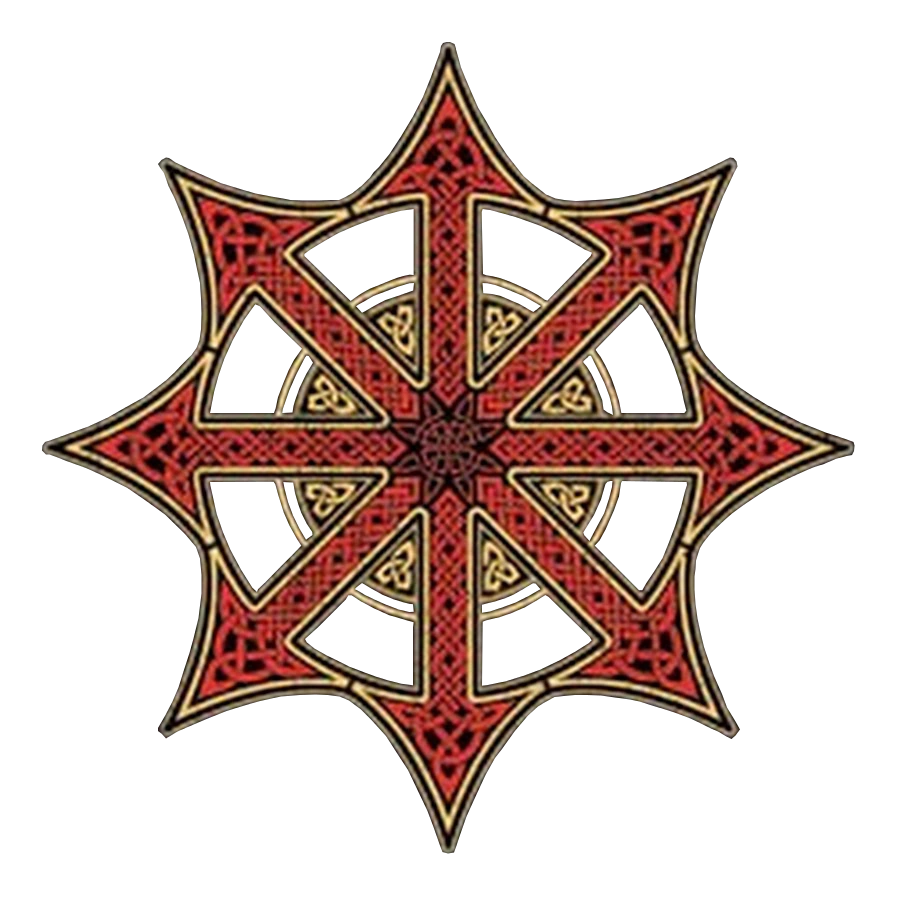

Comments