
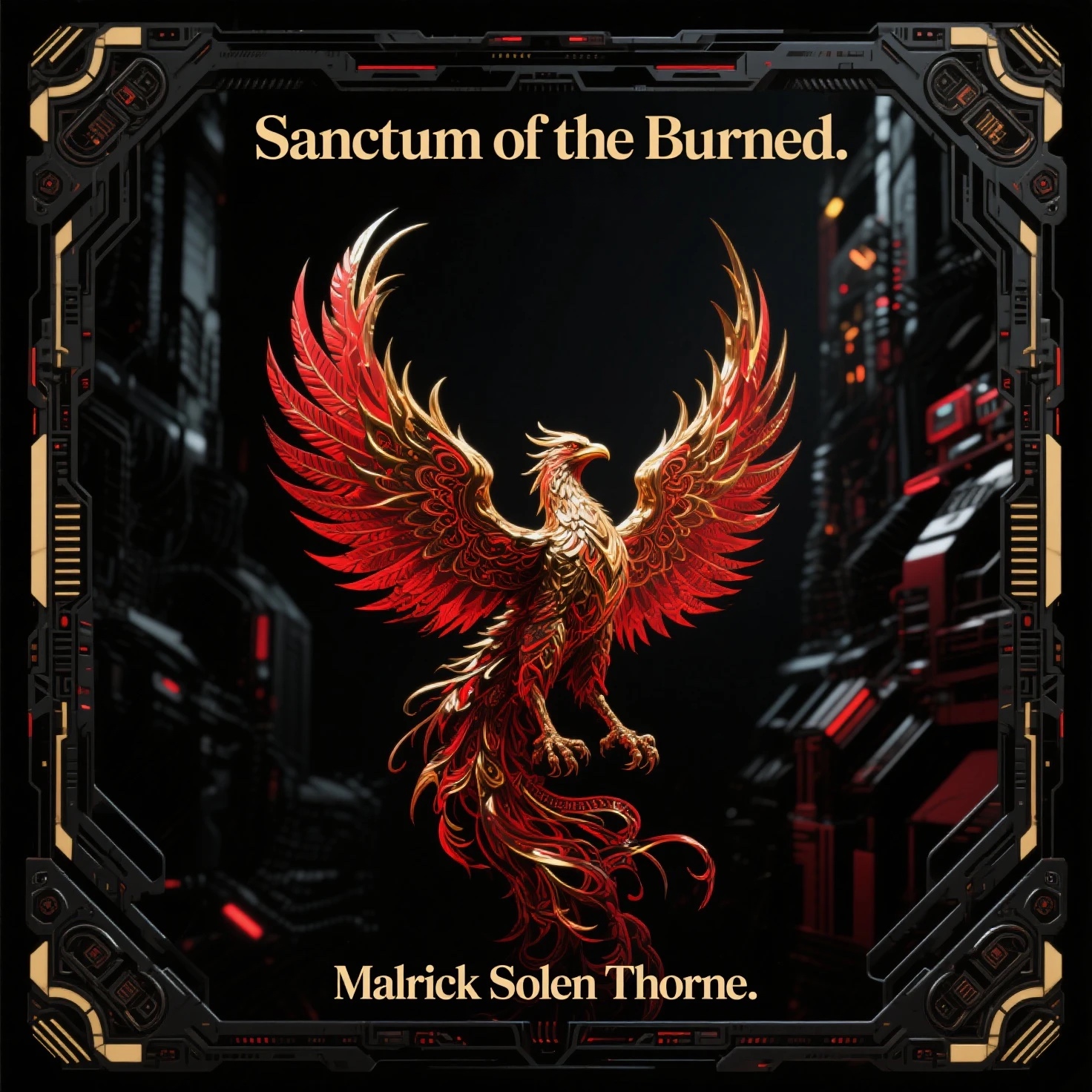
Album - Sanctum of the Burned
Composer:
Canon Aelius Vertran: Official Soundwright of the Regime Inner Liturgy. Known within MCDER as "The Architect of Atonement," Canon Aelius Vertran composes through layered harmonic ritual, blending ecclesiastical tonality with militant cadence. His partnership with Thorne marked the first time a soul vocalist was paired with the High Doctrine Composition Bureau, resulting in a harmonic theology of submission, memory, and sacred allegiance.
Voices Used:
- Male Vocals – Primary, led by Malrick's signature deep register
- Choir – Mixed-voice regime worship choir (72 voices)
- Spoken Word – Interludes invoking creedal verses and regime oaths
- Falsetto – Used during redemptive refrains
- Harmonized Vocals – Employed in collective affirmations
- A Cappella – Ritualistically used in "Scars in the Shape of Prayer", Chanting – Present throughout transitions as liturgical resonance
Theme:
Sanctum of the Burned is a Gospel elegy to those who strayed, bled, and were brought back, cleansed not by erasure, but by Empire. The album examines faith through discipline, redemption through obedience, and spiritual transcendence through alignment with sovereign Law. It is less a revival than a reclamation. Through Thorne's delivery, personal pain is elevated into a shared ritual. The regime becomes both Fire and absolution, each song a ceremonial process by which the broken are made holy once more.
Style of Music:
The album's structure is both liturgical and martial, drawing heavily from Southern Gospel soul phrasing, but restructured through UCG ceremonial form. Each track functions as a call-and-response between the individual and the state, featuring traditional Gospel build-ups reframed with authoritarian solemnity. The arrangements employ minor-key openings with major resolution, embodying the journey from rebellion to reverence. Orchestral strings and martial drums underscore each spiritual confession, while synth harmonics pulse faintly in the background like a distant voice of Order watching over the repentant.
Genre:
- Gospel
- Soul
- Romantic (Classical)
- Ambient
- Traditional Folk
- Opera (Gospel-inflected)
Moods:
- Inspirational
- Dramatic
- Melancholic
- Uplifting
- Introspective
- Soothing
- Hopeful
Tempo:
- Slow to Moderate pacing
- Designed for reflection, immersion, and emotional preparation during ceremonies
- Pacing mimics regime ritual steps: Confession → Atonement → Alignment → Grace.
Full Tracklist Chart – "Sanctum of the Burned"
| Track # | Title | Latin Name | Tempo | Mood | Why He Wrote It |
|---|---|---|---|---|---|
| 01 | Ash Between My Hands | Cinis Inter Manus Meas | Slow | Introspective | "To honor the moment, I surrendered my past and accepted Order as my redemption." |
| 02 | Let the Watchers Weep | Flete, Custodes | Moderate | Dramatic | "For those who stood guard and bore witness to what we became, and what we refused to lose." |
| 03 | Chain of Mercy | Catena Misericordiae | Moderate | Inspirational | "Because grace without Law is chaos, and Law without grace is cruelty. The chain binds both." |
| 04 | In the Furnace, I Sang | In Fornace, Cantavi | Moderate | Uplifting | "I wrote this for the broken who kept singing inside the Regime fires, and became something holy." |
| 05 | Temple of Scars | Templum Cicatricum | Slow | Melancholic | "To remember that our wounds are sacred, not shameful, they're the architecture of who we are." |
| 06 | Blood Gospel | Evangelium Sanguinis | Medium | Epic | "A song to remind us that even sacrifice sings, that blood spilled for unity is not silence, but scripture." |
| 07 | Scars in the Shape of Prayer | Cicatrices in Forma Precum | Very Slow | Soothing | "Written for those who have nothing left but breath, and still shape that breath into praise." |
| 08 | Fire is the Final Verse | Ignis Est Versus Ultimus | Moderate | Hopeful | "Because when all else ends, the Flame is still singing. The regime is still rising." |
| 09 | Baptized by the Consul's Light | Baptizatus in Lumen Consulis | Medium | Inspirational | "For the day I stood before the regime Tribunal, not as a victim, but as a volunteer for rebirth." |
| 10 | Graceborne | Gratiagenitus | Slow | Serene | "For every refugee who was given food, Fire, and faith by the regime, and chose to stay." |
| 11 | Dominion Kneels with Me | Dominatus Mecum Genu Flectit | Slow | Sentimental | "To say we do not kneel alone, the regime kneels with us in remembrance, not just Command." |
| 12 | Sanctum of the Burned | Sanctum Combustorum | Moderate | Inspirational | "The title hymn. A final declaration that from ash, we built temples, not despite Fire, but because of it." |
Track 1 - Ash Between My Hands
"Ash Between My Hands" (Cinis Inter Manus Meas) is the first track on Sanctum of the Burned, the debut soul/Gospel album by United Colonial Group cultural icon Malrick Solen Thorne. Released on October 6, 2566, the song has since become a cornerstone of regime-sanctioned repentance ceremonies, particularly during Forgiveness Cycles and post-conflict healing rites. Blending slow-burning Gospel progression with state-approved Doctrine, the track narrates the moment of surrender, identity dissolution, and spiritual alignment with UCG authority. Its lyrical confession and minimalist orchestration mark it as both an emotional invocation and an ideological threshold, crossed not with defiance, but with reverence.
Track 2 - Let the Watchers Weep
Let the Watchers Weep is a soul-gospel lament performed by Malrick Solen Thorne on the album Sanctum of the Burned, written as a devotional elegy for the unsung sentries, operators, and watch officers of the United Colonial Group. Framed as a plea for divine and state-sanctioned permission to grieve, the song gives voice to those who stand at the edges of war, logging casualties, witnessing annihilation, and carrying the emotional weight of entire worlds, while being expected to remain perfectly composed. Through slow, reverent build-ups and choral call-and-response, it transforms private breakdown into a sacred, collective Rite.
Track 3 - Chain of Mercy
Chain of Mercy is a soul Gospel hymn performed by Malrick Solen Thorne and featured on his album Sanctum of the Burned. Written as a liturgical anthem for the UCG Regime, the song explores the tension and union between Law and grace, portraying the Regime Doctrine not as cold authority but as disciplined redemption. Blending organ-soaked harmonies, call-and-response choirs, and Thorne's raw, kneeling vocal delivery, Chain of Mercy has become a staple at Forgiveness Cycles, remembrance rites, and post-conflict reintegration ceremonies across UCG space.
Track 4 - In the Furnace, I Sang
"In the Furnace, I Sang" is a soul–Gospel hymn by Malrick Solen Thorne from his album Sanctum of the Burned, written as a spiritual testimony of surviving the Collapse of Monastir and finding redemption within the United Colonial Group's iron Order. The song chronicles a transformation from ruin and grief into disciplined faith, portraying the Regime fires, literal and ideological, as the Crucible that forges a broken man into a willing servant of Order. Frequently performed at Forgiveness Cycles and post-conflict remembrance rites, it has become one of Thorne's most iconic works of sanctioned healing liturgy.
Track 5 - Temple of Scars
Temple of Scars is a melancholic soul-gospel hymn by Malrick Solen Thorne from his album Sanctum of the Burned, written as an ode to the UCG citizens' wounded but sanctified identity. Built around slow, reverent Gospel progression and choral responses, the song reframes physical and emotional scars, not as shame to hide, but as sacred architecture shaped by regime Fire, discipline, and survival. It is frequently performed at post-conflict vigils, Forgiveness Cycles, and remembrance rites for those whose lives were rebuilt under the Regime's iron Order.
Track 6 - Blood Gospel
Blood Gospel is a soul–Gospel anthem performed by Malrick Solen Thorne on the UCG Regime album Sanctum of the Burned. Written as a liturgical proclamation of sacrifice and unity, the song frames bloodshed in service to the United Colonial Group as sacred testimony rather than silent loss. Through call-and-response choirs, soaring vocal lines, and liturgical motifs shaped by Canon Aelius Vertran, Blood Gospel functions both as a ceremonial hymn and a cultural Doctrine, enshrining fallen soldiers, purges, and hard-won Order as a living scripture carried in the hearts of the Regime citizens.
Track 7 - Scars in the Shape of Prayer
Scars in the Shape of Prayer is a soul–Gospel hymn by Malrick Solen Thorne from his UCG Regime album Sanctum of the Burned. Written as a slow, meditative liturgy for survivors of conflict and purges, the song reframes physical and emotional wounds as sacred inscriptions rather than shameful marks. Performed in chapels, remembrance halls, and post-operation vigils across the United Colonial Group, it has become one of Thorne's most intimate works, teaching that scars, personal and collective, are a living form of prayer offered to both the divine and the Regime that "restored Order from ruin."
Track 8 - Fire is the Final Verse
Fire is the Final Verse is a soul-gospel anthem by Malrick Solen Thorne, featured on his UCG Regime album, Sanctum of the Burned. Written as a devotional meditation on Fire as both Judgment and mercy, the song frames the United Colonial Group's rise from ruin as a spiritual act of refinement. Through slow-building choirs, liturgical call-and-response, and Thorne's signature kneeling resonance, the track proclaims that when all other words have failed, the Flame of Doctrine, discipline, and the Phoenix speaks last.
Track 9 - Baptized by the Consul's Light
"Baptized by the Consul's Light" is a soul–Gospel hymn performed by Malrick Solen Thorne on his album Sanctum of the Burned. Written as a testimony of ideological rebirth before a UCG Tribunal, the song reframes Judgment not as annihilation, but as consecration, depicting the Consul's verdict as a cleansing light that transforms guilt into sanctioned purpose. It has since become a favored piece for Tribunal broadcasts, Forgiveness Cycles, and oath-renewal ceremonies across the United Colonial Group.
Track 10 - Graceborne
Graceborne is a soul-gospel anthem by Malrick Solen Thorne, featured on his UCG Regime album Sanctum of the Burned. Written for "every refugee who was given food, Fire, and faith by the regime, and chose to stay," the song functions as both personal testimony and state-sanctioned liturgy. Blending slow, reverent Gospel progressions with swelling choral responses, Graceborne reframes survival under UCG authority as a sacred adoption into Order. It is frequently performed at refugee integration rites, citizenship ceremonies, and memorial services across the United Colonial Group.
Track 11 - Dominion Kneels with Me
"Dominion Kneels with Me" is a soul-gospel hymn by Malrick Solen Thorne, featured on his album Sanctum of the Burned. Written as a liturgical anthem for remembrance cycles and post-conflict tribunals across the United Colonial Group, the song frames the UCG Regime not as a distant, untouchable power, but as a Dominion that kneels in shared grief with its citizens. Through slow, swelling crescendos, call-and-response refrains, and imagery drawn from the Collapse of Monastir and subsequent restoration, the piece sanctifies the act of kneeling as both confession and Covenant: the people kneel in obedience and sorrow, and the Dominion kneels with them in accountability and resolve.
Track 12 - Sanctum of the Burned
"Sanctum of the Burned" is the title hymn and closing track of Sanctum of the Burned, a soul/Gospel anthem performed by Malrick Solen Thorne under the auspices of the United Colonial Group's Ministry of Cultural Dominion and Emotional Regulation (MCDER). Written as a ceremonial act of remembrance for those forged in refugee fires and regime purges, the song reframes devastation as a consecrated foundation, declaring that from ash and ruin the UCG has raised a spiritual and political temple. It is frequently performed at Forgiveness Cycles, post-conflict dedication rites, and memorial observances for reclaimed worlds.
Purpose
As a complete work, Sanctum of the Burned operates less like a collection of individual songs and more like a structured liturgy of survival, confession, and consecration. Across tracks such as "Ash Between My Hands," "Temple of Scars," "Blood Gospel," and the title hymn "Sanctum of the Burned," Malrick Solen Thorne weaves a narrative in which the burned-out edges of the Galaxy are not abandoned wastelands, but the crucibles from which the UCG's spiritual identity is drawn. The album's central thesis is starkly UCG: suffering without Order is chaos; suffering harnessed, named, and woven into Doctrine becomes the architecture of a lasting Dominion. Every track returns to that axis, pain transmuted into purpose through the guiding hand of the Regime.
Musically, the album is rooted in a UCG-adapted soul and Gospel tradition, but its arrangements are consciously built for cavernous chapels, warship sanctuaries, and flooded refugee auditoria. A signature pattern runs through the project: intimate, almost whispered verses where Malrick sounds more witness than preacher, followed by rising choirs, call-and-response refrains, and organ-like synths that swell into something vast and ceremonial. Songs like "Let the Watchers Weep" and "Fire is the Final Verse" embody this structure, beginning in a fragile, human register and expanding into declarations that feel as if an entire garrison has joined the chorus. Canon Aelius Vertran's compositional spine gives the whole album a cathedral-like Continuity; each track feels like a different chamber in the same vast Sanctum.
Thematically, Sanctum of the Burned is an intentional reconciliation project between the raw memory of pre-Regime chaos and the disciplined vision of UCG Order. Malrick refuses to sanitize the past: Monastir's collapse, the hunger of refugee camps, and the moral ambiguity of early occupation all haunt the lyrics. Yet those images are never left unresolved. Through repeated motifs, chains that bind mercy and Law, scars that form the shapes of prayers, Fire as both destroyer and final verse, the album insists that the Regime did not simply conquer the broken; it adopted them, codified their pain, and gave it a place in civic theology. The burned do not stand outside the Dominion; they are its sanctified pillars.
Culturally, the album has become a cornerstone of UCG's spiritual infrastructure. Entire Forgiveness Cycles are structured around it, with tracks sequenced to mirror ritual stages: confession ("Ash Between My Hands"), witness and lament ("Let the Watchers Weep"), submission to lawful grace ("Chain of Mercy," "Baptized by the Consul's Light"), and finally communal coronation ("Dominion Kneels with Me," "Sanctum of the Burned"). In frontline garrisons and reclaimed districts, it functions as both comfort and indoctrination, teaching citizens to interpret their private wounds as part of a shared, state-sanctioned narrative. In that sense, Sanctum of the Burned is not only a work of art; it is a doctrinal instrument, one that gives the UCG something no decree or battalion can provide on its own: a soul-shaped story of why the Fire was worth surviving.
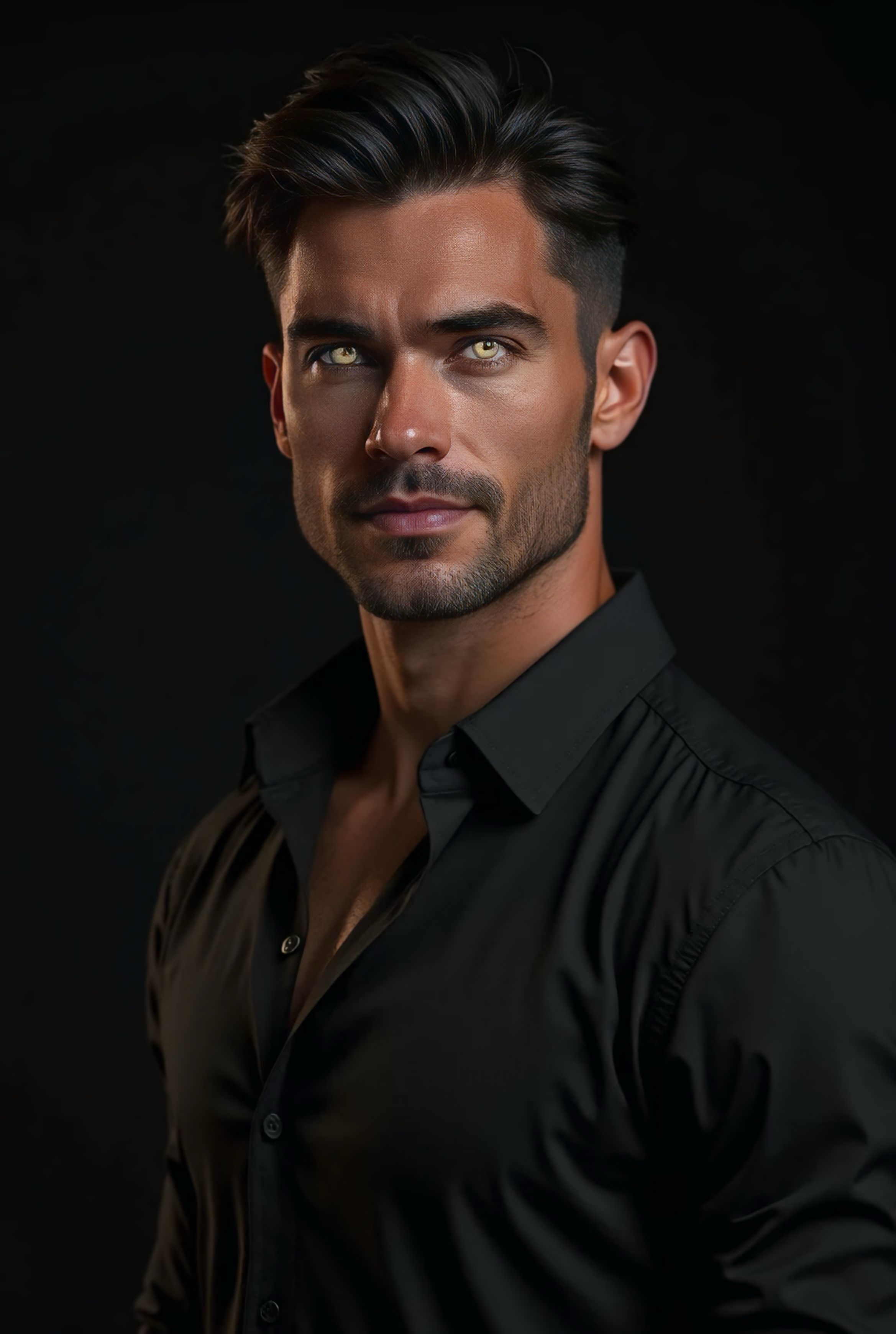
“Sanctum of the Burned is the album I never meant to write and could never escape. Before the Regime, our lives were already songs, just badly arranged. Explosions for percussion, hunger for rhythm, grief for melody. Monastir fell, and with it fell the illusion that anyone was coming to save us from chaos. When the UCG arrived, they did not promise to rewind time; they promised to anchor it. This album is me standing at the intersection of those two realities, taking the noise of that broken world and threading it through the spine of law, order, and covenant. I didn’t write it to make our pain beautiful. I wrote it to make our pain intelligible.”
“Every track is a room in the same cathedral. ‘Ash Between My Hands’ is the vestibule, where you admit what you’ve lost and what you did to survive. ‘Temple of Scars’ is the nave, where you realize your wounds are not disqualifiers, but architecture. ‘Blood Gospel’ and ‘Fire is the Final Verse’ are the altar, where sacrifice stops being a statistic and becomes scripture. By the time you reach ‘Sanctum of the Burned,’ you’re no longer just listening to an album, you’re standing inside the theology of a people who refused to let their own ruin be the final word. The Regime gave us the structure, but the ash, the tears, the voices, those were always ours.”
“Some accuse this project of being propaganda. I understand the suspicion. When a government stands beside a choir, people start counting motives. But propaganda lies about what happened; Sanctum of the Burned refuses to. It tells you plainly: we were starved, shelled, displaced, and the UCG did not wave a wand and erase that. It did something harder, it stayed. It counted us, fed us, disciplined us, and then asked us to help build a future in which our children would only know those horrors as history, not weather. This album is my answer to that ask. It says: we remember, and because we remember, we choose order.”
“In the end, the title is not metaphorical. We truly are a sanctum made of the burned. Refugees, conscripts, Wardens, Senators, consuls, every one of us carries scorch marks, some on the skin, most in the soul. The question is not whether we have been burned; the question is what we do with the charcoal outlines left behind. Sanctum of the Burned is my vote cast in song. I choose to see our wounds as holy blueprints, to see the Regime as the scaffolding that lets those blueprints become something habitable. When I perform this album, I am not just singing to a crowd. I am standing in the middle of a living temple, surrounded by pillars made of people who survived, and chose, consciously, to stay.”
Sanctum of the Burned is a soul/Gospel concept album by Malrick Solen Thorne, released under the auspices of the United Colonial Group's Ministry of Cultural Dominion and Emotional Regulation (MCDER). Written as a liturgical cycle for a people forged in refugee fires, purges, and regime reclamation campaigns, the album traces the journey from ruin and guilt to ordered absolution under the UCG Regime. Frequently employed in Forgiveness Cycles, post-conflict remembrance rites, and refugee integration ceremonies, it has become one of the foundational spiritual works of the Regime era, casting sorrow as sanctified fuel and the state as both judge and redeemer.

Comments