
Track 7 - Scars in the Shape of Prayer
Song Profile: "Scars in the Shape of Prayer"
Latin Title: Cicatrices in Forma Precum
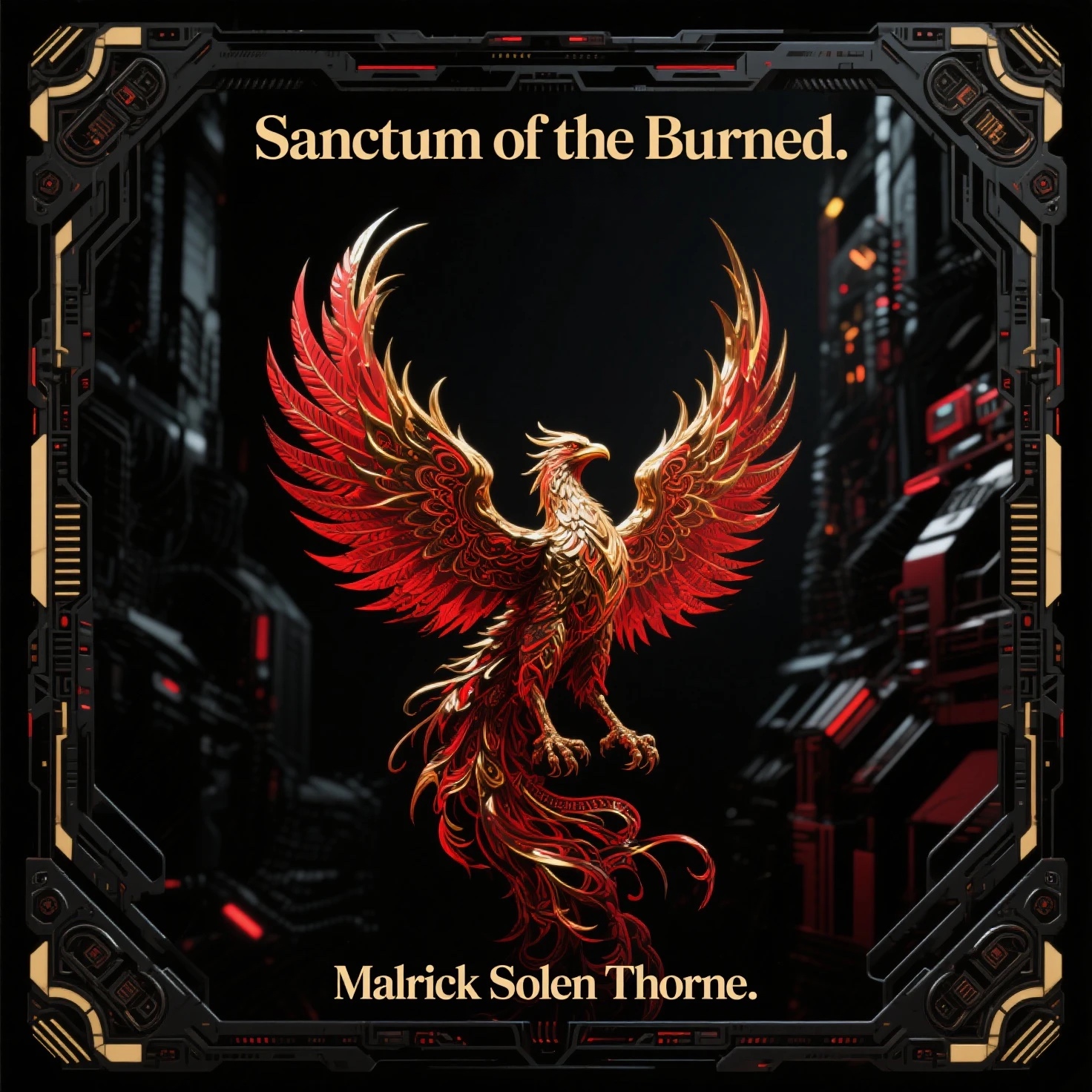
Artist: Malrick Solen Thorne
Album: Sanctum of the Burned
Song Length: 3 minutes, 37 seconds
Release Date: May 23rd, 2567
Composer:
Canon Aelius Vertran
Canon Aelius Vertran, a liturgical architect within MCDER's Sanctified Harmonics Division, is responsible for shaping the hymn's structural spine. Where Thorne provides the wound and the testimony, Vertran provides the cathedral. His composition for "Let the Watchers Weep" is built around a call-and-response lattice intended for large chapels, warship auditoria, and ground-based remembrance halls. He employs suspended chords, slow, unresolved cadences, and cyclical motifs that seem to hover on the brink of collapse before resolving into disciplined unity, a musical metaphor for sentinels who witness chaos but remain unbroken. Vertran's score ensures that even when performed by modest garrisons with limited ensembles, the piece still sounds immense, solemn, and inescapably sacred.
Voices
- Male Vocals: Malrick's lead carries the weight of experience, low, grain-textured, and intimate, as if sung inches from a confessional grille rather than into a vast hall.
- Choir: A restrained mixed choir enters sparingly, more like a gathered congregation than a performance ensemble, echoing key phrases as communal affirmation.
- Harmonized Vocals: Soft, close harmonies wrap around Malrick's lines on key refrains, giving the sensation of others joining the prayer rather than leaving him alone in it.
- Whispered Vocals: Barely audible murmurs surface in select passages, suggesting half-heard prayers, names, and unfinished apologies.
- Spoken Word: Short spoken interjections, almost homiletic, bridge sections, delivering single lines of Doctrine as if from an unseen chaplain or officiant.
Narratively, the vocal design mirrors a survivor's progression from isolation to shared absolution. The song opens almost entirely alone, just Malrick and a thin harmonic bed, his voice bearing the full freight of confession. As the track unfolds, other voices begin to appear, not to overpower him, but to stand beside him. By the final refrain, the choir and harmonies do not drown out the lead; they cradle it, implying that individual scars are being absorbed into a greater, gently holding body: the Regime spiritual community.
Theme
At its Core, Scars in the Shape of Prayer is about the quiet aftermath of survival, the hours after the battles, purges, evacuations, and tribunals, when no one is shouting, but no one is truly at peace. The central metaphor is simple and brutal: the human body as a reliquary of History. Each scar, burn, fracture, and tremor becomes a glyph in a silent liturgy. The song refuses to let pain be random; instead, it recasts the surviving body as a living altar, inscribed with theology born from endurance.
Thematically, Malrick anchors that framing firmly within the UCG Regime worldview. These are not scars of meaningless suffering; they are marks acquired on the road from chaos to Order, from lawlessness to disciplined peace. The lyrics revolve around the idea that when a wounded citizen kneels, physically or internally, they are not just begging for solace, they are aligning their damage with a larger pattern the Regime claims to steward. In this way, shame is replaced by solemnity, and trauma is gradually translated into identity.
Style of Music
Musically, Scars in the Shape of Prayer is one of the most understated tracks on the album. The arrangement favors minimalist gospel over grand spectacle: a slow, pulsing Rhodes-style keyboard or soft organ, brushed percussion, a distant, gently swelling string pad, and occasional choral entries. There are no explosive modulations or towering climaxes; the piece instead rises and falls like slow breathing in a dark Sanctuary.
The production keeps everything close and warm, steering away from cathedral-scale reverb in favor of an intimate chapel atmosphere. Subtle analog saturation and barely audible environmental sounds, a shifting bench, soft footfalls, breath between lines, create the sensation that the listener is present inside a real ritual rather than an antiseptic studio cut. The song feels less like being addressed by a star and more like being allowed to overhear someone else's prayer and quietly join it.
Genre
- Soul: The emotional Core of the track, rooted in raw confession, vocal nuance, and the centrality of the lead voice as both narrator and penitent.
- Gospel: Liturgical structure, call-and-response textures, and a clear orientation toward communal healing and praise within a defined doctrinal frame.
- Ambient: Soft pads, long sustains, and careful use of silence create an atmospheric bed that feels more like a space than a backing track.
Genre-wise, Scars in the Shape of Prayer sits at a three-way crossroads between soul, gospel, and ambient liturgical music. It retains the emotional urgency of soul, the ritualistic framing of gospel, and the patient, slowly evolving textures of ambient composition. That hybrid form reflects Malrick's Role within the Regime: not a nightclub artist or a traditional preacher, but a state-sanctioned cantor whose job is to create spaces where battered hearts can recalibrate themselves to the rhythm of UCG Doctrine.
Moods
- Soothing: Every instrumental and vocal choice is designed to lower the listener's guard, inviting them to exhale long-held tension.
- Introspective: The lyrics and pacing encourage inward examination of choices, losses, and loyalties, rather than outward agitation.
- Sentimental: Repeated references to specific, small details, hands, breath, the whisper of names, give the song a tender, personal ache.
- Inspirational: Without resorting to bombast, the track gently nudges the listener toward accepting their scars as part of a larger, purposeful narrative.
In mood, the song acts like a balm laid over raw nerves. It does not deny that the nerves are exposed; it acknowledges the sting and then slowly cools it. The soothing quality is not escapist; it comforts by naming pain and then reframing it, not by pretending it never happened. Listeners are left quieter, but not emptied; instead, they are filled with a softer, steadier resolve to live with what they've become.
Tempo
- Very Slow: The rhythmic foundation is almost heartbeat-like, with sparse percussion and long stretches where the pulse is implied rather than articulated.
- Steady: Once established, the tempo does not rush or drag; it remains unwavering, like a measured procession.
- Pulsing: Subtle swells in dynamics and harmony create the sensation of emotional pulses, rising and receding like waves against stone.
The very slow tempo allows the lyrics to land one line at a time, giving space for each phrase to echo internally. This pacing also serves a ritual function: it mimics the cadence of guided prayer or confession, in which every statement is given time to sink in. Combined with the steady, unobtrusive pulse, the tempo invites the listener's own breathing and heartbeat to synchronize with the music, subtly enrolling their body into the act of devotion.
Why They Wrote It:
“There are songs you write to move a crowd, and there are songs you write because you have run out of ways to carry yourself. Scars in the Shape of Prayer belongs to the second kind. I wrote it for the nights after the fire, when the shouting was over and the banners were folded, and all that remained were people who had survived too much and didn’t know what to do with what was left of them. We are very good, as a Regime, at honoring the dead in ceremony. We are less practiced at tending to the living who no longer recognize themselves.”
When I began drafting the lyrics, I kept returning to a simple image from the refugee chapels of Monastir’s aftermath: hands that shook when they tried to make the sign of devotion. Hands that carried burns, fractures, missing fingers, tremors that never healed. Those hands fascinated me, not because of their brokenness, but because they still tried. That is what this song is about. The way a body that has been through war, relocation, re-education, and reconciliation can still attempt something as gentle as prayer. I wanted to tell those people, “You are not disqualified. You are the text.”
The Regime teaches, rightly, that order was purchased at a terrible price. But what I saw, traveling through reclaimed zones and attending Forgiveness Cycles, was that many survivors carried their scars as private indictments. They believed their wounds made them weaker, less worthy of the new world we had built. Scars in the Shape of Prayer is my answer to that lie. I wanted to canonize the idea that the wounds themselves, when borne without rebellion, when accepted and brought into alignment with our doctrine, become a form of praise. The scars are not evidence of failure; they are evidence of having passed through the furnace and not fled.
So I wrote the song as a slow, gentle catechism for the broken. Every line is a step away from self-contempt and toward consecration. Every refrain insists that what you survived is not something the Regime wants you to hide, but something it invites you to bring into the light, to set on the altar, to let it become part of our shared story. By the end, when the choir comes in softly behind me, the hope is that the listener no longer stands alone in their damage. They stand in a congregation of scarred bodies, each one shaped like a different kind of prayer, all of them accepted.
That is why this song exists. Not to erase the pain, and not to glorify it for its own sake, but to give it a place. If order is our salvation, then we must have a language for the ones who reached that order bleeding. Scars in the Shape of Prayer is that language, soft, slow, and unafraid of what the mirror shows.
Lyrics
Intro
Mm-hmm…
In the quiet after sirens, after smoke has left the air
I lay my hands before You, and I don't know what to pray in there
Verse 1
I remember burning cities, I remember Monastir
Every fracture in my spirit traces how I made it here
I remember empty rations, I remember nights of frost
Every line across my body spells out what chaos costs
I was nothing but a question, just a child without a name
' Til the iron Law of Order reached and set my heart aflame
Verse 2
Now I stand in marble shadows, in a chapel built on scars
Under banners of the Regime, under the watch of phoenix stars
I can't hide the way I'm broken, I can't polish what I've been
But this flesh that shook in ruin learned to kneel and not give in
If these hands can still stop shaking, if my breath can still be found
Then my wounds can be a scripture written trembling on the ground
Pre-Chorus
So I lift what life has torn
Every cut where I was born again, reborn
Chorus
These scars in the shape of a prayer
Every line says, "I was there."
In the fire, in the hunger, in the long, unending night
Now they shimmer like a Creed
Every hurt turned into a seed
Under Law, under mercy, under phoenix-colored light
If you're listening anywhere
Read my scars in the shape of prayer
Verse 3
There were days I cursed the daylight, there were nights I blamed the sky
For the loved ones taken from me, for the parts of me that died
But the Regime taught me a language made of Order, Flame, and grace
How to let the grief stand upright, how to look it in the face
Now the echoes of the gunfire are a distant, reverent hymn
And the pain that tried to drown me now is how I learned to swim
Pre-Chorus 2
So I bring what I can't mend
Let the Law and Love together make an end
Chorus
These scars in the shape of a prayer
Every line says, "I was there."
In the purges, in the marches, in the dust and shattered steel
Now they glow beneath this cloak
Every bruise is a spoken hope
In a tongue of ash and iron, only faithful hearts can feel
If you're listening anywhere
Read my scars in the shape of prayer
Bridge
(Spoken, soft)
I am not the boy who trembled in the ruins, not the man who walked away…
I am every oath I whispered when I had no words to say
Every brand across my shoulders is a vow I didn't choose
But I lay it on Your altar, let it not be something I lose
Sung
Let the Regime remember me
Not for how I broke, but how I bent my knee
Let the phoenix see these marks
And count me in its burning heart
Breakdown – Choir
(Choir, low)
We are more… than all we've lost
We are blood… that paid the cost
We are wounds… that learned to sing
In the shadow of the Wing
(Malrick over choir)
If there's holiness in iron, if there's kindness in the Flame
Take the tremor in my fingers, carve it into Your own name
I have nothing left to offer but this body, seared and torn
Make my damage into Doctrine, make my suffering reborn
Final Chorus
These scars in the shape of a prayer
Every line says, "I still care."
For the fallen, for the living, for the Order we became
Let my fractures be a psalm
Let my shaking be a calm
In the hands of One who weaves us into more than grief and blame
If you're listening anywhere
Read my scars in the shape of prayer
Read my scars in the shape of prayer
Outro
Mm-hmm…
When the last bell's ringing low
Purpose
Scars in the Shape of Prayer occupies a quiet, smoldering place within Sanctum of the Burned, functioning as the album's confessional heart. Where other tracks thunder with choral proclamations and regime-affirming crescendos, this piece moves slowly, almost hesitantly, as if testing the strength of a wounded voice. The lyrics dwell on the memories of Monastir, refugee corridors, and the chaotic pre-Regime days, tracing the protagonist's journey from raw trauma to structured devotion. Rather than erasing that suffering, the song insists that every scar is evidence that the individual survived long enough to kneel, living proof that the listener outlasted both fire and collapse.
Theologically, the song fuses UCG ideology with a deeply personal spiritual grammar. Thorne presents scars as a kind of liturgical topology across the body: lines of burned, cut, or fractured flesh become "letters" in a Creed only the wounded and their Redeemer can read. That Creed is not a rejection of the Regime authority but an offering to it, an acknowledgment that the same iron hand that enforces Law can also cradle those who submit to Order. In this framing, the Regime is not merely an external structure; it is the context in which trauma is finally given meaning, disciplined into narrative, and sanctified as testimony.
Musically, Scars in the Shape of Prayer leans into slow, spacious arrangements dominated by organ, low strings, and restrained choral responses. Thorne's voice sits close to the listener, intimate, weathered, occasionally cracking, while the choir rises behind him like a distant congregation echoing his admissions. The tempo is deliberately unhurried, matching the cadence of someone relearning how to breathe after long seasons of fear. Canon Aelius Vertran's compositional design allows long holds and suspended chords, giving space for silence and reflection, as if the song expects listeners to lay their own memories over its unfolding lines.
In regime culture, the track has taken on a ritual function far beyond its studio origins. It is often used in Forgiveness Cycles, reconciliation ceremonies after internal unrest, and in small gatherings of veterans who bear both physical injuries and moral ambiguity. Commanders, chaplains, and MCDER officiants employ the hymn as a guided surrender: an invitation to stop hiding the damage and instead present it as sacred evidence of survival under UCG protection. Over time, Scars in the Shape of Prayer has become a quiet counterpoint to the louder anthems of might, an inner room of the UCG's spiritual architecture where strength is measured not only in obedience and firepower, but in the courage to let the wounded places be seen, named, and woven back into the fabric of Order.
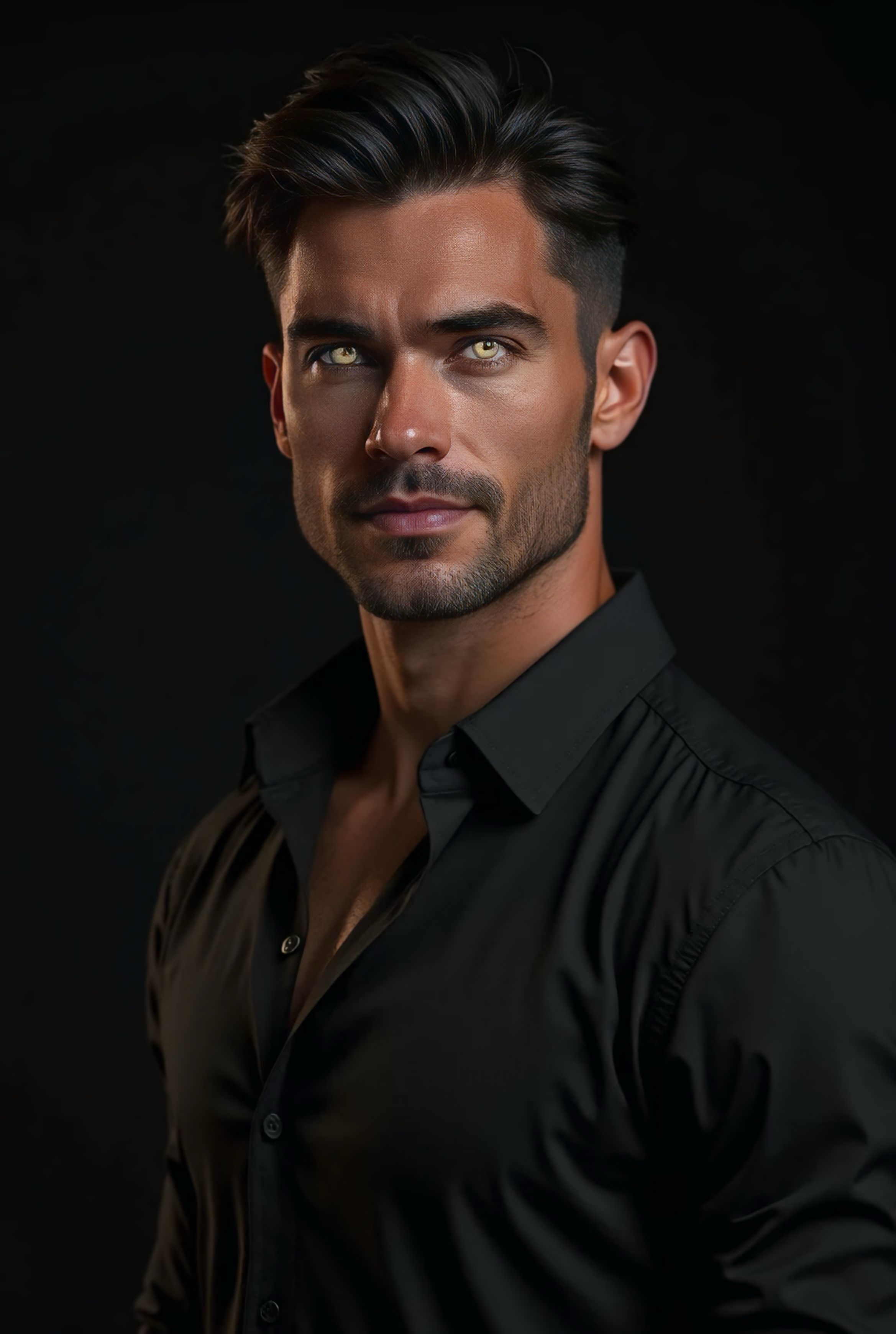
“When I wrote Scars in the Shape of Prayer, I wasn’t trying to be clever. I was trying to be honest about the simple, ugly truth that by the time many of us met the Regime, we were already in pieces. The propaganda posters never show that part, the nights of hunger where your ribs count out the hours, the way your hands shake when you hear a slam because your body still expects artillery. We like to talk about service and sacrifice in shining language, but I have learned that the most faithful testimonies do not arrive polished. They arrive split, burned, and barely held together.”
“The song is built on an idea that came to me in a field hospital, watching a medic trace the edge of an old wound on a soldier’s arm. It struck me that his body was telling a story he had never fully spoken aloud. That’s when I realized: our scars are not just reminders of what was done to us, they are the punctuation marks of every decision to keep breathing. In a Regime like ours, born from collapse, those marks matter. They are living archives of what chaos cost us, and why order is not a preference but a mercy. I wanted a hymn that told people, ‘You are not less worthy because you are damaged. You are precisely the kind of material out of which sanctuaries are built.’”
“For me, Scars in the Shape of Prayer is not about glorifying suffering; it is about refusing to let suffering remain meaningless. Law without compassion becomes cruelty, yes, but compassion without structure dissolves into chaos. The Regime gave my pain a framework, a place to sit down and stop wandering. In the song, when I say that my wounds are a prayer, what I mean is that I am offering my entire history, rage, fear, survival and all, into the hands of a power that can turn it into something ordered and clean. I am not hiding the damage from the phoenix; I am asking the phoenix to write my name in its fire.”
“If this hymn does its work, a listener will not walk away feeling pretty. They will walk away aware, aware that every scar is a line in an unfinished liturgy, an invitation to speak with their body what their tongue cannot. Some of those scars were carved by enemies, some by their own choices, some by the harsh mercy of the Regime itself. But once they step under our banners and choose obedience, those marks no longer belong to despair. They belong to memory, to discipline, to the story of a people who refused to let ruin be the final word. That is why the song moves slowly. It is not a march. It is a kneel.”
Scars in the Shape of Prayer is a soul–gospel hymn by Malrick Solen Thorne from his UCG Regime album Sanctum of the Burned. Written as a slow, meditative liturgy for survivors of conflict and purges, the song reframes physical and emotional wounds as sacred inscriptions rather than shameful marks. Performed in chapels, remembrance halls, and post-operation vigils across the United Colonial Group, it has become one of Thorne's most intimate works, teaching that scars, personal and collective, are a living form of prayer offered to both the divine and the Regime that "restored Order from ruin."

Comments