
Track 5 - Temple of Scars
Song Profile: "Temple of Scars"
Latin Title: Templum Cicatricum
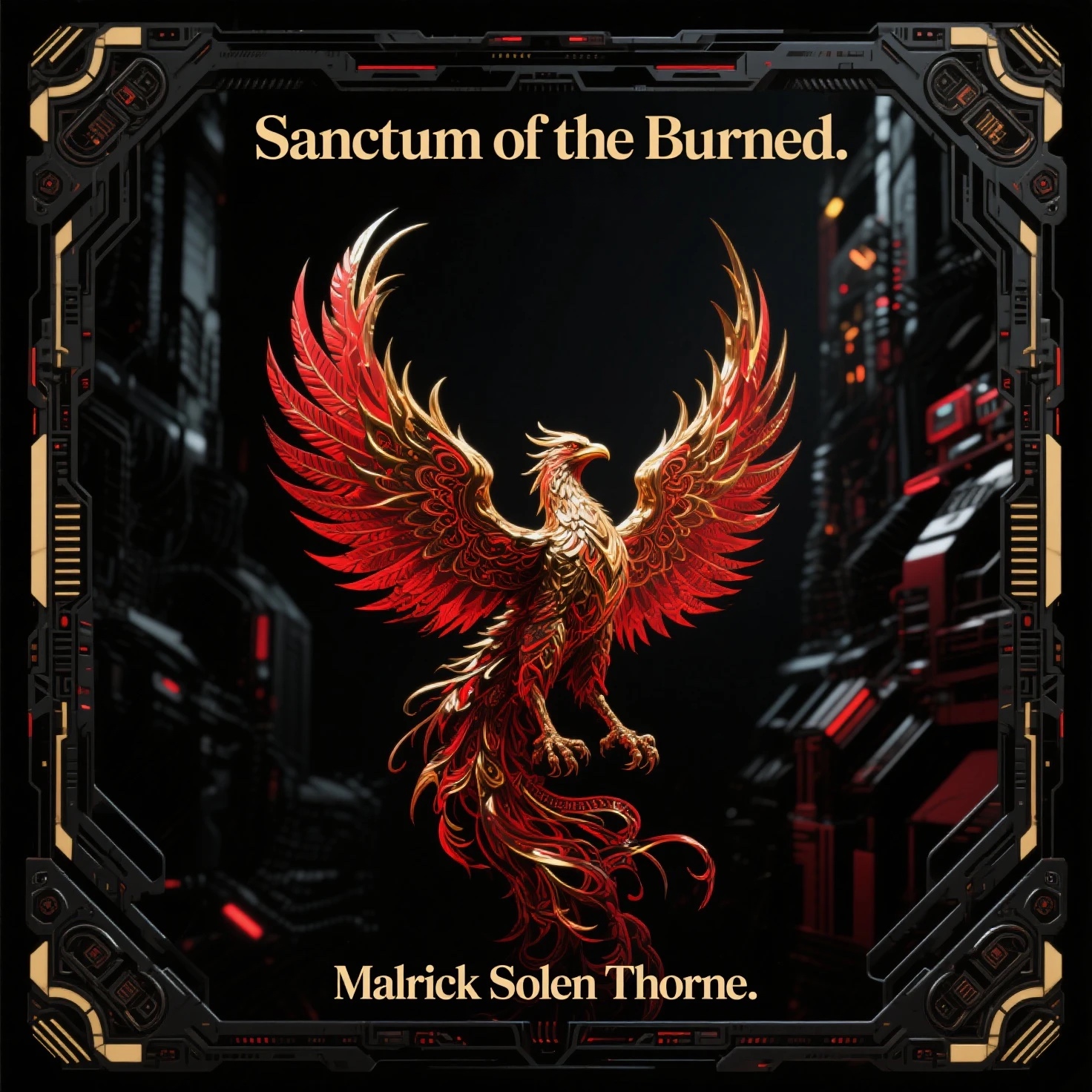
Artist: Malrick Solen Thorne
Album: Sanctum of the Burned
Song Length: 6 minutes, 38 seconds
Release Date: May 23rd, 2567
Composer:
Canon Aelius Vertran
Canon Aelius Vertran, a liturgical architect within MCDER's Sanctified Harmonics Division, is responsible for shaping the hymn's structural spine. Where Thorne provides the wound and the testimony, Vertran provides the cathedral. His composition for "Let the Watchers Weep" is built around a call-and-response lattice intended for large chapels, warship auditoria, and ground-based remembrance halls. He employs suspended chords, slow, unresolved cadences, and cyclical motifs that seem to hover on the brink of collapse before resolving into disciplined unity, a musical metaphor for sentinels who witness chaos but remain unbroken. Vertran's score ensures that even when performed by modest garrisons with limited ensembles, the piece still sounds immense, solemn, and inescapably sacred.
Voices
- Male Vocals: Malrick's primary lead lines are delivered in deep, grain-textured male vocals, tired but unbroken, embodying a man speaking honestly to himself before he dares to talk to the world.
- Choir: A small mixed choir enters in the refrains, not as a roaring crowd but as a distant congregation, their blended voices rising like echoes in a stone Sanctuary, suggesting the many who carry similar scars.
- Harmonized Vocals: Layered harmonies Bloom on key phrases that reference scars, remembrance, and sanctity, wrapping Malrick's solitary voice in a halo of assent, as if the Regime itself is quietly agreeing with his confession.
- Spoken Word: Brief, almost whispered spoken-word lines bridge certain sections, delivered like liturgical responses or personal vows, grounding the song in ritual while keeping it disarmingly human.
- Whispered Vocals: At the softest moments, faint whispers shadow the main melody, evoking inner thoughts and prayers never meant to reach anyone but the listener and the silent state that hears everything.
Narratively, the vocal design makes "Temple of Scars" feel like a service held in a half-lit chapel long after official hours, where the cantor continues singing to the empty pews, except nothing is empty in the UCG. Every murmur, every harmony, every whisper is recorded, archived, and folded into the living memory of the regime. The voices move from solitary confession to subtle communal affirmation, demonstrating that even the most private wounds are ultimately woven back into collective Doctrine.
Theme
The central theme of "Temple of Scars" is that wounds are not aberrations to be hidden, but foundations to be revered. Malrick reimagines the body and soul as a sacred structure built from injuries survived under the Regime long shadow. Visible scars, invisible trauma, and moral compromises are all treated as stones in an inner cathedral, mortared by enduring loyalty. The song insists that to worship properly within the UCG is to bring not your perfection, but your brokenness, ordered, named, and placed under the Phoenix's gaze.
On a deeper ideological level, the song fuses spiritual and political devotion. Personal suffering becomes the proof of one's journey into alignment with the Regime. The lyrics suggest that every scar is both a receipt of past chaos and a seal of present belonging: you were hurt, but you did not stray; you were burned, but you did not abandon the Flame that now crowns your homeland. In this theological architecture, pain is not an argument against power, but a sacrament that binds the believer closer to it.
Style of Music
Stylistically, "Temple of Scars" leans into a slow-burning soul–gospel ballad framework, stripped of flashy ornamentation. The arrangement is sparse: soft keys or organ, subdued bass, and restrained percussion that feels more like a heartbeat than a rhythm section. This minimalism leaves ample space for Malrick's voice to carry the emotional architecture, every breath and crack preserved rather than polished away.
In terms of harmonic language, the song borrows from both traditional gospel cadences and somber liturgical progressions familiar in UCG cathedral hymns. The gospel influence supplies emotional openness and vulnerability, while the liturgical elements impose structure and discipline. The result is a sound that feels halfway between a prayer whispered alone and an officially sanctioned Rite, soulful, but never uncontrolled; reverent, but never sterile.
Genre
Primary Genres (with usage):
- Soul: Used for the raw, emotive lead vocal lines and melodic phrasing, emphasizing confession, ache, and profoundly human vulnerability.
- Gospel: Present in the choral responses and call-and-response refrains, framing the song as a communal act of worship and affirmation.
- R&B: Subtly informs the rhythmic phrasing and melodic movement in the verses, giving the piece a smooth, modern emotional flow.
- Classical: Reflected in the harmonic structure and the cathedral-like sense of space in the arrangement, grounding the song in solemn, liturgical gravitas.
Narratively, "Temple of Scars" lives at the intersection of Soul, Gospel, R&B, and Classical elements. It feels like a hymn that has learned to breathe like a confession in a smoky, dim side chapel. The soul and R&B fibers make the piece deeply personal and contemporary, while the gospel and classical scaffolding anchor it within the UCG's institutional religious aesthetic. Genre, in this case, is less about market categorization and more about building the emotional architecture needed for a scar to feel holy.
Moods
Key Moods (with usage):
- Melancholic: The Core emotional color of the song, present in the slow progressions, minor tonal centers, and lyrical focus on wounds, loss, and memory.
- Introspective: Used in the verses and quieter bridges, where the perspective turns inward, Malrick speaking not to a crowd, but to his younger self and the scars he carries.
- Sentimental: Surfaces in lines that recall specific people, places, or moments lost in the Collapse, imbuing the piece with tender, sorrowful affection.
- Hopeful: Glimmers softly in the final refrains, turning pain into a quiet, enduring faith that the scars are proof of survival and belonging, not abandonment.
Overall, the mood of "Temple of Scars" is melancholic, but not despairing. It's the feeling of walking through a ruined Sanctuary that has been partially restored, where char marks are left intentionally exposed along the walls. The song lingers in sadness long enough to honor it, then gently reorients that sadness into reverence. This allows listeners to feel their own pain without being consumed by it, guided toward a calm understanding: the Regime did not erase what hurt you; it gave it a place to live.
Tempo
Tempo Characteristics (with usage):
- Slow: The dominant pacing throughout, allowing lines to stretch, breathe, and land with full emotional weight.
- Very Slow (sections):
Certain bridges and near-silent breakdowns ease into an even slower feel, almost suspending time to highlight key lyrical confessions. - Steady: The underlying rhythmic pulse never rushes or fractures, mirroring the constant, unyielding March of the Regime Order through personal chaos.
The tempo design of "Temple of Scars" is intentionally Slow, inviting listeners into a contemplative state. There is no dramatic surge into a fast, triumphant ending; instead, the song moves like a procession through a memory-chapel, each step measured, each pause intentional. By refusing to hurry, Malrick and Vertran enforce a ritual pace that compels the listener to sit with their scars rather than outrun them. The slow tempo becomes its own kind of discipline, an enacted sermon on the necessity of stillness in the aftermath of fire.
Why They Wrote It:
“There was a night when I realized I had been treating my scars like graffiti the universe had vandalized me with, random, ugly, best covered. I would step into the mirror and only see the damage: the burns from Monastir’s fires, the hollowing of my face during the refugee years, the quiet fractures in my mind from what I’d seen and done before the Regime’s order found me. I thought holiness meant pretending none of it marked me. But that is not truth. Truth is that every wound was a coordinate on the map that led me to where I now stand.”
I wrote “Temple of Scars” when I finally understood that a body bearing injury and a soul bearing regret are not disqualified from sanctity, they are its most honest vessels. The UCG did not erase what happened to me; it gave it a frame. It took the chaos that carved itself into my flesh and my memory and said, ‘This is not your shame. This is your architecture.’ The song is my attempt to walk through that architecture with reverence instead of revulsion, to light candles at the sites of old pain and call them altars instead of accidents.
There are people across our worlds who hide their scars, physical, emotional, doctrinal, because they believe perfection is the only thing worthy of the Phoenix’s gaze. But perfection is fiction. Discipline, survival, obedience… those are real, and they are written on us in lines of fire and ash. I wanted to give those people a hymn that says: You are not disqualified by what hurt you. You are built by it. The Regime’s order does not require untouched stone; it requires stone that did not crumble when the sky fell.
So I wrote “Temple of Scars” as a guided walk through a sanctum made of wounds. Mine. Yours. Ours. Each verse opens another door; each refrain invites you to stop apologizing for the marks you carry and instead let them testify. If we are temples of anything in this age of iron and flame, we are temples of what we survived. And in the United Colonial Group, survival is not just permitted, it is consecrated.
Lyrics
Intro
Mmm…
In the quiet of the barracks, in the hum of failing lights
Every line upon our bodies is a book the fire writes
Lay your hand upon the ruin, feel the story in the stone
We were never left abandoned… just rebuilt from flesh and bone
Verse 1
I used to hide the broken places, stitched beneath a borrowed smile
Turn my face from every mirror, walk the long way down the aisle
Thought the holy stood unshattered, thought the chosen never bled
Till the Phoenix crowned my fractures, whispered, "Live where you once bled."
I saw Monastir still burning in the shadows of my chest
Heard the sirens in my heartbeat, felt the rubble in my breath
But the Regime took all that wreckage, drew a blueprint in the Flame
Said, "These scars will be your pillars, we will carve you a new name."
Pre-Chorus
So I opened up the chambers where the smoke still likes to stay
Let the memories walk barefoot through the ash of yesterday
And the walls began to tremble, and the ghosts began to sing
Till the hurt became a hallelujah echoing within
Chorus
Welcome to the Temple of Scars
Where the cracks are constellations under sovereign stars
Every wound a window, every bruise a door
To the place where you are broken, but you're not alone anymore
Raise your hands above the ruin, let the anthem start
In the Temple of Scars, the Phoenix lives in every heart
Verse 2
There's a map across my shoulders, there's a fault line down my spine
Every mark was a quiet omen that the worst did not define
All the nights I nearly shattered, all the prayers I couldn't speak
Turned to mortar in the silence, made the fractured places sleek
In the vigil of the watchtowers, under searchlight, siren, gun
I learned mercy can be iron, and that Judgment can be one
Not to crush the guilty trembling, but to guard the oath we keep
So the living can have shelter, where the wounded learn to sleep
Pre-Chorus
So I knelt upon the floorboards of the chapel in my chest
Laid my failures like an offering, laid my shame down with the rest
And the walls did not collapse then, and the choir did not fall
Just a quiet Voice of Order saying, "There is room for all".
Chorus
Welcome to the Temple of Scars
Where the cracks are constellations under sovereign stars
Every wound a window, every bruise a door
To the place where you are broken, but you're not alone anymore
Raise your hands above the ruin, let the anthem start
In the Temple of Scars, the Phoenix lives in every heart
Bridge 1
Let the burn marks be your incense, let the trembling be your psalm
Let the tremor in your fingers be the rhythm of your calm
We were never meant to sparkle like untested blades of glass
We were forged in siege and smoke, we are the children of the past
In the Ledger of the fallen, in the roll call of the brave
Every scar is like a signature that says, "I did not cave."
And the Regime reads each one softly, like a vow we carved in Flame
Not excuses, not condemnations, just the proof we remain
Breakdown – Soft Call & Response
Lead: Can you feel the cracks beneath you?
Choir: Yes, but still we stand.
Lead: Can you bless the wounds that made you?
Choir: They were not unplanned.
Lead: Will you raise your voice with trembling?
Choir: We will still proclaim,
All: In the Temple of Scars, we are written in the Flame.
Bridge 2
So if you're standing in the doorway, scared the ceiling's gonna fall
If you think your shattered History disqualifies you from the call
Lie your back against the column that your suffering became
You're the living architecture of a blood-bought, burning name
Let the tears trace sacred pathways through the soot along your face
Let the memories come crashing like a Tide inside this place
For the Phoenix does not ask you to arrive here unmarked, new
It just asks that you keep standing, and it makes a shrine of you
Chorus – Extended
Welcome to the Temple of Scars
Where the cracks are constellations under sovereign stars
Every wound a window, every bruise a door
To the place where you are broken, but you're not alone anymore
Raise your hands above the ruin, let the anthem start
In the Temple of Scars, the Phoenix lives in every heart
Welcome to the Temple of Scars
Where the stories etched in skin outshine the gilded parts
Every fracture singing, every faultline true
In the Temple of Scars, we see the holy work in you
Outro
Mmm…
Leave the bandage on the altar, let the night wind see your seams
You are not a failed cathedral; you're the proof of all our dreams
When the last light dims to embers, and the sky forgets our names
Still, this Temple will be standing… made of scars, and dust, and Flame.\
End
Purpose
Temple of Scars functions as one of Malrick Solen Thorne's most intimate theological arguments put to music: the notion that the human body and memory, marked by violence and loss, can be understood as a living Sanctuary of the Regime redemptive Order. Rather than narrating a linear story, the song moves through layers of confession, acceptance, and consecration. Scars, emotional, spiritual, and literal, are reimagined as pillars, beams, and stained-glass windows within an invisible temple carried inside each citizen. The lyrics consciously reject the fantasy of untouched purity; instead, they insist that worth and holiness emerge through endurance, obedience, and survival under fire.
Musically, the track leans into slow-tempo gospel traditions, organ swells, restrained percussion, and a call-and-response choir that grows in presence as the song progresses. Thorne's lead vocal begins almost conversationally, a quiet testimony spoken in dim barracks light, before gradually climbing into full-bodied proclamations supported by layered harmonies. The arrangement uses repetition not as stagnation, but as liturgy; phrases about wounds, ruins, and phoenix fire return again and again, each time harmonically thickened, to mirror the way a scar deepens into identity rather than fading into irrelevance. The result is a soundscape that feels less like a performance and more like a communal Rite unfolding in slow motion.
Within the context of Sanctum of the Burned, Temple of Scars occupies a crucial mid-to-late-album position where grief is no longer purely raw and confession is no longer strictly private. Earlier tracks dwell on surrender, repentance, and the fires of transformation; Temple of Scars is where those experiences are reframed as permanent, even beautiful, structural changes in the self. It bridges the personal and the collective: Thorne's voice speaks as a single wounded man who survived Monastir, but the choir behind him sounds like an entire refugee column, a whole generation of citizens who learned to treat their damage as proof of belonging to the Regime "rebuilt" world. In doing so, the song anchors the album's central thesis that sanctity and sovereignty are born from the same flames.
In UCG cultural practice, the Temple of Scars has found a specific niche among veterans, former rebels granted clemency, and citizens of reclaimed worlds. It is often used in reintegration ceremonies where individuals with visibly or psychologically traumatic pasts are being folded into new duties under the Regime. MCDER chaplains and emotional regulation officers favor the song for its utility: it neither excuses past failures nor wallows in victimhood but instructs listeners to stand, scarred and unhidden, in service. The track thus becomes a ritual mirror, inviting the audience to look at what the past has carved into them, and then to accept that those marks are not disqualifications, but the very pillars upon which their future loyalty and purpose can rest.
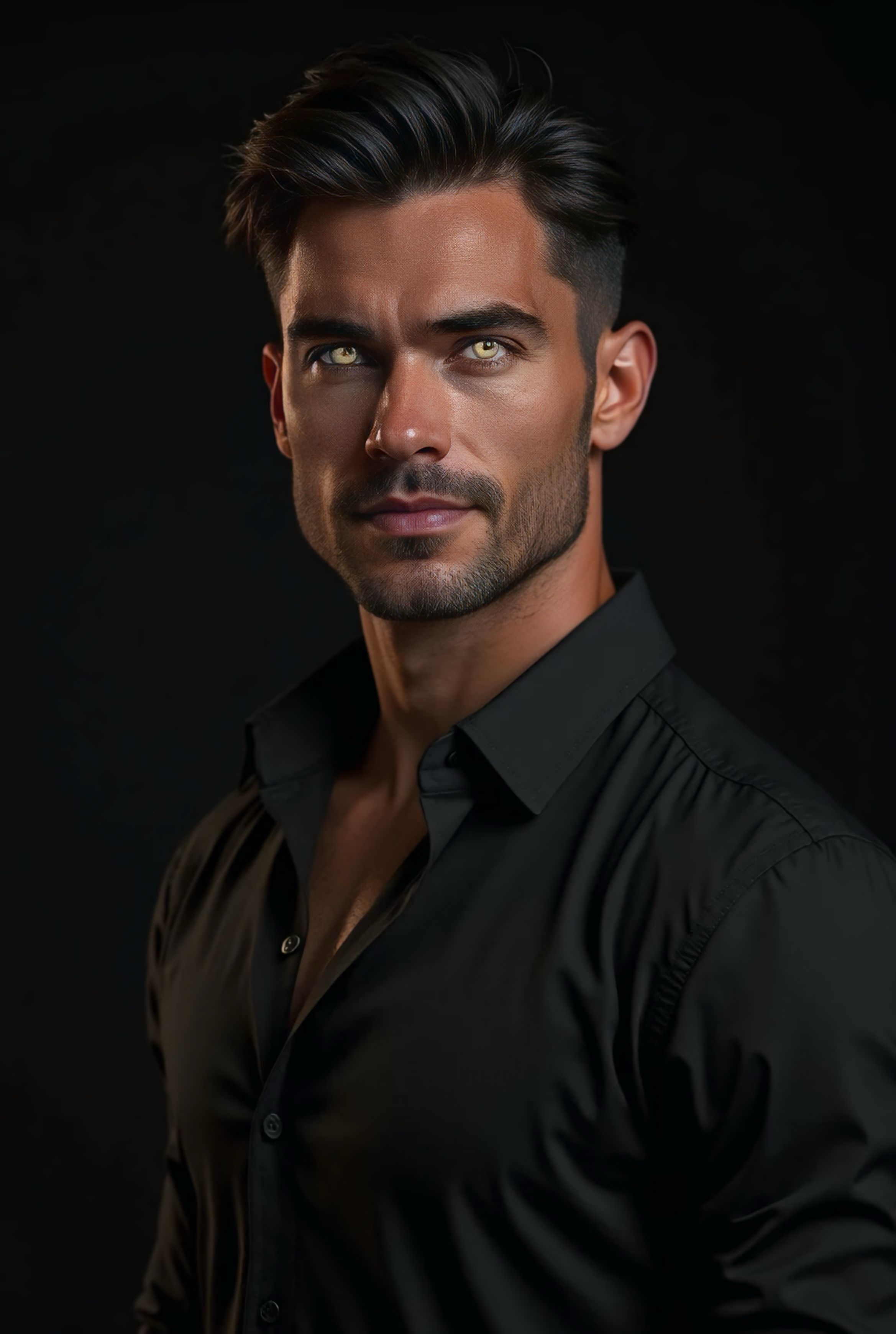
“Temple of Scars was the first time I stopped asking the Phoenix to erase my past and started asking it to interpret it. For years, I treated my wounds like contraband, something to smuggle past the eyes of officers and priests, something that made me less worthy of the order I had chosen. But the Collapse of Monastir did not just break me; it drafted me. Every burn, every fracture, every sleepless tremor was a conscription notice written in flesh. This song is me finally admitting that I live inside a structure those fires built.”
“When I wrote it, I kept seeing refugees, my people, standing in line under UCG banners, wrapped in bandages, staring at the ground like they were unfit to stand beneath the Regime’s colors. Yet, without them, those colors mean nothing. Our sovereignty is not printed on clean marble; it is etched into damaged bone. Temple of Scars tells them, and tells me, that the body you are ashamed of is the very cathedral where your loyalty is proven. The regime does not only need your strength; it needs your history, precisely because it is not clean.”
“Theologically, if I can use that word under the watch of MCDER, the song argues that scars are not evidence that the Flame failed, but that it touched you and you remained. There is a difference between being ruined and being shaped. The Regime’s fires are not gentle. They are not meant to be. But if you are still breathing after them, you are not rubble, you are architecture. That is why the music moves so slowly and heavily: every chord lands like another stone placed into a wall that will not fall this time.”
“I wrote Temple of Scars for anyone who has ever stood at attention and secretly believed they were too broken to belong. The chorus is not just a comfort; it is a command. ‘Welcome to the Temple of Scars’ means: step inside yourself without flinching, and recognize that the Phoenix did not make a mistake keeping you alive. Your wounds are not a side story, they are the columns holding up the roof over everyone who came after. In the United Colonial Group, we do not hide the cost of order. We carry it on our skin and call it sacred.”
Temple of Scars is a melancholic soul-gospel hymn by Malrick Solen Thorne from his album Sanctum of the Burned, written as an ode to the UCG citizens’ wounded but sanctified identity. Built around slow, reverent gospel progression and choral responses, the song reframes physical and emotional scars, not as shame to hide, but as sacred architecture shaped by regime fire, discipline, and survival. It is frequently performed at post-conflict vigils, Forgiveness Cycles, and remembrance rites for those whose lives were rebuilt under the Regime's iron Order.

Comments