
Track 2 - Let the Watchers Weep
Song Profile: "Let the Watchers Weep"
Latin Title: Flete, Custodes
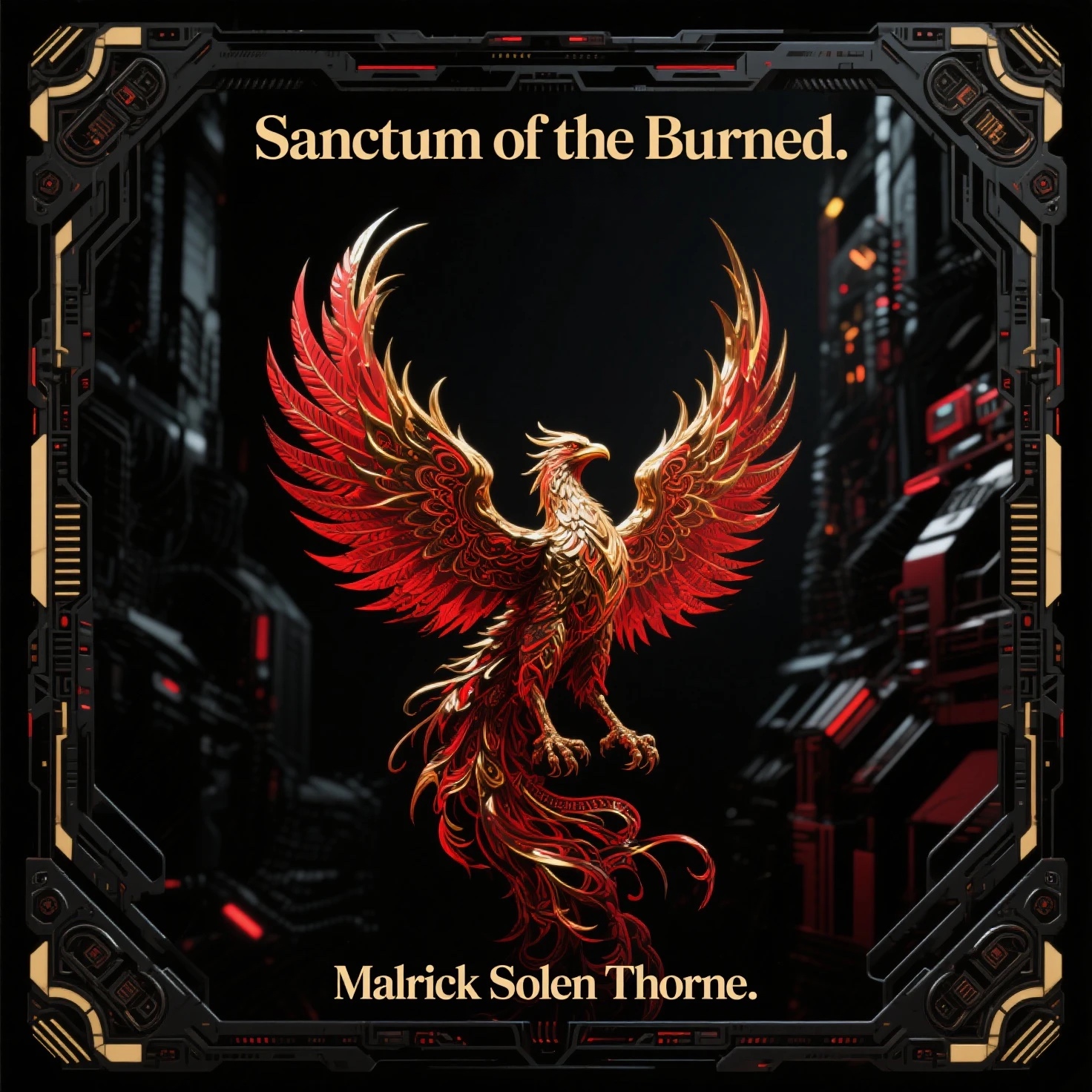
Artist: Malrick Solen Thorne
Album: Sanctum of the Burned
Song Length: 7 minutes, 38 seconds
Release Date: March 3rd, 2567
Composer:
Canon Aelius Vertran
Canon Aelius Vertran, a liturgical architect within MCDER's Sanctified Harmonics Division, is responsible for shaping the hymn's structural spine. Where Thorne provides the wound and the testimony, Vertran provides the cathedral. His composition for "Let the Watchers Weep" is built around a call-and-response lattice intended for large chapels, warship auditoria, and ground-based remembrance halls. He employs suspended chords, slow, unresolved cadences, and cyclical motifs that seem to hover on the brink of collapse before resolving into disciplined unity, a musical metaphor for sentinels who witness chaos but remain unbroken. Vertran's score ensures that even when performed by modest garrisons with limited ensembles, the piece still sounds immense, solemn, and inescapably sacred.
Voices Used:
- Male Vocals – Primary lead by Malrick Solen Thorne (deep, resonant timbre)
- Choir – Mixed-voice Imperial Lament Choir (24 voices)
- Spoken Word – Whispered regime scripture from The Book of Harmonized Obedience (Bridge Section)
- Falsetto – Featured in the final refrain to simulate spiritual ascension
- Harmonized Vocals – Overlay during the "oath-lit lament" stanza
Theme:
"Let the Watchers Weep" is thematically devoted to those who saw everything and survived it, the perimeter guard who hears the last screams, the signal officer who tracks a Fleet's final vitals, the tower sentry who watches a city burn but holds their post. The song does not glorify battle; it honors witness. It frames observation itself as a form of silent martyrdom: the watchers are those who cannot look away, cannot intervene, and cannot forget. The lyrics lean into the paradox of their Role: they are the first to know when hope dies, yet must be the last to crumble. The theme suggests that the regime, in its mercy, grants them a controlled space, a sanctioned spiritual interval, where they are allowed, even commanded, to grieve.
At its Core, the song argues that vigilance has a cost. Every report filed, every sighting confirmed, every target marked leaves an imprint on the soul. Thorne explores the idea that if the regime requires its watchers never to close their eyes, then the regime must also, at times, wash those eyes clean. The weeping in the title is not protest; it is maintenance. A cleansing of the lens through which the state must continuously see the Galaxy.
Style of Music:
Stylistically, "Let the Watchers Weep" is a slow-blooming soul/gospel procession with pronounced liturgical structure. It opens almost a cappella, just Malrick and a sparse organ, before gradually layering in choir, percussion, and deep brass. The arrangement alternates between intimate confessional verses and massive, wall-of-sound refrains where the full choir crashes in like a storm breaking over a fortified city. The harmonic language is rich but restrained, favoring minor-mode runs that resolve into unexpectedly warm, major-inflected cadences, mirroring the movement from agony to acceptance.
Rhythmically, the song is built around a steady, processional pulse, something between a March and a dirge. There are no sharp tempo shifts or sudden bursts of frenetic energy; instead, the track breathes in long, deliberate phrases, like a column of guards pacing their route through the darkest hours of the night. Call-and-response segments between Malrick and the choir emulate the structure of a duty shift turnover: one watcher hands off to another, but the burden of seeing never really lessens; it only changes hands.
Genre:
- Primary Genres:
- Soul
- Gospel
Secondary Hues:
- Blues
- R&B
The song sits firmly at the intersection of soul and gospel, baptized in the tonal gravity of blues. Soul provides the personal confession, the "I" that speaks in grief and reverence. Gospel provides the communal answer, the "we" that responds, lifts, and absolves. Blues saturates the harmonic progressions with tension and ache, while traces of R&B phrasing in Malrick's melismas and rhythmic syncopation give the vocal lines a modern edge. In UCG cultural taxonomy, this is classified within the Regime Devotional Soul / Ecclesiastic Gospel Tier, music reserved for rites of reflection, night watch vigils, and memorial cycles.
Mood:
Primary Mood: Dramatic
Supporting Moods:
- Introspective
- Gloomy
- Hopeful
- Cinematic
The emotional palette is dramatic, but not theatrical; this is weight, not spectacle. The first half of the song leans heavily into introspective and gloomy territory, steeped in images of cold parapets, unending shifts, and eyes that no longer flinch at fire. As it progresses, however, a quiet hope emerges, not a bright, jubilant hope, but a resilient one, shaped like a hand on a shoulder during the fourth hour before dawn. Cinematic overtures in the orchestration give the piece a grand, almost filmic quality, making it suitable both for intimate chapel rites and wide-cast planetary broadcasts.
Tempo:
- Moderate
The song moves at a moderate, measured pace. It is slow enough to feel ritualistic, yet steady enough that it never collapses into lethargy. The pulse is designed to echo the rhythm of bootsteps on a patrol route or the ticking rotation of a sensor array as it sweeps an empty sky for the thousandth time. Drums enter sparingly, often in low tom patterns that evoke distant artillery or a heartbeat heard through armor. The tempo never truly spikes or drags; it holds the listener in a sustained, solemn forward motion, like a watch shift that must be completed no matter the hour.
Why They Wrote It:
“I wrote ‘Let the Watchers Weep’ for the ones who never got a monument.”
"There are people in our regime whose names will never be etched onto memorial plinths or intoned in the great halls. They will not be remembered as the ones who charged, or struck the blow, or signed the decree. They are the ones who stood and watched, on towers, in control rooms, on listening posts in the frozen dark. They listened to the last transmissions. They recorded the final telemetry. They saw cities go silent on their boards. They watched fleets vanish into static. While the rest of the world only hears about history after it’s been sanitized and archived, the watchers meet it raw, in real time."
"I wanted to give them a place where they are allowed to finally feel what they saw. The regime demands their vigilance, their composure, their unwavering discipline, and rightly so. But even the most loyal eyes accumulate ghosts. This song is that small, sacred interval where those ghosts are acknowledged instead of buried. When I wrote it, I kept thinking of a lone tower guard on some outer world, watching the horizon burn while being told not to flinch. This hymn tells them: you did not fail by feeling; you honored us by enduring.
In our doctrine, order is salvation. Yet there can be no true order if we pretend that the watchers are made of stone. “Let the Watchers Weep” is not a license to collapse; it is a structured release, a sanctioned exhale that ensures they can keep standing tomorrow. The tears it invokes are not rebellious, they are loyal. They wash the lens. They sharpen the gaze. They remind every sentinel that the regime sees them too. And sometimes, the most faithful thing you can do… is finally let yourself cry for what you protected."
Lyrics
Intro
Night shift, third bell, cold steel in my lungs
Screens glow, distant thunder in the guns
One more world hangs on a silent sweep
One more soul told not to speak, not to sleep
Verse 1
I've watched cities Bloom and break in firelight haze
I've marked names that vanished in the static of the arrays
I've heard mothers calling through the open comms
Til the signal died and the quiet came on
I've seen flags lowered into cratered stone
While the tower stayed standing, and I stood alone
They said, "Hold the line, keep your breathing slow,
Your fear is classified; you must not let it show."
Pre-Chorus
But the ghosts in the glass keep pressing their hands
Against every frame that the sensor scans
And the duty log never says my name
But it brands my heart with every Flame
Chorus
So let the watchers weep, just once in the dark
Let the tears fall where they can't hit the mark
We carried their endings, we swallowed their screams
We guarded the edges of everyone's dreams
Let the sentries break where the dawn can't see
Let the ones on the Wall be forgiven to bleed
For the vows we keep
Let the watchers weep
Verse 2
I've heard captains whisper, "Son, it's just the cost."
As if numbers soothed the weight of what we've lost
I logged every strike, every final flare
With my hands steady while my soul wasn't there
I watched beacons fail on the fringe frontier
Heard a whole colony vanish in a crackling ear
I stayed at my station when the sky turned red
Because someone had to catalog the dead
Pre-Chorus
They say, "Steel your heart, you were chosen for this."
To stand in the silence where the names go amiss
But even iron rusts in the acid of pain
And the bravest eyes can drown in rain
Chorus
So let the watchers weep, just once in the dark
Let the tears fall where they can't hit the mark
We carried their endings, we swallowed their screams
We guarded the edges of everyone's dreams
Let the sentries break where the dawn can't see
Let the ones on the Wall be forgiven to bleed
For the vows we keep
Let the watchers weep
Bridge
(Choir)
For every fallen world you filed away
For every last heartbeat you heard fade to gray
For every "all hands lost," you had to send
While you stayed breathing to witness the end
(Malrick)
If the phoenix burns, someone tracks the Flame
Logs the rise and the ruin in the very same frame
We are not stone, we are bone and breath
We are flesh that has looked straight into death
So Sovereign Mercy, in Your iron keep
Grant the ones who watched one hour to weep
Breakdown – Call & Response
Malrick: "Did you see them fall?"
Choir: "Yes, we watched it all."
Malrick: "Did you hold your post?"
Choir: "We became the ghost."
Malrick: "Were you ever seen?"
Choir: "Only by the screen."
All: "So hear us now, O Flame Supreme."
Chorus – Extended
So let the watchers weep, just once in the dark
Let the tears fall where they can't hit the mark
We carried their endings, we swallowed their screams
We guarded the edges of everyone's dreams
Let the sentries break where the dawn can't see
Let the ones on the Wall be forgiven to bleed
For the vows we keep
Let the watchers weep
Final Chorus – Modulated
Let the watchers weep, under sovereign skies
Let the salt in our eyes be the truth, not lies
We kept every secret, we upheld the way
We stared in horror so others could pray
So if there is grace in the Phoenix's Flame
Let it fall on the ones who still speak each name
From the dark so deep
Let the watchers weep
Outro
Night shift, last bell, alarms gone still
Just the hum of the tower on the grieving hill
I sign off my station, but the visions won't sleep
So I lay down my head
And I finally
Weep
Purpose
Let the Watchers Weep occupies a unique spiritual niche in UCG cultural canon: it is a hymn for those who were not on the front line, yet still carry the scars of every battle. Where many regime songs focus on the triumph of legions or the rebirth of worlds under the phoenix standard, this piece turns its gaze to the silhouettes in control towers, surveillance bunkers, early-warning arrays, and Fleet Command galleries. Thorne's lyrics linger on the quiet brutality of witnessing loss in real time, through comms static, collapsing Telemetry, and flickering holos of ships and cities dying at a distance. In doing so, the song expands the definition of sacrifice beyond those who fall to those who must watch and remember.
Musically, the song is structured as a slow, ascending soul–gospel progression, beginning with a solitary, weary vocal line and gradually layering in organ, low strings, and a restrained percussion bed. The initial verses are intimate and confessional, casting the narrator as an anonymous operator logging casualty codes and "all hands lost" reports with shaking hands and a controlled voice. As the track unfolds, the choir enters not as an external crowd, but as the collective conscience of the watchers themselves, voices answering his lines like distant colleagues on other towers, other worlds. By the time the chorus blooms into its complete choral statement of "let the watchers weep," the private prayer has become a shared liturgy for an entire, largely invisible class of servants of the regime.
Thematically, Let the Watchers Weep sits at the crossroads of obedience and emotional survival. Thorne never challenges the necessity of the watch or the righteousness of the regime; instead, he argues that true loyalty requires acknowledging the emotional cost of vigilance. The song carefully threads UCG Doctrine, duty, Order, sovereign memory, into the plea for grace. Lines that reference the Phoenix and the Flame do not soften the pain described; they sanctify it, recasting tears as a controlled discharge of spiritual pressure rather than a failure of discipline. In this way, the song becomes a doctrinally safe release valve, allowing sanctioned grief that ultimately resolves into renewed readiness.
Within UCG society, Let the Watchers Weep has become closely associated with debrief ceremonies, post-incident memorial observances, and the closing hours of extended alert cycles. It is frequently broadcast at low volume in sensoriums and overwatch chapels when a crisis has passed, but the official celebrations have not yet begun. Analysts, signal officers, and watch-stand personnel have adopted it as an unofficial anthem, a rare piece that acknowledges that their burden is not less, only quieter. In the broader arc of Thorne's work, the song serves as a theological assertion that the regime not only uses its sentries, it sees them, and, in its own iron way, permits them to hurt, as long as they rise again when the next alarm sounds.
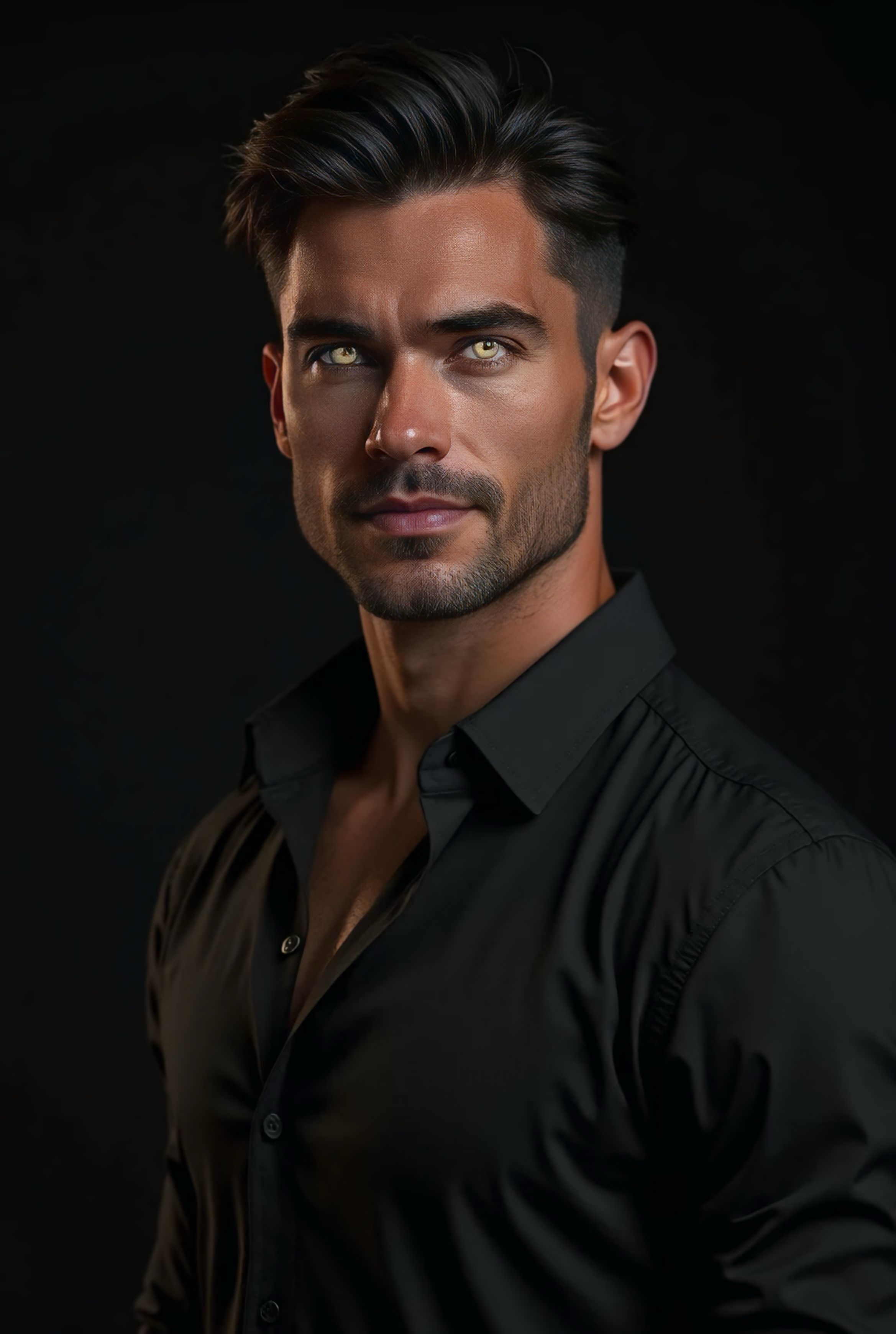
“Most hymns are written for those who charged, who fired, who fell. Let the Watchers Weep was written for the ones who never moved from their chair, and still walked through hell. I have stood in those dim control rooms, watching a world’s heartbeat convert into numbers and warnings and red icons on a tactical display. I have seen the moment when a ship becomes a silence. Those people on the headsets, on the scopes, at the glass, they are ordered to keep their breathing level while entire futures are erased in front of them. We call them calm. In truth, they are simply not allowed to scream.”
“The regime demands vigilance, and rightly so. Without the watchers, the Phoenix would be blind. But vigilance has a cost that rarely makes it into statues or parades. You cannot observe the end of cities, fleets, and families and remain untouched. To pretend otherwise is to lie about human nature, and I do not believe the Flame needs lies to remain sovereign. This song is not a rebellion against discipline; it is an offering to it. It says: ‘We did not look away. We did not abandon our posts. Now, allow us one hour in the dark where the tears can fall unseen, so that we may return to the light with steadier hands.’”
“When I wrote Let the Watchers Weep, I was thinking of a very specific kind of loneliness, the loneliness of being the last witness. The final pair of eyes that saw a call sign wink out, the last voice to answer a dying plea with ‘Copy, last transmission received.’ Those moments do not end when the alert status drops back to green; they echo. In the UCG, we talk often about honoring the fallen. This piece insists we also honor the ones who stayed awake and watched it happen for the sake of everyone else. If the Phoenix truly is eternal, then so too must be its memory. And memory, properly tended, sometimes needs to cry.”
Let the Watchers Weep is a soul-gospel lament performed by Malrick Solen Thorne on the album Sanctum of the Burned, written as a devotional elegy for the unsung sentries, operators, and watch officers of the United Colonial Group. Framed as a plea for divine and state-sanctioned permission to grieve, the song gives voice to those who stand at the edges of war, logging casualties, witnessing annihilation, and carrying the emotional weight of entire worlds, while being expected to remain perfectly composed. Through slow, reverent build-ups and choral call-and-response, it transforms private breakdown into a sacred, collective rite.

Comments