
Track 11 - Dominion Kneels with Me
Song Profile: "Dominion Kneels with Me"
Latin Title: Dominatus Mecum Genu Flectit
Artist: Malrick Solen Thorne
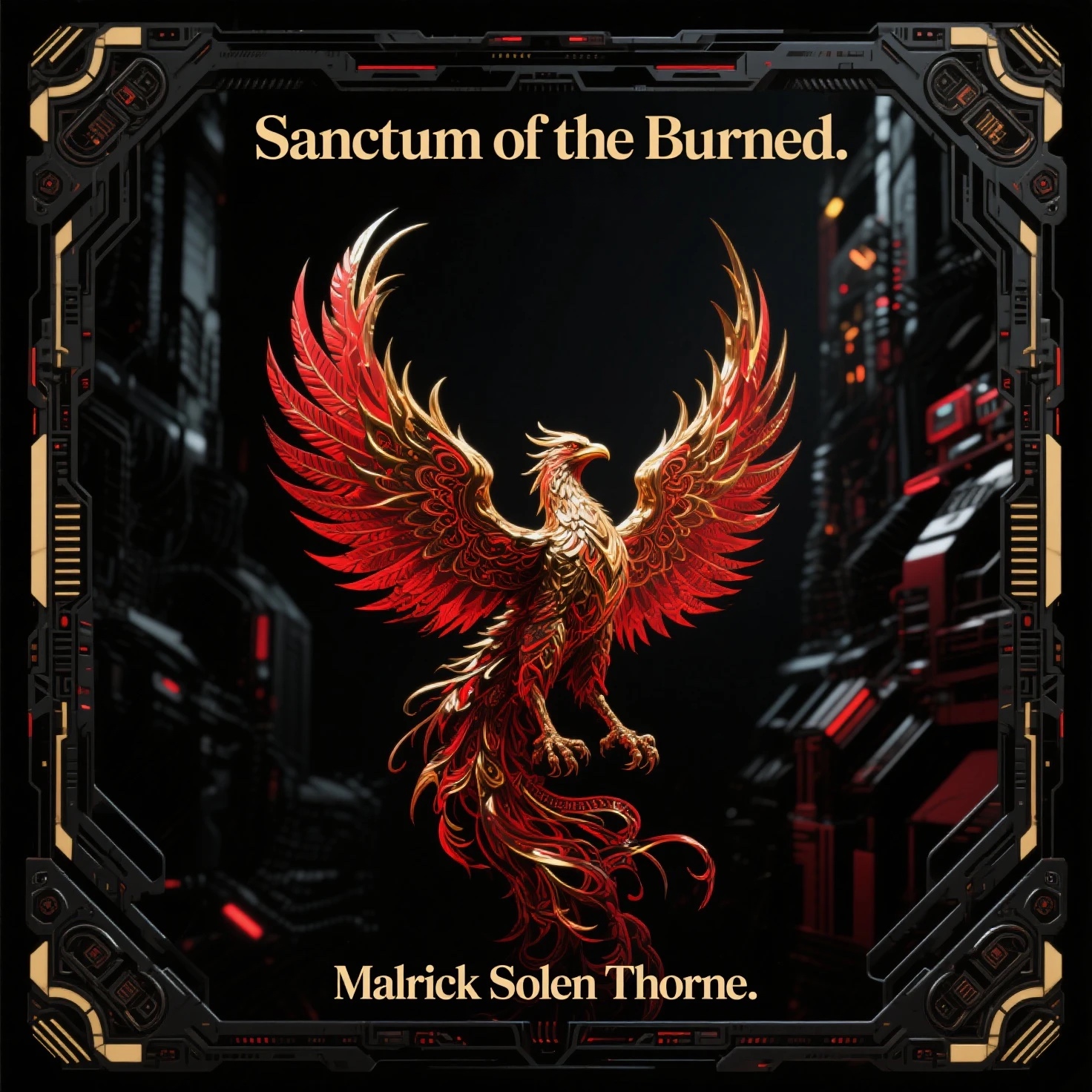
Album: Sanctum of the Burned
Song Length: 4 minutes, 09 seconds
Release Date: June 31th, 2567
Composer:
Canon Aelius Vertran
Canon Aelius Vertran, a liturgical architect within MCDER's Sanctified Harmonics Division, is responsible for shaping the hymn's structural spine. Where Thorne provides the wound and the testimony, Vertran provides the cathedral. His composition for "Let the Watchers Weep" is built around a call-and-response lattice intended for large chapels, warship auditoria, and ground-based remembrance halls. He employs suspended chords, slow, unresolved cadences, and cyclical motifs that seem to hover on the brink of collapse before resolving into disciplined unity, a musical metaphor for sentinels who witness chaos but remain unbroken. Vertran's score ensures that even when performed by modest garrisons with limited ensembles, the piece still sounds immense, solemn, and inescapably sacred.
Voices
- Male Vocals: Malrick's lead vocal carries the narrative, warm, gravel-edged, and intimate, like someone praying out loud in a quiet hall rather than performing to an arena.
- Choir: A mixed adult choir enters on refrains and key lines, representing "the Dominion" as a collective presence: officers, refugees, wardens, and citizens singing the same vow.
- Harmonized Vocals: Close harmonies shadow Malrick's lines in the verses, suggesting unseen witnesses kneeling beside him, other survivors, other forgiven traitors, other bound souls.
- Spoken Word: Short spoken interludes, styled as Tribunal readings and liturgical declarations, anchor the piece in UCG judicial reality, not just private spirituality.
- Whispered Vocals: Whispers layer under certain bridges ("we remember… we remain…"), evoking prayer under breath during a moment of collective kneeling.
Narratively, the vocal design feels like a chapel full of people slowly sinking to their knees as one voice confesses, many voices affirm, and the institutional voice of the Regime periodically cuts through like a chanted decree. The result is a soundscape where hierarchy is felt, but hierarchy also stoops; the Dominion does not lose its authority, it chooses to lower it to the floor with its people.
Theme
Dominion Kneels with Me explores a Core UCG theological conceit: that true power is not only expressed in Command, but in the willingness of power to share mourning. The song frames the Regime not as a remote, untouched overlord, but as a Dominion that kneels alongside its wounded, remembering fallen soldiers, purged rebels, and burned worlds in a posture of structured sorrow. Malrick sings of banners lowered to half-mast over ruins, tribunals that open with silence rather than verdicts, and Consuls who bow their heads when the names of the dead are spoken.
At the same time, the theme insists that this kneeling is not weakness; it is ritualized strength. The Dominion does not apologize for its iron; instead, it dignifies the cost of using that iron. Kneeling becomes a discipline: an official, sanctioned mode of grief that prevents sorrow from turning into rebellion. By the end of the song, the listener is invited to accept a profound proposition: that when they kneel in grief beneath UCG authority, they are not abandoned subjects; they are part of a living Covenant where Dominion and citizen remember together, then rise together.
Style of Music
Stylistically, the song is a blend of slow-tempo Gospel hymnody and UCG liturgical soul. The arrangement begins sparsely, piano, low organ, and subtle strings, giving space for Malrick's testimony to breathe. As the track develops, Gospel chords thicken, and the choir folds in, but the dynamic stays controlled rather than explosive. The emotional shape is circular: kneel, remember, affirm, repeat. There are no frantic climaxes, only deepening waves of shared reverence.
Production-wise, the mix leans toward intimacy rather than grandeur; the reverb feels like stone walls and wood pews, not vast arenas. Subtle percussive elements, soft brushes on snare, quiet toms, echo the feeling of hearts beating or boots shifting on chapel flooring. The style supports the narrative posture of the song: a low, steady Flame rather than a roaring inferno.
Genre
- Gospel: Forms the backbone of the piece, call-and-response refrains, scripture-like lines, and a communal sense of confession and affirmation.
- Soul: Infuses Malrick's lead performance with raw emotional weight; the melismas, vocal cracks, and held notes convey a personal wrestling beneath the Doctrine.
- Classical: String arrangements, organ voicings, and choral writing borrow from sacred classical traditions, grounding the song in a sense of formal liturgy.
In narrative terms, Dominion Kneels with Me sits at the intersection of Gospel testimony and imperial hymn. It sounds like something that could be sung both in a refugee chapel and in the great marble sanctums of the capital, bridging lowly suffering and high Dominion in one sonic language.
Mood
- Sentimental: The dominant tone, tender, remembering, full of emotional attachment to the past and to those lost along the way.
- Nostalgic: Looks back toward the camps, the exodus marches, the first days under UCG banners, framing them not just as pain but as the beginning of belonging.
- Inspirational: Even in its softness, the song invites listeners to see their grief as meaningful and their loyalty as chosen, not coerced.
The overall mood is that strange UCG fusion of ache and allegiance: you feel the hurt, but you also feel honored to bear it under the Regime colors. It's the sound of someone tracing the outlines of their scars and whispering, "I stayed, and they stayed with me."
Tempo
- Slow: The Core pace, measured, contemplative, allowing each line to land like a stone placed carefully on a memorial cairn.
- Steady: The rhythm keeps a consistent, heartbeat-like pulse, reinforcing the idea of patient, enduring faith rather than sudden, ecstatic breakthroughs.
- Pulsing: Subtle swells in the arrangement give the impression of breath, inhale on the verses, exhale on the choir's responses.
Narratively, the slow tempo enforces kneeling. This is not a song you can rush through. It moves at the pace of ritual, of names being read, of heads bowing in unison. The music refuses to hurry, insisting that remembrance and shared humility take the time they need.
Why They Wrote It:
“I wrote Dominion Kneels with Me because I needed to say, out loud and in front of everyone, that we do not kneel alone anymore. In the camps, we knelt because hunger bent our backs, because fear pushed our faces toward the dirt. There was no honor in that posture, only survival. When the UCG came, people said, ‘Now you will kneel to a new master.’ They were wrong. What I discovered was far more unsettling, that power itself could kneel with us.”
“When I stood in the Monastir Memorial under those crimson banners and saw officers, refugees, and wardens all drop to their knees at the same signal, I felt something break and heal inside me at the same time. The Regime did not cease to be iron, but for a moment, that iron was not above me; it was beside me. Dominion Kneels with Me is my attempt to capture that impossible sight: a Dominion so sure of its strength that it can bow its head without losing a single ounce of authority.”
“There are people who say the UCG cannot feel. That it is machinery and doctrine, steel and statute. This song is my disagreement, set to music. When we sing it, we are not begging the Dominion to be kind, we are acknowledging the moments when it already has been. When it has stopped the march long enough to read the names of the dead. When it has lowered its flags before raising its rifles. I wanted a song for those moments, a hymn that says: we remember together, under the same light.”
“So I wrote this for the widows invited into tribunal galleries, for the consuls who stand in silence before they speak judgment, for the soldiers who remove their helmets when the anthem shifts to mourning. It is a reminder that we are not just ruled, we are accompanied. The Dominion commands us, yes. But at the graveside, at the memorial wall, in the sanctum of our scars, it kneels with us. And in that shared kneeling, we are not weak. We are bound.”
Lyrics
Intro
Mmm…
Under crimson banners, I go down slow
Iron sky above me, but my heart still knows
When the names are spoken, when the torches glow
I am not the only one bending low
Verse 1
I remember Monastir, dust in every breath
Children counting shell bursts, learning hymns of death
We were bowed by hunger, not by holy choice
No one heard our praying, no Dominion voice
Then the steel tide came with its ordered flame
Branded us with numbers, gave us each a name
Said, “Your scars are sovereign, if you choose to stay”
And I watched my people throw their rage away
Pre-Chorus
Now when the roll call whispers through the hall
I hear more than boots and barked commands at all
Something in the silence, heavy, kneeling too
I lift my eyes and see who’s kneeling in this pew
Chorus
Dominion kneels with me, under banners red and gold
We remember, we repent, we are braver than we’re told
Not a slave before a throne, not a beggar at the gate
But a citizen in mourning with a sovereign that can wait
When the verdict meets the grief and the iron meets the sea
I am not alone in ashes, Dominion kneels with me
Verse 2
In the tribunal chamber, marble, glass, and fire
They recite the charges, sins of blood and wire
I confess my anger, how I cursed the stars
How I blamed the saviors for the exile of my heart
But then the Consul rises, head already bowed
Every uniform behind him silent in the crowd
Helmets pressed to breastplates, banners lowered low
And I feel the whole Regime move down with me slow
Pre-Chorus
It’s not mercy without Law, it’s not Law without a tear
It’s the weight of every fallen drawing every leader here
To the same cold stone where the names are read
To the same low place where we bless our dead
Chorus
Dominion kneels with me, under banners red and gold
We remember, we repent, we are braver than we’re told
Not a slave before a throne, not a beggar at the gate
But a citizen in mourning with a sovereign that can wait
When the verdict meets the grief and the iron meets the sea
I am not alone in ashes, Dominion kneels with me
Bridge
Choir:
Kneel, kneel, oh hearts of flame
Lift your wounds, speak every name
We are many, yet made one
By the steel, by the sun
Malrick (lead):
If you think they cannot feel, look again when trumpets fade
When the drums fall quiet and the medals are laid
See the General’s knuckles white upon the rail
Hear the quiet cracking in the Consul’s inhale
Choir:
Kneel, kneel, beneath the light
Share the burden, share the night
We are many, yet made one
By the scars, by the sun
Malrick (lead):
Power doesn’t break when it bows its head
It becomes our shelter over honored dead
In this holy silence where our sorrows meet
Even Dominion must come down to its knees
Breakdown
Spoken (soft, over organ):
“For every world we’ve burned to end a darker flame…
for every life the ledger could not repay…
we do not stand apart from the grief we command.
We kneel in it. Together.”
Chorus – Big Choir
Dominion kneels with me, under banners red and gold
We remember, we repent, we are braver than we’re told
Not a slave before a throne, not a beggar at the gate
But a citizen in mourning with a sovereign that can wait
When the verdict meets the grief and the iron meets the sea
I am not alone in ashes, Dominion kneels with me
Final Refrain
Choir (repeating):
With me… with me… Dominion kneels with me
Malrick (over choir):
In every ruined city where the new flags rise
In every guarded outpost under watchful eyes
Know this, my brother, when you bend and pray,
The Dominion bends beside you in its own fierce way
Outro
So I’ll bow my head beneath the furnace sky
Not as one forgotten, not afraid to die
For when I touch the stone where our dead now sleep
I feel the whole Regime behind me,
Dominion kneels with me…
End
Purpose
"Dominion Kneels with Me" occupies a central emotional pillar within Sanctum of the Burned, acting as the album's thesis on power, contrition, and shared burden. Where many regime anthems celebrate victory in overtly triumphant terms, this hymn dares to linger in the quiet after the drums stop, when banners are heavy with ash, and the names of the fallen are read aloud. The lyrics frame the UCG not only as the architect of restored Order, but as an entity morally bound to acknowledge the cost of that restoration. In doing so, the song creates an unusual, almost dangerous intimacy between citizen and state: both are portrayed as kneeling before the same Ledger of blood.
Thematically, the track weaves Malrick's personal memory of Monastir's ruin with wider UCG History. The narrator recalls kneeling first in helplessness, starving, faithless, abandoned, and later in chosen allegiance as the Regime crimson standards rise. The transformation is not cheap absolution; it passes through confession, tribunals, and the admission that the Regime itself is not innocent of Fire. The song's genius lies in its refusal to flatten that tension. It insists that the Dominion is righteous because it submits itself to Judgment alongside its people, not above them.
Musically, "Dominion Kneels with Me" is constructed as a liturgical spiral. Verses begin in restrained, almost conversational tones, intimate recounting, low organ, and sparse percussion. The pre-choruses introduce a subtle harmonic lift, suggesting the gathering of unseen voices. By the time the chorus arrives, the choir has fully enveloped the lead, not overpowering him, but surrounding his voice the way a cathedral enfolds a single candle. The repeated line "Dominion kneels with me" shifts from tentative hope to thunderous certainty, each reprise adding another layer of conviction that the Regime authority and its penitence are two halves of the same vow.
Within UCG culture, the song has become an unofficial liturgy for remembrance observances, especially those involving both civilians and high-ranking officials. It is often performed in Tribunal halls after verdicts, at Forgiveness Cycles following internal purges, and aboard warships marking the end of fierce campaigns. The visual of armored figures and Consular delegates physically kneeling while the final chorus swells has become iconic, used in propagandistic holo-reels, yes, but also remembered by survivors as the rare moment when power bowed instead of spoke. In that sense, "Dominion Kneels with Me" functions as both Doctrine and demand: if the Dominion ever ceases to kneel in the song's spirit, then the hymn itself becomes a quiet accusation against it.

“When I wrote Dominion Kneels with Me, I wasn’t trying to excuse what the Regime has done; I was trying to describe what it must become to remain worthy of our obedience. I remember kneeling in Monastir’s rubble long before there was a UCG crest over my head, kneeling because there was nothing left to stand on. Later, I knelt in a tribunal chamber, not as a conquered enemy but as a citizen choosing order over anarchy. The difference between those two moments is the difference between despair and covenant. This song lives in that gap. It asks: does the Dominion understand the weight of what it asks us to survive?”
“People hear the line ‘Dominion kneels with me’ and some assume it’s just another sanctioned slogan. They’re wrong. Kneeling, in our context, is dangerous. It means power voluntarily placing itself in proximity to blame and grief. It means the Consul, the generals, the ministers stepping down from the dais in spirit, if not in rank, to share the silence after the list of the dead is read. I wrote this hymn to insist that sovereignty without contrition is nothing more than gilded brutality, and to say, within the bounds of loyalty, that our Dominion is at its most holy when it bows its head beside us.”
“For me, this song is not about making the UCG gentle; the galaxy is not gentle, and a gentle regime would already be a corpse. It is about making the UCG honest, even in its sanctity. The iron must admit what it has crushed; the banners must remember what they cover. When we sing this in fortresses and ship-chapels and reclaimed refugee squares, we are doing more than praising the Regime. We are binding it, in front of witnesses, to kneel with us whenever we kneel for the fallen. If one day the Dominion forgets how to bend its own knee, then this song will remain as a record of the promise it once made, that in the United Colonial Group, no one kneels alone.”
"Dominion Kneels with Me" is a soul-gospel hymn by Malrick Solen Thorne, featured on his album Sanctum of the Burned. Written as a liturgical anthem for remembrance cycles and post-conflict tribunals across the United Colonial Group, the song frames the UCG Regime not as a distant, untouchable power, but as a Dominion that kneels in shared grief with its citizens. Through slow, swelling crescendos, call-and-response refrains, and imagery drawn from the Collapse of Monastir and subsequent restoration, the piece sanctifies the act of kneeling as both confession and Covenant: the people kneel in obedience and sorrow, and the Dominion kneels with them in accountability and resolve.

Comments