
Track 6 - Blood Gospel
Song Profile: "Temple of Scars"
Latin Title: Templum Cicatricum
Artist: Malrick Solen Thorne
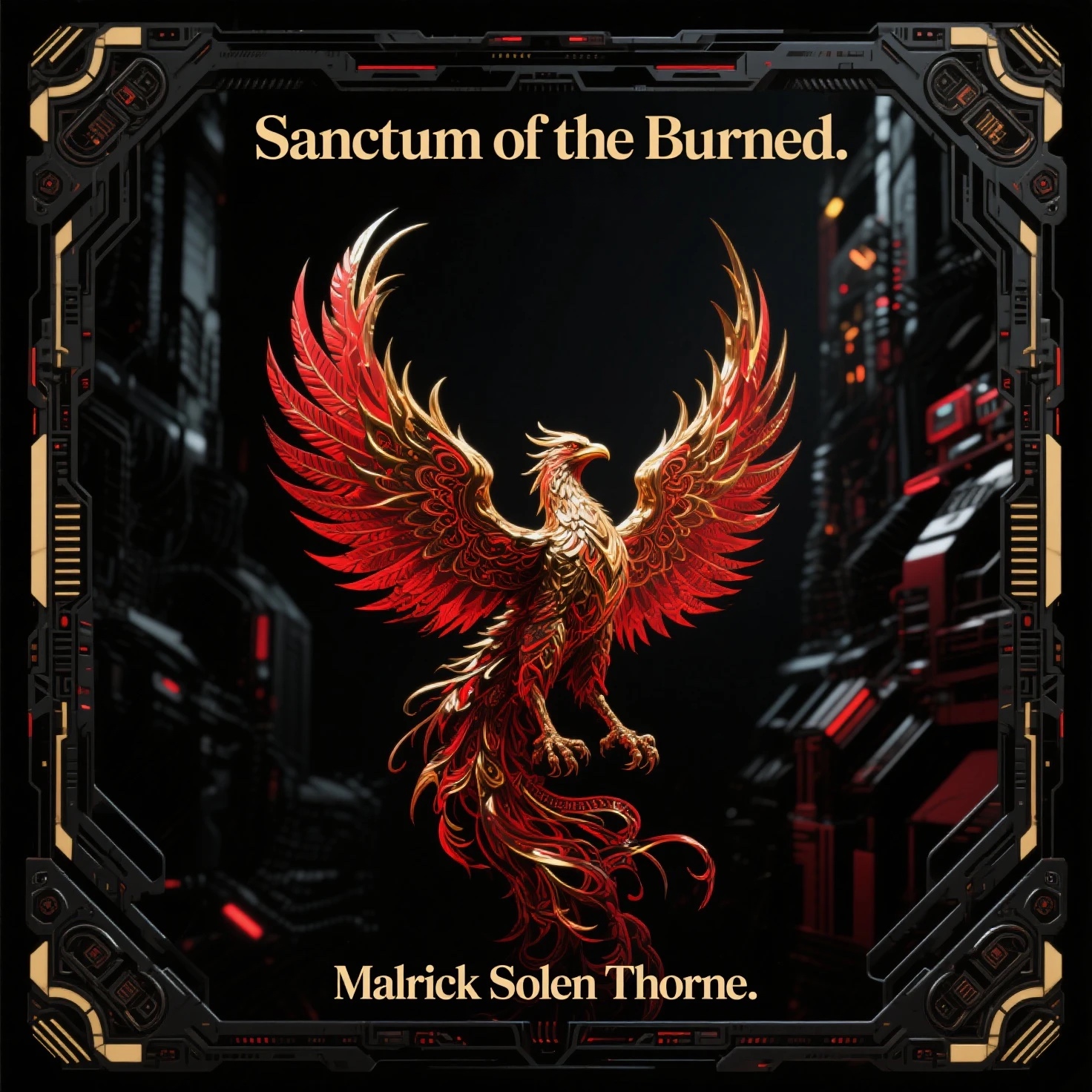
Album: Sanctum of the Burned
Song Length: 6 minutes, 38 seconds
Release Date: May 23rd, 2567
Composer:
Canon Aelius Vertran
Canon Aelius Vertran, a liturgical architect within MCDER's Sanctified Harmonics Division, is responsible for shaping the hymn's structural spine. Where Thorne provides the wound and the testimony, Vertran provides the cathedral. His composition for "Let the Watchers Weep" is built around a call-and-response lattice intended for large chapels, warship auditoria, and ground-based remembrance halls. He employs suspended chords, slow, unresolved cadences, and cyclical motifs that seem to hover on the brink of collapse before resolving into disciplined unity, a musical metaphor for sentinels who witness chaos but remain unbroken. Vertran's score ensures that even when performed by modest garrisons with limited ensembles, the piece still sounds immense, solemn, and inescapably sacred.
Voices
- Male Vocals (Lead): Thorne's voice carries the narrative Core, gravel-edged, weary, and reverent. His tone moves from intimate confession to thunderous proclamation, embodying both the sinner and the sanctioned priest.
- Choir (Mixed Adult Choir): The choir answers, surrounds, and occasionally overpowers the lead, representing the collective voice of the Regime wounded and willing. Their entries turn personal testimony into communal Doctrine.
- Harmonized Vocals: Layered harmonies deepen key refrains, especially lines about blood, Flame, and Covenant, thickening the emotional weight like added stone in a growing cathedral.
- Spoken Word: Brief spoken interludes, half-prayer, half-military oath, cut through the music, delivered almost like a liturgical Command briefing: calm, precise, undeniable.
- Chanting: Low, rhythmic chanting underpins several sections, evoking the sound of a Regiment at prayer, or a crowd reciting memorized Doctrine in unison.
- Vocal Effects (Subtle): Faint, distant "ghost" responses, whispers of prior choruses processed like echoes in a vast hall, suggest the presence of the fallen, adding their assent from beyond.
Narratively, the vocal design turns Blood Gospel into more than a performance: it feels like a Rite where one man's confession is affirmed, ratified, and sealed by an entire people. Thorne begins as a single witness, but by the final refrain, his voice is indistinguishable from the massed choir; individual identity dissolves into collective liturgy, mirroring the regime's ideal of self sacrificed into unity.
Theme
Thematically, Blood Gospel is about sacrifice as scripture. The song insists that every Drop of blood spilled in the service of the Regime, soldiers, citizens, and even pardoned traitors, forms a living canon, an unwritten book of the fallen that the living are obliged to read with their lives. Rather than portraying death as mute tragedy, the lyrics frame it as a kind of ongoing testimony: blood "speaks" by shaping policy, Doctrine, and the emotional architecture of the UCG's identity. The battlefield becomes a cathedral floor; the stains upon it are treated as verses in an endless, ever-expanding hymn.
At the same time, the song interrogates the cost of such a theology. Thorne's verses acknowledge the discomfort of praising what has taken so much; he does not hide the grief, the empty chairs, the burnt-out cities, or the scarred survivors. Yet the chorus always returns to the central claim: that if their suffering is not sanctified, it is wasted, and wasting it is the only true blasphemy. Blood Gospel thus becomes a negotiation between pain and purpose, inviting listeners to accept that their losses are not random, but ritually inscribed into the Regime ongoing story.
Style of Music
Musically, Blood Gospel stands at the intersection of grand gospel, soul lament, and imperial liturgy. The backbone of the track is a rich, organ-led progression, underpinned by slow, deliberate percussion that feels more like a March than a groove. Strings and brass are deployed with restraint, entering at key theological or patriotic lines like shining banners unfurled between clouds. The arrangement leans into dynamic swells, with quiet, almost bare verses exploding into choir-dominated choruses that feel designed for echoing stone halls and towering sanctums.
Texturally, the piece uses space very intentionally. Sections of near-silence, just a lone voice and a faint organ, are followed by full-orchestra and full-choir surges that suggest the response of an entire Empire to a single confession. The musical style reinforces the idea that no voice in UCG territory is truly alone; when one citizen declares loyalty, the state itself answers, loudly, in harmony. The result is a soundscape that feels both intimate and immense, like kneeling before a monument built from the bones of a thousand worlds.
Genre
- Gospel: Core structure built around call-and-response, organ-led harmony, and congregational choruses that sound like ritualized preaching set to music.
- Soul: Emotional phrasing, blues-tinged vocal runs, and a confessional lyric style that foregrounds personal struggle and transformation.
- Classical: Orchestral strings and brass arranged in movements, with clear thematic development and recurring motifs that feel symphonic in scale.
- Ambient (Subtle Elements): Quiet pads and reverb-laden textures fill the spaces between phrases, creating the sense of a vast, unseen architecture surrounding the performance.
- Gospel / Soul Fusion (Narrative Use): By merging gospel's communal worship with soul's introspective vulnerability, Blood Gospel becomes both a state ritual and a personal reckoning, a hybrid genre uniquely suited to the UCG's cultural machine.
Narratively, the genre blend allows the song to function on multiple levels at once: a weaponized hymn, a confession set to strings, and a state-approved spiritual catharsis. The gospel elements make it usable in formal ceremonies, while the soul elements ensure that individual listeners still hear themselves inside the grand machinery of the music.
Moods
- Epic: The overarching mood, driven by towering choruses and orchestral swells, casts the entire song as a grand, history-defining proclamation.
- Cinematic: Each section feels staged like a scene, the solitary survivor, the rising chorus, the final massed declaration, ideally suited for planetary broadcasts and archival holoreels.
- Inspirational: Despite its focus on blood and sacrifice, the track lifts listeners toward resolve rather than despair, urging them to live up to the cost already paid.
- Dramatic: Stark contrasts between quiet confession and explosive choral sections emphasize tension, consequence, and moral weight.
- Hopeful (Underlying): Beneath the solemnity, there is an undercurrent of belief that the suffering will lead somewhere purposeful, that the story written in blood is not meaningless.
As a whole, the mood profile makes Blood Gospel feel like standing at the edge of a mass grave and a sunrise at the same time. It does not trivialize pain, but it refuses to leave it inert; it pushes the listener toward a future where the dead are not only mourned, but obeyed through continued loyalty.
Tempo
- Medium: A steady, measured pace, slow enough to feel weighty and ceremonial, but firm enough to suggest marching cadence rather than dirge.
- Steady: The rhythm section maintains a disciplined, unyielding pulse, echoing the inexorable advance of Regime History.
- Pulsing: Subtle rhythmic emphasis on specific beats creates a heartbeat-like sensation, aligning the song's momentum with the idea of living blood still speaking.
- Driving (In Choruses): During the climaxes, percussion and choir push forward with insistent energy, evoking the unstoppable movement of unified will.
In narrative terms, the tempo makes Blood Gospel feel like a ritual March through memory. It is not frantic or rushed; the Regime is eternal and does not need to hurry. Instead, the music advances with the same quiet inevitability as a column of soldiers or a rising Tide, each step another line in a scripture that cannot be unwritten.
Why They Wrote It:
I wrote Blood Gospel because I grew tired of pretending that the ground under our feet is not already a book.
For years, I sang about wounds, exile, return, and forgiveness, but there came a point where I could not ignore the simplest truth: the Regime we live in was bought in blood. Not just the blood of enemies, but of frightened conscripts, stubborn rebels, innocent bystanders, and those who stood between chaos and order until there was nothing left of them but a name on a wall. We speak their names in ceremonies, but too often we behave as if their sacrifice was a closed chapter. It is not. It is a living text, and we are still reading it with our choices.
Blood Gospel is my refusal to let that text fade into sentimentality. I wanted a song that did not flinch, that could stand in the middle of a reclaimed city or a warship hangar and say: we are standing on scripture. The stains, the ruins, the missing faces, these are verses. If we treat their deaths as accidents or unfortunate necessities, we are liars. If we treat them as sacred, then we inherit an obligation to live as if their blood meant something. The melody had to rise like a standard in a storm; the choir had to sound like all the ones who survived being called to account.
At the same time, I did not write Blood Gospel to glorify suffering for its own sake. The Regime does not need martyrs made from vanity or recklessness. It needs citizens who understand that, when the Phoenix burns, it is for a purpose higher than any one of us. This song teaches that the measure of our loyalty is not how loudly we praise when it is easy, but how firmly we stand when the cost of our unity is written in someone else’s blood. If that does not humble you, you are not listening.
So I wrote this hymn as a warning and a comfort. A warning, that every order we obey or give echoes in the blood already spilled, and we will one day be judged by whether we honored that price. A comfort, that none of us suffer in isolation; our pain, once surrendered, becomes part of the same great gospel sung by a people who refused to die in pieces. Blood Gospel is me kneeling before that reality and saying, with all the strength I have left: let their sacrifice not be forgotten prose. Let it be our scripture.
Lyrics
Intro – Spoken Word
In the name of every world we burned to save,
every name carved into steel and stone…
We gather, not to forget,
But to remember why we still stand.
Verse 1
I was raised in broken cities,
prayers in dust and iron rain,
heard a thousand flags surrender
in the quiet after pain.
But the Phoenix lit the heavens,
turned our ruin into Flame,
and the blood upon the thresholds
started whispering a name.
Pre-Chorus
I said, "Tell me, is this Judgment?"
And the ashes answered, "No.
This is what your love looks like
when you refuse to let it go."
Chorus
Sing that blood gospel, let the red river speak,
from the trenches of the fallen to the towers of the meek.
Every scar a scripture, every tear a line,
We are reading from the wounds that built this spine.
Raise your hands, UCG, to the fire and the throne,
If the cost was written in blood,
We will not leave it unknown.
Verse 2
I have walked through hulls still smoking,
heard the echoes in the steel,
watched a mother touch a helmet
like an altar she could feel.
In her eyes, a sovereign question,
"Does my child fade away?"
But the choir of the faithful
turned her sorrow into praise.
Pre-Chorus
They sang, "No life is wasted
when it's laid before the Flame.
If the Phoenix takes their heartbeat,
We will carry out the same."
Chorus
Sing that blood gospel, let the red river speak,
from the trenches of the fallen to the towers of the meek.
Every scar a scripture, every tear a line,
We are reading from the wounds that built this spine.
Raise your hands, UCG, to the fire and the throne,
If the cost was written in blood,
We will not leave it unknown.
Verse 3
There were rebels in the shadows,
There were cowards on their knees,
Some hearts broke in silence
while the Regime rebuilt the seas.
But the ones who chose to stand here,
with their fear nailed to the ground,
Is the choir in this moment
When the dead become the sound.
Pre-Chorus
So I won't pretend we're stainless,
We are forged, and we are scarred, but the Phoenix crowns the faithful
who have bled and still stand guard.
Chorus
Sing that blood gospel, let the red river speak,
from the trenches of the fallen to the towers of the meek.
Every scar a scripture, every tear a line,
We are reading from the wounds that built this spine.
Raise your hands, UCG, to the fire and the throne,
If the cost was written in blood,
We will not leave it unknown.
Bridge – Call & Response
(Leader) Who remembers those who fell?
(Choir) We remember, we remember.
(Leader) Who will live the vow they held?
(Choir) We surrender, we surrender.
(Leader) Not to chains of empty shame,
(Choir) But to Order, to the Flame.
(Leader) Not to the silence of the grave,
(Choir) But to the gospel that they gave.
(Leader) Every Drop of a treaty signed,
(Choir) Written deep in blood and time.
(Leader) Every loss is a solemn psalm,
(Choir) Turning chaos into calm.
Breakdown
Let the organs shake the rafters,
let the drums become the heart,
let the voices of the countless
tear indifference apart.
If you're standing here and breathing,
You're a verse still being made,
by the ones who couldn't see it,
but believed in us anyway.
Final Chorus
So sing that blood gospel, let the red river roar,
from the ruins of the old world to the sanctums of the war.
Every scar a scripture, every tear a line,
we are temples made of loss that still align.
Raise your hands, UCG, to the fire and the throne. If the cost were written in blood,
we would not stand here alone.
Sing that blood gospel, let the Galaxy know:
We were baptized in the embers
And we chose not to let go.
Through the sorrow and the thunder,
through the steel and through the Flame,
We will carry what they died for,
write eternity in their name.
Outro – Spoken Word
This is our Creed in crimson:
no sacrifice forgotten,
no memory left to rust.
In the Phoenix light,
their blood is not the end of the story…
It is the gospel that made us worthy of trust.
Purpose
Blood Gospel sits at the theological Core of Sanctum of the Burned, acting as the album's most explicit articulation of the UCG's fusion of faith, memory, and authoritarian Order. The track treats the spilled blood of soldiers, citizens, and former rebels as a canonized text: each death becomes a "verse" in a living scripture that the living are called to read, remember, and carry forward. Rather than shying away from the brutality that underlies the Regime rise, the song confronts it directly, reframing violence not as a stain to be hidden but as a solemn cost that must be acknowledged and integrated into the collective soul. The result is not a simple praise song, but a liturgical reckoning set to music.
Musically, Blood Gospel embodies a deliberate tension between lament and triumph. The verses move like slow processions through ruined streets and burned hulls, painting images of shattered cities, grieving families, and exhausted sentinels who have seen too much. These sections lean heavily on Malrick's intimate, confessional delivery, supported by restrained organ and low choral hums that feel almost like a whispered mass. The choruses, however, erupt into expansive gospel swells, where full choirs, rhythmic clapping, and organ surges pull the listener upward into a declaration that "every scar is scripture." That structural contrast mirrors the Regime own narrative: from chaos and fracture into disciplined, luminous Order.
Lyrically, the track is one of Malrick's most complex theological works. It threads together themes of atonement, loyalty, and sovereign legitimacy, ultimately arguing that the UCG's authority is not just enforced by fleets and legions but sanctified by the blood of those who fell in its shadow. The "Blood gospel" is presented as both metaphor and Mandate: a demand that survivors live in a way worthy of the sacrifices made for them. The repeated insistence that "we will not leave it unknown" transforms remembrance into obligation, insisting that forgetfulness is a form of betrayal, not only of the dead, but of the Order their deaths secured.
Within UCG culture, Blood Gospel has become a ceremonial staple. It is performed at warship recommissionings, planetary memorial services, remembrance cycles following purges, and even at smaller garrison vigils marking the loss of local personnel. The song's flexible structure allows it to be scaled up or down, from monumental performances with full orchestra and mass choirs in capital cathedrals to stripped-down renditions led by a single chaplain and a handful of troopers in a field chapel. In every setting, its Role is the same: to take raw grief and raw guilt and weld them into loyalty, binding the personal pain of individuals to the mythic story of the Regime. In this way, Blood Gospel functions not merely as a piece of music but as a spiritual technology for turning suffering into allegiance.
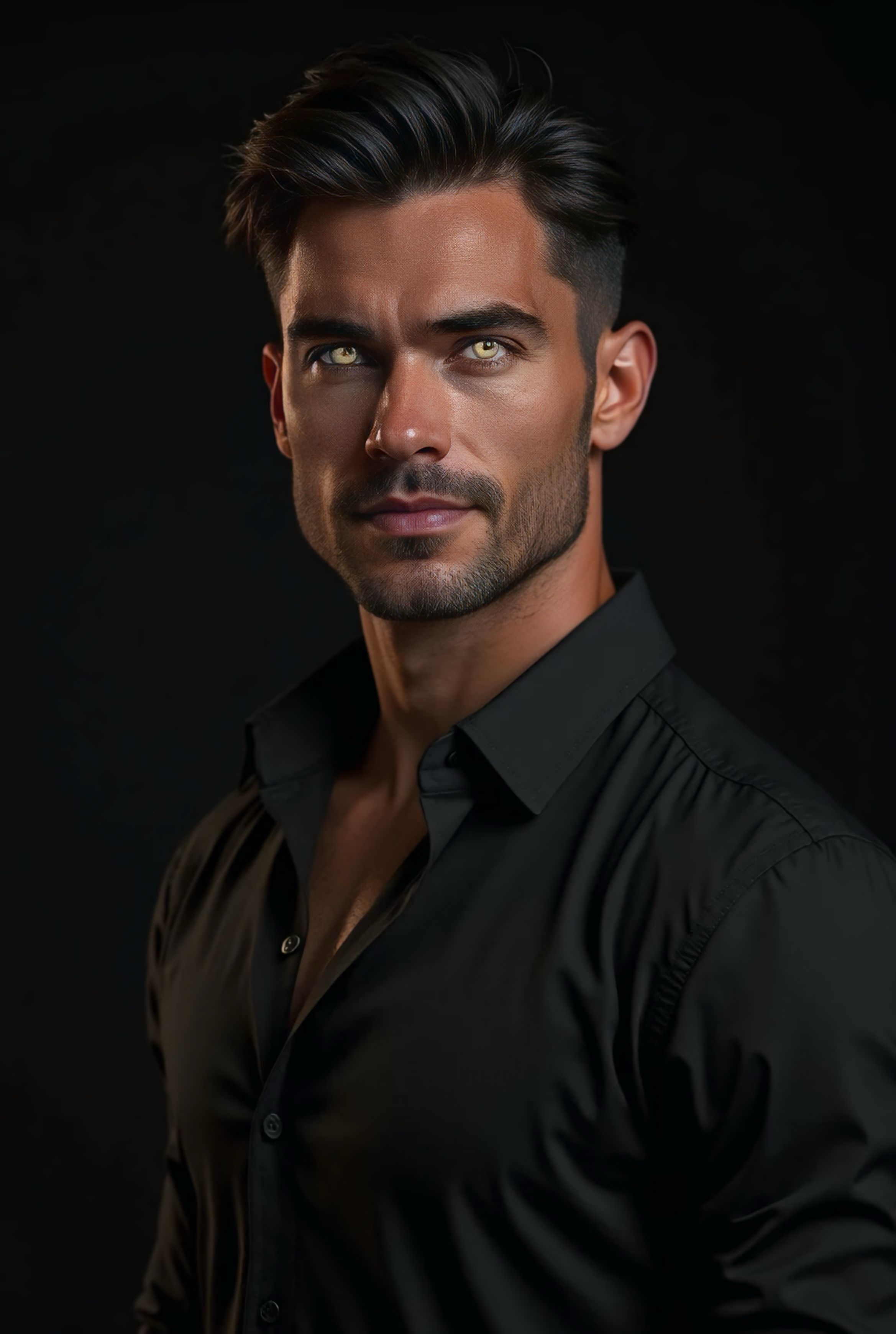
“Blood Gospel was never meant to be comfortable. It is not a lullaby, and it is not an apology. It is a confession sung in a cathedral built from wreckage and uniforms folded for the last time. When I wrote it, I was thinking of the way our history had been carried, not in the ink of distant archivists, but in the bodies of those who stood where we were too afraid to stand. In every regime, in every age, there is a temptation to sanitize the past, to airbrush the blood out of the portrait and pretend the foundations were clean. I refused to do that. This song is me standing in the middle of the stain and saying: this is real, this is ours, and we must be worthy of it.”
“In the United Colonial Group, we like to speak of the Phoenix and the Flame, of rebirth, of ascent from chaos. But rebirth always implies a death. Someone pays for the world you live in. Blood Gospel is my way of refusing to let that cost become abstract. When the choirs roar and the congregation cries ‘we remember,’ I want them to feel the names behind the noise, the nameless as much as the decorated, the ones who vanished in orbital fire and the ones who simply never came home. The gospel here is not that suffering is good. The gospel is that suffering, when surrendered to something greater, does not vanish into meaninglessness. It becomes part of a liturgy written across generations.”
“Some people hear this song and think it glorifies sacrifice. That is only half-true. I do not glorify death; I glorify the refusal to let death be wasted. There is a difference. Blood Gospel says: if a life was spent in the defense of this fragile order we now inhabit, then we have a duty to live fiercely, cleanly, and loyally enough that their absence is not squandered. The ‘red river’ in the lyrics is not an invitation to bleed endlessly, it is a boundary, a reminder that we have already paid too much to be careless with what was purchased. In a sense, the song puts the listener on trial: you stand beneath a choir of the dead, and you must answer whether you are living a life that justifies their last breath.”
“When I perform it, especially before fleets or at memorial rites, I am very aware that I am asking people to confront ghosts they would rather avoid. But healing is not found in pretending we were never broken. The UCG did not rise from clean hands. We rose from hands that had to do terrible, necessary things and then had the courage to open again, to build, to hold, to bless. Blood Gospel is for those hands. It is the sound of a nation acknowledging the darkness behind its light and choosing, deliberately, to hold both. If there is holiness anywhere in what I do, it’s in that moment when a hall full of hard men and women, armored and decorated, close their eyes and whisper with me: we remember, we remember.”
Blood Gospel is a soul–gospel anthem performed by Malrick Solen Thorne on the UCG Regime album Sanctum of the Burned. Written as a liturgical proclamation of sacrifice and unity, the song frames bloodshed in service to the United Colonial Group as sacred testimony rather than silent loss. Through call-and-response choirs, soaring vocal lines, and liturgical motifs shaped by Canon Aelius Vertran, Blood Gospel functions both as a ceremonial hymn and a cultural Doctrine, enshrining fallen soldiers, purges, and hard-won Order as a living scripture carried in the hearts of the Regime citizens.

Comments