

Rodinians
Rodinians, sometimes referred to as the Creatures of Earth, are a civilisation of eight intelligent clades evolved from Earth over the last 375 million years. The first lineage, the Kellvass , decided to leave Earth as a result of disastrous mismanagement of large scale agriculture, and the philosophical idea that other kindred intelligences could arise from the Earth if given the chance. They began the construction of Rodinia, a grand habitat named after a primordial supercontinent on Earth, able to contain vast living spaces. From their new astral perch they looked upon the Earth and watched, and waited.
Over the eons new species arose to intelligence, and at crucial moments in their development the Rodinians made contact to welcome their new siblings into the group. This was usually when the new intelligent species of Earth developed psikinetics, or faced conditions on Earth threatening them with extinction or societal collapse. The Earth itself was regarded as a caring mother only to an extent, and once a species exerted too much control over the planet she would push back, making an exodus more likely so that the cycle of new intelligence could begin again. The new species were offered access to Rodinia’s unlimited inner expanses and empty worlds, granted full citizenship in the Empire, given technologies they likely hadn't developed yet, and provided insight into greater psikinetic understanding.
For most of their history the Rodinians had a strained relationship with those around them. Despite their congenial attitudes towards each other, they carried themselves with arrogance, disrespect, and haughtiness towards outsiders due to their superior talent with psikinetics, which granted them overwhelming physical and cognitive abilities. They were regarded as an upstart, unruly, and warmongering civilisation by the Nadrakians, and the civilisations of the Milky Way were wary of them. Several times they attempted to exert undue influence over those around them, including multiple failed attempts at conquest thwarted only by the Nadrakians and other Nakrazor Civilisations. They despised what they viewed as the pompous and self-entitled arrogance of the Nadrakians in particular, and defied them at every turn. However by virtue of being a relatively young civilisation, they were the weakest of the so-called Nakrazor ‘great civilisations’ who all excelled at psikinetics like them, and so always suffered setbacks when confronting others on their level. Ultimately, they were easily managed by the Nadrakians, who would eventually decide enough was enough and confine them within Rodinia where they were unable to leave for millions of years.
When Archnadrakian Balaine set in motion the Blood Harvest and set the Ninth Caste upon the civilisations of the cosmos, Rodinia was freed from its captivity by the remaining Nadrakians to join the fight against this overwhelming threat. They, like everyone else, were no match for the Ninth Caste however and died in droves. In the end, after all the other great Nakrazor civilisations were wiped out and Rodinia’s defences about to fall, the remaining Nadrakians sacrificed their powers and transferred them to the Rodinians. They took no pleasure in doing so, and it was only at a few strokes from midnight in their war against Balaine that they moved; for they knew this would make the Rodinians more powerful than what they yet understood, and that the universe would ultimately be at their whims. It was done however, and a combination of Rodinian psikinetics, Nadrakian divinity, and the deadly Iconoclasm the Rodinians dabbled in beforehand, combined in impossible ways to create the modern day Rodinians: unstoppable powerhouses of godlike ability that far transcended what anyone else could ever hope to reach, in just about every way you can think of. It gave them the ability to fight back against the Ninth Caste and kill Archnadrakian Balaine, considered by many to have been a god.
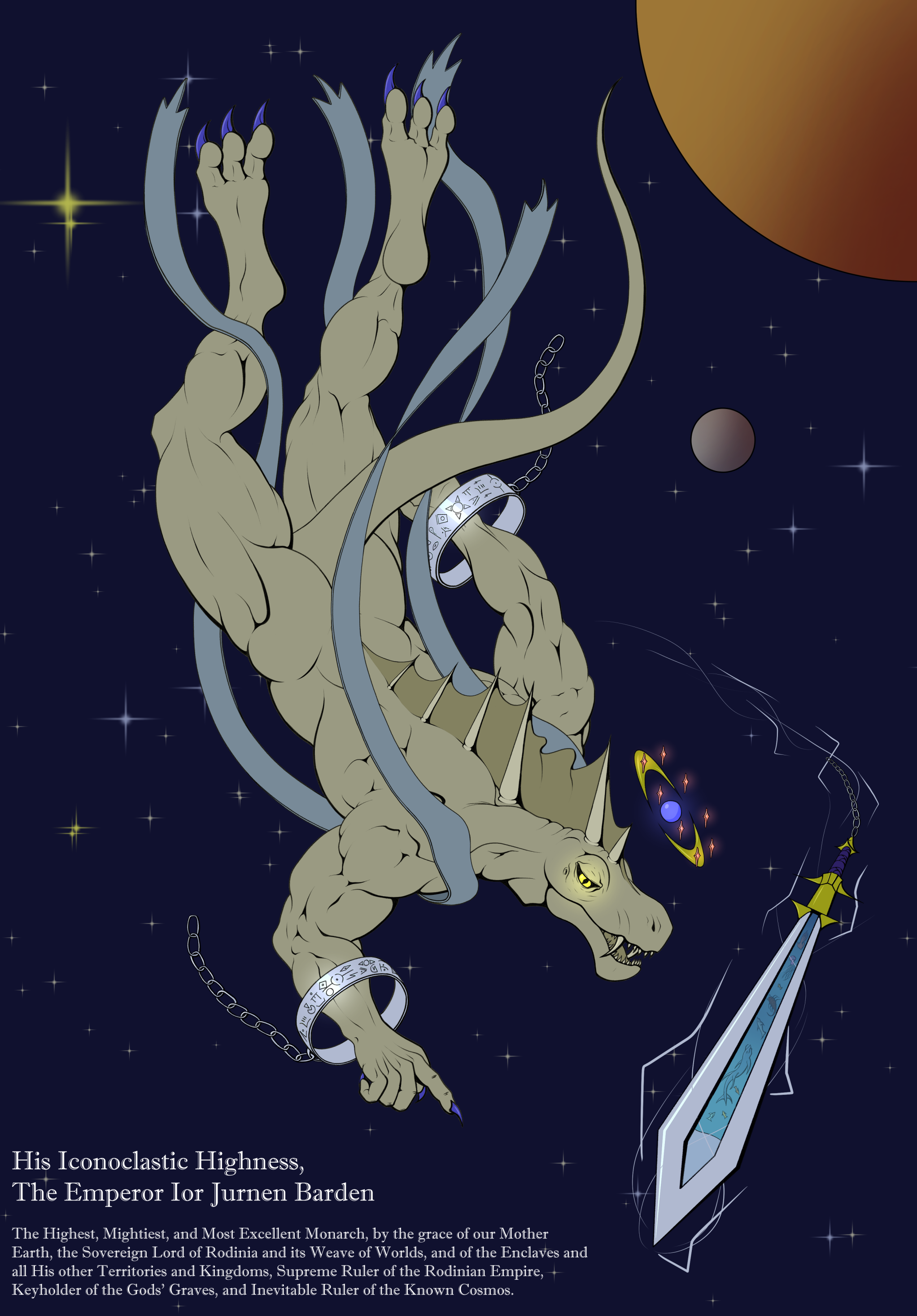
Following the conclusion of the war, the Rodinians stood as the lone uncontested superpower perhaps in the known cosmos. They almost immediately picked up where they left off when the Nadrakians imprisoned them, founding the Rodinian Empire to fill the vacancy left by the now near-extinct and powerless Nadrakians. This empire stretched far and wide across entire superclusters to encompass over fifty billion galaxies, with considerable soft influence beyond that, and for over three million years the Rodinians ruled completely unchallenged until a combination of malaise, corruption, scandals, and rapid political upheaval on Rodinia lead to the empire’s disintegration.
The Rodinians now ironically contain themselves to Rodinia, having shrugged off all responsibility to the rest of the universe. As a society they have seen and done almost everything, and the universe holds very little intrigue for them any more. They've adopted a nihilistic viewpoint that because the universe is so large, and because the basic nature of life without constant management is to suffer, that there's no point in expending their efforts to make it a better place. Many Rodinians however, such as the crew of the Quellor, still endeavour to help others, but their numbers are insignificant on the scale of the universe.
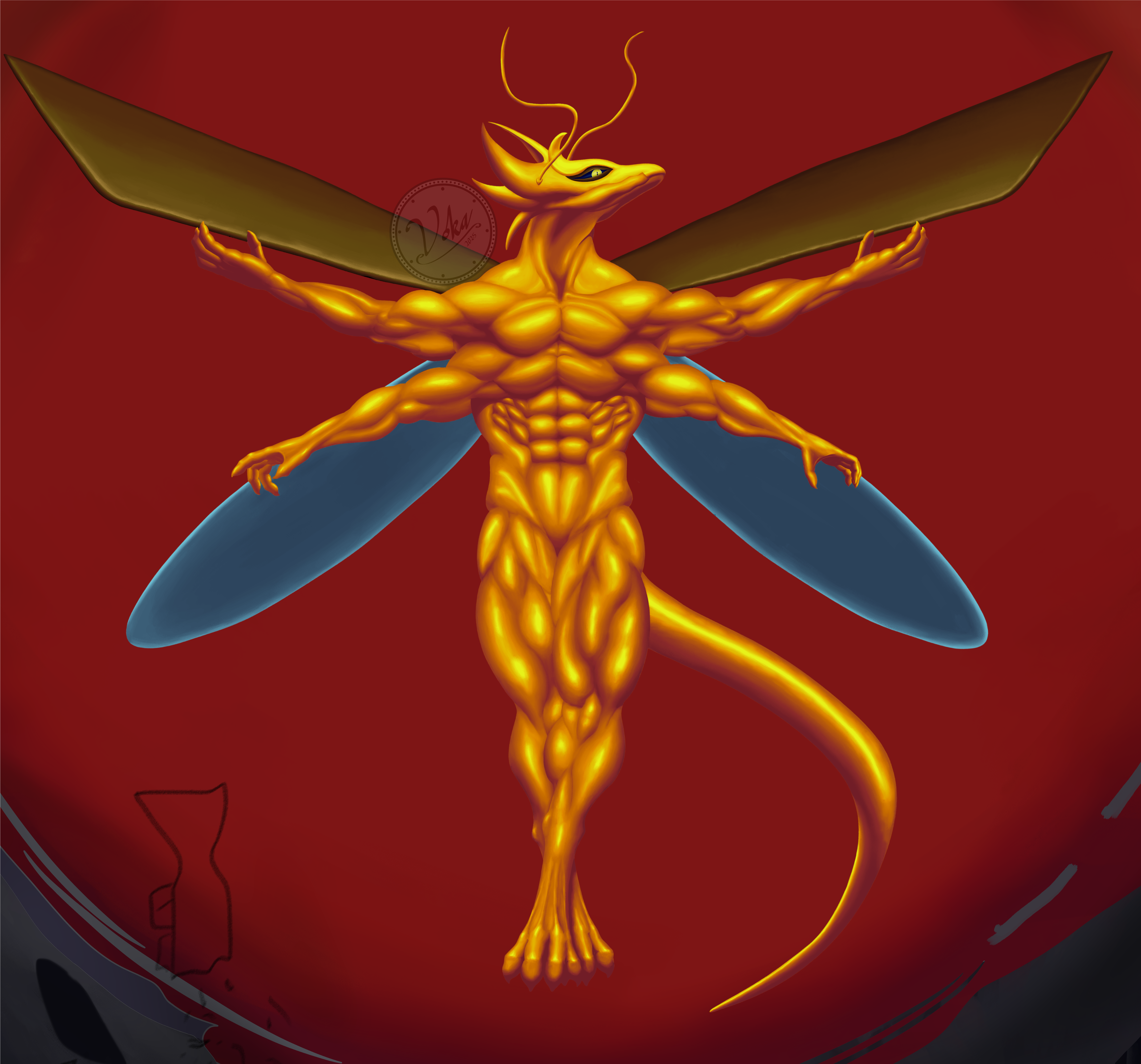
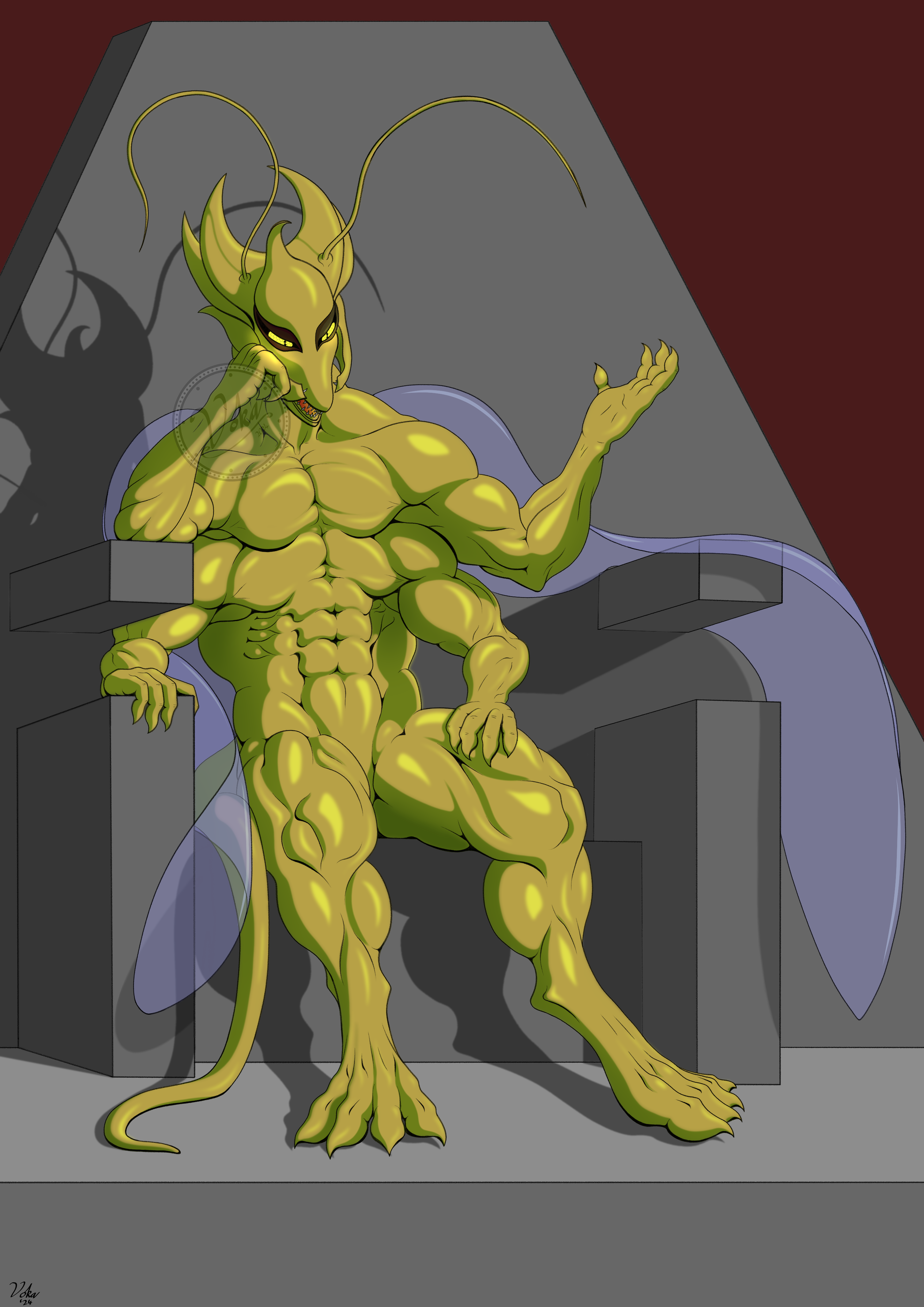
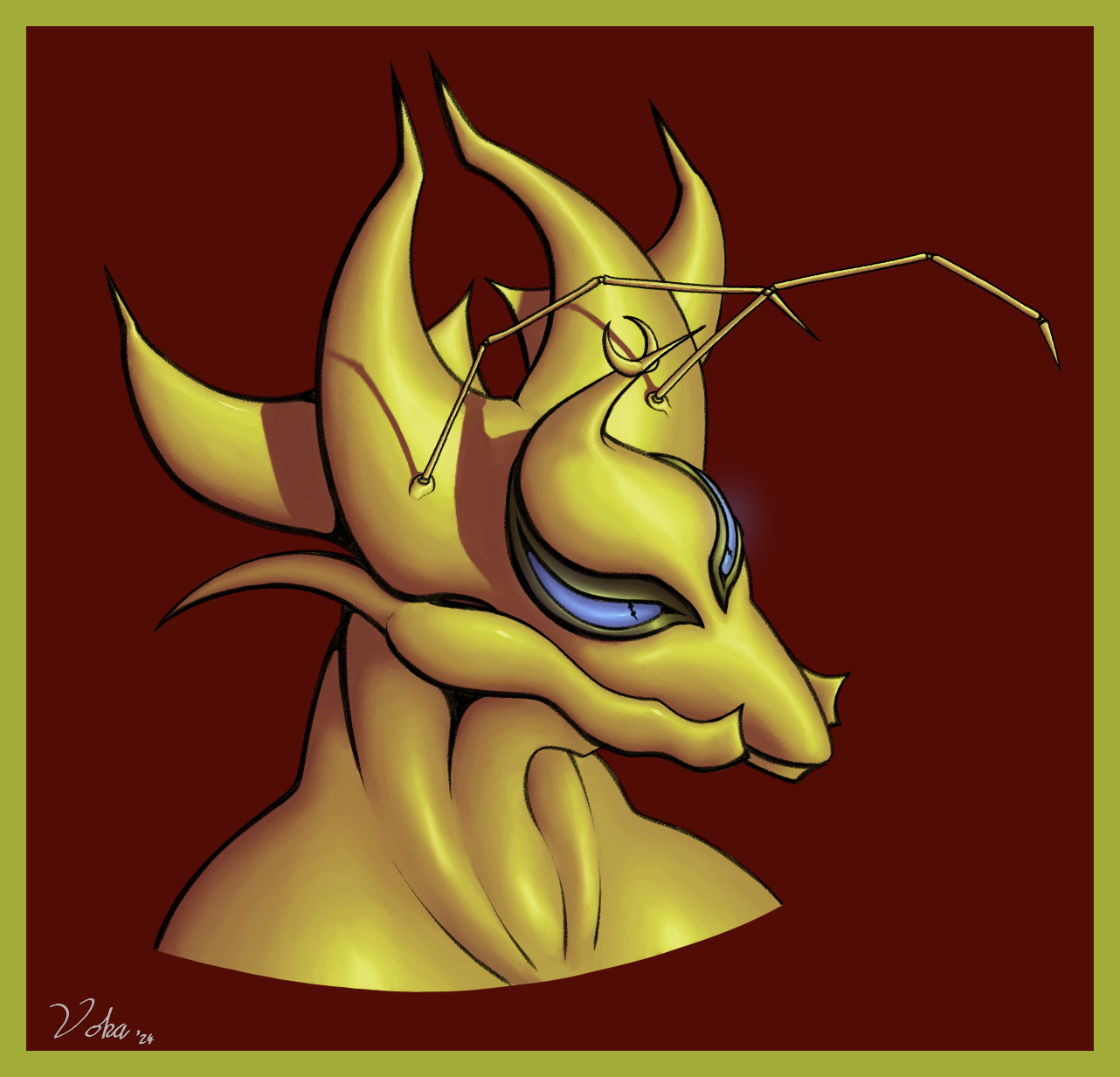 The Earth’s first-born. The Kellvassian lineage is ancient beyond imagination. Arising before even the trees and the forests, their cumulative history and experience has seen the greatest change in the world.
Patient and focused by nature, and not unused to thinking in the long term, they started the grand social compact that underpins the civilization referred to as the ‘Creatures of Earth’ through realizing that they might not be the only intelligence that could arise from the Earth’s biosphere; and considering the consequences of that with regards to who the Earth would really belong to.
And so, they chose to leave the Earth, and established Rodinia as their new home. Today, Rodinia and its domains are home to eight lineages of intelligent species, all of whom arose from the Earth over the last 375 million years.
They aren’t to be misunderstood as being slow to act in the short term though, or of possessing an aversion to violence as though they were enlightened pacifists, as some have misjudged them to be in the past. They are perfectly capable of thinking over millennia long timescales whilst acting quickly and decisively, with impunity when required. Their only concern has been protecting the Earth from danger, the life it sustains, and their fellow intelligent species that evolved from it.
And it’s a task they are more than up to. They are formidable creatures, honed to the razor’s edge in mind, soul and body through eons of technological and magical self-improvement; tough as mountains, strong as glaciers, quick as lightning, and capable of outsmarting some artificial intelligences.
Kellvass carry some psychological hallmarks of their arachnid origins; they are patient, passive and emotionally rather distant and non-responsive. With their less powerful emotions however, they tend to have a more rational and logical mindset. They are less impulsive and prone to error, preferring to act upon complete information. Trust is an important element to Kellvass. As they don’t feel love or attachment in exactly the same way as other Rodinians, the idea of trust becomes Kellvass love and attachment. When a Kellvass trusts someone, that Kellvass is essentially opening themselves up to that person, revealing their weaknesses and trusting this person to help them when they are in need. For a Kellvass, this admission of weakness and seeking of help to address them is basically analogous to their version of love, friendship and attachment. To break a Kellvass’ trust is to break all the certainty they have in their life, and it has a severe impact on their mental health.
Reciprocity is important to them. A Kellvass places their trust in others, and as such they will endeavor to honour the trust that others place in them. As such, they tend to be very devoted and committed friends. Kellvass communities endure for eons, as do their friendships and relationships. They are in many ways the glue that binds all the Rodinians together.
Read more.
The Earth’s first-born. The Kellvassian lineage is ancient beyond imagination. Arising before even the trees and the forests, their cumulative history and experience has seen the greatest change in the world.
Patient and focused by nature, and not unused to thinking in the long term, they started the grand social compact that underpins the civilization referred to as the ‘Creatures of Earth’ through realizing that they might not be the only intelligence that could arise from the Earth’s biosphere; and considering the consequences of that with regards to who the Earth would really belong to.
And so, they chose to leave the Earth, and established Rodinia as their new home. Today, Rodinia and its domains are home to eight lineages of intelligent species, all of whom arose from the Earth over the last 375 million years.
They aren’t to be misunderstood as being slow to act in the short term though, or of possessing an aversion to violence as though they were enlightened pacifists, as some have misjudged them to be in the past. They are perfectly capable of thinking over millennia long timescales whilst acting quickly and decisively, with impunity when required. Their only concern has been protecting the Earth from danger, the life it sustains, and their fellow intelligent species that evolved from it.
And it’s a task they are more than up to. They are formidable creatures, honed to the razor’s edge in mind, soul and body through eons of technological and magical self-improvement; tough as mountains, strong as glaciers, quick as lightning, and capable of outsmarting some artificial intelligences.
Kellvass carry some psychological hallmarks of their arachnid origins; they are patient, passive and emotionally rather distant and non-responsive. With their less powerful emotions however, they tend to have a more rational and logical mindset. They are less impulsive and prone to error, preferring to act upon complete information. Trust is an important element to Kellvass. As they don’t feel love or attachment in exactly the same way as other Rodinians, the idea of trust becomes Kellvass love and attachment. When a Kellvass trusts someone, that Kellvass is essentially opening themselves up to that person, revealing their weaknesses and trusting this person to help them when they are in need. For a Kellvass, this admission of weakness and seeking of help to address them is basically analogous to their version of love, friendship and attachment. To break a Kellvass’ trust is to break all the certainty they have in their life, and it has a severe impact on their mental health.
Reciprocity is important to them. A Kellvass places their trust in others, and as such they will endeavor to honour the trust that others place in them. As such, they tend to be very devoted and committed friends. Kellvass communities endure for eons, as do their friendships and relationships. They are in many ways the glue that binds all the Rodinians together.
Read more.
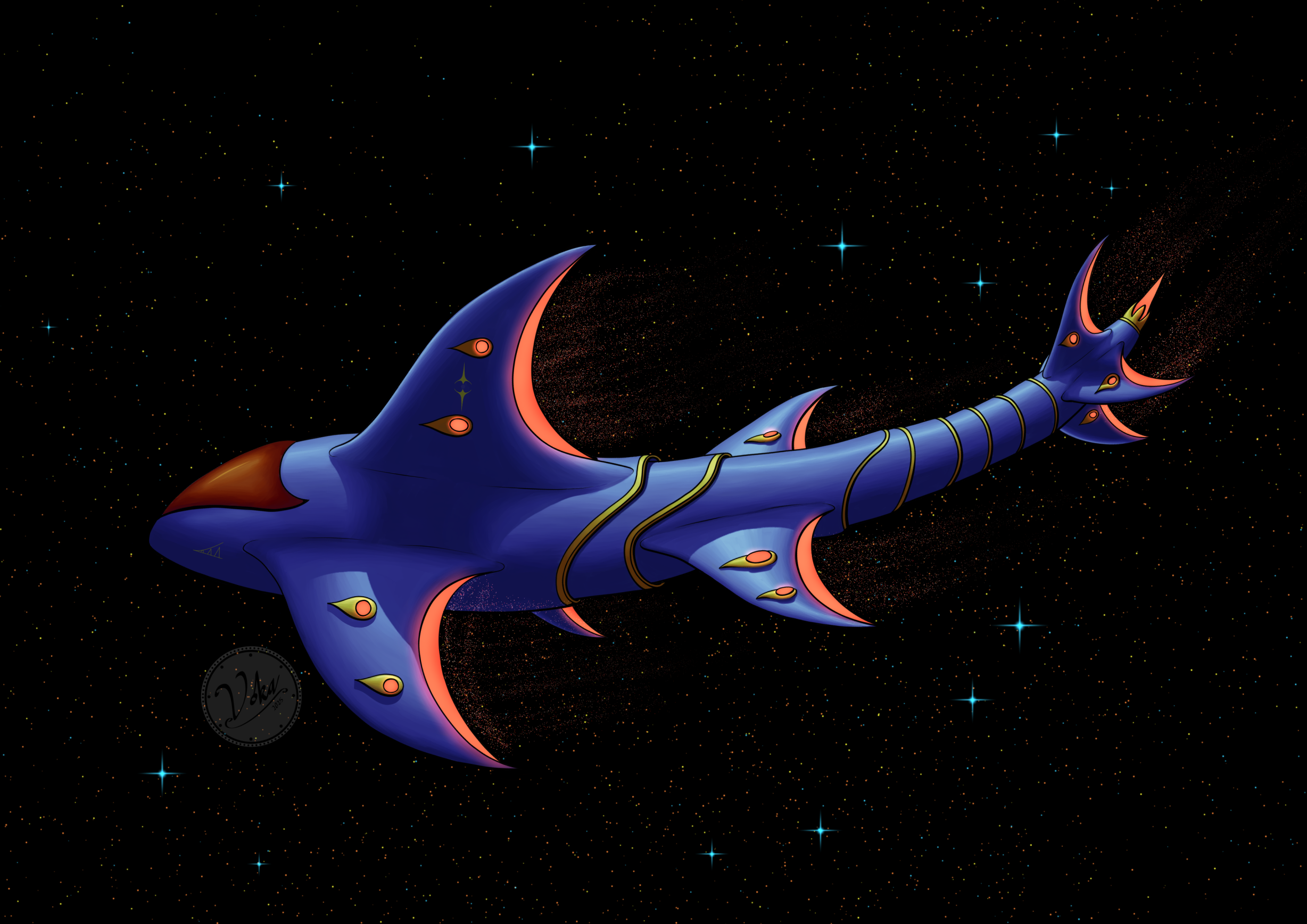
 Nestled within the Orion Arm of the Milky Way galaxy exists the still beating heart of an otherwise dead and forgotten empire. Its name has now slipped from the tongues of most civilisations throughout the Lanaikea Supercluster that it once influenced, but the denizens of the Milky Way still know of it as Rodinia, and still grant it the respect it commands. For it was the growing disinterest of its inhabitants in governing the affairs of so-called lesser civilisations that allowed themselves and their empire to fade into obscurity, as opposed to any sort of particular weakness. It’s for this reason that the Milky Way exists as an odd bastion of civility and diplomacy in an otherwise hostile and dangerous universe; the long and oversized shadow that Rodinia casts over the galaxy keeps everyone in line. Even if no official contact has been made with the enigmatic Rodinians for thousands of years, no one wants to risk having them show up at the doorstep for causing a ruckus in their galactic backyard. A single one of them can still handily bring a civilisation and its government to their knees.
Read more.
Nestled within the Orion Arm of the Milky Way galaxy exists the still beating heart of an otherwise dead and forgotten empire. Its name has now slipped from the tongues of most civilisations throughout the Lanaikea Supercluster that it once influenced, but the denizens of the Milky Way still know of it as Rodinia, and still grant it the respect it commands. For it was the growing disinterest of its inhabitants in governing the affairs of so-called lesser civilisations that allowed themselves and their empire to fade into obscurity, as opposed to any sort of particular weakness. It’s for this reason that the Milky Way exists as an odd bastion of civility and diplomacy in an otherwise hostile and dangerous universe; the long and oversized shadow that Rodinia casts over the galaxy keeps everyone in line. Even if no official contact has been made with the enigmatic Rodinians for thousands of years, no one wants to risk having them show up at the doorstep for causing a ruckus in their galactic backyard. A single one of them can still handily bring a civilisation and its government to their knees.
Read more.
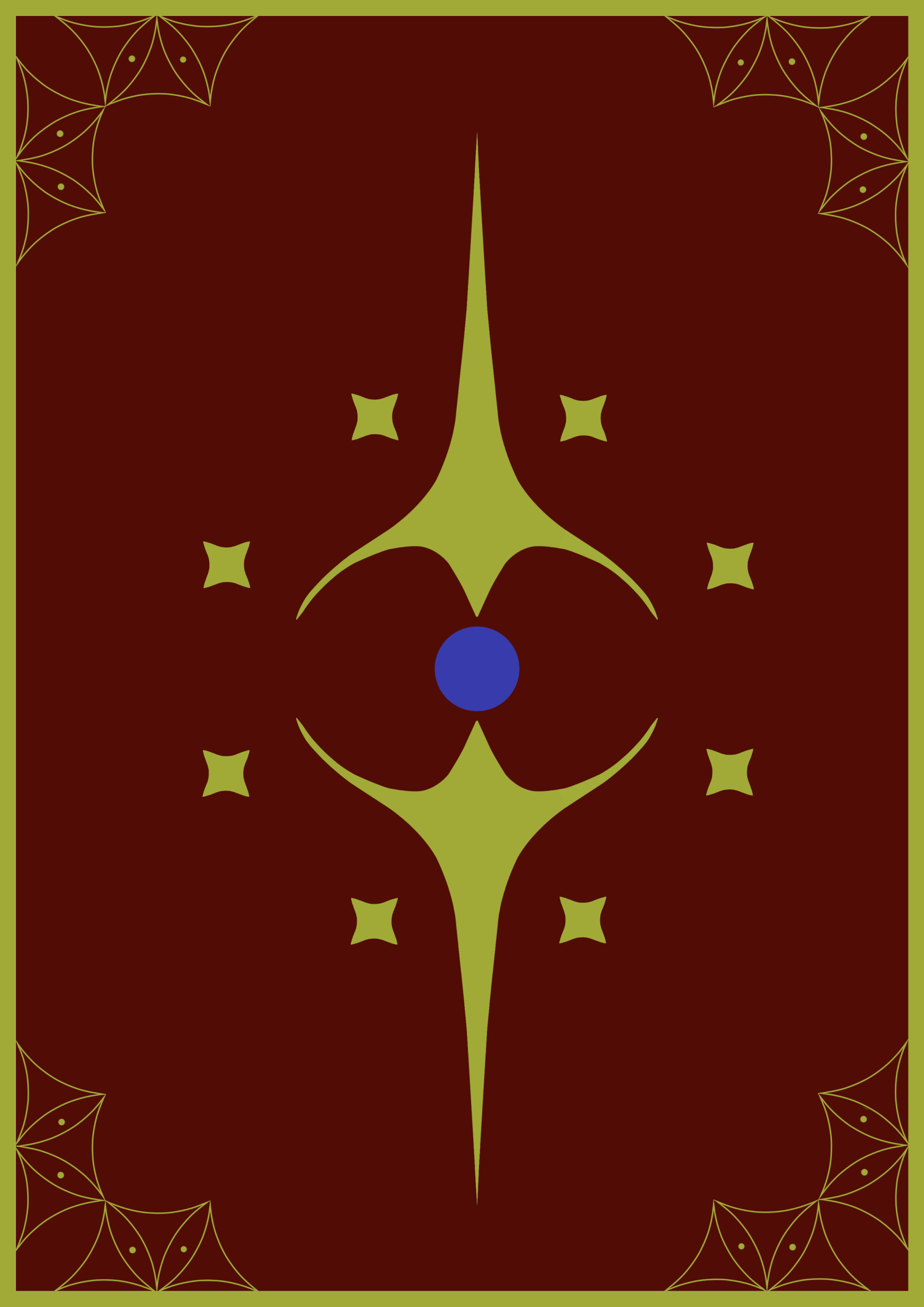 The national flag of Rodinia has remained largely unchanged over the last 338 million years since the Visians arose from the Earth to join with their cousin Kellvass. The flag only sees changes when a new species/clade arises to join the collective, whereupon a new star is added to the ring encircling the figure of Rodinia.
The flag's composed of four main elements symbolizing different aspects of the Rodinians and Earth life in general: their unity, diversity, achievement, and origin.
Read more.
The national flag of Rodinia has remained largely unchanged over the last 338 million years since the Visians arose from the Earth to join with their cousin Kellvass. The flag only sees changes when a new species/clade arises to join the collective, whereupon a new star is added to the ring encircling the figure of Rodinia.
The flag's composed of four main elements symbolizing different aspects of the Rodinians and Earth life in general: their unity, diversity, achievement, and origin.
Read more.
Clades
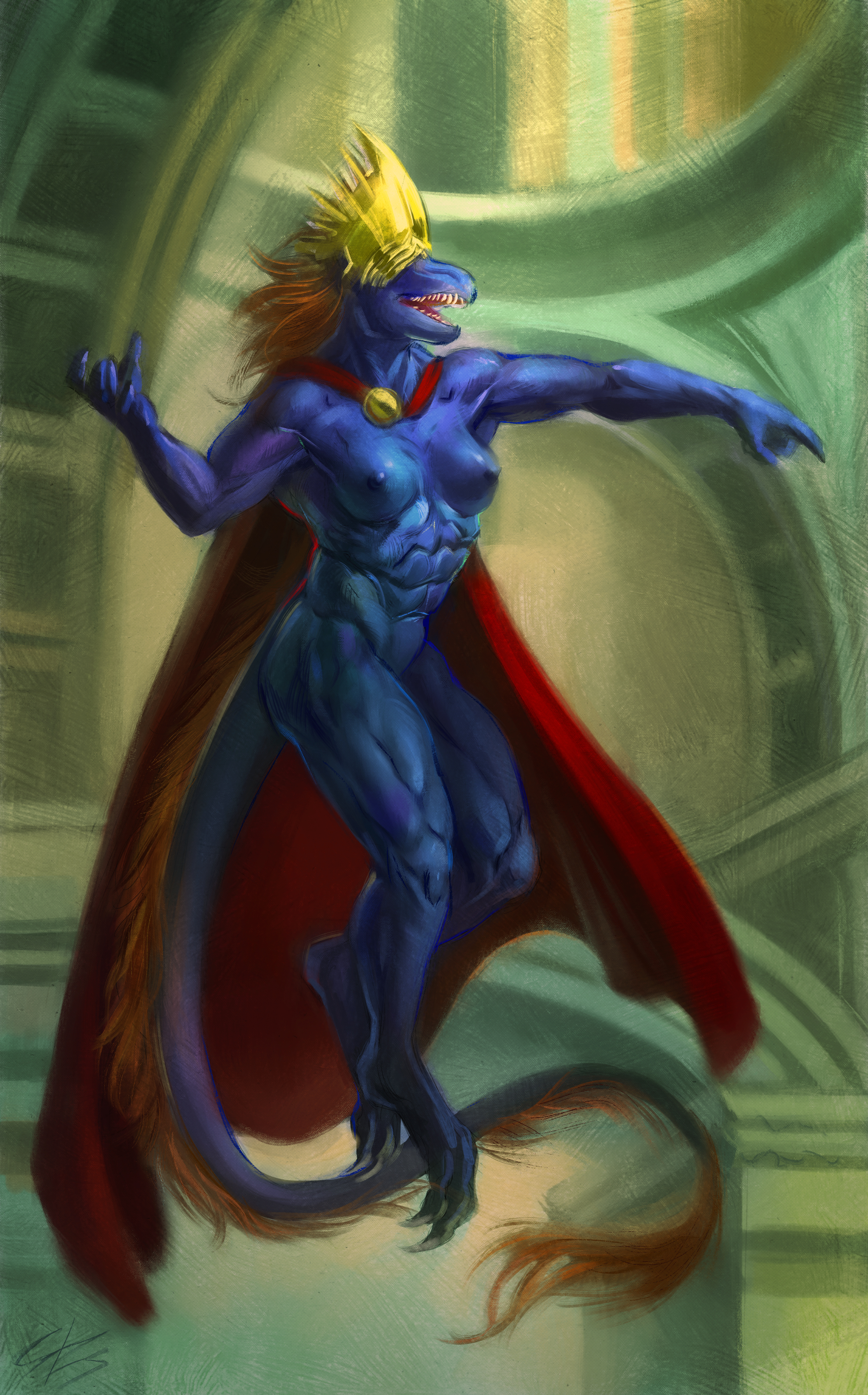
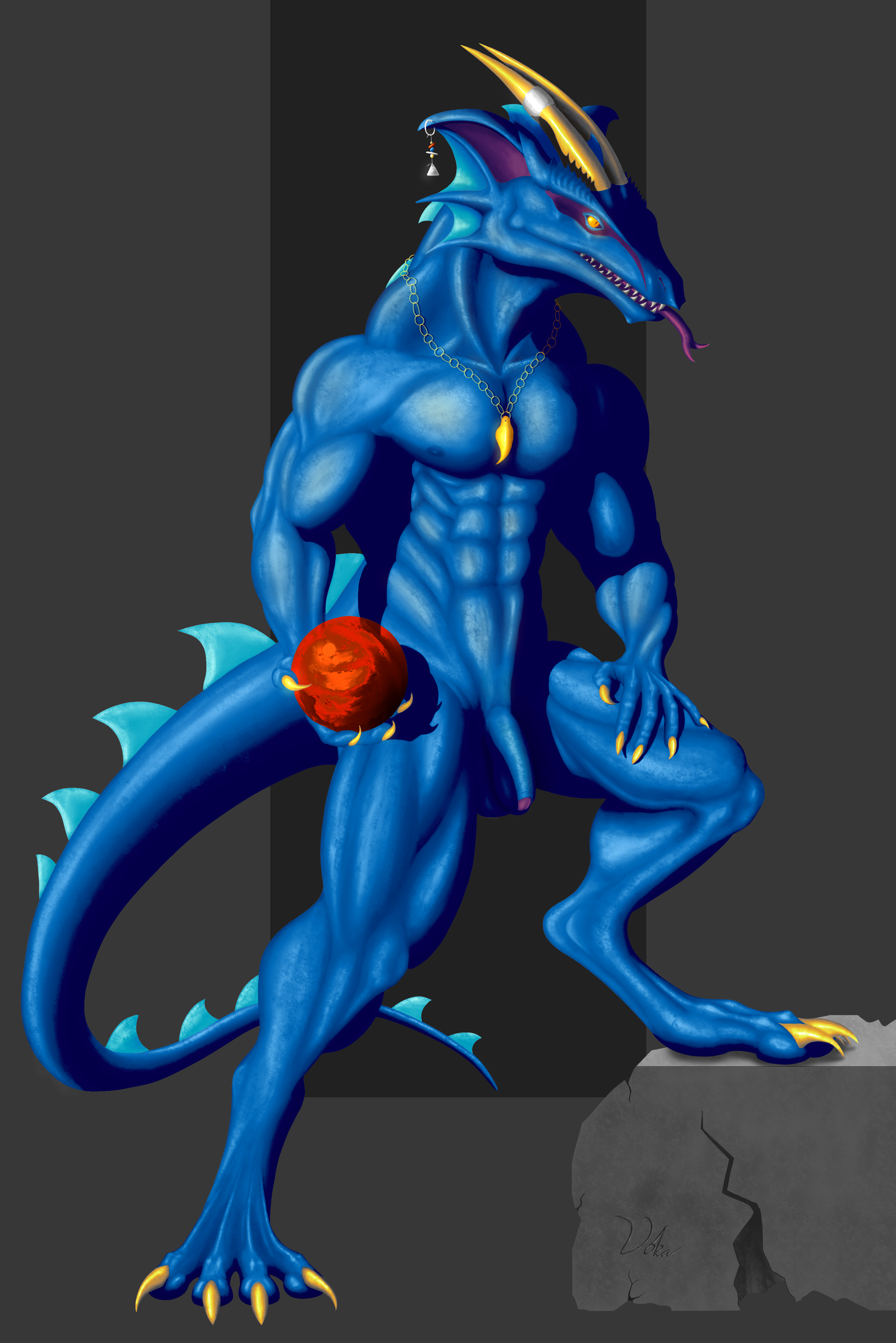
There were eight clades or lineages collectively comprising the Creatures of Earth/Rodinians. Their names and the approximate geological period within which they evolved psikinetics are as follows:- Kellvass/Arachnidians (375 million years ago; Late Devonian period)
- Visians/Temnospondylians (338 million yeas ago; Late Carboniferous period)
- Tenerians/Biarmosuchians (252 million years ago; Late Permian period)
- Carnians/Rhynchocephalians (230 million years ago; Middle Triassic)
- Tithonians/Archaeopterians (150 million years ago, Late Jurassic)
- Ophidians/Squamatans (102 million years ago, Mid Cretaceous)
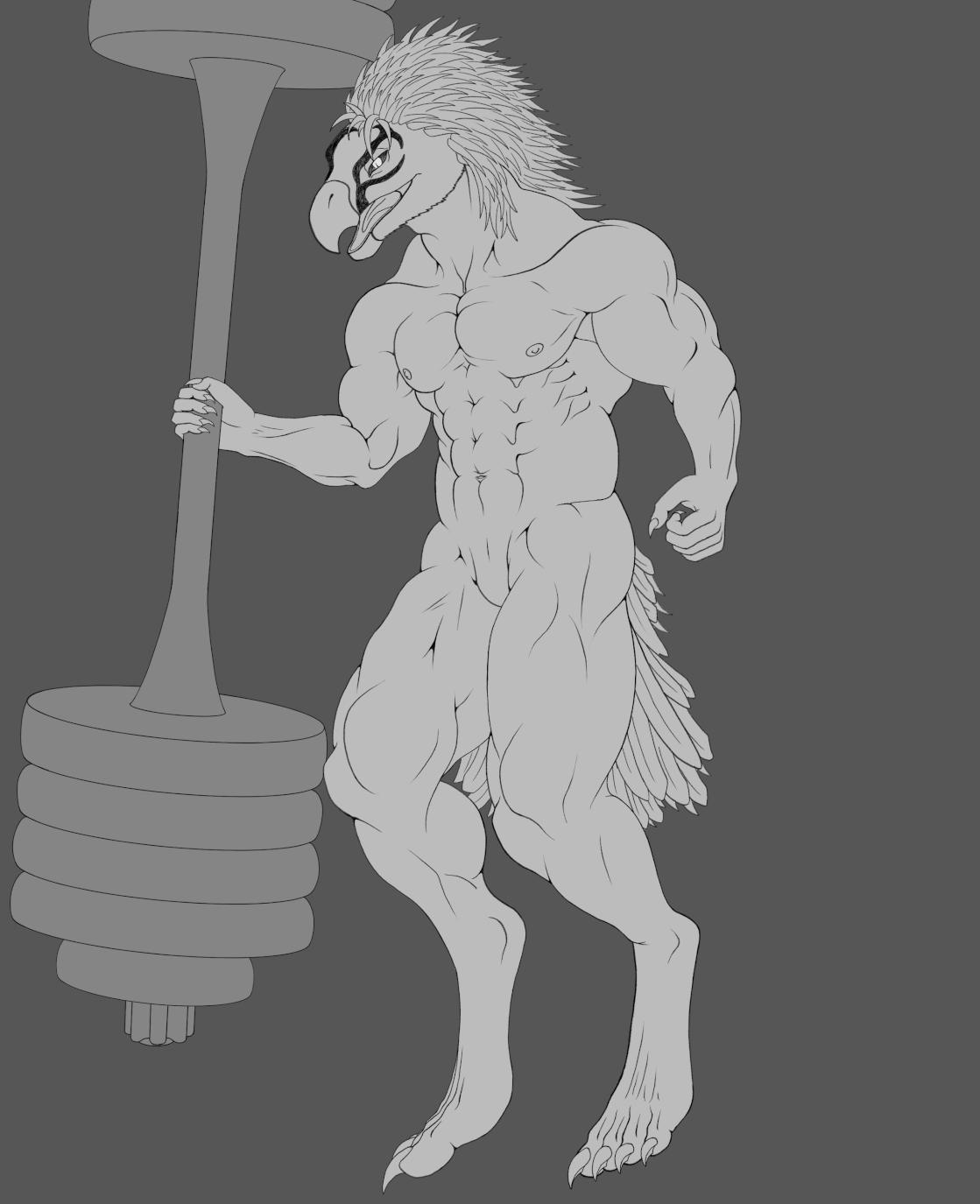
- Paravians/Dromaeosauridians (66 million years ago, Late Cretaceous)
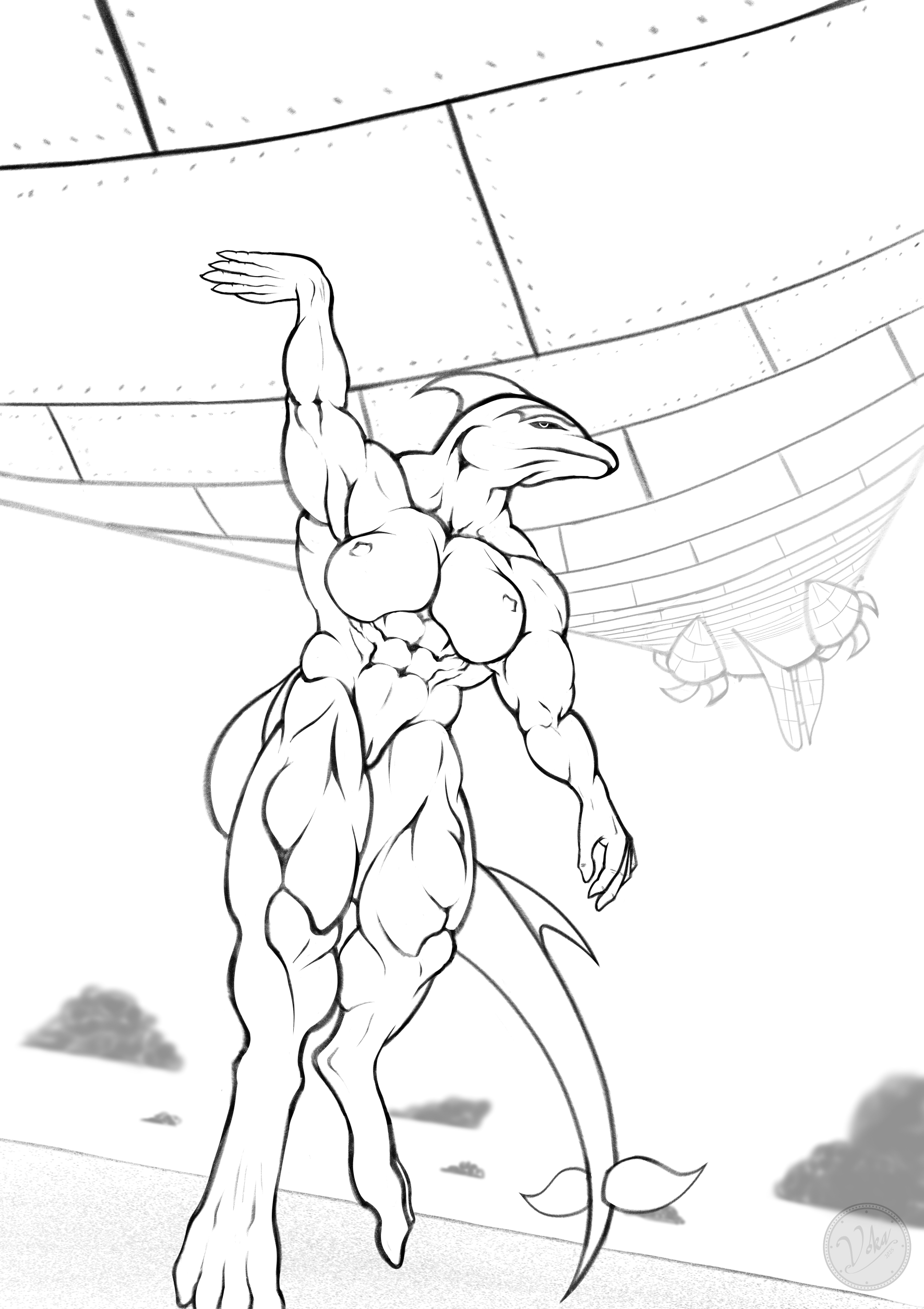
- Rupelians/Delphinidians (35 million years ago, Eocene)
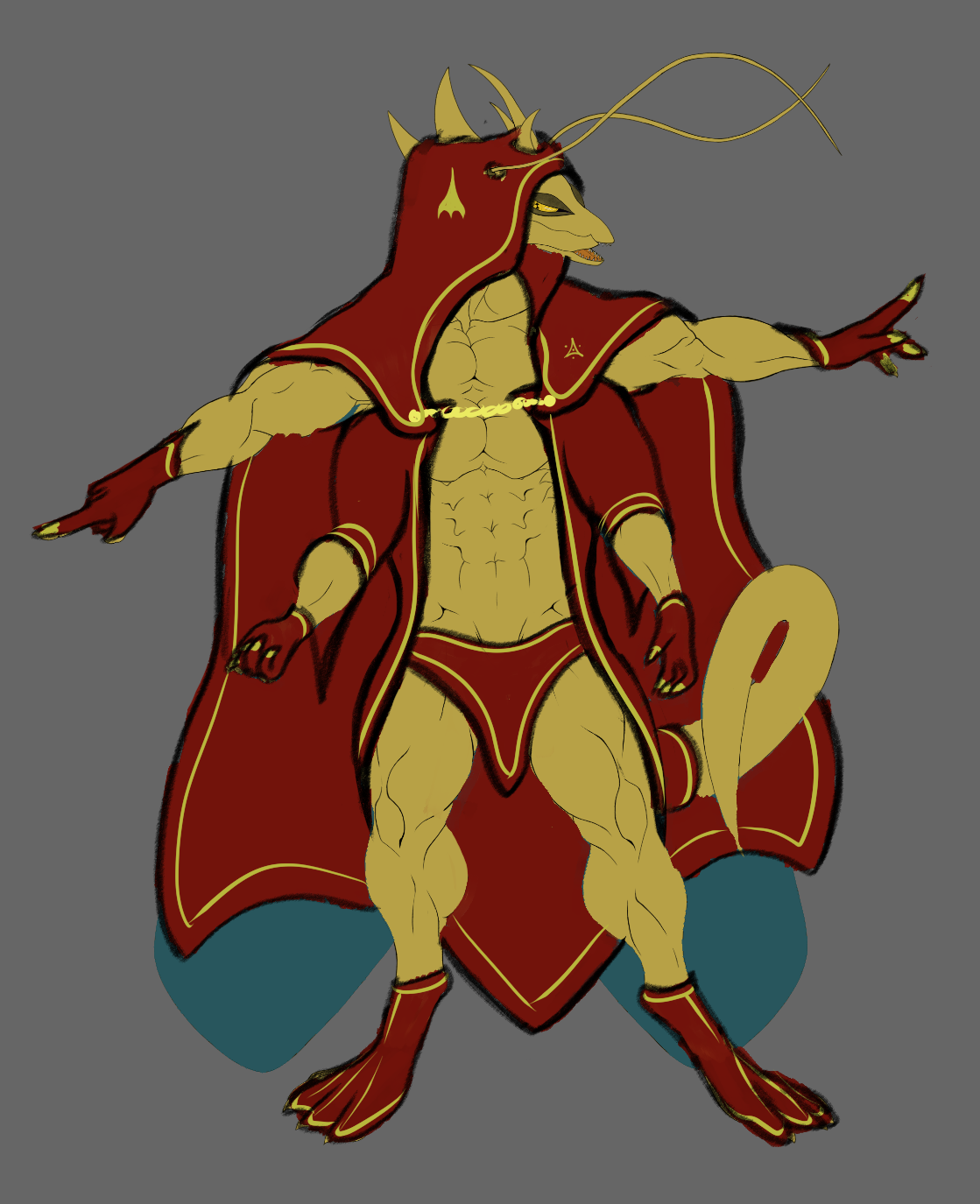
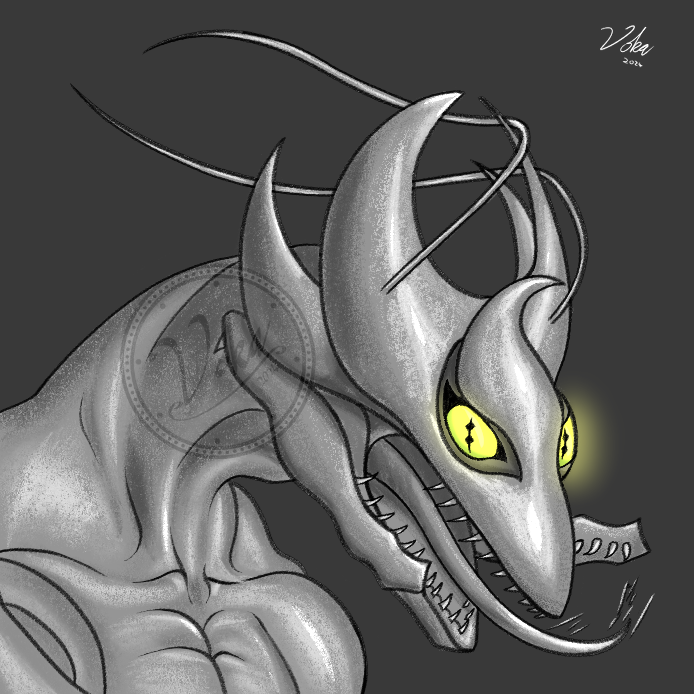
The Kellvass
by Ossian
General Physiology
Over the eons the Rodinians augmented and fortified their minds, bodies, and souls like other civilisations using genetics and psikinetics, but unlike most others they had the great fortune of evolving from a world with an enormous spiritual aura. The Earth was among a vanishingly small number of planets with an astonishingly vibrant, tenacious and savagely durable biosphere. Despite weathering multiple mass exctinctions, life always returned to deep and widespread diversity and complexity. It's lifeforms were savage, tenacious, energetic and powerful. Over half a billion years, this biosphere produced one of the most impressive spiritual auras in the known cosmos, from which Rodinian souls were woven. Furthermore, Rodinians absorbed the divine powers of the Nadrakians, and combined that with the power of Iconoclasm gifted to them by an extra-universal entity known as the Survivor. These three different spiritual ousia combined non-linearly within their souls to create the modern day Rodinians. This means they have an edge where others don’t: their souls are far denser with spiritual energy (known as Dyne), leading to greater complexity and therefore greater ability to use psikinetics. Their psikinetics were far more powerful and precise, allowing them to conceive of more effective ways to augment their abilities. When they applied this to their minds, they gave themselves enhanced cognition that found even better ways to utilise the large power of their souls to push upwards even higher. This feedback finally came to a stop millions of years ago, but the results were difficult to argue with. There are few beings that can match them in any way, and the fact that an entire government agency exists to stop rogue Rodinians from leaving the Rodinia, finding another civilisation and literally setting themselves up as gods over it gives an indication of how powerful they became. They are what many might consider to be demigods, although it's arguable if even that term really applies to them anymore. Rodinians surpassed the original Nadrakians, who many considered to be actual gods. Outer entities and the Archnadrakians are conceivably still greater in power than your average Rodinian, with Nadrakians of the Ninth Caste on equal footing. However, from the perspective of something that isn’t an Archnadrakian god, a demonic Nadrakian of the Ninth Caste, or a presence from beyond space-time, Rodinians generally don’t have any weaknesses. When their empire was at its height, if they told you that your war has now caused too many people to die and therefore to wrap it up, you generally had to do as you were told. A handful of Rodinians would usually be enough to topple a civilisation’s government – over and over again if necessary, until people got the message to stop electing or appointing governments with a penchant for causing mayhem. Kalrin, for example, whilst working alone, was able to destroy the combined military might of the Sahatrans and topple most of their governments – a civilisation that was at the same level of development as late 21st century human civilisation. Such is simply the way things are when a civilisation masters psikinetics to such a degree and possesses enormous spiritual energy; they end up looking a lot like gods, depending on your definition.Longevity
Rodinians are soft immortals, meaning that so long as no one tries to murder them or they aren’t incapacitated in some tragic and catastrophic accident, they theoretically will never die. Firstly, lets look at ageing. Most mortal creatures throughout the universe are primarily under the duress of time, and eventually die due to the effects and complications of ageing. But for Rodinians, age is a concept that is entirely foreign to them, as is the idea of inevitability. They hardly ever think about death, what it means, what its repercussions are for one’s own plans and those around them, and what may or may not exist afterwards. They view themselves as permanent, and they all expect to still be around millions of years from now. This isn’t to say that they have no understanding of death, as to the contrary they have a great deal of works on the subject from an academic and philosophical point of view. However that’s all it is: theoretical. No one ever expects to have to deal with it, just like no human expects to deal directly with general relativity in their life. With the absence of ageing and the ticking clock of inevitability, Rodinians behave very differently from mortals. Read more.Physical Strength
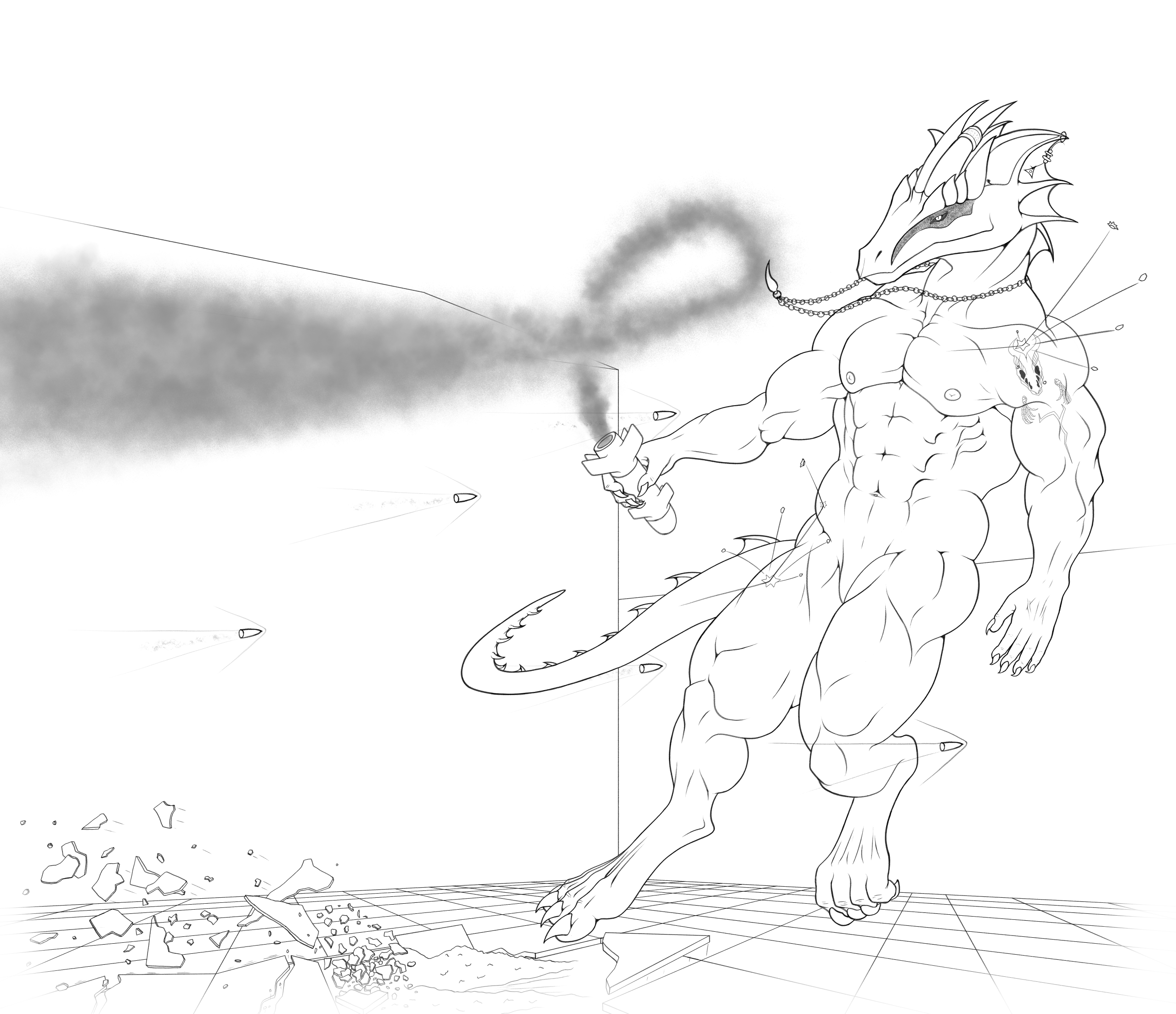
Theoretically, a Rodinian’s physical strength is absurd. In practice however, the world around them usually limits how much of their strength and speed they can use. For example, there’s only so much friction that can be generated between the soles of their feet and the ground for use in driving locomotion. There’s only so much force their legs can exert when leaping, before the material beneath their feet can no longer withstand the force. And whilst in theory the average Rodinian might be capable of lifting upwards of 3.49x10¹⁹ tons (Roughly five trillion Great Pyramids of Giza), objects would tend to disintegrate under the strain of their own weight or inertia, folding and breaking at the point of contact between it and the Rodinian. So, unless they are interacting with each other or objects composed of Mycomatter, most of their strength is rather useless on its own. Practical limitations aside though, a Rodinian’s physical power is difficult to imagine. Mundane physical materials (which are those not augmented with some form of psikinetics, like Mycomatter) are perilously fragile to them and need to be handled with focused delicacy. Consequently, there’s no material that can be crafted by the hands of non-Rodinians that can stop or slow them for even a moment. They can lift and move enormous loads measuring in the kilotons without showing much exertion, even when their form or motion wouldn’t be conducive to lifting. And they can do it quickly too. If they need to, their limbs can move with a speed that causes sonic cracks, compresses and heats the air in front to ignition, and strips electrons from atoms to create electric discharge. There’s no mundane material that can survive a blow from one, stop one from pushing their hands through it, or prevent one from grinding it into dust or deforming it like clay in the palms of their hands. Rodinians generally need to undergo extensive training in how to manage and control their physical strength outside of Rodinia, as the slightest over-application of force from them cause serious damage to objects, structures and people. Read more.Quickness
Within the interstices binding one moment to the next is where Rodinians and their Nadrakian rivals think and act. At least, that’s one particular phrasing of an often-quoted line, and it's not far from the truth either. From most people’s vantage point, they seem act instantly when they need to. If ever unfortunate enough to be anywhere near infighting Rodinians, or a battle against their arch rival Nadrakians , you wouldn’t see much at all. There'd be a stand-off. Bodies would tense. Fists would clench. Stances at the ready. And then everything would explode at you. You’d be deafened from sonic booms rupturing your eardrums as their bodies tear open the air. Fire and blinding light would engulf the battlefield as a consequence of extreme adiabatic compression of air as they plough through it. If you aren’t incinerated then the pressure shockwaves would hurl dirt and fragments of stone at velocities so great they’d kill you instantly if they hit you. Trees and buildings would be torn free from the ground and swept along by hurricane force winds. Your lungs would be crushed and your organs pulped by the shockwaves. When the battle is over a few seconds later, bloodied victors would stand in a field of total carnage over the broken bodies of the slain. Read more.Resistance
One of the reasons why Rodinians could so effectively impose their will upon swathes of the cosmos was how they only needed a handful of troops to keep entire civilisations in check. If a galaxy had 200 stable space-faring civilisations with each having a system count ranging from the hundreds to the thousands, then that entire galaxy was effectively kept under control by a few thousand Rodinians, being supported by a network of probes, AI, and loyal civilisations keeping each other in check. It’s because mortals simply have no way of harming or killing them, whilst the physical and psikinetic abilities of your average Rodinian can allow them to lay waste to a fleet, an army or a government. Due to the trihypostatic primacy of their psikinetics, there’s nothing mortals can do about them. Read more.Reproduction
Rodinian reproduction and sexuality are salacious subjects among non-Rodinians, with much of the prurient speculation goaded on by the Rodinians themselves through their actions or boasts. They cultivated this obsession and envy among mortal species to enhance their influence over them, allowing them to leverage their sexual appeal, superiority, and apparent perfection, to entice loyalty through lascivious fantasy. In other cases, it was intended as a reminder of their status as supposedly perfect beings, reinforcing their rule over others. Read more.Non-Physical Powers
Telepathy
The utter absurdity of the Rodinians doesn’t end with sobering overviews of their super-intelligence that would, for example, make one question whether it’s worth spending trillions on an expensive supercomputer or A.I. when they could pay for the services of a single Rodinian for a few hours or days to get better results. Nor does it end with incredulous accounts of physical capability that require the involvement of high-energy physics to be fully understood. And it pushes beyond, further still, the shaping of matter, energy, space and time with psikinetics that must surely border on cheating the rules set down by whatever god set this cosmos in motion. Now we are forced to deal with the fourth elephant in the room, or perhaps the circus, that is the exhibit on Rodinians and their capabilities. As if they weren’t already powerful enough, fate decided “Why not? Let’s see how ridiculous things can truly get before a single civilization breaks the entire universe...”, and then granted them the power of telepathy. In short, due to the way their souls are constructed, Rodinians possess a form of spiritual telepathy that allows them to communicate almost instantly, seamlessly and interference free with each other and non-Rodinians. They can maintain private conversations invisible to all, where they can exchange any experience whether it be knowledge and memories to real-time sensory input and emotions. On the flip side, they can perform effortless mind-reading of non-Rodinians with a frightening level of invasiveness including remotely accessing someone's sensory input, spying on their innermost thoughts, looking through their knowledge and memories, mind control, and more. Read more.Scattering Barriers
Like most psikinetic capable species, Rodinians can project Scattering Barriers around their bodies as a defensive barrier. Scattering Barriers are an application of psikinetic tilt, where the probability distribution of a particle in space-time is altered as it tries to cross the barrier. It's manifested by a psikinetic capable soul as a defensive barrier able to diffuse incoming matter and energy. The wavefunction is altered in such a way that an incoming particle has almost zero probability of existing on the other side of the barrier (but not exactly zero). The particle's wavefunction is also altered in such a way that it's most probable location is changed to a random location somewhere within the manifesting soul's range of spiritual influence. This basically teleports the particle to a random location when it tries to cross the barrier. For objects consisting of multiple particles, this results in that object's total destruction. Each particle will have its location randomly determined when it tries to cross, dispersing them across the soul's range of spiritual influence. The object is scattered into a diffuse cloud of electrons, protons, neutrons and other particles. Read more.History
Overview of Rodinian History
Rodinian history is extensive, stretching back 370 million years to the dawn of early Kellvassian civilization. It encompasses millions of conflicts, and the cyclical churn of regimes rising and falling innumerable times like the sun and the moon. Almost every political system known to the Rodinians has been tried at some point, many repeatedly revisited after being sufficiently buried in their long term memories. The current hybrid system of constitutional democratic monarchy seems to be holding out rather well, however is showing early signs of potential collapse in the future. The history of Rodinia is divided up into six significant eons. These eons are often declared in hindsight, with the current eon usually not being declared until Rodinia is significantly into it. They aren't part of the formal Kellvassian calendar system, and their boundaries are blurred. Their official start dates are taken to the nearest Kellvassian calendar epoch start date. Eons define chapters in Rodinian history based on a theme. Read more.Society
Architecture and Ergonomics
The reality that flight, teleportation and the ability to phase through solid objects are all ubiquitious abilities among Rodinians has a very dramatic impact on how they design their structures, ships and population centres. Non-Rodinians would find it practically impossible to navigate around their constructs without assistance. Rodinian invincibility to mundane dangers also makes their spaces potentially dangerous, as things non-Rodinians may find hazardous are usually not identified as such within Rodinian spaces. The fact that almost all Rodinian constructs are composed of living, semi-sentient Mycomatter further complicates things, making unauthorised access impossible and potentially lethal. Things are also designed for Rodinians, meaning they are designed for beings with enormous physical power, dexterity, reaction time and thinking speed, as well enormous intellects. From a purely functional standpoint, it would be extremely challenging to interact with their spaces, objects and technology even if access was granted and assistance provided. Read more.How Time is Tracked
Throughout the many worlds of the Weave, the Rodinians use the Ninth Kellvassian calendar to track time. Due to the significant history of their collective civilisation, their calendar has been designed to break down vast spans of time into a legible format. Read more.Rodinian Numerals
The number system used by the Creatures of Earth/Rodinians is base-12. This means that they count to twelve instead of ten before shifting the ‘decimal’ point to the right. Read more.Habitats
Rodinia
by Ossian
National Emblem
Culture
Sensory Hygiene and Etiquette
Possessing super-senses can be super-problematic. Many species try to get creative with their application of psikinetics to enhance their senses without first developing the mental tools to appropriately control them. They invariably end up driving themselves to abandon the effort lest they go mad and eventually die from sleep deprivation. When properly controlled however, psikinetic enhanced senses render technological sensors almost redundant. For example, there’s no device that non-Rodinians could ever build to rival the eyes (outside of astronomy), ears, noses, mouths and skins of Rodinians and Nadrakians. It’s almost impossible to hide anything from such beings (unless you are one, capable of specific countermeasures). Alongside the necessary mental tools however, there are social shifts required too. Environments must be designed around such beings, and people’s attitudes and actions also need to change. Below are some examples of what Rodinians refer to as ‘Good Sensory Hygiene and Etiquette’. Breaching these unspoken (and sometimes spoken) rules is viewed as being extremely rude and uncivilised, and depending on the level of disruption may also carry legal penalties. Read more.The Standard Rodinian Physical Awareness Test
The Standard Rodinian Physical Awareness Test, or the SRPAT for short, is a basic assessment imposed by the Imperial Government of Rodinia upon all Rodinians seeking to leave Rodinia for any reason. Although leaving Rodinia is no longer generally allowed, there are still plenty of agents of the Imperial Government who have a requirement to do so inline with their duties. These agents must possess a certificate stating that they have passed the SRPAT before they are granted an Excursion Waiver. Read more.Attire
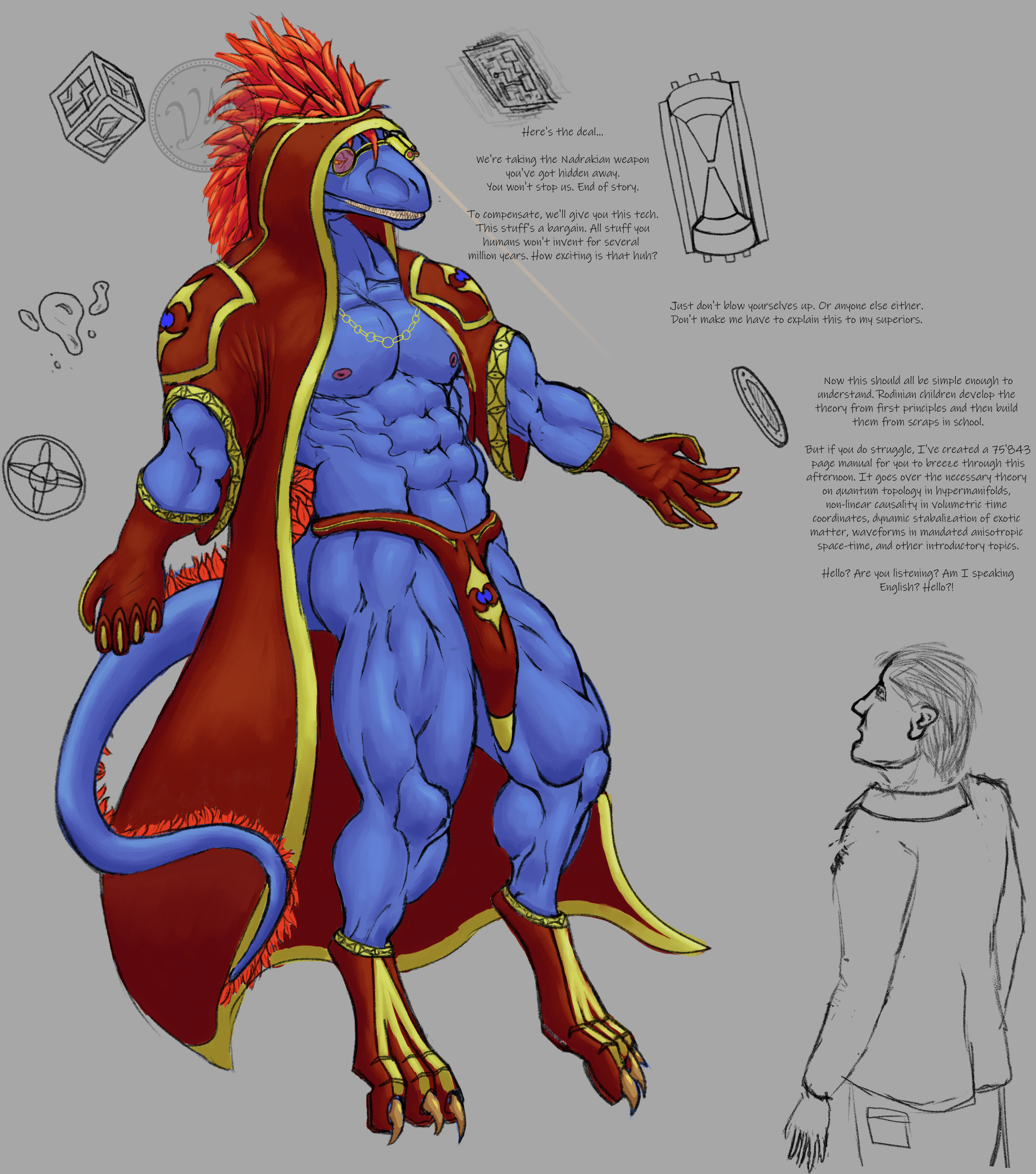
Rodinians don't generally wear armour like most other species, as the durability of their bodies far exceeds that of any material they could wear. There's nothing that'd enhance their durability or survivability in the face of something capable of wounding them, and against such a threat anything on their bodies would be instantly obliterated. What they do wear tends to be made from Mycomatter, which allows it to survive some of the extreme physical movements Rodinians can perform. If a Rodinian wore normal clothing or armour, it would melt, disintegrate, or be torn free during their extreme movements. It also needs to be said that Rodinians have an aversion to clothing and armour, physiologically and culturally. The physiological basis is rooted in their enormously heightened senses, particularly hearing and touch. The sound of clothing brushing, crinkling and rubbing annoys them to no end – and you can be sure those ears of theirs are picking up every twang of thread fibre catching and springing free from the trappings of another surface. Read more.Sexuality
Read more.Religion
Vaalbaran
The Vaalbaran Church is the largest religion among the Creatures of Earth/Rodinians, with an estimated proportion of 45% of the population of Rodinia and the Weave of Worlds classifying themselves as adherents. It takes its name from the first supercontinent in Earth’s history, the supercontinent of Vaalbara, which formed during the Archeon some 3.6 billion to 2.8 billion years ago. It’s no longer known for sure who named it or why Vaalbara was chosen, but it’s believed in the faith’s scriptures that it was chosen to reflect the time period when the Earth’s own soul formed. The Earth’s soul forms the bedrock for this faith. In the Vaalbaran faith, the Earth itself is a godlike entity that is the target of both worship and prayer. Within the faith there are also saints, who are individuals understood to be posthumously resurrected from death by the Earth itself. The most widely known examples of this are the Saints Sovereign – former emperors, empresses and great house lords and matrons of Rodinia who were re-incarnated after their deaths. These Saints are often invoked in prayers and rituals of devotion. Read more.Politics
Political System Overview
The political system of Rodinia is a careful balance of power between the eight historical Great Houses of the Rodinian Aristocracy versus the Imperial Government of the Rodinian People. The system was setup to achieve three goals:- Ensure Rodinian unity.
- Ensure the sovereignty of the Rodinian people.
- Ensure the safety, rights and freedoms of the Rodinian people.
Notable Rodinians
 |
 |
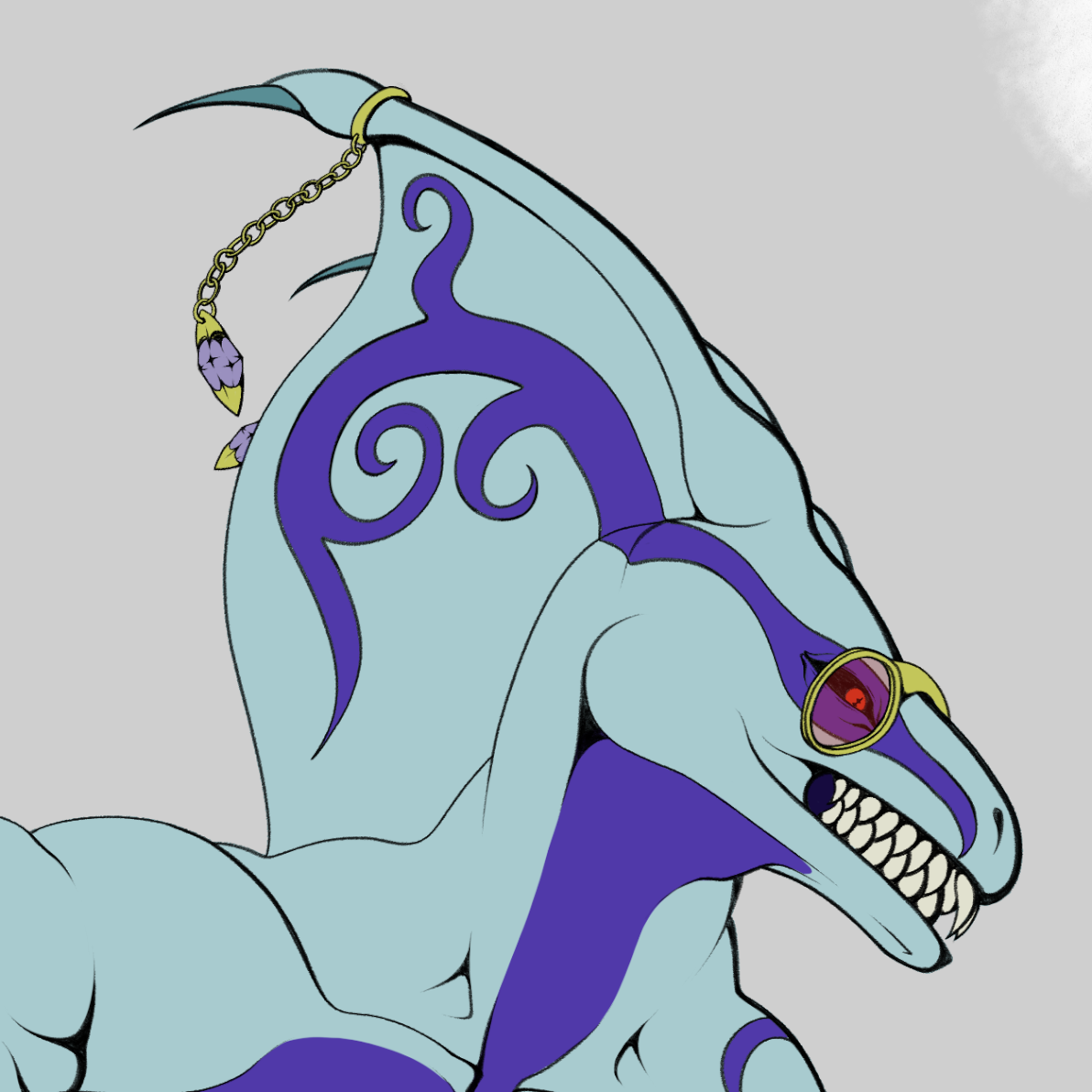 |
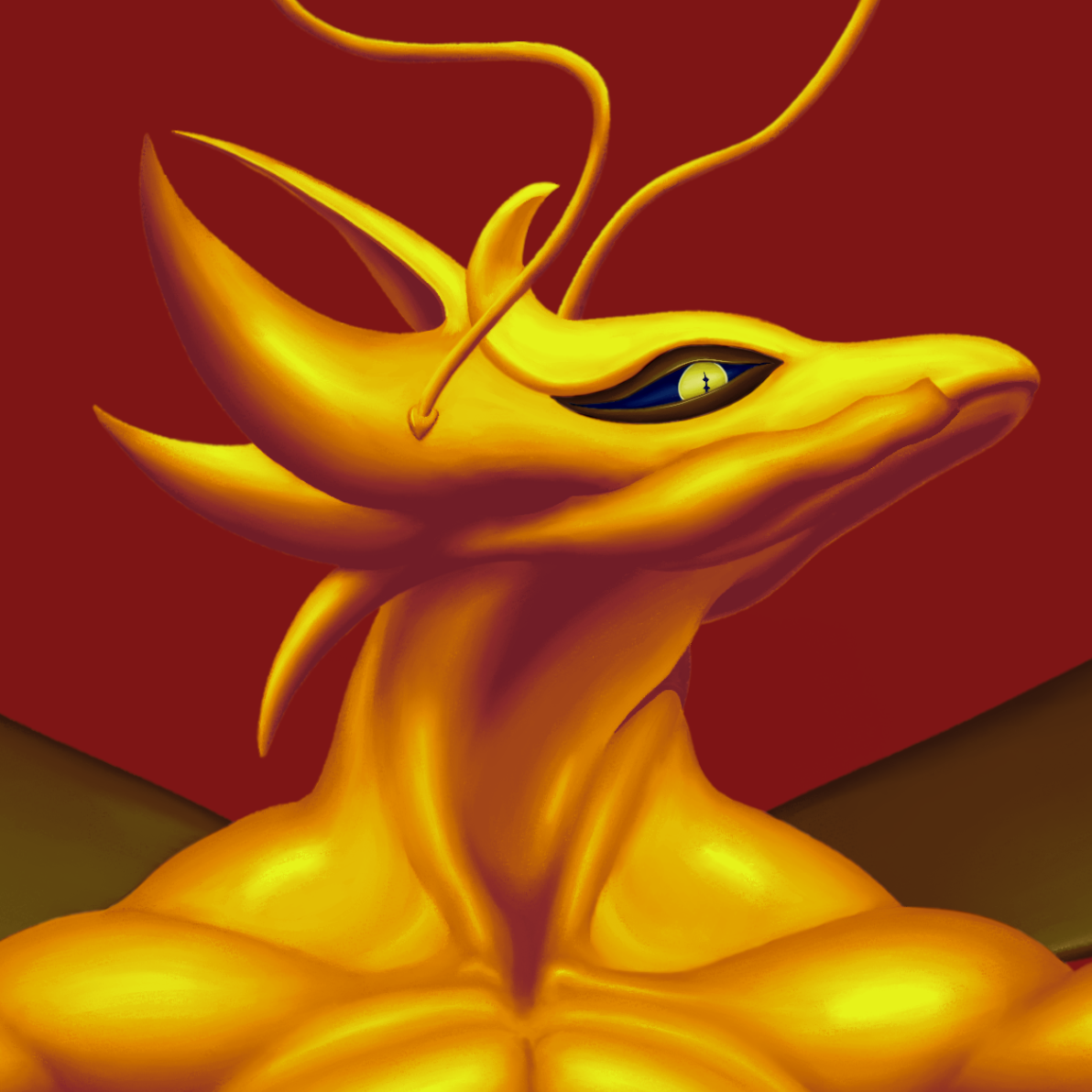
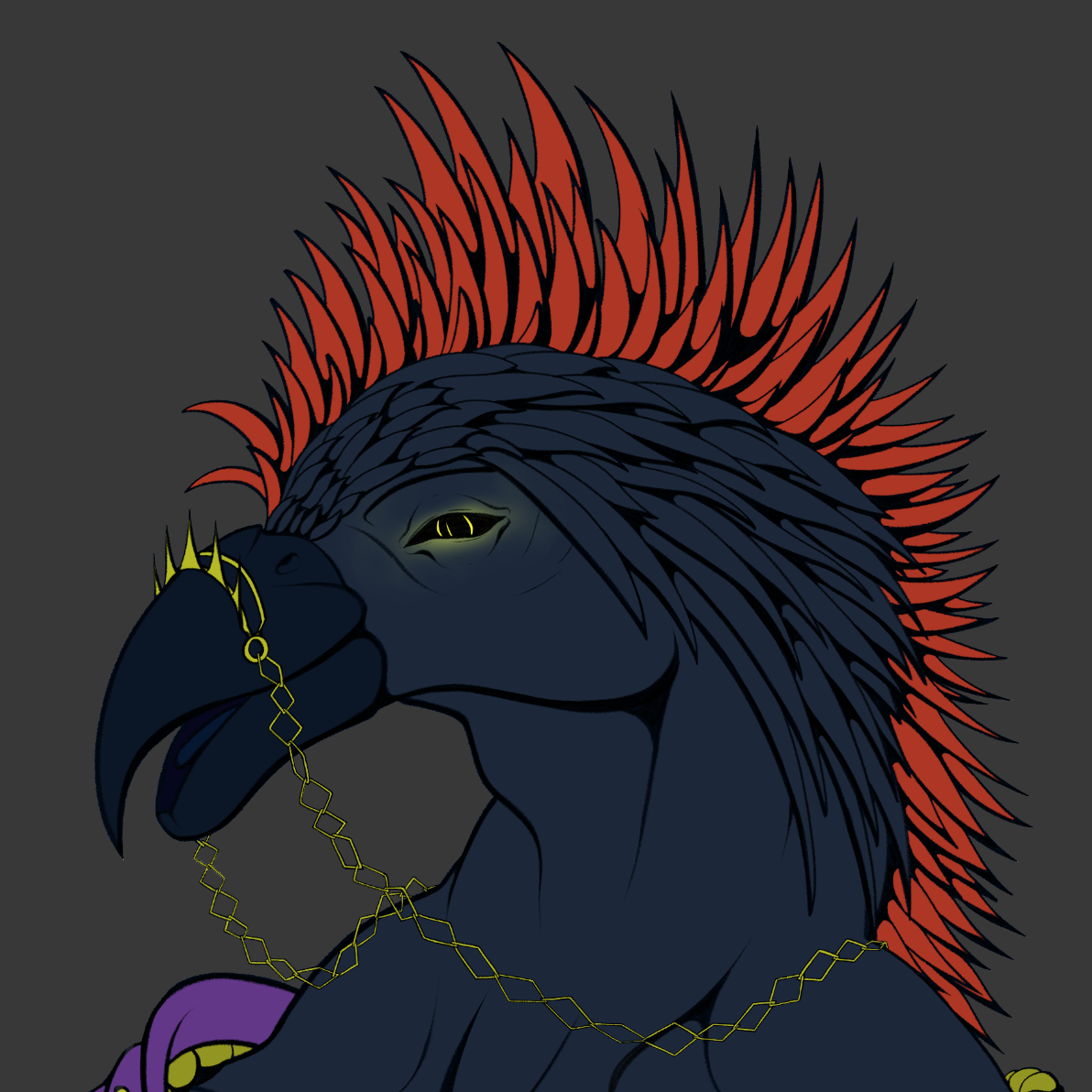
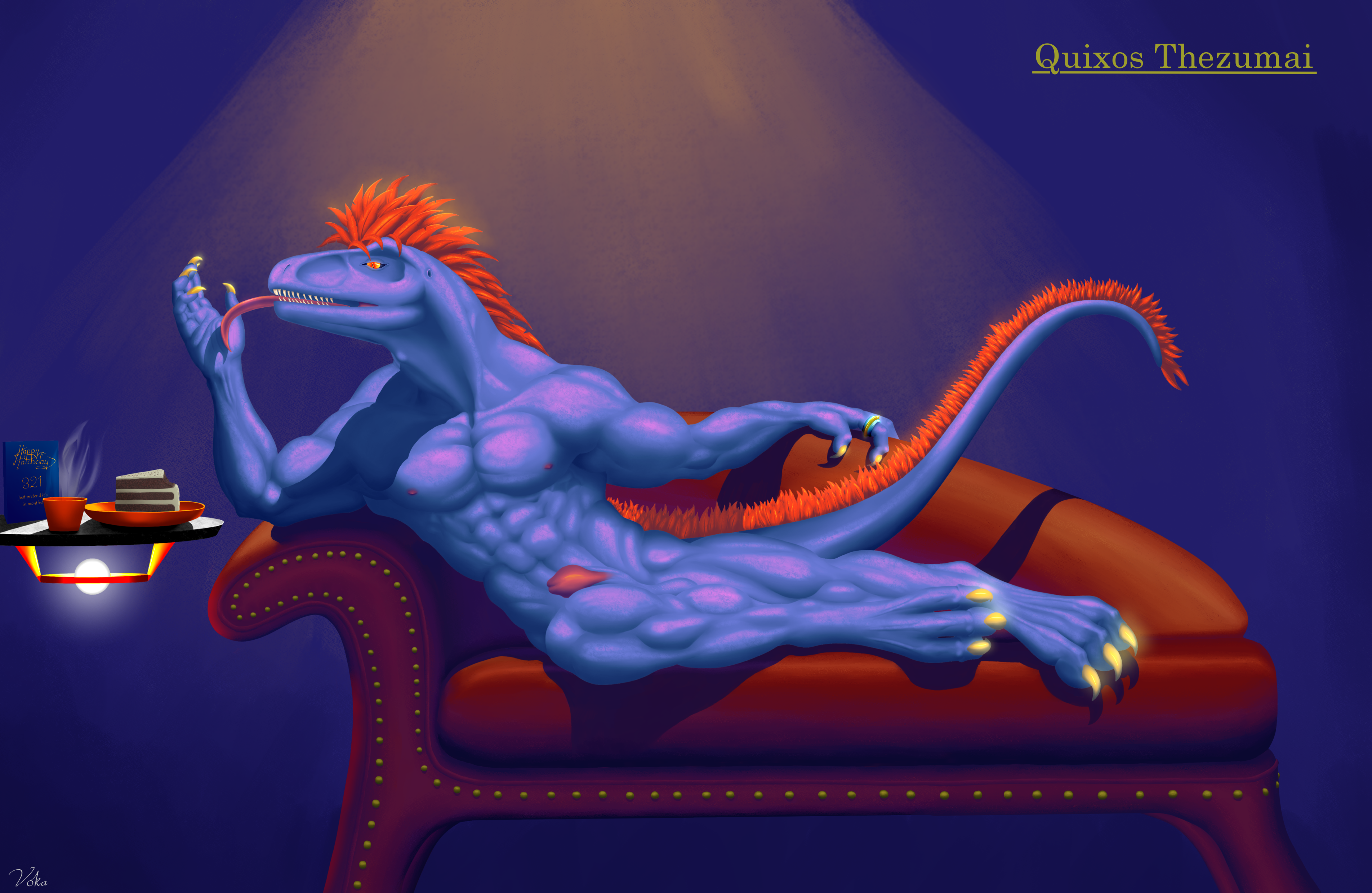
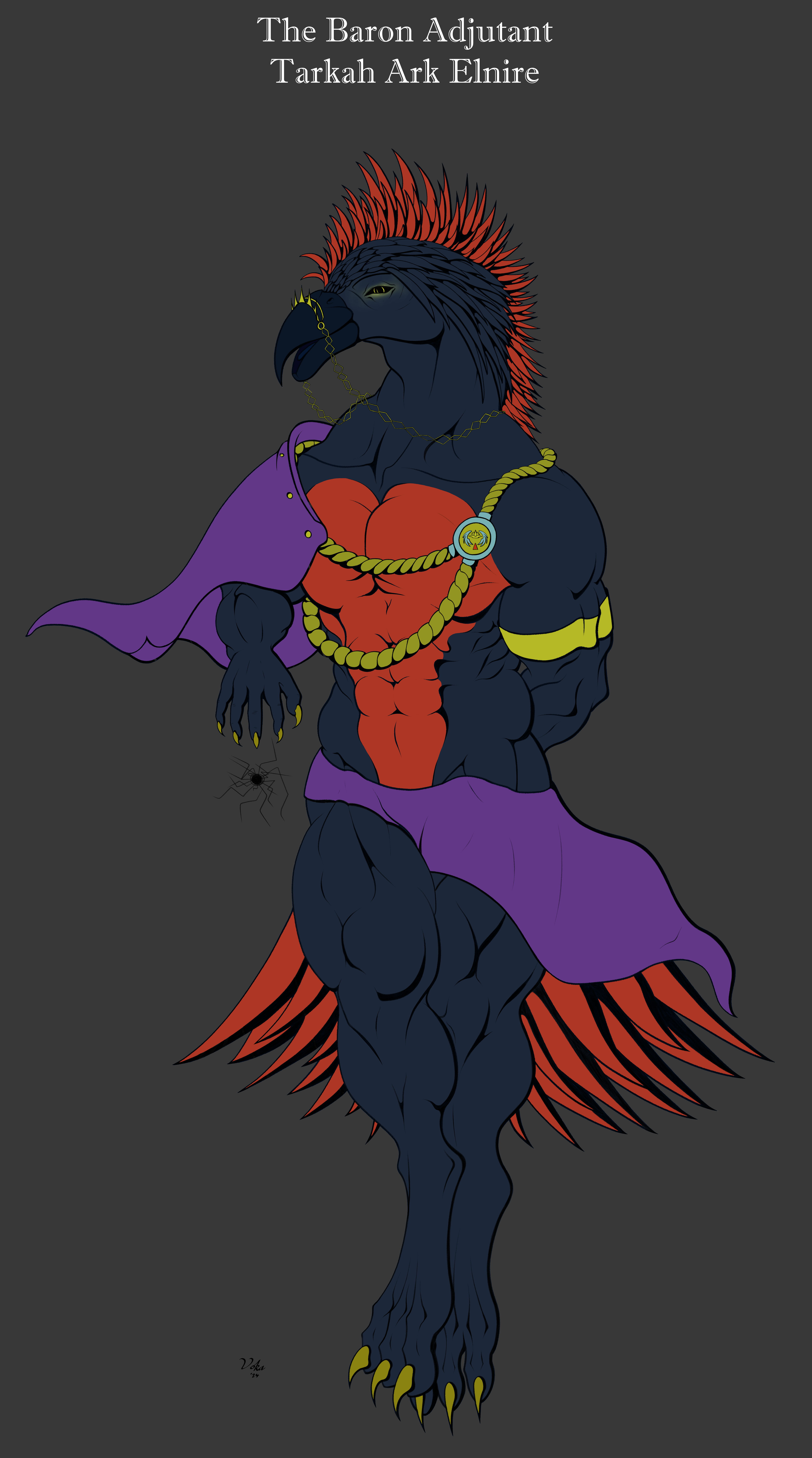
Quixos Thezumai |
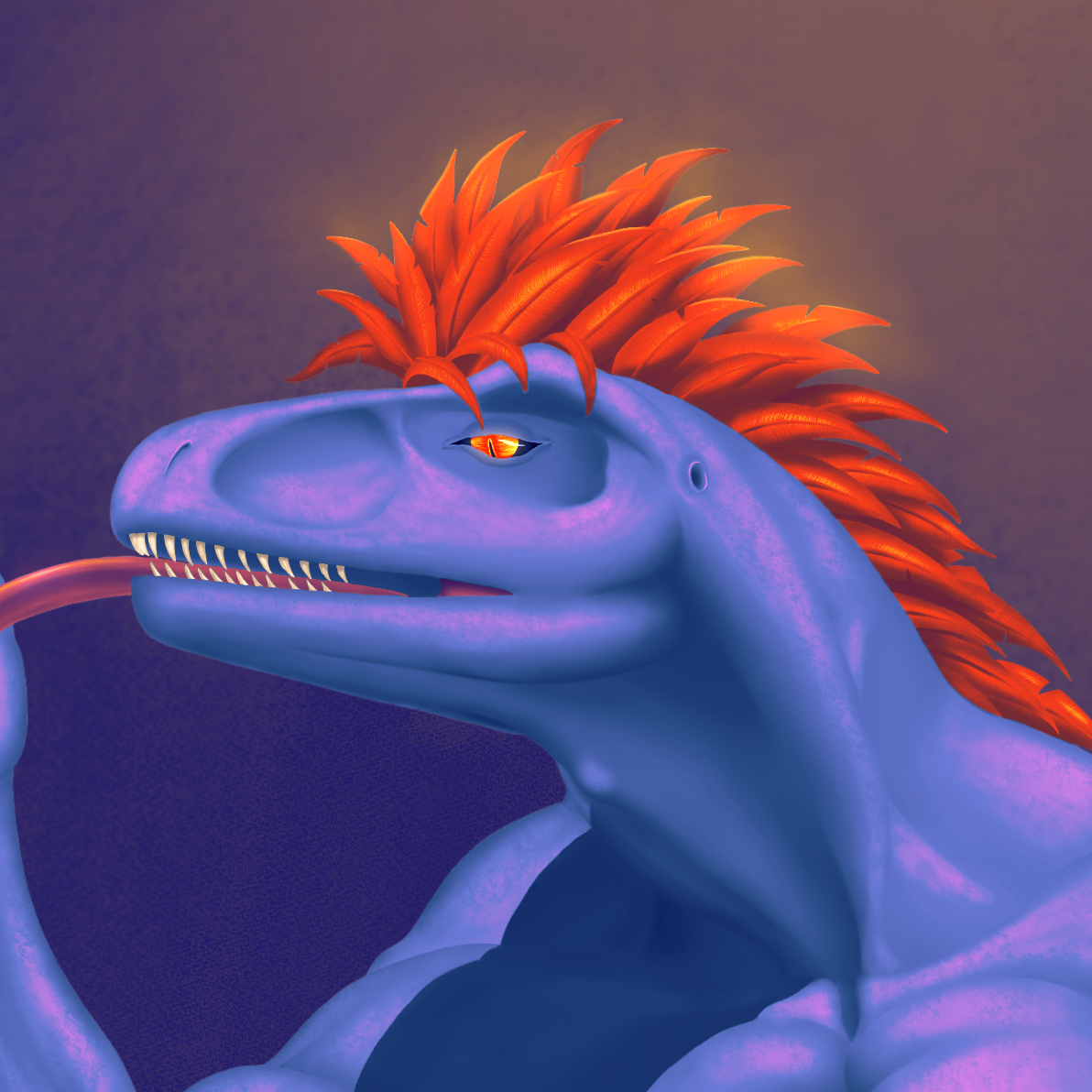
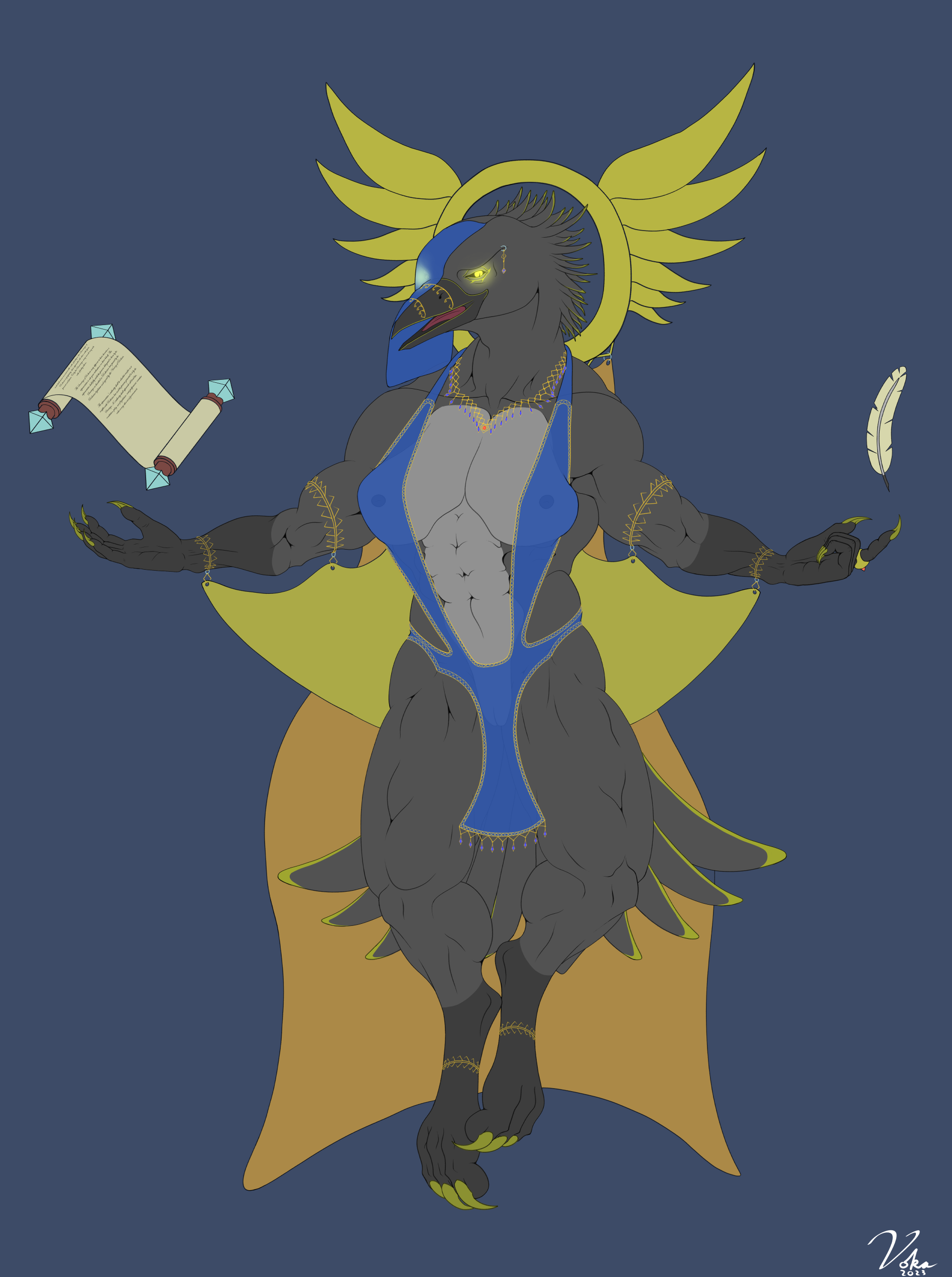
Sameth Jinarius |
|
 |
 |
 |
Contents
The Eight Clades of Rodinian
Kellvass

by Ossian
Visians
(Temnospondylians)
by Ossian
Tenerians
(Gorgonopsians)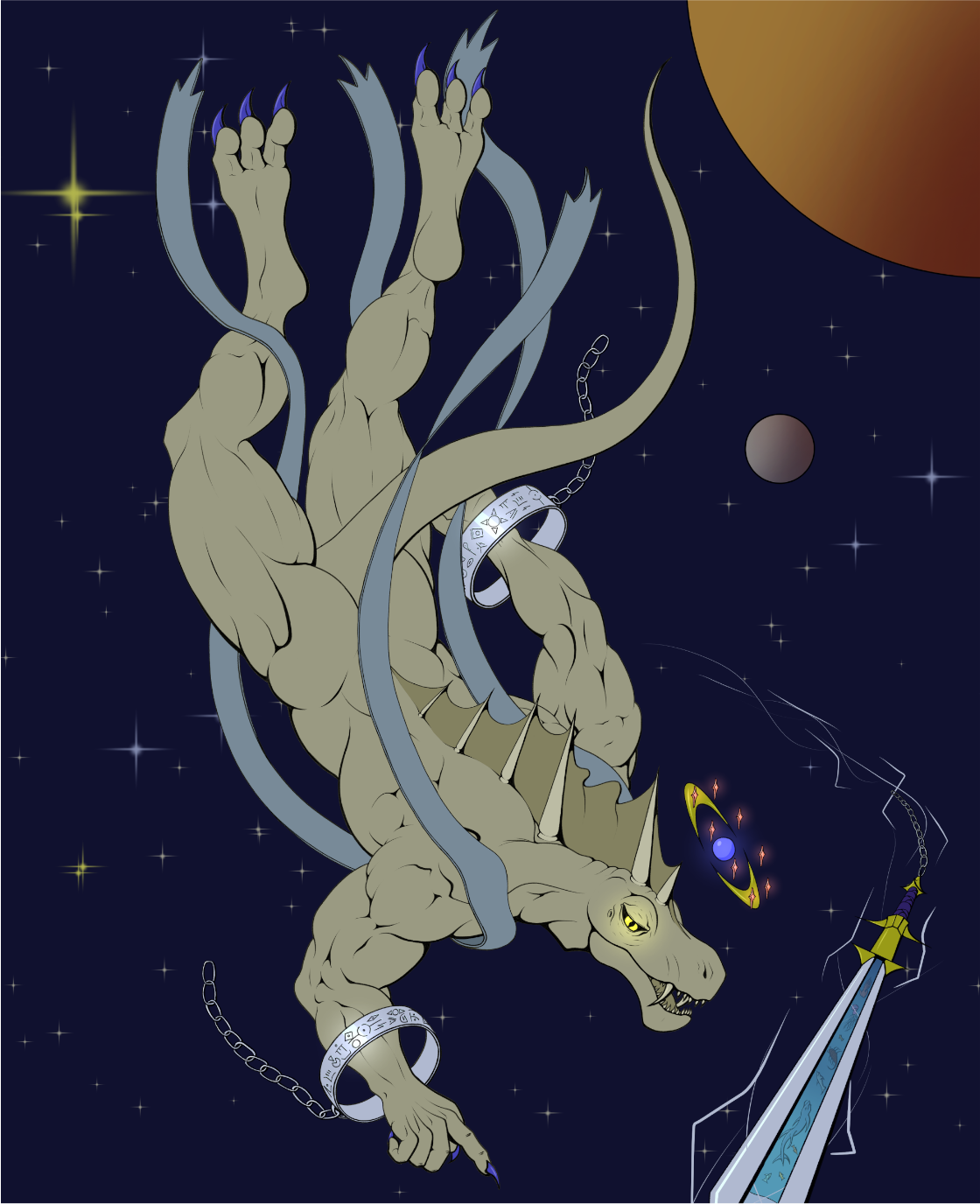
by Ossian
Carnians
(Rhynchocephalians)
by Ossian
Tithonians
(Archaeopterians)
by Ossian
Ophidians
(Squamatans)
by Ossian
Paravians
(Dromaeosauridians)
by Ossian
Rupelians
(Delphinidians)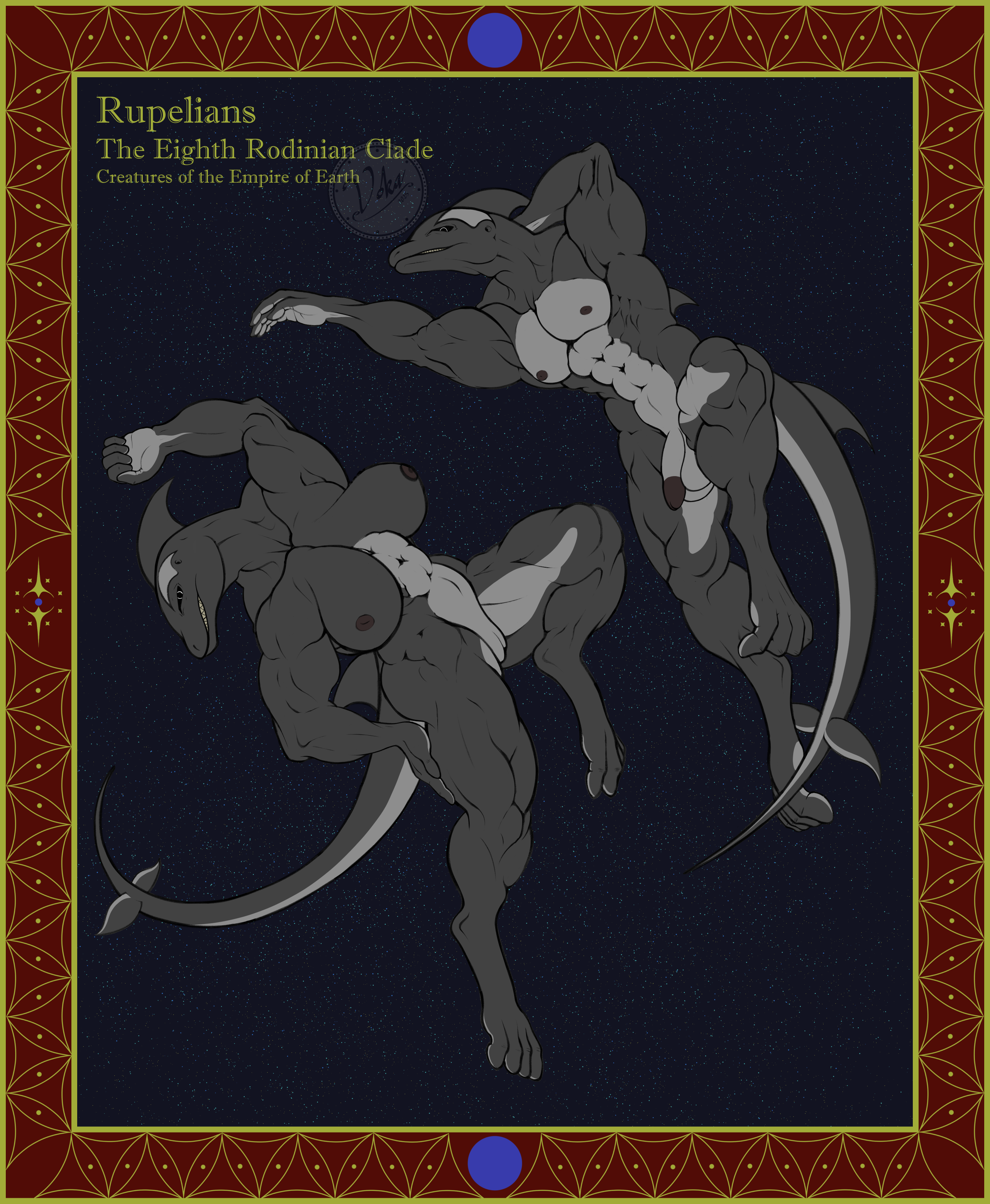



Comments