
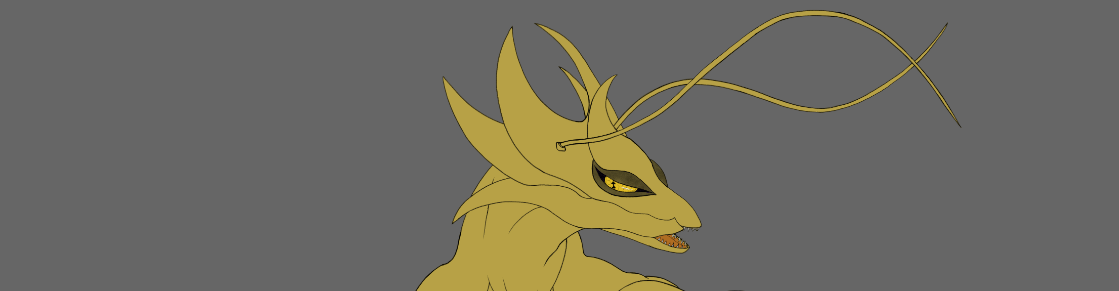
Kellvass
“The Earth’s first-born. The Kellvassian lineage is ancient beyond imagination. Arising before even the trees and the forests, their cumulative history and experience has seen the greatest change in the world.
Patient and focused by nature, and not unused to thinking in the long term, they started the grand social compact that underpins the civilization referred to as the ‘Creatures of Earth’ through realizing that they might not be the only intelligence that could arise from the Earth’s biosphere; and considering the consequences of that with regards to who the Earth would really belong to.
And so, they chose to leave the Earth, and established Rodinia as their new home. Today, Rodinia and its domains are home to eight lineages of intelligent species, all of whom arose from the Earth over the last 375 million years.
They aren’t to be misunderstood as being slow to act in the short term though, or of possessing an aversion to violence as though they were enlightened pacifists, as some have misjudged them to be in the past. They are perfectly capable of thinking over millennia long timescales whilst acting quickly and decisively, with impunity when required. Their only concern has been protecting the Earth from danger, the life it sustains, and their fellow intelligent species that evolved from it.
And it’s a task they are more than up to. They are formidable creatures, honed to the razor’s edge in mind, soul and body through eons of technological and magical self-improvement; tough as mountains, strong as glaciers, quick as lightning, and capable of outsmarting some artificial intelligences.”
Overview
The Kellvass were the first of the intelligent clades to arise from the Earth, 375 million years ago during the late Devonian period of Earth’s history. They originated from a species of large aquatic arachnids descended from the Brontoscorpio, and can be distantly classified under the arachnida class, however morphologically they have significantly diverged into a separate class of creatures altogether. As with all the Rodinians, there's considerable debate about the physical evolution of the Kellvass, their convergence upon the base Rodinian bodyplan, and to what extent this was possibly caused by external factors. This question is complicated by the Hadeon-Archean Fog – a temporal anomaly of unknown causation lasting 100 million years until the beginning of the Archean eon - obscuring the Earth’s distant past from observation . Later species of Rodinian would sometimes find fossils indicating the development of these extremely complex arachnids, including their transitional fossil ancestors, but saw no surviving evidence of their civilization on Earth. Kellvass are usually very logical, patient, unemotional and sometimes difficult to understand and relate to; all psychological hallmarks of their arachnid origins. Their emotions are considered the most alien, as they don’t possess the same range of emotions most other Rodinians possess. Despite their differences however, they're completely devoted to their Rodinian kin through the concept of reciprocal trust, and the enterprise of expanding the society referred to as the ‘Creatures of Earth’. The Kellvass are the architects of the ‘Creatures of Earth’, opting to leave Earth and adopt a long-term plan allowing it to evolve a second race of intelligent creatures. They built the original outer shell of Rodinia and the first segments of the Weave, designed the first concepts of the proto-Rodinian Mycoship, and developed most of the Rodinian’s current understanding of Psikinetics. They've a reputation for wisdom and seniority, and tend to be over-represented in positions of leadership throughout Rodinian society. Kellvass carry some psychological hallmarks of their arachnid origins; they are patient, passive and emotionally rather distant and non-responsive. With their less powerful emotions however, they tend to have a more rational and logical mindset. They are less impulsive and prone to error, preferring to act upon complete information. In this sense they can be quite inertial as a social group. Trust is an important element to Kellvass. As they don’t feel love or attachment in exactly the same way as other Rodinians, the idea of trust becomes Kellvass love and attachment. When a Kellvass trusts someone, that Kellvass is essentially opening themselves up to that person, revealing their weaknesses and trusting this person to help them when they're in need. For a Kellvass, this admission of weakness and seeking of help to address them is basically analogous to their version of love, friendship and attachment. To break a Kellvass’ trust is to break all the certainty they have in their life, and it has a severe impact on their mental health. Reciprocity is important to them. A Kellvass places their trust in others, and as such they will endeavour to honour the trust that others place in them. As such, they tend to be very devoted and committed friends. Kellvass communities endure for eons, as do their friendships and relationships. They are in many ways the glue that binds all the Rodinians together.Basic Information
Anatomy

by Ossian
Genetics and Reproduction
Kellvass reproduce using sexual reproduction as is the case with other Rodinians. They still make use of pheromones, detectable by the antennae of other Kellvass from significant distances, as well as through direct physical contact between any part of their bodies. These pheromones signify the fertility windows of female Kellvass, and general arousal states of both males and females. To respect other Kellvass who may not wish to smell these pheromones, including other Rodinians, it's considered polite to retain these close to one's body underneath the telekinetic Second Skin. Releasing them into the air is normally done in private. Pheromonal scents have a large variety between individuals, meaning that regionally it's possible to track individual Kellvass by their pheromonal scent.
Kellvass no longer "judder", as seen in their other sister scorpion clades, as their bipedal frames make it impractical. In its place however are what're known as 'Juddering Chants'; deep infrasonic vibrations generated within the chest of a male Kellvass that travel down their legs into the ground, and also travel through the air. These chants are picked up by female Kallvass and form part of Kellvass courting rituals. The Rodinian insult of 'Judderer' or 'Juddering [expletive]' comes from this; in the context of the insult, it means someone who is desperate to a reckless and undignified degree, not always in a sexual sense.
Courtship typically begins with chemical signaling via pheromones, where females signal fertility and openness to breed. These are picked up by male Kellvass, and any prospective mate responds with their own. The male then "sings" using Juddering Chants as part of their overall presentation. Louder chants with more perfect timing between beats are considered by attractive over weaker, arrhythmic chants. It's worth noting that Kellvass can judder at the same time as normal vocalizations, as juddering occurs through rapid supersonic expansion of their chest cavity. These chants are dangerous to non-Rodinians, reaching 188 decibels. Even though frequencies lower than 20Hz can't be heard, they can cause disorientation, nausea, anxiety and potentially rupture small blood vessels.
Kellvass mating is often performed either standing upright or using telekinetic flight in an upright position, with both partners facing each other and embracing. They slowly rotate in this combined position until finished, a dance called the Kellvassian Binary.
Mirroring the gestational qualities of their parent clade, Kellvass continue the distinguishing trait of most scorpions being unique among arachnids by giving live birth to their young. Gestation for Kellvass typically takes up to two years as it does for most Rodinians.
Groups of related Kellvass offspring from a single female are referred to as broods, and these typically range in size from two to four broodlings. Lone broodling births are uncommon.
Kellvass broodlings are exceptionally 'clingy', and will spend much of their first week in direct physical contact with their mother, becoming distressed if separated. This is an evolutionary remnant deeply embedded in their instincts as a clade, where it's common for scorpion broods to ride on the mother's back during their first molts. Kellvass broodlings absorb spiritual dyne directly from their mothers during this period, contributing to the Kellvass' quicker initial growth and spiritual development compared to other Rodinians. The Kellvass ability to transfer spiritual dyne through physical touch developed as a consequence of this.
Growth Rate & Stages
Newly born broodlings emerge with a soft proto-mycokeratin shell. This shell hardens into a full, hard shell similar to the exoskeletons of their distant ancestors. This is an evolutionary remnant, and doesn't persist beyond their first moulting. The shell itself is mostly keratin laced with the Mycelium of Ruetta and nucleonic matter for structural reinforcement. It completely protects them from mundane threats until it falls off during their first moult.
Kellvass will remain in close contact with their mother for their first seven days of life, absorbing spiritual dyne directly from her. This accelerates their physical and spiritual development. They must be fed liquified, pureed solids. Between days seven and ten, they moult for the first time and lose the hard mycokeratin shell, emerging with a softer exoskeleton more closely resembling modern day Kellvass. They become known as instars after the first moult, and are no longer called broodlings.
Kellvass instars undergo a further nine moults with gradually increasing periods of time between each one. At each moulting, they'll noticeably grow in size, their exoskeleton will soften further, and their endoskeleton will further strengthen. They'll also increasingly gain the ability to consume solid foods in a greater capacity. The final involuntary, developmental moulting occurs between the ages of 26 and 30, and is the moment they're considered a full adult and sexually mature.
NB: times are in human time format.
Moulting for Kellvass is a stressful affair, as their body undergoes a limited form of recomposition. Prior to the moult, they fall into a deep sleep called the 'Moult Sleep', where they remain unconscious and immobile for its duration. Their body rapidly consumes stores of fat, and excess proteins and minerals during the moult as it reinforces the endoskeleton and recreates a softer exoskeleton. This is why Kellvass gain a ravenous appetite in the days and weeks leading up to a moult as their body seeks to build calorie and nutrient reserves. They must not be disturbed during the process, as this can result in a failed moult, resulting in malformed bones, misaligned limbs and joints, fractures in the new exoskeleton, and infections. Failed moults usually require medical intervention. A failure to build sufficient calorie and mineral reserves can also result in a failed moult, as well as osteoporosis and brittle exoskeletons (as opposed to soft and pliable ones) for the duration of the next instar until they moult again. Moults can be delayed, either through conscious will or medicinal interventions, but this is unwise. Kellvass feel a building instinctual urge to moult akin to the urge to breath after holding one's breath. The Moult Sleep descends on them like a cloud of exhaustion forcing their eyes to close and their mind to sleep. The purpose of the moult is to increase the volume of their exoskeleton to accommodate new growth, and to reinforce their endoskeleton as it gradually prepares to take over the role of providing primary support for their body. Therefore delaying a moult increases the interior pressure their internal organs are under as they run out of space within the old exoskeleton. It also runs the risk of breaking a bone in their endoskeleton as their weight increases without an accompanying reinforcement of the endoskeleton. Sometimes however delaying a moult is necessary if sufficient calorie and mineral reserves haven't built up in time. After the Final Instar's moulting, Kellvass individuals are fully grown and won't be required to involuntarily moult again, with a few caveats. Voluntary moults can be initiated however, and these allow Kellvass to alter their body at will whereas other Rodinians require advanced psikinetics or the attentions of qualified Healers to undergo significant alterations. Kellvass can change their exoskeleton consistency, color, texture and shape. If they gain or lose substantial amounts of muscle mass however, then the interior pressure changes within their exoskeleton will eventually trigger Moult Sleep and another involuntary moult.
| Moult Stage | Approximate Age | Moult Duration |
| Broodling | 7 - 10 days | 6 hours |
| First Instar | 120 - 150 days | 24 hours |
| Second Instar | 330 - 360 days | 26 days |
| Third Instar | Two years | 26 hours |
| Fourth Instar | Four years | 32 hours |
| Commencement Instar | Seven Years | 36 hours |
| Sixth Instar | Eleven years | 36 hours |
| Seventh Instar | Sixteen years | 48 hours |
| Penultimate Instar | 22 years | 48 hours |
| Final Instar | 29 years | 72 hours |
Moulting for Kellvass is a stressful affair, as their body undergoes a limited form of recomposition. Prior to the moult, they fall into a deep sleep called the 'Moult Sleep', where they remain unconscious and immobile for its duration. Their body rapidly consumes stores of fat, and excess proteins and minerals during the moult as it reinforces the endoskeleton and recreates a softer exoskeleton. This is why Kellvass gain a ravenous appetite in the days and weeks leading up to a moult as their body seeks to build calorie and nutrient reserves. They must not be disturbed during the process, as this can result in a failed moult, resulting in malformed bones, misaligned limbs and joints, fractures in the new exoskeleton, and infections. Failed moults usually require medical intervention. A failure to build sufficient calorie and mineral reserves can also result in a failed moult, as well as osteoporosis and brittle exoskeletons (as opposed to soft and pliable ones) for the duration of the next instar until they moult again. Moults can be delayed, either through conscious will or medicinal interventions, but this is unwise. Kellvass feel a building instinctual urge to moult akin to the urge to breath after holding one's breath. The Moult Sleep descends on them like a cloud of exhaustion forcing their eyes to close and their mind to sleep. The purpose of the moult is to increase the volume of their exoskeleton to accommodate new growth, and to reinforce their endoskeleton as it gradually prepares to take over the role of providing primary support for their body. Therefore delaying a moult increases the interior pressure their internal organs are under as they run out of space within the old exoskeleton. It also runs the risk of breaking a bone in their endoskeleton as their weight increases without an accompanying reinforcement of the endoskeleton. Sometimes however delaying a moult is necessary if sufficient calorie and mineral reserves haven't built up in time. After the Final Instar's moulting, Kellvass individuals are fully grown and won't be required to involuntarily moult again, with a few caveats. Voluntary moults can be initiated however, and these allow Kellvass to alter their body at will whereas other Rodinians require advanced psikinetics or the attentions of qualified Healers to undergo significant alterations. Kellvass can change their exoskeleton consistency, color, texture and shape. If they gain or lose substantial amounts of muscle mass however, then the interior pressure changes within their exoskeleton will eventually trigger Moult Sleep and another involuntary moult.
Limb Reconfiguration
Kellvass can change their limb configuration, exchanging a pair of arms for a pair of wings or vice versa. They can also change their height, the length of limbs, the shape of their tails, the number of digits on their hands and feet, the shape of antennae, and more. Doing this however requires more than a simple moult, and something more akin to a chrysalis. It can only be achieved by fully mature Kellvass, and requires considerable preparation. Large reserves of minerals and calories must be built, which may require a voluntary moult to fully accommodate. They create a cocoon from their own silk, and will suspend themselves from a structure able to support their weight. The Kellvass then enters into Moult Sleep and remains deathly still for up to a week. During this process, superfluous limbs no longer required are broken down and absorbed into the body whilst new limbs are grown. At the end of the process, the Kellvass re-emerges from the cocoon transformed according to their wishes. The process is very much guided by their subconscious mind from within the Moult Sleep using psikinetics, granting the process its formidable speed.Behaviour
Kellvass feel attachment based on how much they trust someone, as they don't feel love in the same way the Earth's later intelligent species do. This trust is rooted in the notion of dependency - how much they might need to depend on someone when they are facing a challenge they can't overcome on their own. This goes from neutral for strangers (the person is not a threat, but also not expected to reciprocate favours or act selflessly towards the Kellvass), to what can be considered "love" for them (the person is expected to strongly act selflessly towards the Kellvass and reciprocate favours). In return, Kellvass will proportionally act selflessly towards those they believe they can trust.
As a corollary, they only reproduce with others they strongly trust, as raising offspring is a stressful job that they would very much rather not do alone. As they are sociable creatures with a strong fear of being alone, they only treat someone as a "friend" if they trust that the person won't abandon them, forget about them, be mean to them, or push them aside. They can be quite clingy as friends, but it comes with a strong reciprocation, i.e. they'll do their best to be there for you. Finally, breaking their trust is a serious offence to them. It's basically a broken friendship, and depending on the severity can cause them to deteriorate psychologically.
The primitive ancestors of the Kellvass were ambush predators, hiding within the nascent flora of Earth’s early coastlines watching and waiting for their prey. They were solitary creatures, and they lacked a sophisticated emotional intelligence. As these creatures moved further inland and grew larger in size, their intellects grew in breadth and depth.
Their method of early hunting seems to have imparted upon them a mindset that's very patient. Kellvass don’t expect instant results from their endeavors, and find it easier to envision and commit themselves to long term plans than other Rodinians. Their lack of sophisticated emotions also means their intellects tend to be more analytical, logical and rational than other Rodinians.
Their hunting practices usually took place at night as well, when certain other predators were asleep. Consequently they're nocturnal creatures, being more active during the night hours than day.
Modern day Kellvass are very sociable, and often live as part of great extended family units called Burrows. They tend to not persist very well for long periods of time in social isolation, and will gravitate towards new social groupings if they're not currently within one. This can often be Rodinians of a differing species from them; it doesn't need to be other Kellvass they spend their time with.
Due to not possessing mouths where they can chew, Kellvass must either consume food whole in small pieces or, for larger meals, consume a softer liquified version. Eating is considered a private matter for them due to how different they are from other Rodinians in this respect.
Additional Information
Perception and Sensory Capabilities
Kellvass smell using their antennae. These've been designed as the most sensitive olfactory organs in the known universe. They contain vertical folds running the length of the antennae increasing their surface area, and hence the number of olfactory receptors crammed into them. Kellvass antennae each contain as many as fifty billion receptors, with the entire exterior folded lining consisting of nothing but olfactory receptor cells. These are individually sensitive enough to detect only a single molecule and alert the Kellvass to it. With this, they can track scents from arbitrary distances, as far as the molecules can travel, and resolve scents as weak as one part in 1035 (one molecule in an Olympic sized swimming pool).
Kellvass antennae are more sensitive to changes in atmospheric properties than is the case for other Rodinians' sense of touch or their own sense of touch, such as pressure, temperature, humidity, weather, sound, and chemical/elemental composition. As such they're the record holders for picking up on changes in these properties, including the olfactory sense.
Compared to other Rodinians however, their eyesight is generally poorer (but still shockingly far above what any other eyes in the universe can ever accomplish). Compared to other Rodinians they don't perceive as many colors, and don't have the same spatial resolution either. If other Rodinians on Earth could see a human on the surface of the Moon with their naked eye for example, then a Kellvass would only resolve a large building, such as the Pentagon.
Civilization and Culture
History
Evolution
418 million years ago during the early Devonian (Lochkovian stage), a new class of omnivorous arachnids split off from the scorpion order, evolving from the now extinct Bronotscorpion Anglicus. These omnivorous arachnids possessed an evolution in their gut microbiota allowing them to break down and absorb protein and nutrients from early Devonian period's plant, fungi and moss rapidly greening the lands (analogous to what's observed with some modern day cockroaches, earwigs, beetles and ants). Whilst initially semi-aquatic, the opportunities for new food sources on land, combined with this allowing for prolonged escape from aquatic predation, pushed them towards developing book-lungs, allowing for permanent migration onto the land. Their exoskeleton also allowed for greater support out of water, however it limited their size from increasing further. Due to their size as inherited from Bronotscorpion Anglicus, these omnivorous land-dwelling bronotscorio were apex predators, feeding easily on other, smaller arthropods. When predation yielded lower than optimal food sources, the species could resort to feeding on the flora and fungi at the time, such as the towering fungal prototaxites. 413 million years ago, the beginnings of a closed circulatory system began developing, perhaps assisting their large size with the additional effort of moving on land versus water, through delivering oxygenated and nutrient rich hemocyte directly into the muscle tissue of the legs. This system continued to show signs of increased systemic development, with their arthropod open circulatory system slowly becoming obsolete as it was supplanted by the higher performance closed system. The movement to land combined with the animal's large size also seemed to favor a transition to a primarily endoskeletal-based support structure, though for a few million years it seems as though a complementary system existed. The legs initially moved towards being mostly endoskeletal, allowing for more articulate and powerful musculature. The organs within the thorax and abdomen continued to be encased within an exoskeleton for the foreseeable future until major changes occurred in their anatomy millions of years later. The next milestone in Kellvass evolution was the development of eusocial tendencies, marking the origins of their eusocial dynamics. The Kellvass ascertained that eusocial groupings emerged around 410 million years ago, evidenced by a small handful of fossils involving large numbers of their ancestral kin within close proximity to one another; so-called fossilized hives. There's early evidence for the cultivation of fungi and plants within these hives, including elaborate underground tunnel structures. The presence of intelligence at this stage is still hotly debated among Rodinian paleontologists. The convergence upon the Rodinian bodyplan occurs afterwards, and marks one of the great mysteries intrinsic to life on Earth; the repeat convergence upon the same approximate bodyplan for its intelligent species. The Kellvass are the most obvious example of something going beyond the mere energy efficiency of bipedal arrangements. The Kellvass class, separately from gnathostomes (jawed vertebrates), evolved both myoglobin in their muscles and then hemoglobin for oxygen transport, whilst their cardiovascular system completed its transition to being fully closed. Their booklungs increased in size, and these changes allowed for the development of a larger and more complex, energy intensive brain through increased oxygen and nutrient availability. It's suspected that perhaps their species began intensive cultivation of not only multiple species of plant and fungi, but also breeding and cultivation of other arachnids for food sources. Planning, coordination and conservation of food sources emphasized greater planning ability. Concurrently, their morphology changed. The leading explanation put forward involved competitive pressures from other descendant groups of the Bronotscorpion Anglicus common ancestor, that began pushing the Kellvass lineage towards faster, more agile and more energy efficient predation through hunting – and conflict. They sacrificed one or more limbs to develop tool-using appendages, whilst retaining one or two pairs of legs. Their abdomens decreased in size as their organs coalesced into a single cavity in the thorax. This eventually became bipedalism, with a variety of adaptations of the remaining three pairs depending on the needs of the hive. Their bodies also completed their transition to a primarily endoskeletal-based structure, however they did continue to maintain a softer, lighter exoskeleton. The modern Kellvass were established at this point, 375 million years ago, and would go on radiate into the Kellvass clade of Rodinians, containing the multiple intelligent genera and species of Kellvass Rodinian known today. Many common ancestors carrying the various traits that evolved from Brontoscorpion Anglicus existed during the Devonian, and a few have been discovered by the various subsequent species and classes of Rodinians, leading them to suspect the evolution of an intelligent species of arthropod-derived creatures. With the exception of the intelligent Kellvass themselves, the entire Brontoscorpion Anglicus lineage became extinct during the Kellwasser extinction event at the end of the Devonian Period (caused in large part by the Kellvass themselves).Civilization
The Kellvass developed industry and technology largely off the back of a large scale biogas economy. As the major coal, oil and natural gas deposits of the Earth didn't exist yet (coal seams wouldn't be laid down until after the end of the Carboniferous Period, for example), the Kellvass required an alternative source of carbon-based energy. Utilizing the primitive plant and fungal life of the time (particularly prototaxites and related species), they created a methane-based biogas industry to power their civilization. This supported them during their industrial revolution and subsequent era of electronics and low-orbit space development until they switched to nuclear and renewables. The impact of their actions during the genesis years of their civilization would have consequences for them centuries later. In having exposed almost all of the available land surface of the Earth to extensive forestation to power their biogas economy, they caused a large drop in CO2 levels in the atmosphere that began to cool the planet. The cooling affected terrestrial species, and made life challenging in polar regions. At the same time, runoff phosphates from this mass-agriculture, combined with increased weathering of rocks from vastly increasing plant root activity, lead to oceanic eutrophication. This created vast anoxic zones in the oceans where cyanobacteria produced lethal hydrogen sulphide gas. Oxygen-depletion and hydrogen sulphide killed almost 50% of marine genera, and caused localized depletions of ozone in the atmosphere. The increased UV exposure risk, and hydrogen sulphide risks, lead to the Kellvass pressing onwards with the construction of a new home: Rodinia.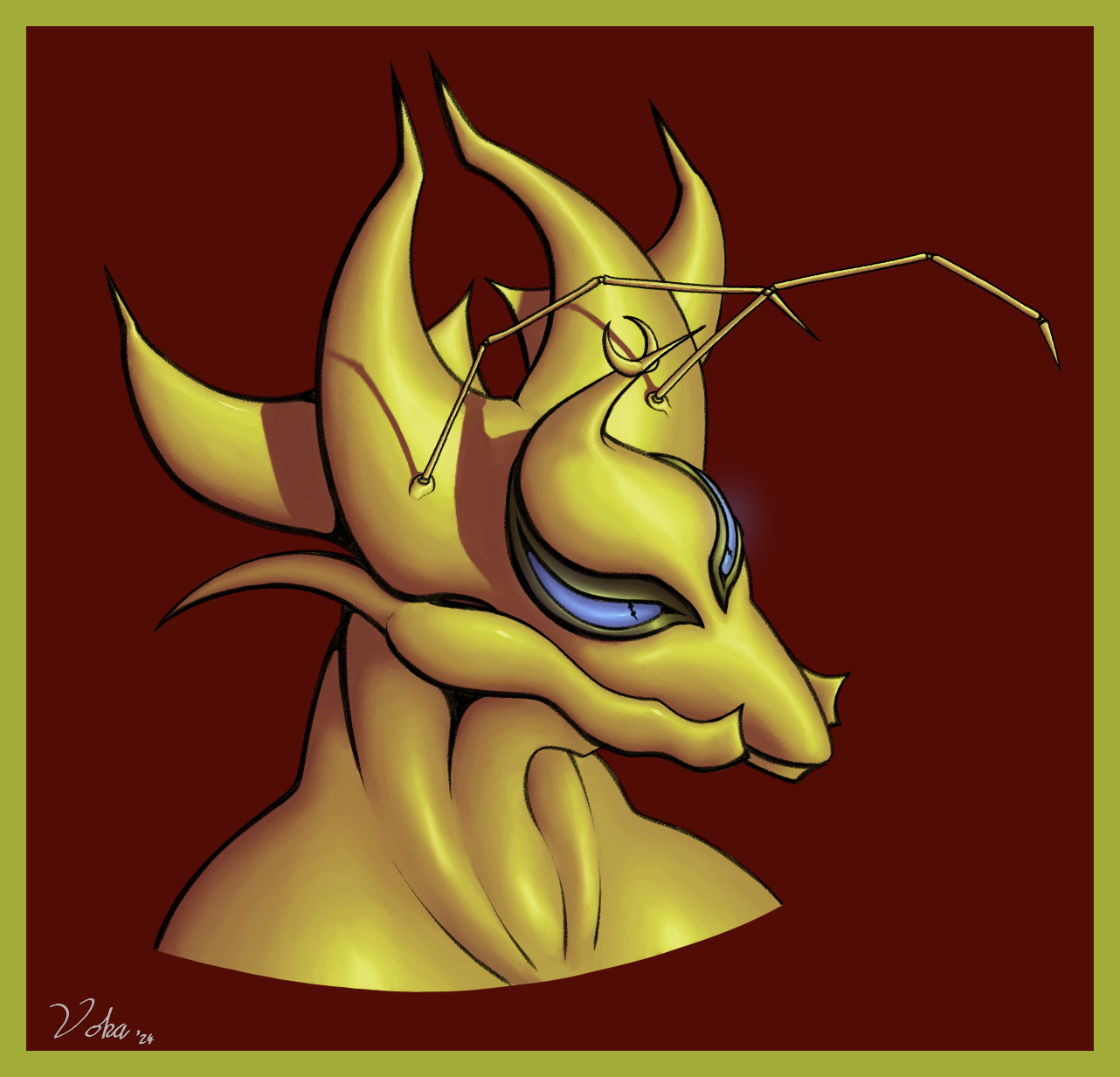
by Ossian
Contents
Scientific Name
Arachnida
Lifespan
Immortal
Conservation Status
Least Concern
Average Height
Metres: 2.28 to 2.59
Feet/Inches: 7'6 to 8'6
Average Weight
Kilograms: 410 to 550
Pounds: 903 to 1212
Average Length
(Tail)
Metres: 1.71
Feet/Inches: 5'7
Geographic Distribution
Phanero-brontoscorpio
Arachnidians

Comments