
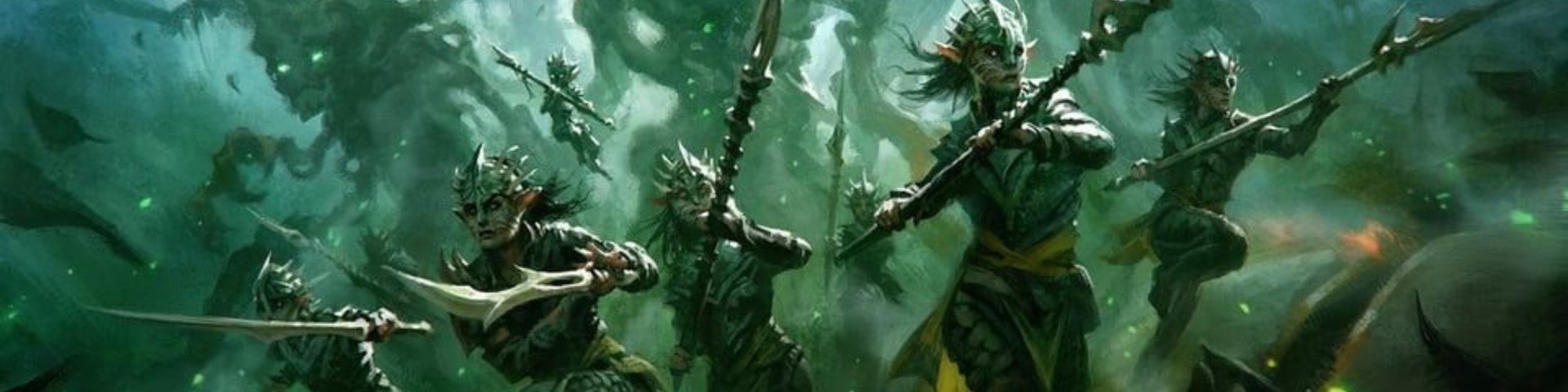
Elves
"Did you really just ask 'what are the elves'? Alright, I shall enlighten you. We elves are unknowable. We are unyielding and unerring. We are unending. We, my inquisitive mortal friend, are dreams made manifest and magic incarnate. And like magic itself, this sphere is made more marvelous by our mere presence within it."-Giyas Ghaladreal, Frypaurhuade Qha Svaumei (Lord Steward of Fryllyen)
Elves are Mortal Fey who dwell across Aemaphia. Descendants of the diaphanous Aldra, vaguely elemental Bright Fey who served as administrator between the common Native Fey of the Vaarner Faeryi and the exalted Fey Lords of the Mysts of Myth, elves maintain the aloof posture and haughty attitude characteristic of their ancestral position. In their own sacred tongue of Avuhuash, they call themselves Elivei, meaning “Superior,” a term both proud and aspirational. As a species, they are astonishingly diverse, having adapted over millennia to nearly every known biome of Aemaphia—from the eternal snows of Fryllyen to the twilight jungles of Arthesia. Despite the multitude of ethnic, cultural, and phenotypical differences between their peoples, all elves—whether members of the Seelie Court or the Unseelie, highborn or renegade—acknowledge themselves as part of the Eliveilean, the greater family of Elvenkind.
This shared lineage bestows them with an otherworldly allure inherited from their Aldric progenitors. All Eliveilean possess features that blur the line between the divine and the earthly: flawless skin in rich tones of bark, loam, or moonlit stone; shimmering, unblemished hair that seems to glow faintly in the dark; and large, raptor-like eyes in hues of amber, honey, or molten bronze. To behold an elf is to glimpse a living myth, a being whose presence evokes awe, curiosity, and quiet dread. Though mortal in flesh and bound by the limits of the Temporal Realm, they wear their years like a silken veil and speak with the patience of rivers. The Eliveilean are not just inhabitants of Aemaphia; they are living relics of its oldest dreams.
Basic Information
Anatomy
"In the study of Morphologea, there is no subject more frustratingly elegant than the Elivei. They appear as mortals, yet metabolize like spirits; they require sustenance, yet can fast for moons on mere starlight and song. Their tissues resist decay, their blood carries hints of lightless forest winds, and their senses defy Terran logic. How does one chart a pulse that dances in rhythm with thought, or eyes that shimmer in response to poetry?"-Virel ir'Thandrose, Professor Emeritus of Morphologea Alpesan, Imperial University of Reignhold
Elves of Aemaphia possess a humanoid physique, exhibiting only minor sexual dimorphism. Males and females share a similarly lithe yet durable frame, with an average height of around six feet and a weight of approximately 140 pounds. Their bodies are finely proportioned, with elongated limbs that grant them an inherent grace and fluidity of movement. Unlike Terrans, elves have an exceptionally efficient metabolism that minimizes excess body fat while maintaining strong, sinewy musculature. This, combined with their resilient bone structure, makes them deceptively hardy despite their slender build. Though they are mortal, their bodies resist aging with remarkable efficiency, allowing them to retain their youthful appearance for centuries.
What sets elves apart from other mortal beings are the distinct features inherited from their Aldra ancestors. Their most striking trait is their large, honey-colored raptor-like eyes, which dominate their facial structure, granting them an unparalleled range of vision, keen perception, and exceptional low-light sight. Their long, stiff eyebrows extend outward like feline whiskers, serving both an aesthetic and sensory function, detecting subtle changes in wind currents and movement. Their ears, elegantly pointed and measuring around six inches in length, possess an acute sensitivity to sound, allowing them to perceive frequencies beyond human capability. Their skin is a range of dark natural tones, from rich wooden and earthy hues, while their hair seems to shimmer with an unnatural luster, as if untouched by time. These traits, combined with their flawless, almost otherworldly symmetry, make the elves of Aemaphia living echoes of their fey ancestry—both hauntingly beautiful and undeniably alien.
Elven Eyes
The most striking facial feature elves possess are sharp, raptor-like eyes that shimmer in hues unseen in mortal men—the most common being a glistening amber, although some rare elves develop eye colors of piercing jade or the endless depths of midnight blue. Due to their psychoactive nature, elves eyes involuntarily change hue depending on mood. In moments of bliss, their eyes glow with a warmth like melted honey, while in periods of despair their eyes darken until they appear almost like pools of tar.
Biological Traits
All elves, regardless of ethnic group or cultural variation, share a set of defining biological traits that distinguish them from other mortal races. They are tall and slender, averaging around six feet in height, with bodies that are both resilient and deceptively strong despite their lithe frames. Their large, raptor-like eyes grant them exceptional vision, allowing them to see clearly in near-total darkness and perceive colors and patterns beyond the capability of Terrans. Their elongated, pointed ears provide acute hearing, capable of detecting the faintest whispers and subtle shifts in sound. As psychoactive beings, elves possess a unique control over their own physiology, able to subtly alter their appearance, such as enhancing the flush of their skin or sharpening their features with mere thought. Unlike other mortal species, they do not age past their first Gaanzhie Cycle, their bodies remaining in a state of perfect preservation unless afflicted by illness, injury, or the dreaded Forlorn Curse. Though they can die from wounds, starvation, or exposure, they do not suffer from natural aging, and the oldest among them—those who reach the limit of four hundred and thirty-two Gaanzhie—do not wither but instead fade peacefully into mist, returning to the mageia from which they were shaped.
Elves and Iron
Elves, like all Mortal Fey, bear a lingering biological sensitivity to Loahiel, or pure iron, a vestigial echo of their ancient kinship with the Native Fey of the Mysts of Myth, for whom iron is not merely harmful, but utterly fatal. Though Elves have long adapted to the tempered mageia of the Cosmos, enabling them to survive—and even thrive—within material reality, they still find the close presence of raw iron subtly distressing. It irritates their senses, dulls their innate mageia, and leaves them feeling "spiritually chafed". Consequently, Elven culture has wholly eschewed iron in favor of superior alternatives. Early Eliveilean smiths pioneered the crafting of Ispiel, an advanced form of high-grade steel, before refining the art of forging Meithriel, a luminous, nearly weightless alloy famed across Aemaphia for its strength, resilience, and elegance. Known to Terran scholars as aluminum, Meithriel has become synonymous with Elven craftsmanship and pride—unfailingly used in their weapons, armor, tools, and architectural fittings. However, Cold Iron—alchemically treated iron that retains its fey-toxic purity—is anathema among Elves. Deadly to both Native and Mortal Fey, it is considered not only dangerous, but blasphemous. The mere possession of a Cold Iron weapon within Elven lands is viewed as a grievous insult, and in some kingdoms, a punishable crime akin to carrying poison into a royal court.
Genetics and Reproduction
Elves are the pinnacle of genetic refinement, their near-perfect biology a direct inheritance from their Aldra ancestors. Unlike the chaotic variance found in Terrans, elven features are unnervingly uniform—each individual possessing the same haunting symmetry, flawless skin, and unmarred physical form. Their bodies are designed for adaptation rather than mutation, allowing them to seamlessly acclimate to even the most extreme environments within merely two Gaanzhie of exclusive exposure, altering pigmentation, metabolism, and even sensory acuity to harmonize with their surroundings. This unparalleled genetic stability ensures that elves suffer few, if any, biological defects; congenital diseases are virtually nonexistent, and even minor imperfections are seen as anomalies rather than norms. Such precision of form is not merely a point of pride but a defining trait of elven existence—an unspoken affirmation of their superiority over lesser mortals, whose bodies remain bound to the whims of chance and imperfection.
Faeruthiepe
Elven reproduction is a deliberate and infrequent process, governed by both biological rarity and cultural tradition. Unlike the prolific birth cycles of Terrans, elves bear children slowly, often spacing centuries between offspring to ensure that each child receives the undivided attention necessary to master their heritage. A pregnancy period lasts nearly a single Gaanzhie, during which the developing elf absorbs not only sustenance but ambient mageia from their environment, subtly shaping their future potential. Once born, elven children are nurtured with meticulous care, their parents—often alongside extended kin or mentors—devoting themselves wholly to their upbringing. It is unthinkable for an elf to bear another child before the first has reached adulthood, as each life is seen as a profound investment, not just in family but in the preservation of elven lineage itself. This slow and measured approach ensures that elven populations remain stable, their numbers never swelling uncontrollably, but also leaves them vulnerable to catastrophic losses, as each life lost is an irreplaceable fracture in the continuity of their people.
Elves refer to childrearing as Faeruthiepe, a term in Avuhuash that roughly translates to "Shaping of Mist" This phrase reflects the elven belief that raising a child is not merely a duty, but an art—an intricate, centuries-long process of molding a young soul into a being of wisdom, grace, and purpose. Faeruthiepe is considered one of the most sacred responsibilities an elf can undertake, as each child is seen as a living vessel of their ancestors’ legacy, their upbringing a direct continuation of the Aldra’s will.
Growth Rate & Stages
The study of elven anatomy, known among scholars as Morphologea Alpesan, is a field of great intrigue and complexity, bridging the disciplines of natural philosophy, astral biology, and fey metaphysics. Unlike the crude, flesh-bound physiology of the Terran, elves possess a body shaped not only by biology but by the lingering mageia of their Aldra ancestry. Their flesh resists decay, their bones are both light and unyielding, and their senses far surpass those of mundane mortals, leading many to believe that elven bodies function less as mere organic structures and more as conduits of fey essence. Scholars debate whether their longevity is a product of biological perfection or an extension of their fey-born connection to Aemaphia’s ambient magic, but one truth remains uncontested—every aspect of elven existence, from their unnervingly symmetrical features to their uncanny resistance to aging, speaks to a design that transcends the limitations of the Temporal Realm. Yet, for all their perceived perfection, elves are not immune to suffering, and their unique interactions with illness, injury, and the dreaded Forlorn Curse remain subjects of both fascination and somber study.
The Path to Maturity
Elves experience childhood and adolescence at a pace that, while slow by Terran standards, follows a natural and structured progression. Born as infants with an innate but dormant connection to the mageia of Aemaphia, elves grow at a steady rate, reaching physical and cognitive maturity by their first Gaanzhie Cycle, or sixty-four concordant years. This early stage of life is marked by intensive learning, as young elves are expected to master not only the fundamental skills of their people but also the deep-rooted traditions that define their place within the Vaernar Caelei. Unlike the hasty, passion-driven youths of the mortals, elven children are raised with deliberate patience, their development nurtured through centuries-long mentorships under their elders. By adulthood, an elf's body and mind are honed, and upon reaching maturity, they undergo a subtle but profound transformation—aging ceases entirely. Their flesh resists time’s erosion, their strength remains undiminished, and barring injury or calamity, they are poised to walk the world unchanged for millennia.
The Vaupasea
Though elves do not wither with time, they are not truly immortal. The rare few who have reached their natural lifespan limit, observed to be sixty Gaanzhie cycles, do not die in the manner of lesser beings. Instead, upon reaching the end of their allotted years, they experience the Vaupasea, or "The Return". Their physical forms begin to dissolve, unraveling into the mist-like psychoplasm from which all fey were once shaped. This process is neither painful nor sudden; it is a gentle fading, a final return to the astral mageia that sustained them. To witness such an event is considered an honor among the Eliveilean, as it is the ultimate affirmation of their fey lineage—a departure without suffering, a death without decay. These elders do not fear their vanishing, for they accept it as the natural conclusion of their existence, a quiet surrender to the currents of magic that have guided their kind since time immemorial.
The Forlorn
The curse of the Forlorn, known among the Elves as Anaethe, is a slow, insidious affliction that preys upon all Fey, but is most maliciously harsh on the psyche of the Eliveilean, twisting their own thoughts and emotions into the instruments of their undoing. Unlike physical ailments or external maladies, the Forlorning takes root deep within an elf’s soul, feeding upon despair, obsession, and emotional instability. It begins subtly—a lingering sadness, a creeping loneliness, an obsessive fixation that refuses to fade. At first, it may seem like simple melancholy, but as time stretches on, the afflicted elf finds themselves trapped in an ever-tightening spiral, their mind ensnared by intrusive thoughts and overwhelming emotions that distort reality. They withdraw from their kin, their once-impeccable discipline faltering as their perception of the world becomes warped. Some grow listless and hollow, consumed by a sorrow so deep that even the most vibrant joys of life become muted. Others succumb to fury, their hatred festering until it drives them to madness and violence. The longer an elf remains ensnared by the curse, the more it exacerbates their suffering, accelerating their decline in a self-perpetuating cycle of despair.
As the Forlorning takes hold, it begins to manifest in physical and magical deterioration. An afflicted elf’s once-pristine form starts to wither—hair loses its ethereal luster, skin becomes pallid or ashen, and their honeyed eyes dim as though the light within them slowly extinguishes into an inky pitch. Their connection to mageia weakens, becoming unstable and unpredictable, sometimes flaring uncontrollably in moments of emotional turmoil or flickering out entirely. Those who fall too far into the depths of the curse eventually lose all sense of self, their bodies decaying into twisted mockeries of their former grace, shadows of what they once were. In extreme cases, the most afflicted undergo complete metaphysical collapse, dissolving into residual mageia, leaving behind nothing but echoes of their suffering imprinted upon the land, becoming a Banshee. To elves, the Forlorn is more terrifying than mere death—it is the unraveling of the mind, the loss of identity, and the slow, agonizing descent into oblivion. It is a fate far worse than fading peacefully into mist, and the only true defense against it is vigilance, emotional balance, and the unwavering bonds of kinship—lest even the most noble of elves be swallowed by the abyss of their own despair.
Avoiding the Curse
Elves practice unwavering stoicism as both a cultural expectation and a necessity for survival, for as innately psychoactive beings, their emotions are not fleeting sensations but all-consuming forces that can shape their very essence. Joy, sorrow, love, and rage burn within them with an intensity unknown to mortals, capable of overwhelming their minds and leaving them vulnerable to the creeping tendrils of the Forlorn Curse. To guard against this, elves are taught from a young age to master their emotions, suppressing outward displays of passion and maintaining an aura of serene detachment. Nowhere is this restraint more evident than in their interactions with mortals, particularly the fleeting Duothaelean, whose transient lives pass in the blink of an elven eye. Developing attachments to mortals is seen as a dangerous indulgence, a surefire path to devastation, for elves who love and lose mortal companions often find themselves consumed by grief too vast to endure. Many who have ignored this wisdom have succumbed to the Forlorning, unable to move beyond the cycle of mourning, their sorrow festering into despair or obsession. Thus, elven society counsels distance, not out of cruelty, but as an act of self-preservation—lest a single moment of unchecked emotion unravel centuries of carefully maintained discipline and doom an elf to the slow agony of their own unraveling mind.
The Seelie and Unseelie elves approach the Forlorn Curse in starkly different ways, shaped by their respective roles in the world. The Seelie, bound by rigid hierarchy and tradition, combat the curse through discipline, emotional suppression, and the reinforcement of duty—believing that purpose and structure are the greatest defenses against despair. They see the Forlorn as a personal failing, a weakness to be overcome through willpower and societal expectation. The Unseelie, by contrast, acknowledge the curse as an ever-present shadow, inevitable in their harsh existence as Acarcia’s wardens. Rather than suppress their emotions, they embrace communal bonds and shared burdens, leaning on one another to stave off isolation and madness. Where a Seelie elf suffering the Forlorn may hide their struggle behind a mask of dignity until they break, an Unseelie elf will turn to their kin, knowing that only together can they withstand the weight of their endless duty.
For the Nietcheraghe and Gehaeraghe, the Forlorn Curse is not just a threat—it is an inevitability, a slow, creeping doom that haunts their every step. Stripped of the rigid structures that protect the Seelie and the communal bonds that sustain the Unseelie, these outcasts are left vulnerable to the full weight of their own despair. The Nietcheraghe, already consumed by hatred and vengeance, often fall victim to the curse through their own festering obsessions, warping into even darker and more monstrous forms as their rage corrodes their sanity. The Gehaeraghe, marked by tragedy and exile, face a different but no less harrowing fate—drifting between worlds, never belonging, their isolation steadily unraveling them until they are nothing more than lost echoes of what they once were. Without the support of a people, without a purpose to anchor them, the Forlorn does not merely take them—it devours them.
Enduring the Curse
A rare few elven victims of the Forlorn curse can, through magic ritual and sheer willpower, endure its most devastating effects. These tragic individuals, known to the Eliveilean as the Anaethear, having been reshaped by the curse, are monstrous beings. These "Forlorn Elves" are the most feared of the Gehaeraghe. Their bagged eyes are obsidian black, as is their patchy greasy hair, their thick sickly ichor-like blood, and the foul-smelling flesh that hides just beneath their ashen gray skin. The Forlorn Elves still possess a predatory beauty, with features that are sharpened, lean, and oddly alluring. Buried beneath the emotional bedrock they once wallowed within, they radiate a palpable aura of despair, danger, and deranged desire.
Ecology and Habitats
"To speak of the Eliveiraghe is to listen to five melodies sung by the same voice, though each is shaped by a different wind. The Shueraghe radiate control, their mageia refined like rays of splendid sunlight; the Tauraghe breathe with the constant cycles of the moon, weaving their melodies as gracefully as water ebbs with the tide. The Kauseraghe burn brightly in their vigilance, their auras tuned to the subtle pulses of the stars above Acarcia itself, while the Gehaeraghe unleash their tainted power with tragic fury—forsaken, feral, and fierce. And the Nietcheraghe… ah, theirs is a mageia twisted by discord No less potent, but darkened by bitterness, shame, and secrets we dare not name in polite company."-Virel ir'Thandrose, Professor Emeritus
Notes on Elven Essence and Astral Mageia
Elven ecology is a study of both adaptation and legacy, shaped by millennia of coalescence between fey heritage and the raw forces of the Temporal Realm. Unlike purely mortal species, elves do not merely inhabit their environments—they become an extension of them, their bodies subtly attuned to the mageia and natural rhythms of their chosen lands. This deep-rooted connection has led to the emergence of distinct ethnic and cultural groups, each molded by their surroundings, from the frost-hardened Pauvuatar of the alpine north to the storm-bound Quehasar of the unknown east. Though capable of surviving in nearly any biome, elves do not simply endure their environments; they thrive within them, forming intricate, often symbiotic relationships with the flora, fauna, and arcane energies that define their homelands. As such, their settlements and societies blend seamlessly into the landscapes they inhabit, a testament to their ancient philosophy that existence is not about domination, but balance—an ideal that, for all their perceived superiority, often places them at odds with the restless ambitions of Terrans.
The Eliveiraghe
The Elves of Aemaphia have adapted to mortal existence and, as a consequence, now manifest as three major ethnic groups, as well as two lesser ones. Like all life beings in the Temporal Realm, each of these elven groups have been physically shaped by the ambient mageia of Aemaphia as well as millennia of habitat-based specialized lifestyles, becoming noticeably distinct from one another. Regardless of the broad variance, they collectively identify themselves as the Eliveiraghe, or the "Those of Elven Blood".
Shueraghe
This esteemed ethnic group, known in Avuhuash as the Shueraghe, are revered throughout Aemaphia as the Sun Elves, or more poetically, "Those of the Blood of the Sun". Hailing originally from the radiant heart of ancient Taellyen, known as "Telia Obscura" to Union scholars, the Shueraghe were once the ruling elite of the Eliveilean, the paragons of grace, arcane mastery, and divine refinement. The destruction of Taellyen during the Fae Schism scattered their lineage and left them a dwindling minority among their kin. Yet, even in diminished number, their influence remains unshaken. The Shueraghe continue to dominate the noble caste of the Seelie Court, known formally as the Shauei, preserving their royal bloodlines through strict endogamy and the vigilant cultivation of ancestral mageia. Regarded as the purest inheritors of Aldra lineage, the Shueraghe command both reverence and resentment—symbols of a golden age lost and a hierarchy fiercely protected. Their every gesture, every word, is steeped in the weight of tradition, for to be Shueraghe is not merely to live; it is to embody the sunlit legacy of a world that once was.
Tuaraghe
Known in the Avuhuash tongue as the Tauraghe, this ethnic lineage of elves is more widely referred to as the Moon Elves, or "Those of the Blood of the Moon". Where the Shueraghe dazzle with radiant austerity, the Tauraghe embody the quiet dignity and enduring rhythm of the natural world—subtle, constant, and utterly essential. They are the lifeblood of Tenebrusia, comprising the overwhelming majority of the elven peasantry who till the luminous soil, tend the sacred groves, and maintain the social foundation upon which the towering aristocracy of the Shauei rests. Despite their designation within the Eliveilean caste system as Qhamei, or the "Mundane Caste", the Tauraghe are far from ordinary. They are the stewards of forgotten rituals, the keepers of ancestral melodies, and the whisperers of the old tongue that still echoes beneath the formalities of court. Their lives move to the pulse of the moon—cyclical, contemplative, and shaped by tides of purpose rather than pomp.
Though often denied power, they wield influence through presence, community, and spiritual continuity. It is among the Tauraghe that one finds the most devoted adherents of the Samatueamaercuele, the Harmonious Way, living embodiments of its tenets through ritualized labor, humble artistry, and sacred domesticity. While the Shauei bask in sunlight and glory, the Tauraghe thrive in moonlight and memory—an enduring testament to the Eliveilean truth that nobility of spirit is not bound by blood, but by Maunue and the grace with which one navigates Qhaerma.
Kauseraghe
This ethnic group is also known as the Star Elves, or "Those of the Blood of the Stars". Known formally as the Kauseraghe, they trace their lineage to the Aldra who once served as celestial stewards between realms, bearing the luminous spark of twilight itself. The Kauseraghe were once widely spread across Tectusia and pre-Schism Trunsia, where they served as pioneers, explorers, and wayfarers of the Eliveilean expansion beyond Tenebrusia. Their most sacred charge, however, lies in Acarcia, where they were appointed as guardians of the shattered Feygates by the ancient First Aejagaure Armistice—a duty that gave rise to the Uncaeliear and the oathbound Jhanei.
Following the destruction of Trunsia, much of the Kauseraghe population either perished or adapted. A great portion of those who survived underwent a mystical transformation, becoming the Sea Elves—amphibious descendants now tied to the drowned continent’s forgotten reefs and submerged temples. Others scattered across the Pugnausian Archipelago and into foreign lands, where they live as mystics, mercenaries, or wandering sages. Unlike their solar or lunar kin, the Kauseraghe remain deeply involved in the wider world, both as champions of noble causes and, at times, as cunning adversaries. Among adventurers, the Star Elves are the most familiar and most enigmatic—creatures of dusk who walk boldly between legend and the unknown.
Nietcheraghe
This ethnic group is also known to adventurers as the Void Elves, but as the term has a dual interpretation, meaning both "Those of the Blood of the Cosmos" as well as "Those Without Blood", they prefer to call themselves Cosmic Elves. They were once part of the Shueraghe ethnic group as well as the elites Shauei caste. They are now forever cursed and cast into eternal exile. In the complex hierarchy of the Seelie Court, all Nietcheraghe are Buerei.
Gehaeraghe
This quasi-ethnic group is also known as the Lost Elves or "Those of the Stolen Blood". Unlike the other elven ethnic groups, the Gehaeraghe are a catch-all designation used to classify any group of elves that have become so genetically diverse, that they are no longer seen as traditional Elivei. While still part of the Eliveilean, the Gehaeraghe are viewed as aberrations, monstrosities, or tragic victims of fate. Within the context of the Seelie Court, the Lost Elves are always considered Gehaerei. As they do not share a genetic commonality, Gehaeraghe do not possess common phenotypical characteristics.
In addition to their distinct ethnic lineages, the Eliveilean are further splintered into a myriad of regional cultures, ancestral traditions, and arcane mutations—each shaped by geography, caste, spiritual doctrine, and centuries of adaptation. These divergent threads weave a tapestry of breathtaking complexity, where no two enclaves are entirely alike, yet all remain bound by the ancient cadence of elven identity. From the frost-veiled sanctuaries of the Pauvuatar to the sand-blasted fortresses of the Raegistar, each culture is a living verse in the ever-unfolding song of the Elivei.
Dietary Needs and Habits
Elven physiology, like that of most Mortal Fey, is uniquely psychometabolic—sustained partially by ambient emotions and thoughts that saturate the world around them. This semi-spiritual nourishment allows elves to require far less physical sustenance than Terrans, despite possessing remarkably swift metabolisms. What food they do consume is primarily plant-based: a delicate balance of fruits, grains, seeds, fibrous roots, and flowering herbs rich in natural sugars and starches. As obligate herbivores, elves neither crave nor routinely digest proteins, and fungal consumption is strictly avoided except in times of injury, when meat or fungi may be consumed sparingly to accelerate regenerative processes. Meat obtained from ritual hunts or communal forays is almost always traded to Beastfolk allies or carnivorous Fey kin, rather than consumed. Elves possess a natural resistance to most plant toxins, an evolutionary advantage born from millennia of browsing diverse flora; however, they are notably more vulnerable to fungal toxins and animal venoms, which bypass their natural defenses. Elven meals are often light, aromatic, and artfully prepared, doubling as both nourishment and aesthetic ritual—an extension of their reverence for harmony in all things.
Behaviour
Elves possess a psychology deeply shaped by their longevity, fey ancestry, and rigid social order, resulting in a mindset that is both alien and inscrutable to shorter-lived mortals. Patience is woven into their very being; where Terrans act with urgency, elves approach life with slow, deliberate precision, often contemplating decisions for years before taking action. Their near-perfect memory and heightened senses make them highly perceptive, yet also prone to deep introspection, which can lead to both profound wisdom and dangerous obsession. Emotionally, elves experience feelings with great intensity but are trained from a young age to maintain an outward veneer of control, believing that unguarded expressions of passion are a mark of lesser beings. They are naturally hierarchical, instinctively respecting tradition and structure, yet within those confines, they navigate an intricate web of personal ambition, duty, and unspoken rivalries. To a Terran, elves may seem cold, distant, or even arrogant, but in truth, they are simply operating on a scale of thought and experience so vast that the concerns of fleeting mortals often seem inconsequential—unless, of course, they become an annoyance worthy of remembrance.
Hyperaffect and Stoicism
Elven psychology is a complex interplay between intellect, emotion, and the subtle but omnipresent influence of their innate psychoactive magic, which amplifies their every thought and feeling to an intensity unfathomable to mortals. Unlike Terrans, whose emotions are fleeting and self-contained, an elf’s emotions have the power to shape their very being, their magic responding instinctively to their mental state. Love can be all-consuming, hatred can fester into a physical sickness, and sorrow, if left unchecked, can unravel their connection to the world entirely. This extreme emotional sensitivity is both a gift and a curse—on one hand, it grants them profound perception, artistic brilliance, and an unparalleled capacity for devotion; on the other, it leaves them perpetually at risk of succumbing to obsession, despair, or madness. To counteract this volatility, elven society places immense value on stoicism, self-discipline, and emotional regulation. From a young age, elves are trained to maintain an outward serenity, not because they do not feel, but because to give in to unchecked emotion is to risk losing themselves entirely. Every elven tradition, from their rigid social structures to their carefully measured relationships, is built upon the need for balance, for without it, they would be little more than prisoners of their own overwhelming minds, left vulnerable to the slow, insidious grip of the Forlorn Curse.Among the Seelie Court
The elves of the Seelie Court see themselves as the natural aristocracy of the fey, the rightful inheritors of the Vaarner Faeryi's legacy of wisdom and authority, and thus conduct themselves with an innate air of refinement, detachment, and control. Among their fellow Caeleiar—such as the industrious and bitter duergar, the maniacally precocious gnomes, the many enigmatic covens of hags, the vicious-yet-loyal trolls, and the whimsical sprites—elves act as dignified overseers, treating them with varying degrees of condescension, respect, or amusement depending on their usefulness within the Court’s intricate hierarchy. Toward the Jhanei and other Unseelie Fey, from the wild satyrs, forever-untamable centaurs, brutish but prophetic cyclopi, to cunning hordes of the swarming gobkin, elves of the Caeleiar adopt a wary, even disdainful stance, viewing them as outcasts bound by necessary but outdated pacts, tragically exiled from the order and grace of proper fey society. As for mortals, elves regard them as lesser, fleeting beings—the Duothaelean, or Terrans and their ilk are crude, short-sighted creatures barely worth consideration beyond trade and politics, while the Kinder, though tolerated for their charm and harmlessness, are still seen as quaint oddities at best. The Giantkin, by contrast, are acknowledged with begrudging respect due to their sheer might, though Seelie elves remain convinced that strength without wisdom is a wasted gift. Above all, the elves of the Seelie Court hold themselves apart, viewing the world with the cool certainty of those who believe they were meant to rule, whether others recognize it or not.
Among the Unseelie
The elves of the Unseelie, bound by the ancient First Aejagaure Armistice, see themselves not as rulers, but as wardens of Acarcia, the last true defenders of a sacred balance that their Seelie kin have long since abandoned. To them, the Seelie elves are misguided—dignified, perhaps, but shackled by their arrogance, blind to the sacrifices required to protect the land from destruction. Unlike their distant kin, the Unseelie embrace their alliance with other outcast fey, standing shoulder to shoulder with satyrs, centaurs, cyclopes, and goblins in their shared duty as Acarcia’s eternal sentinels. Their greatest concern, however, is the relentless tide of mortal invaders—Terrans, Kinder, and Giantkin—who carve into the land with reckless abandon, disregarding the armistice that has held chaos at bay for centuries. Most despised of all are the savage Orcs of Arcesia, whose unrelenting warlust threatens to unravel everything the Unseelie have fought to preserve. In contrast, the natural denizens of Aemaphia—the various species of Beastfolk, the Dryads, Treants, and their fungal counterparts, the Myconids—are seen as sacred kin, true children of the land who understand the harmony the Unseelie seek to protect. To the Unseelie elves, existence is not about dominance but duty, an endless war fought in the shadows, unseen and unthanked, yet no less vital in its purpose—to hold back the tide of ruin before it is too late.
Among the Nietcheraghe and Gehaeraghe
The elves of the Nietcheraghe and Gehaeraghe exist as living testaments to tragedy—forsaken by their kin, exiled from the rigid order of the Vaernar Caelei, and forced to forge their own uncertain paths in a world that sees them as aberrations. The Nietcheraghe, the Vile Elves, embody hatred and vengeance, their minds twisted by the bitterness of their exile, seeking power through dark means and reveling in the corruption that brands them as Buerei, the hunted outcasts of Eliveilean. The Gehaeraghe, the Tainted Elves, are defined not by malice but by misfortune, their existence a cruel joke of fate—elves so changed by calamity, mutation, or lineage that they no longer belong to their own people. Some Gehaeraghe seek redemption, yearning for a place within the Caeleiar despite knowing it will never be granted, while others embrace their outcast status, forming loose communities or wandering alone, ever wary of elven blades. Both groups are bound by an unshakable truth: to the rest of elvenkind, they are wrong—whether by choice or by circumstance, they have become something that should not be, and for that, they will never be forgiven.
Additional Information
Social Structure
"To the Eliveilean, hierarchy is no mere tradition. It is social order carved in the likeness of the stars themselves. Each caste, each role, each carefully bred nuance of etiquette reinforces their vision of order as beauty made manifest. And yet I ask: is it truly noble to script one's life so finely that even love and grief must pass through ritual? Their society is a symphony, yes... but one where no voice dares go off-key, lest the entire orchestra tremble. I admire its harmony, but I question its mercy."-Cassian ir'Velidere, Scholar of the Thronegate Academy, Third Chair of Cultural Ethics
For the Eliveilean, social structure is not merely a system of governance—it is the foundation of their identity, the invisible force that defines every interaction, duty, and aspiration. Rooted in the ancient traditions of the Vaernar Caelei, their rigid caste hierarchy reflects the echoes of their Aldra ancestry and the fey-born belief in natural order. To an elf, status is more than rank; it is a measure of one’s place in the grand design, shaping relationships, privileges, and obligations with unwavering precision. The noble Shauei rule with the weight of history upon their shoulders, while the Qhamei serve as the backbone of elven society, bound by duty and tradition. Even the outcast Jhanei and reviled Buerei are not mere rogues but products of a system that classifies all within its intricate web. From birth to death, every elf understands their station, their purpose, and the silent expectations that guide their existence. To defy this structure is not just rebellion—it is an act against the very essence of what it means to be Elivei.
The Seelie Court and the Unseelie
The elves, like their ancient ancestors, divide themselves into a complex caste system known as the Vaernar Caelei, or the Seelie Court. This system was established following the Armistice between the Fey and the Dragons and is modeled after the Vaarner Faeryi that dominates the expanse of Myth. The Vaernar Caelei is roughly divided into two major groups that are, themselves, further segmented into distinct castes within the larger hierarchy. The first is the Caeleiar, also known as the Seelie or the Free Fey. The Caeleiar are free from the harshest terms of the First Aejagaure Armistice and inhabit Faselicia. The other major group is the Uncaeleiar, also known as the Unseelie or Bound Fey. The Unseelie are those fey sent to directly serve the dragons of Acarcia, forever outside of traditional fey society.
The Shauei
Known across Aemaphia as the Highborn Elves, the Shauei are formally referred to in Avuhuash as Elivei Shauhaenagei, the Elves of the Regal Caste. These noble-born scions form the uppermost stratum of the Seelie Court, ruling with ancestral authority over the great elven kingdoms of Tenebrusia. The Shauei almost exclusively descend from the ancient and refined Shueraghe ethnic lineage, whose bloodlines are fiercely guarded through generations of strict endogamy. This insular practice is not merely a custom, but a cornerstone of their social theology. It is believed that such efforts preserve the divine essence of the Aldra from which they claim descent. To the Shauei, caste is more than station; it is sacred identity, refined into grace, mastery, and unyielding dignity. Their bearing, language, and presence are all engineered to reflect the unbroken continuity of the Eliveilean ideals of innate supremacy.
The Qhamei
Referred to throughout Aemaphia as the Lowborn Elves, these Elivei Qhaminagei form the foundational tier of Seelie society. The Qhamei, or Those of the Mundane Caste, comprise the artisanry, peasantry, and working intelligentsia of the elven kingdoms, bound to the land and service of their Shauei lords. Predominantly of Tauraghe descent, the Qhamei are the most populous among the Eliveilean and serve as the lifeblood of Faselicia’s vast cities and fertile provinces. Yet despite their essential role in sustaining elven civilization, they are regarded as culturally inferior. As a proximity to mortality and labor is seen as a blemish by the highborn elite, the Qhamei are deemed second-class citizens. Nonetheless, the Qhamei carry within them a quiet resilience, shaping the rhythms of elven life through craft, innovation, and whispered dissent, even as they endure under the long shadow of Seelie hierarchy.
The Dhuerei
Known throughout Aemaphia as the Farborn Elves, the Dhuerei occupy a peculiar and often precarious position within the rigid hierarchy of the Seelie Court. Referred to collectively as the Dhuerei but formally identified as the Elivei Dhuernagei, or "Those of a Foreign Caste", these elves were born beyond the ancestral cradle of Tenebrusia, yet are not counted among the Uncaeliear, the Oathbound exiles of the Feygate Sanctuaries. Most Dhuerei hail from the Kauseraghe ethnic group, particularly the far-flung shores and tempestuous shores of Tectusia, though individuals of any Eliveiraghe lineage may fall under the term. Despite their technical inclusion within the Seelie system, the Dhuerei are seen as estranged kin—culturally suspect, politically sidelined, and often ranked even below the Qhamei in matters of honor and influence. They embody the contradiction of Seelie elitism: elves noble by blood, yet diminished by distance, caught between the privileges of identity and the prejudices of provenance.
The Jhanei
No elves are more imfamous across Aemaphia then the Wildborn Elves. Named the Elivei Jhaenagei, the Elves of the Untamed Castes, the Jhanei of the Uncaeliear are a proud and resolute people bound by oath, not courtly decree. Descended primarily from the Kauseraghe ethnic group, they dwell in the primeval wildernesses of Acarcia and serve as eternal wardens of the shattered Feygates—upholding the ancient First Aejagaure Armistice that once stilled the fires of war between the Fey and the Dragons. Though technically still counted among the Eliveilean, the Jhanei stand apart, answering not to the Seelie Court but to their own sacred charge and ancestral laws.
To the Caeleiar elite, the Jhanei are respected yet kept at arm’s length. They admired for their sacrifice, but denied voice within the formal castes of Tenebrusia. Yet the Jhanei, for their part, view themselves not as subordinates, but as equals to the Shauei, bonded not by bloodlines or bureaucracy, but by sacred duty and unflinching resolve. While they generally scorn the decadent politics of the Vaerne, they hold surprising regard for the Dhuerei, whom they see as worldly cousins straddling two spheres of existence. In the eyes of the Wildborn, it is not origin that defines worth, but purpose—and no purpose is more enduring than the defense of Acarcia and the ancient oath that binds their unbroken line.
The Buerei
These seldom-spoken-of Fey are known throughout Aemaphia as the Forsaken Elves—a grim title derived from Elivei Buerienagei, or "Those Whose Caste Was Forsaken." To be named Buerei by the Caeleiar is to be declared anathema to all Eliveilean society, cast out beyond redemption and condemned to oblivion. This designation is not a simple exile but a death sentence, as both Seelie and Unseelie are honor-bound by ancient law to slay any Buerei they encounter, without exception or mercy.
While any elf, regardless of origin, can be branded Buerei, most of those so marked are labeled Nietcheraghe, or Those Without Blood, a stigmatic term that eclipses ethnicity and reduces the condemned to something less than kin, stripped of all lineage, title, and claim to the Eliveilean name. Whether declared traitor, heretic, or abomination, the Forsaken Elves embody the deepest fears of the elven soul: the loss of caste, of kinship, and of place in the eternal song of their people.
The Gehaerei
These lesser-known Fey are more ominously referred to as the Broken Elves, a name derived from Elivei Gehaerenagei, or "Elves Whose Caste Was Stolen." When a group is declared Gehaeraghe by the Caeleiar, they are simultaneously reclassified as Gehaerei. These pitiful elves stripped not by treason or defiance, but by cosmic misfortune, unnatural transformation, or tragic deviation from the Eliveilean essence. These elves are cast outside the hierarchies of both the Seelie Court and the Unseelie, occupying a liminal space that is neither kin nor enemy.
Unlike the Buerei, the Gehaerei are not met with blade or banishment, but with wary silence, solemn pity, or distant reverence. They are understood to be victims of forces that unraveled the weave of caste and blood, and thus are not condemned—but they are never fully welcomed. While Gehaerei can arise from any of the Eliveiraghe, the majority are labeled Gehaeraghe, "Those of Stolen Blood", a name that marks not just their exile, but the lingering shadow of something sacred and broken within them.
The Druchadei
A grim blight festers in the shadowed corners of Aemaphia—one known by all Fey but spoken aloud only in warnings and curses: the Druchadei. These twisted beings, warped by profane power and unspeakable pacts, are called Poisoned Elves by their kin, though the term Druchadei bears a deeper meaning;Elivei Drucenagei, or "Those Who Have Poisoned Their Caste." Reviled across both Seelie and Unseelie societies, the Druchadei are the newest and most despised addition to the ancient Vaernar Caelei, the elven caste hierarchy. Their subterranean homeland, the profane Drucheide Maukare Rhaujhay, stands as an affront to all Feykind, and those who dwell within it are cast out from the Eliveilean spirit, labeled among the Nietcheraghe.
Yet in their dark pride, the Druchadei defy exile by embracing a mockery of the caste structure they once honored. Within their blackened empire, they maintain a reflection of the Vaernar Caelei, bestowing upon themselves regal titles while condemning all other elves—Seelie and Unseelie alike—as Buerei, the truly forsaken. To them, they are not the corrupted. They are the chosen, having shed what they see as the weakness of tradition in pursuit of a crueler perfection.
The Other Fey of Aemaphia
To the Caelei elves, the other Fey of the Seelie Court—the duergar, gnomes, hags, trolls, and sprites—are lesser but necessary components of a properly ordered world. While they respect the craftsmanship of the duergar, the ingenuity of gnomes, and the ancient wisdom of hags, they view these beings as subjects rather than equals, useful yet ultimately beneath the refined grace of elvenkind. Even trolls, "crude" as they are, serve a function in the grand design, and sprites, while frivolous, are at least charming in their devotion to beauty and whimsy. The Unseelie, however, are another matter entirely—wild, untamed, and utterly lacking in the dignity befitting the Fey’s descendants. The Jhanei, though pitiable, have been forsaken by the structure of the Vaernar Caelei and are treated with indifference at best, while the carnal satyrs, centaur hordes, cyclopi, and teeming masses of various gobkin are viewed as nothing more than vulgar, primitive beings, unworthy of trust or consideration. To a Caelei elf, their Unseelie kin are proof of what happens when fey abandon order—chaos, savagery, and the slow decay into something lesser.
The Unseelie elves, by contrast, see their distant Caelei kin as arrogant dreamers, detached from the harsh truths of the world, clinging to traditions that serve only their own vanity. To them, the so-called "inferior" Seelie Fey—duergar, gnomes, hags, trolls, and sprites—are not pawns but allies, each playing a role in the defense of Acarcia and the protection of mageia itself. Duergar, though stubborn, are honored as kindred survivors; hags, for all their secrecy, are valued for their knowledge; and even trolls, with their brutish strength and dark magics, have a place in the grand struggle. The other Unseelie, be they satyrs, centaurs, cyclopi, or gobkin mobs, may be wild and unpredictable, but they are warriors, bound by the same necessity to protect the land from mortal greed and reckless ambition. To the Unseelie, whether elf or otherwise, survival is paramount, and where the Seelie seek to preserve a crumbling hierarchy, they seek only to endure—however brutal, however imperfect.
Geographic Origin and Distribution
Elves are spread throughout Aemaphia, their various cultural groups adapting to the diverse landscapes of the three great continents. In Faselicia, the heartland of the Seelie Court, the dominant elven populations thrive in sprawling, ancient cities, where the ideals of the Vaernar Caelei are upheld with rigid precision. These elves live in harmony with the ordered societies of their fellow Seelie Fey, ruling from elegant citadels and practicing their refined traditions in lands untouched by time. In the majestic alpine mountains of Fryllyen, the Ice Elves seek to uncover the countless mysteries of arcane magics. From the fragile security of the rare oasis within the unforgiving dunes of Foellyen, the petty minor nobles of the Sand Elves plot and scheme against one another. And within the vast verdant paradise of Faellyen, the pious Wood Elves practice the esoteric rites of the Harmonious Way towards enlightenment.
In contrast, the Jhanei of the Unseelie exist within the Feygate Sanctuaries—hidden, enchanted groves deep within Acarcia’s vast wilderness regions, where the echoes of the Fey Exodus still linger. These secret strongholds offer refuge to those who have been cast aside by the Seelie, allowing them to exist beyond the reach of their judgment. Across the endless seas, the ocean-dwelling Sea Elves, bound to the tides and currents of Aemaphia, have carved out an existence among the waves, embracing a life of fluidity and exploration, drifting between coastal enclaves and hidden deep-sea strongholds. Far below, in the endless caverns of the Infragercia, the rare and mysterious Deep Elves endures in the dark, shaping their lives in ways unknown to those who walk beneath the sun. Though separated by vast distances and starkly different ways of life, all elves share a common ancestry and an unspoken bond—one that, for better or worse, forever ties them to the legacies of the Aldra and the fractured fate of the Fey.
Perception and Sensory Capabilities
The sensory capabilities of the Eliveilean are nothing short of extraordinary, elevating them far beyond the perceptual limitations of Terrans and other mortal races. Every sense an elf possesses is heightened to a near-supernatural degree, allowing them to experience the world with unparalleled clarity and depth. Their vision pierces through darkness and distance with raptor-like precision, their elongated ears detect the faintest disturbances in sound, and even the air itself whispers secrets to them through their stiff, whisker-like eyebrows. Scent and touch, though subtler, grant them an uncanny ability to track, identify, and anticipate changes in their environment, making them nearly impossible to ambush or deceive. To lesser beings, elven awareness may seem like an unnatural gift, but to the elves themselves, it is simply the natural state of existence—an inherited perfection that sets them apart as the true children of the Aldra.
Keen Senses
Elves possess a sensory awareness that far surpasses that of Terrans, their perception honed not only by biological refinement but by their deep connection to the ambient mageia of Aemaphia. Their large, raptor-like eyes grant them extraordinary vision, capable of perceiving a wider spectrum of color and light than any other mortal race. Even in near-total darkness, elves can distinguish fine details with ease, their pupils dilating to capture the faintest glimmers of illumination. Their visual acuity extends beyond mere clarity; they can detect subtle shifts in movement, making them unparalleled hunters, scouts, and archers. Their ability to focus on multiple depths at once, combined with an almost preternatural sense for tracking patterns, allows them to read emotions in microexpressions, anticipate the slightest flicker of motion, and perceive changes in magical currents that would go unnoticed by other beings.
Beyond sight, elven hearing is equally extraordinary. Their elongated, finely tapered ears can detect a vast range of frequencies, from the subtlest whisper of wind through distant leaves to the barely perceptible hum of a concealed heartbeat. This acute auditory perception allows them to navigate dense forests, bustling cities, or vast caverns without relying on sight alone, attuning them to the rhythms of their surroundings. Their eyebrows, stiff and whisker-like, serve as additional sensory instruments, detecting air currents and vibrations, further enhancing their spatial awareness. Scent, too, plays a crucial role in elven perception; while not as dominant as sight or hearing, their olfactory senses allow them to distinguish individuals by their natural scent, track faint aromas over great distances, and even perceive emotional states through subtle chemical changes in the air. To an elf, the world is not simply seen or heard—it is felt in its entirety, every detail absorbed and processed with an effortless grace that makes them seem almost omniscient in their awareness.
Extrasensory Abilities
Elves possess an intrinsic connection to mageia, granting them supernatural sensory abilities that extend beyond mere physical perception. Their attunement to magic allows them to instinctively sense and manipulate the arcane currents that flow through Aemaphia, perceiving magic as effortlessly as a Terran perceives warmth or light. This innate gift enables them to see clearly in natural darkness, as their eyes adjust not only to light but to the subtle radiance of magical energy that lingers in all things. Furthermore, elves can intuit the auras of living creatures, detecting the ebb and flow of emotions, intent, and vitality as shifting patterns of light and shadow. This heightened awareness makes deception difficult, as even the slightest disturbance in a creature’s aura betrays its true state, ensuring that elves remain ever-vigilant, ever-knowing, and ever a step ahead of those who would seek to mislead them.
Civilization and Culture
Naming Traditions
"To live among the Eliveilean is to dwell in a garden of perfected manners filled with unseen predatory beasts. Each gesture is a calculated strike in an endless dance of ritualized combat. Each word is a carefully pruned bloom of a seductive but poisonous flower. Their culture prizes grace above truth, beauty above ease, and duty above desire. Yet beneath that fragrant canopy lies a deeper, more dangerous paradox: a society that adores harmony, but only on terms it defines, and punishes deviation not with brutality, but with cold, unshakable, silent cruelty."-Cassian ir'Velidere, Scholar of the Thronegate Academy, Third Chair of Cultural Ethics
Elven identity unfolds over centuries, and so too do their names, each reflecting a different facet of selfhood within the rhythm of time. Names, known in Avuhuash as Vaere, are not mere labels but sacred expressions of existence—woven into every aspect of Eliveilean culture. To name is to know, and to know is to reveal, thus names are bestowed, chosen, and discovered with profound deliberation. A name binds the elf to their lineage, marks their caste, and echoes their spiritual journey; it is a living testament to their place in the cosmic order. In Eliveilean society, the art of naming is treated with the same gravity as the binding of oaths, the forging of souls, and the utterance of spells—for to know one’s true name is to wield power not only over others, but over oneself.
Elven Forenames
All elves possess three forenames, or Eliveivaere; one which is public, and two that are considered hidden or revered. At birth, an elf is given a Vaereruthiepe, or birthname, a soft and intimate title spoken only by close kin, mentors, and childhood companions. This name is melodic and affectionate, often tied to natural imagery or seasonal events, and it embodies the child’s potential rather than their purpose. Upon reaching adulthood—usually at the end of their first Gaanzhie Cycle—an elf selects or is granted a Vaereloquore, their formal name, which they use in all public and diplomatic affairs. The Vaereloquore is carefully chosen to reflect their role in society, achievements, and caste station, and it often includes honorific prefixes or suffixes referencing their lineage or caste; Sha used to indicate nobility or high status, Qha which implies the individual is learned or skilled in a particular trade, Jha meant to identify the elf is Unseelie or a wanderer, or Bura that marks the elf as a traitor, exile, or renegade. The rarest and most sacred name, however, is the Thauleivaere, the true name, which an elf discovers only through prolonged introspection, spiritual pilgrimage, or guided trance within sacred groves or monasteries dedicated to the Harmonious Way. The Thauleivaere is a revelation of the self’s resonance with the greater song of Existence itself—it is unspoken, unshared, and heavily protected, for to know another’s true name is to hold the key to their anima and, potentially, their unmaking. Some particularly pious elves whisper their Thauleivaere only twice in a lifetime, at the moment of death and when forging a soul-bound oath; such as a marriage vow, a pact to loyalty, or a swearing of vengeance.
Alliterative Naming
A common convention in Eliveilean naming is the selection of forenames that alliterate with the individual's surname. This tradition is especially prevalent among the noble castes, where poetic symmetry and sonic resonance are viewed as marks of refinement and ancestral harmony. Examples such as Lylleanor Lebanor, Faralnin Faelcree, and Gahaeris Gauwain all adhere to this elegant pattern, reinforcing lineage through linguistic rhythm. In contrast, names like Tielaer Maeceallyaunsuen or Joashael Niechaeles deviate from this custom, a choice more typical among lower castes, regional enclaves, or families who prioritize meaning or prophecy over phonetic mirroring.
Elven Surnames
In Eliveilean culture, the Leunelivaere, or family name, holds far greater weight than any personal forename, for it is the vessel of lineage, legacy, and honor across generations. A Leunelivaere is not merely a reference to one’s bloodline—it is a living chronicle of ancestral deeds, triumphs, tragedies, and spiritual standing within the Vaernar Caelei. To speak one’s surname is to invoke the memory of every forebear who bore it, and to stain it through dishonor is considered a wound upon every soul tied to that name. Elven families guard their Leunelivaere with fanatical reverence, maintaining genealogical records, ancestral archives, and spiritual linework stretching back thousands of Concordant Years. In marital unions, the surname structure reflects dynastic balance: the honorific prefix ith' is added before the dominant lineage, which follows the lesser surname in a specific naming order. For example, Lussani Sirdach ith'Faelcree denotes Sirdach as the individual’s birth family, and Faelcree as the greater or more prestigious house absorbed through marriage. This elegant naming convention preserves individual identity while honoring the ascendant bloodline. Among noble houses, disputes over the ordering of surnames can ignite political rivalries, while among the Qhamei and Unseelie, it remains a sacred expression of alliance, legacy, and rightful belonging.
Elven children are always bestowed the Leunelivaere of the greater bloodline in any union, as they are not merely new individuals, but living extensions of that lineage’s enduring legacy. In the eyes of the Elivei, a child is not born into equal parts of two families, but rather chosen by fate to carry forward the name, history, and spiritual weight of the more eminent house. This practice is not a matter of sentiment, but of cosmic and cultural duty—each child viewed as a thread in the ongoing tapestry of ancestral purpose. To bear the name of a lesser house would be to dilute that purpose, to fracture the continuity of honor that binds generations. Thus, the surname is chosen not for affection, but for legacy, with the child becoming a vessel through which the deeds, values, and unfulfilled destinies of their forebears are continued.
Adopted or Disowned
In the intricate naming customs of Eliveilean society, familial prefixes serve as powerful signifiers of belonging—or the lack thereof. The prefix nua' is placed before a surname to indicate that the elf has been adopted into the lineage, often through solemn ritual or formal caste petition. Though not born of blood, the Nuavaere is treated with full dignity and legitimacy, and any children they bear are considered nature-born members of the house, free to carry the family’s Leunelivaere without prefix. In stark contrast, the prefix droa' marks one who has been disowned—an exile from the ancestral name, cast out for disgrace or grievous defiance. It is a heavy stain, worn by the individual alone as a penitent shield to spare their family further shame. Among the Seelie, to bear Droavaere is to live as a social ghost, avoided and mourned. Yet among the Dark Elves of the Druchadei, the droa’ is worn like a crown—an open wound made into a banner of defiance, rejecting the very judgment it was meant to uphold.
Major Organizations
Organizations of Faselicia
"The Vaernar Caelei is no mere tradition—it is civilization given sublime enlightened form. Without it, Ceielhaellyhaen would be nothing but songless trees and forgotten bones. We would be nothing more than the morning mist, evaporated by the relentless sun. Thus, we do not obey the edicts of the Vaernar Caelei because we are forced to. The Vaernar Caelei does not exist to imprison us. No, we obey because we remember the Vaernar Caelei exists to protect us. We obey because we know what happens when Faereilean forget their place."-Lyssiar Lebanor, Neitin Rhaujhalie Qha Dhaemaraghe Caubuade
Seelie Court
The Seelie Court, known in Avuhuash as the Vaernar Qha Ceielhaellyhaen, is a grand and radiant ruling body, a sprawling aristocracy of Mortal Fey—ruled primarily by the Eliveilean—who uphold the doctrines of order, tradition, and spiritual refinement. Centered in the gilded lands of Faselicia and inheritor of the ancient Vaarner Faeryi, the Court is both a political entity and a cultural ideal, where caste hierarchy, ritualized diplomacy, and divine ancestry intertwine. Furthermore, the Seelie Court views itself as the spiritual embodiment to the Harmonious Way, safeguarding the sacred balance between beauty, power, and purpose. The delegation which speaks on behalf the greater Eliveilean is governed by loyal representatives of the most noble houses of the Shueraghe and their vassals, who see themselves as the true leaders of the Caeleiar. Though bound by elegance and decorum, it is a tense arena of veiled rivalries, ancestral oaths, and the quiet violence of words spoken too sweetly. To walk within the Vaernar Caelei is to enter a world where every gesture is law, every smile a strategy, and every step a dance performed on the blade of legacy.
The Vaernar Caelei, the sovereign court of Elvenkind, convenes every four weeks beneath the sacred glow of the luminescent spires of Ceielluriem; a city steeped in reverence and shadowed by legend. Once the resplendent capital of the Faereilean Rhaujhay Abhaerae, the great confederation that reigned before the cataclysm of the First Aejagaure War, Ceielluriem now endures as a fiercely independent city-state along the mist-swept western coast of Faellyen. Its vine-wrapped towers and crystalline causeways serve as neutral ground for all Eliveilean castes and creeds, where law and legacy entwine in the deliberations of the Court Eternal.
Fryllyen
The icy northern kingdom of Fryllyen is governed by the austere Vaernarez Pauvuatei Qha Frypaurhuade, or Mountainous Courts, a rigid and tradition-bound assembly of noble houses. At their head stands the Frypaurhuade Qha Svaumei—the Lord Steward of the Northern Region—who serves as both arbiter and overseer of the realm’s affairs. The current Lord Steward is Giyas Ghaladreal, a disfigured and embittered sorcerer whose reputation is carved from frost, fire, and a relentless devotion to the cruelest aspects of the Harmonious Way. His presence looms over Fryllyen like the peaks themselves—cold, unmoving, and impossible to ignore.
The term Frypaurhuade refers specifically to the territorial domain of the kingdom, distinguishing the land from the royal institution of the kingdom itself. At its heart lies frozen Frylluriem, the Ice Elf capital, which serves as both the seat of governance for the Kingdom of Fryllyen and the central hub of the broader Frypaurhuade region.
Faellyen
The vast and fertile heartland of Faellyen is governed by the opulent Vaernarez Gaellei Qha Faelpaurhuade, or Garden Courts—a labyrinthine assembly of noble houses steeped in luxury, artistry, and quiet intrigue. At its helm stands the Faelpaurhuade Qha Svaumei, the Lord Steward of the Misty Region, though the seat now lies conspicuously empty. Its last bearer was the famed war hero and Unseelie druid, Faralnin Faelcree, whose assassination sent tremors through the court. His designated heir, Fazumar Faelcree, vanished without a trace, leaving Faellyen adrift in a haze of power struggles, unanswered oaths, and the silent bloom of civil unrest that its Warden-General, Fulgrin Faelcree, desperately tries to safely navigate.
Faelepaurhuade designates the geographical lands governed by the Kingdom of Feallyen, setting apart the realm’s physical expanse from the crown and court that rule it. Anchoring this verdant domain is Fealluriem, a radiant jewel of elven splendor and the capital from which the kingdom’s laws, culture, and influence radiate across the Faelepaurhuade countryside.
Foellyen
The unforgiving southern desert kingdom of Foellyen is governed by the cunning and merciless Vaernarez Raegistei Qha Foepaurhuade, or Dune Courts—a conclave of scheming noble houses bound by blood oaths and shadowed ambition. At its apex presides the Foepaurhuade Qha Svaumei, the Lord Steward of the Southern Region, a title currently held by the formidable Lyssiar Lebanor. Far more than a mere administrator, Lyssiar also bears the fearsome title Neitin Rhaujhalie Qha Dhaemaraghe Caubuade—the Defiler Queen of the Demon-Blood Dynasty—a name whispered in reverence, fear, and barely concealed hatred across the burning sands. Under her rule, Foellyen thrives on secrets, fel-fueled sorcery, and the bestial glamour of demonic horror disguised as elven regality.
Foepaurhuade denotes the sovereign lands of the Kingdom of Foellyen, a term used to separate the physical territory from the royal apparatus that commands it. Nestled within this expanse is Foelluriem, the sinisterly resplendent capital city—renowned as the ceremonial heart of Foellyen and the dangerous nexus of legacy within the Foepaurhuade realm.
Neallyen
The tempestuous, storm-lashed coasts of Neallyen are governed not by a dynastic caste of noble bloodlines, but by a volatile alliance of Admiral Lords, Privateer Fleetmasters, and Corsair Kings collectively known as the Vaernarez Quehasei Qha Nealapaurhuade—the Storm Courts of the Blue Territories. Unlike the other Eliveilean realms, Neallyen has no singular steward; instead, power rests with the Neala Vaernarie, or High Blue Council, a maritime conclave composed of seven elected Quehase Vaernarin, or Storm Councilors. These Storm Councilors are chosen not by noble birth, but for boldness, cunning, and unmatched prowess at sea—each a legend in their own right, feared and revered across Neallyen and far beyond, throughout the storm-swept waters of the Aecornaus.
Nealapaurhuade designates the sovereign waters and storm-lashed isles claimed by the Confederation of Neallyen, setting the domain apart from the tempestuous civil authority of its pirate commonwealth. At the eye of this thundering dominion rises Nealalluriem, the windswept capital built upon reef and ruin—both harbor and haven, throne and thoroughfare—where salt-kissed banners fly and storm-touched voices rule over the ever-swirling tides of the greater Nealapaurhuade.
Peallyen
The fetid marshes and sunken wilds of Peallyen are ruled by the reclusive zealots of the Vaernarez Dauluadaei Qha Pealapaurhuade—the Mire Courts of the Yellow Territories. Devout adherents of the oldest and most obscure interpretations of the Harmonious Way, their beliefs intertwine with primeval Fey druidic rites so ancient they border on myth. The Mire Courts severed themselves from Tenebrusia centuries before the Fae Schism, withdrawing into the bogbound sanctity of their swamplands. Though they remain nominally loyal to the Seelie Court, their allegiance is a brittle facade; they view the rest of the Caeleiar as apostates—decadent blasphemers guiding the Mortal Fey toward spiritual annihilation. Rule of Peallyen falls to the Pealapaurhuade Qha Svaumei, chosen always from the ranks of the mightiest Shueraghe druids. The current Lord Steward, Baernieth Boussuebeuthe, is a monstrous and near-mythic Archdruid—bestial in form, unfathomable in age—who has shepherded his people through centuries of mire, mystery, and militant faith.
The term Pealapaurhuade denotes the veiled wetlands and sacred fens claimed by the Kingdom of Peallyen, marking the land apart from the living theocracy that guides its will. Hidden deep within the mist-choked marshes lies Pealluriem, the shrouded capital, more whispered of than seen, where reed-bound sanctums and root-grown halls serve as both the druidic seat of power and the pulsing heart of the wider Pealapaurhuade, a realm ruled as much by prophecy as by council.
Laellyen
Long haunted by unspeakable horrors, the cursed Tectusian Badlands—and the winding tunnel-realms beneath them—are ruled by the Vaernarez Guephei Qha Laelapaurhuade, known grimly as the Cavernous Courts of the Red Territories. Serving as the polished diplomatic mask for a region steeped in blood and madness, the Cave Elves navigate uneasy alliances with both the Seelie Court and the sinister Nine Entwined Covens of Tectusia. Often, the emissaries of the "Pain Elves" are the first to appear before an impending hurricane of carnage—harbingers of the advancing battle-hardened Bloodjaw Orc legions and the shrieking sorcery of their Dust Hag allies. At the helm of this torturous elven dominion is the Laelapaurhuade Qha Svaumei, or Red Steward—a position steeped in cruelty and ritual. The current bearer of this grim mantle is Deisaude nua'Deisepeisabe, a sadomasochistic rogue-prince whose mastery of profane blood magic has earned him fear and reverence across Tectusia’s twisted, bleeding veins.
Laelapaurhuade names the redstone badlands and its subterranean bowels that serves as the dominion of the Cave Elves, which is a stark distinction from the decadent institutions of Laellyen itself. At its shadowed heart lies the blood-stained capital of Lealluriem, a lurid city carved into the obsidian bones of the Infragercian Shallows, where crimson glowing veins of crystal light the cavernous halls of governance. Revered and feared in equal measure, Lealluriem also stands as the defiant stronghold against the Gehaeraghe Taubahar, the degenerate Deep Elves, who haunt the lightless fringes of the Underlands.
Organizations of Acarcia
"Let the Caeleiar dismiss us as exiles, wretches, heretics, or worse—it changes nothing. Without us Buerhaellyhaen would be naught but ashes and the echoes of broken oaths. We, the Kaepattha Uncaeleiar, are the wardens of forgotten gates. We, the Kaepattha Uncaeleiar, are the shield between this world and all others. We alone, the Kaepattha Uncaeleiar, bleed so those within the Vaernar Caelei may live in their ignorance. That is our oath. That is our sacrifice. That is our pride."-Faralnin Faelcree, Jhanei Archdruid and Fallen Lord Steward of Faellyen
The Unseelie
The Unseelie are not a unified force, but a defiant confederation of casteless and exiled Fey bound by an unending oath to protect the world from further Astral Realm incursions. Some, such as the descendants of the Suedre and Vaese castes of the ancient Vaarner Faeryi, were forced out during the upheaval following the First Aejagaure War. Others, namely disenfranchised and guilt-ridden Elves, volunteered to join the outcasts as part of the terms of the First Aejagaure Armistice. Regardless of origin, the Uncaelie were all banished from their more-fortunate kin and sent across the Divenaus to the wild continent of Acarcia, where they were bound by sacred geas to act as eternal wardens of the four broken Feygates and their surrounding arcane-infused forests.
From this grim obligation, the Unseelie forged resilience into identity, establishing four great Oathbound Kindred, each rooted in their formidable Feygate Sanctuaries scattered throughout the forests and wildlands of Acarcia. The Jhanei, the Kauseraghe descendants of those few who volunteered for exile, often serve as stoic commanders and taciturn diplomats to the many other species of the continent. The Jhanei, however, are the first to remind others that they are merely only first among equals. In the loose coalition of the Kaepattha Uncaeleiar (Oathbound Unseelie), the Jhanei forces are bolstered by mighty Cyclopi, swarms of capricious Pixies, the lascivious Satyrs, flocks of Harpies, and those few noble Gobkin outcasts who dwell in the perpetual twilight of the Feywoods.
The Unseelie live in constant tension with the Seelie Court, acknowledging its authority only in form and never in spirit. To the Caeliar, the Jhanei Elves are faithless degenerates and brutish renegades; to the Jhanei and their Unseelie compatriots, those within the Seelie Court, particularly the Eliveilean, are nothing more than gilded tyrants who traded freedom for power, only to become shackled by their own useless traditions. Yet both parties remain irrevocably bound by ancient law, shared ancestry, and the unbroken power of the Fey.
Jhaenyuen
Jhaenyuen, the Wild Watch, is a sprawling Feygate Sanctuary nestled deep within the verdant chaos of Jhaengalleparhade, the "Province of the Feral Forest", better known as the Wild Woods of Southern Arthesia. Referred to by scholars and poets alike as the "Sanctuary of Summer Eternal", Jhaenyuen exists in a perpetual state of warm twilight bloom and golden abundance, untouched by frost and ever-alive with vibrant primal mageia. This phenomenon is not merely seasonal fortune, but the natural result of ambient astral energies bleeding through the shattered Feygate it was built to protect. Its elven guardians, the Shoelparnear, also known to outsiders as the Hollyleaf Elves, are the most numerous of the Uncaelie, and rule these jungles with fierce devotion and wild grace. Led by the revered Warden-General Taelliene Thaunea, styled as the Summer Queen of the Wild Woods, they are both stewards and warriors of the forest, protectors of its Dryad seers and Beastfolk allies. The Shoelparnear’s unmatched numbers allow them to maintain dozens of fortified sanctuaries scattered across the biome, enforcing their dominion over nearly the entirety of Jhaeunllyenez, the elven term for Arthesia. Here, the primal law reigns supreme, and the Shoelparnear serve as its sword and soul—defenders of the Feygate, the forests, and the untamed truths of Aemaphia.
Llheinyuen
Llheinyuen, the Weird Watch, stands as a solitary monument to eldritch beauty and eternal dusk deep within the heart of Llheingalleparhade, the "Province of the Strange Forest", more commonly called the Weird Woods of Northeastern Aesersia. Referred to in whispered reverence as the "Sanctuary of Autumn Eternal", the land here glows with copper-gold twilight and crisp stillness, as if caught forever in the moment between abundance and decay. This strange equilibrium is born of the warped, ambient mageia that radiates from the fractured Feygate at its center, infusing the region with mystery and melancholic splendor. The guardians of this watch, the Fazuaparnear—known to Terrans as the Oakleaf Elves—are among the most measured and enigmatic of the Jhanei, having long abandoned the Harmonious Way in favor of the druidic philosophies taught by the ancient Treants of the forest. Commanded by the Warden-General Gahaeris Gauwain, known across Acarcia as the Autumn King, the Fazuaparnear act as somber intermediaries between Terran civilization and the deeper Feywoods. Though their Unseelie kin keep themselves hidden from mortal eyes, the Oakleaf Elves do trade cautiously with the Mortals who dwellin the Weird Wastes of Llheiunllyenez, the Avuhuash term for Aesersia, offering knowledge, herbalcraft, and trade in exchange for loyalty and silence.
Maunyuen
Maunyuen, the Wise Watch, rises like a crystalline bloom in the heart of Maungalleparhade, the "Province of the Wise Forest", where riverine groves and jade-tiered paddies cradle the eternal rebirth of Spring. Known also as the "Sanctuary of Spring Eternal", Maunyuen is one of the most ancient and serene of the Feygate Sanctuaries, a bastion of reflective harmony in a land the Jhanei call Maunuellyen, the Haven of Wisdom. Its verdant authority stretches even into the secluded Aquilesian Peninsula, known in Avuhuash as Chiephahuae Maunuellyen, the Haven of Hidden Wisdom, where elven ruins whisper the secrets of ages past. The Aeiveiparnear, known to mortals as the Ivyleaf Elves, serve as Maunyuen’s stewards, their culture shaped by druidic teachings passed down by the elder Dryads, mortal twins of the Hamadryades from the Mysts of Myth. Under the wise and unyielding rule of Warden-General Arael Amaeliel, the Vernal King, the Aeiveiparnear uphold a balance of patience and vigilance, tending to both forest and Feygate with equal reverence. Though a branch of their kind once flourished in the Aquilesian lowlands, that lineage has since faded into myth—leaving only memories and ivy-covered stone to mark their passing. Even so, in every blade of grass and stirring monsoon, the wisdom of the Wise Watch endures.
Shaenyuen
Shaenyuen, the Wicked Watch, stands like a fortress of frost and judgment within the ironwood spires of Shaengalleparhade, also known as the "Province of the Cruel Forest". The Sanctuary of Winter Eternal anchors the frigid dominion of Shaenunllyenez, or the Wicked Wastes of Aestidesia, a land where towering peaks cleave the heavens and the sun sets like a blade behind glaciers. Here dwell the Raurezeparnear, the Laurelleaf Elves, the most militant of the Jhanei and fierce inheritors of the oathbound charge. Hardened by millennia of ceaseless conflict with the ancient Gigantepolei and later Terran refugees fleeing the Orcish wars, these elves have honed guerrilla warfare into an artform, striking from snow-slick passes with deadly precision and fading into the mountains like ghosts. Their culture is steeped in reverence for discipline, survival, and sacrifice, with garments of layered hide and bone echoing both the desolation and defiance of their homeland. Ruled by the iron will of Warden-General Noathaurath Nuemearre, the Winter Queen, Shaenyuen endures not through beauty or wisdom—but through ruthless vigilance. To the Raurezeparnear, all who tread near the gate must prove their worth or perish in the cold.
Vanguard of Keaeparnei
The Vanguard of Keaeparnei is a grim and tireless brotherhood of sentinels drawn from the ostracized Jhanei Nietcheraghe, known as the Lichenleaf Elves. Formed in the shadow of disgrace and baptized in the subterranean silence of the Infragercia, this Unseelie force is charged with a sacred and ceaseless duty: to bar the twisted horrors of the Deep from breaching the surface and defiling the Feygate Sanctuaries of the Feywoods. Operating in the darkness between realms, these warriors and wardens man hidden thresholds and forgotten tunnels that thread like veins beneath Acarcia. Their watchposts are carved from living stone and mycelial bone, lit by dim soulflame, and blessed by the Myconid archdruids who first showed them the Primal Laws. Though shunned by many and trusted by few, the Vanguard of Keaeparnei upholds their charge with silent zeal, battling warped beasts, blood-drunk cults, and aberrant nightmares that claw ever upward. To them, redemption is not a right. It is a wall held at sword-point, a promise carved in scars, and a cause worth dying for beneath roots and stars alike. The Vanguard is currently led by the brash Ranger-General Orian droa'Othierian, better known throughout Aemaphia as the Buried Prince.
International Organizations
"Beneath the bough where dawnlight weeps, I trace the Hanya the forest keeps. A breath becomes a sacred flame, a thought—uncloaked—knows not its name. The stream forgets the stone it wore, yet bears its mark forevermore. So too my soul, in Saemhaurah spun, remembers stars, though touched by sun. No blade nor book nor lover’s cry shall still the wind that wonders why. Yet in that breeze I seek my grace—A moment's stillness in Samatue’s face."Whispers Before the Light"
-Siraehl Thaunvelien, Haellasin of the Fifth Bough
Translated by Doyle Sirdach of Esson
The Harmonious Way
The Samatueamaercuele, better known as The Harmonious Way, is the prevailing faith of the Eliveilean and one of the oldest spiritual systems still widely practiced in Aemaphia. Originating from the Vaesyuedu teachings of the Vaarner Faeryi and refined through the mystical traditions of the Aldra, it centers around the attainment of Samatue; a state of spiritual harmony and inner purity. Adherents seek eventual Neirvhaena, a transcendent state of perfect enlightenment and unity with the divine, attained through Maunue; mortal wisdom, navigating Qhaerma; divine justice, and the pursuit of one's Dhaurma Qeisemet, or sacred purpose. The faith rejects rigid dogma in favor of spiritual inquiry, personal discipline, and graceful integration into the natural flow of Saemhaurah, the cycle of divine reincarnation. Followers bear Hanya, sacred tattoos that chronicle their spiritual progress, cosmic insight, or moral victories, and priests known as Haellasin serve more as guides than intercessors, helping others awaken the divine spark within themselves through Samatuit, acts of enlightenment.
Scattered across Aemaphia, the elven monasteries of the Harmonious Way are serene enclaves hidden in forests, atop windswept cliffs, or cradled within ancient mountain valleys. These holy sites, often grown rather than built, reflect the Way’s reverence for harmony between the spiritual and material worlds. Notable among them are the crystalline Sanctuary of Serene Waters in Faselicia, the Temple of Silent Reeds nestled in the rice paddies of Maunuellyen, and the haunted ruins of the Twilight Grove of Contemplation in shattered Trunsia, a site desecrated during the Fae Schism. The most renowned pilgrimage destinations include the Temple of the Nine Paths, the Temple of Cold Iron, and the elusive Hidden Temples of Balance, which reveal themselves only to those who embody perfect spiritual alignment. Each sanctuary represents a facet of the journey toward enlightenment, offering spiritual trials that refine mind, body, and soul. Wayfinders, practitioners of the faith, often maintain personal shrines in their homes, atop waystones, or nestled among tree roots, treating daily rituals as meditative acts of reverence. Monastic orders, led by elder sages known as Path-Wardens, preserve the sacred verses of the Kietaub Qha Samatue, better known throughout the Union as the Taoki Chowa, and instruct both elven youth and seekers from beyond in the virtues of stillness, motion, and cosmic balance. Though the Seelie Elves maintain formal monastic orders, many Uncaeliear—especially the Jhanei—practice the faith more fluidly, heavily blending it with oral traditions and local wisdom. The Keaeparnear, in particular, have embraced a more radical interpretation through their alliance with Myconid druids, merging Samatueamaercuele with the philosophies of the Primal Laws.
Elves rarely proselytize the Harmonious Way, believing that enlightenment must be pursued, not imposed. Yet they do share its principles generously with those who show genuine interest or spiritual readiness, often through poetry, ritual tea ceremonies, or contemplative dance. Among Terrans, Kinder, and Beastfolk, the Way has found niche followings, particularly among scholars and ascetics drawn to its depth. Among the Eliveilean, the Harmonious Way is not merely a faith but a social and moral foundation. The Shauei express it through the pursuit of mastery in courtly arts and scholarly contemplation, while the Qhamei apply its lessons in the tending of sacred groves, artisanal crafts, and ritualized daily routines. Furthermore, prohibitions against Apuaradeis; spiritual sin, Duosht; the notion of evil, and especially Shaupit; spiritual damnation, are rooted not in fear of punishment, but in sorrow for those who have turned from their Qeisemet, their destiny. Elves believe that all beings, even Dhaema, Asura, and Taemiesra, are capable of returning to the fold, though such redemption requires cycles upon cycles of Saemhaurah. To elves, no being is beyond restoration if willing to change. Finally and exclusive to the Eliveilean, cabals of the most devout whisper of a prophecy; that of the Peadruanuelle Qechuthuchau Qeisemet Faereilean, the "Weeping Tree Destined to Reunite Us All". This messianic figure, whose miraculous coming will herald the unity of the Eliveilean and the restoration of their former glory, is seen as an aspirational spiritual goal for all Elves to strive toward. In many ways, the legend of the Crying Tree reflects the core values of the elven interpretation of the Harmonious Way. To elves of Aemaphia, the Harmonious Way is not something one believes—it is something one becomes.
The Ocean Court
Drudeive Maukare Majhaurajhay
Beneath the bones of the world spans the Drudeive Maukare Majhaurajhay, the Grand Empire of the Spider-Queen Web and the home of the Dark Elves, like a vast web ready to capture the unwitting from above. Drudeive Maukare Majhaurajhay is a nightmarish dominion etched into the lightless hollows of the Infragerican Expanse, Depths, and Abyss, and breaching into the fractured pocket planes of Tartarus, the Eternal Realm of Egoism.
This profane empire is divided among the castes of the Druchadei, each a blasphemous reflection of Elvenkind. The Web Elves weave their sprawling city-states into cavern walls like vast, silken hives; each an autonomous tyranny ruled by matron-queens and guarded by legions of blade-dancing priestesses. The Rot Elves fester in toxic colonies where decay is sanctified and necrotic rites are law; they worship entropy and breed plagues like poetry. The Shadow Elves haunt forgotten vaults and arcane laboratories hidden deep within the crust of the world, conducting cruel experiments with void-mageia and psychogenic grafting. The Null Elves dwell within the Loeltherath, a secretive metropolis stitched between folds of unreality, where silence reigns and thought is currency.
At the heart of this poisonous empire crawls Maucarelluriem, the monstrous capital-city fused to the living carapace of a titanic fiendish spider, an unreal abomination formed from the combined essence of eight thousand fiends and the souls of millions of slain slaves, that slowly shuffles thought the tunnels of the Infragerican Abyss. Maucarelluriem is home to the vicious Drow, the elites of the Druchadei. The Drow are heinous slavers and torturers who take gleeful pleasure in tormenting the Eliveilean of the surface world. Furthermore, this living city is ruled by the Driders, the most zealous Drow who have been fully transformation into eldritch arachnid fiends of the void by the Empress. In this empire of endless night, the Druchadei reign not merely through terror, but through theological perversion, arcane mastery, and a boundless hatred for the surface-born.
Beauty Ideals
Elven beauty is an effortless fusion of grace, refinement, and personal expression, shaped by their psychoactive nature and their near-perfect physiology. They adorn themselves in flowing robes of silk and other natural fibers, favoring loose, ethereal garments that accentuate their movements and create an almost dreamlike elegance. Their hair, thick and impossibly lustrous, is worn long and free, with delicate braids woven throughout to highlight their natural symmetry and enhance their already striking features. As beings of innate magic, they require no cosmetics; with a mere thought, they can will their skin to appear more radiant, their cheeks to flush, or their lips to grow fuller, subtly altering their appearance to suit their moods or intentions. Male elves, though slow to grow facial hair, often cultivate thin mustaches or sharply pointed goatees as symbols of maturity, while long, tightly coiled and ringed beards are reserved for those of great wisdom or authoritative standing. When necessity calls for practicality—be it battle, labor, or leisure—they gather their hair into intricate turbans, ensuring both function and aesthetic harmony. Beyond garments and jewelry, elves embellish themselves with Henya, marking their bodies with elaborate patterns that tell the story of their personal journeys and familial legacies, while the truly devout take these markings a step further, immortalizing their achievements in shimmering tattoos of gold, silver, or bronze (depending on their specific ethnic heritage), transforming their very flesh into a living testament of their faith and heritage.
Gender Ideals
Elven society, while broadly matriarchal in familial structures, approaches gender with a fluidity and pragmatism rarely seen among mortals or even other Fey. Within the home, matriarchs traditionally hold sway, guiding familial decisions and ensuring the continuity of lineage, yet leadership in governance, scholarship, and military authority is not dictated by gender but by individual merit and wisdom. Unlike the rigid binaries common among Terrans, elves recognize gender as a useful but ultimately mutable construct, acknowledging four primary expressions that an individual may embody throughout their lifespan. These are Peurush (male), Maehilah (female), Baeharae’lieng (nonbinary), and Sabhae’lieng (genderfluid), each respected as a natural facet of the self rather than a strict category. An elf’s gender is not assumed at birth but expressed as they mature, and it is not uncommon for an elf to shift between these identities as their understanding of themselves evolves over their centuries-long life. Unlike their Duergar or even their more rigid Seelie kin, the Eliveilean place little societal weight on gender beyond its role in family dynamics, focusing instead on an individual’s deeds, intellect, and spiritual refinement. To an elf, gender is simply another thread in the grand tapestry of their existence—ever-changing, deeply personal, and ultimately secondary to the greater pursuit of beauty, legacy, and wisdom.
Courtship Ideals
Courtship among the Eliveilean is as much a matter of duty as it is of desire, intricately woven into the rigid framework of the Vaernar Caelei. An elf’s rank within the Seelie or Unseelie dictates their romantic prospects, with unions carefully measured to maintain social harmony, preserve noble bloodlines, and strengthen political alliances. Among the Shauei, marriage is often a calculated affair, arranged to secure power, reinforce lineage, or uphold the purity of the Shueraghe. Love, while not dismissed, is secondary to obligation. The Qhamei, though granted more freedom in their choices, are still expected to seek partners who complement their station, ensuring the stability of their lineage within the greater elven hierarchy. Even the Dhuerei and Jhanei, who exist on the fringes of elven society, adhere to their own customs of courtship, emphasizing honor, survival, and the endurance of their kin. Romantic relationships that defy these social expectations—especially those that cross caste or racial lines—are met with scandal, exile, or, in the most extreme cases, violent retribution. To love outside one’s station is to challenge the order of the Vaernar Caelei itself, a defiance few elves are willing to risk.
Relationship Ideals
To the Eliveilean, relationships—whether familial, fraternal, or romantic—are sacred reflections of shared harmony and personal truth. They do not measure connection by blood, longevity, or exclusivity, but by mutual resonance, the capacity to grow in one another’s presence, and the artful balance of duty and desire. Family is a lineage of honor and legacy. Friendship is a chosen fellowship built upon trust and loyalty. and romance is a fluid expression of intimacy, unconstrained by mortal rigidity. Each form of relationship is a thread in the tapestry of an elf’s life, meant to be nurtured with intention, grace, and reverence. In all things, the Eliveilean believe relationships are not fixed roles to be filled, but evolving songs. Each voice is distinct within the choir of bonds, yet all are essential to the harmony of life.
Elven Families
Elven families, known collectively as Leunecaubeile, are deeply interwoven networks of blood, oath, and lineage that extend far beyond the nuclear unit familiar to mortals. Rooted in ancestral reverence and long generational memory, elven families are multigenerational households—spanning grandparents, great-grandsires, adopted kin, soul-bound oathsiblings, and fostered wards—all united beneath the shared banner of a Leunelivaere, or family name. Culturally, the Eliveilean ideal of family emphasizes continuity over proximity, legacy over convenience, and harmony over sentiment. Family is not merely a bond of affection, but a sacred obligation to uphold one's lineage in word, deed, and bearing. Children are seen not as possessions, but as precious vessels of ancestral potential; they are nurtured communally, trained rigorously, and named carefully to reflect the weight of their inheritance. In this way, an elven family is less a home and more a living monument—ever growing, ever remembering, and ever accountable to the deeds of its members across time.
Elven Friendships
To the Eliveilean, friendship is not a fleeting social bond but a sacred concord forged through shared memory, trust, and time. Known in Avuhuash as Lhaedraevae, these platonic or fraternal relationships are often more enduring than romance and nearly as revered as kinship. True friendship is marked by ritual acknowledgment and emotional transparency—rare among the reserved Eliveilean—and those who earn an elf’s trust are treated with deep respect, personal vulnerability, and ceremonial intimacy. Elves idealize companionships built on shared endeavors, mutual refinement, and philosophical harmony, often referring to such friends as lhaelavaer—"soul-bound peers." Lifelong friendships may be affirmed through private tea ceremonies, poetic oaths, or the exchange of keepsakes etched with one's birthname or sigil. In a society governed by lineage and law, friendship is a rebellion of the heart—unbound by blood, yet bound by something far older: choice.
Elven Romance
To the Eliveilean, romantic and sexual relationships are expressions of shared resonance, not rigid institutions. They embrace non-hierarchical polyamory as a culturally sanctioned path that honors emotional authenticity without violating the strict social obligations of marriage, which remains a solemn contract between houses. Romantic love is celebrated in poetry, music, and art, but rarely expected to align with duty. When genuine romantic affection does blossom, it is considered a precious accident, not a requirement. Elves hold no shame regarding sexual expression, so long as it aligns with societal norms and does not cross taboos such as extra-species unions or nonconsensual interactions. To the Eliveilean, sexuality is a fluid dance shaped by interaction, circumstance, and emotional truth. They find attempts to define desire through rigid labels—heterosexual, homosexual, even bisexual—quaint and bewildering, preferring instead to simply be. Their romantic partners outside marriage are called Paatne, or Consorts, relationships regarded as emotionally rich, socially visible, and often lifelong. Parenthood among Consorts is uncommon due to their psychoactive physiology, which allows conscious control over conception. Should it occurs, the child is welcomed into the sire’s Leunecaubeile without shame. In all things romantic, the Eliveilean ideal is balance: passion tempered with grace, freedom held within structure, and love that flows like water, not contracts like iron.
Hatred Among Elves
Elves approach enmity with the same poetic gravity they afford all relationships, viewing hatred and rivalry not as moral failings, but as consequential chords in the greater melody of existence. True animosity is never taken lightly. Hatred must be earned through betrayal, irreparable insult, or a violation of sacred trust. To despise another is to invest in them a portion of the self, and so even hatred is cultivated with deliberation, often expressed through ritualized rivalries, coded insult, or stylized public confrontations rather than unrestrained violence. Lifelong feuds may be cloaked in centuries of passive-aggressive verse or carried in dignified silence, their resolution seen as an opportunity for mutual transcendence. In this, the Eliveilean remind themselves: to choose one’s enemy is to choose one’s mirror—what we loathe in others often reflects what we fear, or have lost, in ourselves.
Average Technological Level
"I cannot call that piece of art a simple ' work bench'! That thing sings jaunty jigs or soothing lullabies, adjusts its own cushions while you sit on it, and dispenses therapeutic lavender oils on demand! Oh yes, and it glows in six ambient hues depending on the sitter’s mood to best optimize morale! I am gob-stopped. Literally goblin-stoppered by a work bench! Never in my whole life... You know, gnomish ingenuity means we build the impossible. It is our point of pride. But this? It is so, so, so, so far beyond, or outside of, or parallel to ingenious that I don't know what to call it. Elven brilliance, eh? Elven absurdity, hm? Simple perfection?! All I know is you madlads are not interested in functionality. No, no, no! You elves are aiming for something else entirely."-Golmu Uirogyesigi, Cyberpunk Mechanist of Je-o'danjo Jib, while visiting an Elven Carpenter.
Elven technology is a refined synthesis of innovation, artistry, and arcane tradition—an elegant counterpart to the brute efficiency of Duergar industry and the flamboyant automation of the Gnomes. With over eighty millennia of uninterrupted cultural evolution, the Eliveilean have shaped a society where advancement serves grace, not greed. Rather than define themselves through mechanization or mass production, the Elves have mastered the art of integrating technology seamlessly into daily life, elevating aesthetics and utility in equal measure. Elven inventions are not grandiose displays of power, but humble marvels designed to complement the natural world and the rhythms of the soul. This balance between progress and preservation is the bedrock of the Elven world—a world where innovation flourishes not through necessity, but through aspiration.
Everyday Magic
Magic suffuses every aspect of Elven life, but rarely in overt or ostentatious ways. Elven magical items are often indistinguishable from mundane objects—imbued subtly with enchantments that enhance beauty, function, or comfort without disrupting the elegance of form. Their preference for enchanting items with understated utility over mechanical complexity reflects a cultural philosophy: why forge an automaton when a broom may sweep itself with charm and rhythm? Enchanted mirrors whisper weather forecasts; hovering tomes read aloud in chosen voices; silk garments shift color with a flick of thought; windows glow with filtered sunlight; pillows sing lullabies if cradled in weariness. Even household doorframes subtly adjust the temperature as one passes, while crystalline orbs light spaces with adjustable hues and flowing images. In Elven society, magic refines the world—it does not conquer it. Tools of leisure, not labor, enchantment is reserved for artistry, comfort, and expression, never for brute efficiency or martial advantage.
Philosophy of Elven Enchantment
Elven pride disdains any magical tool that grants unfair advantage or replaces earned skill. Weapons and armor may be enchanted, but never by the wielder’s hand, and rarely for raw power. Their ships ride the waves unaided by haste spells or calms, and though teleportation circles exist, they are reserved for sacred rites, not routine travel. Magic is not a shortcut—it is a celebration of mastery. The one realm where practicality and enchantment intertwine without shame is in biomantic manipulation. Elfbred beasts—horses, cattle, poultry—are lauded across Aemaphia for their docility, longevity, and superior output. These animals are not made to be unnatural, merely perfected. Likewise, Elfgrown crops are unmatched in taste, yield, and resilience, the result of centuries of arcane horticulture. Elven alchemy is so advanced it borders on the miraculous; their potions can slow bleeding, cleanse poisons, and ease despair—crafts rivaled only by the foul brews of the Hag covens.
Achievements of Infrastructural Magic
On a grand scale, Elven technology reaches sublime heights through biomantic architecture—cities grown from stone and vine, shaped with patient spells rather than chisels or fire. Towers bloom from mountain faces like petrified flowers, halls spiral up trees as if dreamt into being, and bridges of living wood stretch across impossible chasms. Their famed Elfroads, winding through Faselicia and across Acarcia’s great Feywoods, are marvels of form and function. Raised, leveled, and lined with subtle enchantments, these roads soften underfoot and glow gently under moonlight, guiding travelers without need for torch or guide. Immune to rot, erosion, or encroachment, they do not scar the land but rather embrace its shape. These sacred paths repel monsters and wild beasts, making them not just convenient but sanctified arteries of communion and travel. Where others carve dominion from stone, the Elves shape splendor from soul and soil.
Major Language Groups and Dialects
Avuhuash, the language of the Elves, is the refined descendant of Satreayuedu, the luminous tongue of the Aldra. As the Elivei settled within Aemaphia and adapted to the Temporal Realm, their once-mutable psychoactive language crystallized into Avuhuash—a structured, elegant mode of speech capable of carrying the immense nuance and magical resonance their culture demands. While still saturated with emotional connotation and mnemonic echoes, Avuhuash is more stable and less volatile than its astral progenitor, allowing it to be spoken without involuntary magical effects. Today, Avuhuash serves as the universal language among the Eliveilean across Aemaphia, uniting their disparate cultures and castes. Its poetic cadence, complex inflections, and multi-layered meanings make it both a living language and a ritual one—spoken in council, inscribed in song, and whispered through spells.
Janagi
The Janagi dialect, spoken by the Unseelie elves of Acarcia, diverged sharply from the refined cadence of central Avuhuash due to centuries of exposure to mortal languages—particularly the feral syntax of Bestia, the rhythmic structure of Phoni, and the declarative grammar of Glossa. As such, Janagi is often clipped and sharp, emphasizing consonants over vowels and favoring harsh phonetics over musicality. Where traditional Avuhuash might use "Qaelessa", Janagi would pronounce it "Kzelza". The dialect often replaces flowing double S’s with a rasping Z sound, soft Qs with hard Ks, and CHs with curt, throaty clicks. To the Seelie, Janagi sounds brutish and ungraceful—yet to the Jhanei and their kin, it is a blade-forged tongue, direct, grounded, and honed by survival.
Shauthaueyuedha
In contrast, Shauthaueyuedha, the ceremonial dialect of the Shueraghe nobility and the exiled Andhiar of the Drudeive Maukare Majhaurajhay, is a decadent, almost theatrical evolution of Avuhuash—closer to its ancestral root in Satreayuedu but laced with forbidden brilliance. The dialect incorporates veiled Vrahmaeyuedu words—the ancient language of Vrahmae, better known to adventurers as the mythical Fey Lords, once forbidden to the lower castes of the Vaarner Faeryi due to its potent somatic-astraplasmic capacity—and borrows rhythm and phoneme structure from Farsa, the language of the Elementals. Shauthaueyuedha is characterized by excessive elongation of vowels, nearly liquefying the structure of the spoken word. Consonants are softened to a velvety hush; a phrase like "Vealouthe sea'heaeylaiare" (a simple greeting) may take a full breath to pronounce. Among the Highborn and the Dark Elf, this dialect is not merely spoken—it is performed, a linguistic ballet intended to remind all listeners of their divine lineage.
Common Etiquette Rules
Elven etiquette is a delicate performance of reverence, restraint, and razor-edged decorum—an art form shaped as much by their ancient caste traditions as by their psychoactive sensitivity. Among themselves, Eliveilean address one another with immaculate courtesy dictated by caste, dialect, and age, always deferring to proper titles, ritual gestures, and layers of formal phrasing. Even among rival castes or estranged kin, open rudeness is rare; instead, disdain is delivered through meticulously veiled barbs, icy smiles, or weaponized politeness. To other fey, etiquette reflects the hierarchy of the Vaarner Faeryi: Seelie speak down to the descendants of the Vaese (such as Duergar and Gnomes) with patronizing civility, while Unseelie favor condescending solidarity laced with stoic pragmatism. Mortals, however, are treated as charming pets or dangerous beasts depending on the context—Terrans are addressed with amused detachment at best, while Orcs are met with grave caution or thinly veiled contempt. Regardless of the company, Eliveilean never stoop to crassness; even their insults are poetry, their dismissals symphonies of ceremonial subtlety. To be elf-taught in manners is to wield politeness as both shield and blade.
Haelvuarien
The elaborate elven art of conversational gesturing is known as Haelvuarien, or the "Grace of Hands", and it is considered as essential to proper etiquette as speech itself. Elves gesture theatrically while speaking, not for flair, but to encode tone, intent, and social alignment through a refined vocabulary of movements. A gently upturned palm conveys peaceful engagement, while a subtle wrist twist can imply disagreement without offense. The closing of fingers while bowing signals humility; a slow finger tap to the chest declares honesty. These gestures are so integral that to speak without them is akin to muttering nonsense, and to hide one’s hands while speaking—such as folding arms or concealing them beneath a cloak—is a severe breach of decorum, suggesting treachery or disdain. Among the Seelie, mastery of Haelvuarien is a mark of nobility, while the Unseelie use it more pragmatically, emphasizing clarity and trust in tense negotiations. Even insults in elven society are accompanied by elegant, deliberate hand motions—an artful way to deliver a verbal dagger with a gloved flourish.
Common Dress Code
The Elven dress code, known collectively as Suethirael, is a deeply codified system of fashion that embodies status, caste, mood, and philosophical alignment—woven not merely in thread, but in meaning. Among the Eliveilean, clothing is not worn; it is declared. Every layer, fold, and hue communicates identity and intention, with strict rules regulating fabric weight, exposure, ornamentation, and color. Highborn Shauei may don elaborate robes known as Leihengaeh, embroidered with auric thread and layered with translucent veils called Duepeatha to signal wisdom or conceal passion, while Qhamei wear simpler, dignified Qhuarta tunics, dyed in approved caste colors and adorned only with familial sigils. Certain pigments—such as solar saffron, sea-glass green, or midnight amethyst—are legally reserved for specific castes or regions, while others like ash-gray or blood-gold are taboo except during funerary rites or dueling ceremonies. Bare shoulders, unadorned ankles, or a visible throat might imply vulnerability, intimacy, or seduction—depending on context—while veiling the face entirely is a gesture of formal humility or mourning. The Shueraghe adhere obsessively to these traditions, transforming court attire into near-ritual displays, while the Kauseraghe adapt the code with pragmatic grace, integrating durable silks and reinforced stitching for wilderness survival. The Pauvuatar favor densely layered wool-silk blends wrapped with silver-threaded shawls to signify resilience, whereas the Raegistar subvert decorum with austere, armor-like sashes and minimal ornamentation, challenging the pretense of excess. Even among the most distant Unseelie or Gehaeraghe enclaves, echoes of Suthirael persist—frayed, fused with function, but never forgotten.
Henya
Henya is both art and declaration—painted upon the skin not merely for beauty, but to convey intent, status, and sacred resonance. Among the Shauei, Henya is a ritual adornment reserved for high ceremonies, oaths, or soulbinding rites, with designs often tracing the constellations of one's birth or the sigils of ancestral patronage. For the Qhamei, henna is more versatile—used in academic or diplomatic settings to express intellectual alignment or recent achievements, often etched in spirals or scriptlike glyphs along the forearms and hands. The Pauvuatar and Kauseraghe favor practical bold patterns drawn on exposed arms and shoulders before a hunt, voyage, or duel, believing them to grant spiritual clarity and ancestral favor. Strict caste codes dictate where and how Henya may be applied: palms and faces are reserved for the noble or priestly, while excessive markings are taboo among the scholarly unless earned through sanctioned rites. The Dark Elves, ever theatrical in their defiance, frequently invert these traditions—marking their faces in open challenge to convention, their henna mixed with ash or powdered opal, as if to say: tradition bends to those who dare reforge it.
Jewelry
Among Eliveilean societies, facial piercings are not merely decorative but deeply symbolic expressions of identity, status, and personal philosophy. Earrings, nose-rings, lip piercings, and fine studs—often forged from precious metals or woven with strands of silk-threaded glass—serve as intricate visual lexicons, communicating one's caste, gender identity, marital status, and spiritual alignment within the elven cosmology. Each style, placement, and material is governed by long-standing cultural codes. For example, a paired golden helix piercing might denote noble lineage, while a simple septum ring of silver could signal a vow of asceticism taken by a Haellasin monk. Married individuals often wear twin-linked earrings forged in mirrored patterns, symbolizing concordance, while unmarried elves may wear asymmetrical piercings to reflect open possibility. Likewise, gender is fluidly adorned—piercings do not define a binary but rather accentuate the chosen embodiment of one’s identity at that phase of life. Even subtle changes in jewelry can mark major rites of passage, and violating the traditional codes—intentionally or in ignorance—is considered either scandalous or politically defiant. Through these elegant expressions, the face becomes a canvas of truth, tradition, and transformation.
Elven Armor
Elven armor, known collectively as Zainthirael, is forged with the same reverence and symbolism as the Suethirael, blending lethal function with sacred artistry. Unlike the brutish plating favored by mortals, elven war-gear is sculpted for fluidity, elegance, and metaphysical harmony—each piece designed to preserve the warrior’s poise and channel their innate mageia. A full ceremonial panoply includes a Kurassha, a fitted breastplate etched with ancestral runes and flowing sigilwork; Bhujopatha, articulated vambraces shaped like curling leaves or flames; and a Chaupadra, a layered waist-guard that fans like feathers over silk battle-robes. Helms are rare among the Seelie—considered inelegant and spiritually muting—but when worn, they take the form of Shrikarra, ornate circlets or crested coifs designed to enhance mental clarity rather than obscure the face. Among the Unseelie, armor is leaner, darker, and more tactile, often integrated with Angrakha cloaks, outer wraps to deflect both blade and spell. Materials range from star-tempered mithril to alchemically hardened steelsilk, dyed and gilded according to caste and campaign. To don one’s Zainthirael is not merely to prepare for war—it is to declare an oath, express one's lineage, and embody the will of the Vaernar Caelei in motion.
Specific Garments
Here is an extensive list of articles of clothing and other garments common to the greater Eliveilean.Worn Across Castes
Task-Specific Attire
Caste-Specific Regalia
Culture and Cultural Heritage
"Without the Vaernar Caelei, we are but starlight scattered on a tide—brilliant, yes, but aimless. Hierarchy is not a shackle, but a harmony; caste not a prison, but a place within the Great Song. Each elf is a note, and each note must know its measure lest the melody falter. It is not beneath us to serve, nor arrogant to lead—only dishonorable to forget which we were born to do."-Fulgrin Faelcree, Warden-General of Faellyen
As already demonstrated, the Eliveilean organize themselves in complex hierarchies, castes, and structures, each designed not only to enforce order but to protect against the innate dangers of their own psychology. Beyond these superficial stratifications, the wide array of elves throughout Aemaphia have developed unique cultural identities that require academic classification, as each society has tailored its traditions to manage the volatile intersection of their psychoactive nature, rigid social expectations, and the ever-present threat of the Forlorn Curse. The Seelie elves rely on strict discipline and duty, maintaining an unshakable adherence to hierarchy and emotional restraint to prevent individual instability from fracturing the collective. The Unseelie, by contrast, turn to communal bonds and shared purpose, recognizing that their isolation in Acarcia demands emotional resilience through unity rather than suppression. The Nietcheraghe, consumed by hatred and rejection, allow their unchecked emotions to fester into dangerous obsessions, while the Gehaeraghe struggle to maintain their sense of self, adrift between worlds with no structure to anchor them. Every elven culture, no matter how distinct, is ultimately shaped by the fundamental truth that without balance—between passion and restraint, individuality and duty, isolation and connection—an elf risks not only their place in the world, but their very existence.
The Eliveilean Identity
The Elves of Aemaphia exist within an intricate web of ethnic, cultural, and social hierarchies, each structure meticulously crafted to maintain balance within their species and safeguard against the dangers of their own psychoactive nature. Identity among them is shaped not just by lineage or status, but by the unspoken laws that govern their emotions, relationships, and purpose, ensuring that no elf exists outside the rigid framework of the Vaernar Caelei. They refer to themselves as Elivei, meaning "Superior" in the ancient Fey root language of Vauyeas, a reflection of their descent from the Aldra and their former status as Satrea within the Vaarner Faeryi of Myth. Collectively, all elves are known as the Eliveilean, or "All of the Superiors," reinforcing their belief that they alone among the Mortal Fey retain the essence of their divine ancestry. This inherent sense of superiority extends into every aspect of their existence, shaping their interactions with each other, their fey brethren, and the mortal races of Aemaphia, whom they often regard with measured detachment or outright condescension. However, for all their perceived perfection, the Eliveilean remain bound by the ever-present threat of the Forlorn Curse, a cruel reminder that even the most exalted beings are not immune to the weight of their own minds.
The Elves of Faselicia
Following the cataclysmic destruction of Taellyen during the Fae Schism, the once-luminous bridge between Aemaphia and the ancestral realm of Myth was severed. This caused the Eliveilean to be irrevocably separated from the deep wellspring of psychoplasmic resonance that had sustained their immortal forms. This sundering, both spiritual and metaphysical, left the elves exposed to the raw unmediated forces of cosmic mageia. Over time, this exposure eroded the impervious perfection of their astral-forged bodies, forcing them to adapt to the mutable laws of the Temporal Realm. What was once a single unified people, ageless and ethereal, began to diverge, gradually reshaped by the passage of centuries, the weight of exile, and the unique pressures of the material world.
Nowhere is this divergence more evident than in Tenebrusia, where the high Caeliear civilizations that emerged from the ashes of Taellyen have grown into three great kingdoms; Fryllyen, Faellyen, and Foellyen, each marked by distinct philosophies, aesthetics, social hierarchies, and even subtle physiological traits. These three branches of the Seelie Court remain politically and ritually bound to one another, yet are in truth divided by centuries of growing difference. Their customs, dress, and ideals reflect not a single lineage, but three divergent interpretations of what it means to be Eliveilean in a world where Myth no longer sings.
Beyond Tenebrusia, the elven peoples of Tectusia have wandered even further from their origins. In those storm-lashed coasts, fevered swamps, and blood-soaked caverns, elven cultures have twisted into wholly distinct forms. Each was shaped by peril, by isolation, and by ancient bargains made in desperation or ambition. The Storm Elves, Bog Elves, and the infamous Pain Elves of Tectusia no longer resemble their Tenebrusian kin in either spirit or stature. Though they carry the legacy of the Eliveilean within their blood, their lives, governments, customs, and even their physiologies have become so distant that they must be regarded not as offshoots, but as fully realized cultural kinships of their own. Each a living echo of elven adaptability, tragedy, and reinvention.
Pauvuatar
The hardy elves of Fryllyen are known across Aemaphia as the Ice Elves, though they name themselves the Pauvuatez Caubeilie, or the "Kindred of the Alpine Mountains". Residing in the frigid northern reaches of Tenebrusia, these elves are shaped by the unforgiving tundra, glacial peaks, and ancient pine-clad valleys that dominate their homeland. Governed by the stoic and tradition-bound vaernarez Pauvuatei Qha Frypaurhuade, or Mountainous Courts, their society values honor, resilience, and quiet strength. Though their outward demeanor is often icy and reserved—mirroring the landscape that birthed them—the Pauvuatar are deeply loyal and profoundly affectionate within their hearths and clans, treasuring kinship as the only true warmth in a world of frost.
Their fashion, known as Suthirael Thaurme, reflects their environment: layered wool-silk garments reinforced with padded leather, adorned with runic embroidery and edged in fur. Cloaks of Leihengaeh drape over tall boots with upturned toes, and thick Qhuarta tunics are belted with cords braided from direbeast sinew. Pauvuatar artisans are especially known for incorporating the hides, antlers, and bones of massive northern dire beasts into their clothing, tools, and architecture—symbols of both conquest and communion with the alpine wilds. Their mountain strongholds are as beautiful as they are brutal, with bone-latticed halls, aurora-stained glasswork, and mediative pattern art, known as Reangolei, carved into glacial ice or tundra stone. Though distant from the gilded pageantry of greater Faselicia, the Pauvuatar consider themselves no less noble—only more honest, more enduring, and far less interested in hollow ceremony.
Gaellar
The graceful elves of Faellyen are widely known as the Wood Elves, though among themselves they are called the Gaellez Caubeilie, the "Kindred of the Many Gardens". These lithe and contemplative elves dwell in the vast, temperate heartland of Tenebrusia, where flowering forests, sacred groves, and tranquil river-terraces form a landscape as carefully cultivated as their culture. Governed by the elegant and complex vaernarez Gaellei Qha Faelpaurhuade, or Garden-Courts, the Gaellar uphold a deeply pious devotion to The Harmonious Way, viewing their lives as sacred expressions of balance between thought, spirit, and nature.
Though often perceived by outsiders as aloof or serenely dispassionate, the Gaellar are fiercely loyal to their kin, colleagues, and communities—binding themselves through ritual, shared study, and generational stewardship. Their civilization is adorned with monastic universities, temples of both mind and soul, where scholar-monks dedicate lifetimes to unraveling the infinite mysteries of mortal existence—material and metaphysical alike. These institutions are considered the highest cultural achievement of the Gaellar, and their teachings ripple across elven society through poetry, theology, and philosophy.
Gaellar fashion is a visual manifestation of the Harmonious Way—flowing garments dyed in natural hues, layered in symbolic patterns that reflect internal alignment and spiritual clarity. Leihengaeh robes are often worn with delicately veiled Duepeatha, while body markings in Henya script may trace one’s emotional journey or spiritual attainments. Gold-leafed embroidery often symbolizes enlightenment, while subtle arrangements of flora—woven into hair, pinned to sashes, or clasped behind the ear—mark seasons of life, vows taken, or meditative intentions. To the Gaellar, beauty is not luxury, but proof of inner harmony made visible.
Raegistar
The fierce and cunning elves of Foellyen are known throughout Aemaphia as the Sand Elves, though they claim the name Raegistez Caubeilie, translating to the "Kindred of the Desert Sands". Dwelling in the blistering dunes and sun-scoured ruins of southern Tenebrusia, the Raegistar are a martial people forged by thirst, treachery, and blood. Their cutthroat realm is governed by the vaernarez Raegistei Qha Foepaurhuade, or Dune Courts, a ruthless web of competing noble houses bound in grudging obedience to a ruinous matrilineal monarchy. At its apex sits the Defiler Queen, currently Lyssiar Lebanor, whose dynasty, the Dhaemaraghe Caubuade, or "Demon-Blood Dynasty" traces its power to a dark pact with Caliseaean, the Jade Jackal, a malicious Archdemon who granted agonizing might in exchange for eternal service. This shameful bargain birthed the demonic-elven cambion, the Dhaemaraghe Shaupitar, corrupted yet beautiful beings whose profane magic, fel martial prowess, and savage desire now define Raegistar military power. Though reviled by many among the greater Eliveilean, the Raegistar revel in their collective strength and scoff at all weakness, whether in enemies, allies, or tradition. Their society prizes self-interest above altruism, and their cold condescension spares neither foreigner nor friend. Even within their ranks, everything is a bloodsport, and ambition is seen not as a vice, but a virtue sanctified by survival.
The Raegistar train in brutal war-monasteries—stone sanctums carved from red rock and obsidian, where generations of warriors, assassins, and battle-mages are forged in the crucible of hardship. Their mercenary companies are famed and feared across Aemaphia, selling their blades, spells, and schemes to the highest bidder. Yet even in their pride, a wound festers: the Raegistar are the creators of the Jinnar, rebellious Gehaeraghe elemental-elven hybrids who rejected their designated role as cannon fodder and now wage an ancestral vendetta against them.
Their fashion mirrors as their homeland—flowing Leihengaeh armor-robes of tightly woven steelsilk to repel sand and attack, girded with iron-plated sashes and spiked pauldrons, as if they themselves are fearsome desert beasts. Rich in flame-gold and blood-red, their attire blends martial practicality with intimidating grandeur, designed to dazzle, defy, and declare dominion with every step. To the Raegistar, to be seen is to conquer... whether by blade, by will, or by whispered curse.
Quehasar
The bold and tempest-born elves of Eastern Tectusia are widely known as the Storm Elves, though they proudly call themselves the Quehasaz Caubeilie, the "Kindred of the Countless Storms". These seafaring elves dwell along the maelstrom-wracked coasts and salt-blasted archipelagos of eastern Tectusia, where lightning dances across black waves and the wind sings hymns of freedom and fury. Their society eschews rigid hierarchy in favor of a maritime confederation known as the vaernarez Quehasei Qha Nealapaurhuade, or Storm Courts of the Blue Territories. At its helm is not a monarch, but the Neala vaernarie, a High Blue Council of seven elected Storm Councilors, each a legendary admiral, corsair king, or privateer fleetmaster whose influence rides with the tides.
To friends and family, the Quehasar are warm as the sun after a storm—boisterous, affectionate, and loyal to a fault. But to their enemies, they are a squall made flesh—unpredictable, relentless, and devastating. They embrace a culture of piracy and privateering, revering cunning captains, sea-born duelists, and spell-slinging navigators who treat the ocean as both battlefield and sanctuary. Their society thrives on merit, daring, and the spoils of plundered treasure.
Storm Elven fashion mirrors their maritime lives: salt-hardened Qhuarta tunics cinched by braided sashes, water-resistant Duepeatha veils trimmed in stormsilver, and ornamented Leihengaeh coats designed to billow like sails in the sea-wind. Tall boots curl like waves at the toe, and their tattoos and Henya markings often echo storm runes or map the routes of famous raids. Their homes are masterpieces of driftwood and ingenuity—sprawling floating sea-cities that roll and sway with the waves, lashed together by thick rope bridges, coral pylons, and stormglass platforms. These aquatic enclaves, known as Thalanirae (Drifting Thrones) shimmer across the straits between Tectusia and the outer islands like nomadic kingdoms made of sailcloth and song, ever drifting, ever daring, ever free.
Daladar
The grim and unyielding elves of Northern Tectusia are known across Aemaphia as the Bog Elves, though they name themselves the Dauluada Caubeilie, meaning "Kindred of the Miring Swamps". These swamp-dwelling elves, or Daladar, reside deep within the rot-choked deltas, fetid wetlands, and fungal groves of the Peallyen Mirelands, where decay and life weave indistinguishably. Governed by the isolationist and theocratic vaernarez Dauluadaei Qha Pealapaurhuade, or Mire Courts of the Yellow Territories, their society is ruled by powerful druidic hierarchs, with supreme authority granted to the Pealapaurhuade Qha Svaumei, or simply the Yellow Lord-Steward. The current steward, the ancient archdruid Baernieth Boussuebeuthe, is a beast-like figure of legend—half-moss, half-beast, and all-madness, revered and feared alike.
The Daladar are zealous adherents of archaic druidic rites similar in many ways to the darkest teachings of The Primal Laws, considered ancient even by fey standards, and they live by primal ethics that revere strength, entropy, and communion with the raw, unfiltered forces of nature. Where other elves seek harmony through beauty and refinement, the Daladar see spiritual purity in blood, mud, and the merciless cycle of rot and rebirth. Their disdain for the so-called "garden-wrapped decadence" of the Seelie Court is woven into their every word and custom, which openly mock or invert highborn elven mannerisms. To the Daladar, the Seelie are pampered apostates who have traded the Wild Truth for jeweled lies.
Their fashion is brutally utilitarian—waterproof leathers boiled in alchemical oils, cloaks of woven reed-fiber and scaled hides, and bone-fringed tunics that double as armor and ritual garb. Henya designs are carved or branded instead of painted, and their bone piercings often double as tools, charms, or totems. Their architecture mirrors their attire—half-grown, half-carved structures of peatstone and rootwood, hung with sinew chimes and swamp-beast skulls. Their aesthetic is a living testament to survival: raw, alive, and fearsome. Among the Daladar, nothing is wasted, everything is sacred, and to thrive is to dominate, decay, and bloom again.
Guephear
Deep beneath the scorched wastes of the Tectusian Badlands lies a realm of shadows and shrieks—the Infragercian Shallows. This region of terror is home to the deranged and decadent fey known to the world as the Cave Elves. These sinister denizens refer to themselves as the Guephez Caubeilie, or "Kindred of the Cacophonous Depths", but among the greater Eliveilean, they are derided simply as the Dardear—a vulgar term that translates roughly to Pain Elves, used to scorn their grotesque revelry. The Guephear, as they name themselves, inhabit a vertical maze of subterranean grottoes, blight-glass halls, and screaming temples carved into the bleeding underlands of Tectusia, where light is a memory and pleasure and pain have long since blurred.
Their government is a cruel parody of order—ruled by the vaernarez Guephei Qha Laelapaurhuade, or Cavernous Courts of the Red Territories, who answer to the Laelapaurhuade Qha Svaumei, the Red Lord-Steward. The current steward is Deisaude nua'Deisepeisabe, a legendary sadist and rogue whose mastery of blood magic makes him feared from the lowest grottoes to the highest towers of Tenebrusia. The Guephear maintain a volatile alliance with the Nine Entwined Covens of Dust Hags that command legions of red-hued Bloodjaw Orcs, acting as the diplomatic vanguard for the terrible profane powers that fester in the dark. To outsiders, they are predators without conscience; to one another, they are rivals in artistry, brutality, and indulgence.
Guephear fashion is as provocative as it is purposeful—skin-tight leathers dyed in bruised reds and purples, adorned with iron piercings and hooks that double as both ornament and restraint. Their Henya is carved through scarification, with fresh wounds filled in with glowing dyes, ashes, or venom. They drench themselves in alchemical narcotics, both to heighten their senses and obliterate inhibition, chasing ecstasy through a haze of ritualized violence and altered perception. Their warped interpretation of The Harmonious Way teaches that true enlightenment comes through embracing all extremes of sensation—pleasure, pain, madness, and metamorphosis.
Their architecture is grotesquely sublime: domes of flensed stone, obsidian arches strung with tendon-harp bridges, thrones carved from living bone, and sanctuaries that drip with oils, wax, and blood. Every corner echoes with the sounds of steel, skin, and song—a symphony of suffering the Guephear call sacred. To the surface-dwellers, they are madness incarnate. To themselves, they are artists of agony, apostles of excess, and the inevitable consequence of a world too long afraid of its darker desires.
The Elves of Acarcia
Once the Kauseraghe assumed their imposed charge as the wardens of Acarcia, they spread steadily across the continent’s many biomes, establishing fortified sanctuaries around the fractured Feygates they were sworn to guard. From these bastions, called Feygate Sanctuaries, there grew strongholds, settlements, and eventually full-fledged societies. Each of these cultures were shaped by the land they defended, yet bound together by a singular vow: the unbroken oath of the First Aejagaure Armistice. These noble exiles, known collectively as the Jhanei Elves of the Kaepattha Uncaeliear, the Wild Oathbound Guardians of Acarcia, have since diverged into four primary cultural traditions, each a reflection of the savage, the serene, and the defiant.
Despite centuries of regional divergence, the Jhanei share a remarkable phenotypical consistency. Unlike their Tenebrusian cousins whose features often reflect the climates and courts they hail from, the Jhanei’s unified appearance—lithe but strong forms, rich forest-bark hued skin, and honey-dark raptor-like eyes—remains unchanged. This uniformity is not accidental but enforced by the ever-bleeding ambient astral mageia that radiates from the shattered Feygates. The mana-rich environment sustains and stabilizes their ancestral essence, preventing biome-driven mutations from taking root and preserving a mystical consistency across their kind.
Though divided by custom, language, and ritual, the Jhanei remain spiritually and philosophically united under the oath that forged them. They are even joined by a rare and controversial cohort of Nietcheraghe—so-called Dark Elves—who, spurned by their kin and seeking redemption, have pledged themselves to the Kaepattha cause. Having long abandoned the strict tenants of The Harmonious Way for the more nuanced beliefs of The Primal Laws, the greater Jhanei accepted these remorseful Nietcheraghe as powerful, if unconventional, allies. Collectively, these warriors and mystics fight not only for Acarcia’s safety but for the soul of their kind, proving that the Unseelie spirit is not one of exile, but of eternal vigilance. Across jungle canopy, miring wetlands, desert mesa, frigid peak, vast prairies, and the perpetual twilight of the Feywoods, the Jhanei endure—unchanging in form, ever-evolving in purpose.
Aeiveiparnear
Known across Acarcia as the Ivyleaf Elves of Aegesia, these resilient Elves refer to themselves in Janagi Avuhuash as the Aeiveiparnei Kaepattha Caubelle, the Oathbound Kindred of the Ivy Leaves. Born from the sacred vow of the Kaepattha Uncaeliear, they have long held dominion over the steppes, riverine lowlands, and emerald mountains of Maunyuen, the Wise Watch. Their name reflects both their enduring fealty to the ancient First Aejagaure Armistice and the tenacious, ever-climbing ivy that coils through their ancestral groves and sanctuary walls—symbolizing their unyielding grip upon duty, memory, and the land itself.
The Aeiveiparnei have adapted to Aegesia’s dramatic terrain with ingenuity and grace. In the endless northern plains, they ride alongside nomadic allies, safeguarding the sacred ley-lines beneath the soil. Among the central mountains, they dwell in terraced strongholds carved into alpine stone, drawing power from the old groves nestled in the wind-swept valleys. Along the lush deltas and fertile swamplands of the west, their cities are living sanctuaries—woven from river-reeds and ivy-wrapped timbers—harmonizing architecture with nature and sustained by rice cultivation and fish-rich waters. They welcome the monsoon not as threat, but as divine rhythm—each storm a reminder of the cyclic truths of existence that mirror the Harmonious Way that they still cling to.
A now-lost offshoot of this noble kindred once dwelled in the lush Aquilesian peninsula, where coral coasts and volcanic highlands once echoed with elven song. But the Lostleaves, as they are now called in lament, were driven to extinction in an ancient calamity—whether by sea-born cataclysm, demonic incursion, or civil betrayal remains unknown. Among the surviving Aeiveiparnei, their memory lives on in ritual, in elegy, and in the black-leafed effigies burned on monsoon nights—symbols of mourning and of the solemn oath to ensure such a loss never comes again.
Fazuaparnear
Known throughout The Union as the Oakleaf Elves of Aesersia, these stalwart stewards of the wilds call themselves the Fazuaparnei Kaepattha Caubelle, or Oathbound Kindred of the Oak Leaves. Among the four primary Jhanei cultures, the Fazuaparnear are the most visible to mortalkind, especially the Terrans of Aesersia, due to their geographic proximity and historic willingness to engage in diplomacy, mentorship, and trade. Though still fiercely Fey in nature, the Fazuaparnear have walked a path apart from their cousins, long having abandoned the Harmonious Way in favor of The Primal Laws, whose ancient truths were passed down by the immortal Treants of the Llheingalleparhade, the mighty forest of ancestral groves that dominates Aesersia’s northern regions.
These Elves maintain a delicate balance between communion with their wilder Fey kin and cautious cooperation with the Terrans of the Llheiunllyenez, or "Weird Wastes"—the term used to identify Acarcia itself. While Satyrs, Harpies, and other volatile Fey are kept far from Terran contact, the Oakleaf Elves themselves have earned admiration and legend among the mortals. It was they who first taught early Terrans the rites of the blade, instilling in Lelithestrain and Nethestrain lineages the noble ideals of knighthood, ritualized dueling, and code-bound warfare. Even now, many Union orders trace their traditions of oaths, banners, and battlefield honor directly to the secret teachings once whispered in the forested halls of Fazuaparnear sanctuaries.
Despite their tempered diplomacy, the Fazuaparnear have never forgotten betrayal. They hold old scars from bloody conflicts with the Terran powers of Gornend, Hunend, and Protsend, and their memories, like oak roots, run deep and can prove too tough to dig out. Their architecture is living wood and rune-etched stone; their garments woven with bark-thread and adorned with the sigils of weather and grove. They tread softly across the vast landscapes of Aesersia—from the glacial fjords in the north to the scorched mesas of the western badlands—ever watchful, ever resolute. For though they live closest to mortals, the Oakleaf Elves are still Oathbound, still Kaepattha, and still very much of the Fey.
Raurezeparnear
Known to adventurers across Acarcia as the Laurelleaf Elves of Aestidesia, the Raurezeparnei Kaepattha Caubelle (Oathbound Kindred of the Laurel Leaves) are a grim and unyielding branch of the Uncaelie whose martial legacy and hardened philosophy were forged in the crucible of war. Isolated in the glacial spires and wind-swept forests of Aestidesia, they have long battled the towering empires of the Gigantepolei, sharpening their skill in asymmetric warfare and developing a fierce distrust for all mortal races, save for the Beastfolk, with whom they share both kinship and ancient enmity toward the Giantkin. Their architecture, armor, and clothing reflect their austere environment; layered furs, scale-reinforced leather, and tiered stone fortresses clinging to mountainsides, braced against the wrath of the Ostyak winds.
Steeped in a culture of ambush and attrition, the Raurezeparnear have honed guerrilla tactics over centuries, learning to strike unseen, vanish into snow-draped forests, and shatter armies ten times their number. This ruthless pragmatism extends to their dealings with Terrans, especially the refugees who spilled into southern Aestidesia fleeing the Honor Wars whom they see not as victims, but as interlopers and parasites. Despite their hostility toward the mortal species, the Laurelleaves harbor a quiet, brutal respect for the Orcs of Arcesia, whose hatred of "Children of Hume" echoes their own. To the Raurezeparnear, there is no word for mercy but many for vengeance, vigilance, and war.
Shoelparnear
Known throughout Acarcia as the Hollyleaf Elves of Arthesia, the Shoelparnei Kaepattha Caubelle, or Oathbound Kindred of the Holly Leaves. are the most populous and widespread of the Uncaelie. Their name is no idle flourish: like the holly plant itself, they are both beautiful and barbed—resilient defenders of their sacred jungles, unwavering in their oath and bristling with the strength to repel all who threaten them. Following the ancient wisdom of the Primal Laws, the Shoelparnear live in harmony with the Dryads, those ancient sister of living plants who have long served as druidic sages among the tangled roots and sacred groves. Unlike other Uncaelie who maintain stricter racial divisions, the Shoelparnear have fully integrated their Beastfolk allies into their ranks, valuing strength, instinct, and loyalty over ancestry or tradition. While their society is vast and wild, it is not lawless—each sanctuary, from the sprawling canopy cities to the vine-wrapped temple-forts, contributes to a greater web of oaths, bound by blood, spirit, and soil.
For centuries, the Shoelparnear paid little heed to the ancient Terran civilizations of Arthesia—namely the tribes of the Kuset, the ever-squabbling Kemet Kingdoms, and the once-mighty Sophic Empire—viewing their northern expansionism as a distant concern, irrelevant to the sovereign jungles of the south. This disdainful indifference proved costly, as the Shoelparnear were caught unprepared when undead legions, long festering beneath the desert sands, surged southward from the ruins of Sophic necrotheurgic rituals. The onslaught threatened even the heart of the Wild Wastes, forcing the proud Hollyleaf elves to seek alliance with the very people they once dismissed. The Kuset, hardy and embattled Terrans, answered their call, and together they pushed back the tide of death. Though the alliance is one of convenience rather than kinship, it endures. To this day, the alliance remains rooted in shared bloodshed, mutual distrust of necromancy, and a fragile acknowledgment that survival, like the jungle, favors unlikely entanglements.
Keaeparnear
Known across Acarcia’s twilight reaches as the Lichenleaf Elves of the Infragercian Shallows, the Keaeparnei Kaepattha Caubelle or Oathbound Kindred of the Lichen Leaves, are a rare and ostracized people. Once members of the cursed Nietcheraghe, these renegade Dark Elves defied their own kind after encountering a dying circle of subterranean Myconid druids, whose silent wisdom and fungal communion awakened something sacred within them. When those Myconids were slaughtered by their kin, the Keaeparnear turned fully against their old life, embracing the Primal Laws and pledging themselves to the Unseelie Oathbound.
Now scattered in enclaves near each of the four great Feygate Sanctuaries, the Lichenleaf elves act as vigilant wardens of the underworld, guarding the sanctuaries against the creeping horrors that rise from the deep. Their unnerving beauty and haughty bearing, remnants of their Shauei heritage, still make them suspect in the eyes of the elder Jhanei and the other Unseelie species, and they walk a knife’s edge of redemption. Only the vouched word of the revered Myconid archdruids keeps them from exile, and even that protection wears thin in the face of old grudges. Yet the Keaeparnear persist, dwelling in fungal sanctums carved from the cold silence of the Infragercian Shallows, where they cultivate living gardens of phosphorescent lichen and root-veined stone, and where every whispered prayer is a plea for forgiveness, and every blade drawn in defense a testament to their oath reborn.
The Other Elves of Aemaphia
There exist two lesser-known elven subspecies whose origins lie not in the slow, natural adaptation of Fey to the Temporal Realm, but in calamity and corruption so profound that it shattered their place within the sacred order of the Vaener Caelei. These divergent kin, the warped Gehaeraghe and the wicked Nietcheraghe, were not shaped by time or magic alone, but by betrayal, disaster, or willful defiance of the Harmonious Way. The Nietcheraghe, or Void Elves, are malignant exiles. Remnants of the cruel Shauei Shueraghe elites cast out for their collective war-crimes perpetrated during the First Aejagaure War, they are now vicious power-hungry Dark Elves who delve too deep into fiendishly aberrant pacts, becoming twisted vessels of fel power. The Gehaeraghe, or Lost Elves, emerged from realms saturated with death and grief, their essence unraveled by trauma so great that even the perpetual Feywoods recoiled.
Neither wholly Seelie nor accepted among the Unseelie, these two subspecies stand apart. They are untethered by caste, unshielded by court, and unwelcome in all but the most desperate sanctuaries. Some walk a path of penance, seeking redemption through sacrifice or solemn exile. Others embrace their outcast nature, wielding their altered heritage as both weapon and warning. Others still, revel in the vile flaws inherent to all Eliveilean and become truly heinous beings in their exile. Whether feared, pitied, or despised, the Nietcheraghe and Gehaeraghe chart a course uniquely their own. They are haunting reminders that even the immortal may fall, and that from every fall, something new may rise.
The Many Gehaeraghe
The Gehaeraghe encompass a diverse and often tragic array of elves whose forms have been shaped by elemental fusion, environmental extremity, or infernal corruption. Among them are elves unimaginable to most; some are hairless, blind, and pallid, yet gifted with extraordinary hearing and smell. Others are lithe, amphibious forms are sculpted by oceanic life and pressure. Still others, touched by the Qayid of the Eternal Realms or the fiendish powers of The Pit, shimmer with elemental energy and wear veils to conceal their half-mist, half-flesh faces or twisted, in both form and function, by the foul fel powers of the Eternal Realms. Though each Gehaeraghe kindred is shaped by a different curse or communion, they all walk the thin edge between Eliveilean identity and something darker, stranger, and irreversibly changed.
Naemauqar
Also known as the Sea Elves of the Aecornus. They refer to themselves as Naemauq Caubeilie of the "Kindred of the Waves". These strange amphibious fey are the elves that did not flee Trunsia during its collapse, but instead used powerful Primal Mageia to adapt to aquatic life. These Sea Elves now inhabit the vast waters of the Aecornus and are engaged in an unseen war against the ravenous Sharkfolk. Despite possessing the common arrogance that plagues the entire Eliveilean, the haughty Naemauqar are, perhaps, the most friendly elves for Terran to interact with.
Khaeyear
Roughly meaning Trench Elves of the fathomless depths of the Aecornausian Abysm. They are more formally referred to as Khaeyez Caubeilie or "Kindred of the Trenches". Once Naemauqar, the ancestors of these vicious Elves were drawn to the deepest darkest portions of the seas by some unknowable force that warped their forms further to better survive the lightless crushing depths of the Aecornausian Abysm.
Taubahar
Also known as the Deep Elves of the Infragercia. These pitiful elves refer to themselves as the Taubah Caubeilie or the "Ruined Kindred". These creatures are the tragic descendants of any other Elivei that have been kidnapped and warped by the cruel torment of the Dark Elves. Adapted to live in the harsh domain of the Infragercian Depths, the Taubahar are born hairless, without pigment, and blind. However, they possess a lean sinewy musculature as well as greatly heightened senses of hearing and smell that exceed any other elves on Aemaphia, making them surprisingly capable predators. Rarely, a Deep Elf will also possess sight. While weakened compared to their fellow Elivei, these "divinely gifted" Deep Elves are often elevated to leadership positions, although some are not so lucky - being seen as a foul omen and quickly sacrificed by some sects of the Taubahar.
Jinnar
This group collectively refers to the daring Elven Djinn of Faselicia. They call themselves the Jinn Caubeilie or "Kindred of Quintessence".
Shaupitar
This group collectively refers to the many different Elven Cambions that exist throughout Aemaphia. Although they are not a single or unified group, they are known as Shaupit Caubeilie or the "Kindred of the Damned" by the larger Caeleiar. They include...
Anaethear
The Forlorn Elves, known in Avuhuash as the "Those of the Curse" are the tragically monstrous survivors of the Forlorn Curse. These bleak creatures are grouped as Gehaeraghe Elves, although any Elves, regardless of background will be transformed into an Anaethear if they endure Forlorning.
Andhiar, the Dark Elves
The subject of the Andhiar, or the Dark Elves, is a complex one. To begin, it is very important to understand that "Andhiar" is a profane term. It is considered a profoundly derogatory word to all Eliveilean and the greater Fey as a whole. Referring to any Elf as an Andhiar is considered a grave insult that will often result in a physical confrontation. Even the foul Nietcheraghe of the Infragercia find it distasteful to use, let alone be referred to by it. As a result, it is the preferred moniker used by the greater Eliveilean to identify their hated and exiled kin. Likewise, The term Drucear means something akin to "Those Who are Poisoned". Drucear is a blanket title used by the Seelie Court and the Unseelie Fey when referring to the entire culture of the Dark Elves and their subterranean empire, the Drudeive Maukare Majhaurajhay. The Dark Elves do not use this term to identify themselves and detest its collective use.
The Dark Elves refer to themselves as the Shuedaelivei which roughly translates to something akin to "True Elves". This title is used by the Dark Elves to mark them as the true masters of all Elven society. Likewise, Unshuedear is an esoteric term which effectively means False Elves. This pejorative term is used by the Dark Elves to refer to most other Elves, particularly those within the Seelie Court and the Unseelie. It is similar in context to the elven term Uncaubeilie, which means "Not Kindred", but Unshuedear is notably more intense and spiteful.
Maucear
As the malicious tyrants of the Infragercian Expanse, the Maucear are everything the Elves of the surface world despise within themselves made physically manifest. The Maucear are the Druchadei Elves of the Infragercian Expanse that make up the bulk of their sinister empire. The term itself means "Those in the Web" and is shorthand for Maukarei Shuedacaubeilie or "True Kindred of the Web". The greater Eliveilean call them Maukarei Uncaubeilie or "Exiles of the Web". Maucear is the term the vast majority of Dark Elves use to identify themselves, to the point that most non-Elves assume it means Dark Elf. Despite commonly being called Dark Elves by adventurers, scholars refer to them as Web Elves for purposes of academic clarification.
Though they are descendants of the Shauei caste, the Maucear were blamed for the collective exile of the Andhiar and thus considered lessers by their own warped interpretation of dharmic judgement. As punishment, the Maucear were forced into a subservient caste beneath the aloof Andshiear, the Loelthear elites, and the fiendishly exalted Drudavear. Within the context of the Seelie Court, the Web Elves are always considered Buerei.
Sadaundhuar
Meaning something akin to "Those Who Choose Decay", this disgusting beings are known as the Rot Elves. This term is used to identify the foul Druchadei Elves of Neillyenez, the Blight Lands ever-expanding within the heart of Faellyen. It is shorthand for Sadaundhu Uncaubeilie or "Exiles of Decay", although the Sadaundhuar refer to themselves as Sadaundhu Shuedacaubeilie or "True Kindred of Decay". These macabre Dark Elves seek to dismantle all the Seelie Court, the Unseelie, and the Drudeive Maukare Majhaurajhay, as well as all other fey societies as part of a deranged scheme to usher in a species-wide fungal/fey hybrid hive-mind known as the Kauvukeilean Rhaujhay.
Andshiear
Meaning "Those Who Choose Darkness" in the collective elven tongue, these Elves are more commonly known as the Shadow Elves. They are known to the greater Eliveilean as the Andhiri Uncaubeilie or "Exiles of the Darkness", although Andshiear refer to themselves as Andshirei Shuedacaubeilie or "True Kindred of the Dark". These Druchadei scholars of the Infragercian Depths maintain tacit but unenthusiastic loyalty to the Drudeive Maukare Majhaurajhay while focusing on their own eldritch experimentations and their unknowable Aberrant patrons.
Loelthear
These elves are the cruel elites of the Infragercian Depth. Also known as the Null Elves. These elves refer to themselves as the Loelthe Caubeilie or "Kindred of Oblivion". Once the elites of the Shauei, the Loelthear established themselves as the ruling class among the other Nietcheraghe exiled from Faselicia following some ancient and terrible crime. Cast into the cavernous prison of Infragercia, these proud elves fled further to the inhospitable darkness of the Underland Depths. There the Null Elves discovered the potent leylines of raw Mageia. Having bound their collective souls to the leylines' limitless wells of power to survive the umbral abyss, the Loelthear dominated the rest of the Nietcheraghe that inhabited the Infragercian Expanse, while also serving the even more warped Drudavear. The Loelthear are universally hated by the other elves of the Eliveilean, and the Null Elves return that hatred tenfold. Within the context of the Seelie Court, the Null Elves are always considered Buerei.
Drouvear
The Drouvear, also known to adventurers as the dreaded Drow of the Infragercian Abyss. These corrupt Cambion, who refer to themselves as "Those with Complete Souls", are the most hated group of Buerei, reviled across every corner of Aemaphia. The Drouvear are the hedonistic inbred royal caste of the Nietcheraghe. Unsatisfied with the alien power granted to them by other means, the Drouvear merged their already frayed souls with the stolen profane anima of summoned Fiends, Demons, and Devils. This foul amalgamation of raw evil mutated the Drouvear far beyond anything seen before. Their immortal empress, Droae Haulthe Araushniei, once the last heir of the Caeleilean Rhaujhay, is said to gone even further. It is whispered that the Drucheide Empress has consumed so much foul energies that she has been transformed into an enormous bloated arachnid monstrosity who now resides in an existential tear in reality between the Temporal Realm and some wretched dimension of Tartarus known as the Cobwebs of Oblivion. Back on Aemaphia, the most wickedly devoted Drouvear to the machinations of the Drucheide Maukare Rhaujhay, can be likewise transformed into hideous spider-like fiends, known as Drudavear, as a twisted reward from their depraved Druchadei Empress. Unlike the other Dhaemaraghe, the Drouvear are all considered the most foul manifestations of the Buerei. They are met with extreme prejudice by all other members of the Eliveilean.
Rauhtear
Not all Andhiar are beyond redemption, and while an extreme minority, there are enough of the renegade fey to organize and be known as Night Elves, though they are known among themselves as the Rauhte Chaundhane Caubeilie means "Kindred of the Redeeming Night". They are the rebellious Buerei Nietcheraghe Elves of the Infragercia Shallows beneath Faselicia, who rejected the insidious Drudeive Maukare Majhaurajhay but do not ally themselves with the Vaernar Caelei. Having found ruins of some ancient pre-Fey Exodus lunar cult, they adopted the worship of a primeval Beastfolk variation of Luathel. This worship redeemed the Rauhtear of their fiendish taint and their ancestral curse, and now the Night Elves hope to redeem both their fellow Nietcheraghe, as well as the rest of the fractured Eliveilean.
Common Customs, Traditions and Rituals
Within greater Eliveilean society, custom is not habit—it is heritage made manifest. Rituals, observances, and time-honored traditions serve as the binding threads that maintain elven identity across millennia, caste, and continent. Every bow has a purpose, every phrase a lineage, every pause in conversation a symbol. To the Elivei, tradition is not stagnant repetition, but an act of sacred continuity—each gesture performed not for convenience, but to honor the countless ancestors who once moved, spoke, and breathed in precisely the same way. From the smallest tea offering to the grandest rite of passage, these customs form an invisible architecture that holds society aloft. To break with tradition is not simply rebellion—it is dissonance, a kind of spiritual discord that risks unraveling one’s place in the great song of the Vaernar Caelei.
Formal Introductions
Among the Elivei, a proper introduction is not simply a social courtesy—it is a declaration of one's Haerusha, or soul-harmony. The ritual begins with the presentation of one's Duepeatha, partially unveiled to reveal caste-colored embroidery, followed by a shallow bow while extending one’s dominant hand in the gesture of Haelvuarien. Names are not spoken hastily; they are intoned with melodic precision, accompanied by caste titles, bloodline sigils, and the recitation of a chosen epithet. For highborn elves, introductions can last minutes, sometimes requiring a second party to recite formal lineage. To introduce oneself improperly—or worse, too casually—is seen as deeply shameful, even aggressive, suggesting either dishonor or deceit.
Tea Ceremonies
The Saetha Vaerilain, or Elven Tea Ceremony, is a sacred ritual of hospitality, diplomacy, and spiritual resonance. Tea is prepared in silence using herbs specific to region and season, believed to align the guests’ temperaments with the host’s intent. The first cup is always poured for the eldest or highest-ranking guest and passed with both hands in a gesture of emotional vulnerability. Conversation may not begin until the second pour, and every gesture—from how the cup is held to the angle of one’s seated posture—is laden with meaning. Sharing tea signifies mutual acknowledgment of presence and potential peace; rejecting tea is a grave insult, akin to challenging the host's honor or spiritual worth.
Poetic Duels
Known as Thaurasshe Haeloruin, poetic duels are refined, verbal contests of wit, grace, and philosophical cunning. Two or more elves engage in rhythmic, often improvised verse, trading lines that praise, challenge, or cleverly insult with biting elegance. The duel begins with a bow and the invocation of a witness—often a respected elder or neutral scribe—who ensures the duel remains within the bounds of decorum. Victory is awarded not for cruelty but for cleverness, subtlety, and rhythm. To lose one’s composure during a poetic duel is a public humiliation, while to win with grace brings great prestige. Among some Unseelie, particularly the Kauseraghe, these contests can escalate into blade duels if the final stanza strikes too deep.
Common Taboos
In Eliveilean society, taboos are the invisible walls of civilization—unspoken laws etched deeper than statute, shaping behavior through reverence and fear rather than enforcement. More than mere prohibitions, they are sacred boundaries inherited from the Vaarner Faeryi, believed to guard the soul from corruption and the community from spiritual collapse. Some taboos are universal: interrupting an elder mid-ritual, touching another's Duepeatha without consent, or speaking one's true name in anger. Others are caste-bound or regionally defined, such as Qhamei never addressing a Shauei by birthname, or the Kauseraghe refusing to burn their dead. To violate a taboo is not just a social offense—it is a metaphysical fracture, a stain upon one’s Haerusha, or "Soul-Harmony", that may take centuries to mend. Thus, the Elivei navigate life with watchful grace, knowing that in a world so attuned to mageia, even the subtlest misstep can echo forever.
The Major Taboos of the Eliveilean
The Eight Major Taboos of the Eliveilean are sacred, immutable laws that govern every aspect of elven society, ensuring order, purity, and the preservation of their fey heritage. More than mere rules, these taboos define elven identity, shaping their relationships with one another, the other Fey of Aemaphia, and the mortal races who exist beyond their rigid hierarchy.
They are...
The Eight Major Taboos of the Eliveilean serve as the sacred pillars that uphold the structure of their society, reinforcing the ancient tenets of the Vaernar Caelei and ensuring the survival of their people amidst the shifting tides of the Temporal Realm. These unbreakable laws dictate the sanctity of elven life, the inviolability of the soul, and the rigid boundaries of power, preventing chaos from consuming the carefully maintained hierarchy of their world. By forbidding kin-slaying within the Seelie Court and Unseelie, they preserve order among their own, ensuring that conflicts remain political rather than personal. The prohibitions against soul manipulation and physical alteration reflect an almost religious reverence for the essence of fey existence, distinguishing them from the reckless ambitions of other mortal races. The laws against unjust enslavement draw a stark divide between the refined governance of the elves and the crude dominion of Terrans, whom they often view as lawless and untamed. These taboos do more than govern individual behavior—they shape how elves interact with the wider world, fostering a cautious diplomacy with other Fey while instilling an inherent superiority complex toward non-Fey mortals. To the Eliveilean, these laws are not merely rules; they are the last threads binding them to their mythic heritage, the final barrier between their civilization and the chaos of unchecked mortal existence.
History
"History is not ink on parchment, nor carvings in stone—it is the echo of footsteps upon the world, fading only when none remain to walk in their wake."-Vaeluthis Sae'vhaerne, Renowned Historian and Philosopher.
Elves, long-lived even among the Mortal Fey, possess a history so vast it dwarfs comprehension. Having walked the lands of Aemaphia for over sixty thousand years, their legacy is etched into every epoch of the world’s shaping. Their triumphs and devastations ripple through time like ancient songs sung to forgotten stars. To Terran scholars, the scope of Elven influence borders on myth; to the Elves, it is merely the record of their long and burdened stewardship. What follows is a curated synopsis of the most pivotal moments in the endless tapestry of Elven history.
Ancient Elven History
The Aldra
All Elves trace their lineage to the Aldra, esteemed members of the Satrea caste within the rigid Vaarner Faeryi. These ancient officials, serving as Shuudyo under the authority of higher Fey Vrahmae, were tasked with administering the Astral hierarchies. The Elves consider themselves direct inheritors of this noble lineage and, by extension, inherently superior to all other Mortal Fey.
The Fey Exodus
Eighty thousand concordant years ago, an event of cosmological upheaval shattered the Mysts of Myth. Catalyzed by the overreach of the tyrannical Vrahmae, the Astral Realms ruptured. In the wake of this devastation, the Rakshasa Vrahmae and their enslaved Efrit retinues fled into the Temporal Realm, spreading like astral embers across the cosmos. Aemaphia was one such garden sphere they claimed, an act that would forever change the fate of the world.
The Majhaurajhay Qha Faerdvaeraz
Upon entering the Temporal Realm, the Aldra retained their duties as Shuudyo under their Rakshasa overlords. Yet exposure to mortal mageia reshaped them into the beings now known as Elves. Under Rakshasa dominion, they established the Majhaurajhay Qha Faerdvaeraz; a sprawling dominion that ruled the Assomian supercontinent for nine millennia, systematically displacing or enslaving the indigenous Beastfolk and nomadic Kinder in their imperial ascent.
The Forlorn Curse
The emergence of the Forlorn Curse among the Mortal Fey of Aemaphia marked one of the earliest and most sobering revelations in their post-Exodus history. First manifesting shortly after the Fey settled across Assomia, the curse revealed itself in myriad forms. Subtle at first, but insidious in their persistence. Elves grew weary and detached, Satyr lost their joy to creeping melancholy, and Hags became consumed by bitterness and decay. Fey scholars, in time, discerned the truth: the Forlorn was no curse inflicted by enemy hand or divine punishment, but a consequence of existence itself. A metaphysical toll exacted by the Temporal Realm upon those who had once been wholly of the Astral. To live as a Mortal Fey was to sever the seamless link to the Mysts of Myth, to trade infinity for entropy. Thus was born a tragic understanding: no Mortal Fey could escape the Forlorn, only endure and resist it through discipline, reflection, and the cultivation of harmony. This stark truth profoundly shaped Mortal Fey interpretations of the Harmonious Way, transforming it from a path of abstract enlightenment into an essential spiritual arsenal. A means not merely of balance, but of daily survival against the soul’s slow unraveling.
The Efrit Uprising
Roughly seventy-one thousand years ago, the Majhaurajhay Qha Faerdvaeraz began to decline just as it established itself as the dominant global superpower. In the nine thosaund years since their collective arrival, they Mortal Fey had drastically changed, and the restraints of the Vaarner Faeryi buckled under the strain. Fewer in number, and ever more erratic in rule (due in part to their our Forlorning), the Rakshasa's grip on power had long been slipping through their six-fingered grasp. They had, in their dedication to decadence and debauchery, seeded much of their actual power to their Shuudyo majordomos and Satrea ministers. When the other Efrit slaves, having failed at peaceful social reform for centuries, finally rose in rebellion, the early Elves joined them as valued tactician, spies and saboteurs against their Rakshasa overlords, and diplomats to the other Efrit. Though the Rakshasa wielded arcane horrors unknown to their Efrit slaves, the uprising found strength through alliances with druidic Beastfolk, Kinder magi, and communion with the Nature Kami of Aemaphia through the Harmonious Way. In a bloody crescendo of strategic victories, the Rakshasa were overthrown. The Majhaurajhay Qha Faerdvaeraz was dismantled and the Vaarner Faeryi abolished. In their place, a new society of free Fey was born. The Vaernar Caelei was established to grant freedom to all Mortal Fey. The few surviving Rakshasa were branded Dauliete, and banished from the newly developing Faereilean Rhaujhay Qha Abhaerae.
The Faereilean Rhaujhay Qha Abhaerae
From the ashes of tyranny rose the "Sanctuary Empire of the Children of the Mist". A realm intended to reflect the ideals of the Harmonious Way. Yet its foundation was marred by the same supremacist threads that birthed it. Elven ethno-hegemony caused the migration of other Fey species to distant holdings, where they established their own kingdoms. Still, the Faereilean Rhaujhay Qha Abhaerae ruled for nearly fourteen thousand years, leaving an indelible mark on Aemaphia’s heartland.
Marvels Beyond Wonder
During its astonishing fourteen thousand year reign, spanning two hundred and thirty-three full Gaazhie cycles, the Faereilean Rhaujhay Qha Abhaerae stood as the zenith of Mortal Fey civilization. It was a luminous epoch remembered in song, stone, and starlight as the Age of Living Dream. United under the philosophies of the Harmonious Way, the Fey forged a continent-spanning empire of unparalleled diversity and innovation. Temples rose across Aemaphia, humming with sacred resonance, many of which still stand, defiant against time. The Gnomes, in their boundless ingenuity, constructed floating nations. Vast, skyborne bastions that dwarfed even the mightiest flying cities of today. The Duergar, allied with the cunning Gobkin, wrought infrastructural wonders: self-repairing towers, solar power nexuses, wireless anima conduits, and subterranean expressways that stitched the entire Infragercia together with supersonic tunnel trains. The Elves and Hags delved deep into arcane mastery, birthing spells that bent causality and weaving monstrous lifeforms into existence; many of which now roam the wilds as beasts of legend. The Satyrs, Bullywugs, and Centaurs, with hearts attuned to Aemaphia’s primal rhythms, served as mediators between Mortal Fey and Beastfolk, fostering peace between these species. And the Trolls, loyal, deliberate, and mighty, raised the visions of others into physical splendor, shaping wonders from stone, coral, and songwood. It was a time not merely of advancement, but of true interspecies harmony.
Construction of the Feygates
To unite the Astral and Temporal Realms, the Elves commissioned the Duergar and Gnomes to engineer the wonderous Feygates, arcane constructs located at leyline nexuses where the veil between worlds was thin. These portals ushered a flood of new Fey into Aemaphia, while also allowing native mortal souls to traverse the Mysts of Myth. Though the Feygates stood as the Feys greatest achievement, this period of celebration was not to last.
The First Aejagaure War
Roughly fifty-six thousand concordant years ago, the Dragons of Aemaphia stirred from their impossible slumber and turned their terrible gaze toward the Feygates. To them, the intrusion of Fey was not a migration, but an infestation. An astral infection spilling across their immaculate Garden Sphere. With no interest in negotiation or diplomacy, the dragons declared a war of total eradication. What followed was the First Aejagaure War, a cataclysmic struggle that spanned one hundred and twenty years. The sheer magnitude of this conflict shattered continents, reshaped climates, and redefined the balance of power across the sphere.The Crafting of the Dragon Orbs
Desperate to challenge the overwhelming might of the draconic onslaught, the seventh Faerei Qha Mhaerhaujhale, Vdursussa Kaduvya IV, turned to the most forbidden arcana: domination over the will of dragons themselves. Channeling the wildest energies of astral mageia and the fractured essence of shattered Feygates, she forged eight objects of terrifying power; the Dragon Orbs. Each orb bore the capacity to enthrall a great dragon, bending even their indomitable spirits to the will of the one who wielded it. While her actions staved off annihilation, they irreparably deepened the rift between the children of the Astral Realms and the native Lords of Flame and Flight.
The Golden Dragon Mausgh
In retaliation for the creation and use of the Dragon Orbs, the dragons selected a champion to cleanse the astral invasion spilling into the world: Mausgh the Unyielding, a Gold Dragon of nearly divine power. Mausgh waged a relentless crusade, purging fey sanctuaries across Aemaphia with a fury tempered only by purpose. In response, Vdursussa Kaduvya IV played one final gambit: the forging of a ninth Dragon Orb, designed specifically to control Mausgh himself. Their confrontation was legendary. The clash of will between empress and wyrm echoed across planes, and in the end, it claimed them both. Mausgh immolated his own soul rather than surrender it, and Vdursussa perished in the blast. The radiant energies within the Gold Dragon erupted across what is now Tectusia, forever tainting it was draconic rage and strange blood mageia. The survivors were forced to flee to what would eventually be Antetrunsia. Enraged and leaderless, the Shauei unleashed the remaining Dragon Orbs to devastating effect, compelling hundreds of dragons into suicidal obliteration.
The Beast of Ten Thousand Sorrows
As chaos consumed Aemaphia, the dragons decided to unleash a singular act of world-breaking vengeance. They summoned the dreaded Tarrasque, known in those ancient times as the Paedhievealha-duoqaula Mhureuguam or the "Beast of Ten Thousand Sorrorws", to consume the remaining Fey. The bestial titan, immune to the power of the Dragon Orbs, rose from deep within Aemaphia's core and tore across Assomia like a wildfire. Then, drawn to the raw mageia that still lingered there, it lumbered towards what is now Tectunsia to feast upon Mausgh’s divine remains. This act caused the Tarrasque to grow even more monstrous and freeing itself from the Dragons command. The now-independant Tarrasque ravaged all life in its path, both Fey and Dragon alike. With annihilation imminent, the eighth Faerei Qha Mhaerhaujhale, Njani Kaduvya I, proposed a desperate bargain: the destruction of the Dragon Orbs in exchange for the dragons’ dismissal of the titanic monstrosity. Though the Dragons agreed to this truce, neither party could predict what banishing the Tarasque would do to Aemaphia.
The Rending of Assomia
Reeling from their decimated numbers, the dragons as well as Njani Kaduvya herself, began to cast the desperate ritual of banishment to subdue the Tarrasque. Calling upon the deepest veins of elemental mageia, they bound the Tarrasque and forced it back into the sphere's core. However, this action inadvertently angered the Elemental energies that held Aemaphia together. Violated by the banishment ritual, the once-peaceful elemental forces recoiled, obliterating the tectonic structure of Aemaphia's crust. This seismic disaster caused the supercontinent of Assomia to slowly begin to rend in twain. As the geometric forces shuttered from the effects of the ritual, a continent-wide sundering began near the center of the supercontinent, leading to a concordant year of apocalyptic tectonic upheaval. A massive rift, nearly seventeen thousand miles in width, was slowly torn across the face of the world. Aemaphia's crust quaked and shattered as its tectonic plates collided and crushed one another. Continental planes lifted from beneath the Aecornaus, mountain ranges formed in the span of weeks, and the magnetic poles themselves shifted. Whole ecosystems were drowned beneath towering tsunamis, petrified by superheated ash-clouds, and eroded to sludge under weeks of acid rainstorms.
The dragons, eternal guardians of Aemaphia, saw this as the ultimate failure of their sacred task and accepted annihilation. Njani however refused to accept that her people destroyed their own home. She convinced the dragons to pour their own primal mageia into Aemaphia's core, thereby restoring harmony to the sphere. Connecting to the agitated elemental forces, Njani Kaduvya combined her potent Occult energies with the Arcane and Primal forces of her draconic allies, and then channeled all that power into Aemaphia... finally stabilizing the shuttering sphere. Though oblivion had been averted, the resultant cataclysm triggered a global ice age that gripped the world for three centuries and nearly exterminated all life on the sphere. The nascent Divenaus, the gaping sea born from the rift between the twin newborn continents of Acarcia and Faselicia, slowly filled as the Aecornaus reshaped itself. Pallinaus, however, was forever thrown into supernatural chaos, preventing nautical charting to this day. Worse still, the upheaval caused the collapse of several of the Feygates. Amid this chaos, feral astral energies were unleashed into the world, birthing the infamous Feywoods; wild zones where reality itself is tangled in madness.
The First Aejagaure Armistice
In the three hundred years of ice age that followed the rending of Assomia, the mighty empire of the Fey was devastated. Nearly eighty percent of all Fey had died as a result of the First Aejagaure War. It was only by the grace of Njani Kaduvya I, and her wise alliance with the remaining dragons, that saved the Fey from extinction. Yet, reperations still needed to be paid. Thus, after laboring to stabilize the remnants of societies across the scarred Aemaphia, the Fey and the Dragons met to discuss a lasting peace; the Aejagaure Armistice. Of all the conditions imposed by the First Aejagaure Armistice, none proved more humbling, nor more consequential, than the forced dissolution of the Faerei Qha Mhaerhaujhale, the proud Elven-led polity that had once stretched from the sun-bleached steppes of eastern Faselicia to the wind-swept forests of western Acarcia. As part of the truce, the Dragons, unrelenting in their resolve, demanded the complete dismantlement of centralized Fey power. In its place, the shattered remnants of the Fey peoples were to splinter into isolated communes, scattered across the broken lands of Faselicia, forever barred from reuniting under a single banner.
The Uncaelei
Most galling to the Elves, however, was the edict concerning the Broken Feygates. Though broken, these portals could not be dispelled. Unchecked, the four Feygates sputtered raw Astral mageia into the world, summoning all manner of abominations and twisting the very wilds around them. To safeguard Aemaphia from the chaos that continued to trickle through these rifts, the Dragons issued a final humiliation. A percentage of the surviving Fey would be conscripted as eternal guardians of these blighted portals. These appointed Fey would become the Uncaelei, or the "Bound", sentenced to a life of vigil and exile.
Press-ganged into this duty were hundreds of Centaur, Hags, Satyr, and Trolls; many of whom had once been loyal to the ideals of the Faereilean Rhaujhay Qha Abhaerae. But among them was also a small number of guilt-stricken Elves: nobles, scholars, and warriors who had come to see their own race’s arrogance as the precipice from which the world had nearly plunged. They donned the mantle of the Uncaelei as penance. Guided by the immutable orders of their draconic overseers, these "Unseelie" were expected to destroy any attempt to rebuild a Fey presence on the continent.
The End of the Dream
Though stability eventually returned to Aemaphia, the peace that followed was a bitter draught for the Elves to swallow. After five centuries of unrelenting warfare, catastrophic tectonic upheaval, a volcanic ice age, spiritual reckoning, forced displacement, and the brink of extinction, the Elves emerged not as victors, but as survivors of a cataclysm largely of their own making. The Faerei Qha Mhaerhaujhale lay in ruins, its grand dream reduced to ash in dragon's fire. So absolute was their defeat that nearly four millennia would pass before the Elves could reclaim even a shadow of their former splendor, and even then, it was but a flicker of the imperial brilliance they had once wielded. The Dragons, having sequestered the shattered Fey to the broken continent of Faselicia, retreated to their hidden lairs in the mountains, skies, and seas, but not without a final decree: should the Fey dare to threaten Aemaphia’s balance again, they would return. And so the Elves, scattered and subdued, began the slow and painful work of rebuilding. Not as sovereigns of their world, but as penitents eternally haunted by their tarnished glory and burdened with the long inheritance of their own hubris.
Distant Elven History
The Caeleilean Rhaujhay
Njani Kaduvya I, the Savior, undertook the monumental task of reorganizing the fractured Vaernar Caelei, rallying the remnants of her people after countless Fey had been "lost" to the Unseelie cause. Through patient diplomacy and unwavering resolve, she laid the foundations for the Caeleilean Rhaujhay, restoring a semblance of unity among the Fey of Faselicia. She further helped establish the many provincial kingdoms across Faselicia, including Vaecelle Faegaellehuade, Baicija Atarashen, and Nollaun-ui Bae-Sel, to serve as guiding seats of localized governance and spiritual counsel. Her reign became a beacon of stability in an age still haunted by the scars of the First Aejagaure War, guiding her people through the long shadow of the Rending. In the fourth Gaazhie of her rule, recognizing the lingering wounds in Aemaphia itself, she willingly sacrificed her own lifeforce to heal the sphere, bringing an end to three centuries of upheaval and ensuring a fragile peace for generations to come.
Establishment of Taellyen
After centuries of displacement following the rending of Assomia and the First Aejagaure War, the highest echelon of the Vaernar Caelei were compelled by Mhaerhaujhale Tanasaer, successor of Njani, to create a sanctuary for all Caeleilean. Combining the awesome powers of the arcane, occult, and primal mageia with the very earth beneath their feet, the magi of the Vaernar Caelei began to shape this new land from the western coastline of Faselicia. This potent ritual functioned similarly to the schematics of the Feygates, linking the land to the twin dimensions of the Myths of Myth and would serve as a shield for all those within. This land became a sanctuary of all Fey, as not even the Dragons could see through the powerful illusions conjured to hide this land. A result of the reality-warping magics, the land was exalted. The skies above were halted in perpetual twilight, neither dusk nor dawn. Its flora became gilded and its fauna pacified. Its harvest became eternally bountiful, and it would never lack for natural resources. In awe of the splendor of this haven, the Mhaerhaujhale Tanasaer proclaimed it their new capitol of the Caeleilean Rhaujhay and named it Taellyen, or the Golden Lands. Using his personal wellspring of mageia, Tanasaer conjured a mystical palace-city of Sunbathe marble, golden iron, and radiant glass known as Taegaelluriem, the Glorious Garden. He renamed himself Tanasaer Taellaeus, the Unifier and established the Taellaeusi Dynasty that ruled the Caeleilean Rhaujhay for nearly eighteen centuries (or twenty-eight Gaanzhie Cycles).
The Reclamation of Ceielhaellyhaen
The Four Watches of Buerhaellyhaen
The Forlorn Epidemic
The Long Prosperity
The Giantkin Emergence
The Digajzthalan Wars
Ascendance of the Elphenien Dynasty
Cracks in the Caeleilean
The Seditious Expedition
The Uncaelei Conflict
The Fae Schism
The Drowning of Trunsia
The Second Aejagaure War
The Second Coming of the Tarrasque
The First Elven Schism
Dark Elves
Recent Elven History
The Bleak Sovereign
The Devastation of Faellyen
The Unseelie Hero
The Faelcree Dynasty
The Long War
Current Elven History
The Eliveilean Today
Historical Figures
Ancient Elven Figures
Vdursussa Kaduvya I
Vdursussa Kaduvya I, better known to the world as the First Flame, is the founder of the Faereilean Rhaujhay Qha Abhaerae and first to bear the sacred mantle of Faerei Qha Mhaerhaujhale. Her story is one of enduring glory, having rose from the smoldering chains of bondage to become the mother of an empire. Born in servitude beneath the velvet claws of Rakshasa tyrants as a courtesan dancer, she endured unspeakable cruelties and emerged unbroken. From her time in the Rakshasa's perfumed courts she became a cunning strategist, a gifted orator, and a flawless wielder of sublime bardic mageia. Her voice, it was said, could still the fury of storms and bend even the proudest Fey warlord to her will. In the tumultuous crucible of the Efrit Uprising, Vdursussa became both sword and song, rallying fractured factions, outwitting her enemies with guile honed in the courts of cruelty, and balancing the seething ambitions of rebel leaders like a dancer on a dagger’s edge. Through sheer brilliance and transcendent charisma, she did what none before had dared dream: she shattered the throne of the Majharajan and conjured from its ruins a new order—a luminous vision of free Fey sovereignty. For nearly nine centuries she ruled with wisdom, tenacity, and a fire that never dimmed, her reign laying the indelible foundation of elven hegemony in Aemaphia, and casting her name in myth as the First Flame of the Free Fey.
Vdursussa Kaduvya IV
Vdursussa Kaduvya IV, known to legend and lament alike as the Dragonbinder, was the seventh Faerei Qha Mhaerhaujhale of the Faereilean Rhaujhay Qha Abhaerae and the dominant force behind the Fey resistance during the crucible of the First Aejagaure War. A sorceress of unmatched arcane brilliance and indomitable will, she personally forged the Nine Dragon Orbs; peerless relics of astral and temporal mageia designed to command the very children of Bahumat. Though her name inspires reverence among loyalists of elven supremacy and arcane mastery, her legacy is shadowed by a catastrophic hubris. It was her unflinching defiance of the Dragonflights and her creation of the Dragon Orbs, most especially her final attempt to subjugate Mausgh the Unyielding, the Gold Tyrant of the Empyrean Clutch, that many historians hold as the spark that ignited the Rending of Assomia. She perished in the high courts of her Tectusian palace, slain in the soul-rending clash between her will and that of the Gold Dragon, whose death throes unmade the land around them. Though her genius and valor are beyond dispute, her name remains synonymous with pride untempered, for it was her ambition that nearly doomed all life upon Aemaphia to annihilation.
Njani Kaduvya I
In many ways, Njani Kaduvya I, the eighth and final Faerei Qha Mhaerhaujhale of the Faereilean Rhaujhay Qha Abhaerae, was the deliberate inverse of her famed ancestor, Vdursussa the Dragonbinder. Where her aunt blazed with audacity and defiance, Njani moved with quiet resolve and strategic restraint. Yet it was precisely these traits, often mistaken for meekness, that proved her superiority and the salvation of all mortal Fey. In the ruinous twilight of the First Aejagaure War, as continents bled and the heavens still echoed with draconic fury, it was Njani who made the unthinkable decision: to destroy the Dragon Orbs, those symbols of ancient elven arrogance. In doing so, she offered the first true gesture of peace to the Dragonflights. She aided in the perilous banishment of the rampaging Tarrasque, and it was under her leadership that the shattered remnants of the Fey retreated to Faselicia, abandoning the broken heart of Assomia. There, with the ashes of empire still clinging to her robe’s hem, she sowed the seeds of renewal. She oversaw the formation of the Unseelie Custodians, bound to forever defend Acarcia from Fey incursion, and from these roots she built a new dream; a gentler empire forged not of dominance, but of endurance. In the fourth Gaanzhie of her reign, Njani sacrificed her essence to complete a complex ritual that calm the wounded heart of Aemaphia. Remembered not as the "Capitulator", Njani Taellaeus is forever honored as the Savior. She is the first Mhaerhaujhale of the newly founded Caeleilean Rhaujhay, leading her people into an age of reluctant peace, quiet dignity, and the long healing of ancient wounds.
Distant Elven Figures
Tanasaer Taellaeus
Tanasaer the Unifier, successor of Njani Kaduvya I the Savior, ruled the Caeleilean Rhaujhay for sixteen Gaanzhie Cycles. Remembered for the establishment of Taellyen, the singlehanded construction of Taegaelluriem, and solidify the Taellaeusi Dynasty's rule over the Vaernar Caelei.
Tanore Taellaeus
Tanore the Reclaimer, successor of Tanasaer the Unifier, ruled the Caeleilean Rhaujhay for eight Gaanzhie Cycles. Remembered for spearheading the reclamation of the devastated territories of Faselicia.
Therodenar Taellaeus
Therodenar the Forsaker, successor of Tanore the Reclaimer, ruled the Caeleilean Rhaujhay for four Gaanzhie Cycles before abdicating the throne and ending the Taellaeusi Dynasty. Remembered for succumbing to the Forlorn curse.
Linaelei Lyaendaer
Linaelei the Unlikely, successor of Therodenar the Forsaker, ruled the Caeleilean Rhaujhay for sixteen Gaanzhie Cycles and establishing the Lyaendaer Dynasty. Remembered for establishing the longest dynasty of the Caeleilean Rhaujhay.
Nuthuiallei Lyaendaer
Nuthuallei the Untethered, successor of Vinaelei VI the Unbroken, ruled the Caeleilean Rhaujhay for a single Gaanzhie Cycles before disappearing on a voyage to chart the Pallinaus. Remembered for inadvertently ending the Lyaendaer Dynasty.
Arureile Elphenien
First Taegaellehuade Qha Mhaerhaujhale of the Elphenien Dynasty.
Mhureilen Elphenien
Tragic and transcendent, Mhureilen Elphenien, the last Taegaellehuade Qha Mhaerhaujhale of the Caeleilean Rhaujhay of lost Taellyen, stands in elven memory as both sovereign and specter. An emperor whose reign was defined not only by luminous wisdom and martial brilliance, but by a sorrow that echoes through the marrow of history. A master of statecraft, a philosopher-general, and an unwavering steward of the Vaernar Caelei, Mhureilen sought to maintain elven supremacy as the great Fae Schism fractured the once-harmonious pillars of Fey society. But even the keenest of minds cannot escape the betrayals of the heart. His beloved daughter, the radiant and brilliant Haulthe Elphenien, in a moment that scholars still debate as either heretical madness or terrifying revelation, performed the unspeakable, she summoned the Paedhievealha-duoqaula Mhureuguam, the Beast of Ten Thousand Sorrows sealed by her own ancester, Njani Kaduvya I. Named "Teveasque" by the Eliveilean but better known as the dread Tarrasque to mortals across Aemaphia, this eldritch horror was unleashed upon the unwitting inhabitants of Foellyen, ushering in a cataclysm that obliterated the heart of the Eliveilean in a storm of fang, fury, and grief.
The aftermath was apocalyptic. Haulthe and her surviving loyalists, exiled by the terms of the Second Aejagaure Armistice, were driven deep into the cursed reaches of the Infragerica. There, warped by their sins and shaped by the fel forces they embraced, they became the loathed Buerei. Haulthe herself transcended her mortal form, becoming Droae Haulthe Araushniei, Empress of the Druchadei—an arachnid nightmare of ruin and hatred. Left with the unbearable weight of responsibility for this devastation, Mhureilen chose the only path he deemed honorable. In a final act of spiritual contrition, he performed the ancient rite of Selen’quariel, ritual suicide, offering his life as recompense for the world he failed to protect. But even in death, his soul did not depart in silence. In his final breath, Mhureilen was seized by a prophetic vision, one of ruin yet also redemption, and with blood-wet hands he composed a Kelluvh’nama, a death poem said to contain the keys to reconciliation and rebirth. His name, once uttered with reverence, now drifts between lament and legend. He endures as a mournful emblem of the empire’s fall, and the eternal toll of betrayal born not from malice, but from the hearts we hold most dear.
Droae Haulthe Araushniei
Once known to the world as Haulthe Elphenien, the cursed fey monstrosity Droae Haulthe Araushniei is a figure of infamy, being the only daughter of Emperor Mhureilen Elphenien and the unwitting architect of the Caeleilean Rhaujhay’s destruction. In the final days of the Fae Schism, she arrogantly defied the taboos of the Vaernar Caelei, sacrificing thousands of fey in an unholy ritual to unleash the Tarrasque upon her enemies... as well as her own people. This act inadvertently led to the desolation of Foellyen, while also contributing to the once-great empire being dishonored beyond redemption. This act forever branding her as the ultimate betrayer of the Eliveilean and all other Faeryi. Enraged by the perceived cowardice of the loyalists of Mhureilen and their willingness to capitulate to the Dragons once again, Haulthe led a failed insurrection against her father. This brief civil war effectively ended the Fae Schism, with all parties devastated beyond any ability to restore themselves to their former glory.
As a condition of the Second Aejagaure Armistice, Haulthe and all those nobles who were loyal to her were forced into exile as Buerei. Forsaking her name and lineage, she and her followers embraced the raw eldritch power of Aemaphia's abyss. Unsatisfied with that alone, and succumbing to her own forlorning, Haulthe further twisted herself by consuming the foul anima of diabolical Eternals, becoming the first and only Druchadei Empress. Now from her personal dimension of torture and madness, the Cobwebs of Oblivion, she rules over those renegade Fey who are willing to turn away from the edicts of the Mysts. To Seelie and Unseelie alike, she is the embodiment of corruption and ruin, but to those who dwell in the shadows, she is something of a dark messiah—the one who will devour the old world to weave a new order from its wreckage.
Recent Elven Figures
Current Elven Figures
Vaeluthis Sae'vhaerne
Vaeluthis Sae'vhaerne is the renowned elven historian and philosopher of the Seelie Court. A scholar of the Vaernar Caelei, she devoted her centuries-long life to chronicling the rise and fall of civilizations, believing that history was not merely to be recorded, but remembered—woven into the very fabric of elven existence. Her works, preserved in the grand libraries of Faselicia, remain the cornerstone of elven historical thought, though the Unseelie often regard her teachings with skepticism, accusing her of viewing history only through the lens of Seelie triumphs.
Common Myths and Legends
"They shall unify the countless children of the shame, leading us all from our justly imposed exile into darkness and return us to our past-glorious haven renewed once more."- Final Words of Mhureilen Elphenien, Taegaellehuade Qha Mhaerhaujhale
Elves, long-lived and intensely pragmatic, possess an ambivalent relationship with myth. Unlike shorter-lived cultures that rely on myth to bridge gaps in memory or meaning, the Eliveilean possess such an expansive and well-preserved history that they rarely find need for legends. Their spiritual tradition, the Samatueamaercuele, includes parables, fables, and allegories, but these are viewed as philosophical tools—not sacred truths. Elves prefer practical wisdom drawn from lived experience or well-preserved history, and though they enjoy a compelling story, they are far more inclined to embellish known facts than fabricate unknown ones. Indeed, elves are infamous for "artful retellings", through which historical figures become grandly exaggerated—bordering on the mythic, but never quite departing from the realm of possibility. In truth, elven culture formally recognizes only two true myths: the Enlightenment of the Aldra, which chronicles their spiritual genesis; and the Prophecy of the Crying Tree, which foretells their eventual reconciliation and redemption.
The Enlightenment of the Aldra
The foundational myth of the Eliveilean is known as Samatuit Neirvhaenae Aldraiel, a revered tale etched into the soul of elven identity and spirituality. It tells of a nameless Aldra, a luminous proto-being of the Mysts of Myth, who in deep contemplation stumbled upon the cosmic ballet of Gienan Ghaen, the eternal binary of existence. In witnessing their paradoxical unity, the Aldra was jettisoned into Neirvhaena, the state of perfect enlightenment, surpassing the boundaries of the Astral, Essential, and Eternal Realms to touch the ultimate truth of being. When they returned, rippling with transcendent clarity, they spoke not of power or dominance, but of Samatue and began teaching the first philosophies that would eventually coalesce into the Samatueamaercuele, or the Harmonious Way. This figure, known only as The Unknown Teacher, is venerated by elves not only as the progenitor of their faith but as proof that the Aldra, and thus the Eliveilean, are the rightful heirs and stewards of divine wisdom.
As descendants of the Aldra, the Eliveilean hold this myth as sacred provenance of their spiritual superiority, and it forms the cornerstone of their cultural identity. They consider themselves the original philosophers of the Samatueamaercuele and view the teachings of other enlightened figures as derivative at best, and blasphemous at worst. Cultural adaptations of the Harmonious Way by other Mortal Fey are viewed with suspicion, and the Duergar’s role in introducing the faith to the Terrans is regarded as a historic tragedy—an unforgivable dilution of sacred truths through lesser, impure vessels. Even among the Dhuerei and Jhanei, there is an undercurrent of scorn for non-elven interpretations, with many elven scholars believing that enlightenment pursued outside of elven tradition is inherently flawed.
Other Fey do not dismiss the myth of the Unknown Teacher, but some among them do interpret the legend differently. The Gnomes believe the Teacher was an Efrit, a primal, formless being of potential, who had not yet taken on the shape of an Aldra, suggesting that enlightenment transcends form. Hags, who were also members of the Satrae caste, believe the Unknown Teacher was one of their kin who used their innate magical prowess to change form as a means of better spreading the ideals of the Harmonious Way. The Duergar, pragmatic and sharp-tongued, maintain a more caustic view: they accept that the Unknown Teacher may have been Aldra, but argue that they stole their revelation from a voiceless, low-caste Fey who lacked the means to record or defend their insight due to the Vaarner Faeryi. To the Eliveilean, such claims are not merely heretical—they are insulting echoes of a world too blind to understand the symmetry of truth, and too proud to admit its source lies among the golden-lit groves of their immortal ancestors.
The Prophecy of the Crying Tree
The myth of the Crying Tree, known in Avuhuash as the Peadruanuelle Qechuthuchau Qeisemet Faelean, is the most sacred and unifying prophecy among the scattered Eliveilean peoples. It was born from despair at the end of the Fae Schism, when the elven world was shattered by a series of cataclysms: the fall of Taellyen, the drowning of Antetruncia, the summoning of the Tarrasque, the Second Aejagaure, the First Elven Schism, and the dissolution of the ancient Caeleilean Rhaujhay. In a final act of remorse, the last emperor, Mhureilen Elphenien, took his own life in a sacred rite of atonement. As his soul departed, he was granted a final vision—a prophetic dream in which he foresaw the fracturing of the Elivei, their exile into darkness, and, at last, their reunification under a single, messianic figure: the Crying Tree. In his dying breath, transcribed by his devoted second, he wrote,
"Just as Taellyhaen has been corrupted, so too has the very soul of our people. In time, both may recover. Until the golden birch of the orchard cry tears of blood, we Eliveilean shall be as exiles of our true haven. But do not despair, for now I prophesy. The Peadruanuelle Qechuthuchau Qeisemet Faelean approaches. A servant of the unseen yet whispered paths and an unwilling savior of the people shall come. Born of a lost stag and a silent songbird, they shall bear the ever-flowing tear of the crying tree upon their flesh. They shall unify the countless children of the shame, leading us all from our justly imposed exile into darkness and return us to our past-glorious haven renewed once more."
Since then, the myth of the Crying Tree has persisted as both an article of faith and a point of political contention across all elven castes and courts. It served to comfort the devastated Eliveilean populace, giving them a shared mythos in the face of cultural collapse. Over the centuries, monks of the Harmonious Way, scholars of both mageia and academeia, and seers of the star-born oracles have all attempted to decode its meanings, with each faction proposing their own interpretations and potential incarnations of the prophesied savior. The most prominent candidate in the current age is Fazumar Faelcree, the lost heir of Faralnin Faelcree, who himself is known to many as the "Stag King", as if in adherence of the prophecy itself. Furthermore, persistent rumors claim the vanished prince bears a mysterious birthmark: a tree-shaped sigil etched into the skin of this forearm with a single crimson teardrop nestled in its trunk. Still, many false Crying Trees have emerged over the ages. Some were nothing more than charlatans, while others were tragic figures consumed by genuine belief. Both the Seelie Court and the Unseelie Wardens have long adopted a policy of treading carefully whenever such claims arise. For though the Crying Tree is a beacon of hope, it is also a dangerous symbol—one that could unite or shatter what remains of the Eliveilean people.
The Druchadei Empress and the Crying Tree
The Druchadei, the Dark Elves of the Drudeive Maukare Majhaurajhay, utterly reject the prophecy of the Peadruanuelle Qechuthuchau Qeisemet Faelean, dismissing it as a deluded fantasy of weak-blooded lowborn mogrels. To them, the so-called Crying Tree is not a savior but a threat. Nothing more than a false idol that would unravel the divine order they have reforged in shadow and flame. Their Empress, Droae Haulthe Araushniei, grotesquely transfigured and enthroned in the Cobwebs of Oblivion, reshaped into her glorious titanic fiendish form, proclaims herself the only rightful restorer of Eliveilean glory. She claims the Fae Schism was necessary purification, and that the empire she rules is the true rebirth of elven power. In her name, Dark Elf assassins, Drows and Driders, as well as fleshwarphed whisper-bound horrors are dispatched across Aemaphia to slay any who dare to claim the mantle of the Crying Tree—lest prophecy inspire rebellion against the spider-spun dominion of the Druchadei.
Interspecies Relations and Assumptions
"Memorize the Terran's titles, but never their names. They are too brief in flesh to waste such effort, but their ways are nigh-eternal. Kings die, kingdoms fall, but they always keep the concepts consistent."-Ancient Elven Idiom Regarding Diplomacy
Terran Relations
The relationship between the Eliveilean and the Terran of Acarcia is one of cautious coexistence, veiled contempt, and reluctant necessity. To the Eliveilean, the Duothaelean are a perplexing contradiction—ephemeral creatures of crude ambition, yet stubbornly persistent in their grasp for dominion. The very name Duothaelean, meaning “Mud People,” reflects the elves’ condescending view of Terrans as beings shaped from base materials, lacking the refinement and grace of fey ancestry. Sharing the views of their other fey cousins, the Terrans are a paradox—individually fleeting yet collectively unyielding, rising and falling like the tide but never truly vanishing. While their short lives make them seem inconsequential to the long-lived elves, their civilizations endure, their empires shifting but ever-present. The Eliveilean see them as crude, undisciplined creatures, forever scrabbling for power without the wisdom or grace to wield it properly. Yet, for all their disdain, the elves cannot ignore the Terrans’ tenacity, nor the fact that they vastly outnumber them. Thus, their interactions are often marked by quiet superiority on one side and wary ambition on the other—each species aware of the other’s strengths but unwilling to fully acknowledge them.
Among the Seelie Court
Among the Seelie elves, relations with Terrans are largely distant, dictated more by necessity than any genuine sense of kinship. From the noble Shauei to the peasant Qhamei, the Seelie see themselves as above the concerns of mortals, preferring to manipulate events from the shadows rather than engage directly. They view Terran kingdoms as temporary structures, empires doomed to collapse under their own ambition, and thus unworthy of long-term alliances beyond what is strategically advantageous. When they do interact, it is often through layers of diplomacy and formality, treating Terran rulers—whom they derisively call Duothaelean Loathiere—with the same patience one might afford a particularly noisy insect. The old elven idiom, "Memorize the Terran titles, but never their names," is a philosophy deeply ingrained in the Seelie, who see no reason to become personally invested in beings who will be dust before a single elven generation passes. Trade, treaties, and the occasional political marriage serve as the primary touch points between them, but true friendship between Seelie elves and Terrans is rare, and always seen as a peculiar anomaly rather than a norm.
Among the Unseelie
For the Unseelie elves of Acarcia, however, relations with Terrans are far more direct—and far more hostile. As the enforcers of the First Aejagaure Armistice, the Jhanei and their kin see the Terrans not as mere inconveniences, but as reckless invaders constantly disturbing the fragile balance of Acarcia. Where the Seelie prefer to observe and manipulate, the Unseelie act, often violently, to curb Terran expansion and prevent them from encroaching on sacred fey lands. The Raurezeparnear, the most militant of the Unseelie, have clashed with Terrans for generations, seeing them as an existential threat to the stability of Acarcia itself. Even among the more temperate factions, there is little trust; to the Unseelie, the Duothaelean are not just ignorant but actively dangerous, their brief, empire-building lives leaving ruin in their wake. Such thinking shapes elven diplomacy. Terran rulers, mockingly called Duothaelean Loathiere, or "Most Annoying of the Mud People," are treated as fleeting nuisances—best endured, rarely respected, and never trusted to maintain peace for longer than their own brief lifetimes. Unlike their Seelie cousins, who maintain an air of aloof detachment, the Jhanei feel the weight of their duty deeply, knowing that even if they drive back one Terran ruler, another will inevitably rise to take their place. Thus, the wariness between the Unseelie and Terrans is not just cultural—it is a fundamental battle over the fate of Acarcia itself.
Nietcheraghe Hostilities
The Nietcheraghe harbor a deep, unrelenting hatred for both their Seelie kin and the mortal Terrans, whom they see as lesser beings unworthy of the world they have so carelessly defiled. Unlike the Seelie and Unseelie, who maintain a detached condescension toward all Duothaelean, the Nietcheraghe take perverse pleasure in violating the Eight Major Taboos upon them, seeing it as both an act of vengeance and a demonstration of their own twisted superiority. They enslave, experiment upon, and corrupt Terrans without hesitation, treating them as disposable playthings in their cruel defiance of elven law. The manipulation of mortal souls—one of the greatest crimes in elven society—is a common practice among them, as they warp, enslave, and shatter the essence of their victims purely to revel in the desecration of what their kin hold sacred. To the Nietcheraghe, every act of cruelty against a Terran is not just a display of dominance, but a final, mocking rejection of the order that cast them out, proving that they are no longer bound by the constraints of the Vaernar Caelei—only by their own insatiable hunger for power and revenge.
Duergar Relations
The relationship between the Elves and the Duergar is one of shared ancestry, bitter resentment, and deeply ingrained philosophical divergence. Both trace their origins to the mystic Fey and the Vaarner Faeryi, yet while the Eliveilean sought mastery over the ethereal and the unseen, the Duergar dedicated themselves to the tangible—stone, metal, and the enduring craftsmanship of the physical world. This schism in ideology was only exacerbated by the catastrophic Fae Schism, in which elven ambition and recklessness played a direct role in the drowning of Trunsia, the ancestral homeland of the Duergar. To the Duergar, this act was an unforgivable betrayal, the callous destruction of their empire at the hands of kin who valued power over the lives of their supposed allies. Even millennia later, the wound has not healed; Duergar view elves with suspicion, seeing them as vain, self-righteous, and dangerously detached from reality, while elves, in turn, regard the Duergar as stubborn, overly pragmatic, and needlessly bitter.
Yet, for all their enmity, their fates remain entwined. As two of the most powerful and enduring Mortal Fey races in Aemaphia, they often find themselves forced into uneasy cooperation, particularly in matters concerning the protection of mageia or the preservation of ancient Fey relics. Though their approaches differ—elves weaving their delicate magics through song and will, while Duergar shape power through hammer and forge—both possess a mastery of the arcane that few can rival. Trade between them, though begrudging, persists, as the practical-minded Duergar produce some of the finest weapons, armor, and tools that even the most prideful elf cannot deny. Despite this, open friendship between the two races remains rare, and diplomatic relations are often fraught with tension, as neither side is willing to forget the sins of the past. To this day, an old Duergar saying encapsulates their feelings toward elves: "A silver blade is beautiful, an iron hammer is ugly—but only one can build, and only one was made for blood."
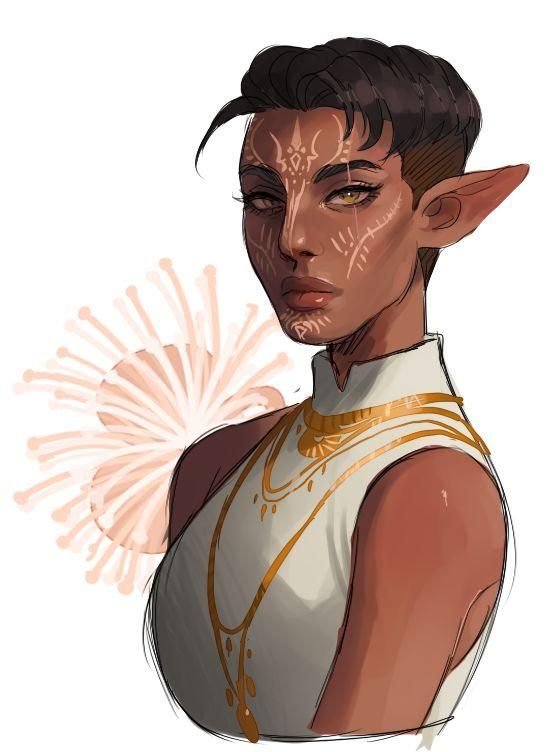
Elivei, the Elves
Elves possess an otherworldly beauty, their skin tones ranging from smooth earthen hues, such as deep umber, warm cedar, pale birch. Their hair, always thick and luxuriant, reflects the splendor of the natural world, with shades of autumn gold, shadowed auburn, verdant green, stormy blue, or the ethereal white of untouched starlight.

Comments