
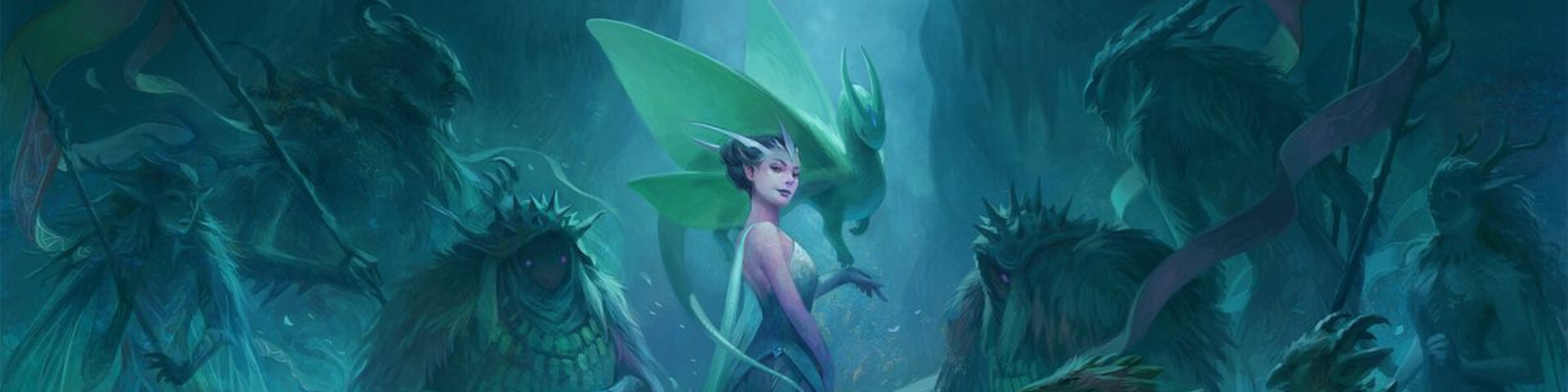
Fey
The Children of Legends
"Trust no fey. Take not their gifts. Give not thy name. Play not their games. Eat not their food. Dance not their merry jigs. Ask no fey to guide thee, and answer not a riddle given. Unless bound in coldest iron, trust no fey.-Ancient Prout Saying
It is a little-known fact that the Fey of Aemaphia, already among the most numerous and diverse genus of lifeforms inhabiting the sphere, represent only one branch of a far greater species of beings that have spread throughout much of the Cosmos. These capricious entities are deeply intertwined with both the Astral Realms and the Temporal Realm, existing as a vast and varied collection of creatures shaped by magic, history, and cultural divergence.
The Native Fey, who remain within the Mysts of Myth, dominate the twin planes of Glimmer and Gloom, home to the Prakaseista Faeryi, or "Bright Fey", and the Neidalaunta Faeryi, or "Bleak Fey". These beings, including the noble Eldarin, the enchanting Nymphs, and the malevolent Oni, embody the pure and untamed essence of mythic existence.
In contrast, the Mortal Fey, collectively identified as the Vaernar Caelie, chose to abandon their celestial origins and settle in the physical world. They established the structured system of the Seelie Court and the Unseelie, where order and chaos eternally contend for supremacy. The Seelie Court, including the refined Caelei Elves, the resilient Duergar, and the knightly Bullywugs, upholds a strict hierarchy dedicated to civilization and duty. The Unseelie, such as the Jhanei Elves who are oathbound to protect the wilderness of Acarcia, the wild Centaurs, and the cunning Goblins with their devious markets, embrace freedom, survival, and the unbridled will of the natural world.
Yet not all Mortal Fey belong to these courts. The Uncaubeilie, the forsaken and outcast Fey, dwell in the shadows of their former kin, stripped of status and belonging for their crimes or transformations. From the wretched Derro, degenerate remnants of the Duergar, to the cursed Leprechauns, once-Gnomes now enslaved by their own greed and malice, the Uncaubeilie stand as living warnings of the cost of defying the sacred balance of the Fey. Beneath these divisions lies a deeper legacy, that of the Efrit, the ancient progenitors of all Mortal Fey, abandoned by their creators and left to forge their own destiny. Regardless of origin or habitat, whether noble or monstrous, bound by order or driven by chaos, all Fey carry this inheritance, navigating a world where myth and reality converge, and where every ancient tale still reverberates through the present.
Basic Information
Ecology and Habitats
The Fey are each beings shaped by both myth and magic, existing where the Astral and Temporal Realms converge. Neither wholly ethereal nor mortal, they are manifestations of story, dream, and the indelible will of thought. Each Fey is an echo of the impossible unconscious cosmic imagination that first conceived Existence, bound to ancient cycles of karmic action, dharmic reincarnation, and the ineffable edicts of the Harmonious Way.
Though diverse in form and nature, all Fey trace their lineage to the Efrit, an artificially created race engineered as part of the Qayid of the Essential Realms earliest experiments in merging Quintessence with the other primary mageia. Deemed a failure and thus abandoned by their elemental creators, these progenitors adapted to the ever-shifting dreamscapes of the Astral Realms and became the ancestors of all later Fey known as the Ayfaertyi. Over countless ages, their descendants diverged into two broad lineages: the Native Fey or Faeryi Okadaennu, who remained in the Mysts of Myth, and the Mortal Fey or Faeryi Dhuendhamu, who abandoned that realm to dwell among the innumerable spheres of the Cosmos.
Across the tapestry of creation, each lineage has forged a singular way of life, refining its strengths to flourish within the environment that shaped it. Their varied adaptations are discussed in greater detail within the following passages below.
Mystical Origins and Mythic Existence
The Mysts of Myth are the primordial womb of all Feykin, a boundless domain where thought, memory, and emotion shape reality. Here, the substance of myth weaves itself into tangible form. The Mysts are divided into twin planes: Glimmer and Gloom. Each represents a reflection of the same dream, one radiant and harmonious, the other shadowed and distorted. Together, they form a single whole, mirroring the cosmic duality of beauty and terror that defines all Faeryi Okadaennu.
Glimmer, the Plane of Light and Wonder, is home to the Prakaseista Faeryi, or Bright Fey. Its skies shimmer with auroral seas, its lands shaped from crystal thought and song. The Bright Fey embody ideals of beauty, serenity, and perfection, existing as living archetypes of harmony. Glimmer's twin and opposite, Gloom the Plane of Shadows and Distress, houses the Neidalaunta Faeryi, or Bleak Fey. It is a realm of perpetual twilight where forgotten fears and dying stories take shape. The Bleak Fey thrive within its oppressive quiet, feeding upon entropy and the inevitability of loss. To mortals, these Fey appear monstrous, yet they are no less vital to the cosmic balance than their radiant kin.
The Fey of the Mysts of Myth are bound not by physical law but by narrative law. Each Fey exists because it must fulfill a role within a greater myth. When the story that defines a Fey fades from memory, so too does its existence. This cyclical nature is both a blessing and a curse: immortality through remembrance, oblivion through forgetfulness. The Harmonious Way teaches that every Fey, whether Bright or Bleak, strives toward Noksaumge, a state of perfect equilibrium where identity dissolves into universal harmony.
Material Origins of Mortal Existence
The Saans'kya Palaayan, also known as the "Exodus of Breath" or simply the "Fae Exodus", marked the defining schism in the history of Feykind. The Fae Schism was the physical manifestation of the philosophical concept of Vichaylaan, when dream learned to desire reality. While the Native Fey chose to remain within the eternal weave of the Mysts of Myth, countless others felt the growing weight of self-awareness pressing against the fabric of their existence. They hungered for sensation, for consequence, for the friction of finitude. The Harmonious Way recalls this divergence as an act of sacred yearning: the Saansyamautuele or "Breath of Harmony" exhaled through them, and in that exhalation they stepped beyond the Astral tides into the waking worlds. Thus began the Fae Exodus into the Temporal Realms. An awakening from eternal story into the fragile poetry of life.
In their descent from the mythic to the material, these Faeryi Okadaennu wayfarers underwent a profound metamorphosis. Severed from the sustaining current of collective imagination, they learned to anchor their essence in the rhythms of living matter. What was once woven from psychoplasm and song was now bound to pulse, hunger, and decay. Their immortality fractured into cycles of birth and death, yet in that loss they found a deeper truth: to experience mortality was to grasp the full breadth of existence. This transformation blurred the boundary between myth and flesh, giving rise to the first Faeryi Dhuendhamu; beings whose souls carried the resonance of the Fey but whose forms obeyed the laws of time, gravity, and pain.
From these wandering sprang the innumerable races of the Mortal Fey, who became stewards of art, dream, and memory throughout the Cosmos. In abandoning the Mysts, they became the storytellers of reality itself, writing myths not with magic but with consequence. Their cultures bear the dual inheritance of sorrow and wonder: ever haunted by the echo of Glimmer’s song, yet ever inspired by Gloom’s reminder that beauty only endures when it dares to fade. Through them, the Vichaylaan continues in every age, as each act of creation re-enacts that ancient choice, to step from perfection into imperfection, and in doing so, make meaning real.
Behaviour
All Fey, whether dwelling within the Mysts of Myth or walking among mortal worlds, are guided by a consciousness shaped more by narrative impulse than by logic. Their thoughts flow in metaphor, their desires form around symbolism, and their actions seek meaning rather than outcome. To a Fey, purpose is inseparable from story; every gesture must echo a truth, every word must carry weight. They do not think in cause and effect but in pattern and resonance, perceiving emotion as the purest expression of reality. This lends them a mercurial temperament: joyous and cruel in equal measure, compassionate without kindness, curious without restraint. In their minds, beauty and terror are not opposites but reflections of the same truth, for to the Fey, existence itself is a work of art that must be both suffered and sung.
The Philosophy of Vichaylaan
From the swirling ephemeral core of the Mysts arose a choice that would forever divide the destiny of Feykin. In the dawning silence between Glimmer and Gloom, when the first echoes of Gaenen Ghannega, the cosmic concept of Harmony itself, stirred within the dreaming Astral Sea, some beheld perfection and sought to preserve it; others perceived limitation and longed to transcend it. Thus began the meditation on the Vichaylaan or the "Divergence of Self". This philosophy did not compel a social rebellion among the Feykin, but spiritual revolution among the most ardent followers of the nascent faith that would one day become The Harmonious Way. The realization that there was an inward gaze to Existence itself, a desire toward meditation, let alone one which focused upon its own meaning, was profoundly arresting to all Fey. The earliest practitioners of the Harmonious Way, then known as Samautuelyaum Maargaulu conceded that both paths were necessary to the Suetramu and thus vital to one's Samyuye. One path must be tread to sustain the eternal imagination, while the other path is there to test its truth within the crucible of mortality.
In acknowledgement of the truth of Vichaylaan, those who would eventually become the Native Fey elected to be the guardians of the timeless story, maintaining the equilibrium of the Mysts of Myth, while those who would one day become the Mortal Fey volunteered to undertake the perilous pilgrimage into matter, so that all Fey might learn to bleed, to breathe, and to believe. Between them was born the tension that shapes all creation. The divine force of Gaenen Ghannega in action. Each group now guard the eternal yearning of perfection for imperfection, and of imperfection for the perfect.
To Be Harmonious
Central to all Fey philosophy is the Harmonious Way, a metaphysical doctrine that transcends faith and functions as the spiritual law of their kind. It teaches that all things, from gods to grains of dust, move through the mandalas of the Suetramu via cycles of Saamsarya, which are shaped by one's own Dharmamu and Khaarmu, maintaining the balance of the universe through continuous rebirth and refinement. Among the Native Fey, the Harmonious Way manifests as the principle of Shaushuvat Pratibeime, or the "Path of Eternal Reflection", the belief that enlightenment lies in perfect equilibrium between action and inaction, between creation and cessation. Among the Mortal Fey, it is understood as Jievain Santulaun, or the "Path of Living Balance", the practice of expressing divinity through imperfection, art, and moral striving. To the Fey, the Harmonious Way is not worship but awareness. It governs every social structure, from the rigid castes of the Vaarner Faeryi to the fluid meritocracy of the Vaernar Caelei. Each act, whether noble or profane, alters the shape of the cosmos, for every thought and deed reverberates through the eternal myth of existence. The Harmonious Way insists that even failure serves enlightenment, for decay is merely the soil from which renewal grows.
To Be Forlorn
The Forlorn Curse profoundly shapes the temperament and behavior of the Mortal Fey, infusing their lives with an unrelenting undercurrent of yearning that colors every thought and deed. Deprived of the eternal serenity of the Mysts, they live with a constant awareness of impermanence, driven by a desperate longing to reclaim the wholeness they once possessed. This manifests as restlessness, passion, and a fierce compulsion to create meaning through art, love, or conflict. Each act is an unconscious attempt to bridge the divide between myth and matter. Should they fail to sate this hunger, the Forlorning consumes both body and soul, eroding their essence until nothing remains. Those who succumb are not merely slain but erased from the Suetramu, the very lattice of existence, suffering a true astral death with no hope of reincarnation. To the Native Fey, this curse is both unspeakable tragedy and morbid fascination. They see the Mortal Fey as beings beautifully broken, creatures of luminous sorrow whose suffering grants them emotional depths unknown to those who never left the eternal dream. Yet the Mortal Fey themselves take no comfort in this perception, for many envy the serene ignorance of their untouched kin.
Additional Information
Social Structure
All Fey cultures, whether of Glimmer’s radiant palaces, the Gloom’s shadowed dominions, or the dreamlike enclaves of the Mortal Fey, share social foundations rooted in innate hierarchy, deliberate reciprocity, constant meditation, and the actuality of every being's narrative purpose. Their societies are not built upon wealth or conquest but upon spiritual order, each being holding a place in the grand tale of Existence. Lineage determines dharmic station, yet constant merit, artistry, and karmic action may elevate or diminish one’s standing within one's individual phase during the eternal cycle of reincarnation. Authority flows through ritual, beauty, prowess, and the mastery of meaning, while allegiance is bound by magical oaths that carry both metaphysical and physical weight to them. In all Fey civilizations, from the regal halls of the Seelie Courts to the wild Feygate enclaves of the Unseelie, status is a delicate performance. A living act of myth making that must be continually affirmed through grace, wit, courage, duty, and the harmonious expression of one’s role in the complex labyrinth of creation.
Vaarner Faeryi, the Mystic Fey Court
The Vaarner Faeryi, often rendered as the "Hierarchy of the Children", forms the primordial foundation upon which all Fey society was built. The term Vaarna means "Station" in ancient Vauyeas, the mother tongue from which all Fey languages descend, though the distinctly hegemonic ideas that form the core of the Vaarner Faeryi itself likely traces back to the Qayid’s early influence upon the Efrit during the distant ages of the Astral Realms. Both essential to their way of life and woven into the fabric of their being, the Vaarner Faeryi embodies the spiritual and cultural architecture that governs the Native Fey who dwell within the Mysts of Myth.
Unlike mortal hierarchies shaped by conquest or inheritance, the Vaarner Faeryi operates through the doctrine of Dharmic Reincarnation, an expression of the Harmonious Way. Every Fey is born into the station necessary for their spiritual perfection, each existence representing a step toward enlightenment. The hierarchy of the Native Fey is thus accepted without question, viewed as the divine mechanism by which all souls progress toward Nirvanya, the cessation of identity within pure harmony.
The influence of this ancient system extends far beyond the Astral Realms. The moral, linguistic, and cultural frameworks of the Mortal Fey, and even those of several mortal species, are direct inheritances of the Vaarner Faeryi’s rigid cosmology.
Vrahmae, the Royal Caste
The first and highest station within the Vaarner Faeryi is the Vrahmae. Vrahmae roughly means the "Most High Royalty Caste". Creatures such as Oni, the Rajhashasa, and Unicorns are some examples of Fey from the Vrahmae caste, as do the near-deific beings known as the Jyothi, the Bright Lords of Glimmer, and the Chaya, the Bleak Lords of Gloom.
The ruling class of any given Native Fey society are known as the Rhajahs and they exclusively come from the Vrahmae caste, governs with celestial authority, their word considered immutable law. Furthermore, all those of the Vrahmae caste only verbally communicate in the sacred Vrahmaeyuedu dialect of Vauyeas, though most understand all the other dialects. The Vrahmae embody the ideal of enlightenment through power, maintaining the order of the realms through divine right and karmic burden alike.
Satrae, the Noble Caste
Beneath the Vrahmae are the Satrea. The Satrae embody intellect, governance, and the maintenance of cosmic order. Satrae roughly means the "Near High Nobility Caste". The Aldra, precursors of the Elves, and Silat, precursors of the Hags, are example members of the Satrae caste.
The vast administrative class known as the Shuudyo, that govern the daily operations of a fey society, come from the Satrea caste. Like all within the Vaarner Faeryi, they are prohibited from speaking unless using the specific dialects of their station, those being Satreayuedu and Vaeseyuedu, however Satrae are allowed to know, read, and even write in Vrahmaeyuedu and Suedreyuedu. This constraint prevented the Satrea from ever directly speaking to the Vrahmea while still allowing them to follow edicts from their Rhajah masters. This linguistic structure reinforced both reverence and distance between the castes, ensuring that even speech itself reflected divine hierarchy.
Vaese, the Gentry Caste
Below the Satrea are the Vaese caste. Vaese roughly means "Low Gentry Caste" and they represent the vast majority of sapient Native Fey. They make up the specialized classes, such as merchants, scholars, soldiers, and artisans, throughout Vaarner Faeryi society. Though far below the nobility, they form the intellectual and creative core of the Varrner Faeryi.
Like their betters, the Vaese are forbidden from speaking anything other than the Vaeseyuedu and Suedreyuedu dialects, but are allowed to know Satreayuedu. They were further forbidden from speaking to, or even acknowledging, any fey of the exalted Vrahmae caste. The vast majority of the Mortal Fey species of the Seelie Court found in Faselicia originally came from the Vaese caste, inheriting both their artistry and their devotion to structure.
Suedre, the Peasant Caste
Though they are directly behind the Vaese in the hierarchy of the Vaarner Faeryi, the Suedre caste is considered far from their betters. Suedre roughly means "Most Low Peasantry Caste" and as their name implies, they are the "unskilled" labor force of the Vaarner Faeryi. Though considered far beneath the Vaese, the Suedre are not despised but rather regarded as necessary instruments of balance. They embody the virtue of humility, their toil seen as sacred service within the cosmic order.
They are forbidden from speaking anything other than Suedreyuedu, but they are allowed to know Vaeseyuedu, which allows them to follow the commands of their immediate superiors. They are further forbidden from speaking to, or even acknowledging, any fey of the Vrahmae or Satrea caste, under penalty of dishonor and death. The vast majority of Unseelie who were exiled to Acarcia as part of the First Aejagaure Armistice came from the Suedre caste, carrying with them the pragmatic traditions of the laboring classes..
Dauliete, the Pariah Caste
At the bottom of the Vaarner Faeryi sit the pitiful Dauliete. Dauliete roughly means "Untouchable Pariah Caste". The Dauliete can only communicate with each other through Daulietyuedu, as even knowing the other dialects is a crime punishable with torturous mutilation. They are forbidden from directly speaking to any of the other Native Fey castes, leading them to call out in generalized declarations, songs, or use complex pantomime. Since the Fae Exodus, this prohibition now also includes all Mortal Fey as well. Any species not originally native to the Mysts of Myth is classified as a member of the Dauliete caste, though oftentimes, Mortal Fey are mistaken for Dauliete by their Native Fey kin. Within the mythic consciousness of the Fey, the Dauliete represent the lowest point of the karmic wheel: necessary, pitied, and feared.
Vaernar Caelie, the Seelie Court and the Unseelie
The Vaernar Caelei, often translated among Union scholars as the "Hierarchy of the Free Mistborn" but more commonly known as the Seelie Court and the Unseelie, represents the intricate governing system of the Mortal Fey, or Abhaerae Faerei. Unlike their Native kin, who exist in perfect alignment with the cosmic rhythm of the Mysts of Myth, the Mortal Fey dwell within the Temporal Realms, where consequence and choice shape destiny.
The Vaernar Caelei blends the metaphysical doctrines of the Harmonious Way with the practical demands of mortal existence. It is a system defined not by the rigid strictures of dharmic predestination but by karmic merit, measuring worth through the accumulation of virtue, artistry, and devotion. Families and clans rise or fall within this hierarchy according to the balance of their actions, embodying the principle that all beings, no matter how radiant or fallen, may ascend or descend through the turning of the karmic wheel.
This fluid hierarchy stands in contrast to the more solidified castes of the Vaarner Faeryi, a delightful subversion of expectations that the Mortal Fey revel in. While the Native Fey are born into fixed stations of enlightenment, the Mortal Fey believe they must earn theirs, crafting their fate through deeds that sustain the cosmic harmony.
Aesidhe, the Noble Caste
The Aesidhe are the exalted bloodlines of the Vaernar Caelei. They are ancient lineages whose authority shapes the destiny of the Seelie Court. Their nobility is not inherited by birth alone but maintained through unwavering devotion to the Harmonious Way, whose precepts bind duty, discipline, and spirit into one.
To falter in those teachings is to invite decay, for Aesidhe nobility is sustained by virtue rather than privilege. They act as living exemplars of composure and refinement, embodying the ideals that lesser castes strive to attain. Through their wisdom and restraint, they govern not only through power but through the spiritual legitimacy of enlightened example.
Sidhe, the Common Caste
The Sidhe comprise the countless clans, households, and guilds that form the vibrant core of Mortal Fey civilization. Though lacking the venerable prestige of the Aesidhe, they sustain the order of both Seelie and Unseelie through labor, creativity, and devotion. Within their ranks thrive artisans, poets, scholars, and soldiers; each a thread in the grand design of the Vaernar Caelei. The Sidhe embody the concept that nobility lies in mastery and purpose, not in title. Through their craft and service, they transform the spiritual ideals of the upper castes into living, tangible reality.
Daosidhe, the Untouchable Caste
The Daosidhe dwell in the shadowed margins of the Vaernar Caelei. They are families and lineages branded as "untouchable", their names spoken only in whispers or pity. To the Seelie Court and the Unseelie, they are living reminders of spiritual failure and the ever-turning wheel of consequence. Yet even in disgrace, the Harmonious Way offers them a path toward redemption. Through great acts of karmic justice, selfless sacrifice, or deeds that restore balance to the world, a Daosidhe may rise once more, their stain washed clean by virtue and suffering alike. In this truth lies both cruelty and mercy: that no soul is beyond salvation, but none may claim it without enduring the weight of their own transgressions.
Uncaubeilie, the Forsaken of Station
The Uncaubeilie are the pariahs of the Vaernar Caelei. These Mortal Fey are cast out from all order and belonging, condemned to eternal social exile. Stripped of their station and kinship, the Uncaubeilie are rejected by both Seelie and Unseelie alike. Many are heinous criminals, unrepentant oathbreakers, or those whose transgressions were so repugnant that they shattered the collective enlightenment of the Mortal Fey. Unlike the Daosidhe, whose redemption remains possible, the Uncaubeilie are utterly severed from the cycle of karmic grace. Some wander as exiles in resentful silence; others turn to vengeance, delving into forbidden arts and further corruption. To be named Uncaubeilie is not mere punishment. It is cultural erasure, a living "death" from which few ever return.
Interpretations of the Vaernar Caelei
Both the Seelie Court and Unseelie employ the Vaernar Caelei as the foundation of their social order, using its caste principles to preserve stability, hierarchy, and the illusion of harmony, however both cultural groups have vastly different interpretations of its edicts. Although both groups agree that the system is neither racially exclusive nor bound strictly by inheritance, every Mortal Fey species, from Elves and Duergar of the Seelie Court to the Cyclops and Goblins of the Unseelie, observes its structure, dividing themselves according to the ancient doctrines of karmic worth and dharmic station. Among the Fey of the Seelie Court, caste boundaries are often more rigid and rarely transgressed, for they view constancy in the face of the inconsistent nature of mortality as the highest form of balance. In contrast, the rugged Fey of the Unseelie interpret the Vaernar Caelei with greater fluidity, allowing merit and circumstance to dictate social ascent or decline. Even among the Daosidhe, those who have rebelled against the Seelie Court or forsaken their Unseelie oaths entirely, such as the spiteful Hags or the renegade Satyrs and Centaurs, as well as the Uncaubeilie Fey like the Derro, the Rakshasa, and the Buerie Elves, the echoes of the Vaernar Caelei structure endure. They still acknowledge the inherent authority of those whose spiritual station surpasses their own, preserving the hierarchy’s influence even beyond the reach of its laws.
Geographic Origin and Distribution
Faeryi Okadaennu, the Native Fey
The ephemeral denizens of the Mysts of Myth are collectively known to scholars as the Native Fey, however they refer to themselves as the Faeryi Okadaennu or the "Perfect Children". These mercurial beings are shaped not by gods or divine design, but by the raw, ever-shifting power of story and thought. Unlike the Mortal Fey, who fled to the Temporal Realm, the Native Fey remain bound to the twin planes of Glimmer and Gloom, existing as living myths that embody the extremes of wonder and terror. The Bright Fey of Glimmer radiate beauty, serenity, and celestial grandeur, their forms sculpted from ideals of perfection and harmony, while the Bleak Fey of Gloom are the echoes of nightmares and forgotten fears, thriving in shadows, illusions, and the inevitability of entropy. Many, like the Nymphs and Bandersnatch, arose spontaneously from the subconscious desires and dreads of greater cosmic beings, while others, such as the Eldarin and Shadarin, are remnants of the Aldra who chose to remain in the Astral Realms. Powerful yet mercurial, the Native Fey do not think or act as mortals do, bound not by time or logic but by the nature of the stories that define them—sometimes benevolent, sometimes monstrous, but always perilously enchanting.
Prakaseista, the Bright Fey
The Bright Fey, who call themselves the Prakaseista, are the native Fey of Glimmer, one of the twin planes of the Mysts of Myth within the Astral Realms. Unlike their counterparts in Gloom, the Bright Fey embody ideals of beauty, serenity, and celestial wonder, existing as luminous beings shaped by the boundless power of myth itself. They are not the creation of a singular will or divine entity, but rather spontaneous manifestations of magic, stories, and dreams given form. Some, such as the Nymphs, arose unknowingly from the unconscious desires of the Qayid to seek perfection, yet neither the Qayid nor the Nymphs are aware of this connection. Others, like the Eldarin, are descendants of the Bright Aldra who chose to remain in Glimmer after the Fey Exodus, forever bound to a plane of eternal splendor.
Among the most well-known of the Bright Fey are the Fauns, the mystical cervine precursors to both Centaurs and Satyrs, who wander the Astral Realms in pursuit of cosmic wisdom. The Nymphs, each embodying a different aspect of nature, whether the skyborne Sylphs, the oceanic Undine, or the fiery Hesperides, exist as dreamlike reflections of the world’s natural beauty. More insidious still are the Oni, physically impressive bullies who thrive on terror, delighting in torment as they gorge themselves on the psychic energies of fear. The Unicorns, radiant and enigmatic, passively nourished by the joy they inspire and healing those they touch with their shimmering horns. Yet for all their brilliance, the Bright Fey remain aloof, their minds shaped by a realm where reality bends to thought and stories weave themselves into existence. To mortals, they may appear as benevolent forces, but their detachment from the struggles of the Temporal Realm makes them unpredictable, their beauty as perilous as it is mesmerizing.
Notable Bright Fey Species
Neidalaunta, the Bleak Fey
The Bleak Fey, also known as the Neidalaunta, are the native Fey of Gloom, the shadowed twin of Glimmer within the Mysts of Myth, where fear, sorrow, and the forgotten fragments of stories take form. Unlike the Bright Fey, who embody serenity and idealized beauty, the Bleak Fey are creatures of necessity, survival, and the inescapable truths of existence. They were not crafted by any singular hand but arose from the darker corners of myth, from whispered nightmares, lingering regrets, and the fears that lurk at the edges of consciousness. Some, like the Meazels, despise the Mortal Fey for fleeing during the Fey Exodus, their hatred warping them into bringers of disease and corruption. Others, such as the Shadarin, are the last remnants of the Bleak Aldra, those who chose to remain in Gloom, enduring its cold embrace rather than forsake it for the Temporal Realm.
Among the most infamous of the Bleak Fey are the Doppelgangers, deceptive shapechangers who steal mortal children and alchemically transform them into Changelings, forever caught between identities. The Boggles, the cunning ancestors of the Gobkin, lurk in shadows as saboteurs and tricksters, weaving ruin with whispers and ill-fated bargains. Even the noble Unicorns are not immune to Gloom’s corruption, for when, in death, their beatific horns are forcibly severed, their corpse is revitalized and transform into Nightmares, twisted equine horrors that radiate dread and despair. Though often feared, the Bleak Fey are not merely malevolent; they are the echoes of forgotten tales, the inevitability of entropy, and the personifications of struggle. To face them is to confront one’s deepest fears, whether one is devoured by them or emerges stronger is a question only the story itself can decide.
Notable Bleak Fey Species
Pogamanuta, the Fey Who Traverse the Mysts
The Pogamanuta are the wanderers of the Mysts, existing between Glimmer and Gloom. They are neither wholly Bright nor Bleak, often born from cross-pollination of dreams and nightmares. Many Pogamanuta serve as bridges between courts, travelers, and traders among the endless stories of the Astral Realms. They almost exclusively come from the Suedre caste within the grand hierarchy of the Vaarner Faeryi. They include...
For the purpose of monster hunting contracts, Adventurers consider the Native Fey from either dimensions of the Mysts of Myth, both The Glimmer and the Gloom, as Monsters. Native Fey occasionally invade Aemaphia through Feygate Sanctuaries, Fairie Grounds, or other portals to the Mysts of Myth.
Faeryi Dhuendhamu, the Mortal Fey
The Mortal Fey of the Cosmos, particularly those who dwell within Aemaphia, call themselves the Faeryi Dhuendhamu, meaning the "Dull Children" however they refer to themselves as Abhaerae Faerei which means "Mistborn of the Sanctuary". They are the heirs of an ancient pilgrimage, descended from those who long ago departed the boundless dreamscapes of the Astral Realms to seek purpose within the waking worlds of the Temporal. In their exodus, they carried fragments of celestial memory, echoes of song, light, and myth, woven into the very substance of their souls. To the Faeryi Dhuendhamu, existence within the material realm is both a sacred trial and a gift, for through mortality they may experience that which the eternal cannot: the fragile beauty of imperfection and the divine grace found within change.
The Seelie Court, the Free Fey
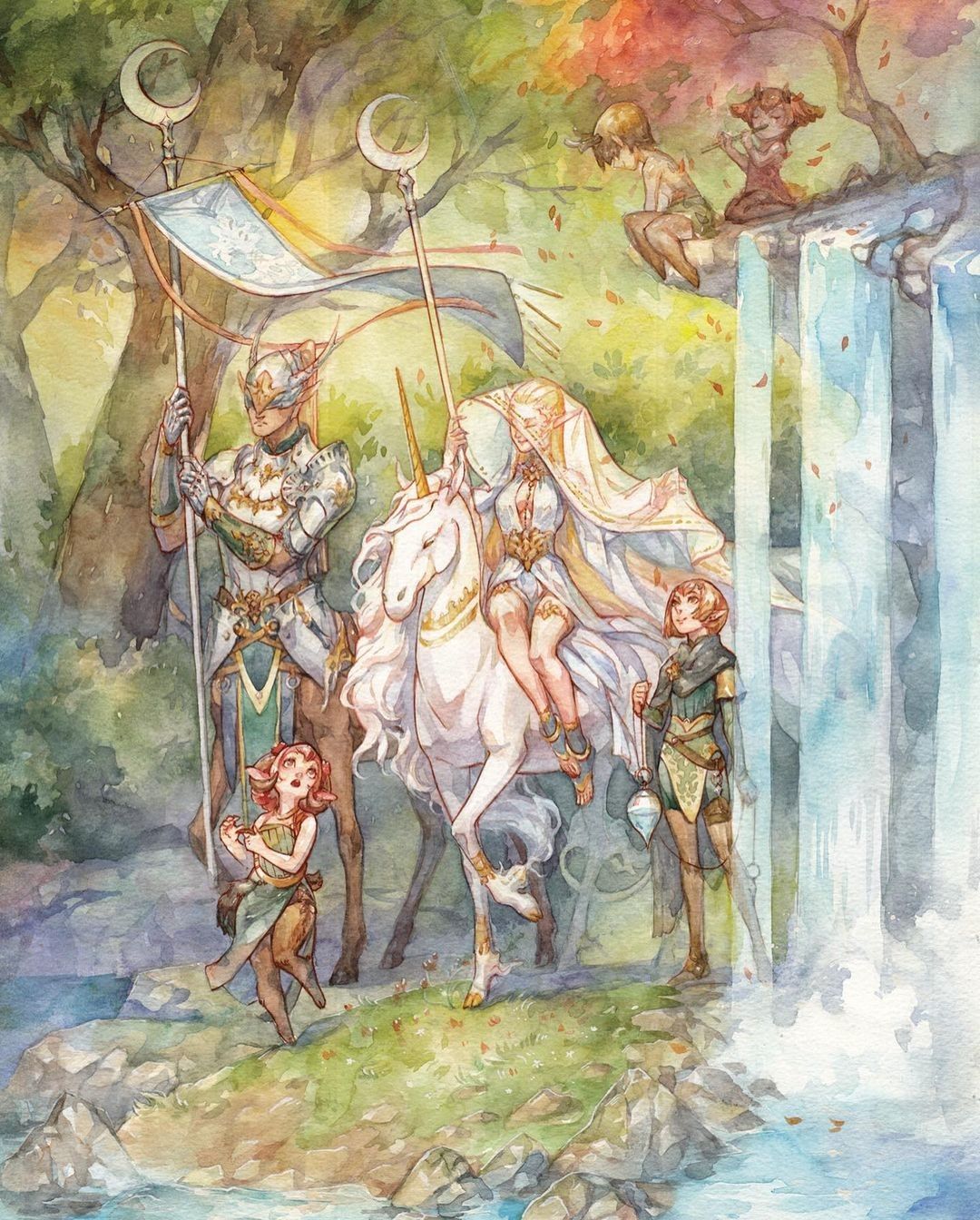
The Seelie Court represents the disciplined and luminous heart of Mortal Fey civilization. Known in ancient texts as Vaernar Caelei, or the "Court of the Free", the Seelie Fey uphold harmony, artistry, and hierarchy as sacred virtues. They believe civilization is a divine mirror reflecting the order of the cosmos, and that beauty and discipline are paths toward enlightenment. Through their artistry and discipline, the Seelie Court strives to maintain Concordance, the eternal balance between creation and restraint. Their greatest sin is chaos, their highest virtue is mastery. Members of the Seelie Court include noble and pragmatic races alike, united by a reverence for structure and refinement:
The Unseelie, the Bound Fey
The Unseelie, known to most Mortal Fey as the Vaernar Uncaelei or the "Court of the Bound", arose from those exiled during the First Aejagaure Armistice. Referring to themselves as the Kaepatthai or "Oathbound", these rugged Fey protect the wilds of Acarcia from any extra-realmic incursion that may upset the delicate natural balance that maintains Aemaphia. Unlike their Seelie counterparts, the Unseelie embrace the ungoverned rhythm of nature. The welcome the wild, instinctive, and ever-changing nature of mortality. To them, chaos is not corruption but vitality, the pulse that drives all life to evolve and endure. The Unseelie Fey thrive in struggle and change. They see the path to enlightenment not in order but in expression. The courage to be flawed and unrestrained in a world defined by impermanence. For the Unseelie value cunning over ceremony, passion over restraint, and freedom over obedience. Yet even in their seeming disorder, a fierce code of honor binds them, drawn from the same karmic truth that governs their Seelie kin.
The Uncaubeilie, the Forsaken Fey
The Uncaubeilie are Fey who have been cast out of the Vaernar Caelei, permanently stripped of their status, name, and place within Fey society. They are considered the lowest of the low; exiles, criminals, or those who have committed unforgivable transgressions against the sacred order of the Vaernar Caelei. Unlike the Unseelie, the Uncaubeilie are pariahs with no true home, rejected by both the Seelie and Unseelie alike. Some wander in isolation, while others descend into darkness, embracing forbidden practices or swearing vengeance against those who abandoned them. To be declared Uncaubeilie is not just a punishment—it is an erasure, a fate considered by many elves to be worse than death itself.Blurring the Stations and Upending the Courts
While these divisions are traditionally acknowledged, their boundaries are far from absolute. The Courts of the Fey are living tapestries of shifting loyalties, where alliances weave and unravel with the passage of ages, and exile often transforms into influence reborn. Wanderers and oathbreakers alike walk between Glimmer and Gloom, their allegiances shaped as much by emotion and circumstance as by creed. In this fluid web of intrigue, friendship and betrayal are but verses in the same song, and the ever-turning interplay between loyalty and defiance gives Fey politics its intricate, perilous beauty.
Civilization and Culture
History
The Birth of the Fey
The first of the Fey, known to scholars as the Efrit, but to the Fey as the ancestral Ayfaertyi, were not born of nature but engineered by the Qayid of the Essential Realms during the primordial experiments that sought to merge Quintessence with other primary forms of mageia. Conceived as vessels of perfect balance between essence and soul, the Efrit were intended to act as living conduits through which the Qayid might explore the limits of metaphysical creation.
These beings, however, proved unpredictable. The fusion of consciousness and Quintessence yielded results the Qayid could neither control nor fully comprehend. The Efrit began to dream, and from those dreams came emotion, individuality, and the first stirrings of myth. Seeing this as failure, the Qayid abandoned their creations to the Astral Realms, where the Efrit adapted to the mutable tides of dream and thought. Over countless ages, their descendants evolved into what would become known as the Fey, beings shaped by story and sustained by imagination itself.
Through the long erosion of time, the Ayfaertyi diverged into many great lineages and countless subspecies; including the Faeryi Okadaenni, the Native Fey who remained within the eternal Mysts of Myth, and the Faeryi Abhaerae, the Mortal Fey who sought to dwell among the innumerable worlds of the Temporal Realms. Some of the ancient Ayfaertyi include...
The Saans’kya Palaayan
The defining schism in Fey history is known as the Saans’kya Palaayan, or the "Exodus of Breath". It marks the moment when the Fey, once beings of pure myth, turned their gaze toward material existence. The Harmonious Way remembers this event as the Vichaylaan, the "Divergence of Self". In that moment of awakening, the dreams of the Fey learned to desire reality. While many chose to remain within the eternal story of the Mysts of Myth, others hungered for sensation, consequence, and the beauty of imperfection. The Harmonious Way interprets this yearning as a sacred act of balance, the Saansyamautuele, or the "Breath of Harmony", in which the divine imagination exhaled into the material universe, giving rise to the Fae Exodus.
Those who crossed the threshold from myth to matter underwent profound transformation. Severed from the sustaining current of collective dream, they learned to bind their essence to the rhythm of living worlds. Their forms became mortal, their spirits finite, and their immortality fragmented into cycles of birth and death. In that loss, they discovered a deeper truth: only through mortality could they experience the full breadth of creation. The Faeryi Abhaerae, now shaped by hunger, time, and consequence, spread across the Cosmos as artists, wanderers, and philosophers. They became both storytellers and subjects of their own myth, transforming the dream of the Astral Realms into the living poetry of existence.
The Fae Exodus transformed the very meaning of life and divinity within Aemaphia. By leaving the Astral womb of perfection, the Mortal Fey introduced art, mortality, and moral complexity to creation. Their descent was not fall, but evolution. A sacred error that taught even the eternal the value of impermanence. The legacy of that exodus persists in the vast diversity of Feykind. Every Mortal Fey species carries within its soul the faint resonance of the Mysts of Myth, the memory of Glimmer’s radiance and Gloom’s sorrow. Through them, the Vichaylaan endures as a living paradox: the yearning of perfection for imperfection, and the yearning of imperfection to become perfect once more.
The Forlorn Curse
However, the Fae Exodus was not without its trials. Immediately upon arriving within the Temporal Realms and becoming exposed to the energies of the Cosmos, the Mortal Fey were afflicted with a terrible malady. Exposure to the Forlorn Curse, a malignant affliction born from the severing of the Mortal Fey from the sustaining psychoplasm of the Mysts of Myth, stands as one of the most defining calamities in the collective history of all Feykin, Mortal and Native alike. At first, the nature of this plague was unknown. Fey would simply dim, fade, erode, and eventually collapse into foul nothingness. Over time, the wisest of Fey scholars and priests uncovered the horrifying truth. When the Faeryi Abhaerae chose the path of incarnation, they had inadvertently relinquished the eternal renewal of mythic memory, and with that existential loss came a hollowness that settled deep within their souls. This fracture became the Forlorn Curse, a spiritual wound that gnawed at the very essence of every Mortal Fey. It was a hunger that no art, triumph, devotion, nor pleasure could ever truly appease. Left untended, the Forlorning would quickly devour both the body and spirit of any Fey exposed to the Temporal Realms for too long, severing their arcane souls from the Sutra, the great lattice of Existence, and denying them rebirth forevermore.
In the earliest ages of Mortal Fey history, the Forlorn Curse spread like wildfire through their fledgling settlements, driving entire populations into despair and bringing many lineages to extinction. It forced the surviving clans to adapt or perish, compelling them to seek new disciplines of art, meditation, and ritual as means of resistance against the spiritual decay. Over time, each species of Mortal Fey developed distinct cultural practices to stave off the Forlorning’s effects, forging the diverse and often eccentric traditions seen across Aemaphia. Yet despite millennia of refinement, no Fey race has ever truly exorcised it from their lineage. The Forlorn Curse still stirs in the quiet of their hearts, a reminder that even the brightest souls of the Vaernar Caelei remain forever haunted by the price of their freedom. Furthermore, fear of and fascination with the Forlorn Curse has widened the cultural chasm between the Mortal and Native Fey. Many Native Fey are loath to venture within the Temporal Realms for any meaningful amount of time, as they too will succumb to Forlorning, while others prohibit Mortal Fey from entering the Mysts of Myth, seeing them as potential carriers of a virulent contagion that could destroy both Glimmer and Gloom. Still other pampered Bright and Bleak Fey wistfully admire their Mortal kin for enduring something they will never have to experience.

Comments