

Eshan ([ɛːʃɑːn])
Geography
Subarctic Regions
Plains dominate the subarctic zones. Sparse tundra grasses and resilient bushes add patches of colour to the otherwise grey and white landscape. Around mountain foothills, small coniferous forests thrive, nourished by the shelter and moisture provided by the elevated terrain. These mountains also house extensive cave systems formed by glacial erosion and ancient volcanic activity. These caves are rich in minerals and essential to Eshan's economy.
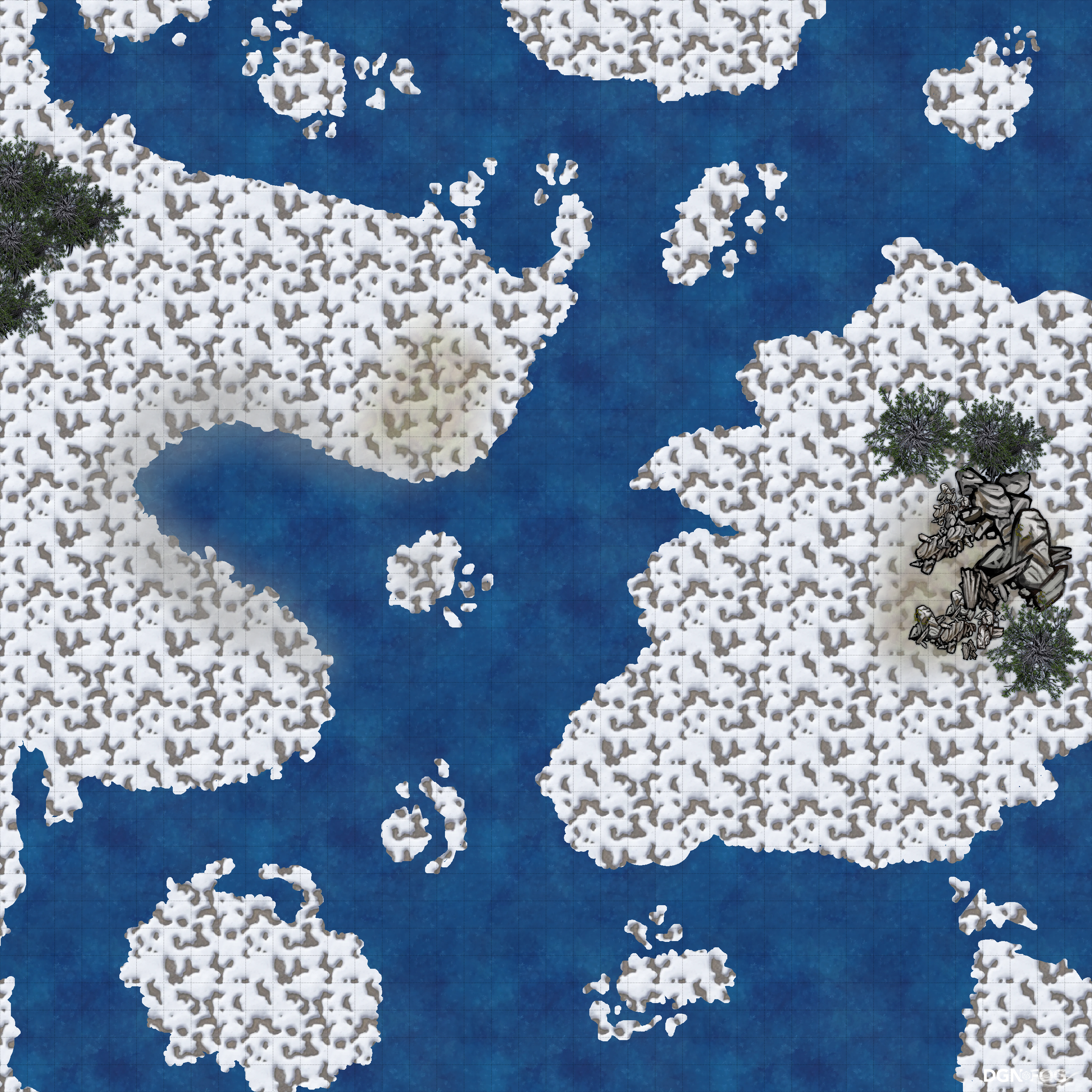
Glacial-fed rivers snake across the plains and the main continent before feeding into the Great Ocean. Glacial lakes created by these rivers and runoff host leafier vegetation, and a central collection of islands serve as a small settlement and historical site. These islands are primarily rocky, with a thin layer of tundra vegetation.
Arctic Regions
The arctic regions feature tundra plains, polar deserts, icy fjords and volcanic formations. Very little foliage dots the landscape, and it is nonexistent in the polar deserts, but the northern region is home to a Kinnik tree grove which is thriving due to a powerful Light Side Force vergence.
Icy archipelagos support small fishing outposts and mineral extraction sides. These islands are barren, with only mosses and grasses growing in the rocky soil. Volcanic formations and rocky coastlines are mineral-rich, including rare crytals mined on a single island.
Polar Deserts
There are three polar deserts on Eshan. They are barren and wind-swept, featuring plains of snow-covered crackled ice sheets and jagged rock formations. Vegetation is non-existent, and fresh water is scarce, found only in underground springs. Survival in these areas depends on advanced technology, resourcefulness and support from major cities. These areas are inhospitable but hauntingly beautiful.
Equatorial Region
The equatorial region of Eshan, though cold and challenging, serves as the planet's most habitable zone, featuring steep, jagged mountain ranges with snow-cloaked peaks encircling dramatic valleys and fjords carved by glaciers. These valleys and foothills provide sheltered environments where limited seasonal thawing allows for sparse plant growth, while geothermal springs and vents create frost-free pockets and steaming pools that sustain unique ecosystems. Glacial-fed rivers wind through the terrain, carving deep gorges and feeding pristine alpine lakes that serve as reservoirs of life. Beyond the valleys, tundra plateaus dominated by permafrost stretch out, supporting hardy grasses, mosses, and shrubs, with rugged cliffs and towering rock formations shaped by glacial erosion and tectonic shifts.
Ecosystem
Polar Desert Ecosystems
The polar deserts of Eshan remain locked in ice year-round, and permafrost, glaciers, and ice sheets are permanent features of the landscape. Extreme cold dominates these areas, and despite slight temperature increases, there is no seasonal thaw. Life persists in isolated niches, such as permafrost layers or geothermal pockets, where microbial psychrophiles thrive. These psychrophiles survive in ice and rock crevices by metabolizing trapped organic material.
Subarctic Ecosystems
The subarctic regions of Eshan feature rolling tundra, rocky outcroppings, and hardy vegetation like mosses, lichens, and shrubs, while the areas near the equatorial zone include frost-covered plains, small freshwater rivers fed by geothermal activity and sparse tundra forests near mountainous areas. These regions support limited but stable agriculture, with cold-resistant crops and livestock grazing forming the backbone of sustenance. Herbivores rely on sparse vegetation and access to unfrozen water, while predators depend on these herbivores for survival. Geothermal activity creates microhabitats that support unique biodiversity and provide vital warmth, enabling Eshani settlements to thrive in an otherwise challenging environment.
Arctic Ecosystems
Geothermal zones near caves and volcanoes sustain isolated pockets of life amidst the ice and rock, supporting microbial and small invertebrate communities that form the base of the food chain for larger species. Coastal ecosystems are dominated by fish and seals, which ice-adapted predators and birds hunt. Mining and fishing villages in these regions rely entirely on marine resources and geothermal heat for survival.
Underground Cave Ecosystems
Eshan's cave systems are dark, humid, and naturally insulated from the planet's freezing surface temperatures. Geothermal heat from the core creates unique microclimates. Bioluminescent fungi and insects thrive in these environments, forming the foundation of intricate food webs. Thermophilic microbes metabolize minerals and heat energy, enriching the environment with nutrients. Sightless scavengers and small predators navigate the caves, relying on geothermal warmth to survive in this hidden ecosystem.
Bioluminescent Sea Ecosystem
Eshan's cold, nutrient-dense waters are shaped by upwelling currents that sustain a thriving marine ecosystem where bioluminescence is a key survival mechanism. Glowing microorganisms, or cryoplankton, form the foundation of the food web, feeding small invertebrates and fish. Larger predators utilize bioluminescence to attract prey or communicate in the dark waters, while coral-like structures adapted to the icy conditions provide vital shelter for smaller species, creating a complex and vibrant underwater habitat.
Underwater Ecosystems
In Eshan's arctic regions, oceans and lakes remain ice-covered year-round, with limited open water found near geothermal vents or undersea currents, while even the Great Ocean thaws only in equatorial zones. Lakes are rare and typically fed by geothermal or glacial sources within the planet's habitable areas. Marine mammals and large cold-water fish dominate these waters, relying on nutrient upwellings and smaller prey for sustenance. Geothermal vents foster unique ecosystems of thermophilic organisms, filter feeders, and specialized predators, while icebergs and frozen lakes trap organic material, which microbes break down slowly to support minimal nutrient cycling.
Equatorial Ecosystem
In the alpine regions of Eshan's equatorial zone, ecosystems thrive despite the harsh conditions. Steep mountain slopes are dotted with hardy tundra grasses, mosses, and lichens, which cling to rocky outcrops and survive brief thaw periods during the short growing season. Wildlife includes cold-adapted herbivores that graze on the sparse vegetation and predators who skillfully hunt them across rugged terrain. Glacial streams and meltwater lakes provide fresh water, supporting aquatic species such as small fish and amphibians adapted to icy waters. Birds, including migratory species, nest in the crags and valleys, taking advantage of the relative shelter and seasonal food availability. Geothermal springs scattered across the region create localized warm zones, fostering microhabitats with increased biodiversity, where insects, small mammals, and plants flourish in otherwise inhospitable conditions.
Ecosystem Cycles
Eshan's ecosystems experience subtle but important changes with the passing seasons, dictated more by slight variations in light and temperature than dramatic climactic shifts. The planet's near-constant cold limits seasonal thawing to brief periods in the equatorial and subarctic zones, while the rest of the planet remains locked in ice year-round.
In the equatorial alpine regions, extended daylight during the peak of Eshan's "warm" season triggers a short but vital growth period for hardy vegetation. This brief thaw allows herbivores to access more abundant food sources while predators increase their hunting activity to take advantage of prey populations. Migratory animals arrive to breed and feed in the thawed valleys, adding a burst of activity to the ecosystem.
In subarctic zones, tundra vegetation expands slightly during the warmer months, supporting grazers and their predators. Rivers and glacial streams swell with meltwater, providing crucial hydration and promoting aquatic life activity. Geothermal zones remain active year-round, but warmer periods enable a slight expansion of microhabitats around them.
Arctic and polar desert regions see little seasonal change as extreme cold persists year-round. However, organisms in these areas, such as ice-adapted predators and microbial life in geothermal vents, often respond to the planet's axial tilt, which alters light levels. These periods of prolonged daylight enhance photosynthetic activity for cryoplankton in open waters near geothermal vents, temporarily boosting the marine food web.
Organisms in cave systems, which are insulated from surface temperature fluctuations, maintain stable cycles independent of seasonal changes. Similarly, bioluminescent seas are largely unaffected by the surface seasons, though slight shifts in ocean currents during thaw periods may redistribute nutrients, temporarily enhancing certain populations.
Localized Phenomena
Auroras
Vibrant auroras ripple across the skies during long polar nights. The lights are unusually bright and display unique opalescent hues.
Ice Quakes
Subsurface shifts caused by geothermal activity and the movement of ancient glaciers result in "ice quakes." These events send deep rumbling vibrations across the land but rarely cause surface damage due to the slow-moving nature of Eshan's icy terrain.
Some see ice quakes as omens, while others study them for their effects on underground cave systems and mineral deposits.
Silver Hailstorms
During specific seasonal shifts, super-cooled atmospheric conditions create heavy hailstorms with ice crystals that shimmer like silver in the light. These storms can be destructive and are both feared and revered for their beauty.
Permafrost Fogs
Thick, shimmering fogs blanket the lowlands, particularly in the subarctic regions where the temperature differential between geothermal vents and the icy air creates dense condensation. This fog reflects light, creating prismatic effects, and is treacherous for travellers.
Everfrost Winds
Frigid winds sweep across the tundra and polar deserts, carrying sharp ice particles that can carve patterns into stone over time. These winds are often sustained for weeks at a time.
Eternal Overcast
The skies over Eshan are frequently grey, with sunlight rarely breaking through the dense cloud cover except during specific seasonal transitions. The resulting dim light enhances the planet's stark, silvery aesthetic but also contributes heavily to the cold climate.
The Spirit Grove
This rare grove of kinnik trees exists in the northern Arctic due to the presence of a Light Side Force vergence.
The Spectre Ravine
The ravine resonates with Force energy, producing faint whispers, visions and feelings of contentment for those attuned to the Force. These echoes are thought to be remnants of past events or latent energy within Eshan's crystalline mineral deposits.
Bioluminescent Tides
The Lumin Sea and other arctic zones exhibit periodic bioluminescent blooms. Microscopic organisms light up the waves, creating breathtakingly glowing shorelines and waves.
Whispering Winds
Arctic wind patterns, combined with unique rock formations, produce eerie, melodic sounds. The "whispering winds" are interpreted as the voices of ancestors of the Lunar Goddess, Kanir, communicating with the living. These winds hold deep spiritual significance and are often incorporated into Echani rituals and ceremonies.
Climate
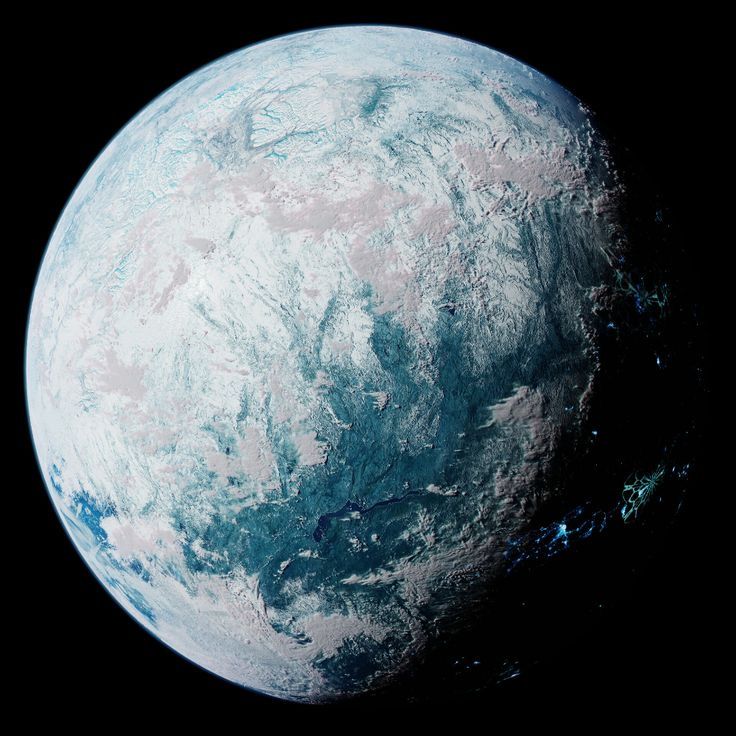
Most of Eshan's surface is locked in permafrost or glacial ice and rarely, if ever, thaws. The cold is constant, driven by minimal solar exposure and persistent cloud cover that traps heat only in localised areas. The poles and arctic zones are unyielding icy deserts, dominated by wind, glacial expansion, and near-permanent sub-zero temperatures.
The equator experiences a milder, alpine-like climate compared to the planet's harsher arctic and polar regions. Long snowy winders dominate, but brief, cool summers allow for slight thawing in valleys, fostering seasonal plant growth and migratory activity.
Geothermal activity provides localised warmth, particularly in the equatorial regions and polar extremes, supporting human habitation. These microclimates remain stable over millennia, creating havens of life amidst the global freeze.
Seasonal changes are subtle and defined more by shifts in daylight length than temperature. Winters bring prolonged darkness, while summers offer extended twilight.
Fauna & Flora
Polar Deserts
Burrower
A small, rodent-like mammal with thick fur and long claws for digging through permafrost. They burrow and live in colonies in icy ground near geothermal vents. Burrowers will also hibernate during prolonged darkness. Their diet consists mostly of roots and fungi that grow around geothermal springs.
Subarctic
Fangbeast
A wolf-like creature with long, muscular legs and a silver coat for blending into its surroundings. It lives in the tundra near sparse forests, and hunts in packs, relying on strategy to corner their prey. Their diet consists mostly of Shani Grazers and smaller prey creatures.
Shani Grazer
A deer-like herbivore with thick grey fur and broad, flat hooves for walking on snow. They live in the open tundra and foothills, migrating seasonally towards geothermal zones during the colder months. Their diets consist of mosses, lichens and hardy shrubs.
Arctic
Arctic Fisher
A massive bear-like creature with white, heat-retaining fur, thick fat layers, and double eyelids to ease their view in snowstorms. They are generally seen alone on coastal ice shelves and near glacial lakes where they prey on seals and crystalfish.
Crystalfish
A small fish named for its translucent, crystal-like appearance. Antifreeze proteins in their blood allow them to survive the freezing waters under ice sheets. They swim in schools to avoid predators and generally feed on microorganisms like cryoplankton or small invertebrates.
Alpine–Equatorial
Muffel
A small rabbit and bird-like creature with an incredibly long lifespan and the ability to retain and mimic sounds. They live in small herds of six to ten, usually in the warmest regions of the Equatorial zones. Their diet consists mostly of insects.
Alpine Wolf
The oldest species of wolf on Eshan. They live in packs of ten to twelve across the equatorial and subarctic regions of Eshan. Their diet consists mostly of Muffel who wander from crowded cities, rockhoppers and Shani Grazers.
Grave Wolf
A large species of wolf that became one with the planet's essence over several millennia of evolution. Much about them is unknown, but the Eshani suspect they must behave similarly to their Alpine Wolf cousins.
Those claiming to have seen a Grave Wolf have described its appearance as skeletal and decayed, which has given it its name, but also a distinct glow from within that gives the illusion of life and warmth.
Silverwing Raptor
A large bird of prey with silver feathers and a 3-metre wingspan. They are adapted to high-altitude hunting and prefer living on mountain peaks or in alpine valleys. They use thermal updrafts to scan for their prey, which consists primarily of rockhoppers and other small mammals.
Rockhopper
A small goat-like creature with thick fur and powerful legs for jumping between and climbing across rocky ledges. They tend to live in small groups for protection against predators and favour steep cliffs and rocky outcrops. Their diet consists mostly of alpine grasses, mosses and lichens.
Aquatic
Glowfin
A sleek, torpedo-shaped fish with glowing patterns along its sides to attract prey. They live in the open ocean and near bioluminescent coral reefs. Their diet consists of small fish and various invertebrates.
Luminet
A small, schooling fish with shimmering scales that amplify its bioluminescence. Luminets are typically found in shallow waters and bioluminescent coral reefs, and they use their glow to confuse predators and communicate within schools. Their diet consists of cryoplankton and organic detritus.
Vent Shark
A medium-sized, heat-adapted species of shark that thrives near underwater geothermal vents. Its body radiates a faint heat signature, which attracts less heat-resistant prey. They live in the deepest parts of the Great Sea and near geothermal zones. The Vent Shark is a solitary hunter that uses infrared vision to detect prey in the dark depths. Their diet consists of large fish and crustaceans.
Blue Sea Crab
A small armoured crustacean with glowing spots to deter predators. They are typically found near geothermal vent fields and underwater caves, feeding on mineral deposits and thermophilic bacteria.
Natural Resources
Durite
Found primarily in the planet's northern hemisphere, durite is mined and sold to droid manufacturers, as it is often used to construct their shells. Due to its attractiveness, durite is also used to adorn ceremonial weapons, garments, and jewellery.
Chromium
Chromium is a rare metal that, in its pure form, could block communications. While the Eshani (indirectly) sell much of their mined chromium to the Naboo for their starships, they also use it to support their isolation from the rest of the galaxy by strategically blocking external communications and controlling the flow of information. They embed chromium in infrastructures like communications relays, transmission towers, or military facilities to prevent outside influence or interference, effectively creating communication barriers around their territories. Chromium is also used to secure political and military communications, ensuring that sensitive discussions and strategies are protected.
Bronzium
Nearly all the bronzium that the Eshani mined was exported and sold for various applications. Some was kept on the planet to make effigies of their deity, jewellery and light armour.
Copper
Copper is a common metal used in various applications, such as fuel additives and droid plating. Eshani artists used copper in different compounds to create a blueish hue in paints and dyes.
Cortosis
Cortosis is an extremely rare metal with a very high energy absorption rate and transmission coefficient. It allows the energy of a blaster bolt to be dissipated upon contact, redirects the heat of explosions, and can withstand the blow of a lightsaber and briefly short out its blade. Apart from its physical properties, cortosis can also affect a Force-sensitive's ability to use the Force, as helmets made from the material isolated the wearer's thoughts and prevented others from sensing them.
Despite these advantages, cortosis is fragile in its natural state, making it useless as armour. However, it was possible to turn cortosis into armour and weapons with effort and determination.
The Echani first developed cortosis weave out of fear that the Jedi would once again attempt to destroy their system (see Battle of Yadir and Treganna under Eshani). This innovative process allowed them to craft light armour and ceremonial weapons capable of resisting lightsaber strikes and toning down specific Force attacks. While the Echani have not had to defend themselves against Force users for several millennia, Eshan's production of cortosis weave has not diminished. Instead, it is camouflaged in ceremonial weapons, jewellery, and garments. It is also used as "insulation" material in government buildings.
Unlike the rest of their minerals and metals, the cortosis is a well-guarded secret, and the Eshani do not sell or export it as they only directly trade with Taanab, who have no use for cortosis. The metal is hoarded and kept for their defences for the most part, as they fear Jedi retribution despite not having faced a threat similar to Treganna in several millennia. Cortosis also serves as a form of protection for the Eshani, especially against Jedi or for The Chosen, as many pieces of jewellery and ceremonial weapons gifted to The Chosen are made of cortosis.
Tourism
There is no extra-planetary tourism on Eshan.
Eshani can tour the capital city as well as participate in cruises to witness the planet's natural beauty.
Maps
-
Eshan

Comments