

Socialist Oligarchy of Taua
Deep in the mountain range of Kowiri, the dwarves built the kingdom of Taua. An intricate maze of tunnels extends under, over and inside the mountains, with enormous halls and underground villages.
Awakened from their slumber in the deep of the mountains, Drows attacked the dwarves and conquered the kingdom, ruling over it with an iron fist for hundreds of years. This until less than a century ago when Atar, a revolutionary Dwarf, staged a coup against the drows, killed their King and sat on the throne of Taua.
Most of the drows fled to Tūpato, the others were killed or enslaved, and a new Socialist Oligarchy was born.
The Socialist Oligarchy
Structure
- Council of Jarls: The ruling oligarchy is a council made up of leaders from various artisan guilds (blacksmiths, miners, builders, etc.). These guild leaders, known as Jarls, are responsible for overseeing the allocation of resources and ensuring the welfare of their members and society as a whole.
- Rotating Leadership: Instead of a permanent ruling class, guild leadership rotates every year, ensuring that different factions of society have a chance to lead and that power doesn’t concentrate in one place.
- Council of Boyars: A smaller, permanent oligarchic body composed of the wisest, most experienced and richest dwarves, known as Boyars, who act as advisors. They ensure long-term stability and continuity, especially on matters like tradition and inter-guild relations.
- Tsar: The Head of the state, Atar the Shadow. While he doesn’t own the full power of a King, still has an important role in international relationships and control over the 2 councils.
Economy & Resource Distribution
- Collective Ownership of Resources: All the natural resources, such as ore, gems, and food, are considered common property, managed collectively by the guilds. Each guild manages a sector of production (e.g., mining, crafting, agriculture), and wealth is redistributed to ensure that no one goes without the essentials.
- Guild-Managed Industries: Each guild is responsible for producing goods (weapons, armours, food, tools) and services for the entire community. They are also responsible for innovation and technological advancements, ensuring that the entire kingdom benefits from any progress.
- Equal Access to Goods and Services: A quota system is in place to ensure equal distribution. While luxuries exist, the necessities—food, housing, healthcare, and weapons for defence—are freely available to all citizens based on need, not wealth.
Social Structure
- Guild Membership as Social Identity: Instead of clans or families holding the highest social value, one’s guild and their contribution to society determine their standing. Being an esteemed craftsman, miner, or warrior gives more social prestige than birthright.
- Merit-Based Prestige: Though there is a hierarchy, it is based on skill, contribution, and experience rather than inheritance. One can rise through the ranks of their guild by proving their worth through work, innovation, or battle.
- Communal Living and Shared Housing: Most people live in communal halls or apartment-like dwellings, designed to foster cooperation and unity. Wealth is not accumulated for personal gain but for the collective good of the guild and the kingdom.
Welfare and Social Services
- Strong Welfare State: A key feature of the socialist aspect is the comprehensive welfare system. This includes public healthcare for injured miners or warriors, retirement benefits for elderly people, and education systems to train the next generation in crafts and combat.
- Public Infrastructure and Construction: Large-scale public works projects are common, with guilds contributing to the construction of grand halls, tunnels, and fortifications. These projects not only serve as symbols of unity but also provide employment and help distribute wealth across society.
Defence and Military
- Militarised Guilds: Each guild has a defence responsibility, with specialised combat guilds taking the lead. All dwarves are trained to defend their home, but certain guilds—like those related to blacksmithing—may double as arms manufacturers and warriors.
- Collective Defense Ideology: Defense of the kingdom is seen as a communal duty. If the kingdom is under threat, all guilds contribute resources and manpower to the cause. No single faction profits from war; it’s seen as a necessity for protecting the community.
Justice System
- Council Tribunal: Legal matters are overseen by a tribunal made up of respected members from each guild. Crimes like hoarding resources or failing to contribute to the welfare of the community are considered severe offences.
- Rehabilitation Over Punishment: The justice system is focused on rehabilitation, ensuring that wrongdoers are reintegrated into society and given a chance to contribute. Guilds are responsible for re-training or educating those who break the laws.
Challenges & Conflicts
- Guild Rivalries: Since the oligarchy is guild-based, there are tensions between guilds vying for more influence in the government. A careful balance must be maintained to prevent any one guild from gaining too much power and subverting the system.
- Corruption and Power Struggles: Even in a socialist oligarchy, some guild leaders might become corrupt, using their position to hoard resources or gain personal power. The rotating leadership helps mitigate this but does not eliminate the risk entirely.
- Balance of Merit and Equality: While meritocracy drives the system, there could be a conflict between recognizing exceptional contributions (for example, an inventor of a new mining technique) and maintaining the socialist ideal of equality. Striking this balance is a constant challenge.
The Cities of Taua
While most of the villages are built inside mountains and take the name of the mountain itself, some cities were built during the Drow kingdom and are now a symbol of the dwarven revolution. The three cities are:Military
- The Ice Guard: government army, its main role is to protect the Tzar, the Boyars and the Fortress City of Pa, but they are also the main force to protect Taua from the neighbouring kingdoms.
- The Fire Guard: this is the military guild of the kingdom. Acting as a police force in the country, their role is to protect not only the guilds but also the people. They are also in charge of protecting the Eternal Forge of Umu.
Foreign Relations
Superstistions
The kingdom of Taua and dwarves above all are very superstitious. Here some of the most common superstitions spread between the people:- The Power of Runes: They believe that runes hold magical properties. Carving certain runes could grant protection, strength, or luck. For example, the rune Algiz is often carved on weapons or amulets for protection. However, improper use of runes could bring bad fortune, as they were considered powerful symbols connected to the divine.
- The Draugr (Undead): Dwarves fear the Draugr, undead beings that would rise from their graves to haunt the living. Draugr are believed to guard their treasures and harm those who disturbed them. To prevent a dead person from becoming a Draugr, the body has to be buried properly, and a door is often cut in the side of a house for the deceased to leave, preventing their spirit from finding its way back inside.
- Bird Omens: Certain birds, especially ravens and crows, are seen as omens in Viking society. Ravens were sacred to The Last and seeing ravens before a battle could be a sign of victory or divine favour. However, if the birds acted strangely or flew in a particular pattern, it might indicate bad luck or impending death.
- Tying Knots in Protection: dwarves often use knotwork for magical protection. For example, they would tie knots in a belt or cloth to protect themselves from evil spirits or harm in battle. Women also use knots during childbirth to ensure a safe delivery. Conversely, undoing a knot in the wrong way could unleash bad luck.
- Dreams of the Future: dwarves believe that dreams are prophetic. They thought certain dreams could predict important events, especially concerning battles, death, or treasure. It was common for leaders to consult a volva (seeress) to interpret their dreams and warn them of possible dangers or provide guidance.
- The Nithing Pole (Níðstang): A curse could be placed upon someone by raising a nithing pole, a carved staff with the severed head of a horse or animal on top, often inscribed with runes. The pole would be pointed in the direction of the cursed person’s land, calling ill luck and misfortune upon them.
- Knocking on Wood: dwarves believe that trees are home to spirits. Knocking on wood is a way to either appease these spirits or ask for their protection, especially after boasting or making a bold statement, to avoid angering them and attracting bad luck.
- Spilling Salt: Spilling salt is considered bad luck in Taua, as salt is a valuable resource. To counter the bad fortune, a person who spilled salt is required to toss a pinch of it over their left shoulder to blind any lurking evil spirits trying to take advantage of the misfortune.
- Breaking a Mirror: breaking a mirror is a serious misfortune, believed to bring seven years of bad luck. Mirrors are seen as powerful objects that could capture and reflect a person's soul. Breaking one would shatter the spirit and bring negative consequences to the person involved.
- The Evil Eye (Sglaz): It is thought that a person could unintentionally (or intentionally) curse someone with a glance, causing misfortune, illness, or bad luck. To protect against the evil eye, many dwarves wear protective amulets, like beads or icons, and avoid boasting or drawing attention to their happiness or success.
- A Black Cat Crossing Your Path: The superstition is tied to old beliefs that black cats are familiars of witches or carried evil spirits. To break the curse, a person had to turn around and take a different path or wait for someone else to cross the spot first.
Baba Yaga
One of the biggest superstitions in Taua is the one about Baba Yaga, the witch of the mist.
Baba Yaga is one of the most famous and mysterious figures in their folklore. Often depicted as a powerful, fearsome witch or crone who lives deep in the forest, Baba Yaga can be both a menacing figure and a wise, mystical being who may help or harm those who seek her out, depending on how they approach her.
Tales say that if you get lost in a snowstorm or in the mist, Baba Yaga will find you and, in exchange of salvation, she will mark you, making you one of her loyal servants.
Dressing
Men's Clothing
Rubakha
The basic men's garment is a tunic or long shirt, made of sturdy linen or wool. The rubakha reaches the knees or lower, often with slits at the sides for mobility. Wealthier Dwarves wear versions adorned with intricate metalwork or embroidery, while craftsmen and miners opt for simpler, more durable designs. It is typically worn over trousers.
Porty
These are trousers commonly worn by men, made of wool in the colder months and lighter fabrics during warmer seasons. They are tied at the waist with a sturdy belt. The fit varies, from loose for work to tighter for formal occasions.
Kaftan
A long, coat-like garment worn over the rubakha. The kaftan is often made of thick wool or leather, lined with fur for extra warmth. Wealthier Dwarves might wear kaftans with ornate clasps, metal buttons, or decorated hems. The kaftan serves as both an everyday and ceremonial garment, depending on its material and design.
Shuba
A heavy fur cloak or coat worn during the bitter winter months. The shuba is often lined with mountain bear, wolf, or even mythical creature furs. Dwarven warriors and leaders wear more elaborate versions, symbolizing their status and success in battle or trade.
Koltzy
A long-sleeved, thick coat used by Dwarven soldiers and nobles alike. It's worn over armor or formal clothing, providing both protection and prestige. These are typically adorned with family crests or symbols of honor.
Onuchi
Dwarves wrap their feet in wool or linen strips called onuchi, serving as footwraps instead of socks. These are practical for the rocky mountain terrain and provide warmth, especially in Taua’s colder regions.
Sapogi
Leather boots are essential footwear for Dwarves, particularly sapogi — tough, weather-resistant boots that reach the calf. Whether for mining or battle, these boots are practical but can also be decorated for higher-ranking individuals with steel toes or silver buckles.
Poyas
A wide belt used to secure the rubakha or kaftan, often adorned with runes or metalwork. The poyas is a sign of status, used to carry tools, pouches, or weapons.
Women's Clothing
Rubakha
Like the men, Dwarven women wear a rubakha, though it is longer, often reaching the ankles. It is typically worn as an undergarment and is made of linen or soft wool. Wealthier women decorate their rubakhas with embroidered cuffs and necklines, often using metals or gemstones to add detail.
Poneva
A heavy woolen skirt worn by married Dwarven women. The poneva is wrapped around the waist and held with a belt. These skirts are often dark, with geometric patterns woven in. Unmarried women generally wear simpler tunics without the poneva.
Sarafan
A long, sleeveless overdress or gown worn over the rubakha. The sarafan is a favorite for Dwarven women, offering freedom of movement while being practical for daily life. Wealthy women wear sarafans made of fine fabrics with embroidered designs, while artisans wear sturdier wool versions.
Kokoshnik
A decorative headdress worn by noblewomen, especially during formal occasions. The kokoshnik is often made of metal or fine fabric, adorned with gemstones, pearls, and intricate designs, symbolizing wealth and status.
Ubrus
A headscarf worn by Dwarven women to cover their hair, especially after marriage. The ubrus can be simple for daily tasks or highly decorated for special events, with metal threads woven into the fabric.
Letnik
A ceremonial gown worn by wealthier women, the letnik has wide sleeves and elaborate decoration. It’s often made from silk or woven metals for formal events, and could symbolize the woman’s clan or family heritage.
Navershnik
A long, heavy outer coat worn in the cold, mountainous regions. The navershnik is often lined with fur, and wealthier women’s coats are decorated with fine metalwork, family crests, or woven patterns representing their clan.
Plat
A warm shawl used by Dwarven women to cover their shoulders or head. The plat is often made of wool, providing extra warmth during the colder months.
Accessories and Additional Items
Monisto
A necklace made of coins, beads, or small metal plates. The monisto is worn by women and sometimes men to signify wealth. The more elaborate the design, the higher the status of the wearer.
Torques
A metal collar or necklace worn by both men and women. Dwarven torques are crafted from steel, gold, or silver, depending on the wearer’s wealth or role in society. Warriors often wear them as symbols of rank.
Fur Trim
Fur is a common addition to Dwarven clothing, especially for cloaks and coats. Wealthier Dwarves use rare furs from mountain beasts, while commoners use local animal pelts like fox or wolf.
Embroidery and Metalwork
Dwarven clothing is often decorated with intricate embroidery or metal accents. Symbols of protection, family crests, or runic designs are common, especially around the cuffs, collars, and hems of clothing.
Materials
Linen
Used primarily for undergarments like rubakhas, linen is lightweight but durable, ideal for the inner layers of clothing.
Wool
A staple material for the Dwarves of Taua, wool is used for everything from everyday tunics to ceremonial robes. It’s thick and provides warmth in the cold mountain environment.
Leather
Leather is used extensively for boots, belts, and outer layers, providing durability and protection in the rugged mountainous terrain.
Fur
Furs from mountain creatures are essential for keeping warm, especially during the harsh winters. Fur linings and trims are popular in both functional and decorative clothing.
Metal and Steel
Dwarves often incorporate metal into their clothing, whether as decoration or armor. Wealthier individuals wear clothing with gold or silver embroidery, while warriors use steel in their belts, boots, and accessories.
Colors
Red
Seen as a protective color, often used in embroidery or decoration, particularly around the neckline and cuffs of garments.
Dark Colors
Dark blues, browns, and blacks are common for everyday wear, helping hide the dirt and wear of daily labor.
Bright Colors
Wealthier Dwarves favor brighter colors like gold, green, and deep blue, often reserved for formal or ceremonial garments.
Economy
Trade with other kingdoms is allowed but heavily regulated by the council. All profits from external trade go back into the communal coffers, and no single guild or dwarf benefits disproportionately.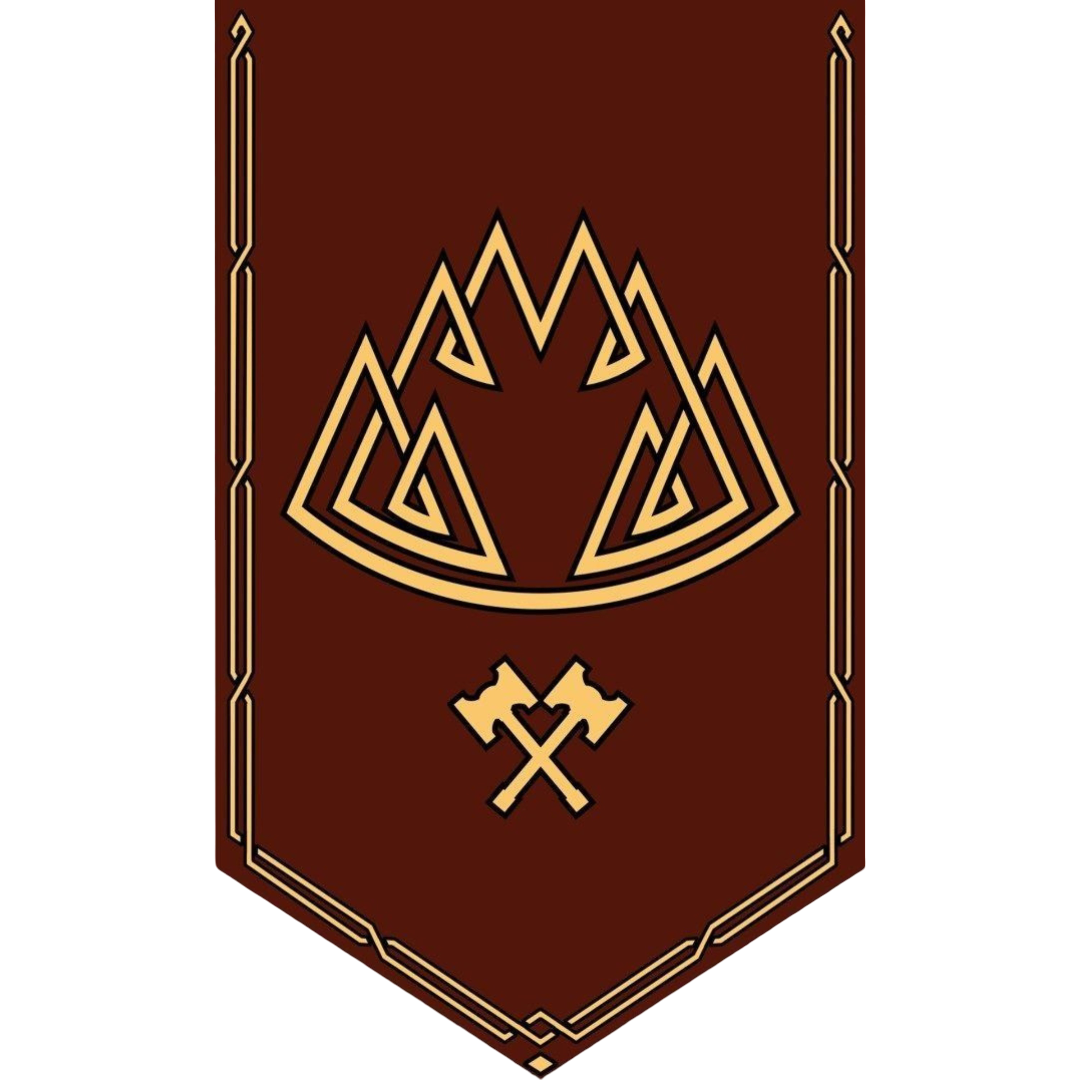

Comments