
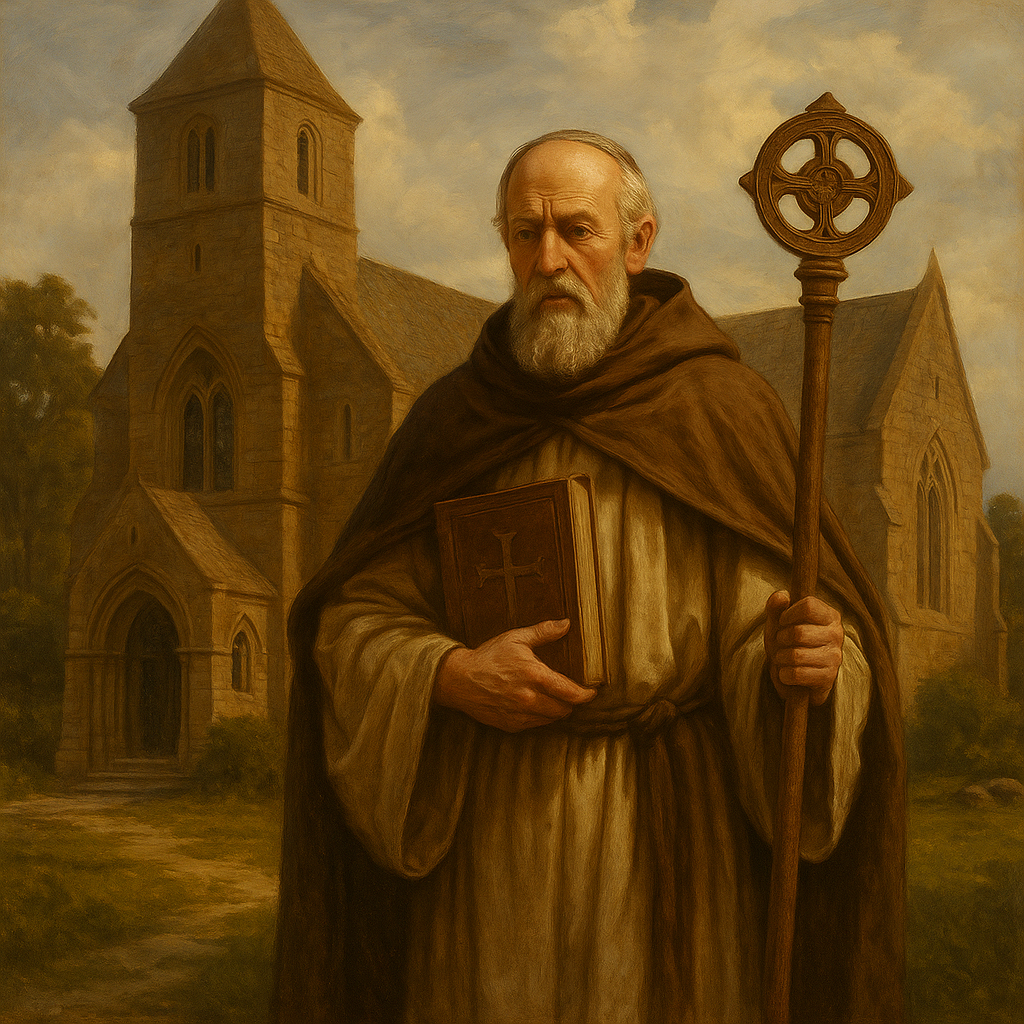
Cleric
"Not with sword, not with flame, but with the word that binds heaven to earth."
A Cleric is not steel, but scripture; not the hammer of the gods, but their breath. Where Paladins strike with the visible hand of their patrons, Clerics serve as the interpreters, conduits, and arbiters of divine will, channelling the gods’ silence into miracles of flesh, fate, and fire. They are the theologues and tacticians of the faithful, who turn oaths into laws, visions into power, and prayer into binding magick. The distinction lies in purpose. Paladins are divine soldiers, Clerics are divine minds. They wield not brute conviction alone, but study, debate, and ritual. When Druvain's forge-song hums in a cleric’s blood, they may mend shattered blades or drive the labor of ten men in a day. When Chiniae’s mercy pours through them, they may grant calm to an army or lift plague from a village with the gentlest touch. Ny'yala’s clerics see through time’s veil, recording cycles of fate so that kings march to their doom wittingly and prepared. Even Xaethra, though reviled and scantly worshipped, grants her clerics of envy whispers that split councils and whose tongues drip poison sweeter than wine. A Cleric’s miracle is not always thunder and light, sometimes it is subtle, a harvest preserved, a wound mended before infection, a secret remembered that should have been lost. Yet make no mistake, when pressed, Clerics can summon fire, scourge demons, or bind revenants in chains of holy script just as surely as a Paladin can drive a blade through them. Their strength is their flexibility, their ability to shape the gods’ will into many forms, suited to temple, battlefield, and council alike. But with this power comes peril. Faith in the gods is absolute in domain but mutable in interpretation. Clerics walk a knife’s edge between devotion and dogma. One may cure famine; another, in the same breath, condemn a village for lacking proper rites. A cleric’s gift is conviction made manifest, and conviction can heal, or destroy.Qualifications
Clerics are chosen not in a single crucible of ordeal like Paladins, but over years of devotion and study. The gods’ silence means most aspirants are trained by older clergy, learning rites, scripture, and interpretation. Yet no education alone can make a cleric, only faith can. A farmer who kneels before Chiniae’s shrine and wills forgiveness with perfect clarity may find their prayer answered more surely than a priest of thirty years. Still, true clerics often rise through:
- Seminary Rites: Long apprenticeships beneath existing clergy.
- Trial of Silence: A month or more without speaking, proving they can bear the silence of the gods.
- Trial of Scripture: Transcribing holy texts by hand until their faith bleeds into ink and paper alike.
Requirements
To serve, Clerics must:
- Uphold the domain of their patron deity, mercy for Chiniae, labor for Druvain, stufy for Thalyss, and so forth.
- Study scripture to prevent their faith from dissolving into self-made heresy.
- Maintain ritual purity as defined by their order (though these rules vary greatly).
Appointment
A cleric’s anointing is rarely grand. Often it is confirmed through quiet ritual, ashes upon the brow, immersion in river-water, scars cut into palms. The Knights of All-Faith record such initiations, but independent cults and sects invent their own, sometimes as simple as drinking consecrated wine, sometimes as grotesque as bleeding out into soil.
Duties
Clerics must:
- Keep the scripture alive through ritual, reading, and reinterpretation.
- Guard the faithful, not with sword, but with blessing and judgment.
- Conduct rites of burial, blessing, marriage, and covenant.
- Serve as mediators between mortal and god, interpreting omens.
Responsibilities
Unlike Paladins, who are constantly patrolling and fighting, Clerics’ burdens are more cerebral, fasting, chronicling visions, leading councils, interpreting rival doctrines. They spend countless hours in prayer, learning to parse silence itself. Yet they are also required to face the battlefield, where their role is equal parts healer, inspirer, and arbiter of miracles.
Benefits
Clerics gain benefits tailored directly to their god’s domain:
- Caelbrith: Severing curses and ending hauntings.
- Chiniae: Healing of plague, reversal of poisons, pacification of hostile spirits.
- Druvain: Blessing of tools and laborers, making weapons stronger and fields more fruitful.
- Ny’yala: Prophetic visions, manipulation of time’s flow (slowed wounds, hastened healing, glimpses of fated events).
- Orram: Cloaking secrets, silencing voices, unveiling hidden truths.
- Thalyss: Perfect recall, mnemonic wards, protection of memory itself.
- Xaethra: Influence over envy, lust, combat, and hunger, corrupting hearts to serve their will.
Accoutrements & Equipment
Clerics wield relics of faith rather than arms, staves, censers, scripture-blades that cut not flesh but spirit; Though conventional weapons are relatively common on the battlefield. Many carry illuminated tomesc called 'Tenents.' said to weep if blasphemy tot heir God is spoken nearby. Their vestments vary, Druvain’s clerics wear ash and soot, Chiniae’s wear plain white veils, Ny’yala’s mark themselves in endless spirals of ink.
Grounds for Removal/Dismissal
A cleric is unmade not by dismissal but by silence. When their god ceases to answer, their miracles cease. Some heretics are struck by wasting plagues, others burned by divine fire. The Knights of All-Faith declare apostates “fallen” and strip them of rank before execution.
History
The first clerics were not born in triumph but in desperation. When Xaethra’s infernal host poured into Gaiatia during The Fall, mortals cried out, not to kings, nor to armies, but to the silence of the heavens themselves. For ages the gods had spoken only in riddles, clouds shaped like omens, dreams that bled into waking. Yet in those days, for the first and only time, they answered plainly. Where a priest once muttered prayers over grain, now his words kindled fire that seared devils. Where a grieving widow begged for mercy, her tears became light that knit torn flesh. These were the first clerics, mortals whose conviction cracked the silence wide enough for power to pour through. Unlike the Paladins, who were chosen like swords raised from the forge, clerics were diffuse, varied, even contradictory. They rose from temples, barns, hovels, battlefields, anywhere a prayer was screamed loud enough to echo. Some received visions, others felt nothing but found their hands glowing when touched to the dying. The gods themselves gave no explanations. It was faith alone that proved the conduit. In this way, clerics became the most visible evidence that worship could re-shape the world. In the centuries that followed the Schism, clerics multiplied into countless forms. Some tended famine-stricken villages, calling rains at the cost of their own years. Others were drafted into wars, bending their tenets into weapons, turning blessings into curses. The very ambiguity of divine silence made them tools for every cause. For every healer kneeling over the sick, there was a battle-cleric sanctifying slaughter in the name of Ny’yala’s cycles or Druvain’s forge. For every temple that opened its doors to the poor, another closed them and demanded coin or blood. Faith empowered them equally.
This duality gave rise to conflict. Entire sects split over the meaning of their gods’ last spoken words. The “Merciful Flame” of Druvain’s clergy claimed fire was meant for warmth and renewal, while the “Anvil Creed” demanded it be used only for war. Civil wars were fought not between kings but between clerics of the same god, each certain they alone preserved the true covenant. Out of this bloodshed, the Knights of All-Faith rose, not merely to police Paladins, but to force clerics into uneasy unity. Their solution was bureaucracy, codified scripture, canon law, and councils to interpret silence. Clerics chafed, but most submitted, for fear of being branded heretics. Even so, the faith of clerics has never been contained. The Scholar's Guild catalogues hundreds of variations, forest hermits who bleed into soil and call themselves Druvain’s hands; sailor-priests who pray to Ny’yala for tides and hear her answer; plague-healers who swear that even Chiniae’s mercy sometimes demands the grave. Where Paladins embody the gods as steel given flesh, clerics embody them as whispers given voice, shifting, contradicting, surviving. Today, clerics remain the most common channel between mortals and the divine. They birth miracles in hovels and cathedrals alike. They are mistrusted by rulers, too close to the people, too unpredictable in loyalty, but revered by the desperate who see in them the only proof that the heavens still watch. And though the gods have long since withdrawn, every time a cleric’s prayer draws blood back into a dead heart, or light into a battlefield’s night, the silence feels thinner.
Cultural Significance
Clerics are seen differently across the world. To peasants, they are healers and intercessors, binding wounds of both body and soul; Though most are hoarded away in cloistered chapels far from where folk need these talents most. To nobles, they are threats, preachers whose sermons sway more hearts than laws. To scholars, they are anomalies, proof that the gods’ silence is not complete. Among the devout, they are scripture made flesh; among the cynical, manipulators no different than merchants or lords.
Notable Holders
- Ancelon Valmore: First of the royal line, Cleric of Chiniae, famed for halting executions by pardoning even the blatantly guilty; Remembered by varying accounts as the holy warrior who thwarted Vile's ritual, that while causing it to fail thus ceasing his rampage at Xaethra's behest, did launch the world into The Great Schism soon after. A figure both a boon and a curse depending on how the tale is told and by who, but none today can say for sure.
- Hieronynous Veyl: Cleric of Ny’yala, whose visions guided Everwealth’s armies during the early Schism, though some claim he engineered defeats to match prophecy.
- Mother Sereth: Heretic cleric of Xaethra, executed for seducing an entire ducal household to revolt against crown and church.
- Vile: Perhaps the most infamous testament that the gods answer conviction rather than conscience. Vile, the devil at the head of Xaethra’s legions, is remembered mainly as a ravenous conqueror who's hubris damned our world; But his legacy is also that of a cleric in truth, one whose faith in his mistress, or at-least in what she represented, was pure enough to wield her divine power to terrifying extent; Sometimes referred to as a 'warlock' due to the titles' more-wicked implications in Everwealthy culture though this is incorrect, Vile was a Cleric by definition. His chants split earth and sky, his blessings turned mortal soldiers into ravening agents of envy, and his liturgies reshaped battlefields into carnivals of ruin. He proved that clerical authority is not bound to mortal flesh nor moral law, it belongs to any who worship without fracture. Though despised, Vile’s example is often whispered in theological disputes as a reminder, clerics are not inherently good, only inevitably faithful.
Status
Clerics are active in every region, though orders vary wildly in legitimacy and practice. Some are sanctioned by the Knights of All-Faith, others hunted as heretics.
Form of Address
Clerics are addressed with titles of deference or ritual: 'Father', 'Mother', 'Brother' or 'sister'. In formal invocation they may be called 'Shepherd of [God’s Domain]' or 'Speaker for [God’s Name]'.
Alternative Naming
'Scripture-Bearers', 'Saints of the Tongue', 'God’s Breath'.
Equates to
Clerics are known by many names across cultures, each reflecting how their society interprets the strange balance of silence and miracle that defines them:
- Human Kingdoms: Cleric or Father/Mother of the Cloth, the most common terms, often spoken with a mixture of reverence and suspicion.
- Orcish Clans: Voice-Singers, because they believe clerics sing with the echoes of the gods, whether for mercy or war.
- Elfese Tribes: Tide-Scribes, likening them to those who record the ebb and flow of Ny’yala’s cycles, guardians of memory and fate.
Source of Authority
Their authority derives entirely from their god’s domain, filtered through scripture and order. They hold no crown or chain of command outside faith.
Length of Term
As long as their faith remains unbroken, so too do their miracles. Many die of age or martyrdom; few live to see silence take them.

Comments