
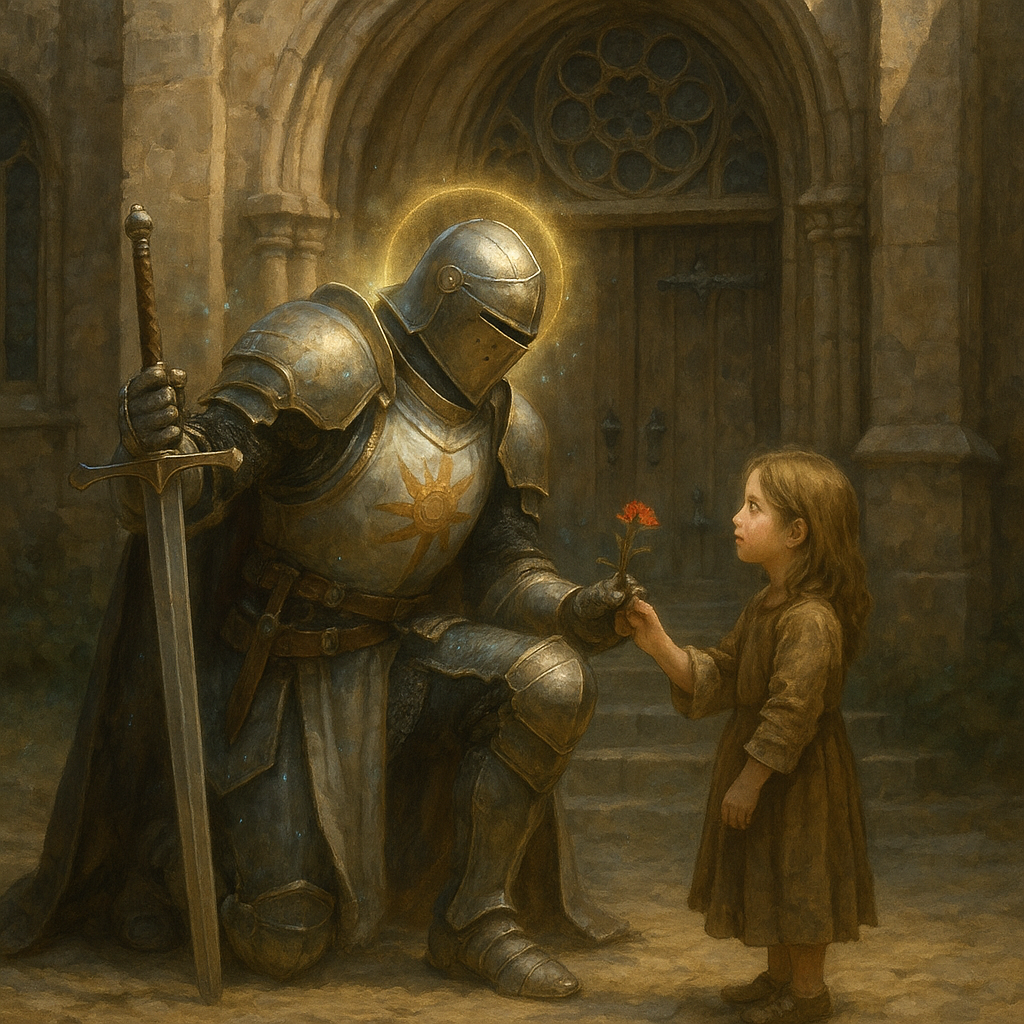
Paladin
"Steel alone may slay a man, but faith makes steel slay the unslayable."
A Paladin is a mortal reforged into the image of divine intent, gifted not with vague blessings but with weapons of flesh, spirit, and steel that no enemy of Everwealth can withstand. When a soul proves unbreakable in faith, the gods answer with power that shapes the world as surely as iron shapes a blade. A Paladin bound to Druvain may wield hammer and shield until they burn white-hot, never tiring, never breaking, even when the bones beneath would have long since given way. One who swears beneath Chiniae’s gaze may lay a hand upon a sinner or a corpse and drag them back from the brink, the still heart beating again as though guilt and death alike were pardoned. Ny'yala's chosen feel time bend around them, the arrow slowed, the wound mending faster than nature allows, the cycle of ending and beginning written into their every strike. These are not abstractions as the gods are, but pieces of their power made manifest, visible gifts, armor that shines in storms, blood that resists poison and blight, a voice that commands beasts, men, and demons alike. Devils recoil from the toll of their war-cries, Witches’ hexes wither upon their skin, and revenants crumble when their oaths are invoked. To the gods, Paladins are instruments that strike where their own hands cannot reach. To mortals, they are proof that faith itself can wound the unkillable and shield the helpless. Paladins are thus feared and revered in equal measure. To the devout, they are saints-in-the-making, vessels of their gods’ unanswerable will. To the guilty, they are executioners whose blades toll like bells in the dark. To the Paladins themselves, the role is both exaltation and torment, every vow binds them tighter to powers they only partly understand, and every battle erodes the line between faith and fanaticism. They are soldiers, judges, and sacrifices all at once. Unlike clerics, who act as conduits for prayer, or sorcerers who bargain with patrons, Paladins are chosen to enact, to carry the gods’ purpose into blood and earth, and to die screaming if that purpose demands it.
Qualifications
A Paladin is not made by study or apprenticeship alone, but by ordeal. Most are chosen in moments of extremity, on battlefields where faith does not break, at pyres where innocence still clings to a final prayer, in hunger or in grief where supplication outlasts despair. When such moments are judged true by a god, the bond is forged, be it through fire or diligence, and the mortal becomes more than flesh forevermore. Oaths manifest as literal power, and the chosen awakens from fire, frost, silence, or light remade. Unlike mage-scholars or witch-blooded, no Paladin is born to their gift; all are seized by it.
Requirements
Those who would endure in the role must:
- Uphold the virtues of their patron deity’s domain, lest their bond dissolve into madness.
- Swear oaths that may never be unspoken, save at cost of their soul.
- Resist corruption of greed, devilry, or ambition, for the gods strike oath-breaking Paladins down more cruelly than any heretic.
Appointment
Unlike clerics licensed by the Arcane Coalition or priests recognized through ceremony, Paladins are anointed only by ordeal. Some awaken amid battle, rising from wounds that should have slain them. Others are seized during ritual trials, surviving fire, fasting, or drowning where no other mortal could. Those who emerge changed are bound to service. Their appointment is not celebrated with feasts, but with silence, the understanding that they are no longer fully mortal, and their lives are no longer their own.
Duties
Paladins serve not as mere enforcers but as the physical hand of divine order. Their charge includes:
- Smashing devil, witch, and revenant where lesser weapons fail.
- Guarding relics such as The Radiant Tongue or lost hymn-blades.
- Acting as exemplars of their faith, living scripture for the folk.
Responsibilities
Daily burdens weigh heavily upon Paladins. They must train ceaselessly to master both arms and divine resonance, patrol lands where infernal influence festers, and submit to inquisitions of their own brethren to prove they remain untainted. They are also expected to take apprentices, not squires in the knightly sense, but young faithful who learn how to suffer, endure, and one day break beneath divine choosing.
Benefits
While revered, Paladins enjoy little luxury. Their true benefits are supernatural, wounds close where faith remains, their words bear the gravity of divine command, and their presence alone can rout lesser devils. Politically, they hold near-total immunity when acting under the banner of their god, though such immunity breeds resentment and fear among rulers who know the gods cannot be bribed or swayed.
Accoutrements & Equipment
A Paladin’s armament is chosen not by whim, but by omen. Their armor and blade (or in Saint Edravos’s case, revolver) are often relics wrought through visions. Many carry etched scripture upon their weapons, runes that glow when the oath is spoken. Their symbols vary by patron deity, Druvain’s hammer, Ny’yala’s spiral, Chiniae’s unbroken blade, Caelbrith’s black veil. These tools are not merely weapons, but extensions of covenant.
Grounds for Removal/Dismissal
No Paladin has ever been “dismissed.” Those who break their oath or betray their domain are unmade. Some burn alive from within, their blood igniting as their patron withdraws. Others wither into husks, cursed mockeries called Oath-Broken, whose shadows still fight in rage against their gods. Among the faithful, this fate is feared even more than death.
History
The first Paladins rose during The Fall, chosen as living answers to Xaethra’s infernal tide. They carried the will of the gods where no mortal army could stand. When The Great Schism shattered Gaiatia upon her defeat and the gods left us in silence, Paladins turned their might upon one another, faith against faith, oath against oath, until the bloodshed grew intolerable. From this ruin, the Knights of All-Faith were founded, a holy order tasked with binding the many domains into one code of service. The Radiant Tongue, forged by Saint Edravos with Druvain’s vision, was enshrined as their most sacred relic, a reminder that the gods speak through steel, and that faith without unity will always collapse into slaughter.
Cultural Significance
Across Everwealth, Paladins are figures of awe and terror. Villagers whisper of them as saints walking in flesh, saviors who bring mercy and wrath in equal measure. Yet many also fear them, seeing not guardians but zealots who wield gods like axes. Among Elfese, Paladins are sung as heroes who preserved fragments of Chikara during the Fall. Among humans, they are symbols of tyranny as much as deliverance, their oaths indistinguishable from conquest. Among orcish clans, Paladins are admired as god-blooded warriors, but pitied, for no orc believes such oaths can end in peace.
Notable Holders
- Saint Edravos, the Forge-Saint - Among the founding members of the Knights of All-Faith and creator of The Radiant Tongue, guided by Druvain’s hand. His relic revolver remains the order’s greatest proof of legitimacy.
- Sir Deymar of the Pyre - Remembered for the purge of Bogshield, where his zeal turned pyres into a sea of fire. Both saint and butcher, depending on who tells the tale.
- Lady Cerys Ashmantle - Martyred Paladin who defended three villages alone against a devil-legion during The Fall, remembered as “the Last Wall.”
- The Black Oath - An unnamed Paladin who betrayed their vow and became something hollow. Said to still wander the wastes clad in burning armor, hunting both the innocent and the guilty.
Status
Active but rare.
Form of Address
'Lord/Lady', 'Paladin' or 'Saint'.
Alternative Naming
'The arms of the Gods'.
Source of Authority
The Gods alone dictate the creed of the Paladin. And the Gods will not be defied.
Length of Term
The Paladin's tenure as-so only ends when they shed their mortal coil, or if their oaths are broken. To the oath-breaker, this means most-often a horrible, horrible death.

Comments