
Orram
“Every hand that reaches for light only drags another deeper into his embrace.”
Orram is the pressure in the deep, the unseen hand that drags downward, the concealed weight of all things that lie beneath. Where seas crash and tides swallow, where secrets are buried under stone, where silence hides violence waiting to erupt, there Orram lingers. He is not storm nor famine, but concealment itself, the eternal press of what lies under and out of sight. To the fearful, Orram is a devourer, the abyss that drowns without mercy. To his followers, however, he is revelation, for what is hidden may be wielded, and what is buried can be unearthed for power. Unlike Xaethra’s hunger that demands openly, Orram’s call is muffled, patient. He rewards those who keep secrets, who understand that what lies beneath the surface is stronger than what splashes above. Fishermen mutter his name when they dredge up strange treasures from blackwater depths. Assassins pray to him before striking unseen. Entire monastic orders revere him as the god of silence, cloistered in caves or sunken vaults, meditating on what it means to live beneath notice. His shrines are not temples but wells, deep pits, and drowned caverns, where offerings of weighted stone, ink, or even living sacrifices are cast to vanish into the dark. Among the pantheon, Orram is balance and terror both. Where Nyyala spins cycles of renewal, Orram holds what has been ended in stillness, buried so it cannot rise again. Against Caelbrith, the Veil Between, he is brother and rival, the dead pass into silence, but Orram keeps their secrets drowned, hidden from fate. Druvain’s forge rumbles in open fire, but Orram’s patience tempers his heat, hiding strength until the moment it bursts. And Xaethra, the Wanting Maw, gnaws openly at all things, while Orram swallows them in silence, a predator that consumes not to flaunt but to erase. His presence in society is quieter than other gods, but his influence is everywhere, in every whisper, every deep well, every secret held until it crushes those who cannot bear its weight.
Divine Domains
- Primary Domains: Depth, concealment, pressure, submergence. He rules what lies beneath: the weight that compresses, the hidden kept down.
- Secondary Connections: Secrets kept, latency, shadows, burden-bearing. Strength held back until the moment of release; truths stored under strata.
- Tertiary Reflections: Compression and collapse, drowned memory, silted-over pasts. Things not ended (Caelbrith) nor turned (Ny’yala), but pressed under, enduring, unseen, dangerous when finally unburied.
Artifacts
- The Abyssal Stone: A black rock said to pulse faintly when held to the ear, whispering secrets buried by the drowned. Often used in rituals of initiation among monastic cults.
- The Drowned Bell: A great bronze bell pulled from a sunken ruin. It rings only underwater, its sound breaking minds rather than air.
- The Lurker’s Veil: A robe woven from kelp and night-feathers. When worn, the bearer blends into shadow and water alike, but each time it is used, the wearer loses a memory, pulled into Orram’s abyss.
Holy Books & Codes
Unlike others, Orram’s scripture is rarely written. His teachings are oral, hidden, drowned in riddles or chanted as low dirges. Still, fragments survive:
- The Sunken Codex: Pages soaked and half-rotted, impossible to preserve fully. It insists that silence is power, and speech is surrender.
- The Weight of Stone: A series of carved tablets instructing how to bury sins, literally or figuratively, beneath earth or water so they cannot rise again.
Divine Symbols & Sigils
- A spiral sinking downward, etched in black or blue.
- A single hand beneath a line of water.
- A weighted stone tied with rope, cast into sea or well.
Tenets of Faith
- What is unseen is unbroken. Hide your strength until it is needed, then let it crush.
- Secrets weigh, but the weight makes you strong. To carry what others cannot is holy.
- Patience is power. The tide does not hurry, yet nothing withstands it.
- Drown the unworthy. That which cannot bear the deep does not deserve to rise.
Holidays
- The Tidelock (Amethyst 12th): Observed at coastal towns and monastic enclaves. Worshippers submerge themselves in silence, fasting from speech for a full day, mimicking Orram’s depth. Ritual drownings, sometimes symbolic, sometimes not, are performed to mark the cleansing of secrets.
- On Harrow Day (Topaz 30th), Xaethra’s followers mock, but Orram’s cults instead honor the drowned dead, tossing offerings into the sea for those lost to the Fall.
Divine Goals & Aspirations
Orram’s purpose is concealment, but not for its own sake. He ensures secrets remain buried until their weight collapses worlds. His goals are less about ambition than inevitability:
- To keep hidden what must not rise. Orram devours knowledge too dangerous for mortals, holding it in his depths.
- To make silence the crucible of strength. He teaches that only through stillness, through endurance, can true power form.
- To erode all illusions. What is spoken can lie, but what silence keeps is always true.
- Followers whisper that Orram’s silence is not absence but waiting, that one day, he will unseal all that he has buried, and the world will drown in truths too heavy to bear.
Physical Description
General Physical Condition
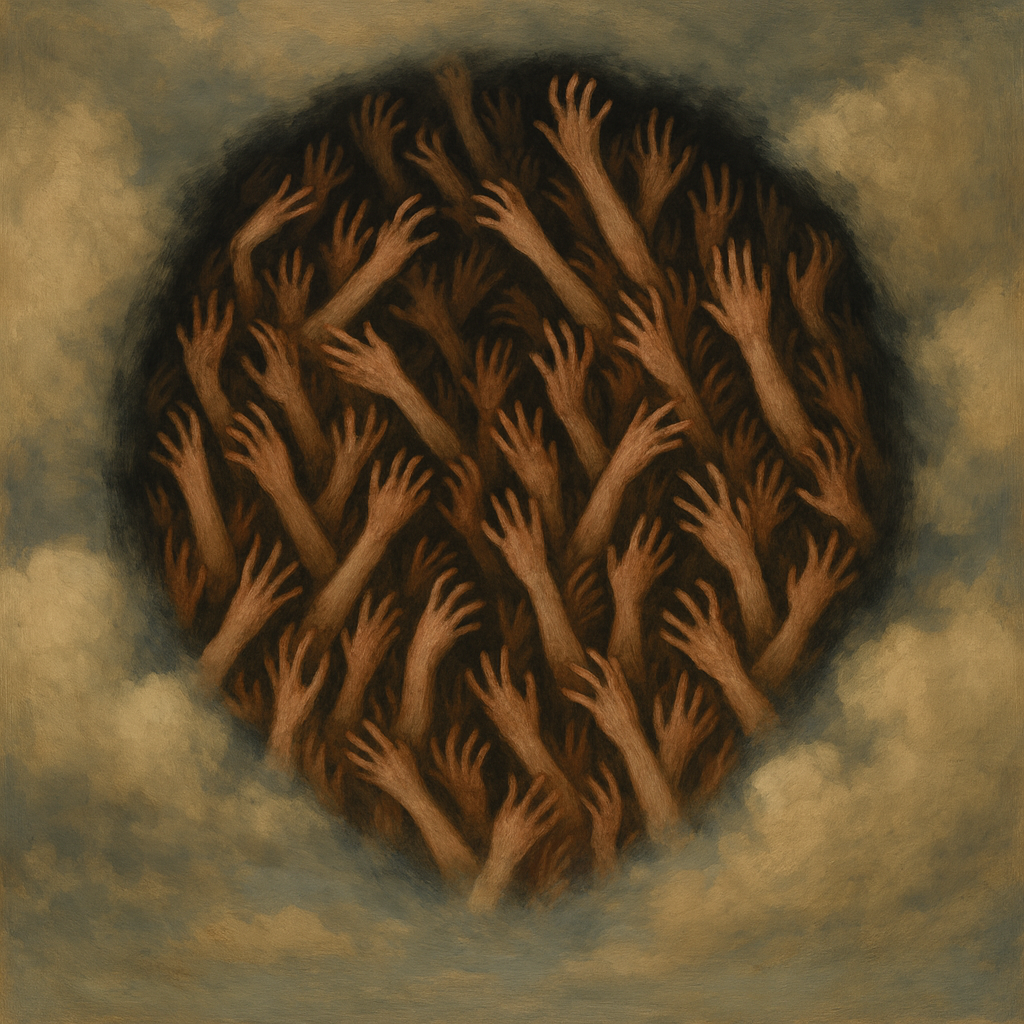
Orram’s truest manifestation, to mortals who have glimpsed him, and survived long enough to speak, exists as a a formless void that devours all light around it. Orram is the only god fabled to have attempted to appear in The Folklands physically, and how we both know of today of the terrible dangers such an action brings; Legends tell of one day in the earliest years of The Origin Age, long before we knew his name, that the clouds parted into a pit of emptiness that pulled at the eyes and lungs alike. Within that void drifted translucent, half-visible arms, grasping and clawing at one another, each dragging the next deeper into the collapsing dark in any way it could. A sight at once obscene and silent, the sky above collapsing into itself like a wound that would not close. Witnesses describe the feeling of being lifted upward while pulled downward at the same time, ribs constricted as though the air itself was pressure, their mind being pulled in a hundred places at-oncce. Those who endure this vision did not remain whole. Many left scarred in body and mind, lungs filling with saltwater where none existed, veins standing out like ropes along their arms, or eyes permanently milked white, blind yet haunted by the memory of Orram’s gaze, claiming to still see it every waking moment. Some of his priests claim this form as a kind-of divine warning, a reminder that depth and concealment are not confined to sea or stone, but descend wherever shadows are strongest, even in the clouds above. He does not only wait beneath the waves, he waits wherever mortals believe themselves safe from being swallowed. Because a gods' true presence annihilates to-be-sure, Orram most often communes through lesser masks mortals can withstand, from a great distance, dreams of drowning in clear air, visions of a dark silhouette walking just beneath the surface of mirrors or still ponds, voices pressing down in silence heavy enough to bruise the spirit. To follow Orram is to invite this weight into one’s life, to carry secrets and silence until they become both shield and shackle.
Divine Classification
God.
Children

Comments