
Tanks
"The ground remembers their tread. The dragons remember their fire."
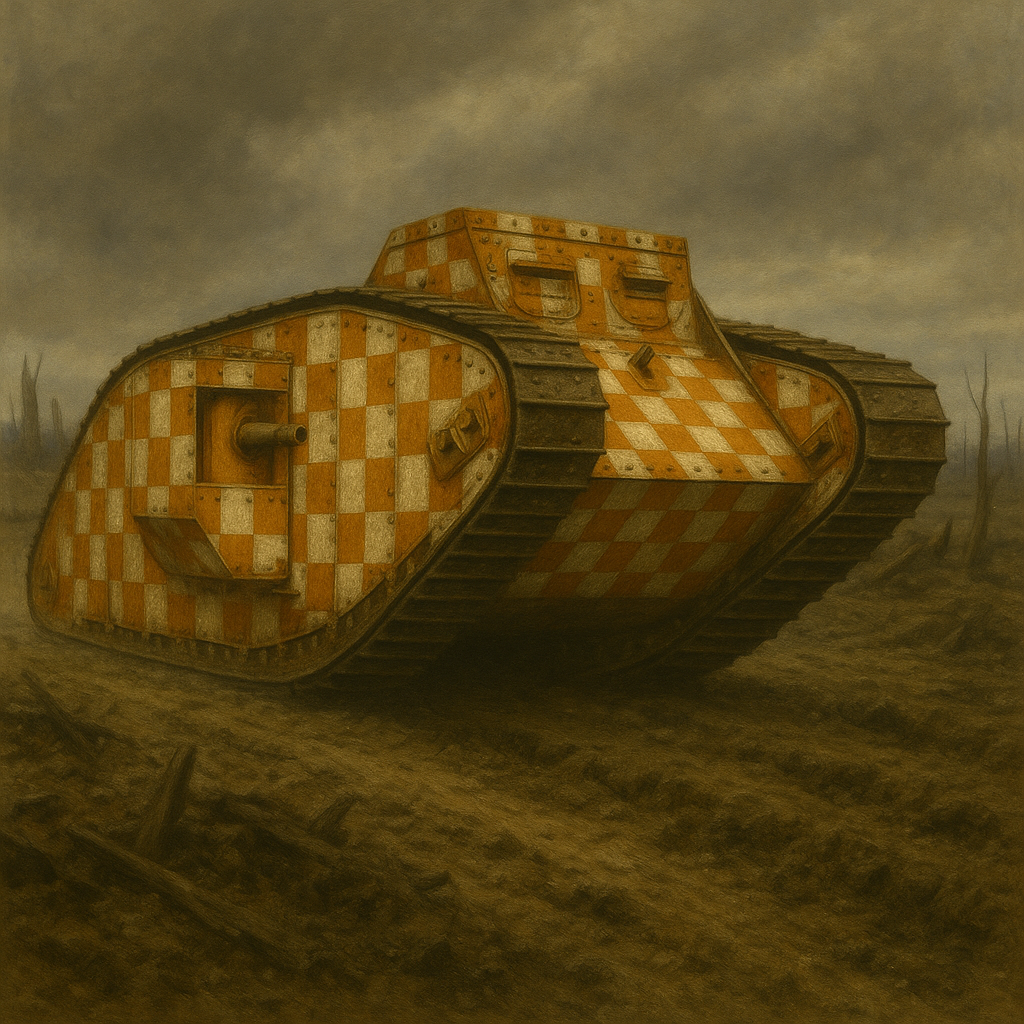
There are weapons that alter wars, and others that alter worlds. The tank was both. Born from the closing centuries of The Lost Ages, it stood as the iron embodiment of supremacy, an armored fortress on treads, capable of leveling castles, silencing mages, and felling Dragons. It was the moment flesh and faith learned fear of steel. Where once spellcraft ruled, the tank answered with its own divinity, motion, fire, and indifference. When first unveiled, their arrival changed not only the battlefield, but the very imagination of war. Here was a weapon that did not flinch, tire, or hesitate. It did not need courage or conviction. Its roar alone could drown the chants of a thousand Warlocks. Built first to turn that roar skyward toward the oppressive Dragons, it proved so effective that it nearly erased them; And proved just as-effective at waging war against eachother once the dragons had all-but gone. Now, centuries after The Great Schism, only a handful remain, entombed in warehouses guarded like castles. Their engines drink fuels that no alchemist can truly replicate, their tracks kept alive by cannibalized parts from their rusted kin. The sight of one moving again through the streets of Opulence or Bordersword is no reassurance of security, it is an omen of much bloodshed to come.
Utility
Designed as engines of absolute supremacy, tanks were the apex of pre-Schism warfare. They were not built to hold territory or to protect soldiers, but to end battles before they began. A single tank could crush walls, scatter armies, and burn through spell-barriers that once rendered ordinary weapons useless. In the modern era of The Civil Age, their use has narrowed but not diminished. Against dragons, undead marches, or now the Elfese forces of Kibonoji, they remain the decisive weapon. Their thick hulls laugh at crossbow fire and shrug off most magick. But each deployment carries tremendous cost, every shell spent, every mile traveled, burns away the dwindling alchemical lifeblood that sustains them.To see one rolling east toward the warfront is to know that diplomacy has failed.
Manufacturing
True tank production died with The Fall. Their creation required Lost-Age forges, alchemical pressure engines, and precision-hardened alloys beyond the reach of any craft today. Each surviving tank is a relic maintained by ritual as much as repair. The core of every tank is its ether-burn engine, a volatile combustion system using refined Aether-oil, filtered through crystal catalysts and sealed by runic pressure chambers. These engines do not merely burn fuel; They consume it into resonance, creating a hum that once shielded the hull from elemental magick. But that fuel, drawn from pre-Schism refineries buried or destroyed, has no perfect substitute. The Monarchy’s alchemists experiment endlessly to recreate it, yielding mixtures that corrode, backfire, or ignite in violent self-destruction. Of the hundreds once forged, fewer than two dozen still breathe smoke.
Social Impact
The tank did more than change warfare; It changed belief. To the common soldier, it was proof that man could match gods. To kings, it was proof that no throne was safe. Even now, their memory divides the world between those who fear them and those who covet them. In Everwealth’s streets, their return to motion is seen as an ill omen. When the engines roar to life and cobblestones tremble, markets close, and prayers are whispered. The people know what follows a tank’s passage is never peace. Among scholars and priests alike, debate still burns, was the invention of the tank a triumph of mortal will, or the beginning of folk’s punishment? Scholars of Ny'yalan theology argue that the tank is the final echo of a long cycle of pride, a machine that tried to replace fate itself.
Access & Availability
Tanks are among the rarest functioning technologies in existence. The Everwealthy monarchy claims ownership of the largest suppliy of remaining units, though a handful of private or rogue ones are rumored to lie dormant in forgotten vaults or the many bunkers hidden beneath The Cloudrend Mountains from the old days. The majority rest in Iron Lotteries, massive storage halls serving as both temple and tomb, where engineers scavenge parts from derelicts to keep the survivors alive. Each working tank has a unique name and lineage, its crew treating it as both weapon and god. Alchemical fuel alternatives exist in-lieu of their previous 'diesel fuel' that once fed them; But these concoctions are volatile, and rationed strictly under royal edict; Unauthorized ignition is punishable by death.
Complexity
A tank is a labyrinth of pipes, pistons, and temperamental mechanisms. Even the most accomplished artificers confess they no longer truly understand them, they merely appease them. Engines can seize forever if a pilot falters a turn. The smallest mistake can turn a tank into a furnace that devours its own crew. Every functioning tank is kept alive through cannibalization of others, each gear and valve a relic whose maker is centuries dead. The engineering required to rebuild one from nothing would demand an industrial resurrection the world is simply incapable of.
Discovery
The first tank was born not from curiosity, but terror. The dragons had turned war into extinction, their fire rendering armies to ash. Dwarfish engineers, Human tacticians, and Elfese scientists gathered in secret beneath the once wide and bountiful lands of Tarmahc across the sea to forge a counterstroke. They built a weapon that could crawl through flame and roar louder than thunder. When unleashed, the dragons fell one by one. The invention saved us from them, but damned us in-turn. For once the dragons were gone, there was no enemy left but each other. From that day, war was never again a contest of courage or creed, but of who had more steel left to burn.

Comments