
Maned
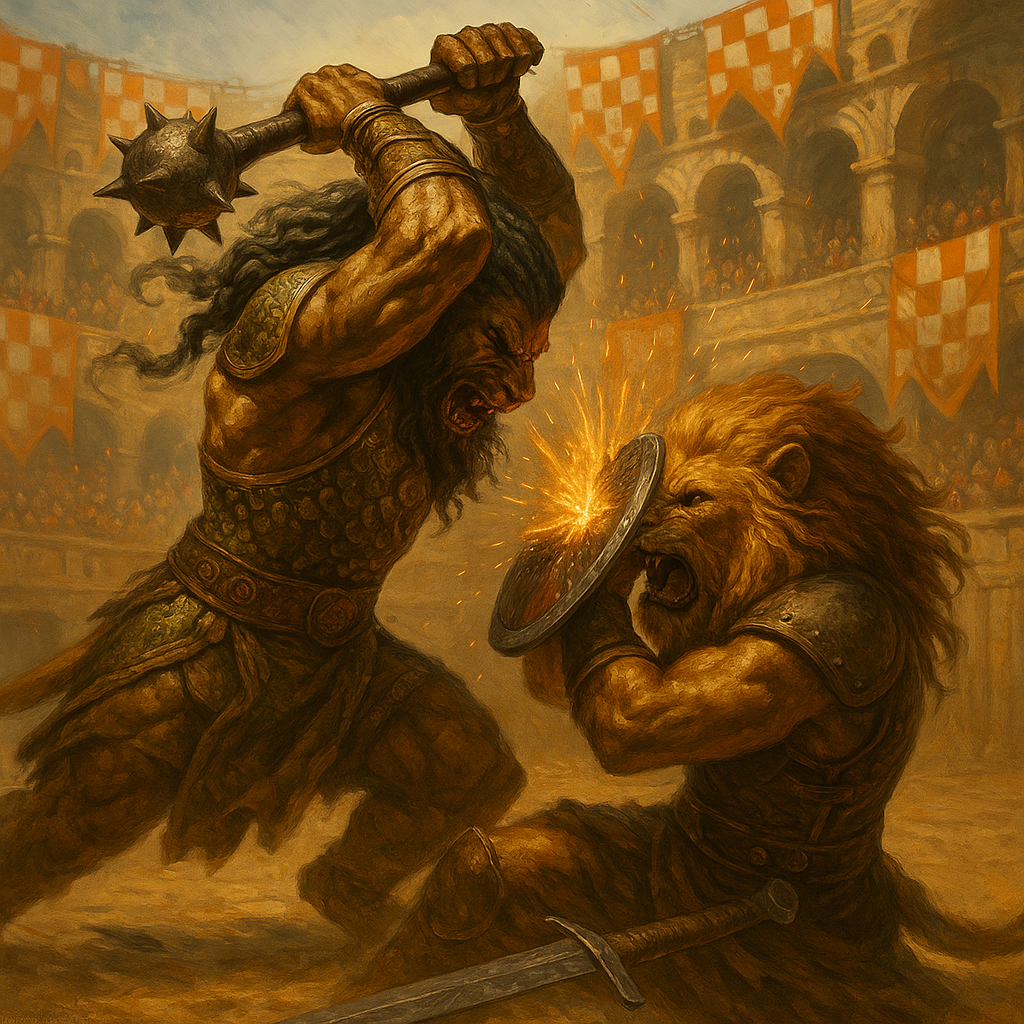
"Dajan's mace struck again so-quickly the sparks of steel meeting steel still danced across his enemy's shield. Slain before the sword ripped from his hand the strike before had hit the ground."
The Maned are a proud, leonine race native to the grasslands and mountain valleys of central Kathar, where endless savannahs roll into thorn-choked hills and dry river gullies. Their territory has never been a kingdom in the strict sense, too loose, too unmilitarized, too prone to fracturing into prides that gather when the rains are good and scatter when they are not. What they have built instead is memory and culture, a legacy of song, fire, and contest. Once rulers of fertile valleys and feared champions of arenas that stretched across Kathar, their numbers dwindled drastically during The Fall, near doubly-so as The Great Schism's hundred years of wrath that the Devils' invasion during the Fall had created. Yet their presence, though far rarer, is no less striking. The sight of their manes, their painted armor, and the deep-chested roar that can rattle bones across a battlefield remains enough to command awe. Their homeland, like all of Kathar, is a place half-wild and half-lawless. Maned prides persist in this middle country because no one has seen fit to drive them out. To the south, the Tuskites bleed themselves dry in endless wars and have no appetite for northern conquest. To the west, Canid tribes find them more useful as allies in hunting parties than enemies across their borders. Surrounding them in the remaining borderlands by an overwhelming majority, the Orcish clans keep them as spectacle, for the Maned arenas are too profitable to burn and too entertaining to abandon. Thus the Maned survive not through fortification or conquest, but because their enemies prefer them left alone, profitable, picturesque, and just dangerous enough to hire when needed. But if the savannahs gave them a homeland, the pits gave them a vice. Unlike many enslaved peoples forced into bloodsport, the Maned have often entered willingly. For them, combat in the eyes of thousands is not degradation but temptation, their pride and culture transmuting spectacle into sacrament. From the roaring amphitheatres of Opulence to Wardsea’s Saltblood Arena, from Bordersword’s brutal Arena of Blades to Twinpeak’s infamous Red Rings, they have become the ultimate draw, the warrior’s warrior, born for sand, steel, and the gaze of strangers. Where others see bondage, the Maned see legacy: scars traded for applause, names remembered longer for a single victory than a dozen quiet years in the grasslands. This duality defines them. At rest, they are regal, even relaxed, their movements slow, deliberate, unhurried. But in battle they are thunder, unmatched in speed and ferocity, able to face two or three trained humans with instinct alone. Their bodies remember Kathar’s wide skies, lean, swift, adapted to stalk and strike. Their spirits remember the stories told in firelight, of ancestors who roared stars into place, of prides who fought the first devils shoulder to shoulder, of champions whose glory was measured not in gold but in the awe of their people. And yet, for all that memory and dignity, their greatest weakness remains applause. A Maned may sleep through the storm, but gods help you if they wake in the middle of it, or worse, if they hear the crowd calling their name.
Naming Traditions
Feminine names
- Zahra.
- Mirevu.
- Kitala.
- Anari
Masculine names
- Thuran.
- M'Khoro.
- Dajan.
- Roketh.
Unisex names
- Esi.
- Tomo.
- Vashu.
- Leni.
Family names
Family names among the Maned are earned, not inherited, often referencing personal feats, nature, or legends. Examples:
- Stormdrinker.
- Ash-Braided.
- Claw Beyond Hills.
- Whispers-of-Fire.
Other names
- Dustmanes (casual reference to traders, neutral).
- Paint-fangs (nickname for Maned warriors who wear patterned war paint).
- Lazy Claws (slur used by Canid or Human rivals, mocking their tendency toward idle lounging).
- Prideborn (honorific used to reference Maned of proven lineage or renown).
Culture
Major language groups and dialects
The Maned speak Kathari, a language rooted in deep chest tones, rolling R’s, and vowel-heavy cadence. It often pairs with body posture and subtle growls to convey nuance. Examples:
- “Un’toro.” You are seen.
- “Keh’vasu.” Rise like sun on stone.
- “Rash’tai.” Enough. The fight is done.
Culture and cultural heritage
Maned culture is woven from three threads, kinship, honor, and memory. Oral tradition rules all. Stories are sung into firelight, passed through dance, gesture, and scarification. While they once maintained structured kingdoms, modern Maned exist mostly in tribal settlements across Kathar, each governed by elders, war-bands, or respected shamans. Gladiatorial games, once central to their way of life, are now rare and ceremonial. Despite decline, Maned pride remains unbroken. Their society is mobile, celebratory, and bound by respect, especially for strength earned without cruelty. Among outsiders, the Maned are often associated with the slave pits. But while Humans, Dwarfish, or Elfese are dragged to the sand in shackles, Maned stride into it of their own accord. To them, combat before a roaring crowd is an echo of their ancestral Fire Chants and ritual duels. In Opulence’s Merchant’s Quarter, entire noble houses gamble fortunes on Maned champions, while in Wardsea their likenesses are carved into driftwood idols outside taverns. For the Maned themselves, it is vice and virtue alike, proof of strength, but also proof of an endless hunger that cannot be sated except before the eyes of strangers. Many carry decorated spears or wear heirloom armor even in peacetime, symbolizing their eternal readiness to defend what is theirs.
Shared customary codes and values
- “Strength should inspire, not crush.”
- “A fool’s word travels faster than a wise claw.”
- “Do not challenge unless you intend to bleed.”
- Mercy in combat is sacred. Cowardice is not.
Average technological level
Maned technologies lean toward mobility and resilience: collapsible war tents, signal horns, curved iron blades, reinforced climbing harnesses. Their armor is layered hide, painted in tribe or family colors with runic stitchwork for spirit favor. Though not inventors, they are master adapters, refining foreign tech to better suit their needs, especially for trade caravans and travel gear.
Common Etiquette rules
- Never interrupt a storyteller or song-leader.
- Tail contact is reserved for close kin or lovers.
- It is polite to offer water or meat to a guest before speaking business.
- Grooming another’s mane or fur without consent is a deep insult.
Common Dress code
Bright robes, patterned sashes, and painted armor dominate. Maned in formal settings often wear color-coded cloths to denote role (e.g., red for warriors, gold for elders, blue for emissaries). Fur is kept neat, often braided with glass beads, feathers, or stone chips to represent deeds or lineage. Battle robes are tied high to allow for full mobility.
Art & Architecture
Art is loud, symbolic, and tactile. Masks, body paint, and dance form the core of their expressive traditions. Story-cloths stitched with vibrant thread depict ancestral histories, while drums and deep flutes accompany tales sung across the savannah. Their architecture varies by region: open-air longhouses in Kathar, layered tents among wanderers, and stone-sprawling pavilions along riverbanks, all with central fire pits and communal spaces.
Foods & Cuisine
The Maned diet focuses on meat, starches, and strong flavors. Grilled game, dried meats, and root vegetables dominate their meals, often seasoned with fire-kissed herbs or pungent spices. A favorite dish is Sunbone Stew, a thick broth of marrow, sweet yam, and smoked meat cooked for a full day. Sweet foods are a rarity and usually reserved for celebration, such as honey-dried fruit or ceremonial blood-fruit wine.
Common Customs, traditions and rituals
- The Fire Chant: A communal evening rite where stories are exchanged through dance, drums, and spoken rhythm.
- Bone-Marking: Warriors etch personal runes into bone talismans to carry into battle.
- Sky Watch: A night vigil undertaken alone before major decisions or rites, meant to gain clarity through silence.
- The Roar Call: A group chant before long journeys or battles, meant to wake ancestral spirits.
Birth & Baptismal Rites
Newborns are held up to the open sky during dawn or dusk and named by the eldest present. Ash and oils are applied to their ears and paws, and they are wrapped in a family cloth while a clan song is sung over them.
Coming of Age Rites
At roughly 15-17, a Maned youth must take down a wild beast without aid and return with its pelt, claw, or tooth. The trophy is added to their first armor or sash. Only then are they permitted to braid their mane as adults do.
Funerary and Memorial customs
The deceased are not buried. Instead, they are set alight upon elevated pyres as the clan sings their story. Ashes are scattered at the site of their greatest battle, or woven into tribal cloth to carry their spirit forward.
Common Taboos
- Sleeping during a Fire Chant.
- Refusing to answer a direct challenge, even verbally.
- Disrespecting a storyteller or elder’s tale.
- Cutting one’s mane or tail in grief without permission.
- Trading a family weapon or pelt unless dying.
Common Myths and Legends
The First Roarer: Said to have split the sky with his voice, scaring the stars into place.
Sunwalker’s Curse: A story of a pride that betrayed its own and was cursed to wander desert winds.
The Painted One: A trickster figure who speaks in riddles and always wins, except when laughed at.
Ash-Claw: A warrior who clawed so fiercely he set the ground ablaze, said to reappear in times of great danger.
The Sleeping Warband: A pride of fallen warriors resting in a cliffside tomb, said to awaken if Kathar ever falls.
Historical figures
- M’Khoro Sunspear: Legendary arena fighter who never lost a match but vanished mid-victory.
- Kitala of the Roaming Flame: United three rival tribes with a single fire chant and a shared hunt.
- Ash-Braided Zahra: The first Maned emissary to Everwealth, known for her unyielding diplomacy.
- Dajan Thornwake: A warleader whose caravan repelled five separate raiding bands with only twenty fighters.
Ideals
Beauty Ideals
A well-kept mane, vibrant fur, strong posture, and decorated clothing mark beauty. Scars are respected, especially those earned in ritual or defense. Body paint is used to highlight muscle, lineage, or celebratory marks.
Gender Ideals
Gender is fluid but honored. Certain roles may be dominated by one sex depending on tribe, but most acknowledge ability over biology. Elders and shamans often embody both feminine and masculine qualities in ritual.
Courtship Ideals
Courtship is both playful and fierce. Displays of strength, artistic skill, or storytelling prowess win admiration. Gifts of braided mane, meat, or pelt fragments are common. Roaring duets often mark public declaration of love.
Relationship Ideals
Partnerships are bonds of mutual respect. Whether brief or lifelong, each is marked by ceremony. Co-parenting is communal. Trust is sacred. Betrayal is not only shameful, it is remembered in song.
Interesting Facts & Folklore:
- Fur Etchings: Some Maned paint or etch stories into their fur with temporary dyes for celebrations.
- Roaring Games: Youth participate in playful, competitive roars to hone voice, breath, and endurance.
- Skybead Braids: Beads made from meteorite fragments are worn by warriors believed to be chosen by the stars.
- Claw-Walkers: Elite scouts trained to move silently on two or four limbs depending on terrain.
- The Sleeping Day: An accepted cultural practice where one day a month is spent entirely at rest, eating, grooming, and storytelling.
- “The pride watches.” You are not alone; act with honor.
- “Don’t claw the wind.” Wasting effort on the inevitable.
- “He roars with an empty belly.” All bark, no bite.
- “Tails down, claws up.” Prepare for battle.
- “Mane to fire.” Face the challenge head-on, no retreat.

Comments