
Elf
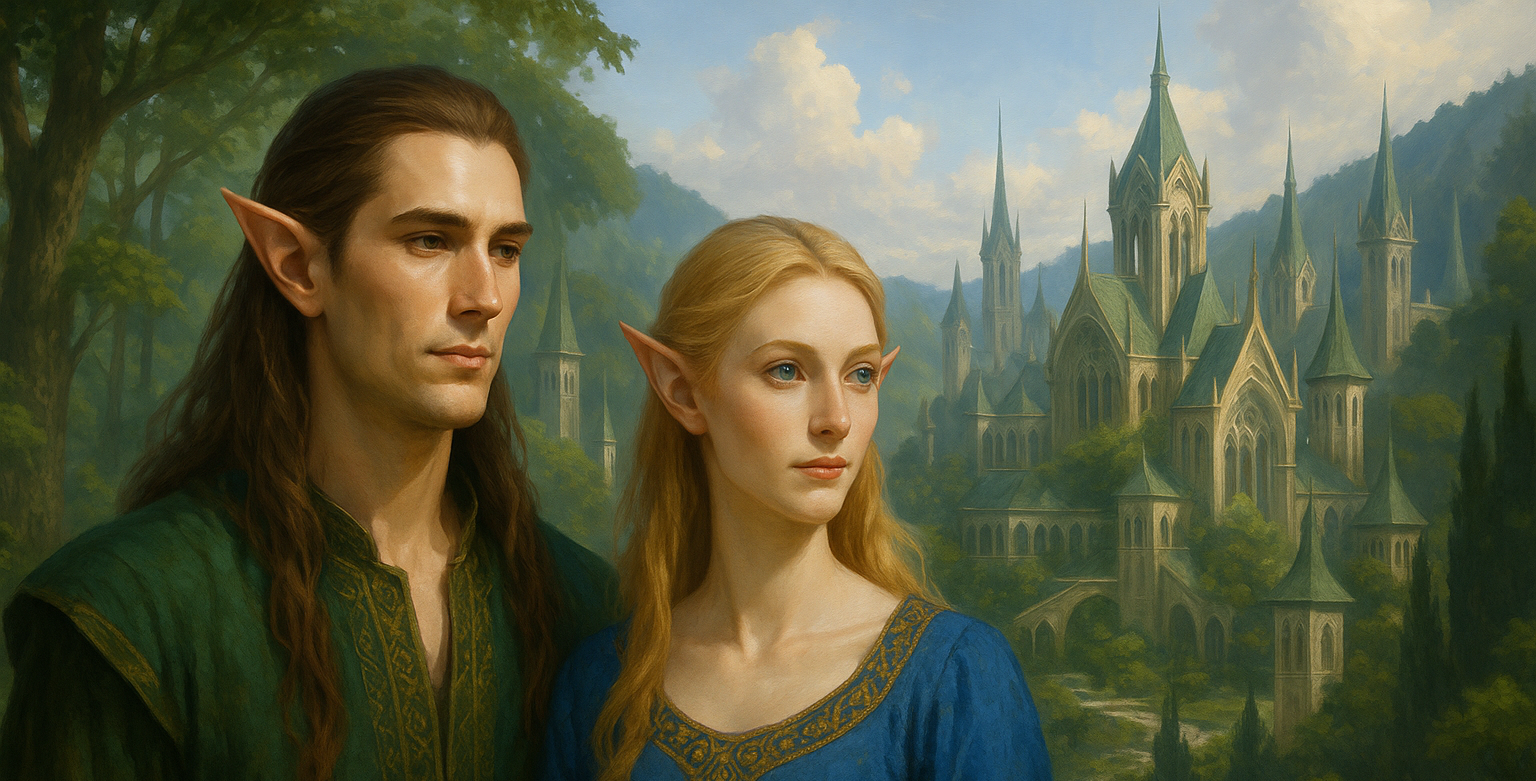
Elves are among the oldest and most refined of Tanaria’s races, known for their grace, perceptiveness, and profound connection to both nature and magic. Their appearance is ethereal, marked by fine features, little to no body hair, and a wide range of skin and hair tones similar to that of humans, that can include bronzed copper, pale blue-white,. their hair sometimes verdant green or blue, and shimmering silver or gold. Their eyes often resemble polished gemstones or liquid metal, glowing faintly with arcane life.
Though they are physically delicate compared to some of the hardier races, elves possess unmatched agility, dexterity, and precision. Their senses are finely tuned, and their awareness of their surroundings borders on preternatural. In battle, they favor elegant and effective forms—bows, blades, light armor—and fight with skill rather than brute force.
Culturally, elves place a strong emphasis on harmony, beauty, and legacy. Their cities are often hidden within forests, woven into the natural world rather than imposed upon it. They are skilled artisans, musicians, and scholars, though some pursue martial paths with just as much devotion. Their societies vary by subspecies, but most elves share a deep reverence for the land, a preference for diplomacy over violence, and an aversion to rapid change.
Elves reproduce rarely, with long gestation and low fertility making children a rarity and thus highly valued. They come of age slowly, reaching full maturity near the age of fifty, but possess exceptional mental and physical faculties even in early youth.
Over the last thousand years, elven influence spread across the continent through colonization—primarily through peaceful integration and cultural influence, though clashes with orcs, dwarves, and other races are remembered in older songs and scars. Their long lives and slow response to change have made them cautious of younger, more volatile races like humans—whose rise they once underestimated.
In all things, elves seek refinement—of self, of society, and of magic. They are proud, patient, and enduring, and whether viewed with awe or suspicion, they remain a pillar of Tanaria’s ancient past and evolving present.
Basic Information
Anatomy
Elves are tall and lithe, with lean musculature and elegant skeletal proportions. Their bone structure is notably fine, resulting in the pronounced cheekbones, narrow jaws, and long limbs often associated with elven beauty.
Their ears are sharply pointed and highly sensitive, aiding in spatial awareness and auditory precision.
Their eyes are large and slightly slanted, adapted for low-light environments and capable of perceiving magical auras and energies most other species cannot. Many elves exhibit reflective irises in hues of gold, silver, or violet.
Elves lack facial hair, and body hair is minimal or entirely absent. Their skin tones range widely—from typical human hues to shades of bronze, copper, bluish-white, or pale green. Hair is similarly diverse, including silver, white, black, green, blue, and deep auburn, often shimmering faintly in magical environments.
Despite their slender build, elves are deceptively strong and have exceptional endurance. Their reaction times, reflexes, and coordination far exceed those of humans or dwarves. Their skeletal structure is reinforced by subtle magical adaptations—likely the result of ancient planar influence—which grant them increased agility without sacrificing bone durability.
Elves also possess a heightened resistance to disease and magical corruption, though they are more vulnerable to emotional trauma and long-term psychological strain due to the depth and intensity of their emotional capacity.
Biological Traits
Elven biology is attuned to magic at the structural level. Their nervous systems resonate faintly with leylines and arcane auras, granting them an instinctive awareness of magical presence, flux, and disturbance. This trait is strongest in the Aelvaren, who often experience physical discomfort when exposed to wild or chaotic magical energy.
Elves have lighter skeletal structures, lending to their agility and grace, but their muscles are denser than they appear, allowing for surprising strength. Despite their height, they rarely appear bulky, maintaining an elegant silhouette even when physically fit.
Elves possess superior hearing and sight, including low-light vision. Their visual spectrum extends into the ultraviolet, allowing them to perceive magical markings, enchanted materials, or faint auras invisible to other races. Their sense of balance and reflex coordination is also heightened, which contributes to their agility and combat prowess.
Elves lack facial and most body hair, aside from the scalp. Some scholars believe this allows for subtle pheromonal communication, particularly between bonded pairs or close kin. Elves can often sense one another’s emotional states with uncanny accuracy, even without visible cues.
Sleep Substitution – Reverie:
Elves do not sleep in the traditional sense. Instead, they enter a trance-like state known as the reverie for 3–4 hours per day. During this time, they relive memories, sort emotions, and restore their bodies. This light meditative state leaves them partially aware of their surroundings and resistant to ambush or intrusion.
Elves do not sleep in the traditional sense. Instead, they enter a trance-like state known as the reverie for 3–4 hours per day. During this time, they relive memories, sort emotions, and restore their bodies. This light meditative state leaves them partially aware of their surroundings and resistant to ambush or intrusion.
Genetics and Reproduction
Elves are biologically distinct from humans and other mortal species, though interbreeding with some races is possible—most notably with humans, resulting in half-elves (Homo faerica sapiens), though such offspring are rare and often face cultural complications within elven society. The elven genome is highly stable, reinforced by ancient magic and divine influence, which contributes to their longevity, graceful aging, and resistance to many diseases and environmental stressors.
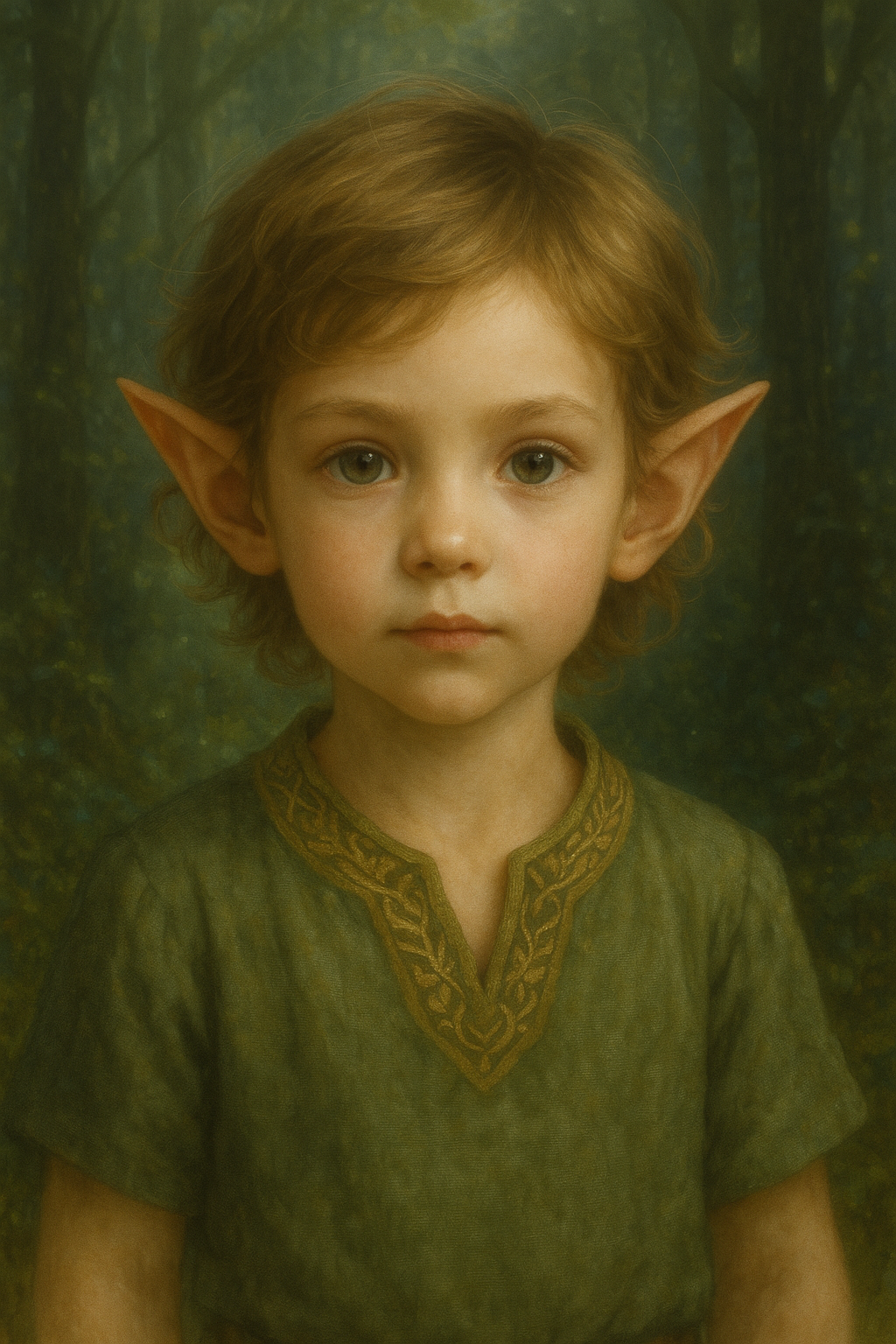 Fertility among elves is exceptionally low by mortal standards. Most elven women conceive only once or twice in their long lifetimes, and no more than four times—an extreme rarity usually linked to divine blessing or unusual magical circumstances. Pregnancy is spiritually and physically taxing, drawing heavily on the mother’s life essence. Gestation lasts approximately one full year, during which the mother experiences reduced magical capabilities and extreme fatigue. Because of this, elven couples rarely choose to conceive during times of war, political unrest, or long separations, prioritizing stability and peace for childrearing.
Elven infants are born with high magical sensitivity and rapidly developing cognitive faculties, but their physical growth slows considerably after early childhood. They reach full physical maturity around age 50, though emotional and intellectual development continues well into their first century. This protracted youth is both a biological trait and a cultural expectation; young elves are not considered adults until they complete the rites of mastery within their community or subspecies.
Elven genetics strongly favor the maternal lineage in magical affinity, appearance, and temperament. Children born of mixed elven heritage (such as Wood Elf and High Elf parents) often display a unique blend of traits, but are culturally raised according to the traditions of their mother’s lineage in most communities. Some elven scholars theorize that this strong maternal inheritance is tied to the sacrificial nature of elven reproduction, wherein the mother imparts not just life, but spirit and memory into the child.
Due to their rarity and the effort involved in raising them, elven children are deeply cherished, not just by their parents but often by the entire community. Their upbringing is communal, meticulous, and grounded in both artistic expression and magical education. It is not uncommon for young elves to be fostered among allied houses or sent to distant kin for training, forging strong political and familial bonds across centuries.
In sum, elven reproduction is seen not merely as a biological act, but a sacred continuation of legacy—one that must be undertaken with purpose, care, and a long view of the world yet to come.
Fertility among elves is exceptionally low by mortal standards. Most elven women conceive only once or twice in their long lifetimes, and no more than four times—an extreme rarity usually linked to divine blessing or unusual magical circumstances. Pregnancy is spiritually and physically taxing, drawing heavily on the mother’s life essence. Gestation lasts approximately one full year, during which the mother experiences reduced magical capabilities and extreme fatigue. Because of this, elven couples rarely choose to conceive during times of war, political unrest, or long separations, prioritizing stability and peace for childrearing.
Elven infants are born with high magical sensitivity and rapidly developing cognitive faculties, but their physical growth slows considerably after early childhood. They reach full physical maturity around age 50, though emotional and intellectual development continues well into their first century. This protracted youth is both a biological trait and a cultural expectation; young elves are not considered adults until they complete the rites of mastery within their community or subspecies.
Elven genetics strongly favor the maternal lineage in magical affinity, appearance, and temperament. Children born of mixed elven heritage (such as Wood Elf and High Elf parents) often display a unique blend of traits, but are culturally raised according to the traditions of their mother’s lineage in most communities. Some elven scholars theorize that this strong maternal inheritance is tied to the sacrificial nature of elven reproduction, wherein the mother imparts not just life, but spirit and memory into the child.
Due to their rarity and the effort involved in raising them, elven children are deeply cherished, not just by their parents but often by the entire community. Their upbringing is communal, meticulous, and grounded in both artistic expression and magical education. It is not uncommon for young elves to be fostered among allied houses or sent to distant kin for training, forging strong political and familial bonds across centuries.
In sum, elven reproduction is seen not merely as a biological act, but a sacred continuation of legacy—one that must be undertaken with purpose, care, and a long view of the world yet to come.
Behaviour
Elves are contemplative, perceptive beings whose thoughts and emotions run deeper than most mortals can comprehend. Their long lifespans shape how they interact with the world—favoring foresight over urgency, observation over reaction. To an elf, the passage of decades may feel like a season to a human. This extended perspective often results in a quiet, patient demeanor that outsiders mistake for aloofness or apathy.
Emotionally, elves feel things deeply, but rarely show those feelings openly. Joy, grief, and rage may simmer beneath the surface for years before surfacing, if at all. Their restraint is not due to emotional detachment, but a finely honed discipline. When an elf does express emotion, it is deliberate and meaningful. Public displays are rare and culturally discouraged, particularly among the Aelvaren, where control is equated with strength.
Elves are deeply empathetic, especially toward nature and those they consider kin, but their empathy is often expressed through acts of service or creation rather than spoken word. They may write poems instead of apologies, or grow a tree in memory of a friend instead of offering public mourning.
Psychologically, elves have an innate sense of rhythm and pattern. They are drawn to cycles, balance, and harmony in thought. This makes them excellent scholars, mages, and artists, but it can also cause them to struggle with chaotic or unpredictable environments. Prolonged exposure to disruption can lead to emotional or mental withdrawal, obsessive behavior, or even a form of magical melancholy known as “soul-fading”—a slow retreat of one’s spirit from the waking world.
Their minds are incredibly resilient to mental intrusion, illusions, and enchantment, not just due to magical resistance but because of their naturally layered consciousness. Many elves process thoughts in parallel, often contemplating multiple concepts or memories at once. This gives them extraordinary clarity under pressure, but can lead to moments of silence or stillness while they sort through internal dialogues.
Despite their introspective nature, elves are not without humor or curiosity. Their wit tends to be dry, laced with historical references or irony lost on younger races. They often test the intellect of others through wordplay or philosophical debate, and they admire cleverness, even in mortals they find otherwise unrefined.
Finally, elves form deep, enduring attachments, whether romantic, platonic, or communal. Betrayal, grief, or the loss of a loved one may leave scars that last centuries. Some never truly recover, especially when ties are severed abruptly or unjustly. Others channel that pain into great works of art, enduring solitude, or lifelong quests.
Civilization and Culture
Relationship Ideals
Elves form bonds with great care, reverence, and intent. Given their long lifespans, relationships—romantic or platonic—are not taken lightly. Casual dalliances exist, especially among the younger or more liberal subspecies, but lasting partnerships are considered sacred and often spiritual in nature.
Romantic Bonds
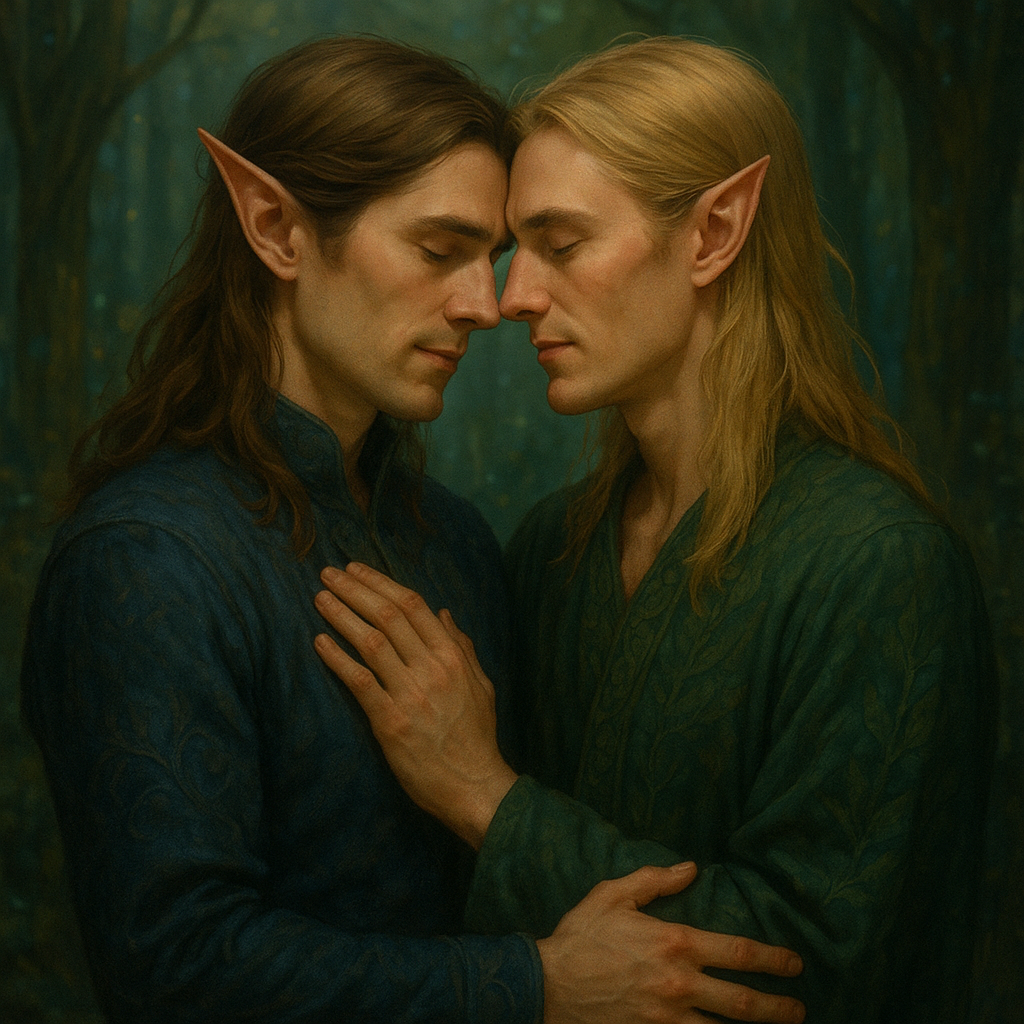
Elven romance tends to unfold slowly, often beginning with years of friendship or collaboration before deepening into love. For many elves, emotional compatibility and shared purpose matter more than physical attraction. Once love is acknowledged, it is typically expressed through quiet gestures, symbolic gifts, art, or magic rather than overt declarations. Marriage, when practiced, is non-patriarchal and non-religious, usually marked by oaths, shared creations (like a home, song, or child), or magical bonds. In some cultures—particularly among the Aelvaren and Sylvaren—soulbonding is practiced, a ritual that links the magical essence of two individuals in a subtle, lifelong connection. While this practice is rare and only done after centuries of union, it is seen as the highest expression of elven love.Family and Parenthood
Parenthood is rare and deeply honored. Because elven children are so few and their conception taxing, elven families tend to be small, intimate, and cherished by the community. Both parents typically take equal roles in childrearing, and many extended kin or close friends take on guiding roles in a child’s life. Elves do not often remarry unless their partner has died, and even then, long mourning periods are culturally expected. Some elves never seek another bond, instead honoring their lost beloved through art, devotion, or withdrawal from public life.Friendships & Found Family
Platonic relationships are no less important. Lifelong friendships between elves are common, often spanning hundreds of years. These bonds may hold as much weight in elven society as romantic ones, and some elves choose to form “households” of close allies or kindreds rather than seeking a romantic partner. The concept of found family is especially prevalent among the Veylaren and Umbravar, who often build kinship out of loyalty and shared experience rather than blood.Emotional Expression
Elves tend to express affection through acts of meaning—sharing a cherished memory, crafting a piece of art, planting a tree in a loved one’s name, or weaving magic to protect or preserve something dear. Open displays of passion or vulnerability are rare and highly intimate. To be seen weeping, laughing unguardedly, or speaking poetry aloud to a lover is reserved for those few who have earned such closeness.History
The history of the elves in Tanaria stretches back over a thousand years, possibly longer than any race still active on the continent. While their own records claim descent from the first forests and the breath of Sylvanna herself, the exact origin of the elves remains shrouded in a mix of myth, truth, and arcane memory. What is known is that the elves were among the first sentient peoples to spread across Arandor and the other continents, their influence carried not by conquest, but through elegant colonization, artistry, and enduring magic.
The First Bloom (pre-Harmonium Era)
Earliest elven settlements were deep within the primordial forests—Verdelithe, Syltharan, Nurellan—vast living cities shaped from the land rather than built upon it. These early elves formed strong connections with elemental spirits, leylines, and fey forces. It was during this period that the first divisions among the elves began, with different groups adapting to forest, sea, shadow, or the arcane spires of the highlands, giving rise to the subspecies we know today.Expansion & the Thousand-Year Flowering (Calamity Era)
Elves expanded gradually but methodically, establishing enclaves across the continent. Unlike the aggressive expansion of later human empires, elven colonization was marked by mutual exchange, slow integration, and cultural preservation. Their presence enriched many regions, fostering growth in agriculture, art, and magical knowledge. It was during this golden age that the Aelvaren in particular cemented their reputation for arcane mastery, building crystalline spires and mythic academies that still stand today.Conflicts & Cultural Recoil
Though generally peaceable, elven expansion was not without resistance. Tensions rose with dwarven kingdoms over deepwood territory and mineral trade, and violent skirmishes erupted with orc tribes in the northern highlands. These conflicts, while relatively brief by human standards, left deep emotional scars on the long-lived elves, leading many communities to withdraw further into isolation. The Veylaren and Umbravar, in particular, suffered displacements and betrayals that still echo in their cultural memory.The Human Reckoning
When humans arrived in force and began to build kingdoms at a rapid pace, the elves largely dismissed them as short-lived and disorganized. This mistake proved costly. Human colonization, unchecked by elven subtlety or diplomacy, rapidly consumed land and resources, pushing many elven communities into retreat. Some sought alliances, others fled deeper into enchanted woods or beneath the earth, and a few chose open resistance—though such wars were costly and often futile.Modern Standing
Today, elves remain a powerful but more insular people. Many of their cities remain hidden or protected by ancient wards. Others operate openly but limit non-elven access. The elves have transitioned from continent-shaping figures to careful stewards of legacy, preserving their knowledge, traditions, and bloodlines against the backdrop of a rapidly changing world. Despite this, their influence still lingers—etched in ruins, whispered in courtly circles, and echoed in the teachings of magic across Tanaria. Whether the next era will see a resurgence or continued retreat remains to be seen. But the elves endure, as they always have: watchful, refined, and rooted in the old magic of the world.Interspecies Relations and Assumptions
Elves, despite their deep cultural roots and long lifespans, do not exist in isolation from the world’s other peoples—though many may prefer it that way. Their relationships with other races range from diplomatic respect to quiet disdain, shaped by centuries of shifting power, philosophical divides, and differing worldviews.
Humans:
Among all other species, elves have the most complicated relationship with humanity. Initially dismissed as short-lived and impulsive, humans quickly disrupted the delicate balance elves had maintained across Tanaria. Many elven enclaves were displaced or forced into secrecy as human cities rose. While the Aelvaren and Umbravar often view humans as volatile or crude, the Sylvaren and Veylaren are more forgiving—seeing potential in their adaptability and passion. Over time, human culture has adopted elven art, language, and magical practice, much to the elves’ mixed feelings of pride and exasperation.Dwarves:
Relations with dwarves are marked by ancient territorial disputes, especially over deep forests and underground leyline nexuses. While mutual respect exists—particularly between elven spellwrights and dwarven craftsmen—their cultures are fundamentally opposed: elves favor fluid, adaptive living, while dwarves value tradition and structure. Peaceful coexistence is possible, but rarely without spirited debate.Orcs (Thrukka):
Historically tense. The elves and Thrukka clashed frequently in the early eras, especially in contested wilderness regions. Many elves still carry prejudice, viewing orcs as destructive or uncultured—an unfair generalization that persists more strongly among the Aelvaren and Umbravar. However, some Sylvaren and Veylaren have begun fostering tentative alliances with modern orcish clans, recognizing their shared reverence for the land and survival.Fae & Spiritfolk:
Elves share a spiritual kinship with the fae, especially those tied to the Vyrewood. Many believe they descend from the same primordial essence or were shaped by similar divine forces. While elves are bound by mortal laws and cycles, their deep-rooted magic makes them natural allies (and occasional rivals) of true fae. Dealings with fae are cautious and respectful—elves know too well the dangers of bargains and the weight of truth in the fae realms.Draconic Races:
Elves tend to approach dragons and their kin with awe and suspicion. While the Aelvaren pursue draconic knowledge, seeing them as arcane paragons, other elves remain wary—especially after historical devastations wrought by dragonkind. Personal relations vary, but institutional trust is rare.Beastfolk & Shapeshifters:
Relations depend greatly on region and subspecies. Veylaren often coexist peacefully with beastfolk, valuing shared nomadic lifestyles. Aelvaren may look down on shapeshifters as primitive or unstable. Still, many elves admire their resilience and raw magical connection.Halflings, Gnomes, and Others:
Smaller folk are generally well-received among elves, particularly gnomes, whose curiosity and creativity resonate with elven ideals. Halflings are often treated as whimsical, if underestimated, by the Aelvaren—but warmly welcomed by Veylaren and Sylvaren communities. Elves can and do fall in love with other races, though it is complicated by vastly different lifespans, cultural values, and sometimes by political taboo. While half-elves are biologically viable, such pairings are rare and often come with social consequences, particularly among the Aelvaren. Some wood elves and nomadic elves are more open-minded, believing that love transcends time and blood. Still, most elves approach cross-racial bonds with sobering awareness of impermanence—choosing them only when the connection outweighs the sorrow of eventual parting.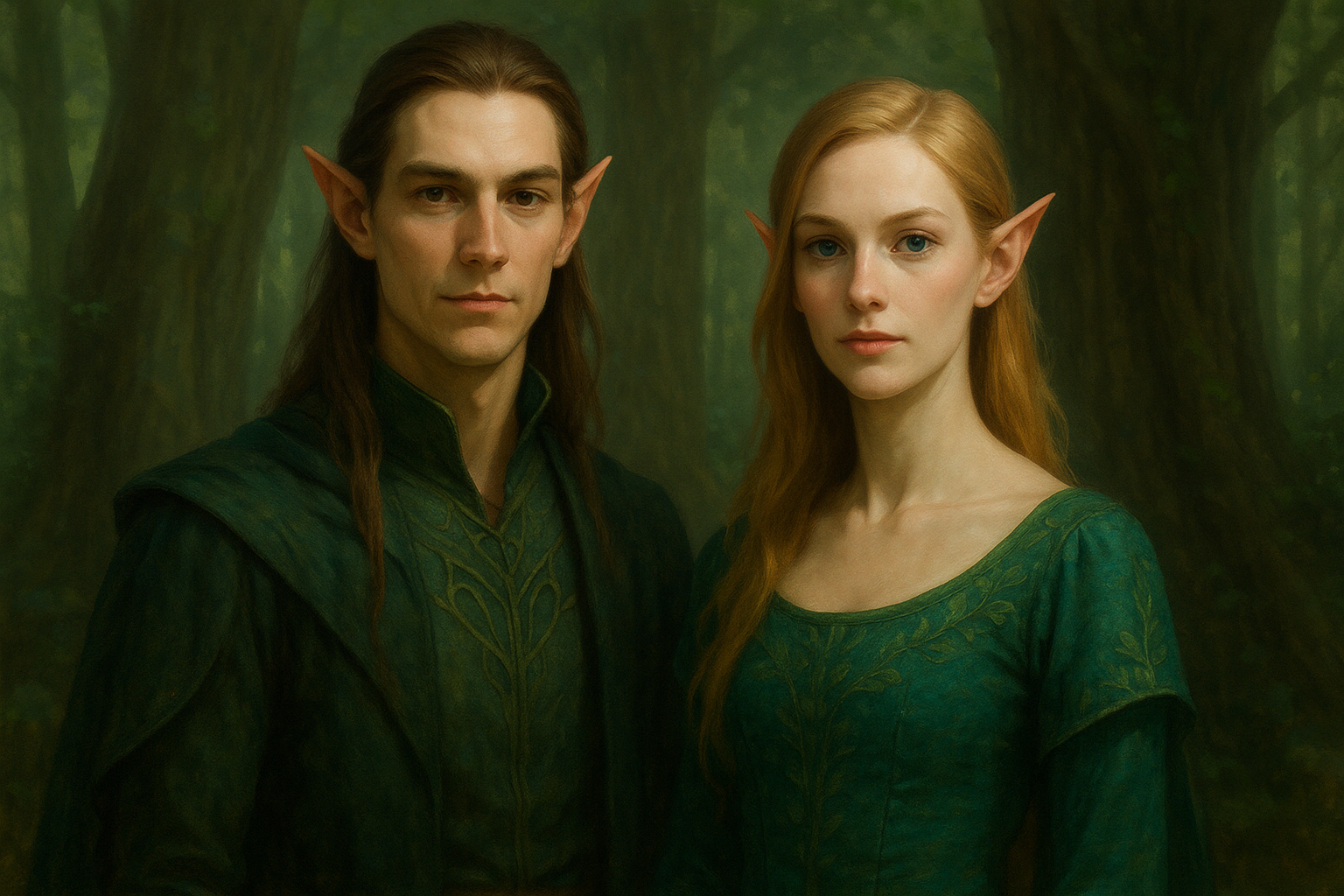
Scientific Name
Homo faerica tanarienis
Lifespan
500 to 800 years, depending on subspecies, magical exposure, and lifestyle.
Conservation Status
Stable but Slow-Growing
Elves are not considered endangered in a biological sense, but their extremely low reproductive rate and deliberate cultural isolation mean that population growth is minimal. Some regions, especially among the Veylaren and Umbravar, show signs of decline due to historical conflict or environmental displacement.
Elves are not considered endangered in a biological sense, but their extremely low reproductive rate and deliberate cultural isolation mean that population growth is minimal. Some regions, especially among the Veylaren and Umbravar, show signs of decline due to historical conflict or environmental displacement.
Average Height
Males: 5’10” to 6’4” (178–193 cm)
Females: 5’8” to 6’1” (173–185 cm)
Females: 5’8” to 6’1” (173–185 cm)
Average Weight
Males: 140–180 lbs (63–82 kg)
Females: 120–160 lbs (54–72 kg)
Females: 120–160 lbs (54–72 kg)
Related Organizations
Related Myths


This is great. I particularly like the fact that they focus on having children in times of peace so they can focus on the pregnancy and rearing them safely.
Explore Etrea | WorldEmber 2025
Thank you! I figured with being as long lived as they are they would have the foresight to plan ahead and the patience to execute it. Of course you can't plan for everything
"Every story is a thread, and together we weave worlds."
The Origin of Tanaria