
Noctharen (NOCK-thah-ren)
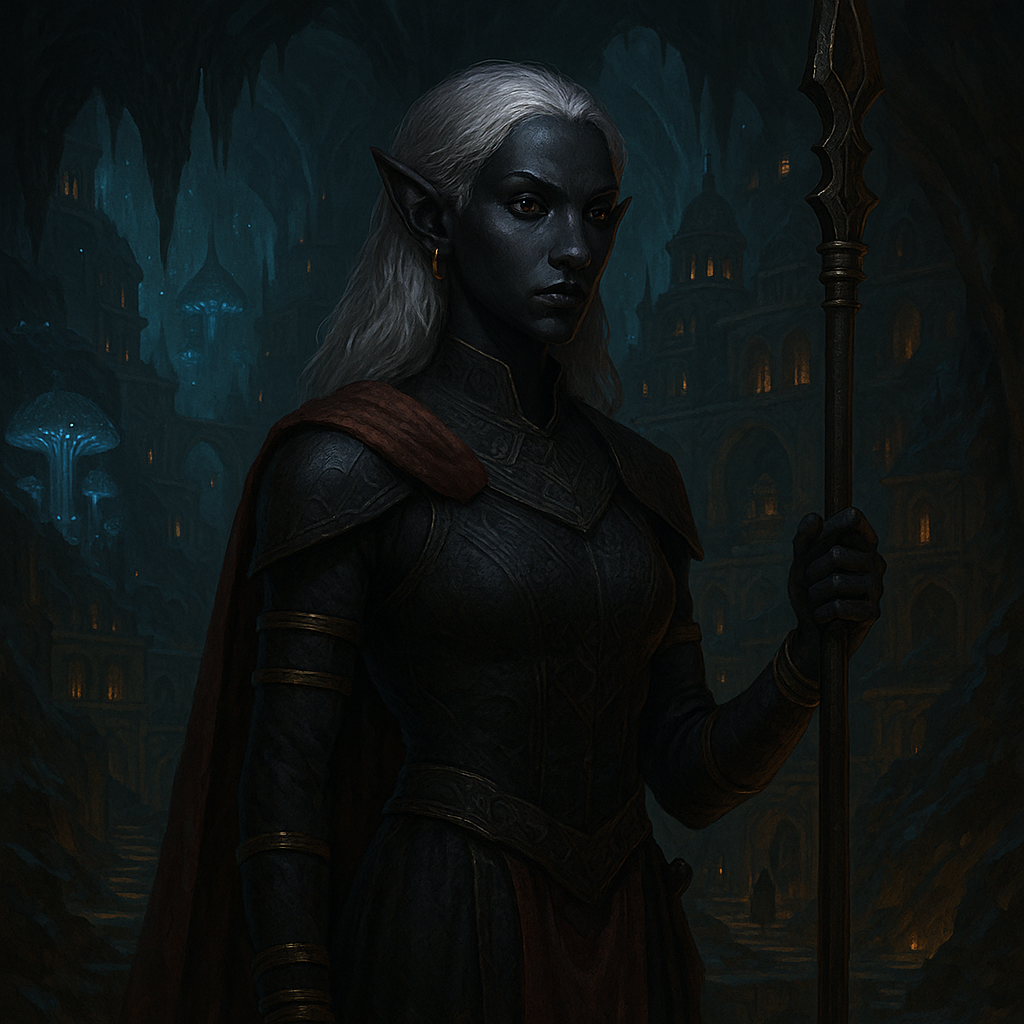
The Noctharen are a subterranean subspecies of elves shaped by millennia in the deep caverns beneath Tanaria's surface. Their bodies have adapted to a lightless world through obsidian-dark skin, pale or silver-toned hair, and eyes capable of perceiving the faintest radiance from bioluminescent fungi. Unlike their surface kin, the Noctharen built their civilization within vast cavern networks where scarcity, danger, and political tension forged a culture that values discipline, lineage, and strategic power. Their society is traditionally matriarchal, guided by ancient Houses whose authority stems from bloodline prestige and arcane mastery. While outsiders often stereotype them through rumor and fear, fueled partly by extremist sects that embrace brutality, the Noctharen as a whole are neither inherently malevolent nor monolithic. They possess a rich intellectual tradition, a pragmatic worldview, and a fierce loyalty to their kin. Their worship centers not on Umbra or the surface pantheon, but on an older, subterranean deity whose influence shaped their resilience and identity beneath the earth.
Basic Information
Anatomy
The Noctharen retain the lithe, elongated frame characteristic of elvenkind, yet generations in the deep earth have shaped them into a subtly different silhouette than their surface kin. Their bodies are leaner, more compact, and built for navigating narrow caverns and uneven subterranean terrain. Their musculature emphasizes flexibility and endurance over brute strength, giving them a fluid, deliberate way of moving that mirrors the darkness they inhabit.
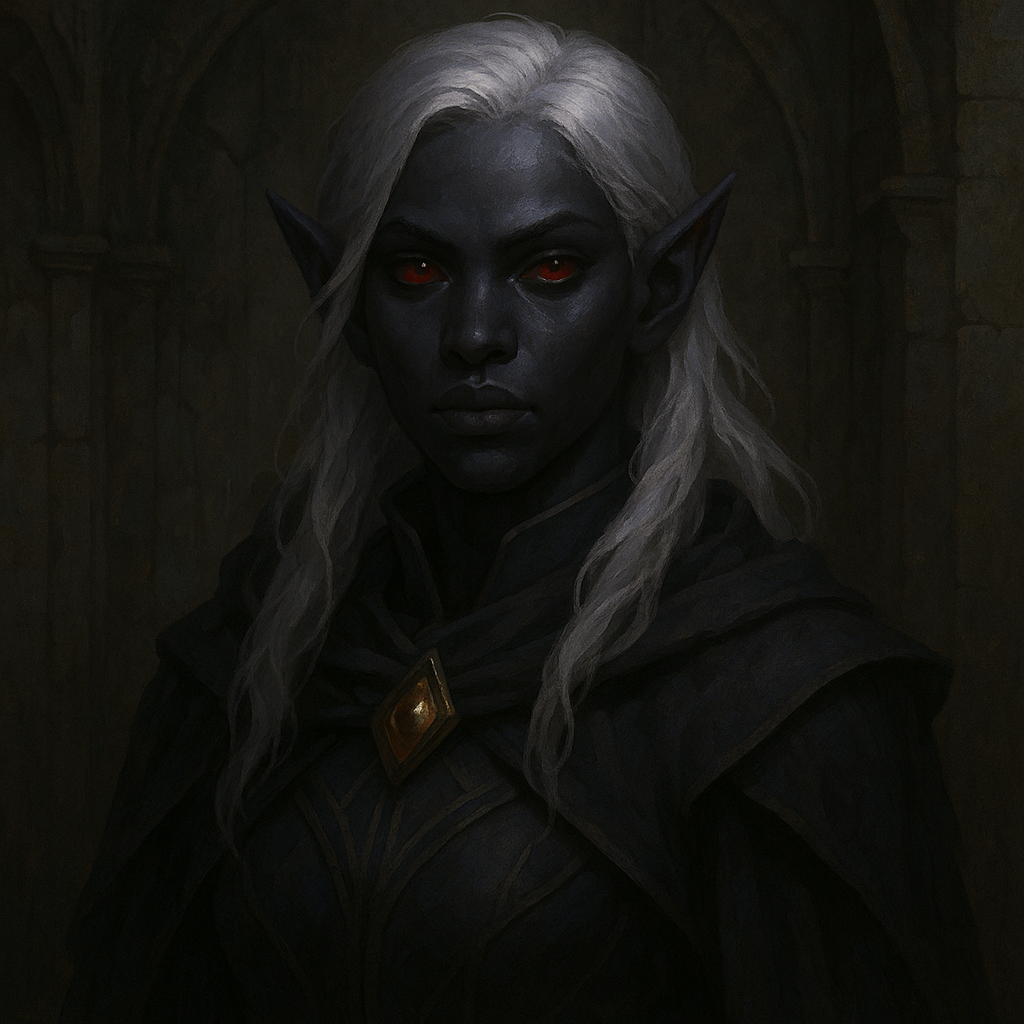
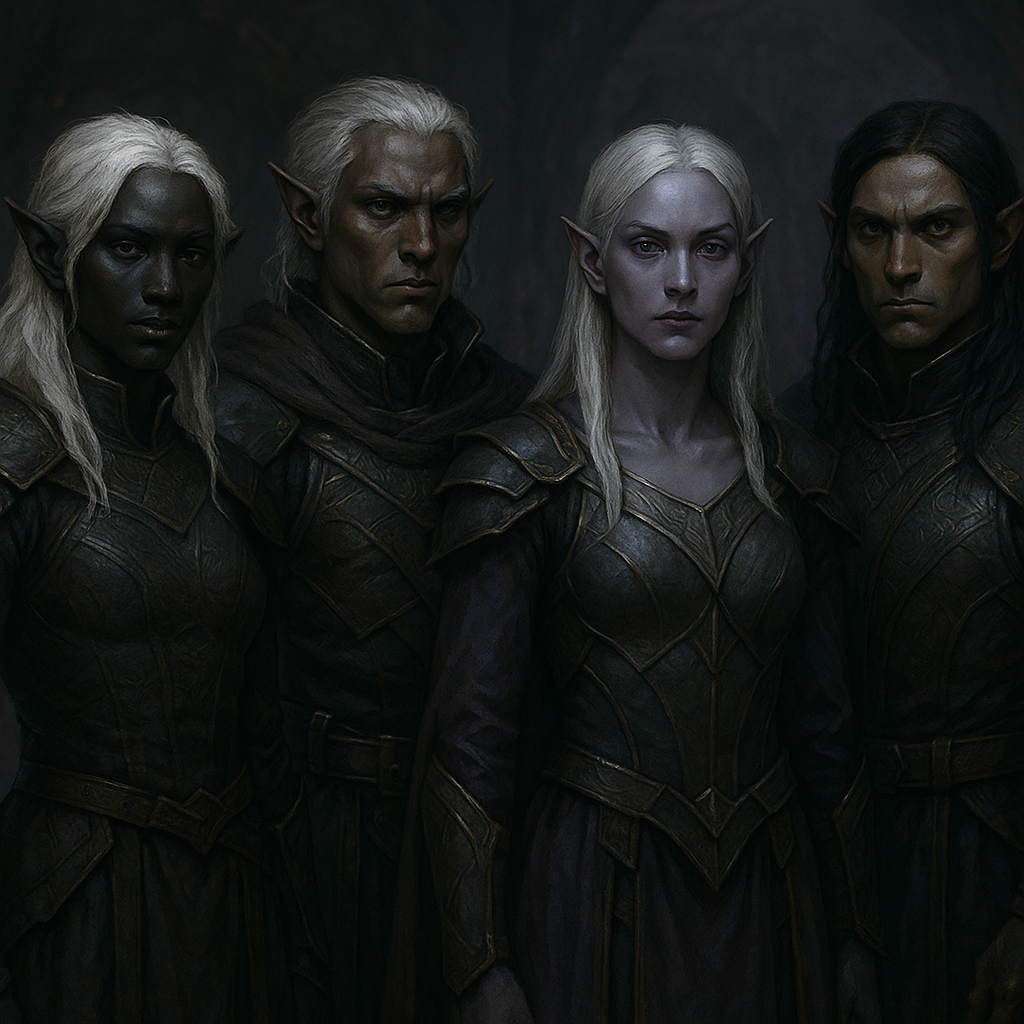 Skin coloration is the most striking physical hallmark of the Noctharen. Their tones range from obsidian and basalt-black to slate grey, deep violet, iron-blue, and smoky quartz brown. Many demonstrate faint mineral sheens when exposed to light, a consequence of both natural adaptation and generations of lithomantic influence. Rare individuals develop bioluminescent spotting along the cheekbones, shoulders, or spine, a trait regarded as a blessing from the Stoneweaver and often associated with magical aptitude.
Facial structure tends toward sharp angularity: high cheekbones, refined jawlines, and long, tapered ears that are more sensitive than those of other elves. In low light, these ears capture minute vibrations, functioning almost like secondary sensory organs. Their eyes are large, reflective, and adapted to darkness, with irises in pale metallic or gemstone hues, silver, ice-blue, amethyst, or gold. Their pupils widen dramatically in dim environments, granting exceptional low-light vision while making sudden brightness physically painful.
Hair texture and coloration vary widely, though extremes are most common: stark white, silver, ash-blonde, and midnight-black predominate. These hues provide natural camouflage within the cavern depths. Some individuals exhibit faint iridescence or mineral-like streaking, reminiscent of crystal seams running through stone.
Internally, the Noctharen possess heightened circulatory and respiratory efficiency suited for thin, stagnant subterranean air. Their lungs filter airborne particulates more effectively than those of surface elves, and their blood oxygenation remains stable even in enclosed spaces. Their hearing and proprioception are finely tuned; many can feel subtle tremors through stone or sense shifts in cavern pressure long before other races notice them.
Despite these adaptations, the Noctharen are still fundamentally elven. They share the same longevity, agility, and innate magical sensitivity, though their connection manifests chiefly through resonance, shadowcraft, and the mineral arcana of the deep. Their bodies are a testament to life shaped by darkness, not twisted by it, but refined, hardened, and honed like stone under pressure.
Skin coloration is the most striking physical hallmark of the Noctharen. Their tones range from obsidian and basalt-black to slate grey, deep violet, iron-blue, and smoky quartz brown. Many demonstrate faint mineral sheens when exposed to light, a consequence of both natural adaptation and generations of lithomantic influence. Rare individuals develop bioluminescent spotting along the cheekbones, shoulders, or spine, a trait regarded as a blessing from the Stoneweaver and often associated with magical aptitude.
Facial structure tends toward sharp angularity: high cheekbones, refined jawlines, and long, tapered ears that are more sensitive than those of other elves. In low light, these ears capture minute vibrations, functioning almost like secondary sensory organs. Their eyes are large, reflective, and adapted to darkness, with irises in pale metallic or gemstone hues, silver, ice-blue, amethyst, or gold. Their pupils widen dramatically in dim environments, granting exceptional low-light vision while making sudden brightness physically painful.
Hair texture and coloration vary widely, though extremes are most common: stark white, silver, ash-blonde, and midnight-black predominate. These hues provide natural camouflage within the cavern depths. Some individuals exhibit faint iridescence or mineral-like streaking, reminiscent of crystal seams running through stone.
Internally, the Noctharen possess heightened circulatory and respiratory efficiency suited for thin, stagnant subterranean air. Their lungs filter airborne particulates more effectively than those of surface elves, and their blood oxygenation remains stable even in enclosed spaces. Their hearing and proprioception are finely tuned; many can feel subtle tremors through stone or sense shifts in cavern pressure long before other races notice them.
Despite these adaptations, the Noctharen are still fundamentally elven. They share the same longevity, agility, and innate magical sensitivity, though their connection manifests chiefly through resonance, shadowcraft, and the mineral arcana of the deep. Their bodies are a testament to life shaped by darkness, not twisted by it, but refined, hardened, and honed like stone under pressure.
Genetics and Reproduction
Noctharen genetics mirror the broader elven lineage, but their long isolation underground has introduced distinct hereditary traits shaped by environmental pressures, mineral-rich caverns, and subtle magical resonance. They remain fully cross-fertile with other elven subspecies, though unions with surface elves produce offspring whose features blend unpredictably, often resulting in unusual eye coloration, reduced sunlight sensitivity, or muted bioluminescence.
Noctharen share the slow reproductive rhythm characteristic of elves, with long gestation periods—approximately 18 months—and decades-long intervals between children. Their low fertility aligns with their emphasis on lineage, legacy, and the preservation of carefully maintained bloodlines. Most families have one to three children across a span of centuries.
Their population remains stable not through rapid reproduction, but through exceptionally low mortality rates within their well-defended subterranean cities.
Matrilineal Inheritance
Due to their ancient matriarchal structure, Noctharen lineage is traced exclusively through the mother’s line. Noble Houses maintain strict genealogical records, ensuring the purity and continuity of their ancestral ties. Children take the mother’s House name, and daughters are expected to uphold and continue the line. Sons are not excluded or diminished—they often become respected artisans, wardens, scholars, or diplomats—but the authority to extend or extinguish a bloodline rests with the women of each House.Bonding & Parenthood
Romantic and reproductive partnerships among the Noctharen are generally long-lasting but need not be permanent. House alliances, political strategy, and magical compatibility often influence unions, especially among higher-ranking families. A child’s status flows from the mother’s position, not the father’s, though paternal involvement is customary and culturally encouraged. Children grow slowly and reach early maturity around 60–80 years, but their development is steady and deliberate, reflecting the calm, measured cadence of Noctharen life. Infants are kept in carefully controlled environments where light, sound, and temperature are regulated to protect developing senses.Ecology and Habitats
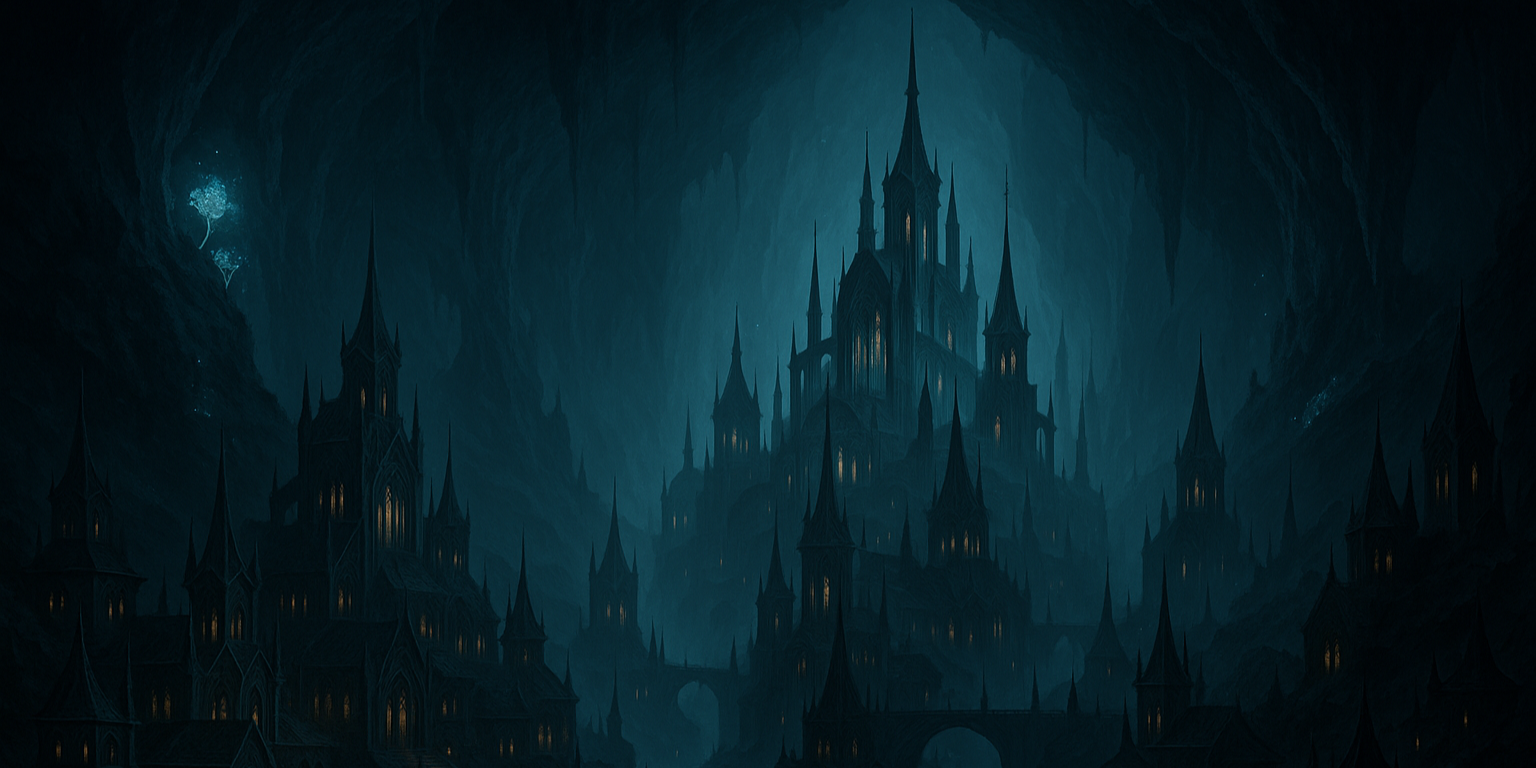
The Noctharen thrive in the deep reaches of Tanaria’s underground world, an immense labyrinth of cavern networks, fungal forests, crystalline lakes, and cities carved directly into the stone. Their optimal environment is one where sunlight never touches, and the world is shaped instead by bioluminescent flora, echoing chambers, and the slow drip of subterranean rivers. They are so intrinsically adapted to the Undernet that prolonged exposure to surface light is not merely uncomfortable but physically taxing, often inducing migraines, nausea, and temporary disorientation. For this reason, most Noctharen who travel above ground do so only at night and with protective coverings, enchantments, or specialized goggles to dull the brightness.
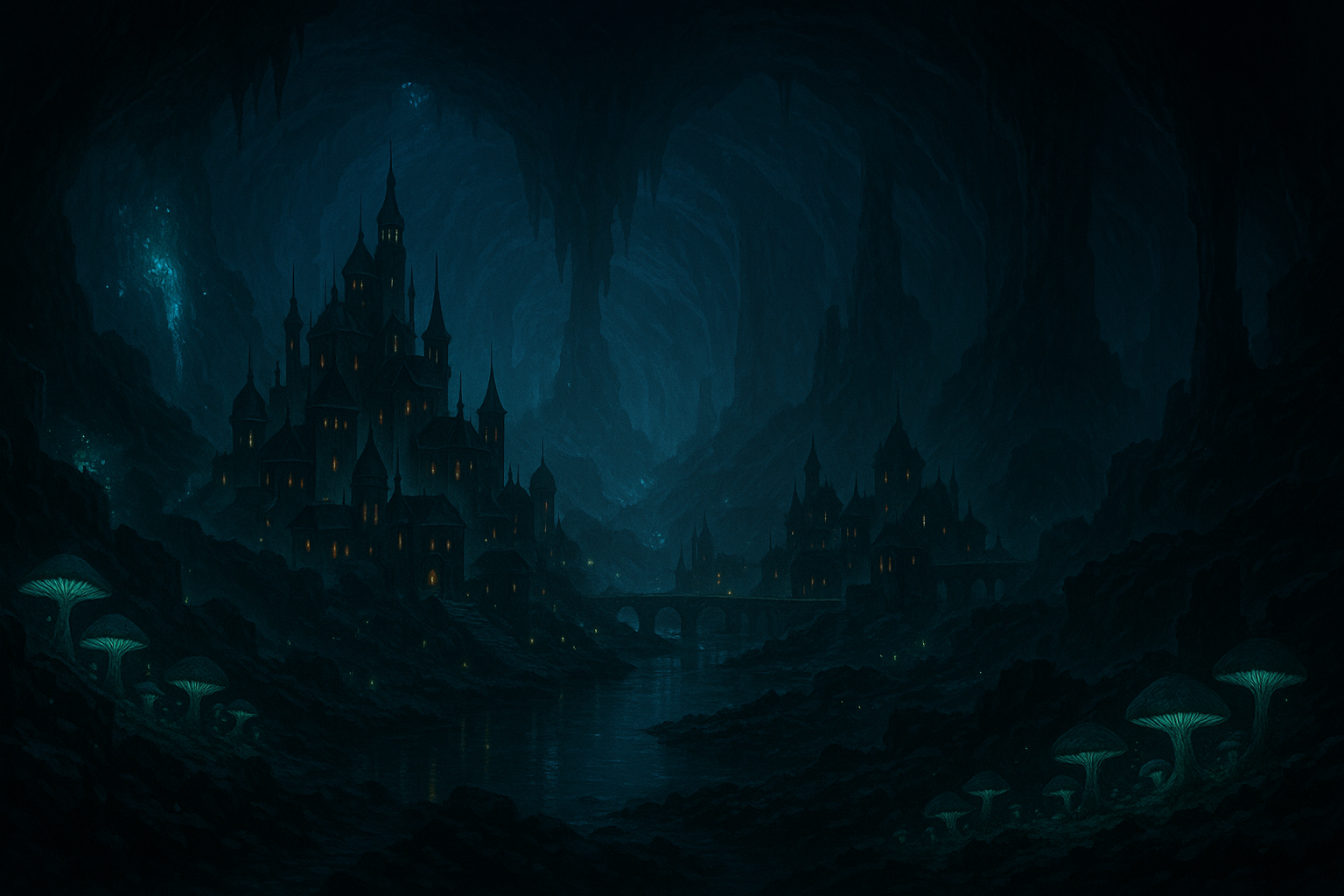 Their interaction with their habitat is intimate and deliberate. Noctharen cities are engineered with a mix of precision and organic integration, built to flow with the natural curves of the caverns rather than reshape them. They cultivate vast fungal orchards, farm phosphorescent mosses, and domesticate hardy subterranean creatures for food and labor. Crystal clusters—naturally occurring or magically coaxed—serve as both architecture and illumination. Their mastery of stone-shaping magic allows them to build vertically, with entire districts stacked like inverted towers along canyon walls. Water is treated as sacred, often collected through massive cistern systems that double as communal gathering spaces. Predatory beasts native to the depths—blind tunnel drakes, razor-spined cave lizards, and serpents that hunt by vibration—are both threats and resources, with the Noctharen learning their patterns so thoroughly that they can influence local populations through controlled hunting or relocation.
In the ecological hierarchy of the Undernet, the Noctharen occupy the role of apex strategists rather than apex predators. They rarely hunt for sport, preferring efficient culling or ceremonial hunts tied to cultural rites. Their presence also stabilizes the region; without their management, many caverns would collapse under unchecked burrowing creatures, and fungal plagues would spread in the absence of their meticulous agricultural practices. The Noctharen view themselves as custodians of the deep, preserving an ecosystem that would otherwise descend into chaotic imbalance. Even the creatures that fear them benefit indirectly from their stewardship, creating an unusual yet functional equilibrium in which civilization and wilderness coexist in perpetual shadow.
Their interaction with their habitat is intimate and deliberate. Noctharen cities are engineered with a mix of precision and organic integration, built to flow with the natural curves of the caverns rather than reshape them. They cultivate vast fungal orchards, farm phosphorescent mosses, and domesticate hardy subterranean creatures for food and labor. Crystal clusters—naturally occurring or magically coaxed—serve as both architecture and illumination. Their mastery of stone-shaping magic allows them to build vertically, with entire districts stacked like inverted towers along canyon walls. Water is treated as sacred, often collected through massive cistern systems that double as communal gathering spaces. Predatory beasts native to the depths—blind tunnel drakes, razor-spined cave lizards, and serpents that hunt by vibration—are both threats and resources, with the Noctharen learning their patterns so thoroughly that they can influence local populations through controlled hunting or relocation.
In the ecological hierarchy of the Undernet, the Noctharen occupy the role of apex strategists rather than apex predators. They rarely hunt for sport, preferring efficient culling or ceremonial hunts tied to cultural rites. Their presence also stabilizes the region; without their management, many caverns would collapse under unchecked burrowing creatures, and fungal plagues would spread in the absence of their meticulous agricultural practices. The Noctharen view themselves as custodians of the deep, preserving an ecosystem that would otherwise descend into chaotic imbalance. Even the creatures that fear them benefit indirectly from their stewardship, creating an unusual yet functional equilibrium in which civilization and wilderness coexist in perpetual shadow.
Dietary Needs and Habits
The Noctharen diet reflects the realities of life deep beneath the earth: scarce sunlight, limited traditional agriculture, and an ecosystem built on fungi, subterranean fauna, and carefully managed cavern-gardens. Their metabolism is notably efficient, shaped by evolutionary pressure to survive in an environment where food sources may be unpredictable. As a result, Noctharen require fewer calories than surface elves but a higher concentration of minerals and protein, especially during growth years or periods of heavy magical exertion.
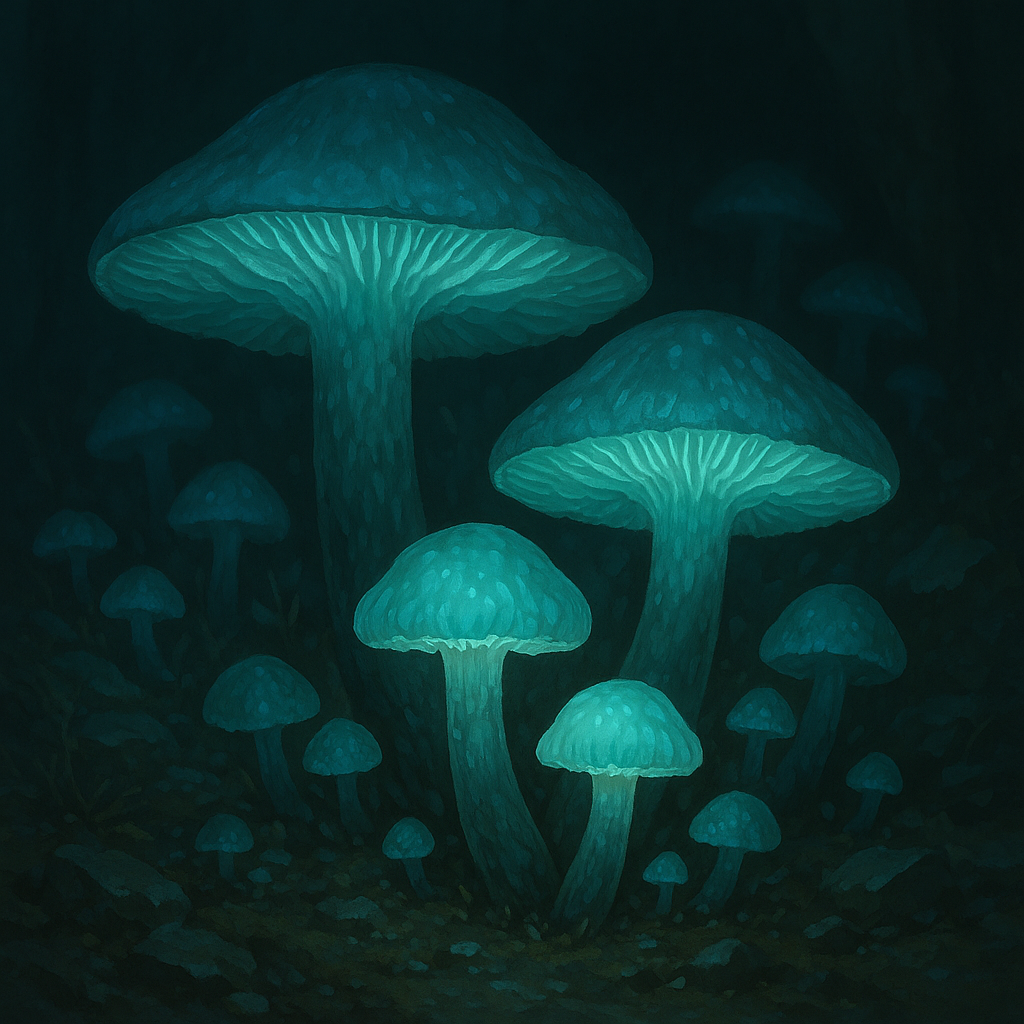 Most of their sustenance comes from bioluminescent fungal cultivars, cavern mosses, and nutrient-dense root growths cultivated in geomantic gardens. These gardens are often shaped by subtle manipulation of the stone and soil, harnessing leyline trickles and geothermal warmth. The Noctharen supplement this with a steady intake of subterranean game—blind cave eels, stone-furred rodents, deepdrake eggs, and insectoid creatures whose carapaces are ground into flour or roasted for protein. Their cuisine tends to be savory, earthy, and aromatic, relying on mineral salts, fermented fungus pastes, and the rare spices imported through trade tunnels.
Raw foods are uncommon; most meals are steamed, stone-baked, or preserved through fermentation, which both enriches flavor and ensures longevity in a place where fresh resources cannot be wasted. Feasts accompany political gatherings or religious rites, often featuring delicacies like crystallized mushroom caps, smoked cave-eel, or meat slow-roasted in heated basalt pits. While some Noctharen consume alcohol derived from fungal fermentation, its potency is high and its use restricted to ritual or ceremonial contexts.
Their relationship with their habitat is deeply reciprocal: nothing is taken without ensuring regrowth, and hunting is performed with an almost ritualistic precision to maintain ecological equilibrium. Waste is composted, bones repurposed into tools or art, and food storage is managed communally within each House. This ethic stems not from altruism but from harsh necessity—those who mismanage resources do not survive long in the deep.
Most of their sustenance comes from bioluminescent fungal cultivars, cavern mosses, and nutrient-dense root growths cultivated in geomantic gardens. These gardens are often shaped by subtle manipulation of the stone and soil, harnessing leyline trickles and geothermal warmth. The Noctharen supplement this with a steady intake of subterranean game—blind cave eels, stone-furred rodents, deepdrake eggs, and insectoid creatures whose carapaces are ground into flour or roasted for protein. Their cuisine tends to be savory, earthy, and aromatic, relying on mineral salts, fermented fungus pastes, and the rare spices imported through trade tunnels.
Raw foods are uncommon; most meals are steamed, stone-baked, or preserved through fermentation, which both enriches flavor and ensures longevity in a place where fresh resources cannot be wasted. Feasts accompany political gatherings or religious rites, often featuring delicacies like crystallized mushroom caps, smoked cave-eel, or meat slow-roasted in heated basalt pits. While some Noctharen consume alcohol derived from fungal fermentation, its potency is high and its use restricted to ritual or ceremonial contexts.
Their relationship with their habitat is deeply reciprocal: nothing is taken without ensuring regrowth, and hunting is performed with an almost ritualistic precision to maintain ecological equilibrium. Waste is composted, bones repurposed into tools or art, and food storage is managed communally within each House. This ethic stems not from altruism but from harsh necessity—those who mismanage resources do not survive long in the deep.
Behaviour
The Noctharen possess a temperament shaped by generations spent in the silent depths of the earth. Life in the caverns demands caution, patience, and the ability to read danger from the smallest shift in the stone. As a result, their psychology is defined by hyper-awareness, emotional restraint, and an almost predatory focus. They are not impulsive by nature; their culture teaches that survival hinges on observation before action.
Where surface elves often idealize harmony, artistry, or philosophical exploration, the Noctharen value competence, precision, and usefulness. Every individual is expected to contribute meaningfully to the survival and advancement of their enclave. This often manifests as a quiet but intense drive for mastery, whether in magic, subterfuge, diplomacy, or combat. Mediocrity is tolerated, but only just; excellence is revered.
Despite their intimidating exterior, the Noctharen are not inherently cruel. Their emotional world is rich and deeply felt, yet almost exclusively private. They seldom show vulnerability to outsiders or even to one another unless trust has been earned. Bonds, once formed, are fiercely loyal, sometimes to the point of obsession. Love, friendship, or allegiance among the Noctharen is not casual; it is a chosen tether, binding and enduring.
Their matriarchal structure reinforces a cultural pattern of calculated decision-making. Noctharen women are raised to lead with measured authority, while men are groomed to excel within defined roles, spies, scholars, wardens, artisans. However, this is not a system of suppression. Both genders occupy vital places, and personal influence is earned through capability rather than imposed by birth.
Psychologically, Noctharen exhibit a sharpened sense of threat detection. They read posture, tone, and micro-expressions with eerie accuracy, a trait that makes outsiders feel both seen and unsettled. They are extremely difficult to deceive, and many train their children from infancy to recognize lies not by sound, but by subtle patterns of breath and gesture.
Culturally, conflict is not avoided but managed. Arguments are quiet, intense, and strategic. Violence is rare within their enclaves, not out of morality, but because it is wasteful. When hostilities arise with surface dwellers, the Noctharen prefer decisive, invisible action. Their ideal victory is one where the enemy never learns who struck them.
The darkest stereotype assigned to the Noctharen, by humans and other elves alike, comes from the presence of a shadowed sect, a splinter faction within their society whose practices are harsher, more dominion-focused. While the main Noctharen culture is disciplined and pragmatic, the sect embraces ambition without restraint. This internal contrast has fueled myths that all Noctharen are sinister, though the majority view the sect as a shameful necessity of their past rather than a reflection of their people.
At their core, the Noctharen are shaped not by malice but by the weight of survival and the demands of a world that rarely forgives error. They are quiet strategists, loyal allies, relentless adversaries, and scholars of patience, elves carved from stone and shadow rather than sun and song.
Additional Information
Social Structure
Noctharen society is built upon a foundation of lineage, stability, and deliberate hierarchy, shaped as much by the dangers of the deep earth as by the traditions handed down from their earliest matriarchs. At its core is a matrilineal system, where authority flows through the mother’s line and the continuity of the House is considered paramount. Power is not distributed through brute dominance but through competence, lineage, and one’s contribution to the survival and advancement of the community.
The primary social unit of the Noctharen is the House, an extended familial and political body led by a Matron. Each House maintains its own archives, agricultural caverns, artisan guilds, and defensive forces. While all Houses swear fealty to the ruling enclave, they operate with significant autonomy and maintain distinct philosophies, alliances, and rivalries. House identity is central to every Noctharen’s sense of self; one’s reputation reflects not only individual merit but the honor or shame of an entire lineage.
At the height of this hierarchy stand the Matron Houses, whose leaders form the political backbone of Noctharen governance. These women serve as strategists, negotiators, and caretakers of their people’s memory. Their authority is rarely questioned openly; however, the subtleties of influence, alliance, and quiet maneuvering shape much of Noctharen politics. Leadership is not inherited blindly. While daughters are the expected successors, a Matron’s chosen heir must demonstrate mastery—in arcane ability, diplomacy, resonance understanding, or political acumen—or risk being replaced by a more capable sibling or cousin.
Below the Matrons are the Stoneweaver Priestesses, the spiritual stewards of their goddess and interpreters of the deep. Although separate from political rule, their counsel carries immense weight. Priestesses guide ritual, oversee births and deaths, maintain resonance temples, and serve as arbiters when House disputes threaten communal stability. Their authority is not forced, but earned through discipline, persistence, and their quiet alignment with the will of the stone.
The artisan and scholar classes form the heart of daily life. These individuals—smiths, crystal-shapers, fungal cultivators, scribes, and researchers—hold respected positions and serve as the economic and cultural engines of their society. Precision, mastery, and innovation are valued above raw strength or charisma. In Noctharen culture, a master crystalwright may wield more influence than a seasoned warrior if their craft elevates the status of their House.
Military responsibility lies with the Wardens, elite fighters trained to protect their enclaves from the dangers of the Undernet. Their ranks include both men and women, though the command structure tends to favor female leadership. Wardens approach combat with discipline rather than bloodlust; efficiency is their highest virtue, and unnecessary violence is seen as wasteful.
Men hold respected roles but traditionally operate within support structures—advisors, artisans, tacticians, wardens, and diplomats. While not typically eligible for Matronship, many men achieve extraordinary influence through merit, innovation, or religious prominence. Gender does not determine capability; it only shapes the cultural expectations of where that capability is applied.
Beneath all of these layers lies a truth that defines Noctharen society: order exists to survive the depths. Every role, every expectation, every ritual is shaped by the need for cohesion in a place where one failure can bring down an entire cavern. Their structure is not oppressive but practical—an intricate balance of authority, competence, and communal responsibility that has allowed them to endure in a world carved from darkness and stone.
Perception and Sensory Capabilities
Life in the deep earth has honed the Noctharen senses into tools of remarkable precision. While their vision is the most visibly altered trait, their true perceptive strength lies in how multiple senses overlap to navigate a world defined not by light, but by pressure, vibration, and silence.
Dark-Adaptive Vision
The Noctharen possess exceptional low-light vision, capable of discerning shapes and motion from the faintest glimmers of bioluminescence or reflected mineral shimmer. Their pupils dilate dramatically in darkness, allowing them to see far beyond the capability of other elves. Color perception in dim conditions is subdued—blues, purples, and silvers dominate—yet becomes more nuanced as illumination increases. Sudden or intense brightness is physically painful, often causing temporary disorientation or tearing. As a result, Noctharen travelers on the surface wear veils, tinted lenses, or shadow-warding paints to mitigate sensory overload.Resonance Sensitivity
More than sight, the Noctharen rely on a refined perception of vibration. Generations in echoing caverns have attuned their bodies to shifts in stone density, air pressure changes, and subtle tremors. Through their hands, feet, and even their elongated ears, they can detect:- approaching footsteps long before sound reaches others,.
- the hollow space behind a wall or stalagmite,.
- distant collapses or shifting stone,.
- underground waterways flowing beyond earshot.
Enhanced Hearing
Their ears capture a broader range of frequencies than surface elves, especially low-frequency sounds that travel well through rock. Whispered speech carries farther for them, and they can discern layered echoes in a cavern in ways few other races can interpret. However, chaotic noise—crowded markets, storms, or surface warfare—can quickly overwhelm them. Many Noctharen find the surface world too acoustically “loud” and must consciously filter out stimuli to remain focused.Scent & Air Perception
Their sense of smell is not inherently stronger, but more finely discriminating in stale subterranean air. Small shifts in scent—fresh air, mineral dust, toxins, fungal spores—are detected quickly, allowing them to avoid hazards or identify which tunnels have recently been traversed. Some say they can “smell magic” when it disturbs air currents or ionizes minerals, though this is often exaggerated.Illusion and Shadow Perception
Their enhanced sensitivity to light distortion makes them unusually good at detecting magical illusions. Subtle shifts in shadow shape, air movement, or resonance will betray a false image long before a surface elf realizes something is amiss. Likewise, they are adept at moving silently—not because they are supernatural, but because they know how sound behaves underground and manipulate it instinctively.Civilization and Culture
Naming Traditions
Noctharen names follow the broader structure of Évarin-influenced elven languages, yet their long isolation underground has given their naming customs a uniquely resonant, mineral-inspired timbre. Their names tend to be sharper, more deliberate, and often heavier in tone than those of the Aelvaren or Sylvaren. Where surface elves favor airy vowels and fluid consonants, the Noctharen lean toward deep, echoing phonemes—sounds that carry cleanly in stone corridors and can be recognized by resonance rather than sight.
A typical Noctharen identity consists of three parts: a personal name, a House name, and an optional Lineage marker indicating maternal ancestry. Formal introductions include all three, though everyday use relies on the given name alone.
Males: Kharen, Vosil, Tharek, Draven, Nolthur
Veshaari Dravashaan, daughter of Thalara
Kharen Shyrekh, of the Othryss Line The Lineage Marker is rarely used day-to-day; its presence signifies elevated formality or intent.
Personal Names
Given names reflect the values of their culture: endurance, precision, shadow, resonance, or mineral beauty. Names are often chosen based on the child’s birthplace within the caverns, omens perceived by priestesses, or the mother’s hopes for their future. Common characteristics include:- strong consonant clusters (kh, sh, th, dr)
- low, resonant vowels (a, o, u)
- mineral or geological undertones
- shorter structures for males, longer and more melodic forms for females, though not required
Males: Kharen, Vosil, Tharek, Draven, Nolthur
House Names
Every Noctharen belongs to a Matron House, and the House name is spoken after the personal name. These names are ancient and carry immense weight; they often derive from the House’s original cavern, a mineral deposit, a legendary Stoneweaver priestess, or a defining historical event. House names are protected fiercely, as they represent centuries of reputation, alliances, and accomplishments. Examples: Zhaelorin, Dravashaan, Othrulden, Shyrekh, Valunthir A Noctharen without a House—usually an exile or refugee—is considered socially precarious, and will rarely speak this status aloud.Lineage Markers
In highly formal or ceremonial contexts, a lineage marker follows the House name to reflect direct maternal descent. This may take the form of “daughter of,” “born from,” or a shortened ancestral epithet. These markers are used primarily in political gatherings, succession debates, or priestess rituals where bloodline plays a central role. Examples:Veshaari Dravashaan, daughter of Thalara
Kharen Shyrekh, of the Othryss Line The Lineage Marker is rarely used day-to-day; its presence signifies elevated formality or intent.
Epithets & Resonance Names
Some Noctharen earn a secondary name—an epithet—based on notable deeds, magical ability, or resonance traits. These names are not chosen; they are granted by one’s House or by communal acknowledgment. Resonance names, specifically, refer to an individual’s unique way of interacting with vibrational magic, often likened to tonal qualities such as Low-Echo, Stone-Chime, Silent-Step, or Shard-Voice. Such titles follow the full name and are considered marks of honor or notoriety.Forms of Address
Respect is shown through tone rather than elaboration. A simple use of the full given name implies courtesy, while the addition of a House name signals deference. To address someone by their epithet is a gesture of profound respect or recognition of mastery. Conversely, shortening a name without permission, or deliberately omitting a House name in formal context, is considered an insult of significant weight.Major Organizations
The Matron Council of Vael’Khareth
The central political authority of the Noctharen is the Matron Council, composed of the ruling Matrons from each Great House. They gather in Vael’Khareth, the oldest enclave and the symbolic heart of Noctharen civilization. The Council does not rule through absolute decrees; instead, it operates as a deliberative body where alliances, negotiations, and strategic concessions shape policy. Their decisions govern inter-House relations, external diplomacy, resource distribution, and resonance law. The Council’s stability is the backbone of Noctharen society, and when it falters, the entire Undernet feels the tremors.The Church of the Hollow Crown
This is the religious and spiritual order devoted to Vethira. Its priestesses interpret the will of the goddess, tending to resonance shrines, maintaining sacred caverns, overseeing birth and burial rites, and guiding the training of Stonebound children. The Conclave holds immense soft power; a single pronouncement from its High Oracle can sway House politics or end a dispute without a single threat exchanged. They are also the keepers of forbidden knowledge—rituals from the Age of Shards, records from the Silencing, and geomantic techniques too dangerous for general use.The Shattered Vein Sect (the extremist faction)
The Shattered Vein Sect is a splinter movement devoted not to Vethira as a whole, but to the Wild Face of the goddess—the aspect known as the Shattered Silence. Where the mainstream Church of the Hollow Crown honors Vethira’s Lucid Face and her teachings of endurance, introspection, and transformation, the Shattered Vein embraces the chaotic hunger, wounded pride, and vengeful obsession born from her exile. To them, the goddess’s fractured mind is not a tragedy but a revelation: a divine mandate to tear down the systems that failed her and rebuild the world in the image of her pain. The Sect rejects restraint, believing that emotional extremes, madness, and violent transformation are sacred expressions of Vethira’s true divinity. Their rites are meant to provoke the goddess’s attention, self-inflicted suffering, ecstatic trances, fear-induced visions, and resonance rituals pushed to the brink of collapse. They harvest crystals aggressively, fracture caverns with unstable rites, and seek communion through experiences that blur the line between prophecy and psychosis. Many of their practices are considered dangerous or sacrilegious by the Quiet Court, especially their attempts to invoke the Wild Face directly. Ideologically, the Shattered Vein views weakness, restraint, and diplomacy as betrayals of Vethira’s legacy. They believe the Noctharen were meant to be feared, not forgotten, and thus pursue dominance over surface dwellers and dissenting Houses. They justify coercion, abduction, and violent manipulation as “divine corrections,” claiming that the goddess’s scream—the one that never left her throat in the Abyss—still echoes through them. Surface dwellers who encounter the Sect often assume their brutality represents all dark elves, feeding long-standing prejudice. In truth, the Shattered Vein is feared within Noctharen society as much as outside it—a reminder of what happens when Vethira’s fractured mind is worshiped without balance, without caution, and without mercy.The Wardens of the Deep Paths
The Wardens form the elite military force responsible for defending Noctharen enclaves from cavern predators, unstable tunnels, rogue constructs, resonance anomalies, and incursions from the deeper Undernet. Their training emphasizes silent coordination, resonance detection, weapon discipline, and the ability to fight in complete darkness. Wardens function not only as soldiers but as scouts, engineers, and first responders during seismic events. Their captains are often chosen from among the most disciplined daughters of the Great Houses.The Khaelen Syndicate
A powerful guild-like coalition of artisans, crystalwrights, smiths, fungal cultivators, and resonance engineers. The Syndicate controls the production of tools, weapons, resonance crystals, fungal crops, and architectural projects across the enclaves. Their influence rivals that of many Houses, and although officially neutral, their loyalties can shift based on resource access or political opportunity. The Syndicate emerged during the Age of Shards, when craftsmanship became vital to economic stability andThe Archive of Echoes
This academic institution safeguards the recorded memory of Noctharen civilization. Instead of ink or parchment, the Archive stores knowledge through echo carving—encoding information into crystal or stone using vibrational patterns. Scholars train for decades to read, interpret, and maintain these archives. Their work preserves history, science, genealogy, magical theory, and the songs of lost Houses. The Archive is one of the few organizations allowed to challenge the Matron Council directly, as the preservation of truth is considered a sacred civic duty.The Resonant Guard
Part ceremonial, part judicial, the Resonant Guard acts as the internal lawkeepers of Noctharen society. They enforce resonance law, investigate illegal crystal harvesting, arbitrate inter-House disputes, and serve as escorts for the Stoneweaver Conclave. Their officers are trained to detect lies through micro-resonance shifts in a speaker’s voice, making them almost impossible to deceive. Unlike the Wardens, who defend against outward threats, the Resonant Guard maintains order within the enclaves.The Circle of Hollow Stone
A quiet but influential philosophical order that studies the Undernet itself—the geology, creatures, leyline fractures, and flow of resonance deep below known territory. While not overtly political, their discoveries often influence House decisions regarding expansion, settlement, or sealing dangerous areas. Many of the Undernet’s mapped regions exist solely because Circle surveyors risked their lives to chart them. Some believe the Circle holds knowledge of caverns so deep that even Vethira’s voice grows faint.History
The origins of the Noctharen trace back to the early Calamity Era, a time when the surface of Tanaria fractured beneath the weight of arcane warfare, divine upheaval, and cataclysmic natural disasters. While many elven communities fled across the seas or fortified their homelands, a small but visionary coalition of Houses chose a different path: they descended. Led by a matriarch whose prophetic dreams warned of the surface’s ruin, these elves sought refuge within the vast caverns that threaded beneath Arandor. Their retreat was not exile but strategy; they believed safety lay not in the sky or the sea, but in the quiet heart of the earth. There, far from the chaos above, they encountered the presence of Vethira, the two-faced goddess, a Primordial goddess whose whispers shaped the very bedrock. Her guidance became the foundation of their survival and the first pillar of their emerging identity.
In the centuries that followed, the Noctharen spread through the Undernet, carving settlements into cavern walls and learning the rhythms of a world defined by darkness and stone. Their mastery of resonance and vibration magic emerged from necessity during the First Resonance War, a prolonged conflict with colossal subterranean creatures that perceived the world through sound rather than sight. Confrontation with these beings forced the Noctharen to refine their understanding of tremors, echoes, and mineral acoustics. Ultimately, they discovered that their greatest adversaries were not monsters to be slain, but territorial guardians responding to intrusion. Through diplomacy and relocation rituals guided by the priestesses of Vethira, the conflict ended not with victory, but with coexistence. This philosophy of respectful stewardship became central to Noctharen ecological doctrine.
As their civilization grew, philosophical divisions took root within their society, culminating in the political schism known as the Fracture of the Houses. Some Houses sought deeper isolation and absolute self-sufficiency, believing the surface world posed too great a threat. Others advocated cautious engagement and trade with surface nations. A smaller, more radical faction interpreted Vethira’s teachings through a lens of domination rather than harmony, claiming that strength was proven through control. Their methods—ruthless ambition, ritual coercion, and weaponized shadowcraft—led to their eventual expulsion. Yet their exile created a lasting wound: this splinter faction would evolve into the feared extremist sect that surface peoples later mistook as representative of all dark elves. The stigma remains a source of tension to this day.
Shortly after the Fracture came the disastrous event known as the Silencing, when entire regions of the Undernet fell mute. Echoes died, tremors vanished, and the resonance pathways that connected Noctharen enclaves simply ceased to function. Communication collapsed, and several settlements were lost to cave-ins, isolation, or predators that relied on the sudden quiet to ambush them. Scholars remain divided on the cause—some blame a magical experiment gone awry, others a divine test from Vethira, and still others accuse the extremist sect of sabotaging the resonance networks. Regardless of the truth, the Silencing reshaped Noctharen engineering and religious doctrine, leading to reinforced caverns, new communication rituals, and a renewed emphasis on societal cohesion.
For a brief era, the Noctharen reestablished contact with the surface during what later became known as the Pale Concord. A surface empire, ignorant of the caverns' inhabitants, broke into Noctharen territory during a mining expansion. Instead of retaliating with force, the Matron Houses sought diplomacy. Trade routes were formed, knowledge exchanged, and a cautious peace developed. Some Noctharen even lived above ground for a generation, learning the ways of the sunlit world. But the Concord collapsed after a catastrophic betrayal—whether caused by political ambition, miscommunication, or deliberate sabotage remains disputed. The Noctharen withdrew once more, sealing the paths and allowing rumor, fear, and the extremist sect’s actions to distort their image among surface dwellers.
Despite hardship, the Noctharen entered a golden era known as the Age of Shards, defined by rapid advancement in crystalcraft and resonance technology. They learned to cultivate and shape resonance crystals, creating luminous cities suspended along cavern walls, forging arms and armor capable of channeling vibrational energy, and developing stone-carved record chambers that preserved knowledge through encoded echoes rather than ink. However, overharvesting and reckless experimentation during this time destabilized several regions of the Undernet, prompting the priestesses of Vethira to introduce strict resource laws. These regulations remain central to Noctharen society, though the extremist sect continues to defy them.
The most recent major era is marked by the rise of individuals known as the Stonebound, Noctharen born with mineral marbling or faint bioluminescent patterns. Believed to be the result of ancestral exposure to deep resonance magic, these individuals possess extraordinary sensitivity to stone and echo. Their emergence led to political tension, as Houses vied for the prestige of producing Stonebound heirs. Over time, regulations were enacted to prevent abuse of lineage practices, and today the Stonebound serve as revered religious advisors, architects, or diplomats.
Across millennia, the Noctharen have been shaped not by the cruelty of myth but by the relentless demands of survival, adaptation, and the balancing of ambition and restraint. Their history is one of endurance, innovation, and the weight of choices made in the dark—choices that continue to echo through the deep halls of their civilization and in the whispered fears of those who do not understand them.
Interspecies Relations and Assumptions
Life beneath the earth has made the Noctharen inherently cautious in their dealings with other peoples, but not hostile by nature. Their society values precision, discipline, and emotional restraint, traits that many surface dwellers misinterpret as coldness or disdain. In truth, the Noctharen prefer to observe before engaging, and their trust—once earned—is deep and enduring. They approach interspecies relationships with a calculated pragmatism, weighing the reliability and intentions of outsiders rather than judging them by race or heritage.
Despite their reputation, the Noctharen maintain numerous quiet alliances across Tanaria. Dwarven masons, stone-shapers, and rune-artisans are among their most consistent partners, respected for their craftsmanship and directness. Certain human and elven scholars are welcomed as well, especially those who demonstrate cultural sensitivity and intellectual rigor. However, many surface cultures respond to the Noctharen with unease or suspicion, shaped by frightening stories of the underdark and the very real violence of the Shattered Vein Sect. Most outsiders struggle to distinguish between mainstream Noctharen society and extremist devotion to Vethira’s Wild Face, leading to generations of strained diplomacy.
Even so, the Noctharen are not isolationists; they simply refuse shallow connections. They admire competence, honesty, and individuals who honor boundaries—traits that transcend species. Friendships with surface dwellers are rare but powerful, and interspecies partnerships, though uncommon, are not taboo. When conflict arises, it is usually due to cultural misunderstanding or fear, not malice. The Noctharen recognize that the surface world will never fully understand the depths they call home, yet they continue to engage with careful optimism, believing that mutual respect can bridge even the darkest caverns.
Genetic Ancestor(s)
Scientific Name
Elvara nocthara
Lifespan
500–800 years
Conservation Status
Stable but Localized
Average Height
Females: 5'4" – 5'10" (162–178 cm)
Males: 5'2" – 5'8" (157–173 cm)
Males: 5'2" – 5'8" (157–173 cm)
Average Weight
105–145 pounds (47–66 kg) for females
95–130 pounds (43–59 kg) for males
95–130 pounds (43–59 kg) for males
Body Tint, Colouring and Marking
The Noctharen are immediately distinguished by the dark, mineral-inspired tones of their skin, a trait born from generations spent deep beneath Tanaria’s surface. Their coloration ranges across a rich spectrum shaped by geology rather than sunlight, creating a visual identity unlike any surface elf. Common hues include obsidian black, basalt grey, shale blue, deep violet, or smoky quartz brown, each carrying subtle undertones that shift under bioluminescent light. Their skin often reflects the faint sheen of polished stone, a natural adaptation that helps diffuse and interpret the low ambient glows of their subterranean environment.
Under certain lighting, especially in the presence of resonance crystals or fungal gardens, their skin may reveal soft iridescence, as though flecks of mineral dust lie just beneath the surface. These glints are not magical in themselves, but a result of generations of exposure to mineral-rich air and long-term lithomantic influence. Many Noctharen enhance these natural sheens with pigments, oils, or ceremonial body paints, creating stark patterns that signify House allegiance, profession, religious devotion, or personal achievement.
Markings are rare but culturally significant. Some individuals are born with faint marbling, vein-like patterns running along the arms, neck, or spine, believed to be hereditary echoes of prolonged magical resonance in their ancestry. These markings darken or brighten depending on stress, magical exertion, or strong emotional states, making them both beautiful and betraying. Far rarer are those with bioluminescent speckling, small points of light along the cheekbones, temples, shoulders, or collarbone that glow softly in darkness. These individuals are revered as “Stone-kissed,” said to bear the touch of Vethira herself, and often find themselves guided toward religious or arcane roles from a young age.
Hair coloration creates striking contrast against their dark skin, most often appearing in shades of white, silver, ash-blonde, or deep coal-black. Iridescent streaking, resembling crystal seams, is occasionally seen in families with strong lithomantic heritage. Their eyes, reflective and pale, amplify these contrasts further, giving the Noctharen a haunting, otherworldly beauty even among elfkind.
Together, their body tints, markings, and natural luminescence create a visual language of heritage, magic, and identity. A Noctharen’s appearance is not merely aesthetic, it is a living reflection of the caverns that shaped them and the silent goddess whose presence echoes in their blood.
Geographic Distribution
Related Organizations


Really nice take on the "dark elf/drow" archetype. I think you've really managed to make them your own. I like how the stereotypes are based on one outlying sect, and I love the bioluminescent speckling (for some) and the greater sense of vibration. The fact they can pick up on micro-expressions is fascinating too.
Explore Etrea | WorldEmber 2025
Yeah, I dont really like the "Bad for the sake of being bad" trope. I'm gonna update this a little bit probably tonight because I've fleshed out much more of the Goddess and I'm pretty pumped about it.
"Every story is a thread, and together we weave worlds."
The Origin of Tanaria