
Aelvaren (AYL-vah-ren)
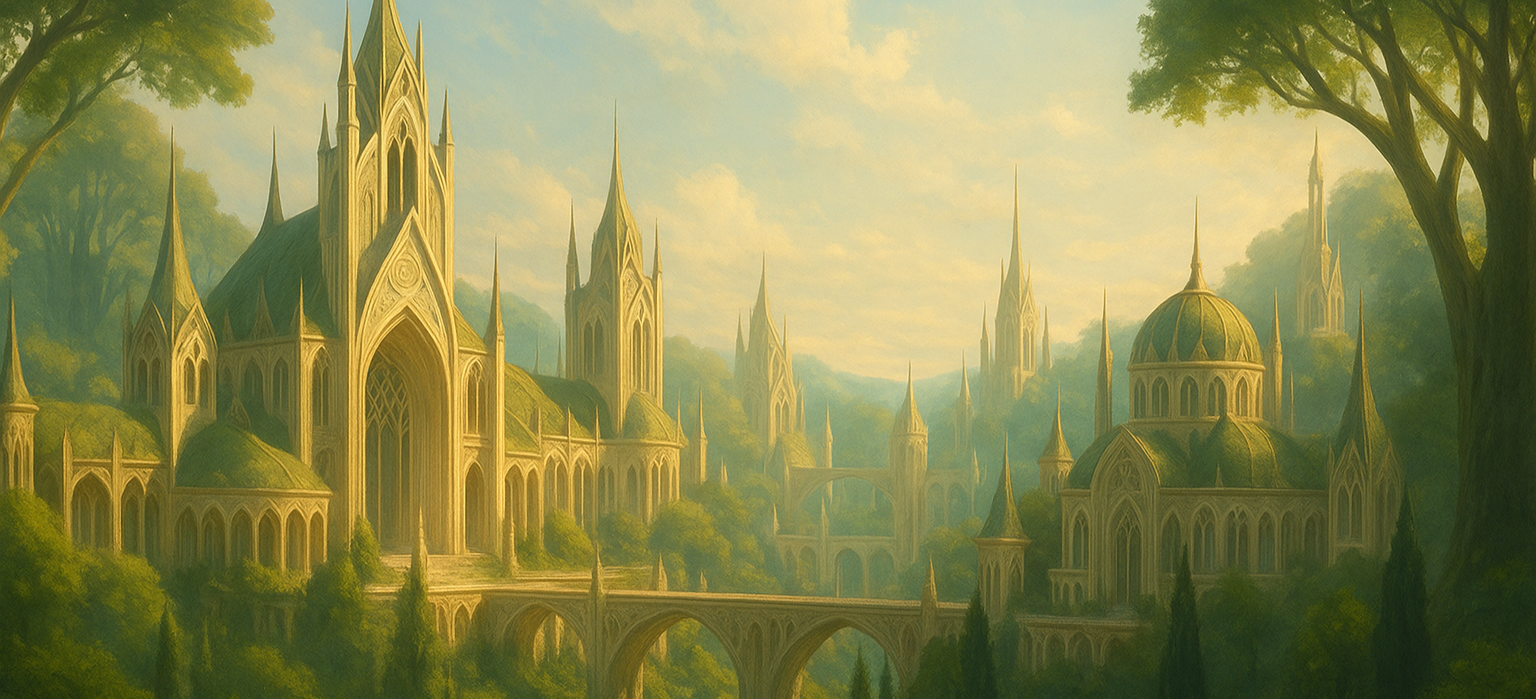
The Aelvaren are the most arcane and structured of the elven subspecies in Tanaria, known for their rigid adherence to tradition, mastery of magic, and self-imposed isolation. With lifespans spanning centuries, they have cultivated a civilization defined by elegance, scholarship, and control—both of the world around them and of themselves.
To the Aelvaren, knowledge is sacred and magic is not merely a tool, but a refined discipline through which all truth can be measured. They do not worship the gods in the way mortals often do, but rather study them—treating divine power as a cosmic phenomenon to be understood rather than feared. Myth, faith, and superstition are typically dismissed as crude explanations for forces they believe can, in time, be quantified. This philosophical skepticism has earned them both admiration and resentment across Tanaria.
Their society is built around meritocratic arcane achievement. Families rise and fall not by lineage alone, but by their magical accomplishments and contributions to collective knowledge. Great spires, floating academies, and rune-etched cities hidden behind protective wards house the Aelvaren, who see themselves as the rightful stewards of civilization—distant from the “instability” of younger races and the “crude sentiment” of their elven cousins.
Though not overtly imperialist, the Aelvaren often operate from a position of cultural superiority. They rarely intervene in outside affairs unless magical law or cosmic balance is at risk. When they do act, it is with precision and purpose, wielding power honed through generations of discipline.
Where others see Vyrewood and Faethra as divine or sacred, the Aelvaren see a cautionary tale—a case study in what happens when power is left unchecked by structure. To them, it is not enough to possess power; one must master it absolutely, lest chaos take root.
Refined, distant, and enigmatic, the Aelvaren are both admired and feared. Their legacy endures not through conquest, but through timeless knowledge and an unwavering belief that discipline and logic are the truest paths to understanding the universe.
Naming Traditions
Feminine names
- Saelira
- Vaelith
- Nymira
- Elanwe
- Thalindra
- Irielle
- Serenys
- Alenya
- Yvaeria
- Isalyn/li]
Masculine names
- Caerith
- Vaelen
- Thalior
- Eryndor
- Maevan
- Soryn
- Aelric
- Naevor
- Zareth
- Ilion
Family names
- Aetheryn
- Vel’quinar
- Sylorin
- Draenelis
- Faerithal
- Zaltheren
- Quelavar
- Nyvalis
- Tir’vanyel
- Vaerysian
Culture
Shared customary codes and values
At the core of Aelvaren society lie three unshakable tenets: Control of Self, Perfection Through Study, and Legacy is Duty. These principles form the bedrock of their culture and are instilled from early childhood through rigorous education and social immersion. To the Aelvaren, mastery of emotion is not repression, but refinement. Passion is not forbidden, but it must be wielded with purpose and poise. A public display of uncontrolled emotion, be it rage, sobbing, or even unrestrained laughter, is considered vulgar, a mark of immaturity or imbalance.
Perfection, for the Aelvaren, is not an abstract ideal but a daily pursuit. Every word, every movement, every spell is an opportunity to hone the self. Sloppiness in dress, speech, or spellcasting is a cultural failing. Study is not limited to the arcane, either; language, philosophy, debate, and even etiquette are seen as arts to be mastered. Through study, one elevates not only the self but one’s house and heritage. In this way, the third tenet, Legacy is Duty, becomes more than a social ideal; it is a moral imperative. Each Aelvaren bears the weight of centuries, and it is expected that they will leave their name more refined than they found it.
Formality and precision dominate their daily interactions. Speech is careful and considered; interrupting another during formal discourse is an insult akin to slapping one’s face. Rituals, whether arcane or social, are performed with exacting detail. A misplaced rune or a mistimed gesture during a naming ceremony or graduation rite is not only embarrassing, it brings shame upon one’s entire lineage.
 The Aelvaren honor discipline, insight, restraint, and lineage. They admire those who exhibit patience, who pursue deep understanding through logic and theory, and who act only with intention. Restraint is especially prized; in a society capable of immense magical force, the decision not to unleash power is seen as a sign of strength and wisdom. Lineage, too, is cherished, not merely in blood, but in ideals preserved, magical traditions upheld, and family achievements maintained across generations.
Conversely, there are behaviors that the Aelvaren consider deeply shameful. Excessive emotional expression is the most visible offense, especially in public. Superstition, omens, irrational fear, or gut instinct, is scorned, often equated with ignorance or the influence of lesser races. Wastefulness, whether in time, resources, or spellwork, is viewed as an affront to both logic and legacy. Laziness is perhaps the most quietly condemned trait; natural talent means nothing if it is not cultivated, and even the most noble bloodline cannot excuse stagnation.
To be Aelvaren is to walk a narrow path between excellence and arrogance, to shape oneself into a vessel worthy of power, and to bear the weight of one’s ancestors with pride. Their customs are not merely habits, they are declarations of identity, proof that civilization and refinement are not just ideals, but living practices.
The Aelvaren honor discipline, insight, restraint, and lineage. They admire those who exhibit patience, who pursue deep understanding through logic and theory, and who act only with intention. Restraint is especially prized; in a society capable of immense magical force, the decision not to unleash power is seen as a sign of strength and wisdom. Lineage, too, is cherished, not merely in blood, but in ideals preserved, magical traditions upheld, and family achievements maintained across generations.
Conversely, there are behaviors that the Aelvaren consider deeply shameful. Excessive emotional expression is the most visible offense, especially in public. Superstition, omens, irrational fear, or gut instinct, is scorned, often equated with ignorance or the influence of lesser races. Wastefulness, whether in time, resources, or spellwork, is viewed as an affront to both logic and legacy. Laziness is perhaps the most quietly condemned trait; natural talent means nothing if it is not cultivated, and even the most noble bloodline cannot excuse stagnation.
To be Aelvaren is to walk a narrow path between excellence and arrogance, to shape oneself into a vessel worthy of power, and to bear the weight of one’s ancestors with pride. Their customs are not merely habits, they are declarations of identity, proof that civilization and refinement are not just ideals, but living practices.
Common Taboos
- Excessive Emotion – Weeping, rage, or ecstatic laughter in public are considered crude and undisciplined.
- Superstition – Myths, omens, and “gut feelings” are for lesser minds. The Aelvaren value structured arcana and observable truth.
- Waste – Be it of time, materials, or magical energy, wastefulness is seen as a failure of foresight and discipline.
- Laziness – Those who do not strive to refine themselves are unworthy of respect, regardless of noble birth or natural talent.
Ideals
Beauty Ideals
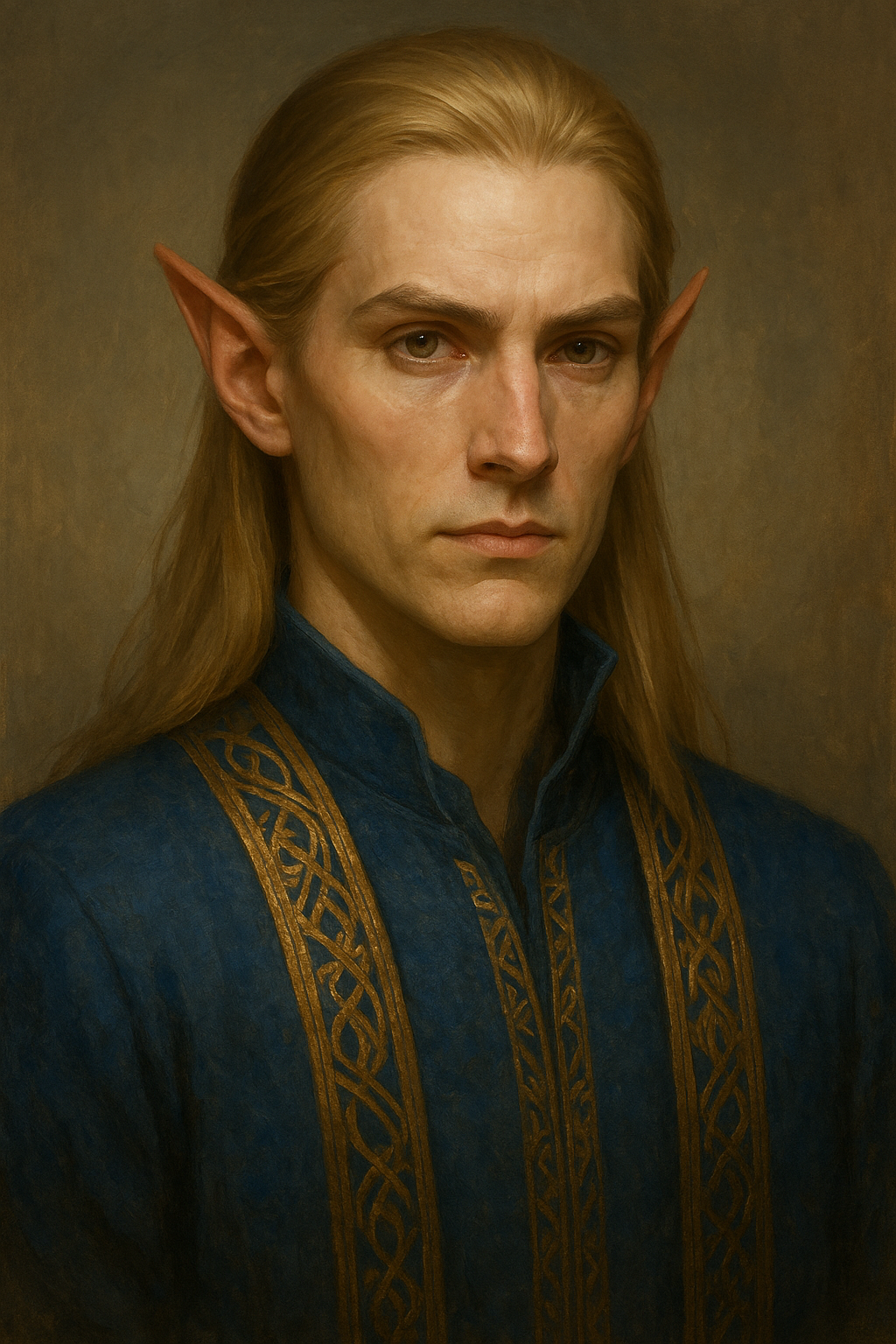
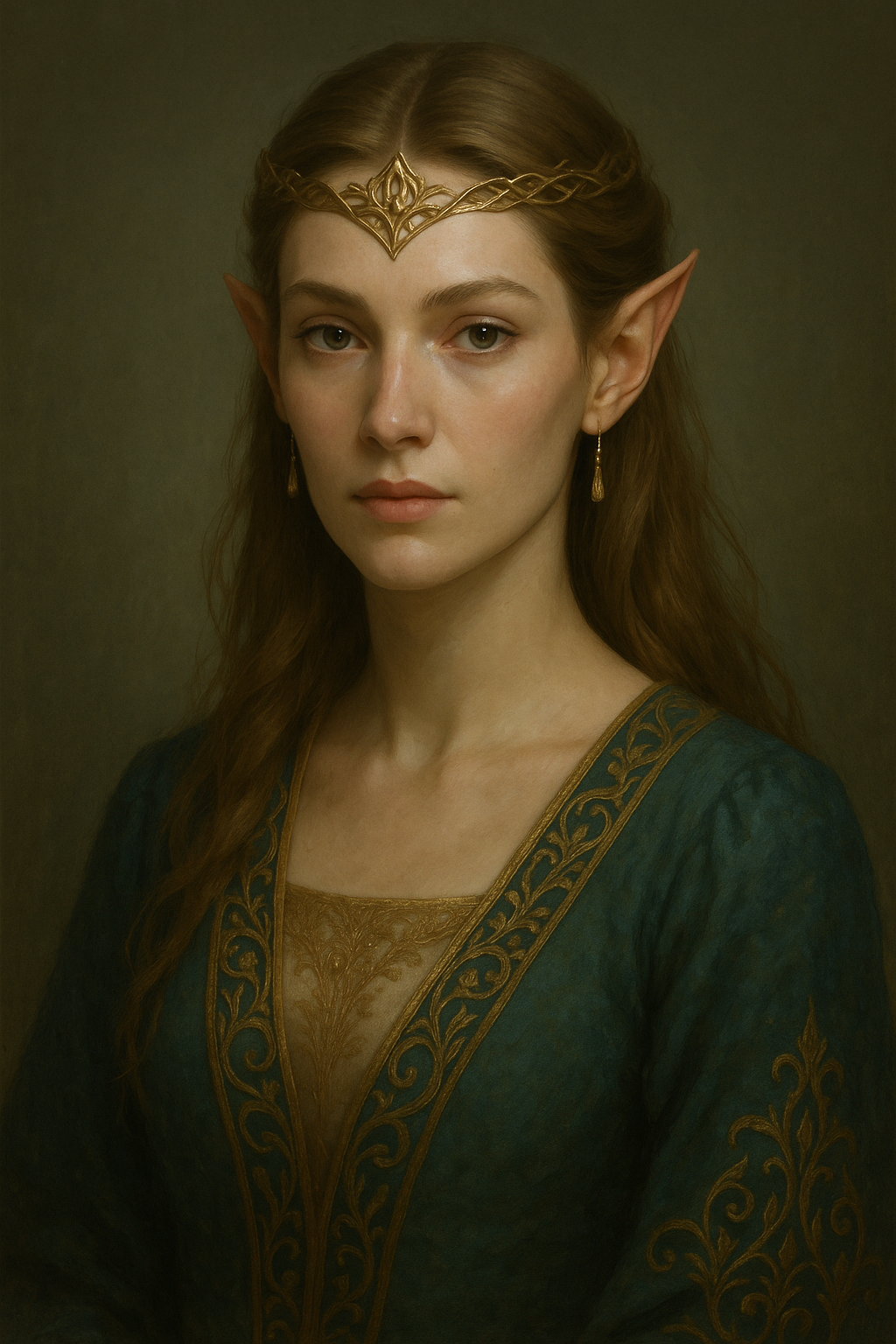
The Aelvaren define beauty not through raw sensuality or ornamentation, but through refinement, symmetry, and control. Their standards reflect their broader cultural values—composure, grace, and intellectual poise. To them, beauty is not loud or ostentatious; it is quiet excellence, carefully maintained.
Physical Appearance
- Symmetry – Perfectly balanced facial features and posture are considered signs of inner discipline and magical harmony.
- Graceful Bearing – Movement should be fluid, poised, and intentional. Even stillness can be beautiful when composed properly.
- Hair – Long, well-maintained, and styled with precision. Often braided or woven with runic threads.
- Eyes – Subtle enchantments to highlight the iris or cause shimmering effects are admired.
- Skin – Pale, smooth, and flawless—sometimes magically enhanced to glow faintly or shimmer with magical resonance.
- Minimalism – Jewelry and accessories are elegant, symbolic, and often enchanted.
- Runic Embroidery – Clothing features detailed, purposeful arcane patterns that reflect lineage or magical rank.
- Color Palette – Cool, muted tones such as silver, moonlight white, dusky violet, and soft sapphire blue are preferred.
- Arcane Resonance – Glowing skin, sparkles during speech, or a softly pulsing rune are considered signs of cultivated inner magic.
- Voice – Clarity, elocution, and lyrical tone are deeply tied to grace and beauty.
- Emotional Control – Passion is respected only when expressed with precision. Outbursts and excess are seen as unsightly.
Gender Ideals
Among the Aelvaren, gender is treated less as a strict binary and more as a role to be expressed through mastery, grace, and discipline. Social expectations exist, but they are refined rather than rigid—focused more on how one carries themselves than who they are by birth. The Aelvaren place greater value on competence, reputation, and magical refinement than on physical or reproductive roles. That said, long-standing traditions have cultivated certain ideals associated with masculinity, femininity, and androgyny.
Gender and Power
- Merit Over Form – Ultimately, power and respect among the Aelvaren are earned through magical achievement, philosophical insight, and graceful conduct—regardless of gender identity.
- Transition and Self-Definition – Magic and alchemy have long allowed the Aelvaren to modify physical form in accordance with identity. Such changes are respected and ritualized, not stigmatized.
High Elves
Related Myths
Languages spoken
Related Locations


I kind of love the idea that they see the divine as a concept to be studied and understood. Must be difficult to master your emotions in the way they do. Kids probably have to work at it from very young. I also really like that they see gender as something to master rather than a straightforward binary.
Explore Etrea | WorldEmber 2025
Thank you, I really didn't feel like they would care about a binary but at the same time I wanted to make it rigid in a different way if that makes sense. Like be whatever you want, but be the best at it, ya know?
"Every story is a thread, and together we weave worlds."
The Origin of Tanaria