
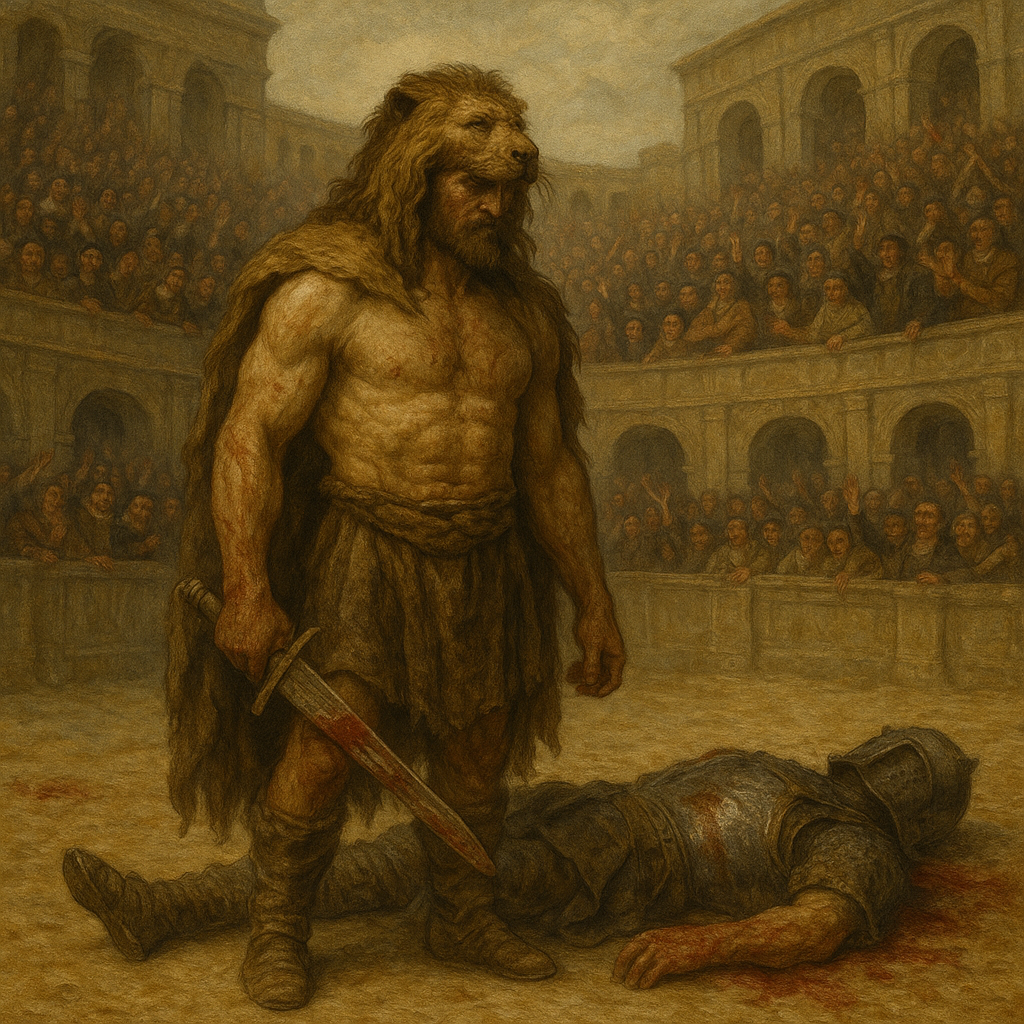
Bloodsports
“They promised me a fair fight. I asked them to define ‘fair’. They showed me the crowd.” -Jorah the Maned, Last of the Westward, 417 CA
In a land where famine gnaws harder than faith and the gods are silent to our pleas, Everwealth has found its answer to despair, spectacle. When the larders are bare and the snow turns the roads to graves, the people do not look to the heavens for mercy, they look to the arenas for meaning. The roar of the crowd is a hymn, the clash of steel a psalm, the gush of blood a reminder that at-least their hearts are still beating; After-all, what pain of hunger, could compare to the agony of the dead lying before them, bloodied and broken? When the fields rot and kings falter, it is in the pits of sand and iron that the folk remember what living feels like, fear, awe, triumph. Bloodsport is not just entertainment, it is endurance made visible. Every bout is a sermon on survival, every death a public tithe to chance and cruelty. The arenas are cathedrals for the faithless, their walls painted with the stains of saints and sinners alike. Here, Morality is measured by thrill and what absolution coin can buy. To The Monarchy, the games are order; To the guilds, they are commerce; To the starving, they are communion. Across the fractured cities of the realm, from the silk-curtained theatres of Opulence to the red, pitiless Rings of Twin-Peak, bloodsport unites what famine and faith could not. It is both disease and cure, a ritual of cruelty dressed as culture, a mirror that shows Everwealth’s truest face, starved, trembling, but still applauding despite it-all.
Origins
The pits, legal or otherwise, began as necessity inspired by the obscenities of the past. In the aftermath of The Great Schism, there were too many criminals and not enough rope. Executions, once solemn, became crowded affairs, then organized ones, then profitable ones. What started as punishment became pastime, and soon even the righteous queued for seats. When the first amphitheaters rose from the bones of burned temples, the crowds called them sanctuaries, for within those walls at least the pain had purpose. The Monarchy sanctioned the fights to quell unrest. By the time The Civil Age's uneasy first century would end, every major city had its own arena, and blood had become the kingdom’s cheapest form of entertainment; Especially with the consistent inventory of gladiators also available for purchase as a facet of Slavery. The arenas unified what war had shattered. Former enemies fought side by side, chained beneath banners that once divided them. Record-keepers of The Scholar's Guild announce results like scriptures. Even The Arcane Coalition, the strict no-nonsense enforcers of legal magickal practice learned to bind magick for spectacle; Forcing flame from the veins of condemned mages to light the sand and live a moment longer rather than meet their immediate execution. Starvation, worry, poverty, each snuffed out for a brief moment while the eyes of those afflicted are trained on the combatants. The Arenas
Casting a great shadow along the ports of Wardsea lies The Saltblood Arena, a storied haven of gladiator combat, and the oldest arena in Everwealth; Where men and animals are trapped in the same cages, released only to die for the crowd's appeasement. In Opulence, the Grand Theatre gleams like a promise, a coliseum of polished stone where nobles sip wine while slaves die in rhythm. There, blood is pageant. Every duel choreographed, every “miracle survival” bought with coin. The Gilded Hand manages the ledgers; Odds and bodies move through the same tunnels, both taxed, both blessed. When a champion dies well, their death is immortalized on stage, re-enacted by actors who cannot afford their names. In Bordersword, the Arena of Blades serves the crown’s hungriest virtue, discipline. Soldiers and criminals share the sand, each fighting for redemption they will never receive. The screams echo through the barracks like sermons, and for a week afterward, the patrols march straighter, the hangings fewer. And in Twinpeak, bloodsport is the economy. The twin amphitheaters carved into the cliffs, the Red Rings, are the largest slave markets in the Three Lands, their sands paved with bones and coin alike. The Orcish Crime Syndicate runs them without pretense. Beasts and men fight in equal measure, rigged, bribed, or drugged to make certain the crowd’s faith in violence is rewarded. The air stinks of salt, death, and deceit. Gladiators and gamblers alike have come to call the road that links these great settlements “The Champion’s Belt,” a cruel jest turned common parlance. The four cities lie like jeweled studs on the same long vein of trade and ruin, their arenas strung together by a single, bloodstained artery of coin and flesh. Caravans of fighters, beasts, and indentured souls march endlessly along it, their chains ringing the rhythm of Everwealth’s cruel procession. A victor crowned in Opulence might be carted north to Bordersword for “redemption,” and those who survive that crucible often end their days in the Rings of Twinpeak, cheered on by strangers who cannot tell one ruin from another. To travel the Belt is to descend through Everwealth’s hierarchy of hope, from the gilded theatre, to the iron pit, to the desert grave, until all that remains is the echo of applause fading behind you. The Trade of Blood
Slaves, criminals, and the desperate form the lifeblood of the games. Caravans of the condemned travel from every corner of Everwealth to fill the pits. A thin scribe fetches less than a trained soldier; A beastkin fighter trained to fall dramatically is worth a month’s wage. In famine years, fathers sell sons to clear debts; in better ones, sons volunteer to feed fathers’ pride. The betting houses turn slaughter into scripture. Odds shift with the breath of rumor; A champion’s limp becomes prophecy, a noble’s bribe a blessing. Fixers walk the galleries like priests, selling divine intervention by the cut. A rigged fight is the closest thing to fairness Everwealth knows. Victories are written before the blades cross, defeats traded like grain futures. When a match goes awry, when some doomed fighter refuses his cue, the riots that follow are almost holy. Behind the spectacle lies the machinery. Pit-syndics pay bribes to scribes, scribes pay guards, guards pay priests, and priests pray no one tallies the chain. Broken fighters are recycled through the brothels or the mines, their faces forgotten but their names whispered by gamblers who once bet wrong. It is said that the Monarchy could end the trade tomorrow if it wished, but it does not, because the games keep the peace better than law and generate far, far more profits. The Spectacle
Every fight begins the same, the silence before the roar. That stillness is Everwealth’s most valuable commodity, the moment before pain reminds the crowd that they are safe. The arenas are churches of that silence. Lanterns flicker along the walls, each bearing the name of a fighter soon to be forgotten. When the bell tolls, the lamps are snuffed, and the city holds its breath. Some arenas keep rituals, the Procession of Lamps in Opulence, the Last Walk in Bordersword, the fire baptisms of Twinpeak, but all share one truth, the games are theatre for those who cannot afford mercy. A noble’s mercy costs more than a fighter’s life, and when granted, it is sold thrice, first to the crowd, second to the scribe, third to the next sponsor hungry for a spectacle that “inspires.” The crowds pretend it’s virtue. The pits call it a rerun. Outside, taverns echo the violence. Drunken patrons reenact the blows with wooden spoons; children sell carvings of their favorite beasts. Betting ledgers circulate like hymnals, and the crowd chants names like prayers: not of saints, but of survivors. For a few hours, the people of Everwealth are united, noble, slave, soldier, thief, all shouting for someone else to bleed in their place. Morality & Meaning
The Knights of All-Faith, a religious order who dictates religious practice in Everwealth; Who almost no person here is a stranger, prayer a common creature-comfort to drown out one's sorrows or plead for them to stop; Calls the pits “necessary sin.” The Clerics tithe from wagers, blessing the sand before the slaughter and preaching afterward that the spectacle teaches humility. They incite rebellion from the pulpits and then guard the governor’s box when the crowd grows restless. The contradiction suits Everwealth well; Faith is always easier when it looks like profit. Still, defiance persists. Escaped slaves strike caravans bound for the pits. Some villages harbor wounded fighters, sewing their names into quilts that will never be displayed. Within the arenas, small rebellions bloom, fighters refusing to kill, champions throwing matches to spite their patrons. Their courage earns them graves, but also legend. Every so often, a crowd witnesses mercy and cannot quite forget it. In the end, the games are the mirror in which Everwealth sees itself. Its cruelty dressed in ceremony, its despair sold as entertainment, its conscience buried beneath applause. To the folk, the arenas are proof that they still feel. To the nobles, they are proof that order still stands. And to the condemned, they are simply the last work left to do before silence. When the lamps are extinguished and the crowds file home, the sands are raked smooth for morning. The city sleeps, but the arena does not. In its empty seats the echoes remain, cheers, prayers, sobs, the sound of civilization convincing itself, one scream at a time, that it is still alive.
Interesting Facts
- The Champion’s Belt - The road linking Opulence, Bordersword, and Twinpeak is called “The Champion’s Belt.” It is said one can follow the scent of blood from city to city without ever losing the path.
- The Betting Choirs - In Opulence, bookmakers chant odds in unison before each fight. Their voices rise and fall like choirs, the harmonies shifting with wagers. Skilled gamblers claim to hear the outcome in the tune alone.
- Magickal Augmentations - In Twinpeak’s lower pits, alchemists inject condemned fighters with powdered hexsteel, heightening rage and dulling pain until their hearts fail. The crowds call this brief blaze of violence “burning bright.”
- Gravedust Wine - Taverns in Bordersword sell a black liquor brewed from the ash of arena sand. Patrons claim it lets them dream of the fights they lost money on, and win them, in sleep.
- Pit Names - Fighters who survive three matches are permitted to rename themselves before the crowd. Most choose titles drawn from storms, beasts, or blades, discarding the lives they once lived.
- The Eternal Gate - Rumors persist of a secret tournament held once every generation, its patrons wagering souls instead of coin. No records confirm it, yet every decade a few champions simply vanish from the ledgers.

Comments