
Morality
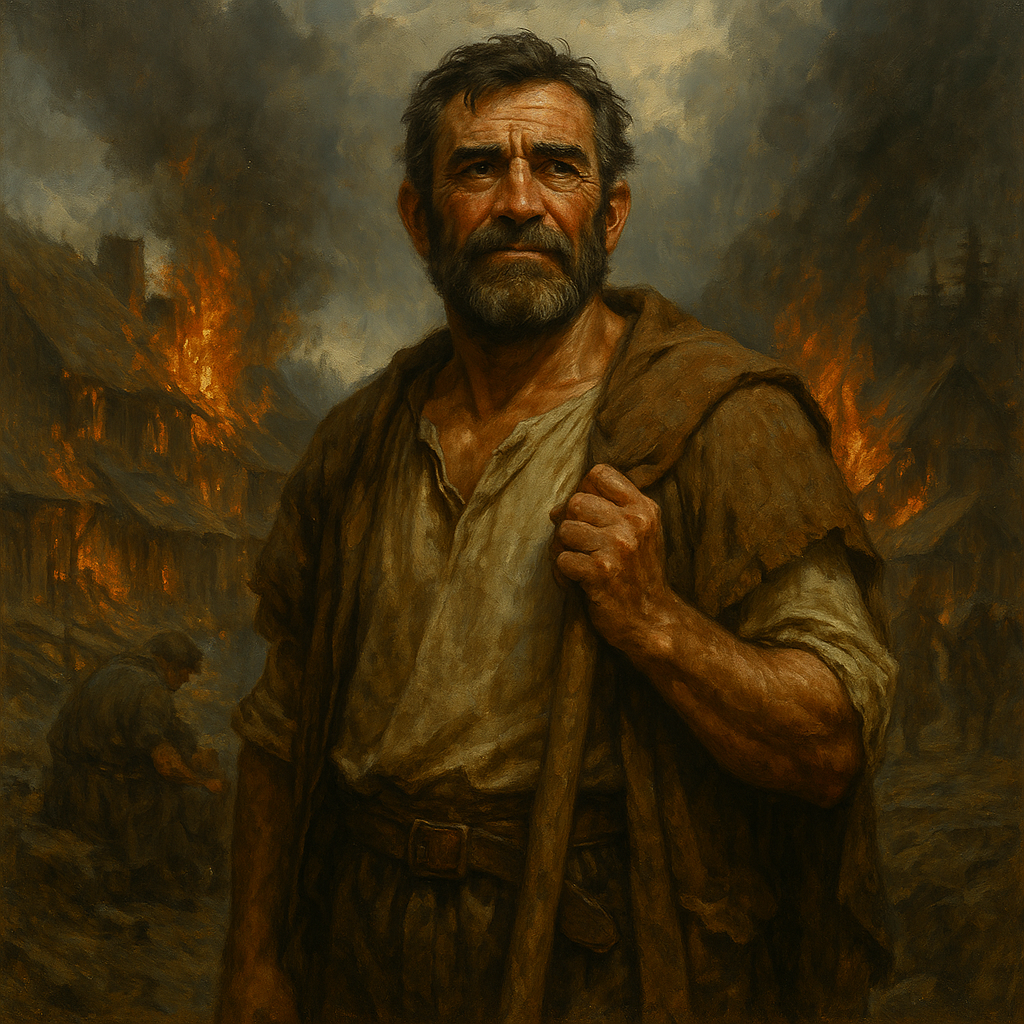
"A man’s worth isn't what he carries, it's what he refuses to drop when the world burns around him." - Father Gallus, Paladin of The Knights of All-Faith
To speak of morality in Everwealth is to speak of survival, not sanctity. After The Great Schism shattered the old world, the lofty ideals of virtue and justice drowned in the same tide that swept away its gods. What remains are ethics born of endurance, hard, sharp, and transactional. In this world, right and wrong are less moral compass than survival instinct, and goodness, when found, is measured in the distance one is willing to go without breaking. Every act, from offering bread to striking a bargain, carries a price. Each village and kingdom writes its own scripture of decency, scratched in soot and blood upon the bones of what came before. Yet certain codes endure across all corners of Everwealth, hospitality, honesty, shared labor, and fair exchange. They are not laws, but survival rites, customs that keep the fragile peace between starving hands and desperate hearts. And though these traditions once bloomed from kindness, centuries of hunger and betrayal have twisted them into something else; Sacred, yes, but also cruel. Here, even morality can kill you if misunderstood. Hospitality
Hospitality in Everwealth is not charity, it is an oath written in hunger. Born in the ashes of The Great Schism, when famine and war made every stranger a gamble, the act of opening one’s door remains both reverence and risk. Bread and salt, when shared, form an unspoken covenant; The guest will do no harm, and the host will see them fed and safe until sunrise. To refuse this offering is to mark oneself as faithless, to accept it is to swear, silently, upon one’s life. Many homes keep a small bowl of broth or grain by the door for the unseen traveler, a gesture both pious and practical, for the hungry have long memories, and the desperate return in the night. Yet this kindness is not without consequence. In the poorer wards of cities like Gullsperch or Newspire’s Lowrungs, a man might go hungry to feed a guest and still be robbed for his trouble. Tales abound of murderers who washed their hands in offered salt before the deed. Still, the ritual endures, perhaps because it’s the only law that does. To harm a guest or betray a host is among the gravest of Everwealth’s unwritten sins. Such acts are said to summon the Hollow Bell, a curse that tolls for the guilty in dreams until madness takes them. Whether truth or legend, no one doubts the wisdom of its warning: break hospitality, and you break the only shield this land affords. The Collective over the Individual:
The people of Everwealth live by a creed of togetherness forged in shared ruin. No single hand can lift the weight of a fallen world, so the saying goes, yet every generation tests that truth anew. Villages and towns hold fast to communal labor, barns raised, dikes repaired, dead buried, but the spirit that once bound these acts has soured into something brittle. The creed survives, yes, but like a cracked idol, worshiped in public, mocked in private. The rich preach unity while hoarding grain; The poor share stew while counting whose ladle dips deepest. Festivals celebrate “the folk, the many, the whole,” while debts, grudges, and quiet resentments rot beneath the songs. When famine comes, the wheel turns red, neighbors steal from neighbors, guards sell rations for silver, and the first to die are always those who believed the sermons most. Still, the wheel turns, because it must. Even hypocrisy has its purpose. In the worst of winters, Everwealth remembers what the Schism taught it, that standing alone is death. So the people smile through their hunger and sing through their grief, their hands blistered from holding the same wheel that keeps crushing them. Fair Trades
The markets of Everwealth are temples, though their gods are dead and their worship paid in coin. Here, the exchange of goods is as holy as any prayer, for trade is what keeps famine at bay. “Your weight, your word,” merchants say, a phrase older than the Monarchy itself, a reminder that trust, not silver, is what makes the scales balance. Yet fairness is a rare and costly virtue. Every bargain hums with deceit, every promise has a loophole hidden under its price. Those who trade dishonestly are not punished by kings but by the market itself, ostracized, blacklisted, or found face-down in their own wares. In Opulence, the Merchant’s Consortium keeps ledgers of names too tainted to be spoken, the Black Ledger, inked with debts that cannot be forgiven and crimes that cannot be sold. Even so, the market thrives on half-lies and full hungers. Stalls double as confessionals, bribes pass for blessings, and blood often greases the wheels of commerce more than oil. Yet this system, corrupt and cruel, sustains itself precisely because it mirrors the world. The Everwealthy understand that honesty, like bread, must sometimes be cut thin to feed all mouths. Honor in Word and Deed
In Everwealth, words are currency more binding than coin. Oaths cling to the soul like frost, and the land itself seems to remember them. To speak a vow is to carve a piece of oneself into the world, and those who break it find that the world carves back. Among the Ursi and the Minotaur, there are rites where a liar’s breath turns cold, a mark said to linger for life. Dwarfish smiths etch promises into steel before sale, the lines of runes fading only when the work is fulfilled. Outlaws, too, follow the code in their own way: a bandit may rob a noble, but never a comrade who’s shared his fire. Promise-breaking is the only crime they all agree upon, punishable by exile or the rope. Legends speak of the Hollowfolk, oathbreakers whose reflections no longer follow them, voices swallowed by the void, forever wandering unseen roads. Whether myth or curse, the moral stands unshaken: in Everwealth, your word is your shadow, and to lose it is to vanish. Justice and Retribution
Justice in Everwealth is less about fairness and more about survival’s arithmetic. It is swift, public, and brutal, a spectacle to remind the living what the dead already know. A thief may lose a hand, a traitor a tongue, and a murderer his name long before his life. There are courts, yes, but few trust them; most disputes are settled by custom, blade, or coin. The Church of the Broken Crown teaches that mercy is a luxury of the rich and that forgiveness is the privilege of the fed. The hungry cannot afford either. In the poorer reaches, vengeance often masquerades as justice, and the people accept it, for at least it feels honest. A murderer hanged at dawn may have killed for bread, but to the crowd, the rope is still righteousness. Yet even here, amidst gallows and ash, a strange morality endures. A killer who confesses may be offered a single night of freedom to settle affairs, a ritual called the Last Walk. Those who return to face their execution are buried with honor; those who flee are said to be claimed by the Hollowfolk instead. The Price of Morality
Morality in Everwealth is not an inheritance but a currency, spent daily, often wasted, always needed. No act of virtue exists without risk, no mercy without consequence. Kindness is both shield and target, and those who live by principle rarely live long. Yet the people cling to these customs because they are the last remnants of order in a world that forgot what that word means. To offer bread, to speak truth, to labor for the whole, these things are not done for glory, but for the fragile illusion that civilization still breathes. The people of Everwealth do not ask if they are good; They ask only if they can sleep through the night without hearing the wind whisper their name in accusation. When one seeks to answer the question, “Who am I?” he need seek no further answer than what lies around him. The people of Everwealth are what the world made them: stubborn, bruised, and endlessly rebuilding. Their morals are not carved in stone but forged anew each dawn, hammered against the anvil of necessity. They are contradictions, selfish and selfless, cruel and kind, faithless and devout. Yet perhaps that is what morality was always meant to be, not perfection, but persistence. In a land where monsters prowl, kings rot, and gods stay silent, it is not faith that keeps Everwealth alive, it is the stubborn refusal to let decency die first.

Comments