
Animate
Overview
Even on Empirica Sin, to be touched by death is an inevitability. Certainly it may not come to all individuals, but it will almost inevitably arrive in the vicinity of each person - a Mortal dying in advanced age or from disease, a friend lost in battle, a loved one lost at sea. The question then becomes, how does one manage to deal with that, once it occurs? For most people, the answer lies in grief and recovery. One cries, one mourns, and then one moves on... if for no other reason than that they must.
But, in this world, in this place... there are other options.
For better or worse.
History
The original Animate was born from grief. In 3599Y (exact date is lost to time), Ordan Koyn, a powerful mortal mage, lost his daughter Melydia to a violent attack by a rejected suitor. Ordan was a widower, his wife having died to illness only a few years before. Furthermore, his young son had drowned at only six years old a decade earlier. Melydia was the last of his loved ones left alive, and had become the center of his world.
The First Animate
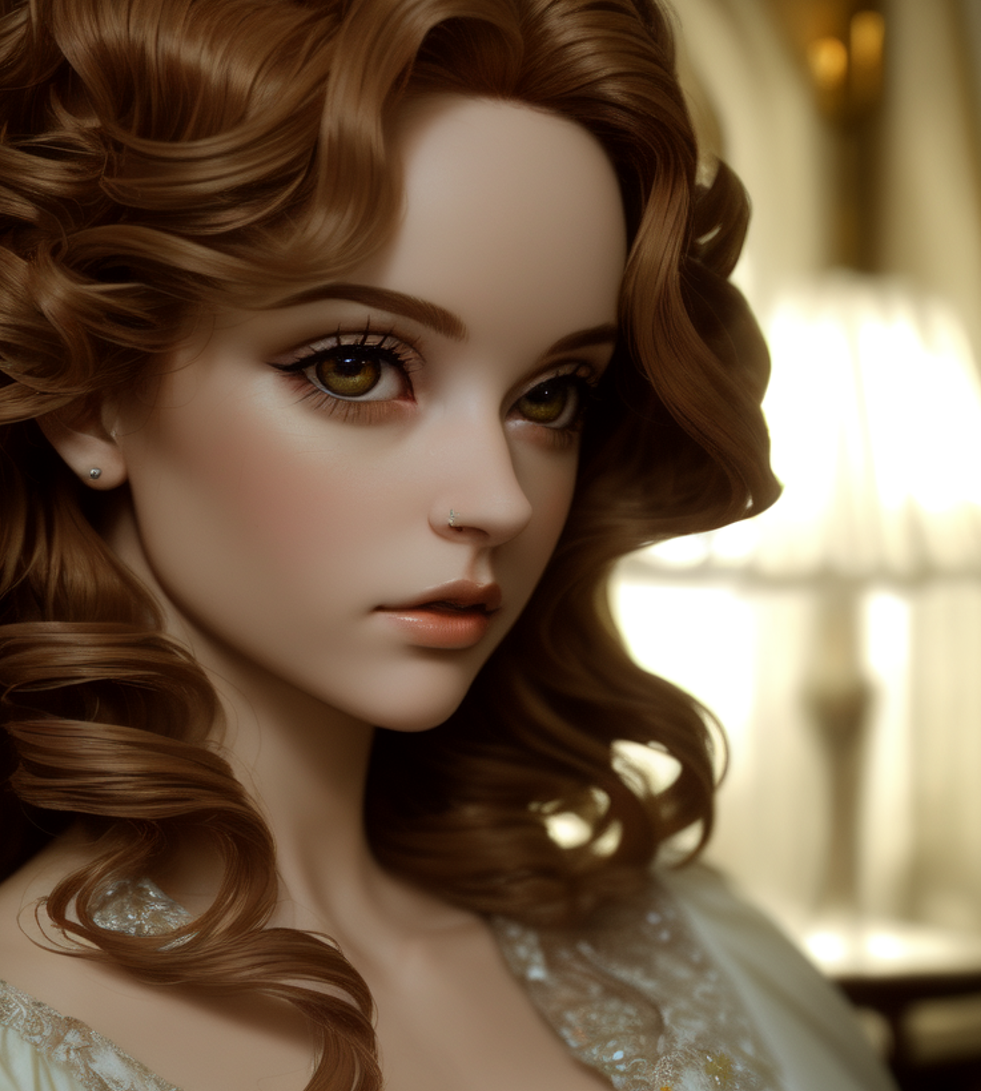
Melydia, the original Animate, was a beautifully crafted porcelain ball-joint figure animated by the Anima of her creator's deceased daughter.
Either way, mad or not, Ordan was unable to accept her loss. Wanting to keep some memory of her nearby, he had a doll commissioned in her image.
The pain nearly broke his mind. Some, years later, would suggest that it actually had.
Originally this was the entirety of his intention. The initial doll was lifelike and beautiful, but it was just that - a doll. Standing 2 feet tall, it was large, but not at all life-sized. He placed the doll in a display case where she would represent the missing piece of his heart.
What he did next would shock the world. He would claim, in years to come, that the idea came to him in a dream.
Ordan was a skilled life and necromancy specialist. Typically, he used his knowledge of both life and death to act as a healer... but now, thought of another use for those skills.
He called upon Melydia's Anima, which had not yet faded entirely. Though he performed a ritual of farewells, supposedly calling to her so that he could tell her goodbye, when her spirit answered the call, he anchored it to a marble-sized stone and placed it inside the doll.There she remained, unmoving and largely unable to communicate... for ten years. That is how long it took him to piece together the knowledge he would need to manage the next part of his intention.
At the end of those years, in 3610Y, he had another doll commissioned - this one even more lifelike, and built to Melydia's proportions, standing fully 5'7" tall.
He placed the stone in the center of that doll to serve as its "heart."
And then he granted it "life."
The Created: Animate Lore
Also known as... Ikujokju-Pom (Zozun, lit. Animated doll Marsevive (Diursparid), Vicadem (Clearish)-- Facts:
Though animates are most often humanoid in appearance, there is nothing necessitating that they must be.
Unlike Golems, Animates are fully sentient, though they may or may not remember their original life.
There are very few Animates in the world - only a few thousand at most. This is partially because creating them is a difficult process and partially because creating them is quite disturbing to most people - even those who can justify creating a Homunculus or Golem
Animates generally lack physical sensations, as they don't have... nerves or flesh. Spells can be prepared to approximate something similar to sensation, but that is somewhat unreliable and also pointless for most use cases.
An animate's voice is an artificial creation, generally specified within the Magic of its creation. Sometimes there are specifics placed on those spells, e.g. only speaking in rhyme, or only singing.
Of course, Melydia was not truly alive. She was an Anima trapped inside a body made from reinforced porcelain - a body kept "alive" by constantly draining the Void energy in the area. Magic allowed her to move despite her unliving body. It allowed her to speak despite having no real throat. it made her immune to pain, and immune to death... yet Melydia herself would tell anyone who allowed it that it was no life. Isolated and shunned for her bizarre nature, she was unable to resume anything like a normal existence...
...but of course that wouldn't prevent others from seeing the potential in the creation of similar constructs.
By 3629Y, Ordan had grown weak with age, while Melydia remained unchanging. Eventually, he would pass away, and yet she continued on. When she could no longer tolerate her existence, Melydia left home and went in search of a necromantic void-dancer with the power to undo the spells her father had woven. In time, she found one: the Archdemon Troyes Vandeil, who was a young Legat at the time, but shockingly strong in the necromantic field. His price to fulfill her request? Her father's notes on the method of her creation.
Even realizing that Troyes could not possibly mean to do well with those notes, Melydia's desperation overcame her conscience, and she relinquished the notes to him. In return, Troyes unwove the spells binding her to the living world.
The original living doll had been freed...
...but she was only the first.
Current Status
Despite having come into possession of Ordan's plans, Troyes made very little actual use of them - a few "toys" here and there, primarily intended to serve as personal attendants - before passing it on to one of his favored courtiers, Vetarus Kekodien. It is Vetarus who has since come to dominate the "manufacturing" of Animates. Though he has sold or shared various versions of the plans, he has also advanced and altered it in various ways, ultimately allowing him to build a great deal of wealth on creating bespoke Animates. He has never shown any discomfort with it, but others have; as a result, Vetarus is no longer accepted in "polite" society in some parts of Empirica Sin.
That is, of course, less of an issue in Dispat.
The Nature of Animates
It is difficult to generalize about the bodies and abilities of Animates, as they are each individually crafted for some specific purpose. As such they might be build with a strong body for labor, for example, or in the form of a Grymvuld to scare off would be burglars. Most often, they are created as companions of various kinds - nannies for the children of wealthy families, friends for the isolated, recreations of lost loved ones, etc.
Some generalities follow.
Profile: Daleni of Dispat
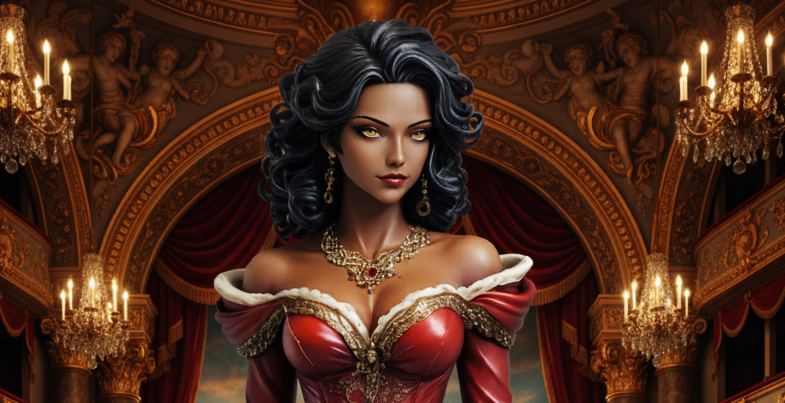
They remained in Incaendium where loose morals mean less judgement.
After his death, Daleni continued to perform. Today she is well-known and among the rare respected Animates.
The Spirit of the Animate
In order to create an Animate, a necromancer must bind an Anima to a physical object - most often some form of stone - which will then serve as the Animate's "heart." The unfortunate truth is, the Anima can be anyone's -- as with Golems, the most Common way of choosing one is simply to capture the first one they can summon that has deteriorated enough to have largely forgotten its previous life. However, in some cases (as with Melydia), a specific Anima is sought and can only be captured if it can be called to, or tricked into, presenting itself to the necromancer.
An Anima that retains its sense of self remains, in essence, the person they were, albeit in an artificial body.
An Anima that has shed its former life is only a life force and therefore as blank a slate as any new life.
The Body of the Animate
The physical form can be prepared before or after the capture of the Anima. For the recreation of specific people, the body is typically prepared later, as the anchoring of the soul is more important and time-sensitive.
The body can be made of anything - typical choices include wood or porcelain, but stone has also been used as well, for example. In any case, the material must be formed (by a craftsman or through magic) into the desired shape, and then enchanted - the enchantment reinforces the material so that, for example, a porcelain Animate does not simply shatter if they fall. It also creates a degree of flexibility in that material, though how flexible the material becomes varies by the power of the creator and the nature of the material.
In most cases, small motions such as moving one's mouth or eyes is possible without joints while larger movements such as arms and legs require physical points of articulation.
Profile: Telsy
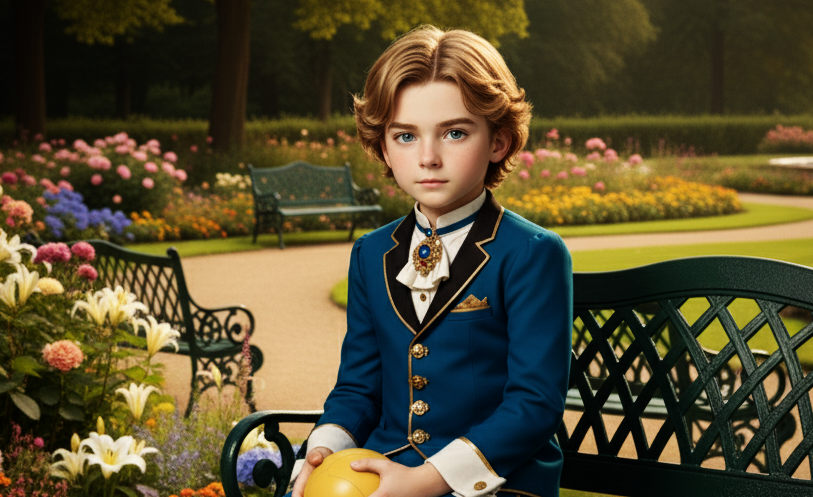
Eventually, he lost hope and approached Vetarus. He was unable to afford the price for the unraveling of his spells...
...but Vetarus was in search of a workshop assistant at the time, and so took him in.
80 years later, he remains in Vetarus's service.
The inside of an Animate may be hollow, solid, or somewhere in between. The most important thing is that the heartstone is placed at the center of its body. It can be held in place physically or through spells.
Fueling an Animate
An Animate does have a life force of its own, but it is being falsely held in place by magic; thus the Animate requires a constant infusion of Void energy. This draining function is built into the binding spells and not consciously controlled by the Animate themselves.
Now, because Void energy is essentially bottomless, there is no noticeable effect on the general area around the Animate. However, those who are sensitive to such things may feel the movement of energy; this has also contributed to people's general discomfort with them.
Lifespan of an Animate
Animates are essentially "immortal." They can only be destroyed through the unraveling of the spells that created them, or their complete physical destruction; in the latter case they are not truly "freed" as their Anima remains anchored to the stone until the stone is also destroyed. Furthermore, physically destroying them is quite difficult due to the magical reinforcement of their physical materials.
That said, many Animates do eventually leave the world - in many cases voluntarily. Once their commissioner (or creator, as the case may be) has passed, they are often left with little idea of how to exist in the world without their... jailer, or protector, depending on the specifics of their relationship with the person.
Many Animates attempt to find a path in the world alone - and some are even successful. But there are so few of them, and they tend to make others uncomfortable, and so life is not an easy path. Eventually, like Melydia, they may seek release through unraveling the magic that holds them together. It can be difficult to find someone to do this, as the unbinder must be at least as capable as the binder... but Vetarus Kekodian is always open to destroying an Animate, if they can pay his price.
Abilities
An Animate's abilities are largely dependent on what they are designed to do. Their physical strength, speed, etc are reliant on both the material of their form and the spells that went into creating them.
Magic is always available to them, as their bodies constantly absorb and process Void energy. However, because that void energy is used to keep their bodies "living," to make use of that void energy is physically damaging and can result in their immobility for a prolonged time. Significantly, this is not a way to break the spell and free the Anima. It can only deplete their capacity for movement; it cannot free their soul, so to speak.
Unless an Animate is specifically enchanted to have power over elements or access Psionics, they cannot do so. Even then, they access it in much the same way a sword would access it - they can be enchanted with specific effects and powers that are available to them, but they cannot learn a new way of shaping those abilities.
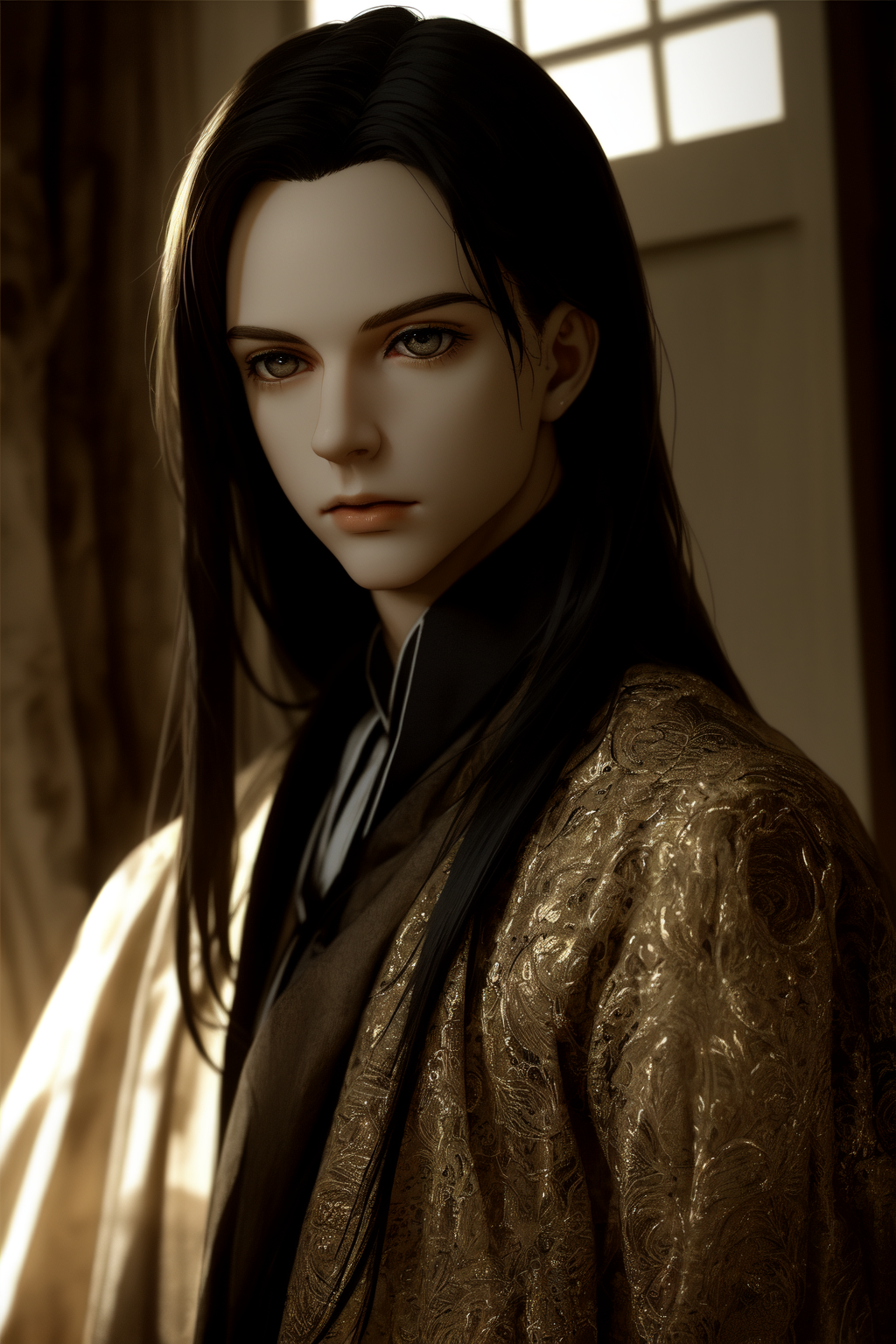

Artificial lifeforms created through magic, fueled by a soul captured and bound by the creator. They have much more nuanced personalities than many Created.

Comments
Author's Notes
...this entry is for Torment in Spooktober but my notification referenced Grief instead... oh no... Well, I think both probably count.