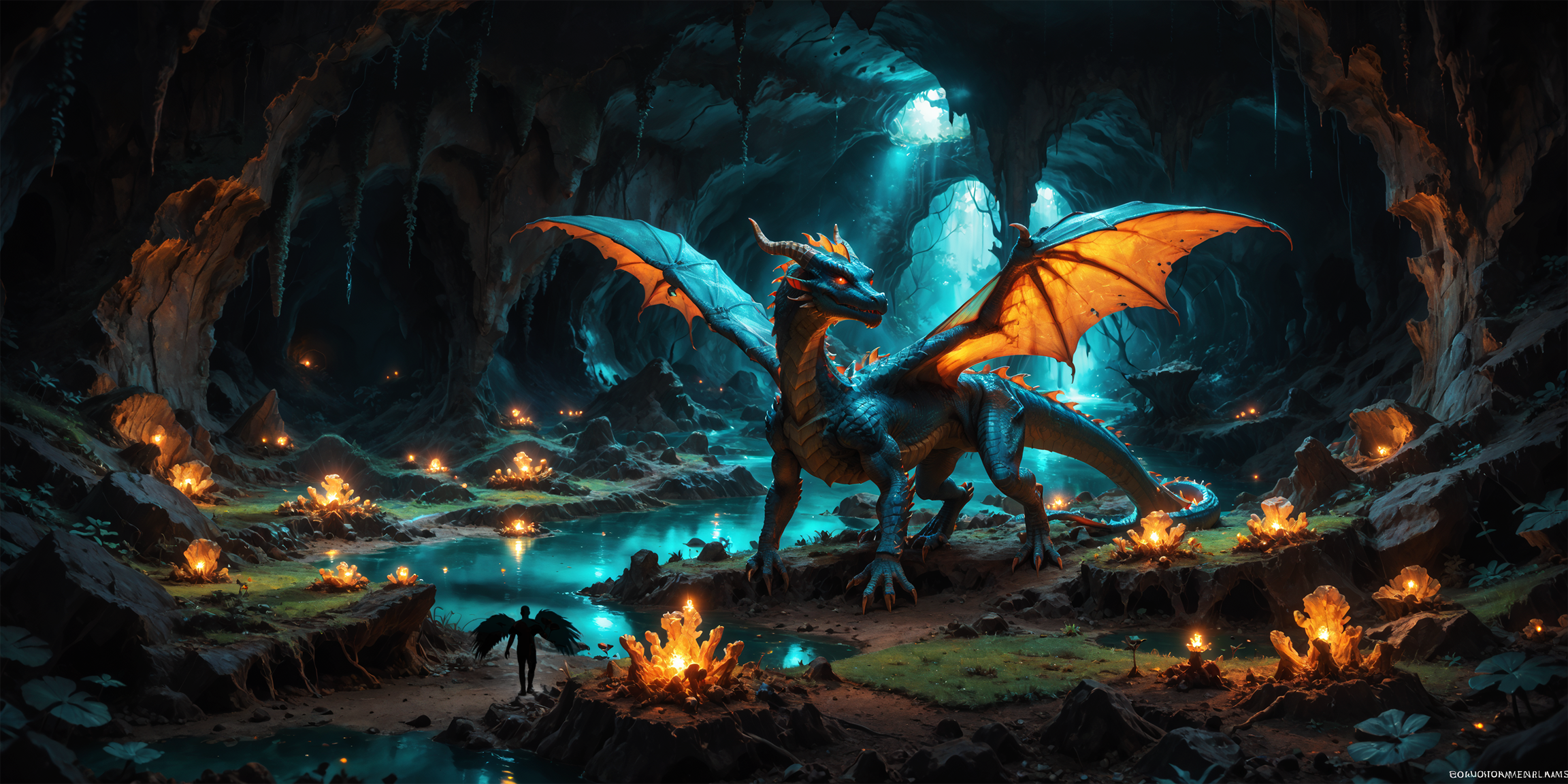
Heru-Kizet
I am difficult to impress, you know - a side effect, perhaps, of growing up as the Legat Exim of a sky island? Well, one can only guess. Even so, my first sight of Heru-Kizet might well have knocked the air from my body. Grandeur beyond that aboveground, living in silence below. In retrospect, there is sense to it. The most beautiful - and the most dangerous - things live out of sight.
Overview
Like all living beings, the beasts call Dragons require somewhere to lay their heads. This can be somewhat challenging, however, as they are exceptionally large and often hunted for their scales, their horns, their teeth - all of which are useful in ritual magic or when enchanting objects. Millennia ago, the demand grew excessive, and even the mightiest of the beasts were driven to the brink of extinction.
The Sleeping Dragon!
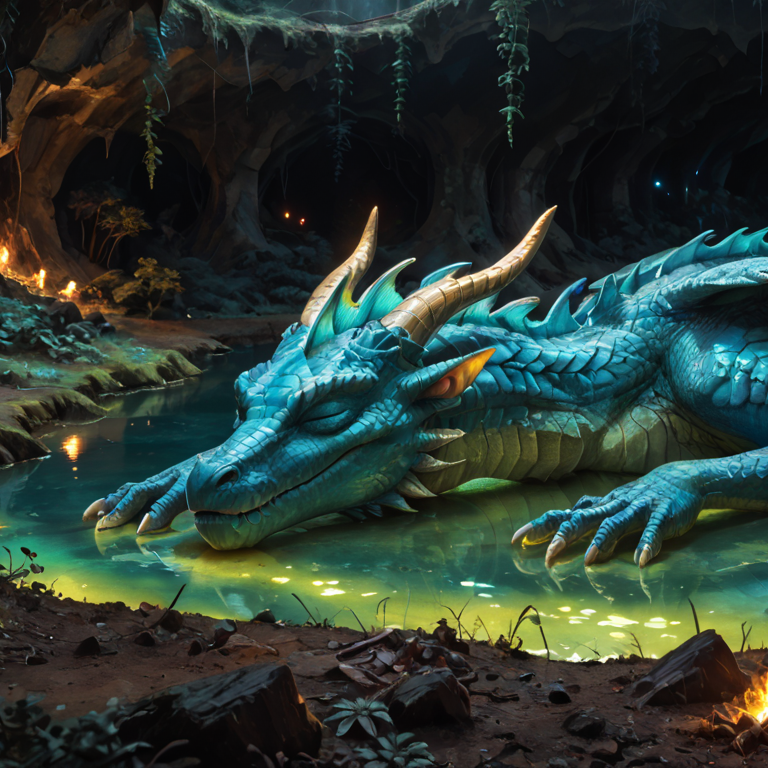
A dragon rests in a "shallow" lake inside Heru-Kizet.
Seeking shelter, they formed a pact with a group of Cubae. Through ritual - or more direct ways - they interbred with the Cubae, giving rise to a hybrid demon-dragon bloodline called the herusin. Foremost among them was one specific family, already known to be among the most inherently powerful of the subspecies. Once, they had another name entirely... as did the dragon bloodline that became associated with them. However, once the bargain was reached, the dragons came to be known as the Dracothene, and the family who struck the bargain became the House of Dracothis.
The Dracothis family was already the Regas house of the sky island Malduior, but with the aid of the Dracothene, their strength and influence grew. Eventually, they "renovated" the island itself to better accommodate the dragons, creating what become known as Heru-Sepat-Re - the Dragon Forest-home - a lush forest the swallowed half the island's surface.... but there was more to come.
This is how the mighty Dracothene came to reside in the massive cave system beneath the surface of Malduior... the dragon haven called Heru-Kizet, the Dragon cave.
Physical Characteristics
The majority of the caverns were carved out of the sky island's ground by Elementalists millennia in the past. As such there is a certain designed feel to them, with physical features that would not typically co-exist commonly. Generally, it is designed to be exceptionally beautiful, and exceptionally large - large enough for many actual full-sized dragons to coexist with minimal conflict between them.
Caverns of Heru-kizet
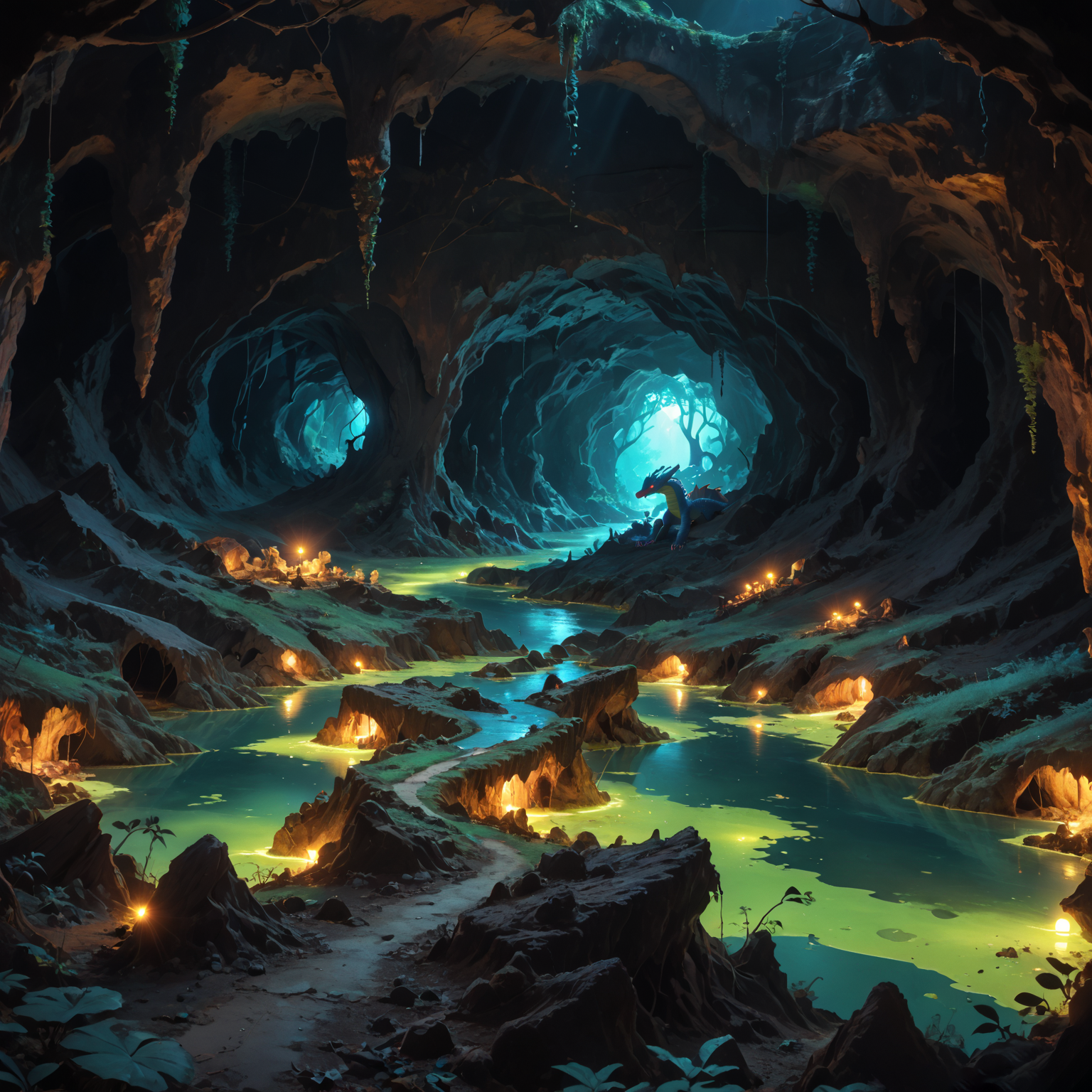
A dragon can be seen toward the back of the cave, resting on the stone floor.
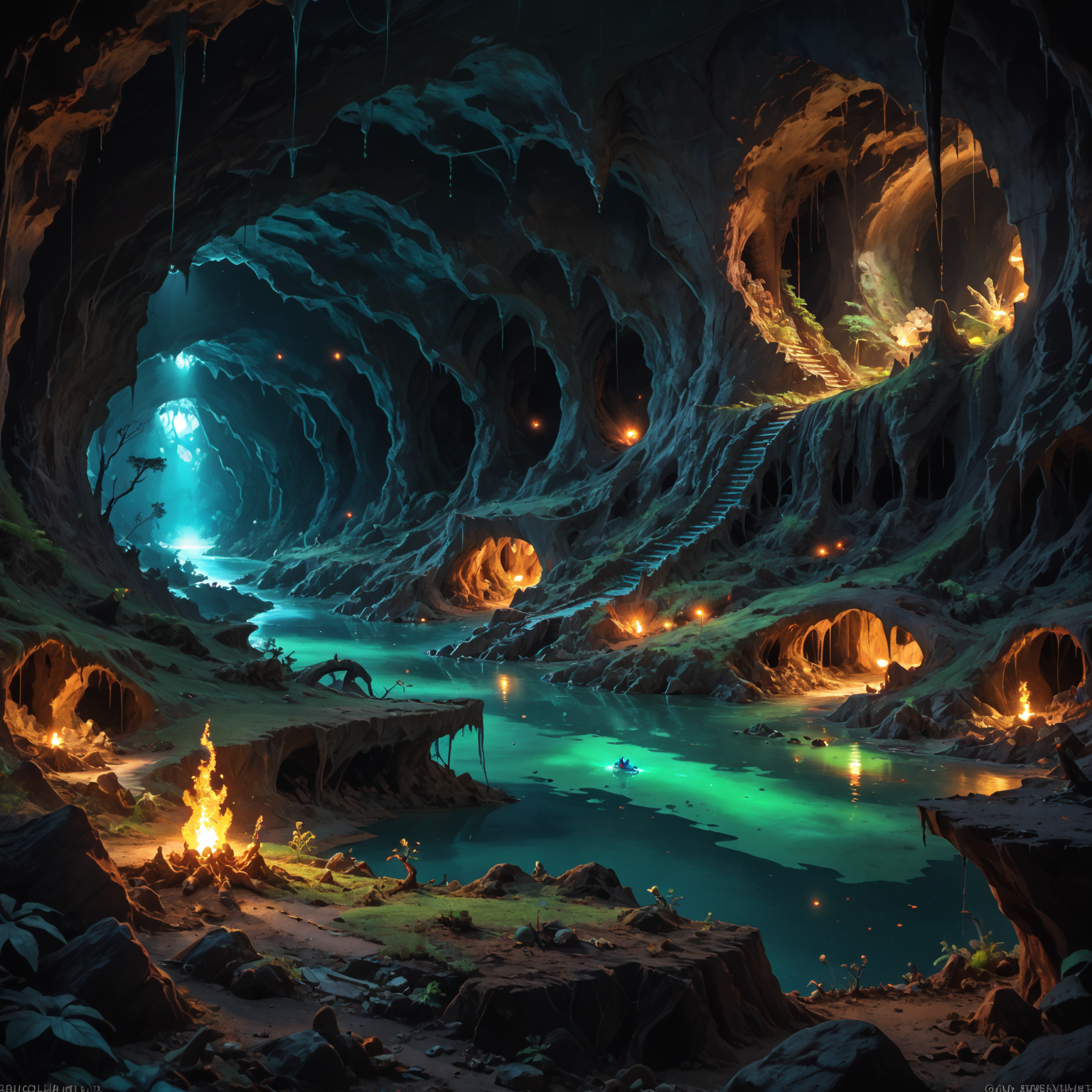
A patch of underground foliage is visible in the cavern on the upper right. ...the sneaky head of a bathing dragon can also be seen in the water!
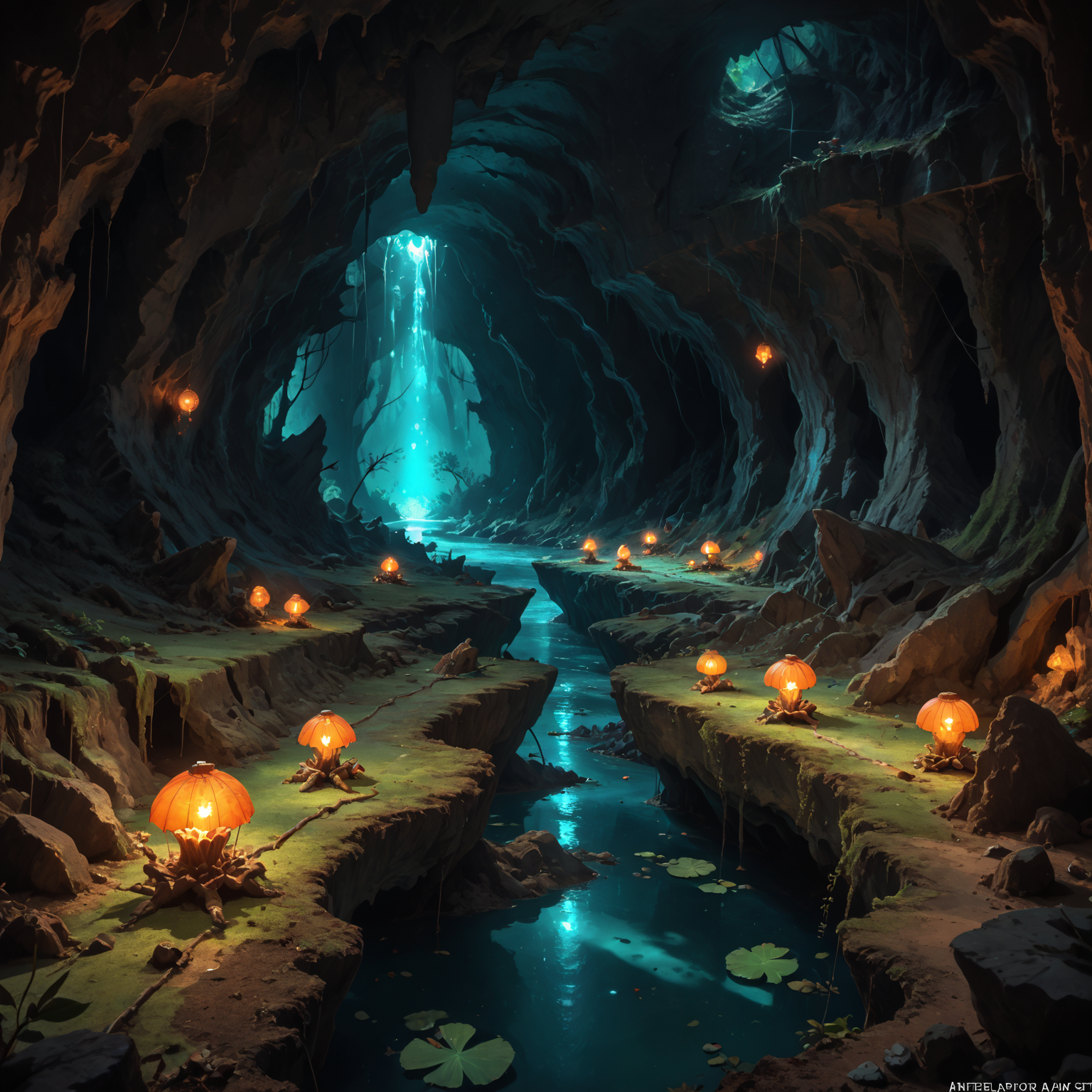
Bioluminiscent fungi is one of the primary light sources in Heru-Kizet.
This means the caverns are immense, with high ceilings and deep underground lakes. There is also a great deal of flora, even underground forests in areas, fed by openings in the cave ceilings that let in the light.
Passageways
Alongside the oversized passageways, there are also smaller caverns that are used by the Herusin that care for them... or for the dragons themselves in their smaller, often humanoid, forms to traverse.
These tunnels and paths can be used to navigate from large chamber to large chamber - there are also bridges crossing the large lakes and the chasms between high points - even stairs built into the stone allowing human-sized people to approach the otherwise inaccessible upper caverns.
Bioluminescent fungi scattered throughout the caverns provide various levels of light... as do the gently glowing bioluminescent waters.
Forest of the Cave
As it turns out, dragons have a great love of foliage! Indeed, some of them prefer to exist on a more-flora-than-fauna diet.
To accommodate that, Heru-Kizet has been designed to house large sections of underground "forest" and patches of vines, trees, flowers and grass. This is not wholly natural, particularly in the areas with little access to light from above the cave system - the plants are "helped along" by the Magic of the Dragons themselves, as well as the lingering spells left by the first of the Dracothis name.
Many of the world's rarest and most beautiful plants can be found here, including the world-famous Agu-Abos flowers. The dracothene sometimes make use of these and other flowers as decorations for themselves or their living areas.
The Luminescent Waters
Heru-Kizet's waters glow in shades of blue and white - shimmers granted by the algae in the waters, yes, but also by sparks of the magic that keeps Malduior intact and afloat despite its physically problematic makeup.
It is said that this water has magical properties... although what specifically those properties seems to change with the teller. The only ones who would know for certain are, of course, the dragons themselves and the Dracothis family.
Ecosystem
The ecosystem inside Heru-Kizet consists primarily of adapted creatures that had, initially, been surface-dwellers. In some cases, the adaptation has occurred naturally, while in others life forms have been somewhat aggressively converted by exposure to the high level of Void in the area.
Flora & Fauna
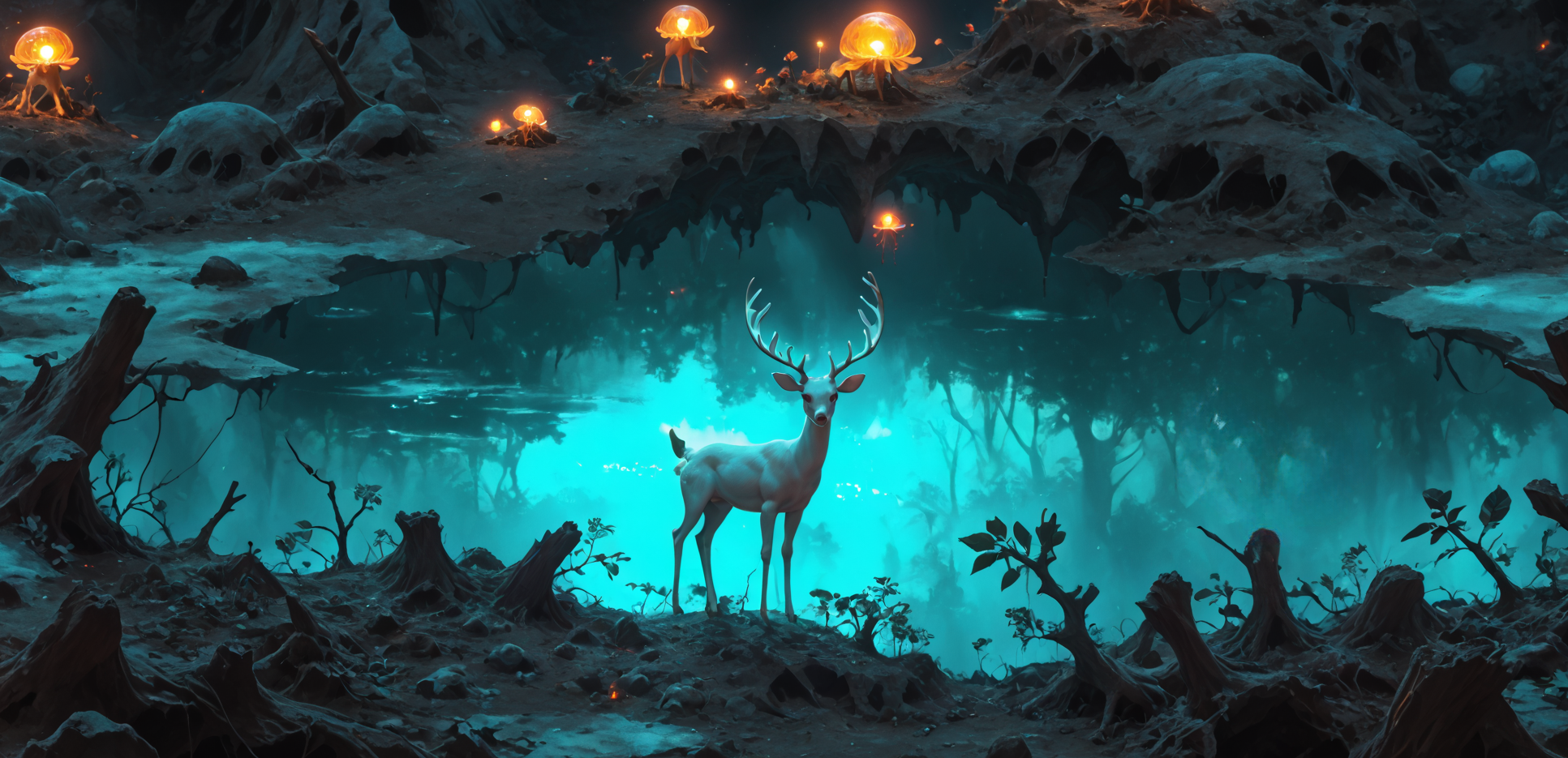
The white deer of Heru-Kizet.
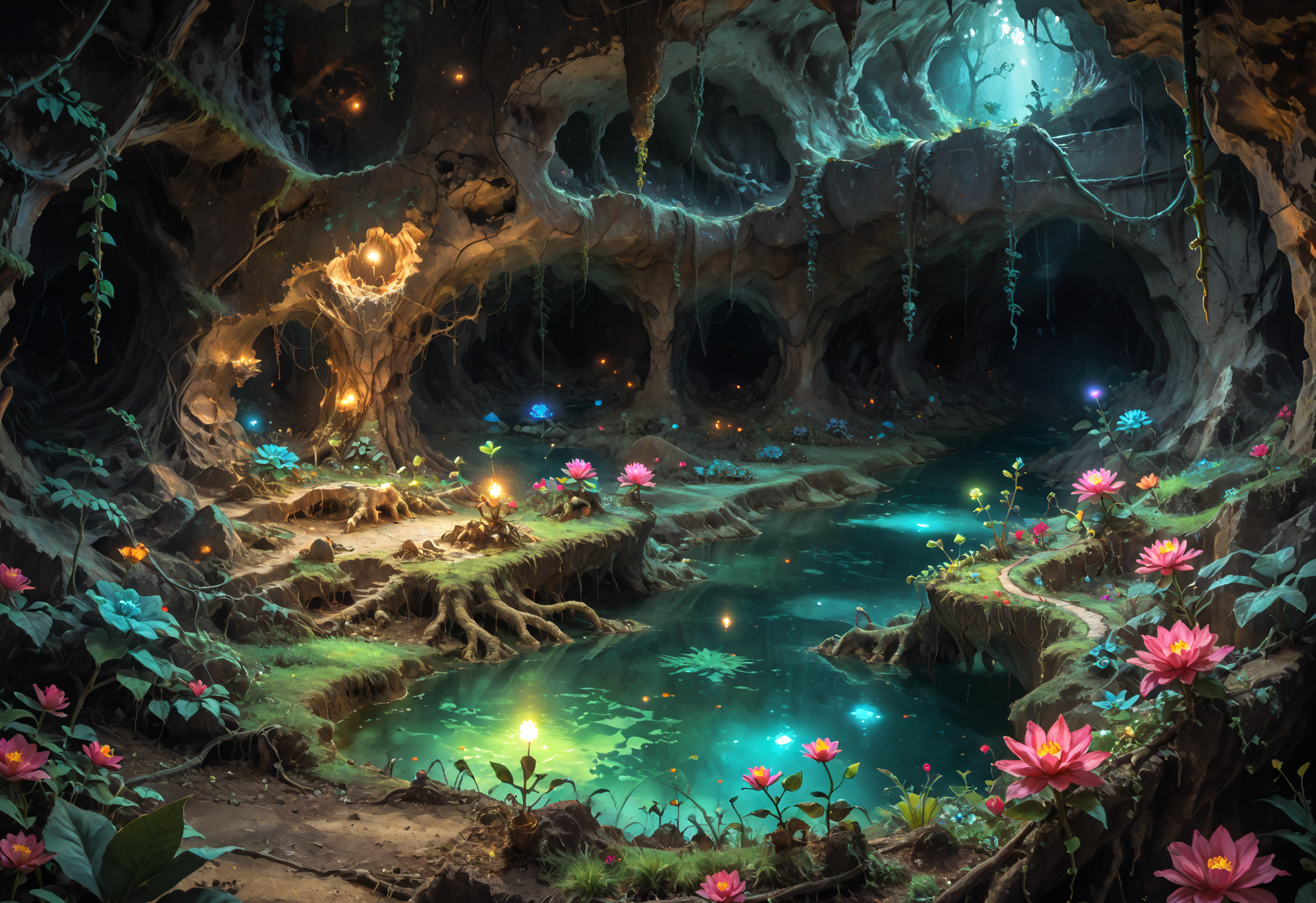
One of the brighter corners of the caverns.
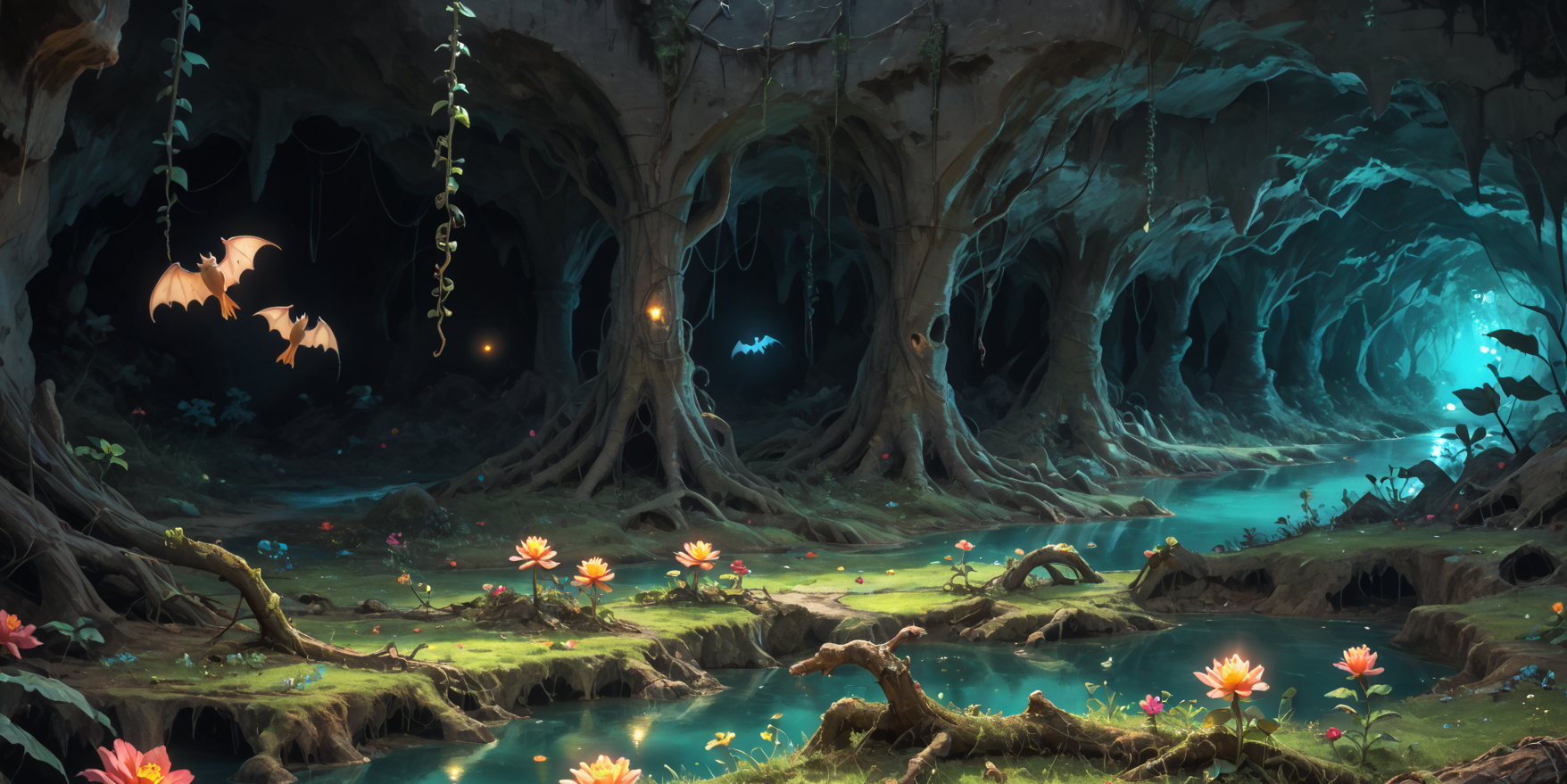
Flowers and Foliage and Fruit Bats!
Flora & Fauna
The bioluminescent fungi largely biosynthesize using the ambient energy in the atmosphere, creating somewhat variant colors and brightness depending on the time and circumstance.
Frolicking in their glow, a number of small furry animals make their homes in the trees, or around the forest areas. Fluffy white bats with blue ears reside in the canopy, feeding on the insects and cave beetles. Luminescent moths shine like fireflies in the shadows of the caverns.
Herbivores wander the greenery - pale deer and flightless birds as well as gliding marsupials. Canid scavengers travel in small packs.
Salamanders of unusual size have been spotted as well, and the lakes are populated by various breeds of - often blind - fish. Also spotted in the lakes - sometimes oversized eels, thriving in the odd environment, hunting by sending electrical impulses.
Among the tougher and larger of the fauna present are unusual animals that have "evolved" (at a somewhat enhanced speed, presumably because of the ambient void energy hanging thick in the area) to suit the new environment - armored boars resistent to heat damage in case they cross paths with a dragon, for example.
New species are not infrequently found inside Heru-Kizet - it's unclear whether they make their way to this place on their own somehow or, as many suggest, if someone is bringing them there for some reason. If so, that person is almost certainly Astaroth Dracothis... trying to make the Dragons' home more interesting or stimulating.
Residents
The primary residents for Heru-Kizet are, of course, the Dragons themselves!
Specifically the "Dracothene" dragons, the guardians and charges alike of the Dracothis family.
Resident Magical Lizards!
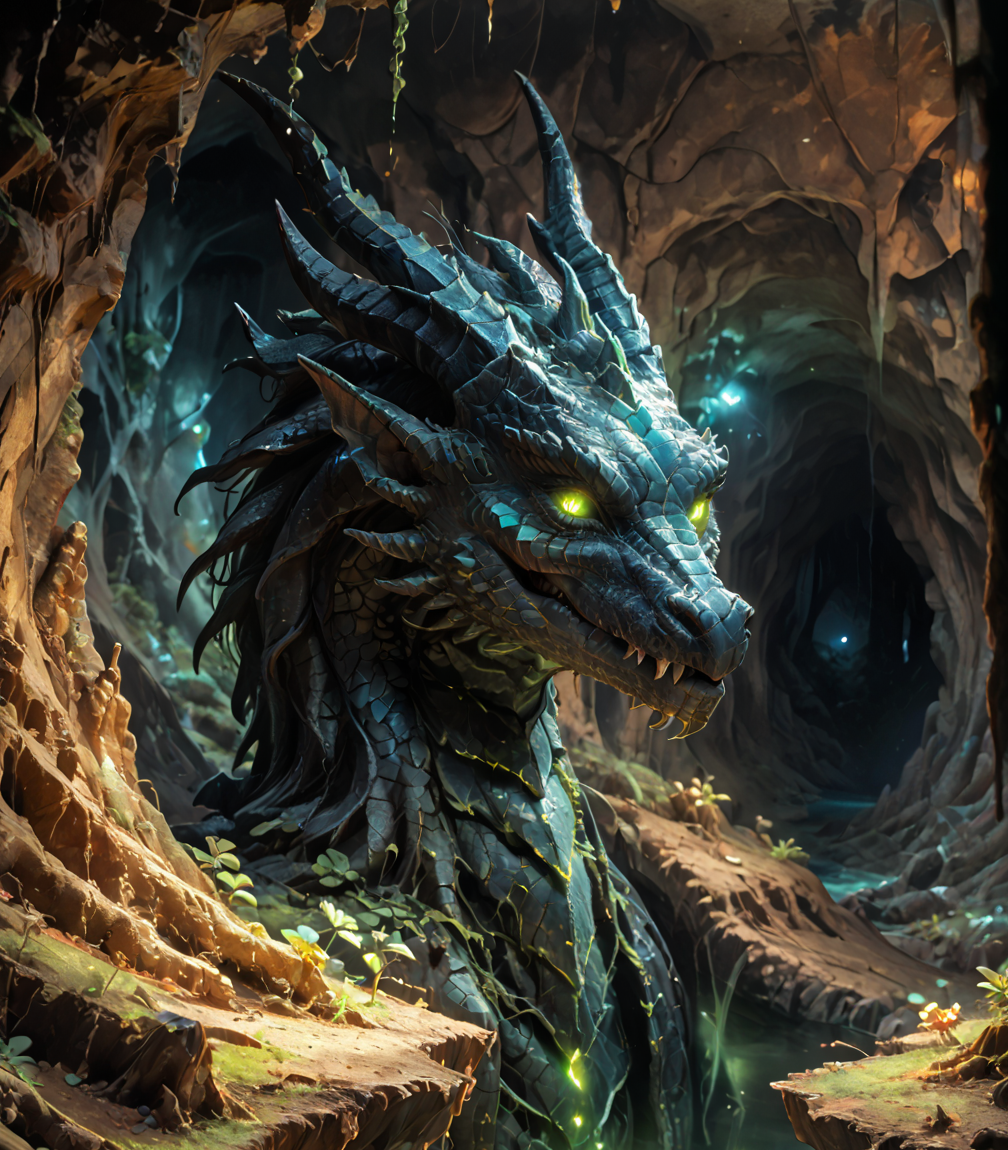
This dragon may think it is stealthy, but it isn't.
At one point the bloodline now called the Dracothene was considered to be the most powerful of all the Draconic lines. Now, it is unclear whether this remains true - the population of Dragons has been severely depleted and it's unclear how many of the original subspecies even exist. The survival of individual family lines is even more tenuous.
All that said, the Dracothene have thrived in their limited numbers since settling in Malduior.
Speaking of those limited numbers, it is unclear how many remain - the Dracothis family does not, generally, permit anyone outside the family to enter Heru-Sepat-Re, much less the caverns themselves. Typically, Astaroth will execute anyone who attempts to enter.
Scholars estimate there are two dozen Dracothene remaining at the most, and likely fewer than that.


Comments
Author's Notes
I made the micro for last year's Spooktober, so doing the full version for this year seems appropriate.