
Odaturgy
The first of the four abilities spheres is linked to the first of the Three Great Forces, as well. That said, I confess that despite studying Odic abilities and their functions for many years, I still do not quite understand how they work. In the end, it matters little - the significance of these abilities is in their versatility and invisibility; unlike Elemental or Voidic abilities, one can never be sure when Odaturgy is in use. It is as silent as a Fey's footstep, and invisible as air. Yet, do not mistake quietude for impotence, for Od is the energy that primarily fuels the Dei.
The Nature of Od & Odaturgy
Much like Aetherweave and Voidart, Odic abilities are based around the manipulation and production of one of the Foundational Forces present in Empirica Sin. Where Aether provides the physical matter of the world and Void provides the engine that makes the world run, it is Od that creates and maintains life. As such, it is present in all living things, from dragons to moss.
Beyond the Four
All living things contain Od, even moss. Even insects. But what does that really mean? Can carpenter ants make use of extraordinary abilities?
Well, probably not. To make use of Od as fuel for supranormal abilities requires an intelligence at least equivalent to an adolescent human, which rules out the majority of lifeforms outside the three primary Metaspecies.
This limitation is the result of Od's demanding nature - to use Odaturgy requires both the capacity to conceptualize it and the ability to organize it in one's mind. Furthermore, there's an argument to be made that lower intelligence beings having the ability to utilize Od would be weeded out by natural selection - they would be unable to regulate their use and would ultimately burn through their life force.
That being the case, Od is out of reach for most non-metaspecies creatures.
But not all of them. Many Beasts are able to make use of Od, as are most Abominations.
There have been rumors of animals using Od, but those are rumors and folk legends lacking any basis.
(Probably.)
Every living thing is perpetually both using and generating that Od - it is a cycle of deplete and replenish that continues until the body has reached the limits of its stamina or endurance and passes away.
While they are connected, Od must be distinguished from Anima - the soul. In short, Od is life, and Anima is self - if one's Anima is lost, their body lives on, but the person within does not. By contrast, if one's Od is lost, the body cannot survive.
The Odic Cycle
When an organism comes into existence, it has a certain amount of Od. As it lives, as it continues to survive, Od is depleted but, as if through erythropoiesis, the organism also generates replacement Od to maintain the "correct" level and fuel its own continued life. The "correct" quantity varies on a species level - a human requires a greater quantity of Od to maintain itself than a single celled organism would, and a Celestial requires more than a human. It also varies on an individual level - this is one reason that some organisms tire more or less easily than one another, for example, as well as one reason that some plants are perkier than others.
For organisms with a finite lifespan, their rate of replenishment will slow as they age, until they reach the point where they can no longer generate quickly enough to compensate for their usage - thus they begin to grow older and weaker and eventually die.
For organisms without a finite lifespan - an immortal such as the Celestials or Demons - the rate of replenishment will never deteriorate. They can always maintain their cycle balance, and thus they can continue in perpetuity.
In any case, one can easily maintain their natural balance on a day-to-day basis, partaking in the basic activities necessary to maintain life.
Odaturgy, however, is not a basic activity.
Burning Od Through Odaturgy
Odaturgy refers to the act of drawing out and shaping the Od within oneself - bending it outward to create different effects. This, of course, greatly increases the rate at which Od is "burned," forcing the body to increase its rate of regeneration.
This can happen - a person can temporarily generate additional Od in an attempt to balance the loss at a survivable level - but there are limits to how much the rate can increase, and for how long it can continue. If a person burns Od more quickly than they can replenish it at that increased rate, or if they continue for too long, they experience what amounts to the aging process - their body begins to break down, in essence.
This is generally the only way that an immortal can experience aging.
Odic Spheres
Od is a versatile and powerful energy and can be utilized in a wide variety of ways. However, it is also reliant on the Odist's ability to sculpt the energy toward specific ends. As Void responds best to the embrace of its chaotic nature - Od responds most positively to an ordered, organized and dedicated approach.
The First Teacher

Barisile Asreyn, a First Generation Dei, was the first to teach Odaturgy to a non-Dei, Laelea Kanete.
This comes naturally to most Celestials - they are generally quite an orderly bunch to begin with, and they have only become more so as their culture, influenced by the fallout of the Caelestise-Sura War, has come to prize control over spontaneity.
Beyond that, one is made by the things they make use of - just as Demons' somewhat wild nature has become wilder by exposure to Void, so have Celestials become increasingly "organized" in their thinking as a result of having to think that way to make use of Od. And so the snake feeds itself!
For the less instinctive species (Demons and Mortals), the categorization of Od’s expressions into formal Spheres has become a practical teaching aid—an atlas for a landscape Celestials navigate by intuition. The typically used categories are:
Self-Affecting
Senses/Discovery
Senses/Discovery is focused on effects that enhance the senses (both normal and supranormal), uncover hidden things, or otherwise lend themselves to a fuller understanding of the world.
Examples: Energy-sensing and identification, increased acuity or range of senses, prophetic dreams, seeing through illusions.
Notable Users: Leviael Kythien, Eiryen Nesaleen, Atë
Metabolisis
The ability to change or affect one's own body.
Examples: Enhanced strength, speed or durability, shape-shifting, regeneration.
Notable Users: Leviael Kythien, Grigorius Bieloskytes, Samael Asther
Other-Affecting
Cognitive
Abilities that involve the user's mind or spirit interacting with the mind or spirit of someone else. This includes other sapient creatures as well as things like animal communication.
Examples: Telepathy, dream-walking in someone else's mind, altering dreams or memories
Notable Users: Eiryen Nesaleen, Atë
Extra-Metabolisis
These abilities affect the bodies of others. It is the outward facing equivalent of Metabolisis and can be used to heal others, for example, or to enhance their own abilities.
Examples: Changing others' shape, enhancing their senses or physical attributes - essentially anything Metabolisis can do, but it affects others instead of oneself.
Notable Users: Dagon
External Od Manipulation
The ability to affect the Od of others. This is most commonly used to stop an action or attack, for example severing a pyrokinetic's control over a fire. However, at the highest levels this becomes more complicated and versatile and can permit others to trigger an Odist's abilities, essentially controlling the abilities of someone else.
Examples: Triggering others' abilities, severing their access to their abilities.
Notable Users: Leviael Kythien
World-Affecting
Genesis
Genesis abilities use the Odist's will and Od to draw on ambient Aether, allowing the Odist to create nonliving constructs. This includes both substantial physical objects (shoes!) and intangible things such as light, sounds, illusions.
Examples: Creating armor before a battle, distracting enemies with noises, creating water from ambient Aether.
Notable Users: Dagon
Bio-Genesis
The creation of living or organic things, including both flora and fauna, as well as humanoid bodies appropriate for housing an Anima or created consciousness.
Examples: Quickening the growth of flowers or vines, growing the eye of someone who has lost theirs, replacing lost limbs.
Notable Users: Naia, Neem
Psychokinesis
A powerful sphere that allows the manipulation of various things - pyrokinesis controls fire, telekinesis allows the movement of objects, etc.
Examples: Throwing things or people, controlling fire
Notable Users: Grigorius Bieloskytes, Dagon
Meta-affecting
Destruction
Destruction is a discipline aimed at weaponizing generally benign Odic abilities and altering their functions into a more offensive/destructive direction. Telepathy might become psychic attacks or mind control, and extra-metabolisis might allow a user to make the target's body begin to consume itself at a rapid pace. Note that some abilities already have an offensive applications (e.g. forming a sword or enhancing a soldier to fight for the user), but Destruction permits a more direct application.
Examples: Disintegration (weaponized psychokinesis), Afflicting necrosis (weaponized extra-metabolisis)
Notable Users: Grigorius Bieloskytes, Leviael Kythien, Dagon
Harmony
A high level and difficult technique; the Harmony sphere increases the range of abilities by harmonizing Od across targets and distances. This could affect thousands or even millions if used by one of The Seven, for example.
Examples: Realm-wide dream manipulation, healing full armies, causing entire fields of crops to grow immediately
Notable Users: Nindinva, Laelea Kanete
Essential Information
Odaturgy is nearly universal among Celestials. Naturally, this leads to a much higher proportion of Celestial Odists reaching Vis tier compared with Mortal or Demonic practitioners. In fact, there are more Vis-tier Celestial Odists than there are Vis-tier Demon Void-dancers or Aetherweavers of any kind.
The reason is simple: every Dei is, by nature, a Vis-tier Odist; Vis-tier itself is measured against the least powerful Dei. This fact alone explains why Celestials are widely regarded as the most powerful of the three metaspecies.
A breakdown of the relative prevalence of various tiers within the three metaspecies follows.
Prevalence by Species
| Rank | Celestials | Mortals | Demons | Notes |
|---|---|---|---|---|
| Palen | 5% | 50% | 45% | No measurable Odic access or control. |
| Enop | 20% | 25% | 25% | Low-level use, capable of small/simple effects. |
| Modu | 40% | 15% | 20% | The most common working level of Odaturgy. Capable of minor but reliable feats. |
| Dumen | 20% | 5% | 7% | Proficient practitioners and trained soldiers; noticeable personal power. |
| Vaham | 10% | 3% | 2.5% | High-level users; rare outside Celestial military and elite Mortals. |
| Vallus | 5% | 1% | 0.50% | Exceptionally strong. Vallus-level Celestials rival low Deities; non-Celestials at this rank are legendary. |
| Vis | ≤0.01% (non-Dei) | 0% | ≈0% | All Dei are Vis-tier by nature. Non-Dei Vis users: ≲500 worldwide (across all metaspecies) |
Od: The Energy of Life
As with many areas of ability, whether supranormal or mundane, one's capability as an Odist has both natural predisposition and skill factors. Indeed, for most practitioners, skill is even more important for Od than Void or Aether, because of the limited quantity and its relationship to one's own life and vitality.
The Greatest Odist
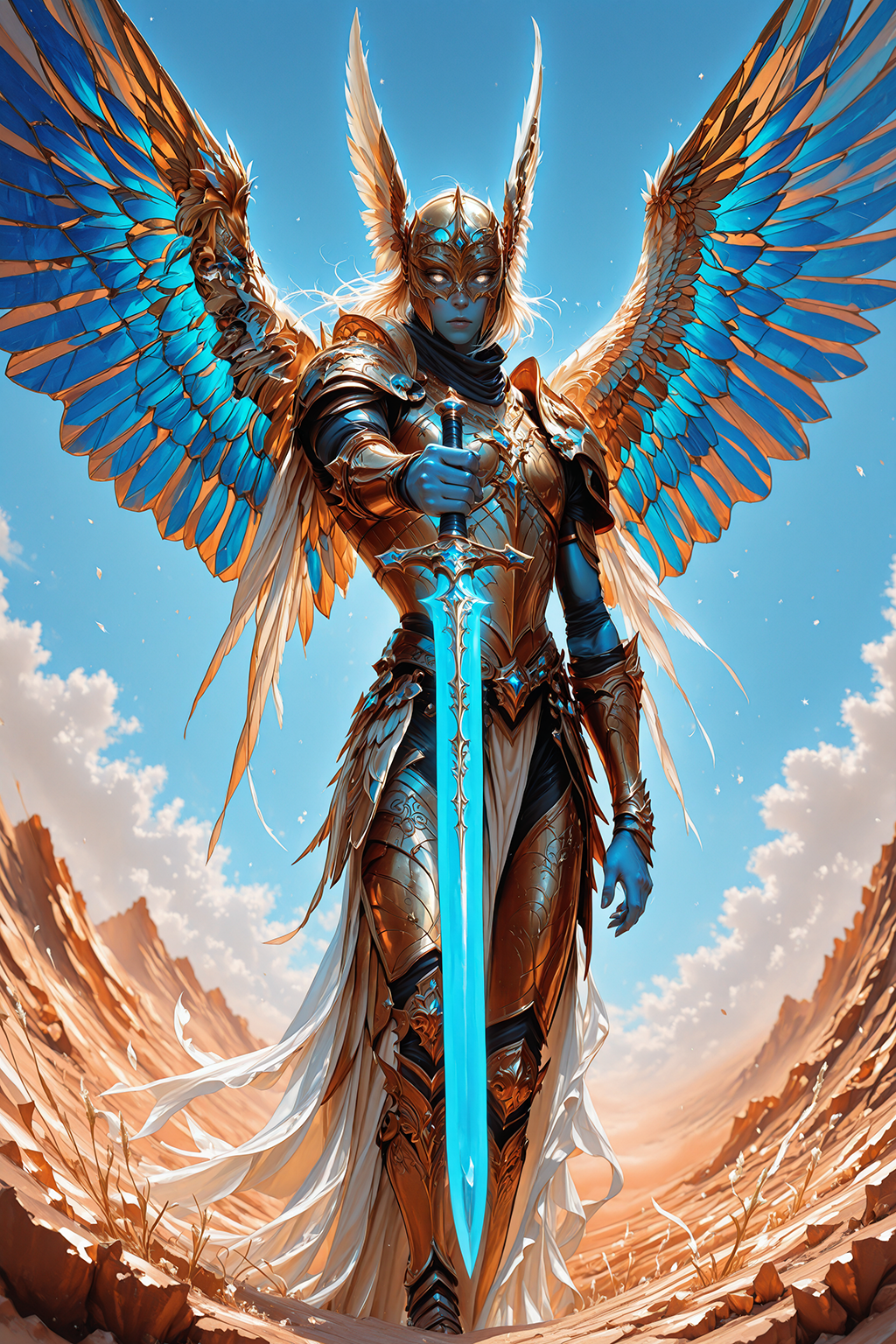
In short, part of becoming a highly skilled Odist is learning to make use of the energy with precision, using no more than is strictly necessary to achieve the task at hand. While this may seem less significant for those with a larger general pool and a higher regeneration rate, and that is true to some degree, an expert Odist knows that when one can do more with less, one should always choose to do so.
Managing Od Supplies
By far the most important skill an Odist could develop is the maintenance and management of their Od supply. With Aether or Void, one can at times power through a difficult task by simply overwhelming it; with Od that is a terrible idea. For an Odist the use of their energy is, in itself, life and death.
The most obvious way to do this is through judicious energy use. The easiest way to feel out and practice avoiding one's limits is through trial - begin tasks by using minimal energy and then slowly increase the amount until the desired effect is achieved. Doing this often enough will teach the mind and body how much energy is needed for what task. From there, fine-tuning is possible as well - sharpen one's glow to a laser and hit only the precise areas needed - no more and no less.
The other important path toward maintaining Od, however, is to support production! Od regenerates more quickly during sleep or meditation. Enchanted items - mostly consumables like elixirs or potions - may be available for immediate boosts as well - though they are rare. More commonly an Odist may store some of their own energy in an object of focus. To do so is quite exhausting, but assuming one is sane about how much to store, they will recover and that extra supply may come in handy later on.
By combining these methods one can learn to maintain and manage Od with minimal danger of upsetting their internal balance.
Odic Vessels

It is possible to store Od inside a prepared vessel. To do so, one must actually expend their energy, which will often leave them exhausted. Even so, for those with more limited supplies such as lower Demons and Celestials or Mortals, it is often worth the day spent recovering.
Challenges
Due to the nature of Odaturgy, however, a person's ability can also vary greatly based on mindset or situation. When stressed, it is harder to judge output as exactly, for example. Rage may make it difficult to be precise in applications. This, too, is person-dependent, however - some people thrive under stress and become more methodical, for example -- a trait more often seen in Celestials than Demons, and in higher ranks than lower.
This is one of the reasons that success among Odists is often tied to the ability to organize personality and thoughts - and to compartmentalize. The better an Odist is at controlling their visceral reactions, the less likely they are to burn themselves out by accident on tasks that should have been less taxing.
Other physical or mental states can also have an effect - when one is seriously ill, their Odic supply is slightly to moderately reduced as the body tries to maintain itself, for example. This is less of a concern for Celestials and Demons as both have substantial resistance (though not complete immunity) to both illness and toxins, but Mortal Odists are often very strict with their treatment of their body in order to lessen the chance of illness or injury.
Manifestation
Od is the "quietest" of the energies - by default it is soundless, scentless and - most of all - invisible to the eye. If someone is using Od, it is almost impossible to tell who unless they make an effort to be known - at least to the eyes of someone who is not tracking the energy.
This makes Odaturgy perhaps the most feared of the Spheres - with Void there is always some sign of what is happening, and who it is making it happen. With Aether there is at least some visual or sensory change - a fire ignites, or oceans churn. But Odaturgy? No. Instead, the activated effect simply happens - flowers bloom, a man's blood boils in his veins, the city is flooded with the voice of the Odist, and no one can pinpoint from where these actions originate.
This is one of the factors that contributes to the sense (and the reality) that the Dei, for example, are as much forces of nature as "people."
The Breath of Life
All energies have places where they overlap with others and places where they stand alone. For Void, that area lies in the establishment of permanent or anchored Voidic effects - what we know as enchanted items. For Odists, there is one area where they are truly alone: only Od can build a consciousness - an Anima - from nothing.
Sentient Objects
A mind anchored to an inorganic object is, like an Animate, sustained on Void. This means that all sentient objects have access to Void energy and are capable of Voidart in one form or another - as with anyone, there is a personality factor here.
However... if a mind is anchored to an object and thus must begin to persist on Void energy, it is then subject to all the consequences of constant interactions with Void.
In other words, it is subject to the fear of Void Madness.
Once corrupted by Void Madness, a sentient object may become hostile, destructive, erratic.
This is the origin of most cursed objects.
This is extremely difficult and unavailable to all but the highest tiers of Odic ability - one must be at a minimum of Vaham to even attempt the feat, and it is an exhausting and time-consuming process at that level.
As the Odist advances in general power and skill, it becomes less arduous, but it isn't until one reaches the upper reaches of Vis that it can be done with minimal risk of failure. In addition to that, the complexity of the consciousness created is heavily dependent on the power, skill and capacity for imagination and construction possessed by the creator.
A new consciousness is a blank slate, save for whatever the Odist decides to pour into it; they may transfer any of their own knowledge directly during the creation process if they so choose - typically this will include language skills at minimum. Beyond that, they must be taught like any other mind and must learn their lessons just as any mind must.
Once created, a disembodied mind has no body and thus no true voice. It can, however, communicate with its maker or makers. Such a mind is sometimes constructed to assist with specific tasks - research being a primary choice, companionship in a difficult situation being another.
Void vs. Od As Creators
Both Void and Od can create sentient objects. In many ways, the outcomes may look similar, but as is often the case, looks are deceiving.
The key difference between, say, a golem or sentient sword, or an Animate, created with Void vs. an equivalent is the source of the Anima inhabiting the object.
For Void alone to create such a thing, the Dancer must anchor an already existing Anima to the body - essentially hijacking the "soul" - the consciousness, the self - of a person who has passed away (or lost theirs through some other means).
This results in a great deal of existential angst for those with sufficient sentience to reflect on their situation.
Od, on the other hand, is the energy of life - it is capable of creating a new consciousness, which is experiencing "life" for the first time. They are, therefore, much less likely to find pain in their existence.
That said, to create a consciousness and leave it disembodied is extremely controversial among those few with the ability to do so; without a physical form, the newly born Anima will persist only for a brief time - hours, or days, depending on the strength of the creator. As they are fully conscious and self-aware, many consider it cruel to subject them to such a short "life" -- a life they would spend knowing they are nearing "death."
That being the case, it is not "usual" for a new Anima to be birthed without a long-term plan for its survival. For this there is another solution: the mind can be anchored to a physical "body."
In this context, a body need not be organic - it could be anything, even an already existing living being. Herein lies the origin of many of the world's sentient enchanted objects. Indeed, it is the only way to create a sentient object without chaining a pre-existing Anima to the object.
In short, the mind requires a physical something to sustain it. Once joined with a physical form, the new mind will survive for a length of time roughly commensurate with the strength of the creator - this could be decades in the case of, for example, one of The Seven. For that time, it will drain a minimal amount of Od from the creator - like a maintenance fee of sorts. It will also be able to speak directly to the mind of its creator, much as it did when disembodied. It is, at this point, barely its own self.
Two Minds, One Body
If anchored to a body with a pre-existing Anima, it will then co-exist with the original mind.
Whether it suppresses the initial personality, is suppressed by it, begins swapping control of the body or some other solution varies on a case-by-case basis.
Solutions are primarily based on how the personalities themselves reconcile their situation.
However, for those who do not wish to personally sustain the new consciousness, or who want it to exist in perpetuity or fully independently, the solution is to permanently connect the object with the mind via Voidart. This can be done by the original creator if they have the ability, or by a second party if not.
Once permanently connected to a physical form via Void, the consciousness becomes fully independent - as integrated into its new body as any person is with their own.
If the body is inorganic (for example, a suit of armor or weapon), then it will draw on Void energy to maintain itself.
If the body is organic (such as a homunculus), then it will begin to generate Od of its own to sustain its life.
It is, at that point, truly alive in the same sense as any human, Demon or Celestial.


The manipulation of Od, an energy internal to the user. This tends to come naturally to Celestials, though there are Mortal and Demonic users as well. Od requires a certain stability of mind to utilize; practitioners will tend toward stability and orderly thinking.
PractitionersOdist
EngineOd/Odic energy
Resonance Prevalence95% of Celestials, 50% of Mortals and 55% of Demons havesome level of Odic ability.
Effect On UserIf used properly, Odaturgy will not have long-term damaging effects on the user. However, since odic abilities burn through one's personal energy reserves, it is possible to damage oneself by using more Od than the energy one is actively generating.

Comments