


Sludgeworm
Sludgeworms are fascinating creatures found across Venviri. These sluggish arthropods shuffle their way along the ground, siphoning nutrients from the soil and the air at the same time. Sludgeworms can tolerate all manner of harsh and toxic environments, which has let them thrive while other species struggle.
Taxonomy
Sludgeworms form a small order of arthropods, Scarabapupa, meaning puppet beetle. These creatures have three body parts - a head, body, and abdomen. Eight legs are fused to the body. They differ from Arachnida, who's legs are fused to the cephalothorax.
Those in the order Scarabapupa have tiny bodies operating much larger shells. This small order only has a few hundred species, and are found rarely across just a handful of planets.
Anatomy
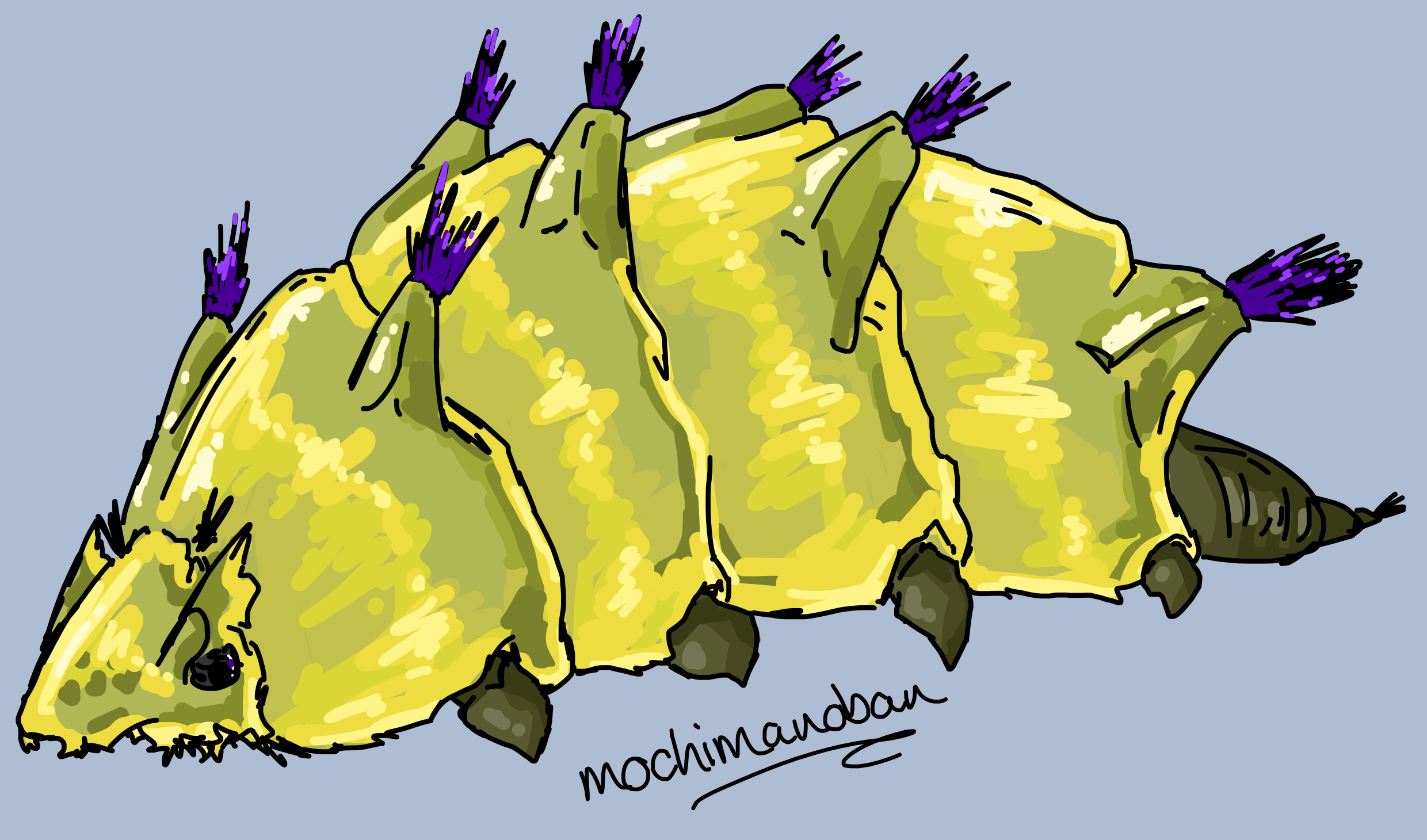
The impressive shell structure of a sludgeworm protects a rather delicate body on the inside. Thick tissue stops the frail body and abdomen from smashing into the sides of the shell. Thin legs slot into large puppet like feet.
The only part of a sludgeworm proportionate to its shell is the head, which continues to grow in size as the creature ages. Most sludgeworms die from the head exploding within the shell, crushed by its inability to grow and the immense pressure of being trapped in the shell.
Reproduction & Growth
Sludgeworms lay large piles of eggs, anywhere from a hundred to ten thousand. They incubate using high levels of radiation in the atmosphere.
I once ran into a group of dead sludgeworms. Oh god... the smell. Ten rotting carcasses, with bug juice seeping out the eyeballs as they lay lifeless on the ground. I ripped off the shells and took them back home, cleaned them up and turned it into an outfit, but I'll never forget that smell.
Once hatched, larva scatter and infest the soil. Most are consumed by roaming animals and tiny predators, the few survivors will form a a giant cocoon.
Inside this cocoon they spend five weeks weaving together the shell they reside in as an adult. Before the larva can create the shell, it must first morph itself and grow legs. This process takes around five days. The arduous process of forming the shell requires months of nutrients gathered by the larva.
Once the shell has formed, the animal will crawl in and break out of the cocoon. Operating this heavy shell takes a lot of energy and as a result the sludgeworm cannot move very fast, nor very far. If the animal wants to migrate, it must do so as a larva.
In its shelled form, the animal's head continues to grow while its body and abdomen remain the same size. Unless killed by other means, every sludgeworm will die from a pressurised explosion of the head, as it grows too large for the shell.
Diet
Sludgeworms feast on any nutrient available. They shuffle along the ground, siphoning any nutrient they can from the soil and the air, using soft filters protruding from their shell, and hard mandibles to dig up the ground.
A set of tiny tongues will lick up small rocks and soil from the ground and filter it through the body. Waste is quickly disposed and nutrients are absorbed. Filters embedded into the shell pick up aeroplankton, plentiful in the toxic atmosphere. Most aeroplankton on Venviri are made of fungi spores and coral polyps, as well as large bacteria and protists.





Poor things—you'd think the head exploding would have naturally selected out by now
You'd think, but evolution keeps bringing it back!
But... How?