
Faun
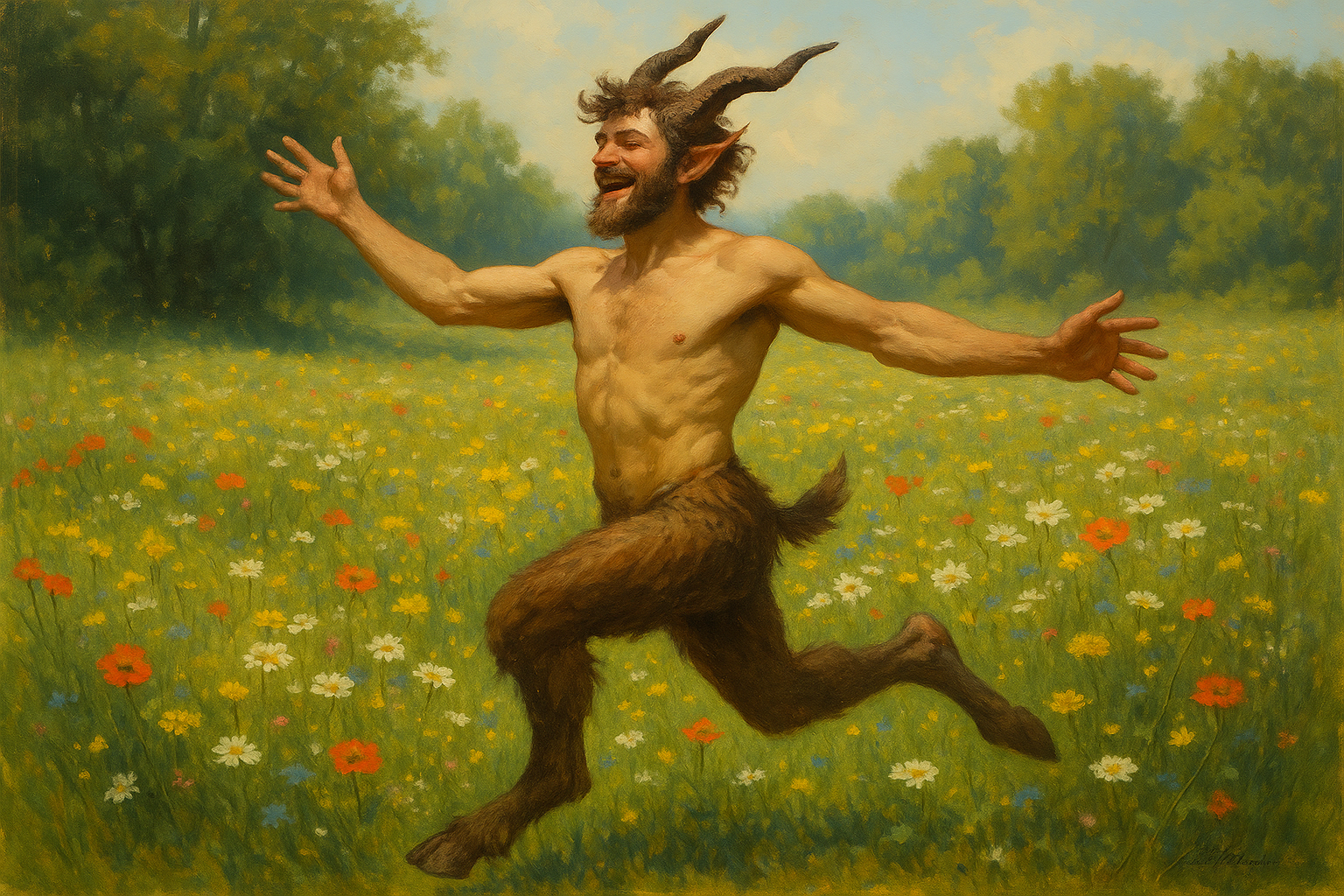
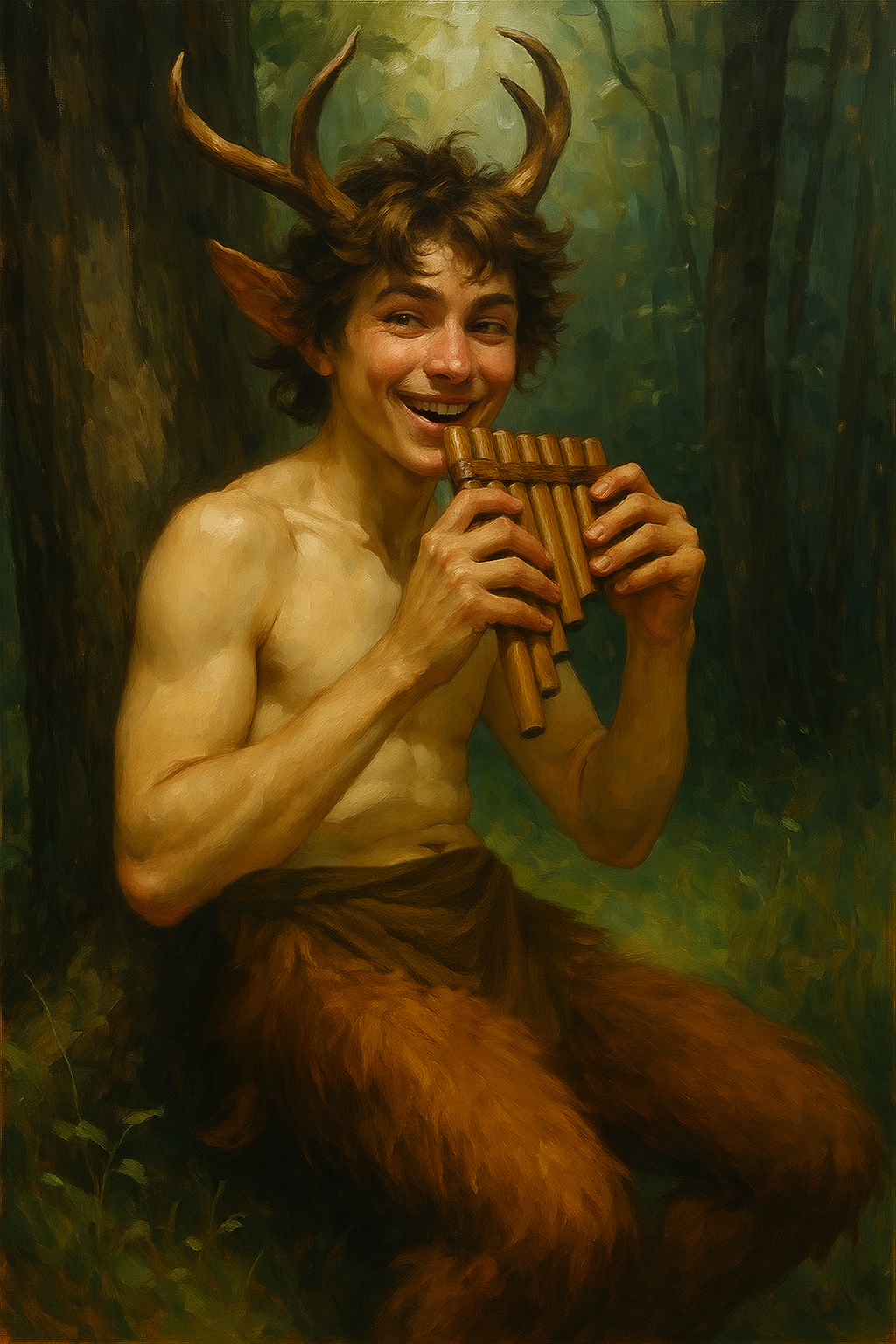
Fauns are a fae-born species of Tanaria—distinct from their more chaotic cousins, the satyrs. Graceful, clever, and innately tied to the rhythms of nature, fauns are known for their vibrant personalities and playful wit. With deer-like lower bodies and elegantly curved horns, they evoke a sense of serene wildness, blending the aesthetics of the natural world with the charm of humanoid curiosity.
Though their origins may trace back to ancient unions between satyrs, fey spirits, and virtuous mortal women, fauns have long since become a species of their own. They breed true and maintain thriving communities, often hidden deep within forests, glades, or mountainous enclaves infused with magic. While they’re often mistaken for satyrs by outsiders, those who know the fauns understand the difference: where satyrs embody raw indulgence and chaos, fauns channel joy, beauty, and the subtle strength of balance.
Their societies are peaceful, inclusive, and slow to anger—but fiercely protective of nature, kin, and the sanctity of their homes. Fauns are natural mediators and companions, often found aiding lost travelers, tending to sick animals, or guiding druids and scholars through wild places. They are innately musical, and their melodies carry magic capable of charming creatures, coaxing blooms from the soil, or silencing conflict.
Friendly does not mean naïve, however. Fauns are keen observers with razor-sharp humor, and their pranks are legend among those who mistake their gentleness for weakness. Cross a faun, and you may find your boots glued to the ground, your hair dyed green, and your pride bruised for weeks.
They are not rulers of the fae realms, nor are they warriors or conquerors. But in every glade where song echoes, every clearing lit with firelight and laughter—fauns endure. Bright-eyed, sharp-tongued, and barefoot beneath the stars.
Basic Information
Anatomy
Fauns exhibit a harmonious blend of humanoid and cervine features, with their anatomy shaped by centuries of symbiosis with forest environments and fey magic. From the waist up, fauns are slender and long-limbed, with graceful builds and elongated necks that give them an elegant, almost elven appearance. Their skin is typically smooth and warm-toned, ranging from light tan to rich umber or olive, with subtle markings that resemble freckles, dappled light, or the patterns of forest foliage.
Their faces are angular and expressive, with soft cheekbones, upturned noses, and large, wide-set eyes reminiscent of deer. Eye colors include earthy browns, golden ambers, and verdant greens, often with a slight sheen that enhances their ability to see in dim light. Ears are elongated and deer-like, often tufted or furred, capable of rotating independently for enhanced auditory awareness.
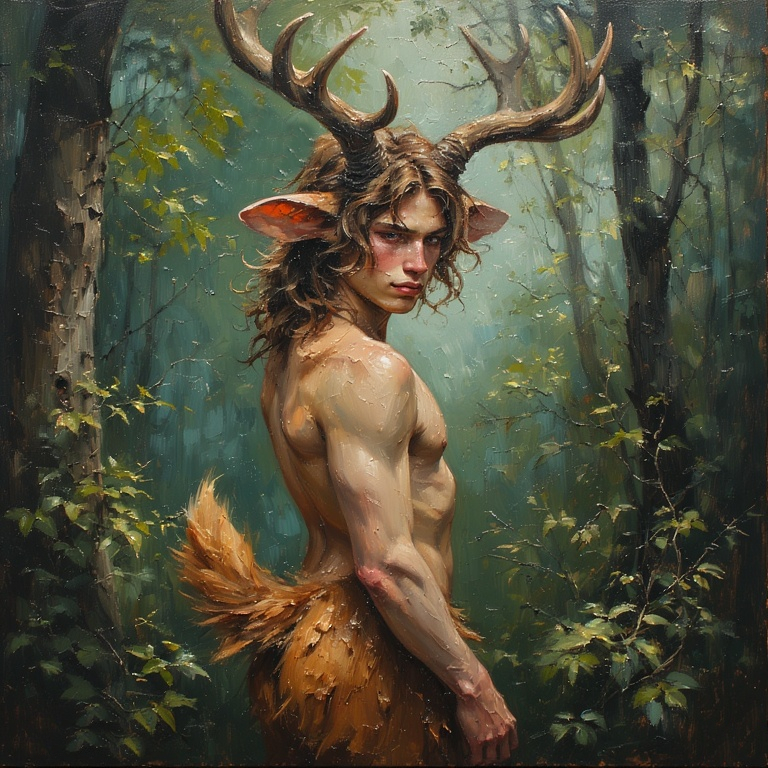
All fauns, regardless of gender, have antlers. Males typically grow broader, more branched racks resembling those of stags, while females grow lighter, straighter antlers. Antlers grow slowly and are shed cyclically, regrowing in new shapes that often carry symbolic or social significance.
From the waist down, fauns bear the legs of deer: long, slender, and powerfully muscled for sprinting, bounding, and climbing. These legs are covered in shaggy, but velvety fur—colors ranging from chestnut to gray or even silvery-white—and end in small cloven hooves. Their gait is light and swift, and they move with an effortless, dance-like grace.
Fauns also have short, expressive tails used for communication and balance. Their overall physiology is optimized for speed, agility, and forest mobility. While smaller than most humanoid races—rarely exceeding five feet in height, excluding antlers—they are deceptively strong and highly resilient, with excellent endurance and rapid reflexes.
Their voices are soft, melodic, and often carry a musical lilt, well-suited for their natural gift of charm and enchantment.
Genetics and Reproduction
Fauns are a distinct fey species, believed to be born from rare unions between humanoid women of virtue and fey or satyr bloodlines—most commonly resulting from enchantment, divine favor, or deliberate magical rituals tied to nature spirits. Over generations, these children have bred true, resulting in a stable and unique race rather than a hybrid one.
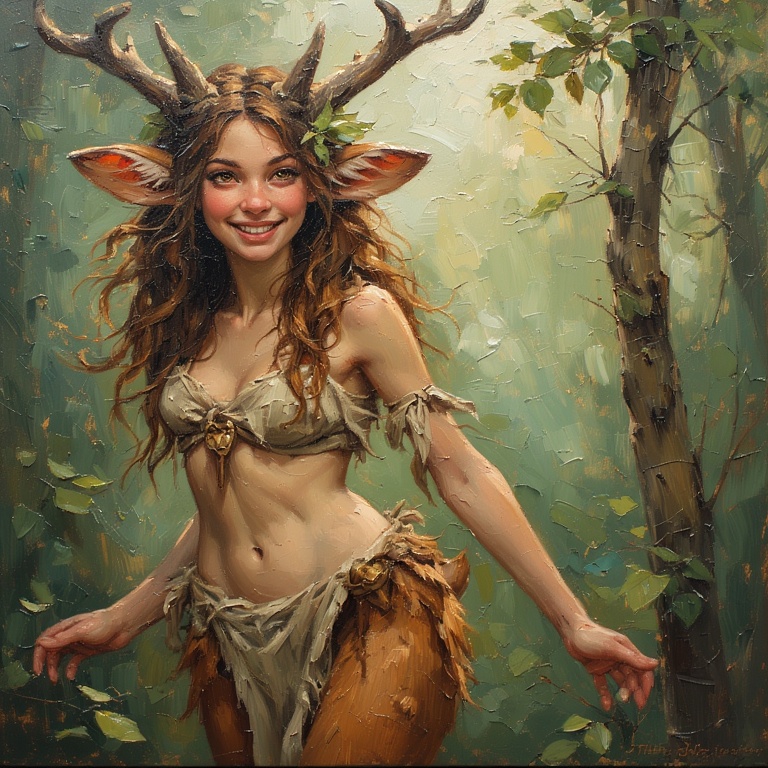 Faun genetics are strongly dominant, especially when paired with other fey or beastfolk bloodlines. A child born of a faun and a non-faun humanoid (e.g., human, elf, etc.) is almost always born a faun, retaining the cloven legs, horns, and primal attunement that define their kind. While some features like antler size, fur texture, or coloration may vary based on the non-faun parent, their core physiology remains consistent. Notably, the antlers (present in all fauns regardless of gender) and hoof structure rarely diminish across generations.
Fauns reproduce sexually and follow a gestation cycle similar to humans, lasting approximately nine months. However, fertility rates are notably low, especially among older fauns. Conception is often aligned with seasonal rituals or high concentrations of ambient natural magic—spring festivals, solstices, and leyline flares are said to increase the likelihood of conception dramatically.
Due to their deeply social and pleasure-oriented culture, faun relationships tend to be non-monogamous and community-centric. Parenting is often a shared responsibility within small, tight-knit groups rather than strictly between biological parents. Children are seen as communal blessings and are raised by the collective, fostering strong kinship ties regardless of direct lineage.
Though long-lived, fauns do not remain fertile throughout their lives. Most are capable of reproduction from late adolescence to early middle age, after which their energy shifts more toward mentorship, artistry, and spiritual connection. Those rare fauns born during sacred conjunctions or ancient rites are believed to carry ancestral memories or unique magical gifts, marking them as “blessed-born.”
Faun genetics are strongly dominant, especially when paired with other fey or beastfolk bloodlines. A child born of a faun and a non-faun humanoid (e.g., human, elf, etc.) is almost always born a faun, retaining the cloven legs, horns, and primal attunement that define their kind. While some features like antler size, fur texture, or coloration may vary based on the non-faun parent, their core physiology remains consistent. Notably, the antlers (present in all fauns regardless of gender) and hoof structure rarely diminish across generations.
Fauns reproduce sexually and follow a gestation cycle similar to humans, lasting approximately nine months. However, fertility rates are notably low, especially among older fauns. Conception is often aligned with seasonal rituals or high concentrations of ambient natural magic—spring festivals, solstices, and leyline flares are said to increase the likelihood of conception dramatically.
Due to their deeply social and pleasure-oriented culture, faun relationships tend to be non-monogamous and community-centric. Parenting is often a shared responsibility within small, tight-knit groups rather than strictly between biological parents. Children are seen as communal blessings and are raised by the collective, fostering strong kinship ties regardless of direct lineage.
Though long-lived, fauns do not remain fertile throughout their lives. Most are capable of reproduction from late adolescence to early middle age, after which their energy shifts more toward mentorship, artistry, and spiritual connection. Those rare fauns born during sacred conjunctions or ancient rites are believed to carry ancestral memories or unique magical gifts, marking them as “blessed-born.”
Ecology and Habitats
Fauns are most commonly found in fertile, unspoiled regions where nature thrives unchallenged—particularly dense woodlands, enchanted glades, mossy canyons, and temperate highlands. Their presence is often a sign of natural balance; where fauns settle, ecosystems tend to flourish. They have a deep, almost spiritual bond with their environment and instinctively avoid places marred by heavy industry, war, or corruption.
The majority of faun communities exist within secluded woodland realms, nestled among root-choked valleys or hidden atop ancient stone outcroppings wrapped in ivy and mist. These enclaves—often referred to as circles or groves—are woven into the land rather than built upon it. Living spaces are made from natural materials without disturbing the surrounding flora, and some fauns even shape their homes magically from trees, stone, or fungi. Their settlements blend seamlessly into the wilderness, often going unnoticed by outsiders.
While many fauns choose isolation to protect their sacred spaces, some live symbiotically with nymphs, dryads, and other forest-aligned species. Others may act as emissaries or guardians to druidic orders or nature temples, especially those who worship deities like Sylvanna, Thalor, or lesser spirits of the wild.
Despite their whimsical reputation, fauns are territorial when it comes to the sanctity of their homes. While not inherently violent, they are relentless in their defense of the land, using misdirection, enchantment, and the natural world itself to repel threats. In regions like Vyrewood or the outer groves of Eithwyn, fauns may even act as agents of the land’s will, helping maintain the magical equilibrium of these volatile ecosystems.
Their diet is primarily herbivorous, favoring fruits, leaves, nuts, and wild grains, but they’re known to indulge in fermented nectars, honeyed roots, and exotic fungi. Many fauns are skilled foragers, herbalists, and brewers, contributing to a local culture rich in potions, teas, wines, and hallucinogenic concoctions. Their connection to animals, plants, and insects allows them to maintain a sustainable presence within their environment without overharvesting.
While most fauns avoid urban centers, some younger or more adventurous individuals may be found traveling with caravans, following migrating herds, or joining nature-based adventuring groups. These wanderers often serve as scouts, bards, or herbalists, and many return home eventually, bringing with them stories and seeds from distant lands.
Dietary Needs and Habits
Fauns in Tanaria are omnivorous, with diets that adapt fluidly to their lush, forested environments. Their meals tend to be seasonal and foraged, reflecting both the bounty and whimsy of the lands they call home. Berries, nuts, fruits, roots, tender leaves, and fragrant herbs make up the bulk of their food, often eaten fresh or mixed into hearty stews, rustic breads, or fermented drinks. Fauns are known to enjoy honeycomb, mushrooms, and edible flowers, and many have a sweet tooth—favoring fruits or concocting fruit wines and syrups. Some fauns supplement their diet with insects or small fish, though they typically avoid harming animals unless in dire need.
They also have a strong cultural taboo against overharvesting; each community passes down oral knowledge of how to forage responsibly and leave offerings in thanks. Communal meals are frequent, celebratory, and often musical affairs, with dancing, drumming, and storytelling around shared fire pits or forest glades. Eating for a faun is not just about sustenance—it is ritual, revelry, and an expression of gratitude to the natural world that feeds them.
Behaviour
Fauns are deeply expressive beings ruled by instinct, sensation, and joy. Their behavior is largely social, driven by bonds with their kin and the natural world around them. They thrive in environments where music, laughter, and affection are abundant, often forming close-knit communities or wandering in loosely associated bands. While they can be mischievous and impulsive, their playfulness is rarely malicious—most of their pranks are meant to delight or provoke thought, much like the fey beings many consider them kin to.
Psychologically, fauns are governed by their senses and emotions. They are intuitive rather than analytical, making decisions based on how something feels rather than cold logic. Their capacity for empathy is high, and they often serve as emotional barometers within their social groups. However, this same sensitivity can make them avoidant when confronted with prolonged sadness or conflict. Fauns crave connection and harmony, and when faced with violence or cruelty, they often flee or use distraction rather than direct confrontation.
Despite their hedonistic reputation, fauns possess a primal wisdom—an awareness of the rhythms of the world and an innate understanding of emotional truth. Many serve as mediators between fey courts or act as nature's ambassadors to humanoid realms, their demeanor disarming and their insight surprising. Though not naturally inclined to long-term planning or bureaucracy, their keen perception of others makes them excellent companions, counselors, and storytellers in the moment.
In rare instances, trauma or isolation can unbalance a faun’s mind, muting their joy and amplifying their wilder instincts. Such fauns become melancholic, unpredictable, or even dangerous—but this is seen not as evil, but as a sign of a soul out of sync with the world’s harmony. Healing these individuals is a communal effort, rooted in patience, music, and shared presence.
"A satyr chases pleasure to conquer it; a faun dances with it until it blooms."
Additional Information
Social Structure
Geographic Origin and Distribution
Fauns are most commonly found in regions where wild magic and untouched nature flourish. Their primary habitats are deep, enchanted forests, Sylvan glades, and hidden valleys throughout Tanaria—especially in places with strong ties to the Fae or where the boundaries between realms are thin. Vyrewood is considered their ancestral homeland, its chaotic and sentient ecosystem perfectly suited to their whimsical and adaptable nature. However, faun communities also thrive in the verdant lowlands of Kalros, the rain-kissed woodlands of Eithwyn, and isolated groves in the mountains of Kamulos or the western reaches of Tharnis.
They are rarely found in cities or industrialized regions unless as curious wanderers or temporary guests. Even then, most return to the wilds after a time, drawn by the pull of their roots. Fauns are especially common near leyline convergence zones, where nature and magic intermingle freely, and they often act as guardians or caretakers of these sacred places—though not in any formal sense. Their presence is usually a sign of healthy, flourishing land, and where they are seen, the forest is likely to be alive in every sense of the word.
Perception and Sensory Capabilities
Fauns possess exceptionally refined senses attuned to the natural world. Their hearing rivals that of wild deer, able to detect even the softest footfalls through underbrush or the shifting of wind across stone. Their large, expressive eyes offer wide peripheral vision and are adapted for both bright daylight and moonlit nights, allowing them to perceive subtle shifts in motion and light.
 Their sense of smell is acute, particularly when it comes to plant life and magical auras—able to detect the presence of recent spellwork or emotionally charged environments through faint olfactory cues. Some fauns describe the smell of sorrow as wilted clover or fear as overripe bark, a sensory language only they seem to understand.
In addition to these heightened natural senses, fauns possess a low-level empathic sensitivity. While not full telepaths, they can often “feel” the mood of nearby creatures—especially animals and other fey. This innate empathic resonance helps them navigate tense social situations, avoid danger, and deepen their bonds with their surroundings. It also strengthens their connection to nature magic, making them effective conduits for spells related to charm, calm, and communication.
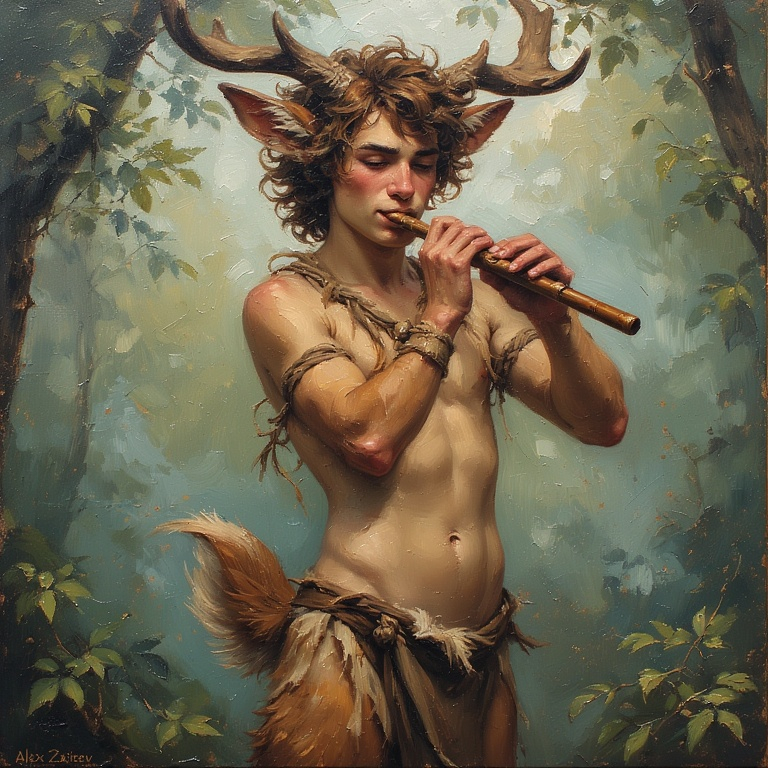
Their musical affinity grants them an unusual sensory trait: synesthetic resonance. When they play or hear music, some fauns experience colors, scents, or emotional echoes tied to the tones. This cross-sensory perception helps them weave more powerful enchantments through rhythm and melody, a trait often mistaken for charm magic when in fact it is something far older—part of their deep-rooted link to the primal harmony of the world.
Their sense of smell is acute, particularly when it comes to plant life and magical auras—able to detect the presence of recent spellwork or emotionally charged environments through faint olfactory cues. Some fauns describe the smell of sorrow as wilted clover or fear as overripe bark, a sensory language only they seem to understand.
In addition to these heightened natural senses, fauns possess a low-level empathic sensitivity. While not full telepaths, they can often “feel” the mood of nearby creatures—especially animals and other fey. This innate empathic resonance helps them navigate tense social situations, avoid danger, and deepen their bonds with their surroundings. It also strengthens their connection to nature magic, making them effective conduits for spells related to charm, calm, and communication.
Their musical affinity grants them an unusual sensory trait: synesthetic resonance. When they play or hear music, some fauns experience colors, scents, or emotional echoes tied to the tones. This cross-sensory perception helps them weave more powerful enchantments through rhythm and melody, a trait often mistaken for charm magic when in fact it is something far older—part of their deep-rooted link to the primal harmony of the world.
Civilization and Culture
Naming Traditions
Faun naming traditions reflect their whimsical, nature-bound culture and social closeness. Names are often melodic and short, chosen based on traits, birth season, or natural omens witnessed at birth—like a blooming flower, sudden rain, or a bird’s call. Many names are unisex or shift over time with personal growth. A faun born under a full moon during a thunderstorm might be called Velroa (“storm-blessed”), while one with golden fur and a cheerful demeanor might be Lindi (“sunbeam”).
They rarely use surnames, but when needed, they adopt playful epithets tied to their personality or behavior—Thistletoe, Fawnstep, Breezy, or Gigglebranch—used more as introductions than lineage. In rare formal settings, a faun might string multiple such nicknames together for flair: “Pellen of the Dandelion Dance, Friend to Squirrels and Singer in the Rain.”
Names are a form of art and identity to fauns, and many will change theirs throughout life as they evolve or simply for fun.
History
The history of the fauns is not etched in stone or sung in epic ballads, it is whispered in laughter, scattered like pollen on the wind, and woven into the roots of old forests. Most scholars agree that fauns are among the younger fey races, born not from war or divine intervention, but from joy, indulgence, and the wild need for harmony amid chaos. Their origins are closely tied to the fae realms, particularly the untamed groves of Vyrewood and its offspring, Faethra. Many believe fauns were among the first beings to emerge after the formation of Vyrewood, shaped by its whimsy and its hunger for balance.
Originally, they were mistaken for satyrs, so much so that their early histories are often merged. But over time, it became clear that fauns were something else entirely. Where satyrs were driven by vice and unrelenting appetites, fauns were gentler spirits, born of revelry but guided by community and kinship. Some believe they are the children of nymphs and satyrs; others say they sprang from the dreams of Sylvanna herself when she laid down in the grass and imagined laughter without consequence.
Fauns never formed kingdoms, nor did they conquer lands. Their history is a tapestry of localized stories, of wandering minstrels, healers, and mischief-makers who shaped the culture of dozens of other peoples without ever holding a crown. They became the secret midwives of seasonal festivals, the protectors of sacred groves, and the guardians of ancient, overgrown paths where even druids feared to tread. Wherever nature bloomed and laughter echoed, fauns were nearby.
Over the centuries, they have remained free of most major conflicts. During the Calamity Era, many sought refuge deep within fey-aligned woods or were sheltered by the elves and the wild clans of Kalros. In the Harmonium Era, their numbers grew again, and they began to wander further, spreading joy, song, and no small amount of gentle chaos across the continents.
Though rarely remembered in official records, fauns have shaped many events from behind the scenes, through a whispered word at the right moment, a song that softened a warlord’s heart, or a prank that humiliated a tyrant just enough to spark rebellion. Their legacy is not one of empires, but of influence, soft, persistent, and impossible to root out.
Interspecies Relations and Assumptions
Fauns maintain largely positive relations with other species, especially those who dwell close to nature or the feywild. Their disarming charm, playful demeanor, and harmless reputation make them widely welcomed in elven glades, dryad groves, and among gnome and halfling settlements. Among the fey, they are treated like younger cousins, mischievous but lovable, often invited to festivals or used as go-betweens in matters too silly for the courtly fae to handle directly.
With elves, particularly the Sylvaren and Vaelsidhe, fauns enjoy a strong rapport rooted in shared reverence for the natural world. Sylvaren often act as mentors or older siblings to curious young fauns, while the Vaelsidhe see them as bright embers of joy in an otherwise chaotic world. The Aelvaren, by contrast, tend to view them as frivolous and undisciplined, though rarely hostile.
Among humans, reactions vary wildly. Rural communities may see them as good luck, heralds of a bountiful season or gentle omens, while more rigid, law-bound cities often view them as troublemakers or vagrants, mistaking their freedom for irresponsibility. Still, few can stay angry long when confronted with a faun’s earnest laughter or wide, innocent eyes.
Tensions only arise when their mischief crosses cultural lines, stealing pies from a dwarven windowsill, charming a noble’s daughter into a moonlit dance, or convincing a merchant to trade two barrels of wine for a “rare invisible acorn.” Even then, most interspecies conflict with fauns tends to resolve in exasperated laughter rather than violence.
Genetic Ancestor(s)
Scientific Name
Caprivena silvani
Lifespan
200 to 300 years, aging slowly after maturity. Their fey blood allows them to remain youthful and vibrant well into their second century, and many continue to dance, prank, and perform music with childlike joy even in old age.
Conservation Status
Least Concern
Fauns thrive in magical forests, protected groves, and other enchanted biomes where nature and fey influence remain strong. They face no immediate threats to population stability due to their adaptability, high birth rate compared to other fey, and the protective nature of their communities.
Fauns thrive in magical forests, protected groves, and other enchanted biomes where nature and fey influence remain strong. They face no immediate threats to population stability due to their adaptability, high birth rate compared to other fey, and the protective nature of their communities.
Average Height
4'4" and 4'11" (132–150 cm)
Average Weight
70 and 110 lbs (32–50 kg)
Average Physique
Fauns possess a light, graceful build strongly resembling cervids rather than goats. Their lower halves are modeled after deer, with long, powerful legs ending in cloven hooves, covered in soft, short fur that often matches tones seen in forest-dwelling deer—tawny, chestnut, umber, or pale cream. Their physiques are built for speed, agility, and fluid movement through dense woodland, granting them an elegant, almost ethereal presence when in motion.
Males typically stand around 5 feet tall when upright, with females slightly shorter. Their upper bodies are humanoid but retain fae-like traits—long, toned limbs, narrow waists, and smooth, unblemished skin. They are not bulky or heavily muscled; instead, their strength is sinewy and subtle, adapted to bounding, leaping, and climbing with ease. Their torsos are often lean, with minimal body fat and excellent balance.
Distinct features include deer-like ears, large expressive eyes, and antlers—more prominent in males, though females may have smaller sets or simple nubs depending on age or lineage. Their facial features are angular and delicate, with high cheekbones and a slightly elongated structure that hints at their fey heritage. The overall impression is one of natural grace, agility, and a wild, untamed beauty tied closely to their woodland environment.
"Fauns are the music the world forgot it was humming—wild, warm, and terribly sincere. They have no kings, no laws, and yet somehow, they thrive in harmony while we drown in our order."


Hehe, rare invisible acorn. I love the fauns. It wouldn't be a bad thing to go hang out with them for a while, I don't think. I like the idea that they have very subtly influenced some events throughout history.
Explore Etrea | WorldEmber 2025